No Cash Left in the Fisc

Right now, markets keep taking risk
And lately, the pace has been brisk
But coming next week
We could see a peak
If there’s no cash left in the fisc
 
A government shutdown would raise
Concerns about ‘nomic malaise
As well, what I see
Is Trump’s OMB
Is planning a RIF anyways


Volatility remains absent from most markets these days, metals excepted, and given the dearth of data until tomorrow’s PCE report, the focus is beginning to turn elsewhere.  Perhaps the biggest story developing right now is the potential US government shutdown if no continuing resolution is passed by Congress.  The government’s fiscal year runs from October 1 through September 30, and the rules are if Congress hasn’t passed appropriations bills by the end of the fiscal year, nonessential services are ended, and government employees are furloughed until that process is completed.  As of right now, the House of Representatives has passed a clean bill, meaning it continues spending at the current rate, and we are all awaiting on the Senate.  However, the Senate needs 60 votes to pass it to overcome the filibuster and right now, the Democratic Minority Leader, Chuck Schumer, claims they will not support the bill.

First, understand this is not unprecedented.  In fact, according to Grok, it has happened 21 times since 1980 with the longest being 35 days in 2018-19 over funding for the border wall.  Now, I ask you, can anyone remember the impact of any of those shutdowns, which in fairness typically last less than a week?  

Next, it is worth understanding what actually happens during a shutdown.  National Parks are closed, while passport services, HUD services, SBA services, scientific research and EPA inspections are the type of things that are put on hold.  Also, the BLS will pause data collection and calculations, although given their recent track record, that may be seen as a benefit!  But things like Social Security, Medicare, Medicaid and the Military are all unaffected.

Naturally, there is a lot of politicking ongoing with this process and apparently, President Trump has given marching orders for departments to begin a RIF if the government is shut down.  So, when things reopen, there will be fewer federal employees, one of the goals of this administration, and something that is anathema to his opponents.

From a market perspective, the impact on equity markets during the December 2018 – January 2019 shutdown was actually a rally of just over 10%, although the market did decline in the month leading up to the shutdown.  My point is, there is a lot more politics than economics in this process.

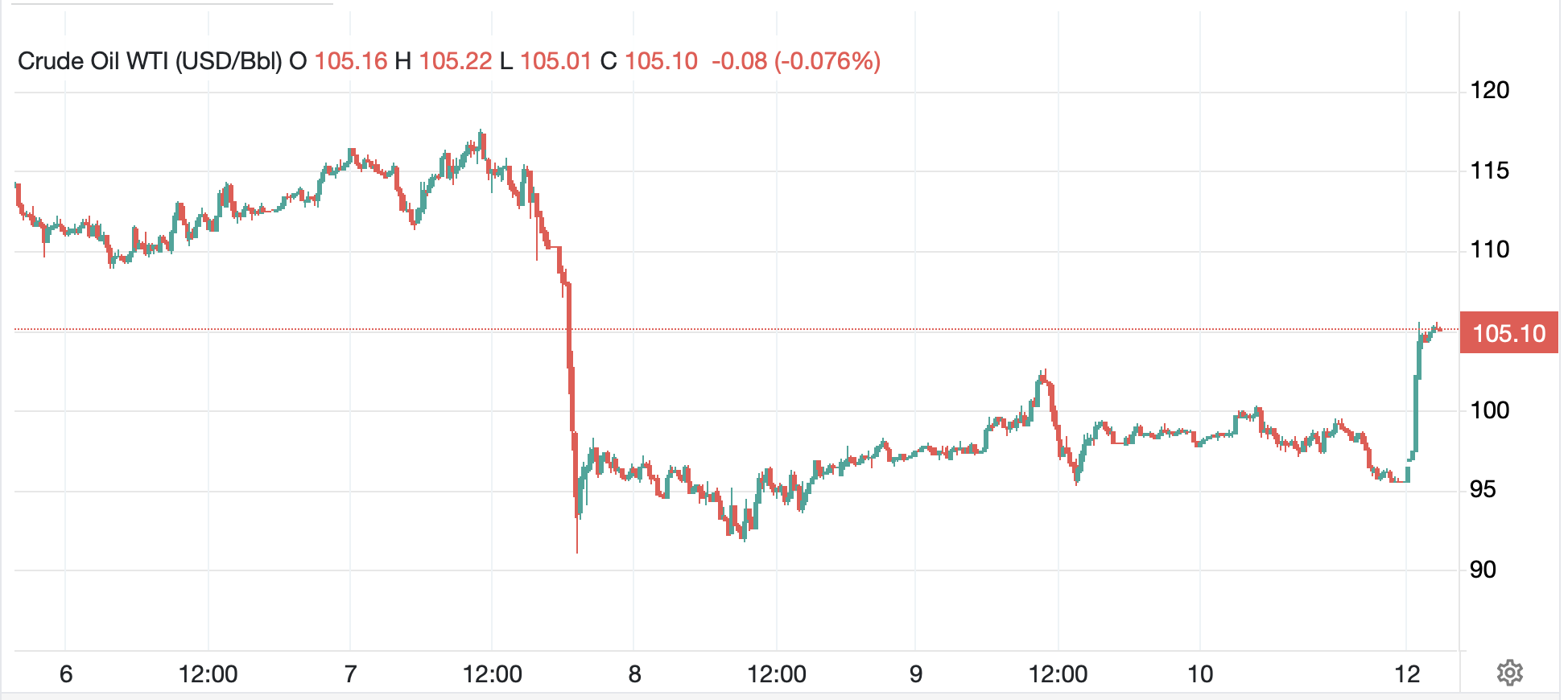
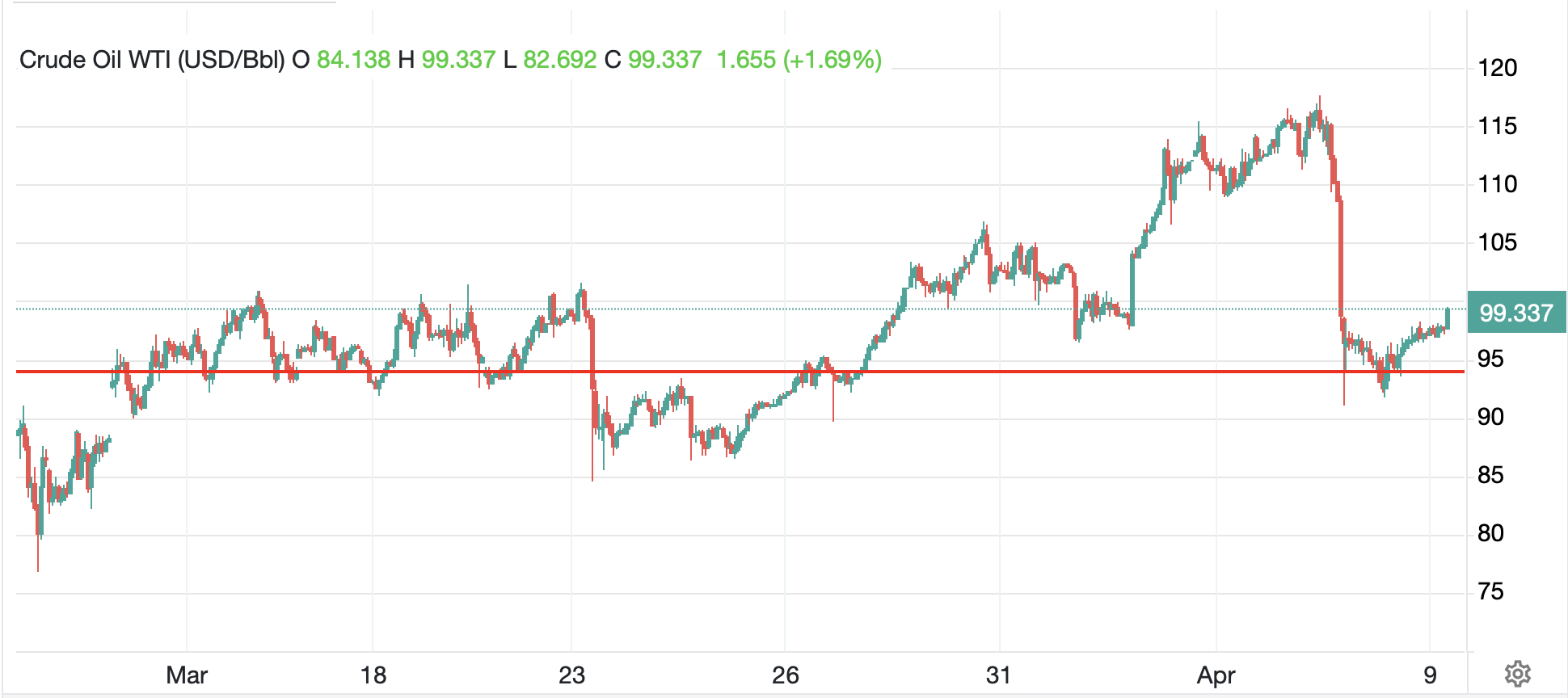
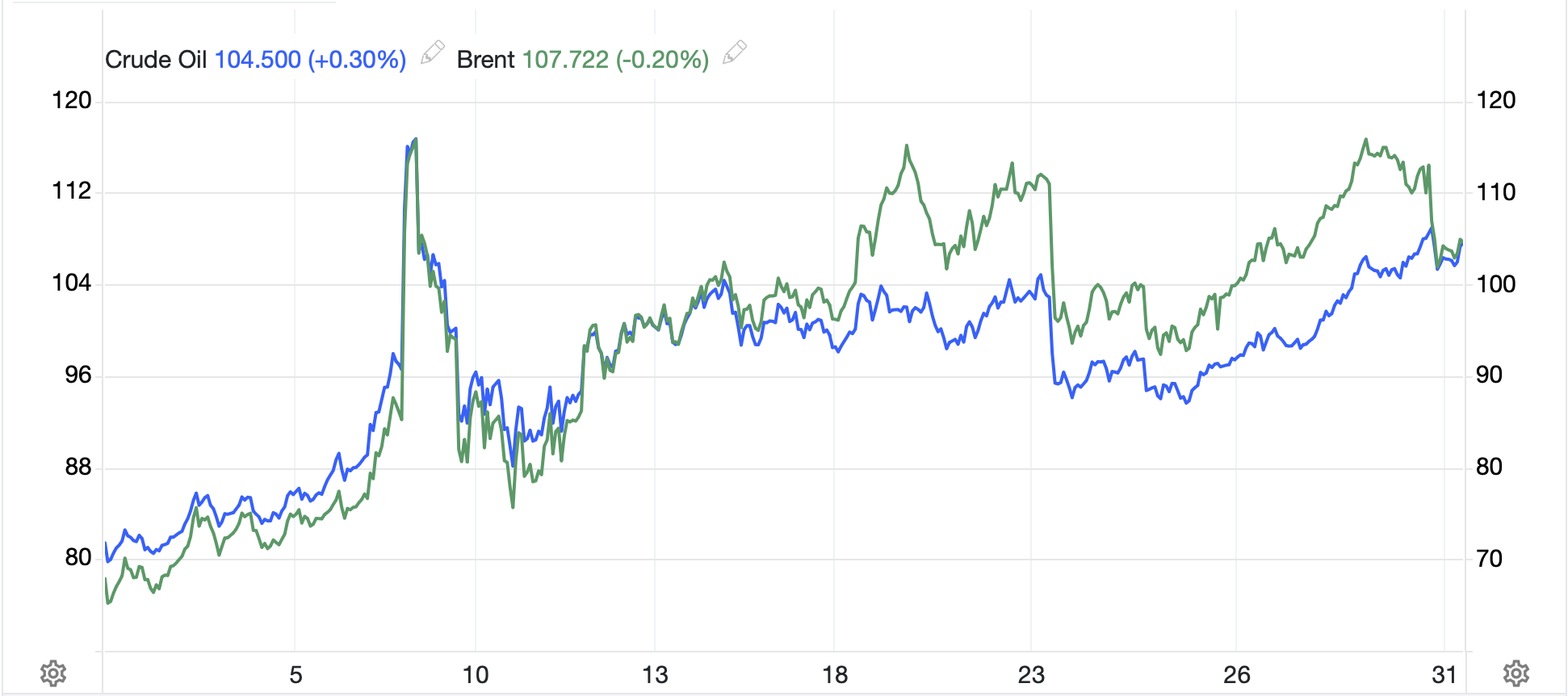
But away from that story, commodities remain the market with the most interest as oil (-0.5%) continues to trade within the range I highlighted earlier this week with a top at $65.50, but has made a technical break above its 50-day moving average, which has the bulls starting to get excited.  As well, the backwardation of the curve is increasing, another bullish sign and much of this is being laid at the feet of President Trump’s seeming turn on the Russia/Ukraine war, where he is quite tired of President Putin’s dissembling.  Certainly, a break above that range top would be at least short term bullish for crude.

Source: tradingeconomics.com

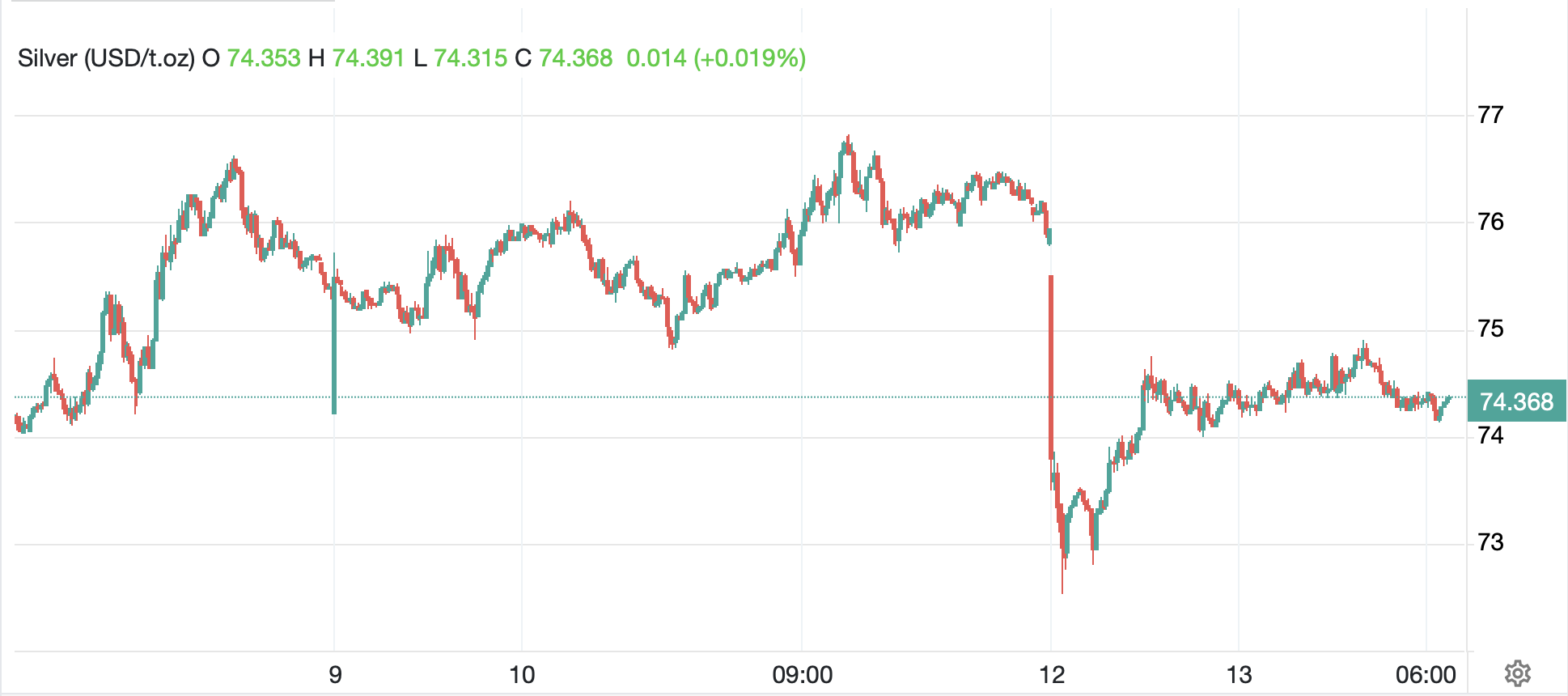
As to the precious metals, while gold continues to trade well, silver has taken the mantle and as you can see from the chart below, is accelerating higher at an even more impressive clip than the yellow metal.  This is a common occurrence as silver historically outperforms gold, on a percentage basis, when both are in bull markets like this.  Just wait until it reaches $50/oz, and makes new all-time highs, and you will see even more discussion of the metals and why they are rallying with inflation concerns a major part of that discussion.

Source: tradingeconomics.com

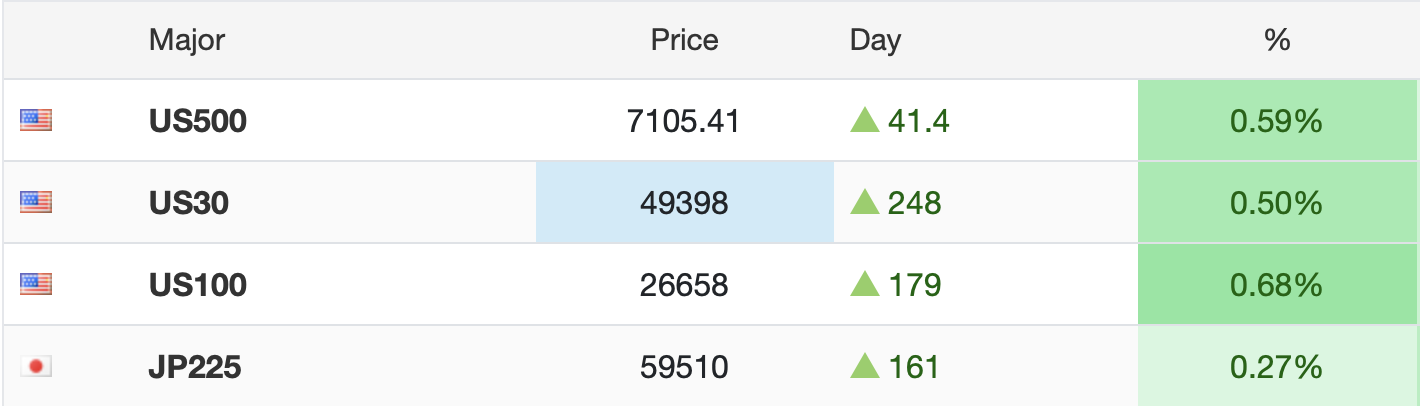
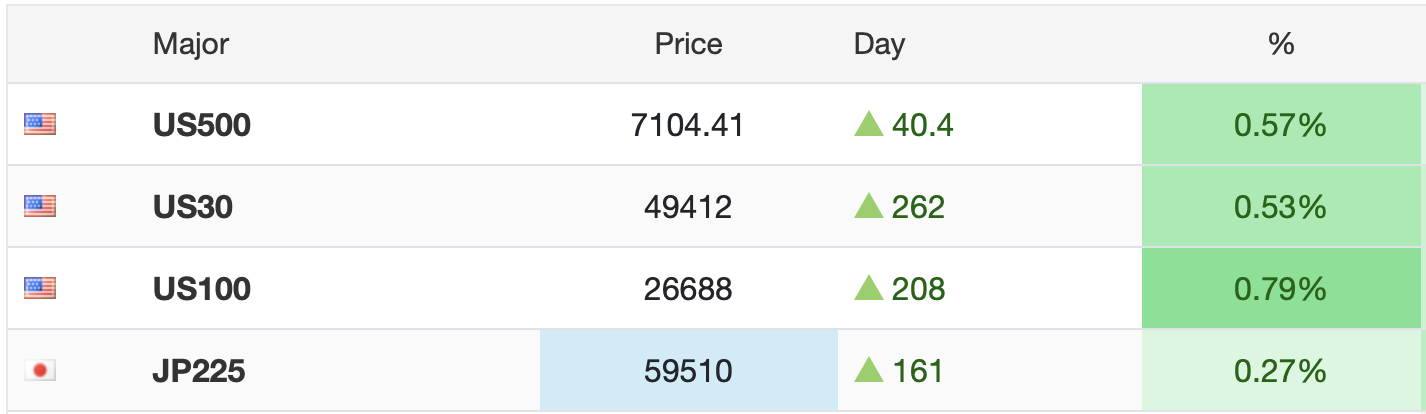
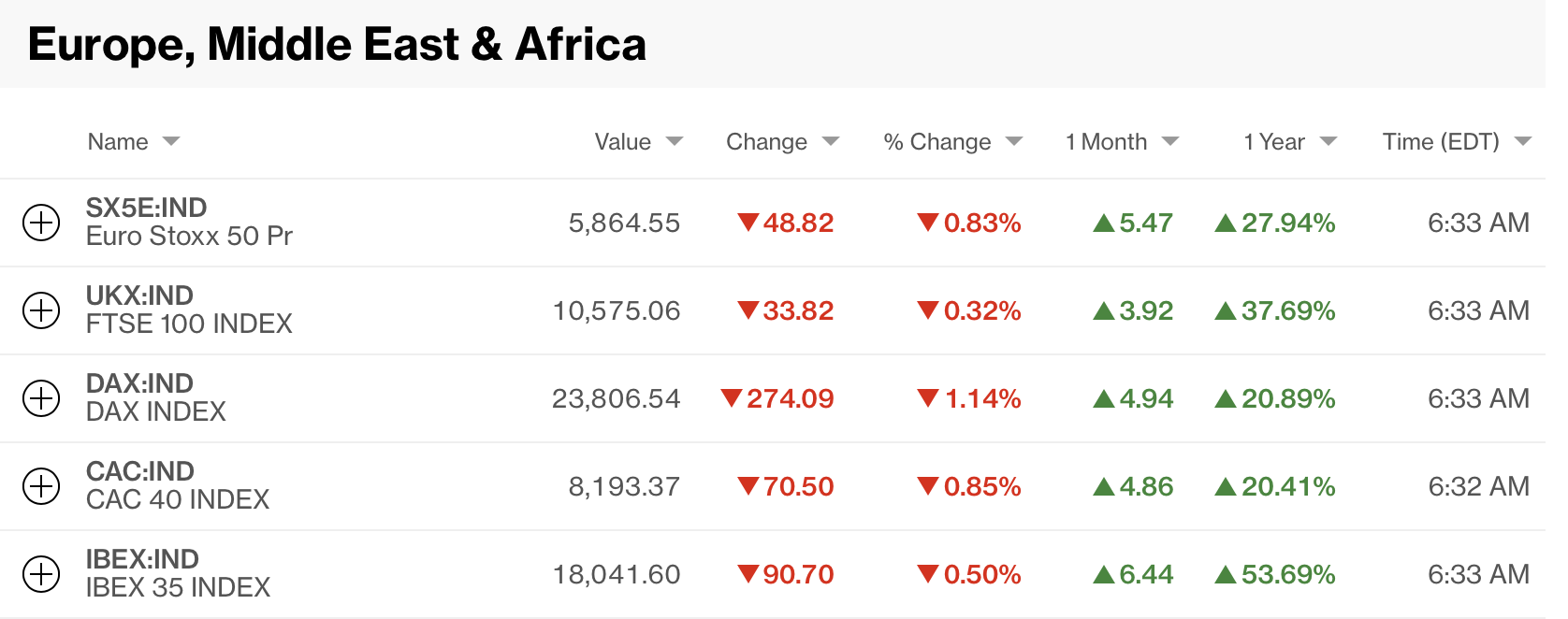
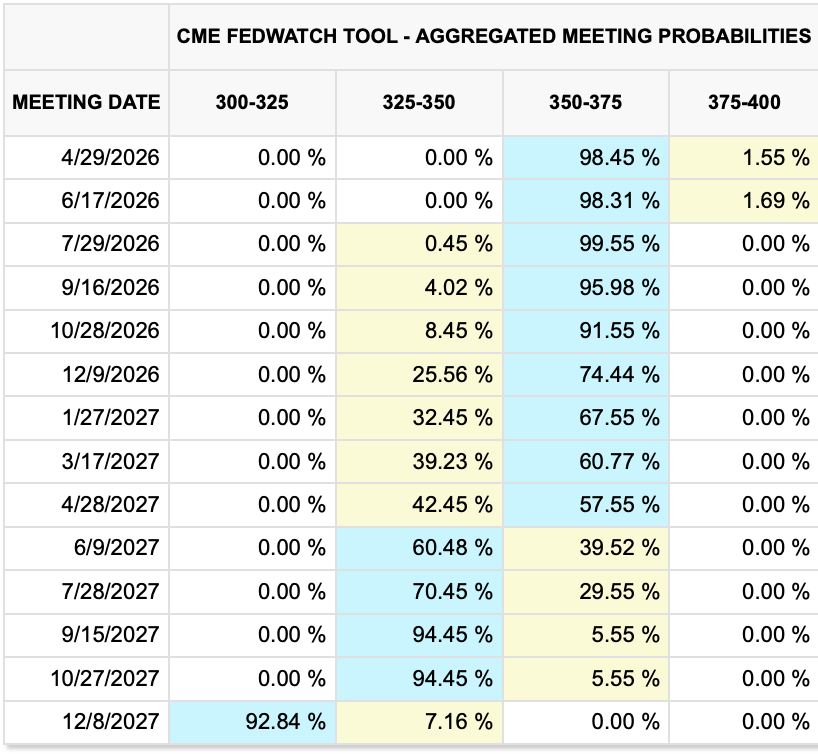
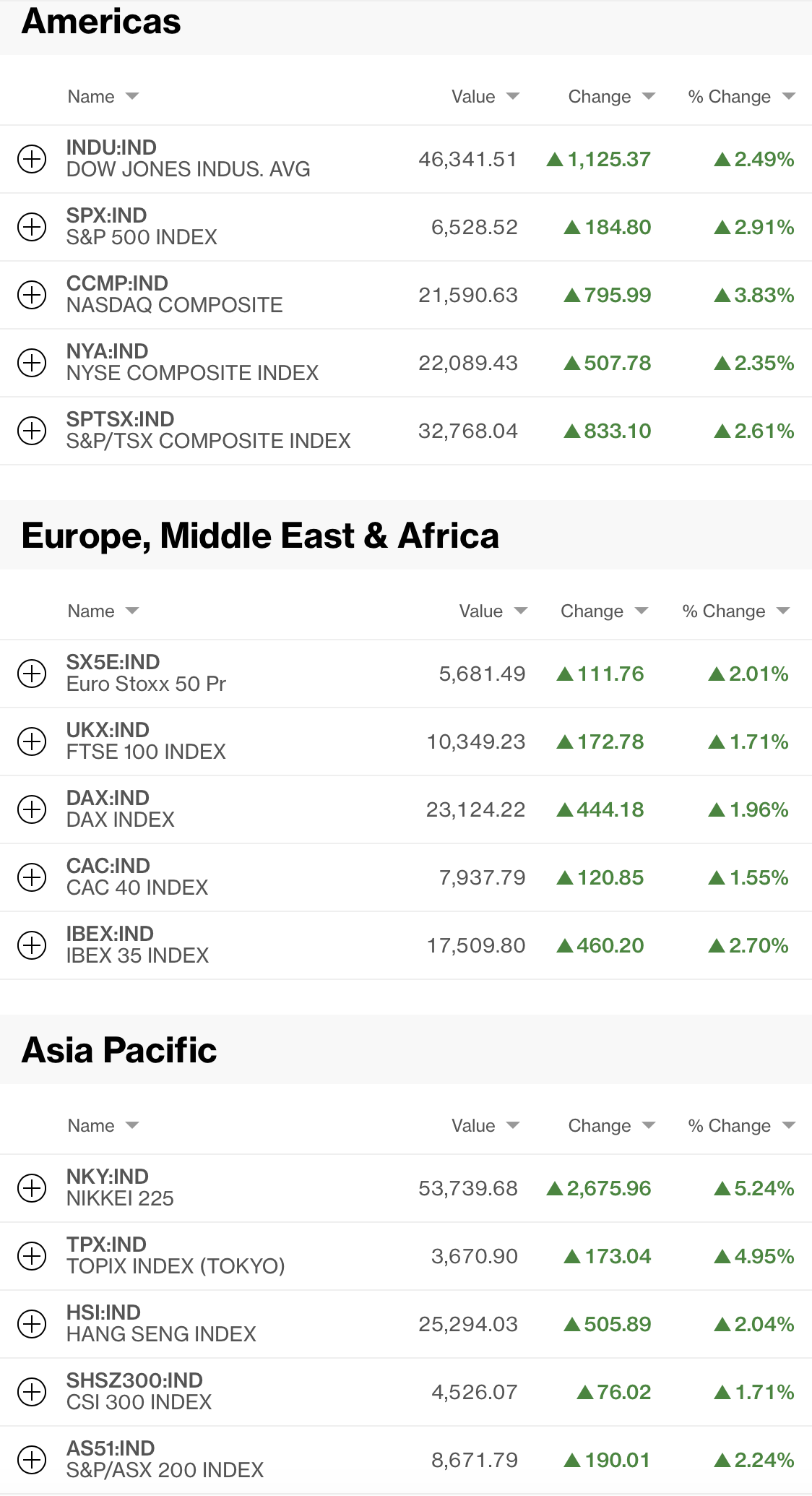
Meanwhile, financial instruments are far less exciting lately with equity markets stabilizing after their recent run and bond markets also doing little.  Granted, we have seen two consecutive down days in US equity markets, but the magnitude of the decline was de minimis, so it is not really telling us very much.  European markets appear more closely linked to the US, with all bourses there lower by between -0.1% and -0.5% this morning although we did see some modest gains in Asia (China +0.6%, Japan +0.3%).  Net, it seems investors are not certain where to turn right now and are waiting for more clarity from the Fed as to whether more rate cuts are on the way.

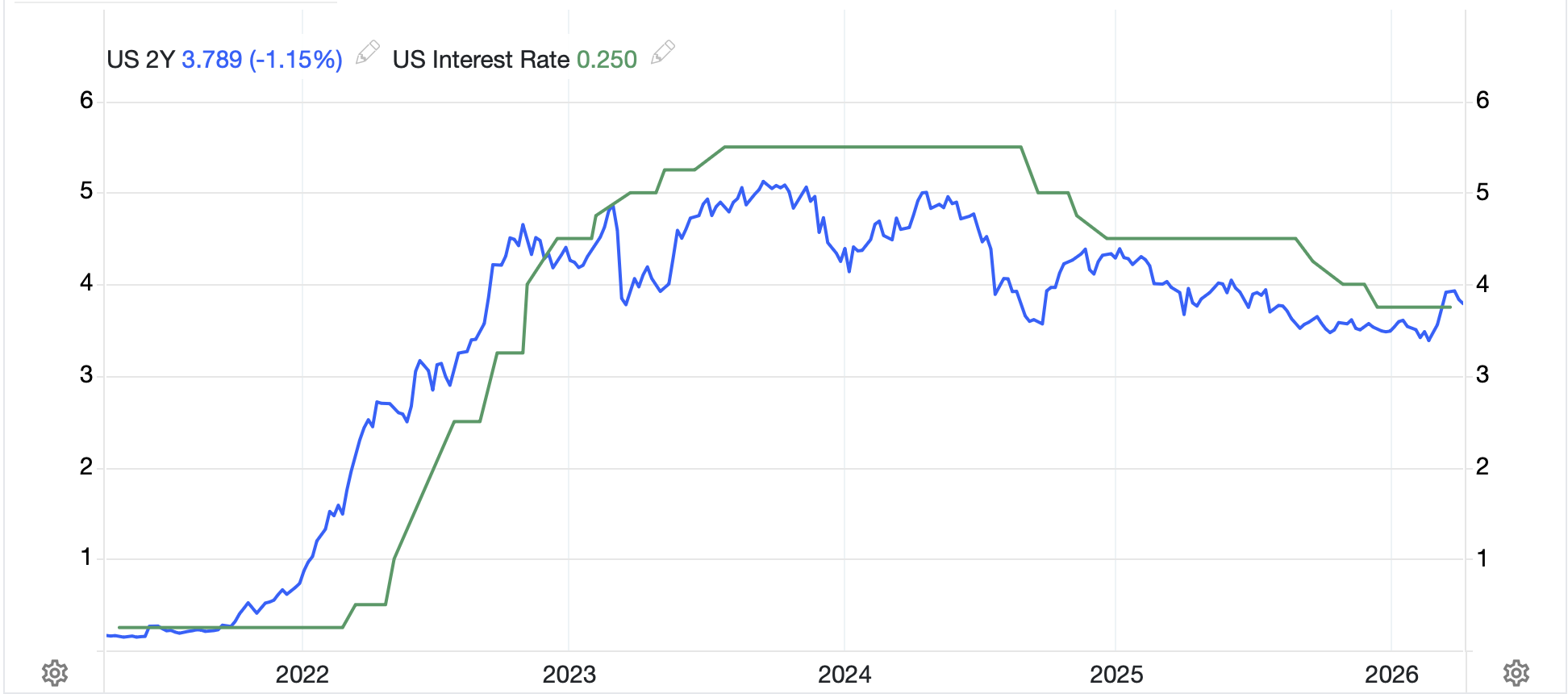
The same is true of bond investors who apparently are unconcerned over the shutdown threats, with yields unchanged despite the increasingly combative rhetoric.  We did hear from SF Fed president Daly yesterday, a known dove, who explained that she is coming around to the idea that more cuts are necessary, and they were simply waiting to see how tariffs were going to impact things.  I might argue that she is anxious to cut rates but also doesn’t want to seem to support President Trump’s demands.

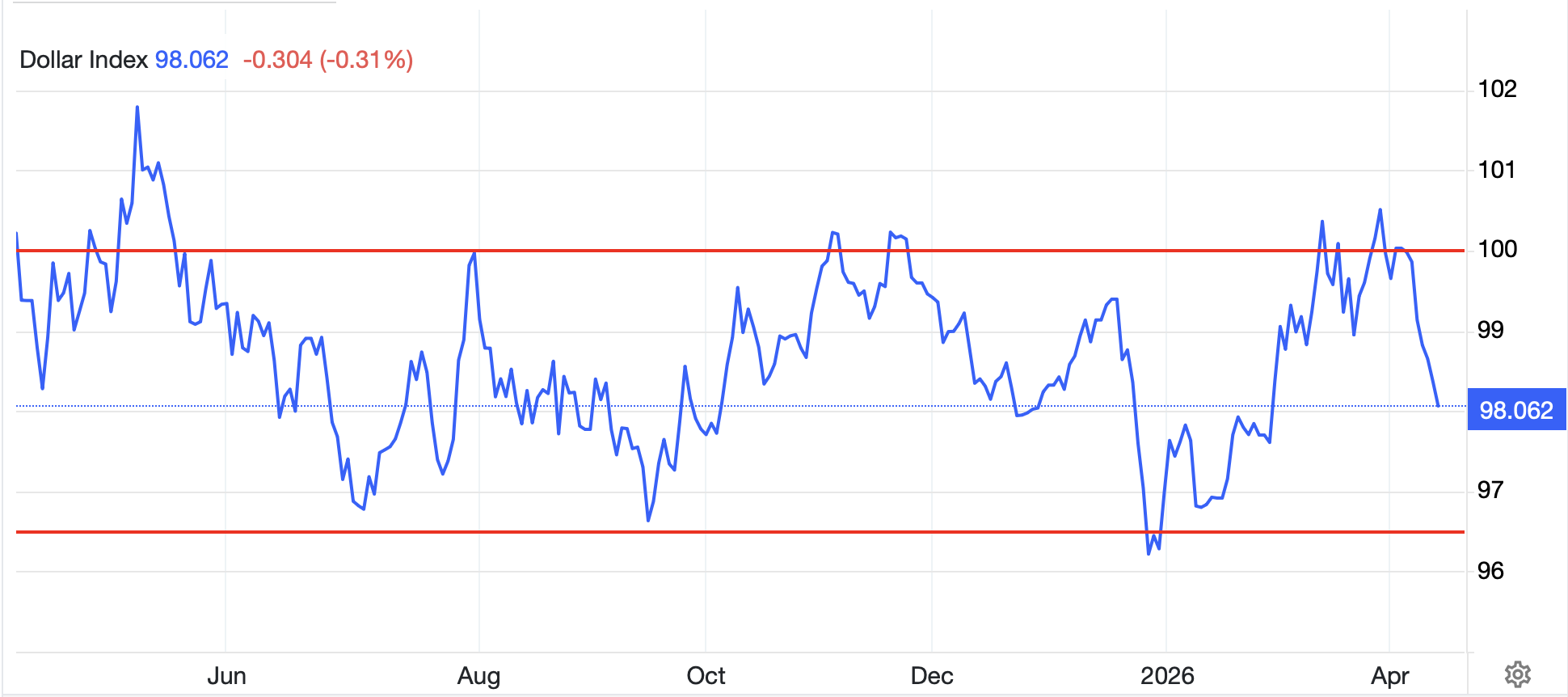
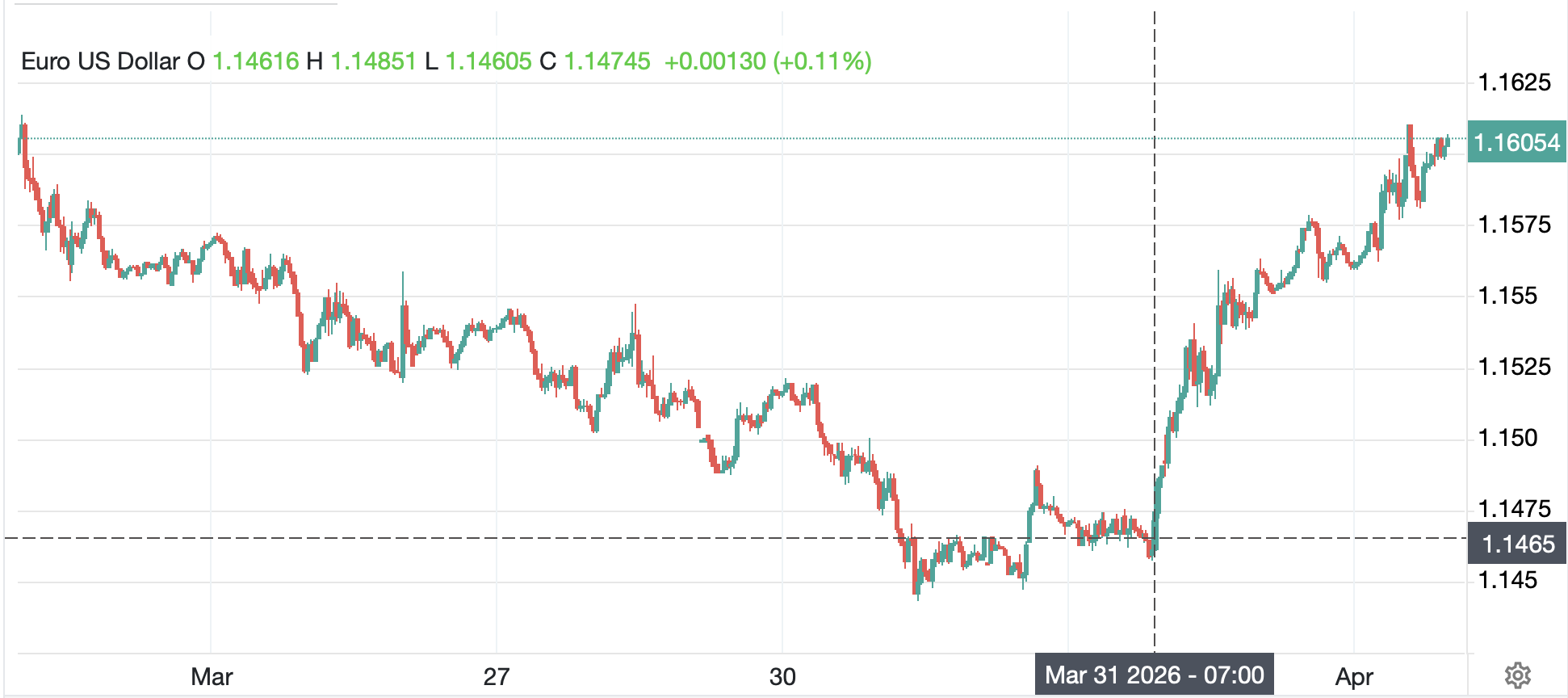
Finally, the dollar, after a pretty solid rally yesterday, is essentially unchanged this morning as well.  (That seems to be the theme today, no change.). As I look across my screen, the largest move I see is 0.15%, which is how far CHF has declined on the session, otherwise things have been completely dead.

On the data front, this morning brings the weekly Initial (exp 235K) and Continuing (1930K) Claims data as well as Durable Goods (-0.5%, 0.0% ex-Transport) and the final Q2 GDP reading (3.3%) all at 8:30 with Existing Home Sales (3.96M) at 10:00.  Yesterday saw New Home Sales rise dramatically more than expected at 800K although most analysts expect that number to be revised lower as the Census Bureau gets more information.  Nonetheless, it is a sign that the economy is not collapsing, that’s for sure.  

We also hear from four more Fed speakers today, Williams, Bowman, Barr and Daly again, and we will need to see how they all interpret the current situation.  We learned from the dot plot that there are a lot of different opinions at the Fed right now, and personally, I am very glad to see that.  Given the overall confusion, and the asynchronous nature of the economy right now, it would be more concerning if everyone was on the same page.

As far as the shutdown is concerned, you can be sure that this process will continue until next Tuesday night, at the earliest, if the Democrats cave, and if not, we will then be bombarded by both sides claiming it is the other side’s fault.  Eventually a spending bill will be passed, and as we saw back in 2019, markets pretty much look through this stuff.  Meanwhile, unless the data starts to really deteriorate and brings Fed comments along for that ride, I think the dollar is probably in a rough equilibrium space for now.

Good luck

Adf
He Axed Her

The NFP data was weak
And President Trump did critique
The BLS head
But unlike the Fed
He axed her as pundits did freak


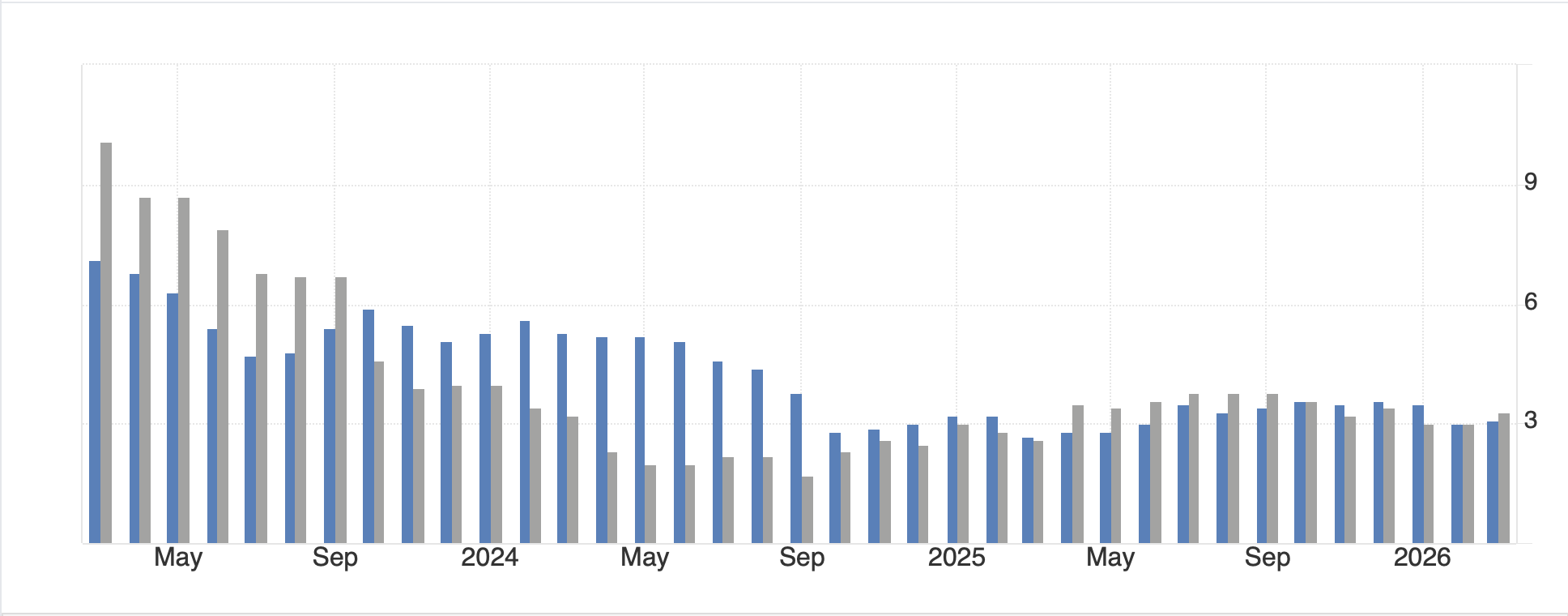
However, it is a fair question to ask if she was incompetent or politically motivated in her daily activities.  After all, it is abundantly clear there are many government workers who are ostensibly non-partisan who are, in fact, highly partisan.  As such, I took a look at the seasonally adjusted NFP data (the non-seasonally adjusted data is wildly volatile) to see if we could discern a pattern.  I created the chart below from BLS data on revisions with May 2025, the latest month with the normal two revisions, on the left and January 2007, prior to the GFC, all the way on the right.

If you look on the left side of the chart, you can see a great many negative revisions.  In fact, 21 of the last 29 months were revised lower from the original print.  If we assume that the BLS models are unbiased, then one would expect a roughly equal distribution of both positive and negative revisions over time.  It turns out, under the unbiased assumption, the probability of 21 out of 29 negative revisions is a very tiny 0.80%.

What conclusions can we draw from this?  My first thought is that the BLS models are not very effective at modeling reality.  I have raised this point many times in the past, the idea that the models that worked in the past, certainly pre-Covid, have been having trouble.  This begs the question as to why an economist of Ms McEntarfer’s long experience didn’t seek to develop a more accurate model.  As it is, there is no evidence that she did so.  I imagine as a government employee, the idea that one should change something that exists within the government framework is quite alien.  Thus, her competence could certainly be called into question, I think.

If we consider the alternative, that her actions were politically motivated, that will be more difficult to discern.  However, given the predominance of Democrat voting members of the federal government and given the fact she was appointed to this position by President Biden, it is fair to assume she is not in favor of the current administration, at the very least.  Now, during Mr Biden’s term, the initial NFP data was consistently better than expected, thus giving the impression that the economy was stronger than it may have otherwise been.  After all, stories about revised data are usually on page 12 of the paper, not headline news.  It is, therefore, possible that she was putting her proverbial thumb on the scale to flatter Biden’s economic performance.  As to her likely distaste of Mr Trump, I expect that to the extent she had the ability to do so, weaker headlines and large negative revisions would be exactly her contribution.

However, the political issue is largely speculation on my part, although I would argue it is plausible.  On the other hand, there is nothing in her background to suggest she is an especially thoughtful or creative economist and there is no indication that she examined the models she oversaw for flaws.  In the end, I come down on incompetence driving a political motive.  But I doubt we will ever know.  

Now, it is not a very good look for a leader to proverbially kill the messenger, which is essentially what Trump did.  Not surprisingly, much hair is on fire in the press and punditry, not because they though McEntarfer was particularly good at her job (I’m sure nobody had ever heard of her before) but because, as we have observed time and again, President Trump doesn’t follow their rules, and they don’t know what to do about it. 

Will this matter in the end?  This is merely the latest tempest in a teapot in my opinion and will do nothing to change the economy.  However, there is one interesting feature of the employment situation that can be directly attributed to the immigration situation.  As you can see in the FRED chart below, since March, the number of foreign-born workers has declined by 1.46 million while the number of US born workers has increased by more than 1.8 million.  I would say that as long as American citizens are finding jobs, President Trump is likely to remain quite popular across the nation despite all the negative press.

The weak NFP report altered the narrative on Friday, with bond yields, equity markets and the dollar all tumbling and the probability of a September rate cut jumping to 80%.  Perhaps President Trump is correct, and it is time to cut rates.

That’s all for this special Sunday night edition.

Good luck

Adf
Europe Has Folded

Last week Japan finally agreed
To tariffs as they did concede
Now Europe has folded
Their cards as Trump molded
A deal despite pundits’ long screed
 
So, now this week there’s lots of news
That ought to give markets more cues
Four central banks speak
And late in the week
Inflation and jobs we’ll peruse


All the talk this morning revolves around the announcement yesterday of a US-EU trade deal where the basics are a 15% tariff on all EU exports to the US and an EU promise to buy US energy and defense products totaling some $550 billion.  Many have said that the agreement means nothing because for it to become law, it requires both the European parliament and each nation to vote to agree on the deal.  As well, we are hearing from various nations how it is a terrible deal (French farmers are furious, German pharmaceutical manufacturers are furious and unions all over the continent are unhappy) and certain politicians (notably Marine Le Pen) are also extremely unhappy.  

It is far too early to understand if the deal will be implemented in full, but the precedent has been set that European exports to the US are going to be subject to higher tariffs than any time since prior to WWI and that is true whether the deal is ratified or not.  As analyst/trader Andreas Steno Larsen explained well this morning, “The EU vs. US trade deal highlights that the EU primarily exports ‘nice-to-have’ products rather than essential ‘need-to-have’ ones.  And if you think about it, arguably the best-known EU companies are luxury goods makers, whether in fashion or autos.  So, while there are women who swear they ‘need’ that Birkin bag, the reality is far different.  

Expect to hear a lot more about this deal going forward, but the market response has been quite positive with European equity markets (IBEX +1.0%, FTSE MIB +0.9%, CAC +0.6%, DAX +0.4%) all higher along with US futures (+0.3%).  Interestingly, Asian markets were mixed overnight as Japanese (-1.1%) and Indian (-0.7%) equities suffered, perhaps on the idea that their deals were no longer that special.  China (+0.2%) and Hong Kong (+0.7%), though, did well amid news that another meeting was scheduled between the US and China, this time in Stockholm, to continue the trade dialog.

Away from the trade discussion, market focus this week is going to be on a significant amount of news and data to be released as follows:

TuesdayTrade Balance-$98.4B
 Case Shiller Home Prices3.0%
 JOLTS Job Openings7.55M
 Consumer Confidence95.8
WednesdayADP Employment78K
 Q2 GDP2.4%
 Treasury QRA 
 BOC Interest Rate Decision2.75% (unchanged)
 FOMC Interest Rate Decision4.50% (unchanged)
 Brazil Interest Rate Decision15.0% (unchanged)
ThursdayBOJ Interest Rate Decision0.50% (unchanged)
 Initial Claims224K
 Continuing Claims19660K
 Personal Income0.2%
 Personal Spending0.4%
 PCE0.3% (2.5% Y/Y)
 Core PCE0.3% (2.7% Y/Y)
 Chicago PMI42.0
FridayNonfarm Payrolls102K
 Private Payrolls86K
 Manufacturing Payrolls0K
 Unemployment Rate4.2%
 Average Hourly Earnings0.3% (3.6% Y/Y)
 Average Weekly Hours34.2
 Participation Rate62.3%
 ISM Manufacturing49.6
 ISM Prices Paid66.5
 Michigan Sentiment61.8

Source: tradingeconomics.com

In addition to all of this, there are Eurozone GDP and inflation data, Japanese inflation data and PMI data from all around the world.  Happily, there is virtually no central bank speaking beyond the post meeting press conferences as I presume all of them will be seeking an escape.

There is far too much data to discuss in any depth this morning, but my take is that President Trump has managed to move the Overton Window significantly over the course of his first 6 months in office.  If you recall, it was on “Liberation Day” back in April, when he announced his reciprocal tariffs on the rest of the world, that the global economic community had a collective meltdown and proclaimed the end of the economy as we know it.  Equity markets around the world plummeted and the future seemed bleak, at least according to every economist and pundit who could get their views heard.  Now, here we are a bit more than three months later and tariffs of 15% on the entire EU as well as Japan, 10% on the UK and higher on other nations is seen as a solid outcome, sidestepping the worst cases promulgated, and the world is moving on.

It appears, at least for the moment, that Mr Trump understood that most nations need to export to the US more than the US needs to export to them. I would contend that is why these deals, which in many eyes seem unfavorable to the US counterparts, are being agreed.  It is far too early to ascertain if things will work out as Trump expects, as the naysayers expect or somewhere in between (or entirely different) but thus far, you have to admit that the president has largely gotten his way.

So, as we open the week, we have already seen equity markets are generally in a positive mood.  Bond markets are also behaving well, with Treasury yields edging higher by 1bp, still glued to that 4.40% level, while European sovereign yields have mostly slipped -2bps or so on the session.  And last night, JGB yields fell -4bps.  It appears that bond investors are not as concerned about the trade deals as some would have you believe.

In fact, the market with the biggest reaction overnight has been FX, where the dollar is showing strength against virtually all its counterparts in both G10 and EMG spaces.  EUR (-0.8%) is the G10 laggard, although CHF (-0.8%) is right there with the single currency as clearly, Switzerland will be impacted by the EU tariff deal.  But AUD (-0.6%), JPY (-0.5%) and SEK (-0.65%) are all under pressure as well as the DXY (+0.6%) continues its bounce.

Source: tradingeconomics.com

I continue to read about all the reasons why the dollar is losing its luster in the global community, because of tariffs, because of the Treasury’s actions freezing Russian assets after the invasion of Ukraine, because China and the BRICS are seeking other payment means to eliminate the dollar from their economies, because American exceptionalism is dead, and yet, while I am no market technician, I cannot help but look at the chart of the DXY above and see a broken downward trendline, indicating a move higher, and a bottoming in the moving average, also indicating further potential gains.  I am confident that if the FOMC cuts rates (which full disclosure I don’t believe makes sense given the current amount of available liquidity and global equity market performance) that the dollar will decline further.  But all those traders who are short dollars (and it is a very crowded position) are paying away between 25bps (long GBP) and 450bps (long CHF) on an annual basis so need to see the dollar’s previous downtrend resume pretty quickly. (see current overnight rates across major economies below from tradingeconomics.com)

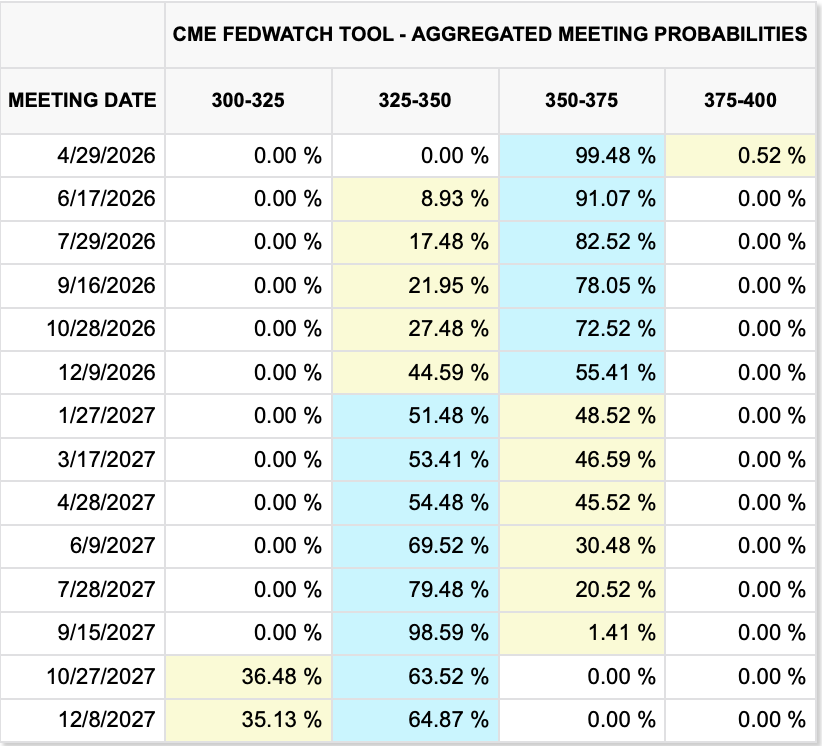
The market is pricing just a 2% probability of a rate cut on Wednesday, and about 60% of a September cut. Unless this week’s data screams recession, I am having a hard time seeing the case for the dollar to fall much further, at least in the short and medium term.  And this includes the fact that it is pretty clear President Trump would like to see a lower dollar to help US export competitiveness.

Finally, a look at commodities shows that while oil (+1.3%) is having a solid session, it remains in the middle of its trading range for the past several weeks.  Meanwhile, metals prices (Au -0.1%, Ag -0.2%, Cu -0.4%) are feeling a little strain from the dollar’s strength but generally holding up well overall.  Too, while there has historically been a strong negative correlation between the dollar and metals, given the large short dollar positions that are outstanding, it would not be hard to see both cohorts rally in sync for a while going forward.

And that’s really all for today.  The data doesn’t really start until tomorrow, and as its summer, trading desks are already lightly staffed.  Look for a quiet session today and the potential for choppiness this week if the data is away from expectations.

Good luck

Adf
Why Their Economy’s Poo

With Tokyo having conceded
On trade, focus turns to what’s needed
For Europe to sign
A deal to align
Its interests and trade unimpeded
 
But headlines about the EU
Explain they have made a breakthrough
With China on carbon
Which might be a harbin-
Ger of why their economy’s poo


Yesterday’s market activity was focused on the benefits of the fact that the US and Japan had reached a trade deal, whatever the terms, and that it seemed to set the stage for other deals to come.  Naturally, all eyes turned to the EU, where negotiations are ongoing, and the working assumption is that they, too, will wind up with a 15% tariff on all goods exported to the US, like the Japanese deal, and that non-tariff barriers would be removed reduced as well.  My sense is that is a reasonable assumption as it will clarify the process going forward and allow businesses to plan and invest accordingly.

As an aside, I am curious why there is so much angst over tariffs from the economist’s community.  Generically, most economists will explain that consumption taxes are better than income taxes as they are more efficient, and fairer in many ways.  After all, if something has a high tariff, you can avoid paying it by not buying the item (I know that’s simplistic but work with me here).  However, an income tax is unavoidable if you earn income.  In fact, that is why so many economists love the VAT.  Yet when it comes to President Trump’s tariff plans, combined with the fact that the OBBB prevented a major tax hike and cut rates for certain parts of income like tips and overtime, these same economists are up in arms over the process.  I would have thought that is exactly what most economists would want to see.  But then, I am just a poet.

Ok, back to the EU, where while the trade deadline with the US is fast approaching, EU Commission president Von der Leyen was in China where she agreed with President Xi to lead the way on CO2 reduction.  Apparently, it was the only thing on which they could agree, and it is, quite frankly, hilarious.  Whatever your views on CO2’s impact on global warming, and if there even is global warming, China is by far the largest emitter of the stuff on the planet.  As of 2023 (which apparently is the most recent data available) here is a list of the top ten countries regarding emissions.

Obviously, only one EU nation is on the list, but if you sum up the entire EU, it comes in at about 2.9 million tons.  (GtCO2e = gigatons of CO2 emitted).  Meanwhile, China continues to build out its electricity infrastructure by expanding its fleet of coal-fired generation, adding 94.5 gigawatts last year.  My point is that if you wonder why Europe’s economy has lagged the US so badly for so many years, this is a perfect encapsulation of the problem.  They are highly focused on virtue signaling for something over which they have essentially no control, and the one nation that could impact things, literally doesn’t care.  For their sake, I hope they agree trade terms.

But away from that, and all the news that DNI Tulsi Gabbard is making with document declassifications and releases, markets continue to trade as though all is well.  It is noteworthy that recent concerns over US Treasury issuance and how foreign investors would be shunning the US because of its uncontrollable debt situation have not been heard in several weeks now that Treasury auctions seem to be going along fine with plenty of foreign buyers attending and buying.  Maybe the worst case is not the default case here.

Ok, so let’s see how markets are digesting the most recent news.  More record highs in the US stock market were followed by gains throughout much of Asia last night with Japan (+1.6%) continuing to benefit from the trade deal and both China (+0.7%) and Hong Kong (+0.5%) feeling some love as talk is a deal there is also getting closer.  Elsewhere in the region, there were a mix of gainers (Singapore, Korea, Malaysia) and laggards (India, Australia, Thailand) but a little bit more positivity than negativity.  In Europe, only France (-0.25%) is lagging today with the rest of the continent (DAX +0.4%, IBEX +1.7%) generally in good shape as investors await the ECB decision, although no policy change is expected.  The UK (+0.9%) is also having a solid day despite lackluster data which seems to be all about the potential US EU trade deal.  As to US futures, at this hour (7:25) they are mixed with the DJIA (-0.4%) lagging while the other two key indices are higher by about 0.25%.

In the bond market, yields are ticking higher across the board with Treasuries (+2bps) back at 4.40%, although still below the top if its recent trading range.  In fact, I think the below chart does an excellent job of describing the fact that the bond market, despite much angst, has done nothing and is trending nowhere for the past six months.

Source: tradingeconomics.com

As to European sovereigns, yields there are higher by 4bps across the board.  The story I read tells me this is optimism that a US-EU deal will help juice the EU economy, thus driving yields higher.  I’m skeptical.

In the commodity markets, oil (+0.8%) is bouncing off its lows, allegedly also responding to the positive trade news.  I guess.  Precious metals, though, are lower (Au -0.7%, Ag -0.5%, Pt -1.25%) as either there is less fear about the future or somebody sold a lot of metals after their recent rally.  Copper (+1.0%) though, continues to benefit from the trade story as well as the underlying story regarding insufficient supply for the future electrification of the world.

Finally, the dollar is a bit firmer this morning, rising 0.2% against both the euro and pound with the yen (-0.15%) also moving in that direction.  Surprisingly, CHF (-0.3%) is the biggest mover in the G10 while ZAR (-0.4%) is the EMG laggard as it follows (leads?) precious metals lower.  This trend remains downward, although as discussed yesterday, it is possible we have seen a true break of that trend.  If Trump successfully concludes the main trade deals, I imagine that we will see significant inflows to the US and that should support the greenback.

On the data front, after the ECB announcement at 8:15, we see Initial (exp 227K) and Continuing (1960K) Claims as well as the Chicago Fed National Activity Index (-0.1) which had a terrible showing last month.  Later we get flash PMI data (Manufacturing 52.6, Services 53.0) and then New Home Sales (650K) at 10:00.

Right now, the market feels like it is embracing the potential for more trade deals to remove uncertainty.  Earnings numbers have been generally strong in the US, which continues to support the stock market, but it remains to be seen how much of the tariffs will be absorbed by corporate margins and how much will find its way into prices.  If the former, that implies earnings will start to lag.  Meanwhile, given the market is generally short dollars, and it appears the next piece of news is more likely to be dollar positive than negative, I have a feeling we could see the dollar bounce nicely in the next weeks.

Good luck

Adf
Oh So Knurled

Most pundits assure us the world
Will end, because Trump has unfurled
A tariff barrage
Which will sabotage
World trade, which is now oh so knurled
 
But so far, the data have shown
The ‘conomy, widely, has grown
Just wait, they all say
There will come a day
When our forecasts will set the tone!


Market activity remains quite dull lately and yesterday was no exception.  Equity markets are generally creeping higher, but ever so slowly.  Meanwhile, all the forecasts of President Trump’s tariff policy creating imminent economic destruction have yet to prove true.  In fact, the WSJ this morning even published an article complaining explaining that things seem to be working out so far despite the tariffs as the global economy is more resilient than most economists’ models had assumed.  (I know we are all shocked that economists’ models have proven unworthy).  While this doesn’t suit the narrative they have been pushing, or that, in fact pretty much every mainstream media outlet has been pushing, at least they have been willing to recognize that the world has not yet collapsed.

Of course, the great question is can this continue or are the doomsayers correct, and we just have not yet felt the impacts of all these (terrible) policy choices that have been made?  My experience tells me that Trump’s designs for his best-case scenario will not be achieved, but neither will the worst-case scenarios painted by the punditry.  In fact, history has shown that it takes a remarkable amount of effort to completely destroy an economy and that usually takes many years of incredibly stupid policies.  

After all, it took nearly 60 years for Argentina to destroy itself with socialist policies (see chart below from latinaer.springeropen.com), and the same was true for Venezuela.  

In fact, some might say that Europe is well on its way to destroying its economy as they implement more and more central control, but it will take decades to completely collapse things.  My point is that it would be a mistake to assume that because you do, or don’t, like a political regime, that they will change the nature of an economy so quickly that it will impact your life.  Perhaps the exception to that rule is the current situation in Argentina where in one year’s time, President Milei’s free market policies have reversed decades of stagnation.  But going the other direction takes a long time to affect.

Turning back to the developed world, we are in the midst of the summer doldrums with a limited amount of data to be released and the headlines in the US focused on either Coldplay concerts or questions about the actions of the Obama government in the last days of his administration.  None of them are financial or market related (the Powell firing story has taken a breather) and while the tariff deadline looms next week, we continue to hear that more deals are on the way.

So, let’s take a quick look at what happened overnight (not much) and how things are setting up for the US session.  Yesterday’s mixed US performance, with not much movement in either direction was followed by a lack of movement in Tokyo (-0.1%) and Australia (+0.1%) although both Hong Kong (+0.5%) and Chinese (+08%) shares managed to continue their recent rally.  But arguably, things were generally worse in Asia as Korea (-1.3%), Taiwan (-1.5%) and New Zealand (-1.0%) all lagged badly with the other regional bourses showing no life whatsoever.  This feels tariffy to me.  In Europe, the DAX (-1.0%) and CAC (-0.75%) are both under pressure this morning with tariffs the clear concern.  As of now, while Commerce Secretary Lutnick has expressed confidence a deal with Europe will be done, if not, tariffs on European goods will rise to 30% next week.  I guess that has focused the minds of investors on the continent.  As to the UK, stocks there are unchanged this morning as, recall, they have already struck a deal.  Of course, the UK has many problems on its own to prevent its economy from growing.  Meanwhile, at this hour (7:10), US futures are essentially unchanged.

In the bond market, yesterday saw yields slide across the board, with Treasury yields slipping 5bps.  This morning, though, there is a little bounce in yields with Treasuries and most European sovereigns seeing yields rise 2bps.  JGB yields, though, fell -2bps last night, as the response to the LDP losing the Upper House election was quite benign.  It seems that so far, investors are not that worried about major changes in Japan

That Japan story is confirmed by the fact that the yen is essentially unchanged today.  In fact, looking at the chart of USDJPY over the past 6 months, it is hard to get excited about much.

Source: tradingeconomics.com

Remember the talk about the carry trade being unwound?  Yeah, me neither.  Arguably, there are two potential drivers of a substantial move in USDJPY, either the Fed will have to start cutting rates, and more aggressively than the 2 cuts currently priced in for the rest of the year, or the BOJ will need to start hiking rates, and quite frankly, neither seems likely anytime soon.  As to the rest of the currency market, sleepy overstates the amount of movement we are seeing this morning.  In fact, it is hard to find a currency that has moved 0.2% in either direction.  FX traders are on summer holiday.

Finally, commodity markets are a bit softer this morning on the open with oil (-0.85%) leading the way after a slide yesterday.  While the narrative discusses concerns over trade and a reduction in demand, market insiders (notably Alyosha) continue to describe the evolution of the crack spread and the fact that the futures contract is rolling over today as being far more impactful to the price right now.  Perhaps the narrative will matter again soon, but that is not the discussion in the marketplace.  As to metals, they had a very strong day yesterday and are consolidating this morning with gold (-0.3%) and silver (-0.15%) slipping slightly, although both metals are closing in on highs.  The big picture in the precious metals space remains that there is more demand and insufficient supply.

On the data front, arguably, Chairman Powell’s speech this morning is the most widely anticipated feature of the day.  However, he is merely making opening remarks at a conference on capital framework for large banks, which while important seems unlikely to touch on monetary policy.

And that’s really it for the day.  There is no reason to believe that anything remarkable will happen but in this age of White House Bingo, we can never rule out some unforeseen event.  The talk in the FX market is that the dollar’s recent countertrend rally is failing and folks are starting to put on bearish bets.  Maybe, but it is hard to get excited in either direction right now.

Good luck

Adf
Flat On His Face

Poor Ishiba-san
Started with so much promise
Fell flat on his face


In what cannot be a major surprise in the current political zeitgeist, a fringe party that focused all its attention on inflation and immigration (where have we heard that before?) called Sanseito, captured 12 seats, enough to prevent Ishiba-san’s coalition of the LDP and Komeito from maintaining control of the Upper House of Parliament there.  The electoral loss has increased pressure on PM Ishiba with many questioning his ability to maintain his status for any extended length of time.  While he is adamant that he is going to continue in the role, and that he is fighting the good fight for Japan with respect to trade talks with the US, it appears that the population has been far more focused on the cost of living, which continues to rise, and the increase in foreign visitors in the nation.  Sanseito describe themselves as a “Japan First” party.

Consider, for a moment, the cost of living in Japan.  For the 30 years up until 2022, as you can see from the chart below taken from FRED data, the average annual CPI was 0.44%.  

In fact, the imperative for Japanese monetary policy was to end the decades of deflation as it was deemed a tremendous drag on the economy.  This was the genesis of their Negative Interest rate policy as well as their massive QE program, which went far beyond JGBs into equities and ETFs.  Now, while the economists and politicians hated deflation, it wasn’t such a bad thing for the folks who lived there.  Think of your life if prices for stuff that you consume rose less than 1% a year for 20-30 years.  

But now, under the guise of, be careful what you wish for, you just may get it, the Japanese government has been successful in raising the nation’s inflation rate to their 2.0% target and beyond and have shown no ability to halt the process.  After all, the Japanese overnight rate remains at 0.50% leaving real rates significantly negative, which is no way to fight inflation.   So, while Ishiba-san explained to the electorate that he was defending Japan’s pride and industry, the voters said, we want prices to stop rising.  

The biggest problem for Japan is that they now have less than 2 weeks to conclude a trade deal with the US based on the latest timeline, and their government is weak with no mandate on trade.  It is not impossible that Japan caves on most issues because if they fight, given the government’s current status, it could be a lot worse.

Now, Friday, when I discussed this possibility, I made that case that if the LDP lost the Upper House majority, it would be a distinct negative for both the yen and the JGB market.  Well, as you can see in the chart below, the first call has thus far been wrong with the USDJPY falling a full yen right away, and after an initial bounce, it has resumed that downtrend.  Like the dollar’s strength when the GFC exploded in 2008, despite the fact that the US was the epicenter of the problem, it appears that Japanese investors are bringing more money home as concern over the future increases.  Over time, I expect that the yen is likely to weaken, but I guess not yet.

Source: tradingeconomics.com

As to JGBs, Japan was on holiday last night, celebrating Sea Day, so there was no market in Tokyo.  While there is a JGB futures market, there was very little activity, and we will need to wait until this evening to learn their fate. 

The deadline for trade talks is looming
And Europe, responses, are grooming
If talks fall apart
And cut to the heart
Of what people there are consuming

The other story that is getting discussed this morning is the fast-approaching trade talk deadline of August 1st.  The EU has been actively negotiating to achieve a deal and there appears to be a decent chance that something will be concluded.  However, this morning’s stories are all about how Europe is preparing a dramatic response (“if they want war, they’ll get war” according to German Chancellor Merz) if they cannot reach a deal and the US imposes much higher tariffs on EU exports.  It is actually quite amusing to see the framing of Europe as the righteous entity being unfairly treated and forced to create a response to the American bullies.  But, that is the message from the WSJ and Bloomberg, and I’m sure from the other news sources that I don’t follow.

Every time I consider the trade situation, and the speed with which President Trump is working to conclude deals, I am amazed at how quickly this is all coming about.  Consider that the Doha Development Round of trade talks was launched in 2001 and IS STILL ONGOING with no resolution yet.  The previous framework, the Uruguay Round took 8 years to complete.  Thus, perhaps the question should be, why have trade talks taken so long in the past.  Much has been made of how President Trump blinked when the original 90-day window closed and so extended the timeline for a few weeks.  Apparently, the use of more sticks and fewer carrots is what has been needed to get these things moving along.  Otherwise, trade negotiators had cushy jobs with no accountability and no responsibility, so no incentive to come to an agreement.

Many analysts have explained that the US will suffer from these deals as inflation will rise because of tariffs and growth will slow.  Of course, these were the same analysts who explained that tariffs by the US would result in other nations’ currencies weakening to offset the tariff.  Once again, I would highlight that old analyst models are not fit for purpose in the current world situation.  I have no idea if there will be a successful conclusion of these deals, but I won’t bet against that outcome.  In the end, as I have repeatedly explained, the US has been the consumer of last resort for nations around the world, and loss of access to the US market is a major problem for everybody else.  That is a very large incentive to agree to deals.

Ok, enough, let’s see how things look this morning.  Tokyo was closed last night but we saw gains in Hong Kong (+0.7%) and China (+0.7%) as the PBOC maintained its policy ease supporting the economy.  In fact, Chinese money supply has been growing recently which should help the economy there, although it is still struggling a bit.  The rest of the region was a mixed bag with some gainers (Korea, India, Indonesia) and some laggards (Taiwan, Australia, Malaysia).  In Europe this morning, equities are under some pressure with the CAC (-0.5%) the laggard, although all bourses are lower.  This appears to be trade related with some concerns things won’t work out.  As to US futures, at this hour (7:05), they are pointing higher by about 0.25%.

In the bond market, yields are falling everywhere with Treasuries (-4bps) lagging the continent where European sovereigns have all seen 10-year yields decline by -6bps to -7bps.  It seems that there is growing hope the ECB will cut rates this Thursday, although according to the ECB’s own Watch Tool, the probability is just 2.7% of that happening.  

In the commodity space, oil is unchanged this morning as the variety of stories around leave no clear directional driver.  However, remember, it has bounced off recent lows despite production increases, and if confidence in economic growth is returning, which it seems to be, then I suspect the demand story will improve.  Meanwhile, metals markets (Au +0.65%, Ag +0.89%, Cu +1.1%, Pt +1.2%) are all having a good morning as a combination of dollar weakness and better economic sentiment are supporting the space.

As to the dollar, it is broadly lower against all its major counterparties apart from NOK (-0.2%) and INR (-0.2%) as NY walks in the door.  While the yen has been the biggest mover, the rest of the world has seen gains on the order of 0.35% or so uniformly.  The INR story apparently revolves around the trade talks with the US and concerns they may not be completed on time, but looking at the krone, after a strong rally last week following oil’s recovery, this morning looks like a bit of profit-taking there.

On the data front, there is very little coming out this week amid the summer holidays.

TodayLeading Indicators-0.2%
WednesdayExisting Home Sales4.01M
ThursdayECB Rate Decision2.00% (no change)
 Initial Claims228K
 Continuing Claims1952K
 Flash PMI Manufacturing52.5
 Flash PMI Services53.0
 New Home Sales650K
FridayDurable Goods-10.5%
 -ex Transport0.1%

Source: tradingeconomics.com

In addition to this limited calendar, it appears the FOMC is on vacation with only two speakers, Chairman Powell tomorrow morning and Governor Bowman tomorrow afternoon.  It is hard to get too excited about much in the way of market movement today.  As has been the case for the past six months, we are all awaiting the next White House Bingo call, as that is what is driving things for now.

Good luck

Adf
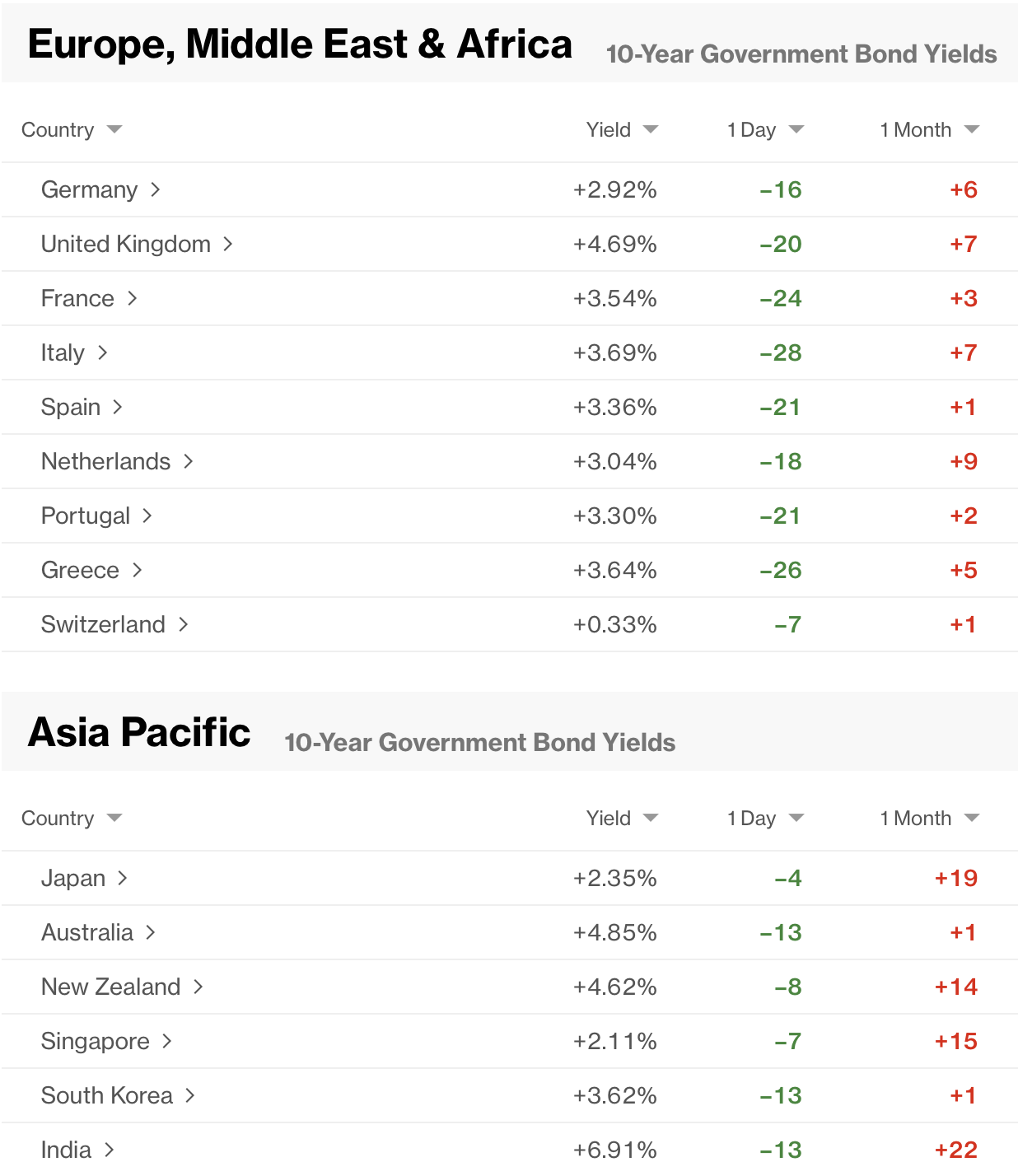
White House Bingo

At this point, investors don’t care
‘Bout tariffs and if they are there
The hype train is rolling
With pundits extolling
Nvidia’s four trillion share
 
So, Canada’s out in the cold
As Loonies, this morning, are sold
But energy’s boring
When folks are adoring
AI or, if bankers, then gold


The tariff machine has been switched back on with yesterday’s announcement that the US will now apply 35% tariffs to all imports from Canada that do not comply with the USMCA.  These tariffs are due to go into effect on August 1st.  It appears this is an effort by Mr Trump to push the progress of trade talks forward as they are not moving at a pace with which he is satisfied.  The Canadian response, by PM Carney, was to indicate they will redouble their efforts to get things done on a timely basis.

I understand that there are many who dislike the President’s bullying tactics as they are completely different than any previous president (or world leader really) and fall far afield from what had been previously accepted and expected in “polite” society.  Diplomats are horrified that he is forcing decisions to be made, something that has been anathema to the diplomatic community since the beginning of time.  But Mr Trump has his agenda firmly in mind and is very keen to use all the power he can to achieve it.  It turns out, the US has a great deal of power beyond its military might.

But for our purposes, the market response is the place we need to look.  First, it can be no surprise that the Canadian dollar quickly declined -0.5% on the announcement as that is the textbook response to tariffs, the country affected sees their currency weaken.  As to equity markets, as there are no TSX futures, we cannot tell exactly how stocks in Canada will be impacted but based on the fact that virtually every market is lower this morning, I expect to see weakness there as well.  in fact, a look at this listing of equity futures markets from 6:30 this morning shows exactly what is happening.  You will note that the Toronto market still reflects yesterday, but pretty much every other nation is feeling the heat of a new potential wave of tariffs from the US.

Source: tradingeconomics.com

I continue to read that European nations are getting closer to agreeing a deal with the US, something that has never occurred before and I suspect that there are a number of leaders in the EU that are growing nervous about the situation.  Again, the world was not anticipating the US to wield its power in such a brash and open manner, and many governing theories still need to be rewritten to address the new reality.

But yesterday’s story was all about Nvidia becoming the first $4 trillion market cap company, a remarkable achievement.  It seems Nvidia’s market cap is greater than the entire German stock market.  

For the longest time, I was convinced that the market concentration of the Mag7, which now account for just over 34% of the S&P 500, would ultimately lead to their demise and a major correction.  However, it is becoming harder to make the case that concentration alone is going to be the problem.  

Rather, I believe any correction will now come from a broader economic result, arguably the long forecast recession when it finally arrives.  If you recall, on Sunday I wrote about how the relative gain in corporate profits vs. labor has been a key driver in the bifurcation in the country.  I also strongly believe that President Trump is very serious about changing that situation.  The obvious solution is to reduce corporate profits.  One way to do that is to impose tariffs where companies wind up reducing their margins to maintain sales volumes. If inflation does not rise (and it has not done so yet) that is a step in the President’s direction of choice.  I have no idea whether this will work, and arguably neither does anybody else.  Virtually, every economic model is no longer viable as Mr Trump has changed the rules so completely that the underlying assumptions are almost certainly incorrect.  But remember this chart, if by the end of his term in 2028, the two lines have begun to converge more clearly, he will have changed a multi-decade trend and likely to the detriment of equity markets.

Ok, enough philosophizing, let’s see how other markets beyond equities have behaved overnight.  Bond markets have been under modest pressure with Treasury yields ticking higher by 3bps and all European sovereign yields higher by 1bp this morning.  We heard from Bundesbank, and ECB, member Isabel Schnabel that it was unlikely there would be further rate cuts from the ECB absent a major decline in Eurozone growth. Inflation has returned to their target, and she indicated her belief that current rates there were modestly accommodative, i.e. below neutral.  JGB yields have returned to 1.5% after having spent the past month below that level.  

Recall back in March and April when yields in Japan moved higher quite quickly with the 10yr touching 1.6% and the longer bonds trading above 3.0% to new all-time highs.   That panic subsided but it appears that yields are on the move again as the BOJ discusses selling its equity ETF’s in an effort to reduce their balance sheet further.  Interestingly, the yen (-0.4%) is under pressure this morning and trading back above 147 for the first time in two months.  Here’s what we know about the yen; the carry trade is still in place in significant amounts, inflation is running hot, and the BOJ clearly is uncomfortable raising rates further to address that situation.  My sense is that the yen could have further to weaken, especially if tariffs on Japanese exports are increased as per the recent letter from Mr Trump.  

Continuing with currencies, the dollar is having a good day all around, with only CNY (+0.15%) bucking the trend.  The pound (-0.45%) is under pressure after weaker than expected May GDP figures were released this morning (-0.1% vs. +0.1% expected).  We’re also seeing weakness in MXN (-0.5%) and ZAR (-0.7%) even though precious metals prices are rising this morning.  Here, too, we must keep in mind that many of the old relationships have broken down.

Finally, in the commodity space, gold (+0.65%) is back at its pivot level, taking silver (+1.4%) and platinum (+1.9%) along for the ride although copper (-2.2%) remains subject to the vagaries of exactly what those mooted 50% tariffs are going to cover.  Oil (+1.0%) which sold off yesterday after news that Saudi Arabia had been producing more than its OPEC quota, is rebounding this morning with all eyes on President Trump’s upcoming announcement regarding potential sanctions on Russia given President Putin’s unwillingness to talk peace.

And that’s all there is.  There is neither data nor scheduled Fed speakers on the calendar today, so we all await the next pronouncement from the White House.  Word is that Presidents Trump and Xi will soon be sitting down for a discussion with the opportunity to get more clarity on that situation a potential outcome.  However, White House bingo remains the game of the day, and my card has not been a winner lately.  How about yours?

Good luck and good weekend

Adf

Widely Abhorred

Most traders this summer are bored
Thus, markets are being ignored
Attention, instead
Is on a man, dead
For years, but still widely abhorred
 
So, even though President Trump
More tariffs on copper did pump
The outrage is such
That nothing else much
Is noticed, not gains nor a slump


This is not a political discussion piece but the only story getting any press today, overwhelming the terrible tragedy in Texas from the weekend, is the closing of the Jeffrey Epstein case by the Trump administration.  I will not go into the details here as they are not relevant to our focus, but it certainly has many people irate, although I imagine there are a small number who are relieved.  On the surface, though, it certainly doesn’t seem to be in accord with Trump’s remarkable transparency in all other facets of his governance.  I will leave it at that.

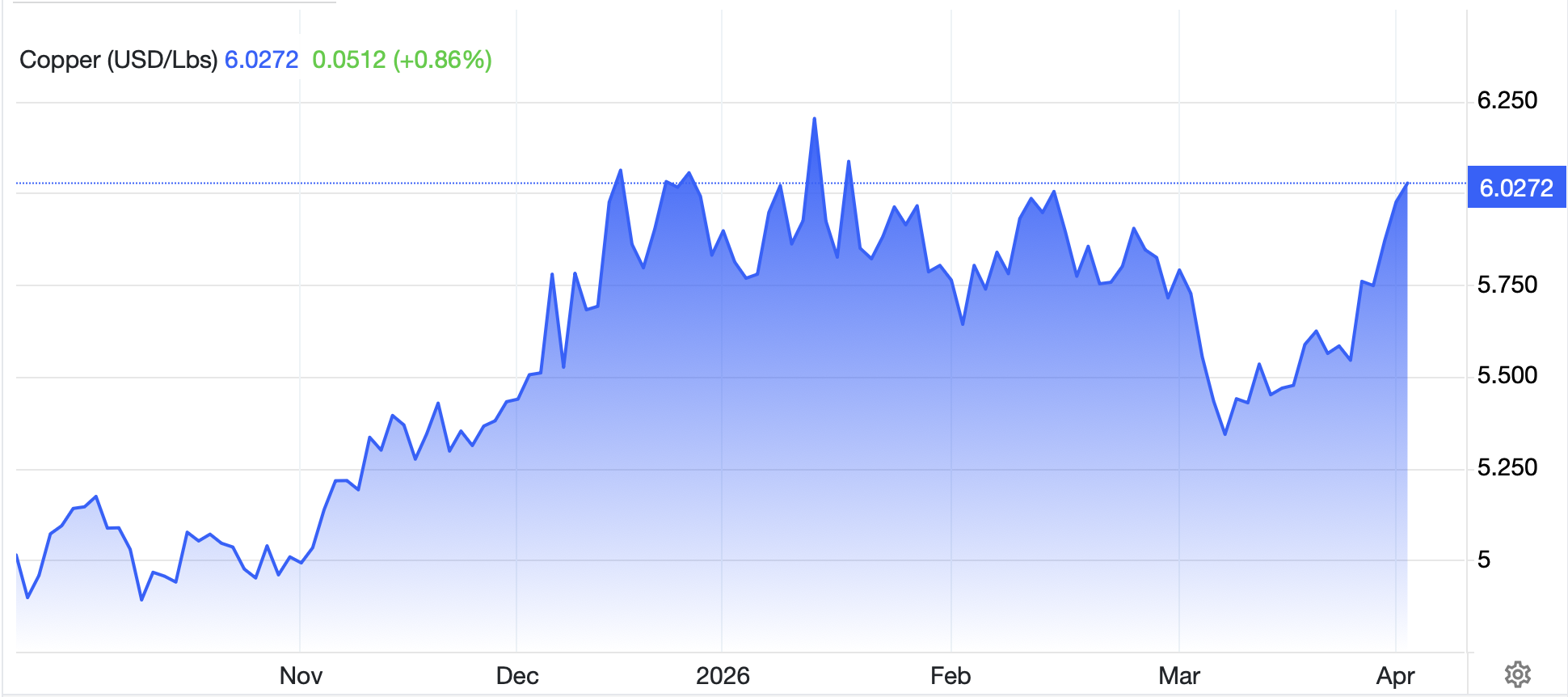
Regarding market issues, while there continue to be ongoing tariff negotiations with numerous countries, nothing new has been completed in that realm in the past several days.  The one new thing is copper, where the president mooted 50% tariffs on the red metal yesterday during a wide-ranging press conference.  See if you can determine when he mentioned this.

Source: tradingeconomics.com

The result is that copper is now trading at new all-time highs, although in fairness, this morning it has slipped back -2.6% from the peak it reached yesterday.  This move has also weighed on gold (-0.3%) and silver (-0.5%), although both those metals remain in longer term uptrends as well.

Away from those stories, perhaps the biggest news is that the Supreme Court overturned a lower court injunction against a Trump executive order from February that was designed to reduce the size of the government.  His cabinet secretaries now have the ability to reduce headcounts as they deem appropriate with estimates of several hundred thousand expected to be let go.  (If I recall correctly, immediately upon entering office Trump offered a buyout for government employees with a generous severance.  I suspect those laid off will not receive the same benefits now).  

I make the connection here as a reduced headcount seems likely to help reduce government spending at the margin, something that has been a key focus of everyone concerned about both inflation and the general growth of government.  Also consider, given the remarkable inefficiency of government processes, any other job these laid off employees take will almost certainly add more value to the economy than they are currently adding.

Otherwise, I’ve got nothing.  Things are just not very interesting right now.  So, let’s recap the overnight session.  Yesterday’s US session was the epitome of dull, with the DJIA the worst performer at just -0.4% and the other two essentially unchanged.  Asian markets saw a modest gain in Tokyo (+0.3%) as investors get used to the new tariffs.  Elsewhere in the region there was no consistency at all with gainers (Korea, Taiwan, Indonesia and Singapore) and laggards (China, Hong Kong, India and Australia).  In other words, there is no pattern here to note.  In Europe, however, gains are universal (DAX +1.0%, CAC +1.15%, IBEX +0.85%) as it appears trade talks are getting close to some sort of agreement.  Again, given the amount of time it has historically taken to reach agreement, the speed with which things are occurring right now is remarkable.  I guess sometimes a stick is needed rather than a carrot.  Lastly in the equity world, US futures at this hour (7:10) are slightly higher, 0.2% or so.

In the bond market, yields, which I pointed out yesterday have risen 20bps in the past week, are on hold this morning with Treasury yields (+1bp) edging higher ahead of today’s 10-year auction.  In Europe, sovereign yields are lower by -1bp across the board which appears to be a simple trading reaction to the recent rise.  JGB yields are also edged higher by 1bp overnight as Japan closes in on its election and comments from a BOJ member indicated they are not likely to hike rates again until March!  Remember, inflation in Japan is 3.6%!

Oil prices continue to edge higher, up 0.5% this morning despite the increased OPEC+ production and the alleged global slowdown in economic activity.  Something about this price action is out of kilter with the narrative and either we are going to see production numbers decline dramatically or the economic data is going to start to show that things are much better than the bears would have you believe.

Finally, the dollar is slightly firmer this morning, +0.2% on the DXY, but continues to trade well below its 50-day moving average and bump up against a very clear trendline lower as per the picture below.

Source: tradingeconomics.com

I am no technician as is obvious by my efforts on the chart, but the general thesis remains intact.  Right now, lower seems to be the direction of least resistance although positioning in the market remains quite net short dollars.  But looking at individual currencies this morning, KRW (-0.5%) is the biggest mover, as concerns over more tariffs on semiconductors undermined investor sentiment there, but other than that, you are hard pressed to find a currency move of 0.2% in either direction.  In essence, like every other market, there is just nothing going on right now.

On the data front, today brings only the EIA oil inventory data where a small draw is expected and the FOMC Minutes at 2:00, although my take is they are pretty stale at this point.  Yesterday saw a surprising decline in Consumer Inflation expectations to 3.0%, despite all the tariff talk, and a decline in Consumer Credit to $5.1B, not a good sign for spending.

As per the above chart, the dollar’s trend remains lower for now.  We will need to see some major changes in policy to alter that trajectory I think, and for now, that seems unlikely.  Everything continues to revolve around what the President says and where he focuses.  If you can anticipate that, good for you.  But this poet hasn’t a clue on the next target.  Stay hedged and nimble.

Good luck

Adf
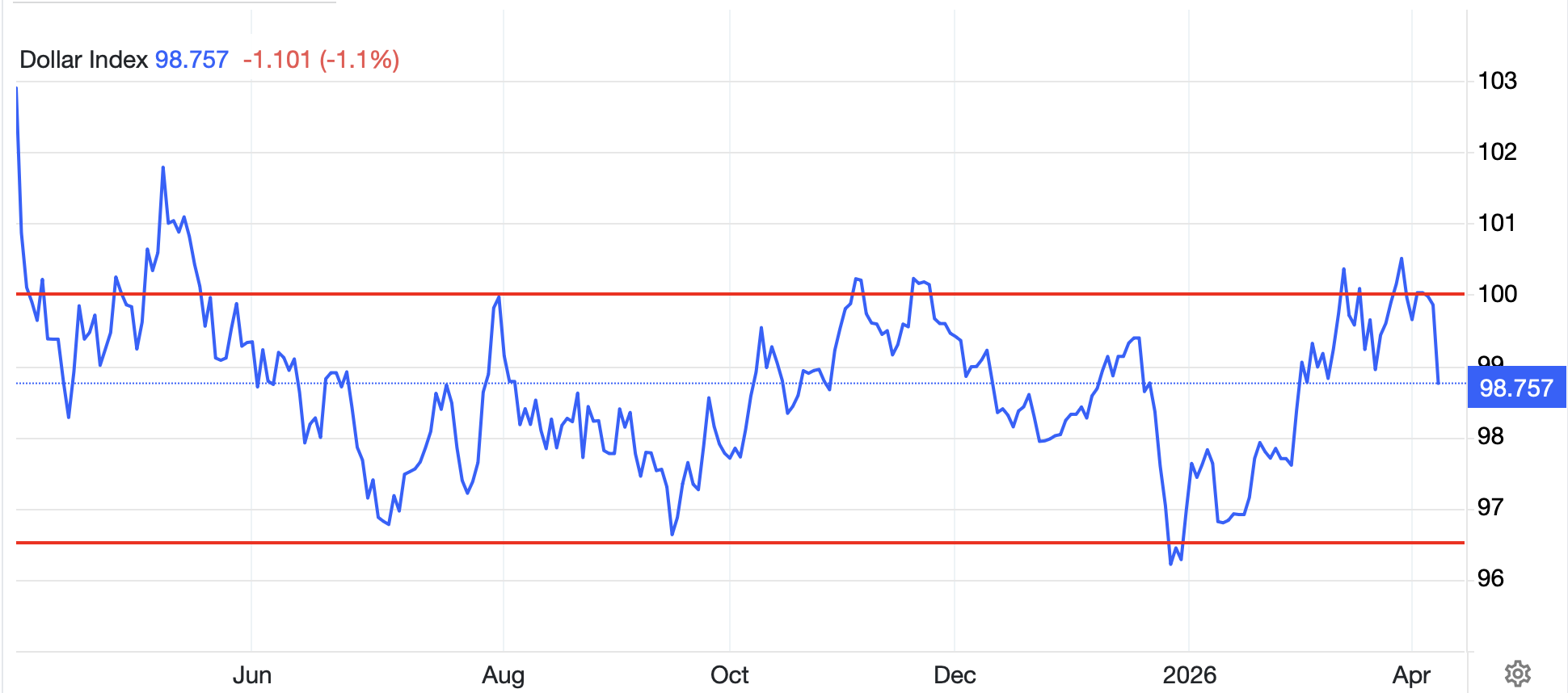
A Reprieve

Some nations have gained a reprieve
About a month left to achieve
A deal to prevent
The extra percent
Of tariffs that Trump can conceive


The news cycle continues to be bereft of new stories regarding finance and markets as there is continued focus on the tragedy in Texas after the flash floods that were responsible for over 100 deaths.  But in our little corner of the world, tariff redux is all we have.  So, to rehash, today marks 90 days since President Trump delayed the imposition of his Liberation Day tariffs back in April with the idea of negotiating many new trade deals.  Thus far, only two have been agreed, the UK and Vietnam, while there has clearly been progress made on several key deals including Japan, South Korea, the EU, India and Australia.  As such, the president has delayed the imposition of these tariffs now to August 1st, but we shall see what happens then.

It is worth noting that trade negotiations historically have taken a very long time, years if not decades, as evidenced by the fact that any time an agreement is reached, it is met with dramatic fanfare on both sides of the deal.  Consider, for a moment, that the EU and MERCOSUR finally agreed terms in 2024, after 25 years of negotiations, although the deal has not yet been ratified by both sides.  With this in mind, it is remarkable that as much ground has been covered in this short period of time as it has.

However, if I understand correctly, many other nations will be subject to tariffs starting today.  Of course, along with these tariffs are the resumed calls for a catastrophic outcome for the US with inflation now set to advance sharply while growth stagnates.  At least the naysayers are consistent.

Away from this story, though, the market is the very picture of the summer doldrums.  After all, nothing else has really changed.  The BBB solved the debt ceiling issue, with another $5 trillion added to the mix, so funding the government should not be a problem for several years at least.  Of course, this means the monetary hawks will re-emerge and complain that the government is spending too much (which it clearly is) and that the economy will collapse under the weight of all that debt.  After all, one needs a calamity to get one’s views aired these days, and doomporn is all the rage with President Trump in office.

So, I won’t waste any more time before heading into the market recap.  Yesterday’s US equity decline, catalyzed by the display of letters written to Japan and South Korea about the imposition of 25% tariffs, was halted after the delay was announced, but the markets still closed lower.  Overnight, Asian markets managed to rally a bit with the Nikkei (+0.3%) the laggard while Korea (+1.8%) really benefitted from that delay.  Meanwhile, China (+0.8%) and Hong Kong (+1.1%) were also solid as was most of the region although Thailand (-0.7%) which did not receive a reprieve, did suffer.

In Europe, the picture is somewhat mixed with the DAX (+0.45%) rising after a slightly wider than expected trade surplus was reported this morning while the CAC (-0.1%) has been under modest pressure after the French trade deficit rose slightly.  But the bulk of the market here is modestly higher on the reprieve concept, although only about 0.2%.  As to US futures, at this hour (7:05), they are basically unchanged to slightly higher.

In the bond market, though, yields continue to rise around the world this morning as it appears investors are growing somewhat concerned that all the government spending that is being enacted around the world is becoming a concern.  Treasury yields have risen 3bps and European sovereigns are higher by between 4bps and 5bps.  JGB yields, too, are higher by 4bps and in Australia, an 8bp rise was seen after the RBA failed to cut their base rate last night as widely expected.  Since the beginning of the month, 10-year Treasury yields have risen by more than 20 basis points (as per the chart below) a sign that there may be concern over excess supply…or that the BBB is going to encourage faster growth.  I’m not willing to opine yet.

Source: tradingeconomics.com

In the commodity markets, oil (-0.3%) has been trading in a $4/bbl range since the end of the 12-Day War and the US destruction of Iranian nuclear facilities removed the war premium from the market.  In truth, this is surprising given the ongoing increases in production from OPEC+ and the widespread belief that the economy is suffering and heading into a recession.  But it is difficult to look at the below chart and be confident of the next move in either direction.

Source: tradingeconomics.com

Meanwhile, metals markets this morning show gold (-0.35%) giving back some of its late day gains yesterday while silver and copper remain little changed.  Again, range trading defines the price action as gold has basically gone nowhere since late April.

Source: tradingeconomics.com

Finally, the dollar is mixed this morning with AUD (+0.6%) the leading gainer after the RBA no-action outcome, although ZAR (+0.6%) has gained a similar amount which appears to have been driven by Trump rescinding his threat to add a 10% additional tariff on all BRICS nations (the S is South Africa) that seek to avoid using the dollar for trade.  On the other side of the coin, the pound (-0.3%) and yen (-0.4%) are both slipping this morning with the former suffering from domestic finance problems as the Starmer government continues to flail in its efforts to pay for its promised spending.  In Japan, the Upper House elections, which are to be held July 20th, are a problem for PM Ishiba and his minority government.  One of the key issues is despite the fact that rice prices there have risen more than 100% in the past year, and the US is keen to export rice to Japan to help mitigate the problem, the farmers bloc in Japanese politics has outsized influence and is vehemently against the proposal.  If the government falls due to election losses, agreeing a trade deal will be impossible.  Perhaps this time, the yen will weaken in the wake of tariffs.  (As an aside, are any of you old enough to remember the death of the carry trade and how the yen was going to explode higher?  I seem to recall that was a strong narrative just a few months ago, but it is certainly not evident now.)

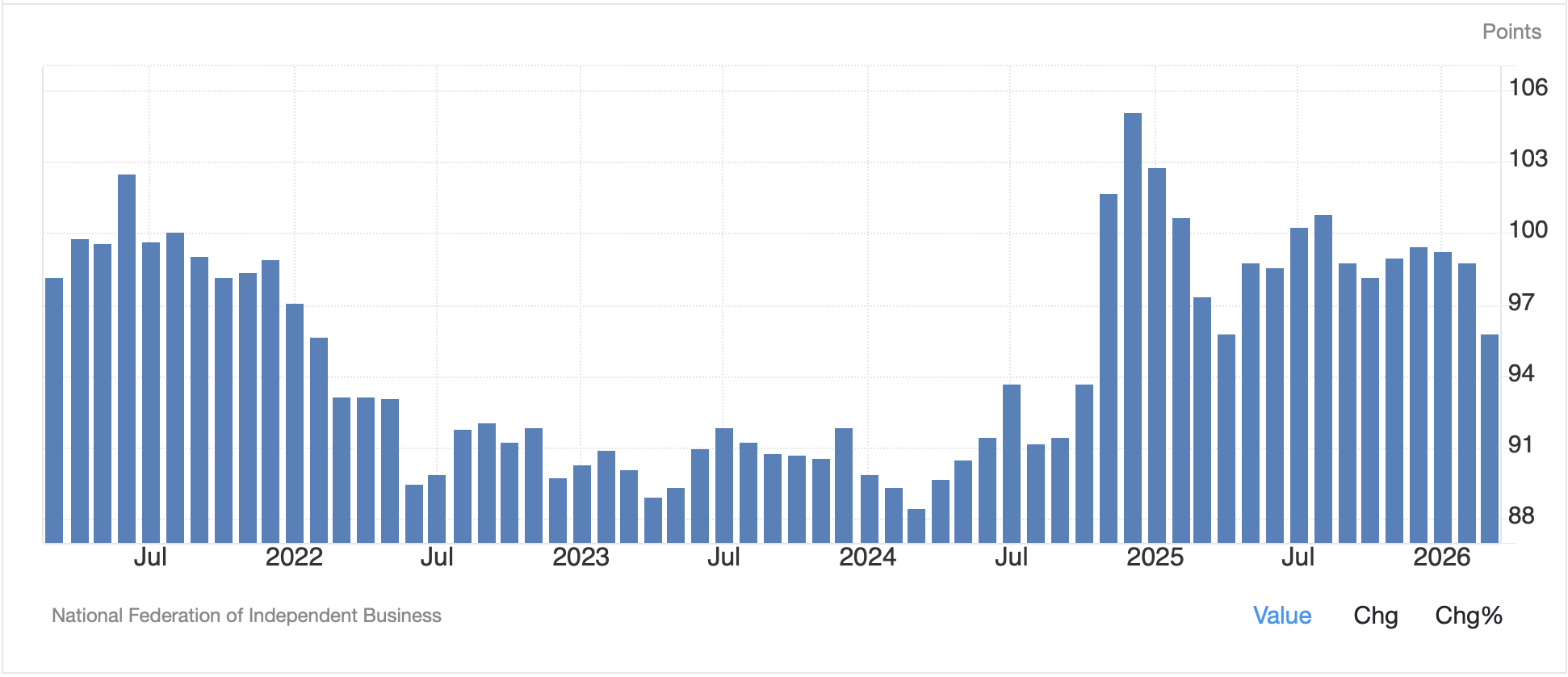
On the data front, the NFIB Survey was released this morning at 98.6, a tick lower than expected and 2 ticks lower than last month, but basically little changed.  I don’t think it provides much new information.  Later this afternoon we see Consumer Credit (exp $11.0B), potentially a harbinger of future spending outcomes.  But really, that’s it.

Headline bingo continues to drive markets with the narratives locked in place.  The dollar’s trend is clearly lower, but it remains to be seen if the oft-predicted collapse is on the cards.  Personally, while a bit further weakness seems reasonable, getting short here, with the market already significantly positioned that way, does not feel like the right trade.

Good luck

Adf
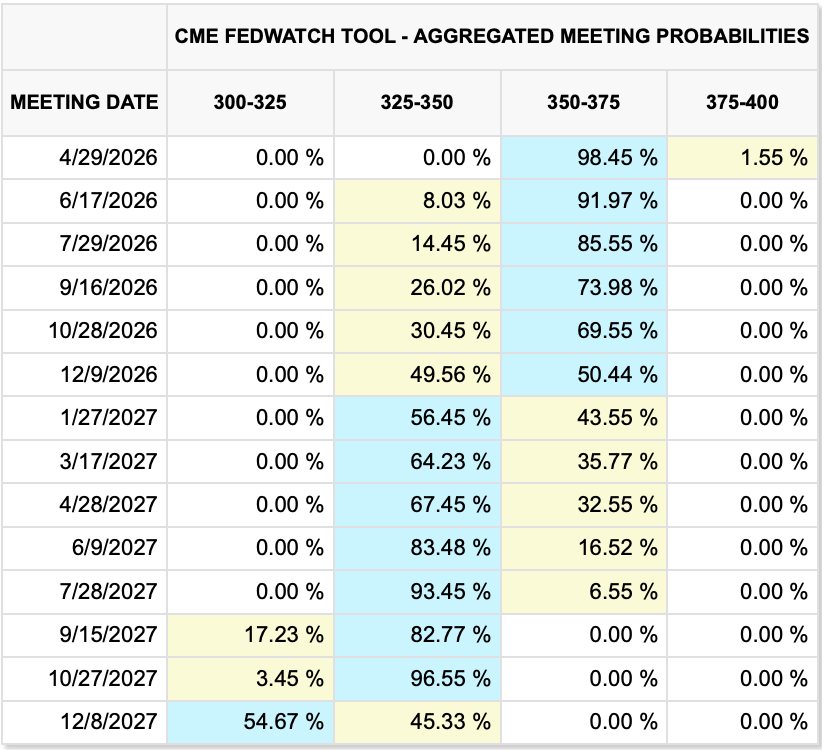
Recession Repression

Though many conclude that recession
Is coming, this poet’s impression
Cannot overcome
A key rule of thumb
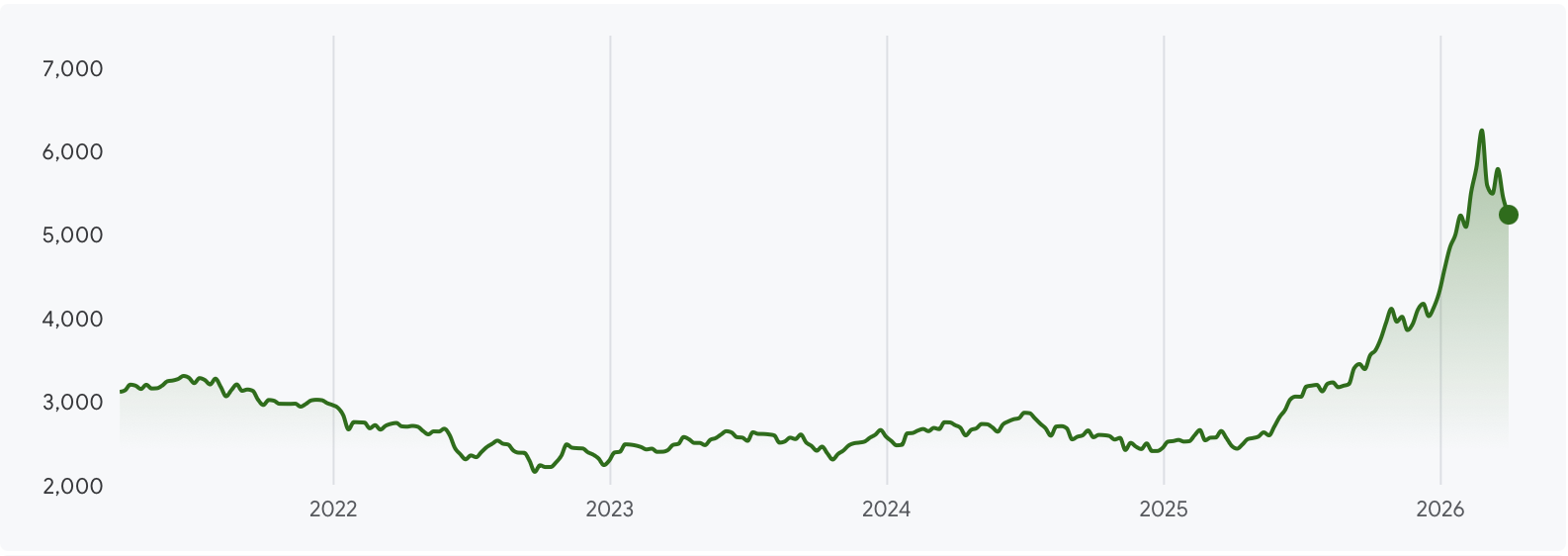
More jobs mean recession repression
 
As well, on the fourth of July
The naysayers all went awry
The BBB’s law
As Trump oversaw
Parades and a massive fly-by


I will be brief this morning.  First, Thursday’s NFP report was much stronger than expected, with 147K new jobs and the Unemployment Rate falling to 4.1%.  This is clearly not pointing in a recessionary direction, although as would be expected by all those who have made that call, there was much analysis about the underlying makeup of the jobs report, with more government hires and less private sector ones.  And I agree, I would much rather see private sector hiring, but I don’t recall as much angst in the previous administration when they hired into the government extremely rapidly.  It is difficult for me to look at the below chart of government hiring over the past five years and conclude that this administration is being anywhere nearly as profligate.

Source: tradingeconomics.com

Second, despite all the naysaying by the punditry, President Trump got his Big, Beautiful Bill through Congress and he was able to sign it on his schedule, July 4th.  Whether you love Trump or hate him, you must admit that he is a remarkable political force, greater than any other president I can remember, although Mr Reagan was certainly able to accomplish many things with a very different style.  And perhaps, that is the issue, Trump’s style is unique in our lifetimes as a president, although I understand that throughout our history, there have been some presidents with a similarly brash manner, I guess Andrew Jackson is the best known.  And it is that style, I would say that leads to the Trump Derangement Syndrome, although his attack on the Washington elite is also a key driver there.

Thus far, the articles I have read about the legislation all focus on how many people are going to die because Medicaid is requiring able-bodied adults to work, volunteer or go to school 20 hours/week in order to remain eligible.  It would be helpful if these ‘news’ sources could keep a running tally so we can all see the results.  Given the law simply sets priorities, and not actual appropriations yet, my take is all this death and destruction may take a few months yet to materialize.

But after those two stories, there is a growing focus on the upcoming Tariff deadline this Wednesday, with a mix of views.  There is both a growing concern that the original level of tariffs is going to be put back in place, and that will disrupt global commerce, and there is a story gaining traction that the deadline will be delayed again.  The administration hinted there would be some notable deal signings this week, so we shall see.

As that’s all there is, let’s look at markets overnight.  Thursday’s US rally in the wake of the NFP data is ancient history.  Overnight in Asia, the major markets (Japan -0.6%, Hang Seng -0.1%, CSI 300 -0.4%) were under pressure but the rest of the region was mixed with some gainers (Korea, Indonesia, Singapore) and some laggards (Taiwan, Malaysia, Australia) although none of the movement was very large, 0.5% or less in either direction.  In Europe this morning, the DAX (+0.65%) is far and away the leader after a stronger than expected IP reading of +1.2%.  However, the rest of the continent and the UK are all tantamount to unchanged in the session.  US futures at this hour (7:00) are pointing slightly lower, about -0.025%.

In the bond market, Treasury yields which rallied 5bps on Thursday after the data are higher by one more basis point this morning.  European sovereign yields are all higher this morning as well, between 2bps and 3bps, as concerns over the timing of tariffs has investors cautious.  The rumors are solid progress has been made in these negotiations.

In the commodity space, oil (+0.7%) is higher this morning which is a bit of a surprise given that OPEC+ raised their production quotas by a more than expected 548K barrels/day at their meeting this weekend.  At this point, they are well on their way to eliminating those production cuts completely.  I guess demand must be real despite the recession calls.  Metals markets, though, are all lower this morning (Au -1.0%, Ag -2.0%, Cu -0.6%) as hopes for trade deals has reduced some haven demand.  Of course, copper’s decline doesn’t jibe with oil’s rally on a demand note, but the movements have not been that large, so it is probably just random fluctuations.

Finally, the dollar is stronger this morning, which is also weighing on the metals markets.  ZAR (-1.1%) is the biggest loser overnight although NZD (-0.9%) and AUD (-0.7%) are doing their best to catch up.  But the euro (-0.35%) and pound (-0.3%) are both under pressure as is the yen (-0.7%) and CAD (-0.5%) and MXN (-0.5%). In other words, the dollar’s strength is quite broad-based.  On this note, I couldn’t help but chuckle at this article in Bloomberg, Misfiring Models Leave Wall Street Currency Traders Flying Blind, which describes how all the old models no longer work in the current world.  This is a theme I have harped on for a while, mostly with the Fed, but also with the punditry in general.  The world today is a different place, and I might ascribe the biggest difference to the fact that for 20+ years, inflation had fallen to 2% or lower in most of the western world and markets behaved accordingly.  But now, inflation is higher, and those relationships no longer hold.

On the data front, this may be the least active week I have ever seen.

TuesdayNFIB Small Biz Optimism98.7
 Consumer Credit$10.5B
WednesdayFOMC Minutes 
ThursdayInitial Claims235K
 Continuing Claims1980K

Source: tradingeconomics.com

There are only 3 Fed speakers as well so pretty much, Washington is on vacation this week.  It is very hard to get excited about much right now.  We will all need to see the outcomes of the trade negotiations and which countries will see tariffs applied or not.  I have no forecasts for any of that.  In the meantime, I think the fact that implied volatilities are relatively low across most asset classes offers the opportunity for hedgers to protect themselves at reasonable prices.

Good luck

Adf