Ere Recession Arose

There once was a Fed Chair named Jay
Who fought ‘gainst the prez every day
He tried to explain
That tariffs brought pain
So higher rates needed to stay
 
But data turned out to expose
The job market, which had no clothes
So, he and his friends
Were forced, in the end
To cut ere recession arose


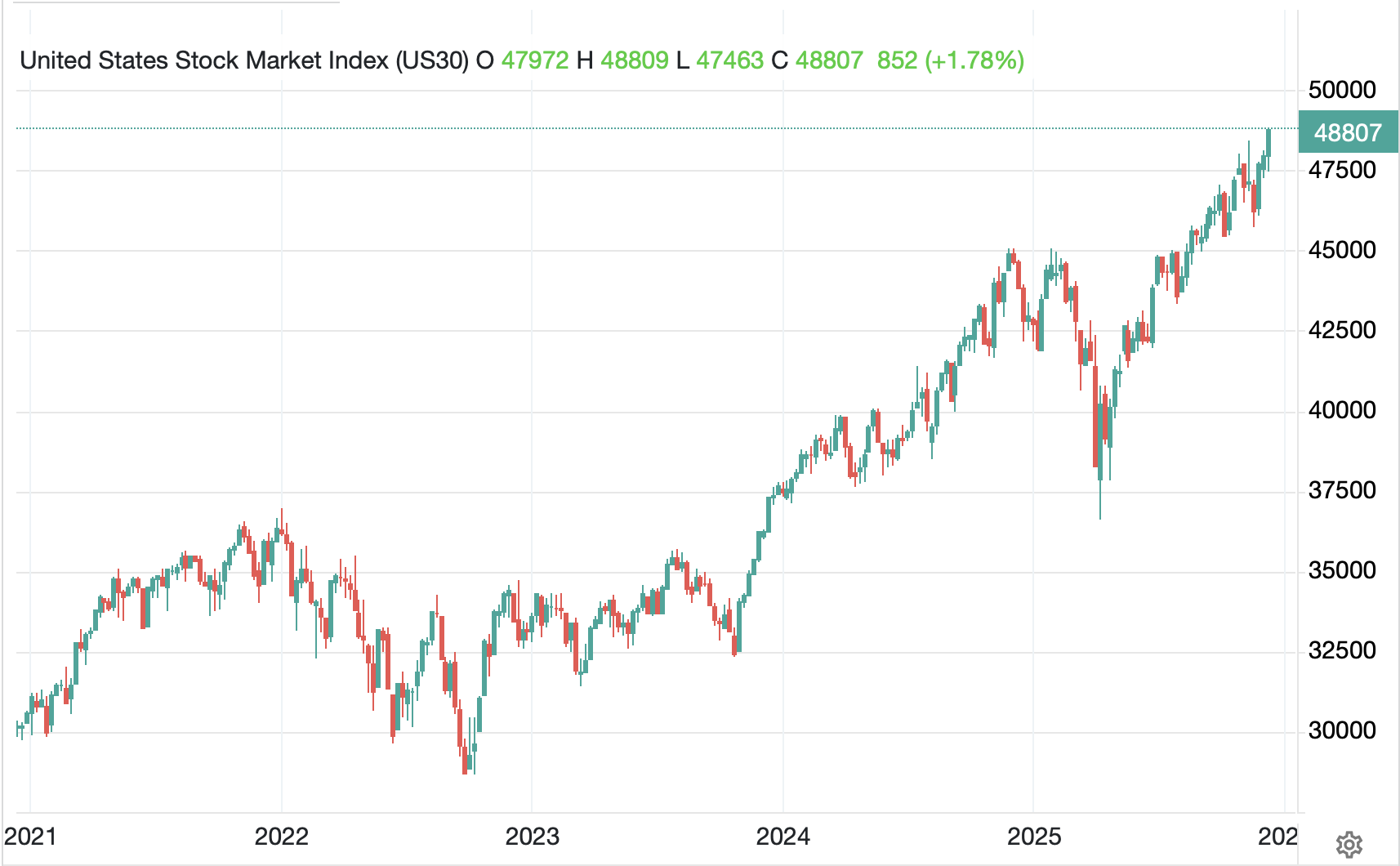
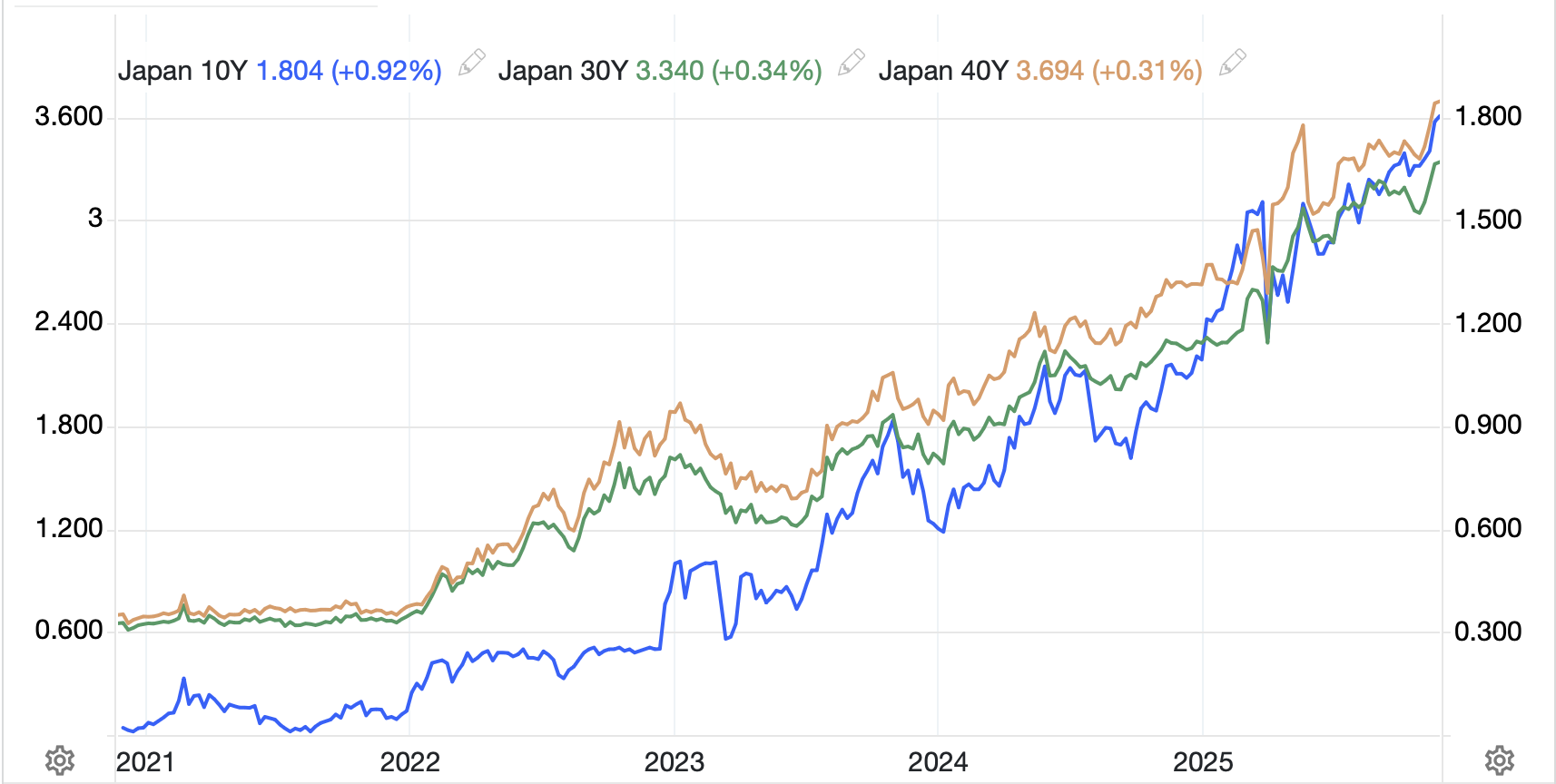
The Fed cut 25bps yesterday, as widely expected (although I went out on a limb and called for 50bps) and markets, after all was said and done by Chair Powell, saw equities mixed with the DJIA rising 0.6% while the S&P 500 and NASDAQ both slipped slightly.  Treasury yields rose 5bps which felt much more like some profit taking after a month-long rally, than the beginning of a new trend as per the chart below.

Source: tradingeconomics.com

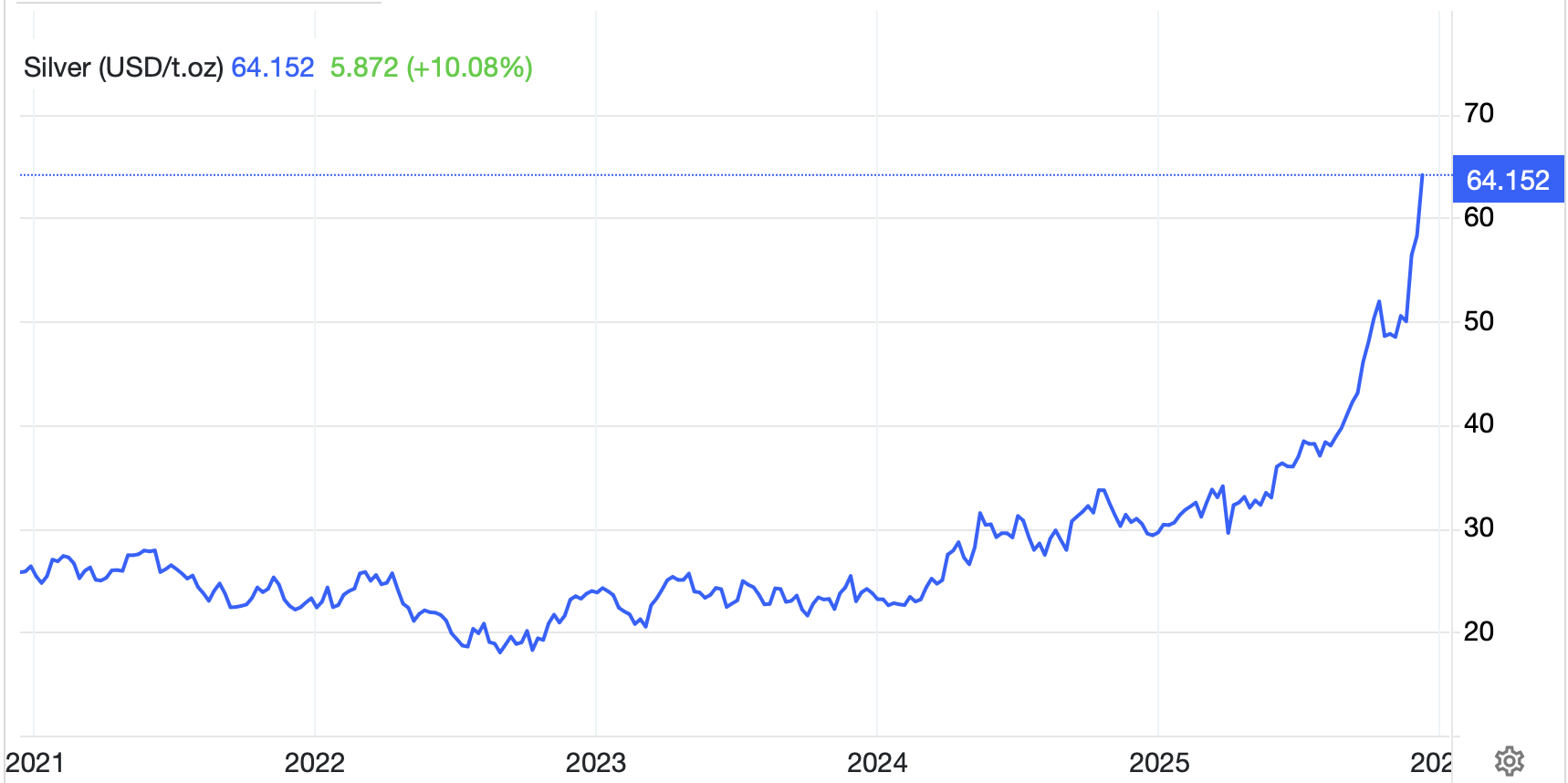
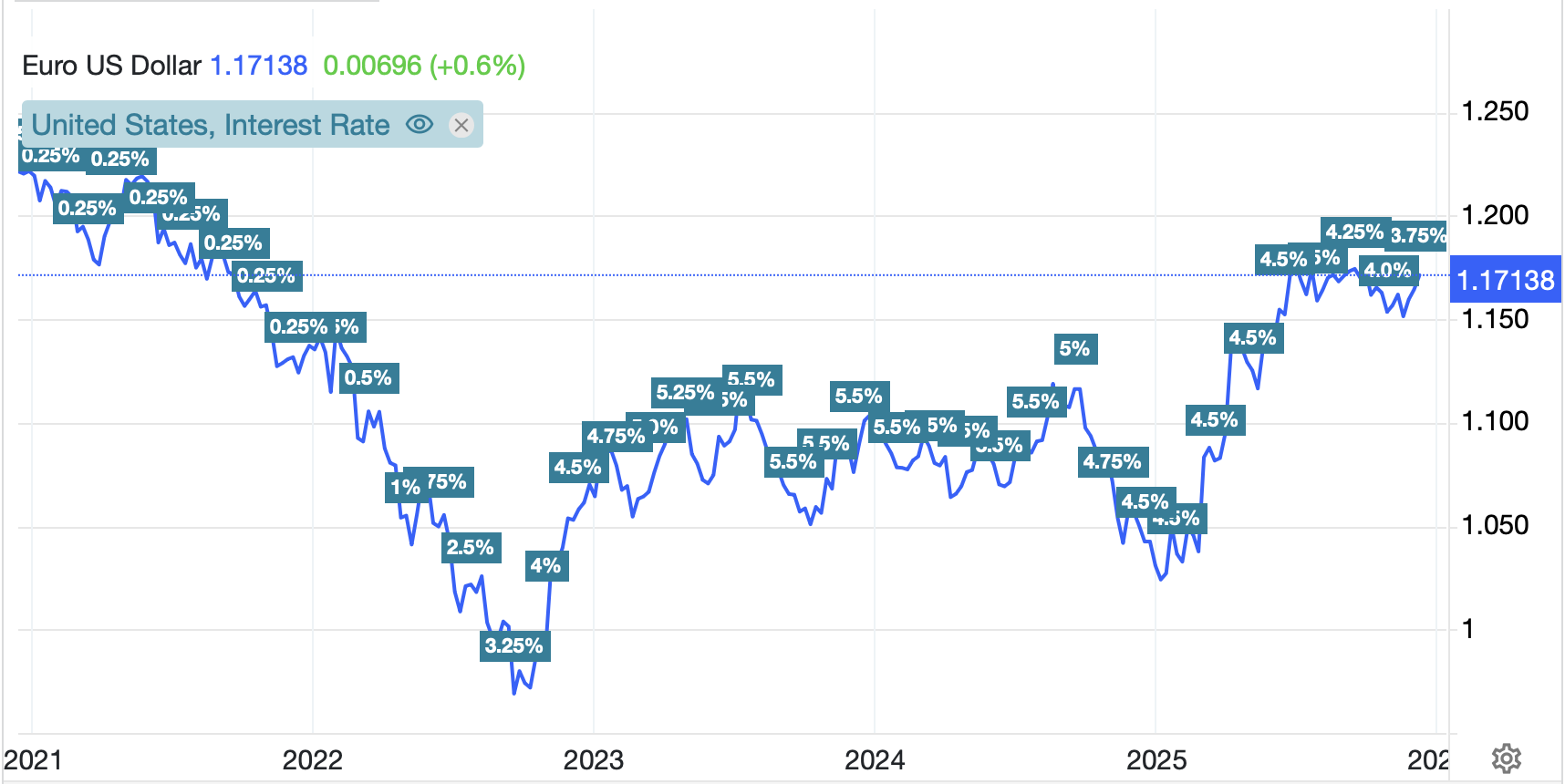
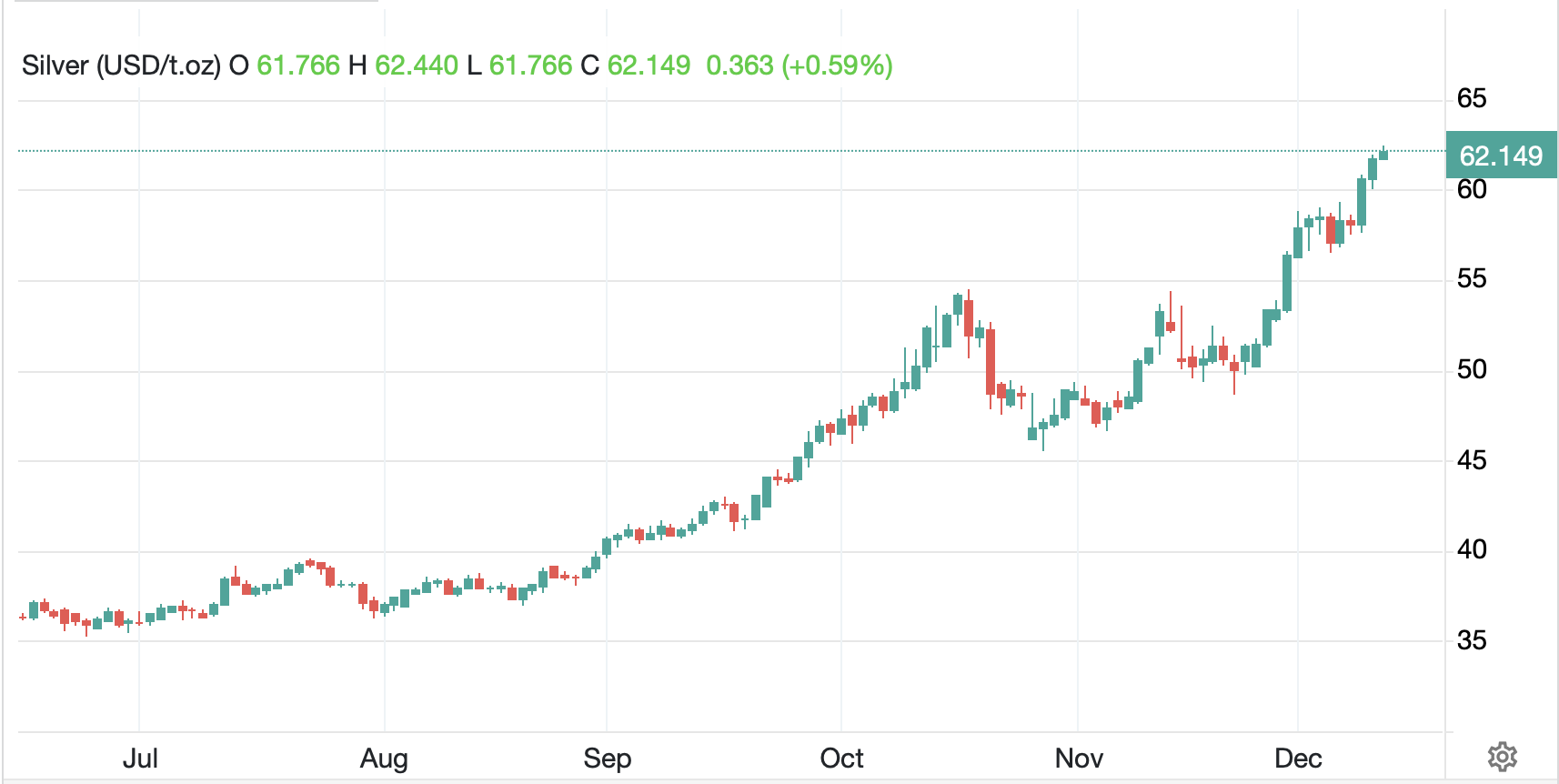
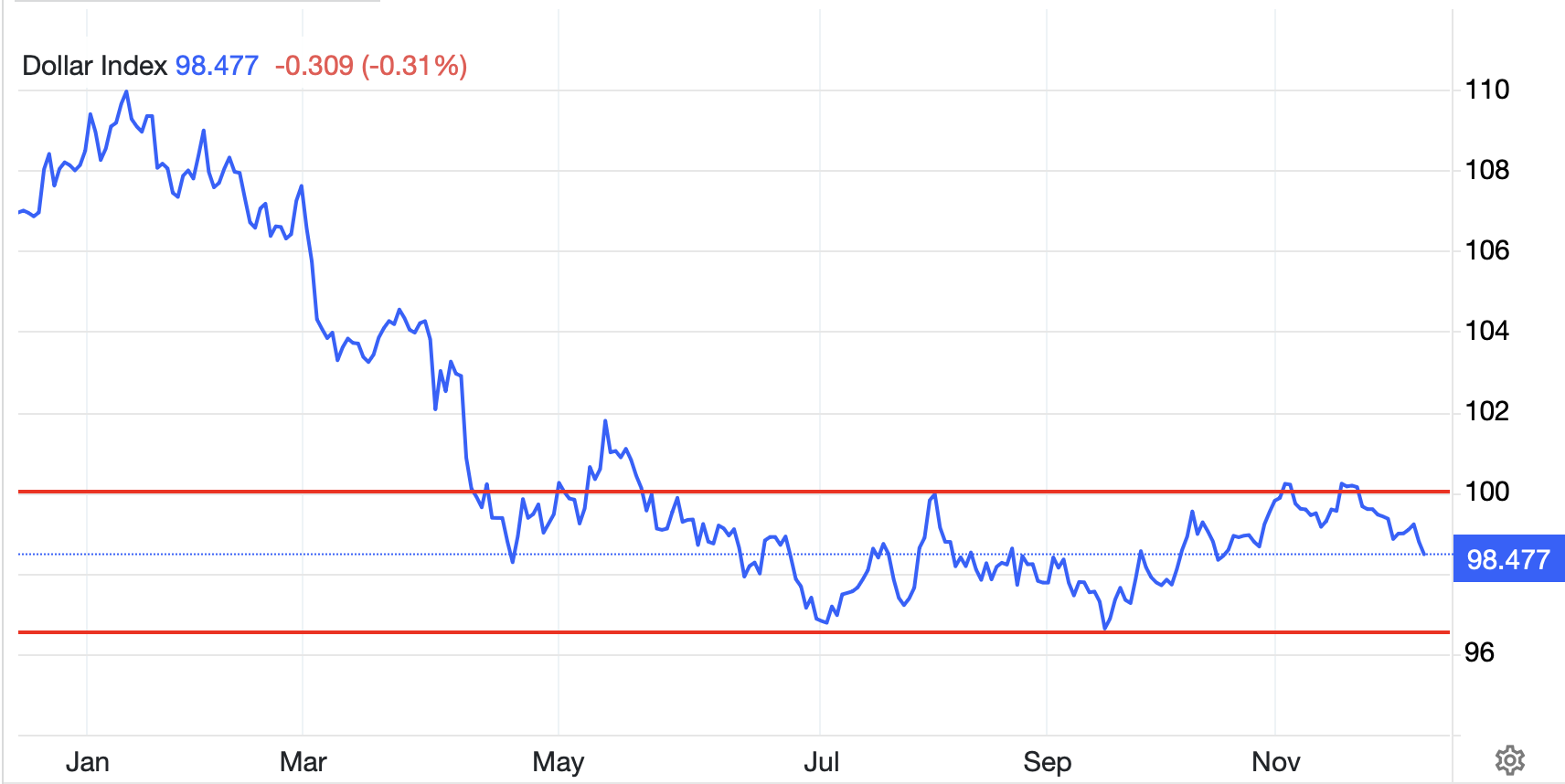
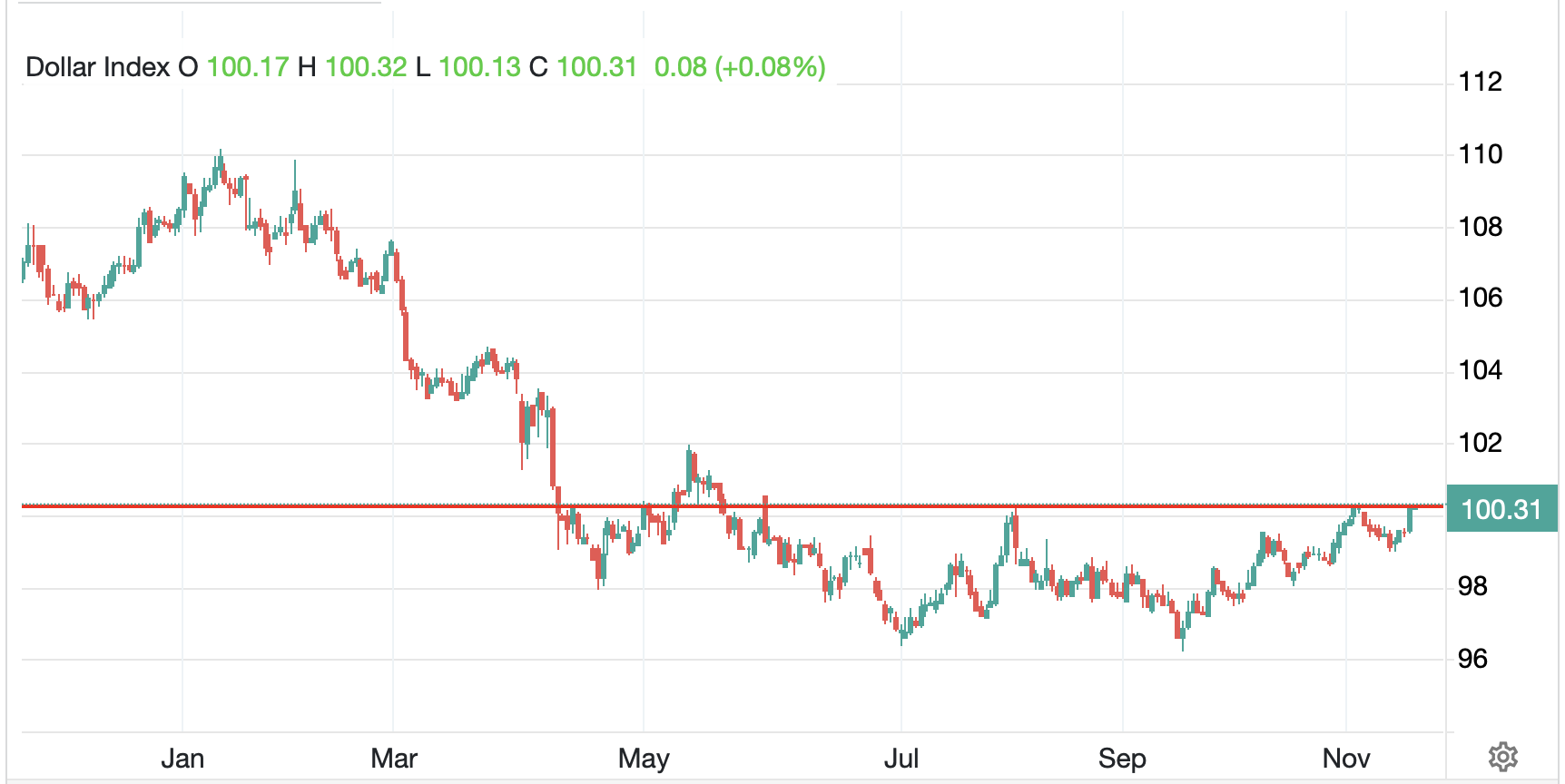
Gold rallied instantaneously on the cut news, trading above $3700/oz, but slipped back nearly 2% as Powell started speaking and the dollar fell sharply on the news but rebounded to close higher on the day as per the below chart from tradingeconomics.com.  See if you can determine when the statement was released and when Powell started to speak.

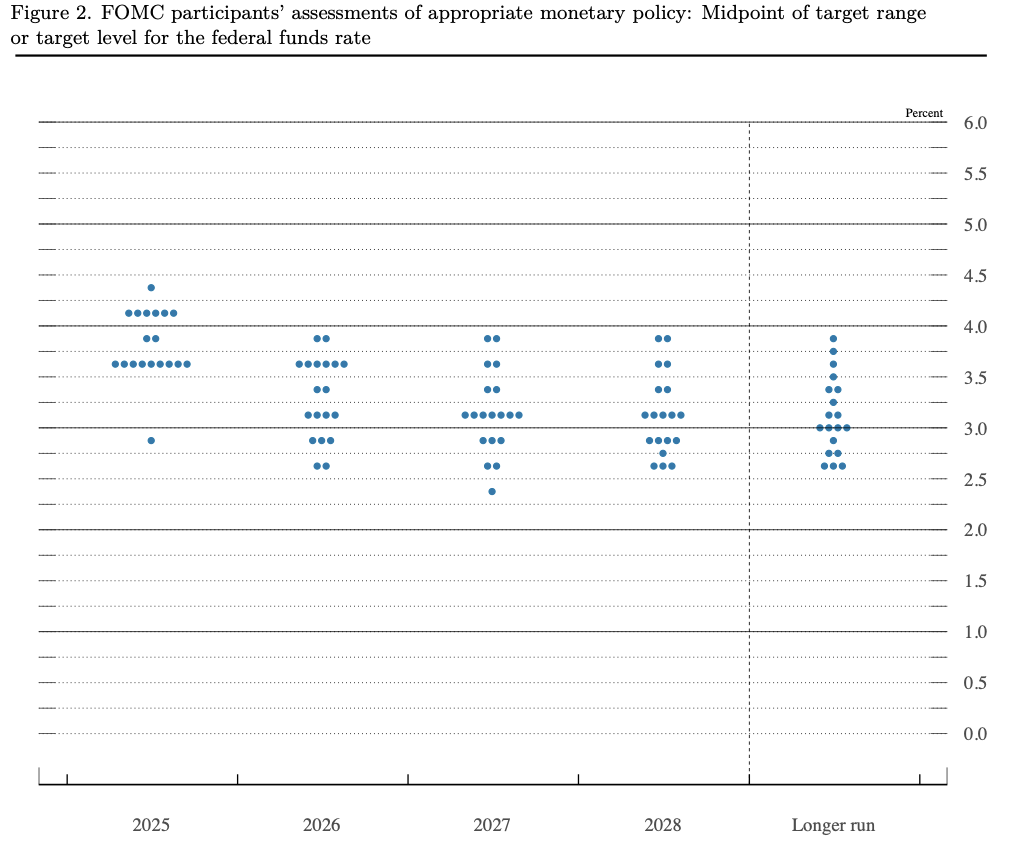
Did we learn very much from this meeting?  I think we learned two things, one which is a positive and one which is not.  On the positive side, there is clearly a very robust discussion ongoing at the Fed with respect to how FOMC members see the future evolving.  This was made clear in the dot plot as even the rest of 2025 sees a major split in expected outcomes.  But more importantly, looking into the future, there is certainly no groupthink ongoing, which is a wonderful thing.  Simply look at the dispersion of the dots for each year.

Source: federalreserve.gov

The negative, though, is that Chairman Powell is very keen to spin a narrative that seems at odds with the data that they released in the SEP.  In other words, the flip side of the idea that there is a robust discussion is that nobody there has a clue about what is happening in the economy, or at least Powell is not willing to admit to their forecasts, and that is a problem given their role in policy making.

It was a little surprising that only newly seated Governor Miran voted for 50bps with last meeting’s dissenters happy to go with 25bps.  But I have a feeling that the commentary going forward, which starts on Monday of next week, is going to offer a variety of stories.  If guidance from Fed speakers contradicts one another, exactly where is it guiding us?  (Please know I have always thought that forward guidance was one of the worst policy implementations in the Fed’s history.)

Moving on, the other central banks that have announced have done exactly as expected with both Canada and Norway cutting 25bps.  Shortly, the BOE will announce their decision with market expectations for a 7-2 vote to leave rates on hold, especially after yesterday’s 3.8% CPI reading.  Then, all eyes will turn to Tokyo tonight where the BOJ seems highly likely to leave rates on hold there as well.

If you think about it, it is remarkable that equity markets around the world continue to rally broadly at a time when central banks around the world are cutting rates because they are concerned that economic activity is slowing and they seek to prevent a recession.  Something about that sequence seems out of sorts, but then, I freely admit that markets move for many reasons that seem beyond logic.

Ok, having reviewed the immediate market response to the Fed, let’s see how things are shaping up this morning.  Asian equity markets had both winners (Tokyo +1.15%, Korea +1.4%, Taiwan +1.3%, India +0.4%) and laggards, (China -1.2%, HK 1.4%, Australia -0.8%, Malaysia -0.8%) with the rest of the region seeing more laggards than gainers.  The China/HK story seems to be profit taking related while the gainers all alleged that the prospect of another 50bps of cuts from the Fed this year is bullish.  Meanwhile, in Europe, while the UK (+0.2%) is biding its time ahead of the BOE announcement, there has been real strength in Germany (+1.2%), France (+1.15%) and Italy (+0.85%) while Spain (+0.25%) is only modestly firmer.  While there was no data of note released, we did hear from ECB VP de Guindos who said the ECB may not be done cutting rates.  Clearly that got some investors excited.  As to US futures, at this hour (6:55), they are solidly higher, on the order of 0.8% or more.

In the bond market, Treasury yields are backing off the highs seen yesterday and have slipped -4bps, hovering just above 4.0% on the 10-year.  European sovereign yields are essentially unchanged this morning as were JGB yields overnight.  It seems investors were completely prepared for the central bank actions and had it all priced in.  I guess the real question is are those investors prepared for the fact that the Fed is no longer that concerned about inflation and will allow it to rise further?  My guess there is they are not, but then, that’s where QE/YCC comes into play.

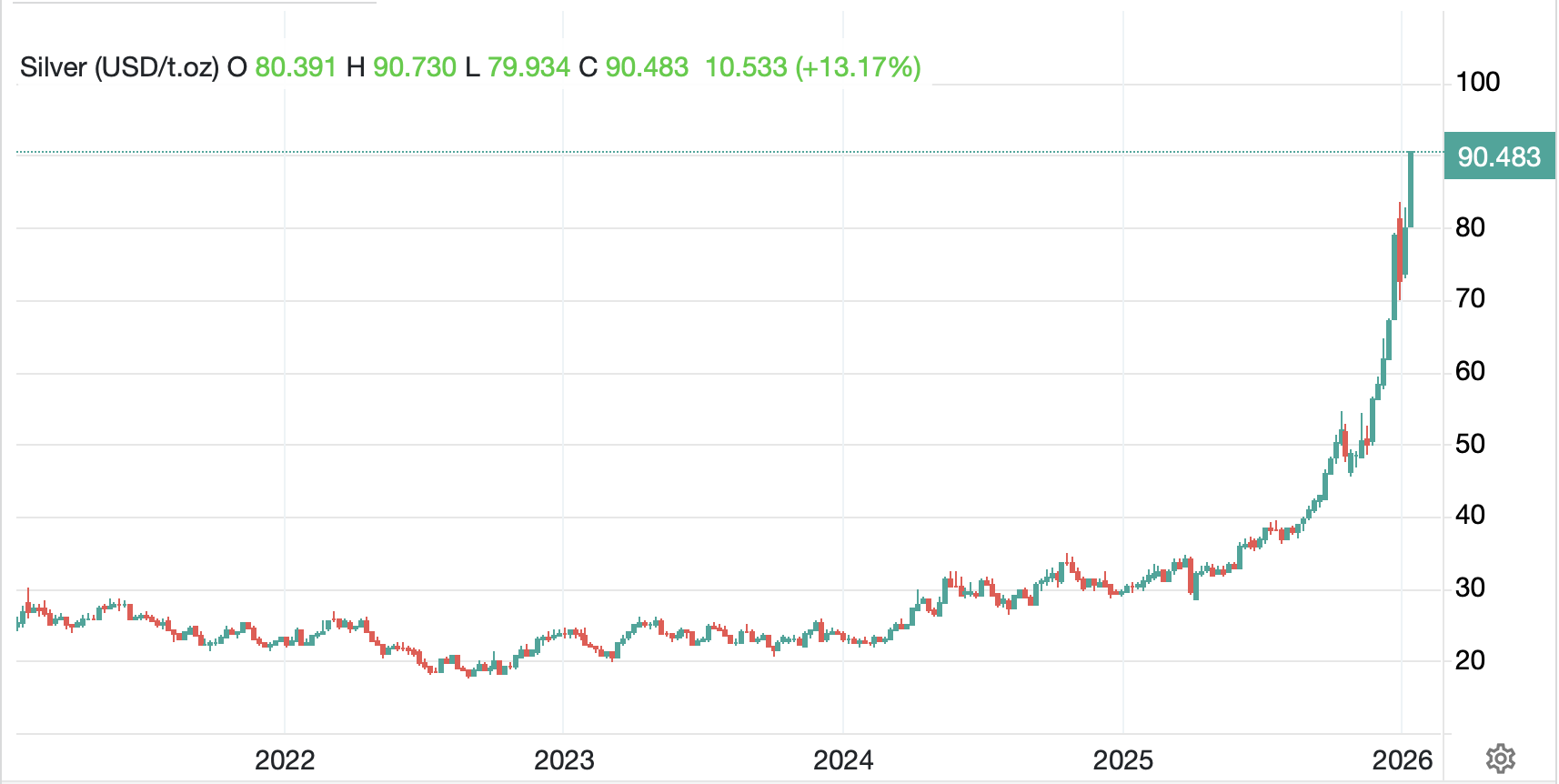
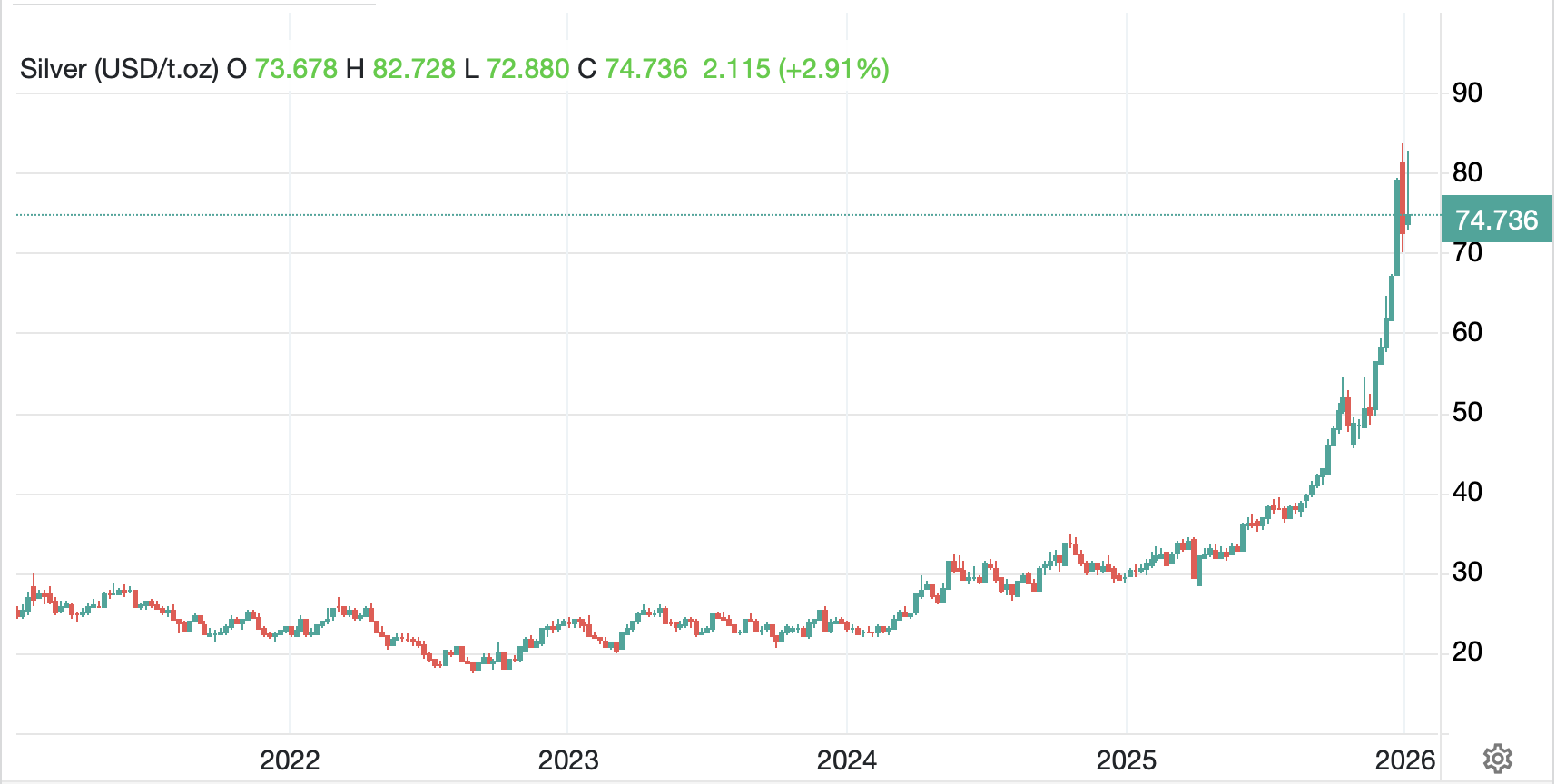
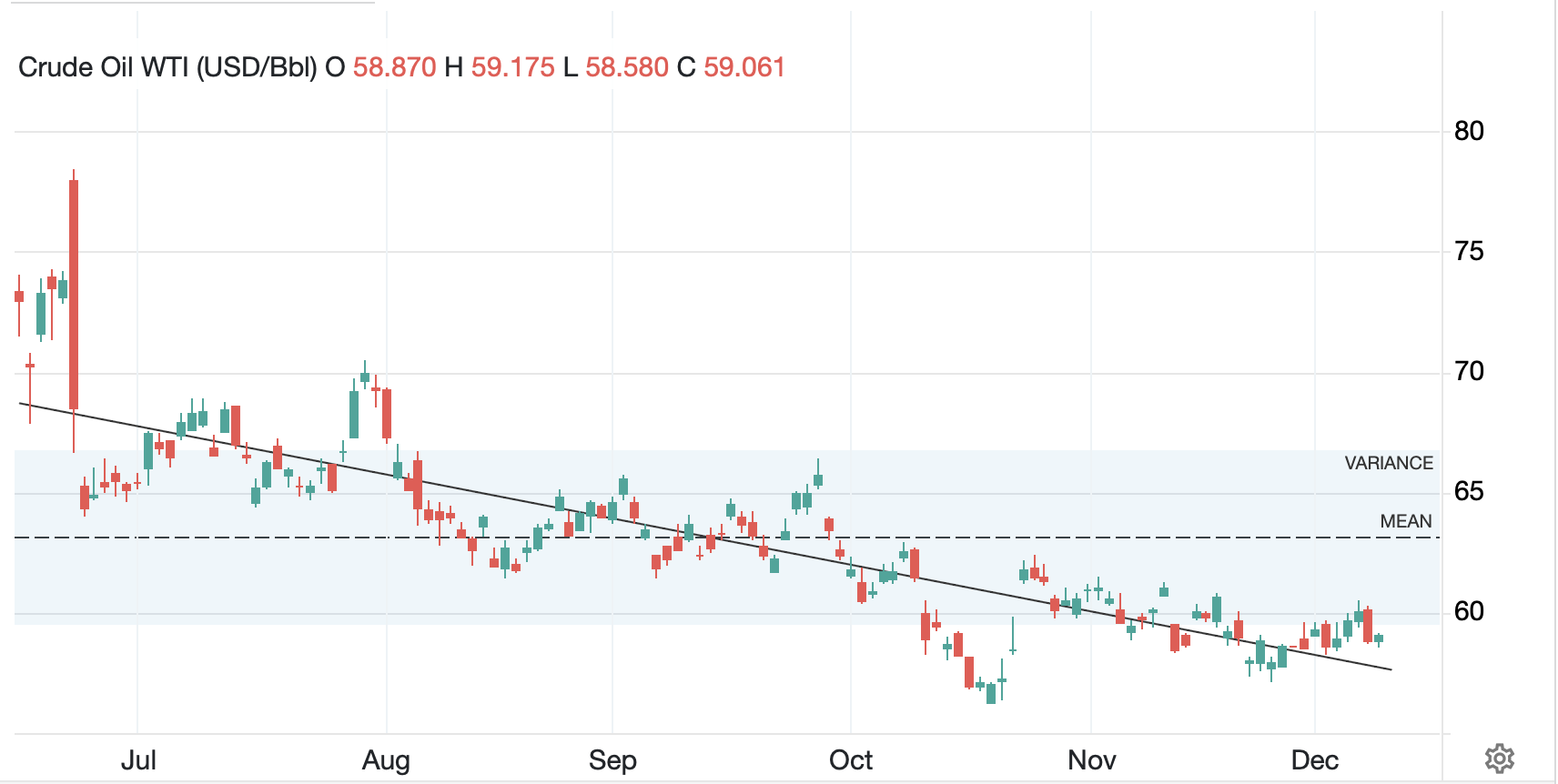
In the commodity markets, oil (-0.25%) is slightly lower this morning despite Ukraine attacking two more Russian refineries last night.  What makes that particularly interesting is that the EIA inventory data showed a massive net draw of oil and products last week of more than 11 million barrels, seemingly a bullish signal.  But hey, I’m an FX guy so maybe supply and demand in oil markets works differently!  In metals, gold (+0.2%) and silver (+0.4%) continue to rebound from their short-term lows from yesterday.  It is abundantly clear that there is growing demand for alternatives to fiat currencies.

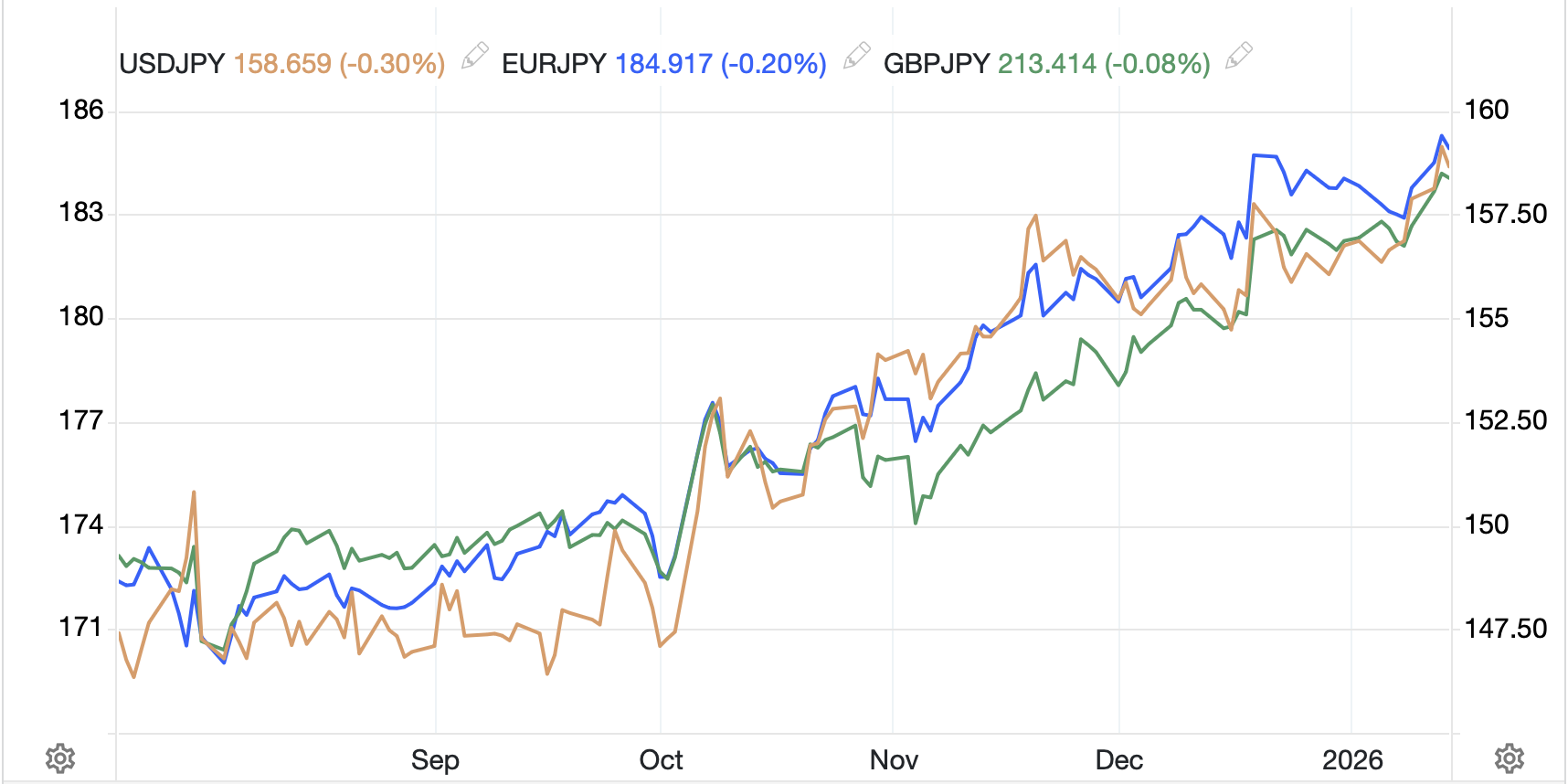
Speaking of which, in the fiat world, rumors of the dollar’s demise remain greatly exaggerated.  After yesterday afternoon’s gyrations discussed above, it is largely unchanged this morning with some outlier moves in smaller currencies, NZD (-0.5%), ZAR (+0.3%), KRW (-0.3%) while amongst the true majors, only JPY (-0.25%) has moved any distance at all.  

***BOE Leaves rates on hold, as expected, with 7-2 vote, as expected.***

Turning to this morning’s data, we see the weekly Initial (exp 240K) and Continuing (1950K) Claims as well as Philly Fed (2.3), then at 10:00 we get Leading Indicators (-0.2%).  Something I read was that last week’s Initial Claims number of 263K was caused by a data glitch in Texas, implying it was overstated.  I imagine we will find out more on that this morning.  

Recapping all we learned yesterday and overnight, the Fed seems reasonably likely to cut at both of their last two meetings this year, but expect only one cut in 2026, which is at least 50bps less of cuts than had been expected prior to the meeting.  Meanwhile, equity markets don’t seem to care and continue to rally while bond investors remain under a spell, believing the Fed will fight inflation effectively.  Gold is under no such spell, and the dollar is the outlet for all of it, toing and froing on the back of various theories of the day.  If forced to guess, I do believe there is a bit more weakness in the dollar in the near-term, but do not look for a collapse.  In fact, I suspect that as investment flows into the US pick up, we will see a reversal of note by the middle of next year.

Good luck

Adf

Throw in the Towel

All eyes are on Chairman Jay Powell
And if he will throw in the towel
Or will he still fight
Inflation? Oh, right
He caved as the hawks all cried foul!
 
So, twenty-five’s baked in the cake
While fifty would be a mistake
If fighting inflation
Is his obligation
Though half may, Trump’s thirst, somewhat slake


Well, it’s Frabjous Fed Day and there will be a great deal of commentary on what may happen and what it all means.  Of course, none of us really knows at this point, but I assure you by this afternoon, almost all pundits will explain they had it right.  

At any rate, my take is as follows, FWIW.  I believe the huge revision to NFP data has got the FOMC quite concerned.  Prior to that, they were smug in their contention that patience was a virtue and their caution because of the uncertain price impact of tariffs was warranted given the underlying strength in the jobs market.  Now, not only has that underlying strength been shown to be a mirage, but the import price data released yesterday, showing that Y/Y, import prices are flat, is further evidence that tariffs have not been a significant driver of inflation.  If you look at the chart below of Y/Y import prices for the past 5 years, you can see that since April’s ‘Liberation Day’ tariff announcements, they have not risen at all.

Source: tradingeconomics.com

With that in mind, if you are the Fed, and you are data dependent, as they claim to be, and the data shows weakening employment and stable prices in the area you had been highlighting, you have no choice but to cut.  The question then becomes, 25bps or 50bps?  While the market is pricing just a 6% probability of a 50bp cut, given there are almost certainly three Governor votes for 50bps (Waller, Bowman and Miran) and the underlying central bank tendency is toward dovishness, I am going to go out on a limb and call for 50bps.  Powell and the Fed have already been proven wrong, and the only thing worse for them than seeming to cave to pressure from the White House would be standing pat and being blamed for causing a recession.  

With that in mind, my prognostications for market responses are as follows:

  • The dollar will weaken pretty much across the board with a move as much as -1% possible
  • Precious metals will rally sharply, making new highs for the move as this will be proof positive that the Fed has tacitly raised its inflation target from the previous 2%.  In fact, my take is 3% is the new 2%, at least until we spend a long time at 4%.
  • Equity markets will take the news well, at least initially, as the algos will be programmed to buy, but the concern will have to grow that slowing economic activity will impair earnings going forward, and multiples will suffer with higher inflation.  I continue to fear a correction here.
  • Bonds are tricky here as they have been rallying aggressively for the past six weeks and that could well have been ‘buying the rumor’ ahead of the meeting.  So, it is not hard to make the case that bonds sell off, and long end yields rise in response to 50bps.

On the other hand, if they cut 25bps, and sound hawkish in the statement or Powell’s presser, I don’t imagine there will be much movement of note.   I guess we’ll see in a while.

Until then, let’s look at the overnight price action.  Yesterday’s modest declines in US equities looked far more like consolidation after strong runs higher than like the beginning of the end.  The follow on in Asia was mixed with Tokyo (-0.25%) after export data was weak, especially in the auto sector, while HK (+1.8%) and China (+0.6%) both rallied on the prospect of reduced trade tensions between the US and China based on the upcoming meeting between Presidents Trump and Xi.  Elsewhere in the region, Korea, Taiwan and Australia fell while India, Malaysia and Indonesia all rallied, the latter on the back of a surprise 25bp rate cut by Bank Indonesia.

In Europe, the picture is also mixed with Germany (-0.2%), France (-0.4%) and Italy (-1.2%) all under pressure, with Italy noticeably feeling the pain of potential domestic moves that will hurt bank profitability with increased taxes there to offset tax cuts for individuals.  Spain is flat and the UK (+0.25%) slightly firmer after inflation data there showed 3.8% Y/Y headline, and 3.6% Y/Y core, as expected and still far higher than the BOE’s 2.0% target.  While the BOE meets tomorrow, and no policy change is expected, if the Fed cuts 50bps, do not be surprised to see 25bps from the Old Lady.  US futures at this hour (7:30) are essentially unchanged.

In the bond market, Treasury yields continue to creep lower ahead of the meeting, slipping another 2bps this morning and now trading at 4.01%, the lowest level since Liberation Day and the initial fears of economic disaster in the US.

Source: tradingeconomics.com

You can see the trend for the past six months remains lower and appears to be accelerating right now. Meanwhile, as is often the case, European sovereign yields are following Treasury yields and they are lower by between -1bp and -2bps across the board.  Nothing to see here.

Commodity markets have seen the most movement overnight with oil (-0.7%) topping a bit while gold (-0.65%), silver (-2.5%) and copper (-1.8%) have all seen some profit taking ahead of the FOMC meeting.  Now, there are plenty of profits to take given the 10% rallies we have seen in gold and silver in the past month.  In fact, I lightened up some of my gold position yesterday as well!

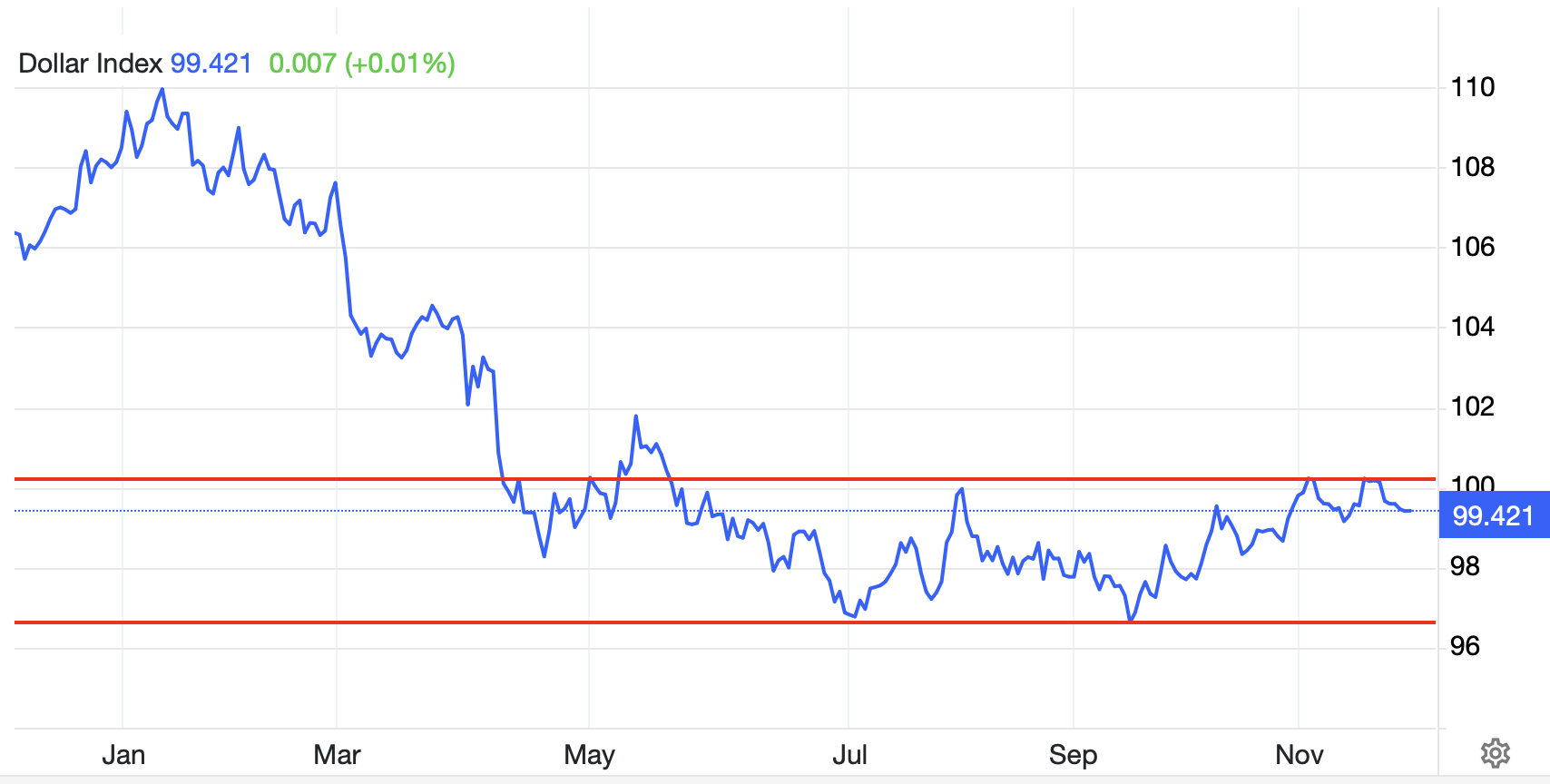
Finally, the dollar, which fell pretty sharply yesterday is bouncing a bit this morning.  Using the DXY as proxy, it came close to the lows seen back on July 1st, as you can see in the chart below. 

Source: tradingeconomics.com

But remember, as you step away from the day-to-day, the dollar is hardly weak.  Rather, it is much closer to the middle of its long-term price action as evidenced by the longer view below.

Source: finance.yahoo.com

There is a lot of discussion on FinX (nee FinTwit) about whether we are about to bounce or if the dollar is going to collapse.  But it is hard to look at the chart directly above and get the feeling that things are out of hand in either direction.  Now, relative to some other currencies, there are trends in place that don’t impact the DXY, but matter.  Notably, CNY and MXN have both been strengthening slowly for the bulk of the year and are now at levels not seen for several years.  given the importance of both these nations with respect to trade with the US, this is where Mr Trump must be happiest as it clearly is weighing on their export statistics.

Source: tradingeconomics.com

Ahead of the FOMC meeting, we do get a few data points, with Housing Starts (exp 1.37M) and Building Permits (1.37M) leading off at 8:30.  Then at 9:45 the BOC interest rate decision comes, with a 25bp cut expected and finally the Fed at 2:00.  Housing will not have any impact on the market in my view but the BOC, if they surprise, could matter, especially if they pre-emptively cut 50bps as that will get the juices flowing for the Fed to follow suit.  But otherwise, we will have to wait for Powell and friends for the next steps.

Good luck

Adf

More Insane

Though debt round the world keeps on growing
The equity run isn’t slowing
But what’s more insane
Is yields slowly wane
Despite signs inflation ain’t slowing
 
The French are the latest to hear
Their credit’s somewhat less sincere
But CBs this week
Seem likely to tweak
Rates lower, and markets will cheer


Something is rotten in the state of financial markets, or at least that is the conclusion this poet has drawn (and please do not think I am trying to compare myself to Shakespeare).  No matter what my personal view of the economy may be, I cannot help but look at the recent performance of the equity market and the bond market and be extremely confused.  The chart below shows the past year’s price action in the S&P 500 (blue line) and US 10-year yields (green line). 

Source: tradingeconomics.com

Since early June, the two price series, which have historically had a pretty decent correlation, have gone in completely opposite directions.  Equity markets continue to trade to new highs on a regular basis as earnings multiples continue their expansion.  Typically, multiples only expand when growth expectations are rising, and the economy is in an uptrend.  Ergo, if multiples are high and rising, it seems equity investors believe that is the case.  I understand that view as there are strong indications the administration is going to continue to ‘run the economy hot’ meaning do all it can to increase economic activity and allow inflation to rise as well, counting on the fast growth to offset the pain.

However, 10-year Treasury yields have been sliding steadily for the past three months despite the equity market belief in running it hot.  Bond yields have historically been far more sensitive to inflationary pressures and the fact that yields have been declining, down >40bps since early June, would lead to a very different conclusion about the economy, that it is going to see much slower growth and by consequence, reduced inflationary pressures.

I have discussed the asynchronous economy in the past and I believe this is more proof of that thesis.  The equity markets are still being largely driven by the AI/Tech sector and while that is a huge portion of the equity market, its size within the overall economy is pretty small.  Given the capital weightings of both the S&P 500 and NASDAQ, strength in that sector has clearly been sufficient to drive stock indices higher.  However, much of the rest of the economy is not seeing the same benefits, and in fact, there is a portion suffering as AI takes over roles that had been filled by people thus increasing unemployment.  That segment of the economy is much larger, and it seems there is a growing probability that a recession may be coming there.  

Or not, if the administration is able to run it hot.  Ultimately, the thing the makes the least sense to me is that there is no indication that inflation is slowing anywhere back toward the Fed’s alleged 2% target.  Rather CPI looks far more likely to coalesce around the 3.5%-4.0% level which means that PCE, even on a core basis, is going to be hanging around 3.0%.  If the Fed is getting set to cut rates, and by all indication they are going to cut at least 25bps on Wednesday, I think it is clear that 3.0% is the new 2.0%.

And here’s the problem with that. When inflation is low, 2% or less, equities have historically been negatively correlated with bond prices, so if stocks fell, bonds rallied and the 60:40 portfolio had an internal hedge.  But when inflation is higher, and it doesn’t need to be 10%, 4% is enough to change the relationship, equity prices and bond prices tend to move in sync.  This means, if stock prices fall because of a recession, so do bond prices with yields rising.  In that situation, the 60:40 portfolio suffers greatly.  Just think back to 2022 when both equities and bonds fell -30% or so.  Where was inflation?  Right, we were in the throes of the Fed’s last mistake regarding the word transitory.  The below chart is the best I could find to show how things behaved in the 60’s and 70’s with inflation running hot and then how things changed after Mr Volcker began to squash inflation.

Original source: Isabelnet.com

And what of the dollar you may ask?  Well, theoretically, rising inflation should undermine the currency, but rising rates, when central banks fight inflation, should help support it.  However, this time, with rising inflation and the Fed set to cut, it seems the dollar may have some trouble, although as other central banks follow suit, and they will, the dollar will find support.

Ok, let’s see how things behaved overnight.  While Friday’s US session was mixed with only the NASDAQ managing to gain, there was more green in Asia and Europe.  The Japanese celebrated Respect for the Aged Day, so markets there were closed.  However, both HK (+0.2%) and China (+0.25%) managed modest gains despite (because of?) weaker than expected Chinese economic data.  Every aspect of the data, IP, Retail Sales, Investment and Unemployment, printed worse than forecasts and has now encouraged investors to look for further Chinese government stimulus to support the economy.  That theory helped Korea, Malaysia and Indonesia, all showing solid gains, but did nothing for the rest of the region, perhaps most surprisingly Taiwan.

In Europe, Fitch cut France’s credit rating to A+ from AA- based on fiscal deficits and political turmoil (aka no government), yet equity investors saw that as a buy signal with the CAC (+1.15%) leading European shares higher.  The DAX (+0.4%) and IBEX (+0.6%) are also doing well although the FTSE 100 (0.0%) is just treading water.  There has been no data of note, so it appears investors there are anticipating good things from the US where futures are higher by 0.2% at this hour (7:30).

Bond yields in the US are unchanged this morning, but European sovereign yields have slipped -2bps across the board, despite France’s downgrade.  I am really at a loss these days to understand the mind of bond investors.  I guess there is a growing belief that central bank rate cuts are going to help!

In the commodity sector, oil (+0.4%) has edged higher this morning but remains firmly in the middle of its 3-month trading range and is showing no desire to move in either direction.  Metals markets, meanwhile, are basically unchanged this morning, simply sitting at their recent highs with the latest contest on Wall Street being who can forecast the highest price for gold in 2026.  Goldman just explained that $5000/oz is reasonable if just 1% of risk assets move into the relic.

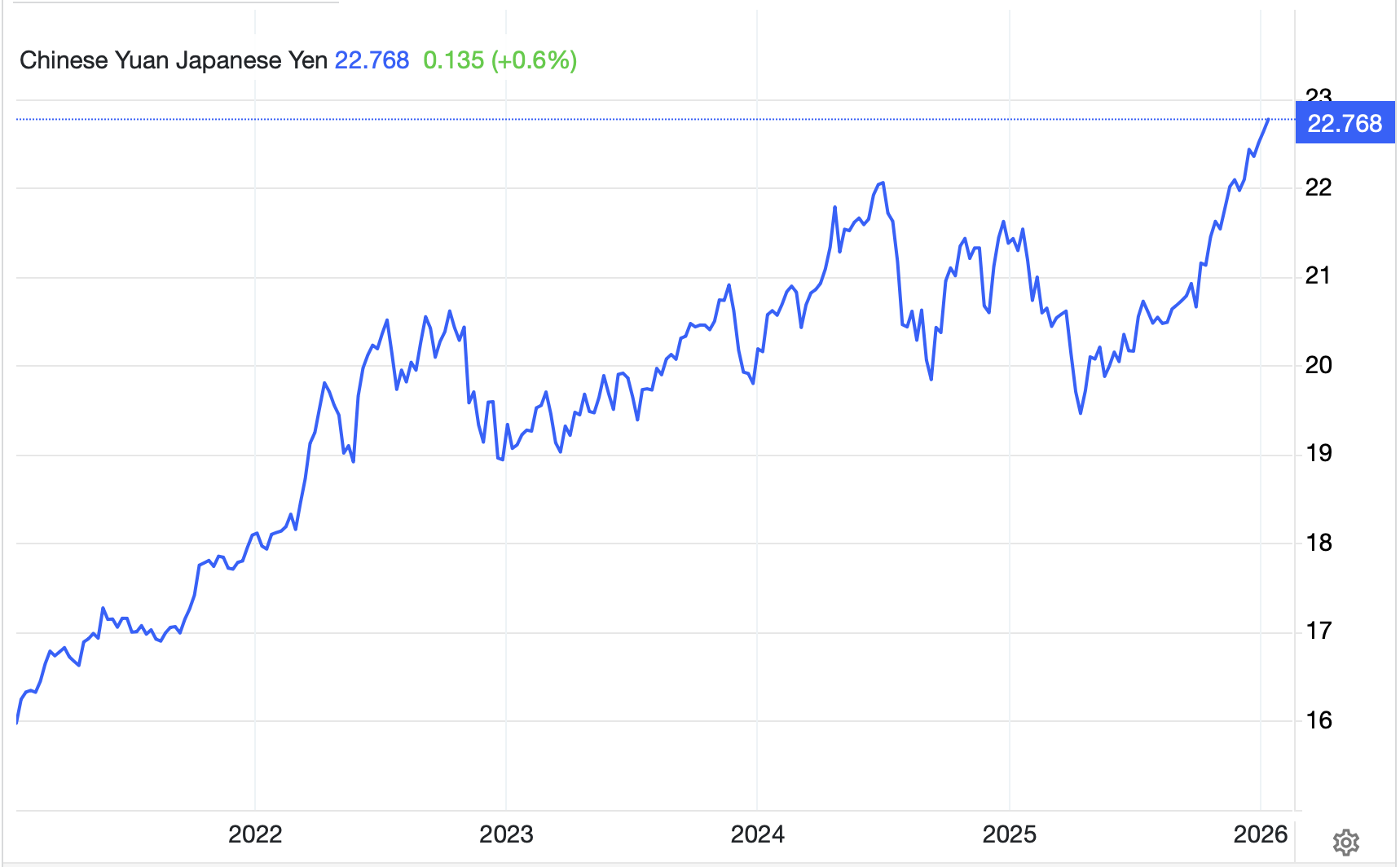
As to the dollar, while it did little most of the evening, as NY is walking in, it is slipping a bit, with the euro (+0.25%) and pound (+0.5%) leading the way higher in the G10, and truthfully across the board as the largest EMG moves are KRW (+0.4%) and HUF (+0.4%) while the rest have moved on the order of 0.1% to 0.2%.  There has been growing chatter that China is now going to allow the renminbi to start to strengthen more steadily (in fairness, it has been strengthening modestly since the beginning of 2025, up about 3% since then), and that this is part of the trade negotiations ongoing with the US currently taking place in Madrid.  But remember, while CNY has been creeping higher this year, a quick look at the chart below shows it has fallen substantially since 2022, having declined more than 17% between 2022 and the beginning of this year.

Source: tradingeconomics.com

On the data front, in addition to the FOMC, there are several other central bank meetings and some important data as follows:

TodayEmpire State Manufacturing5.0
TuesdayRetail Sales0.3%
 -ex autos0.4%
 Control Group0.4%
 IP-0.1%
 Capacity Utilization77.4%
WednesdayIndonesia Rate Decision5.0% (Unchanged)
 Housing Starts1.37M
 Building Permits1.37M
 Bank of Canada Rate Decision2.5% (-0.25%)
 FOMC Decision4.25% (-0.25%)
 Brazil Rate Decision15.0% (unchanged)
ThursdayBOE Rate Decision4.0% (unchanged)
 Initial Claims240K
 Continuing Claims1950K
 Philly Fed2.3
 South Africa Rate Decision7.0% (unchanged)
 Leading Indicators-0.1%
 BOJ Rate Decision0.5% (unchanged)

Source: tradingeconomics.com

So, while Retail Sales may give us some more color on the strength of the economy, it is really a week filled with central bank policy decisions and the ensuing discussions they have to spin things as they desire.  I imagine we will be getting an article from Nickileaks this afternoon or tomorrow to get Powell’s message out, but it remains to be seen if we are watching bond traders buy the rumor and they are set to sell bonds on the news, especially if the Fed goes 50bps, something that remains a real possibility in my mind, though the futures market is pricing just a 4% chance of that as of this morning.

A 50bp cut will undermine the dollar in the short run and may put pressure on the BOE to cut more rather than hold.  Until then, though, I suspect there will be little net movement in either direction.

Good luck

Adf

Voters Have Doubt

In France, Monsiuer Bayrou is out
In Norway, though, Labor held stout
Japan’s been discussed
And Starmer’s soon Trussed
In governments, voters have doubt
 
Investors, though, see all this news
And none of them have changed their views
Just one thing they heed
And that’s market greed
At some point they’ll all sing the blues


Here we are on Wednesday and already we have seen two major (Japan and France) and one minor (Nepal) nations make governmental changes.  Actually, they haven’t really changed yet, they just defenestrated the PM and now need to figure out what to do next.  In Japan, it appears there are two key candidates vying to lead a minority LDP government, Sanae Takaichi and Shinjiro Koizumi, although at this point it appears too close to call.  Regardless, it will be rough sledding for whoever wins the seat as the underlying problems that undermined Ishiba-san remain.  

In France, President Macron has, so far, said he will not call for new elections, nor will he resign despite increasing pressure from both the left and the right for both measures.  He will appoint a new PM this week and they will go through this process yet again as the underlying issue, how to rein in spending and reduce the budget deficit, remains with nobody willing to make the hard decisions.  A side note here is that French 10-year OATs now trade at the same level as Italian 10-year BTPs, a catastrophic decline over the past 15 years as per the below chart. 

Recall, during the Eurozone crisis in 2011, Italy was perceived as the second worst situation after Greece in the PIGS, while France was grouped with Germany as hale and hearty.  Oh, how the mighty have fallen.

Nepal is clearly too insignificant from a global macroeconomic perspective to matter, but it strikes me that the fall of the PM there is merely in line with the growing unhappiness of populations around the world with their respective governments.

A friend of mine, Josh Myers, who writes a very thoughtful Substack published last night and it is well worth the read.  He makes the point that the Washington Consensus, which has since the 1980’s, underpinned essentially all G10 activity and focused on privatization of assets, free trade and liberalized financial systems, appears to have come to the end of the road.  I think this is an excellent observation and fits well with my thesis that the consensus views of appropriate policies are falling apart.  Too many people have been left behind as both income and wealth inequality in the G10 is rampant, and those who have fallen behind are now angry enough to make themselves heard.  

This is why we see governments fall.  It is why nationalist parties are gaining strength around the world as they focus on their own citizens rather than a global concept.  And it is why those governments still in power are desperately struggling to prevent their opponents from being able to speak.  This is the genesis of the restrictions on speech that are now rampant in Germany and the UK, two nations whose governments are under extreme pressure because of policy failures, but don’t want to give up the reins of power and are trying to prevent anybody from saying anything bad about them, thus literally jailing those who do!

And yet…investors are sanguine about it all!  At least that seems to be the case on the surface as equity indices around the world continue to trade higher with most major equity markets at or within a few percent of all-time highs.  This seems like misplaced confidence to me as the one thing I consistently read is that markets are performing well in anticipation of the FOMC cutting Fed funds next week, with hopes growing that it will be a 50bp cut.  

But if we look at the Treasury market, which has seen yields slide steadily since the beginning of the year, with 10-year yields now lower by 75bps since President Trump’s inauguration, it is difficult to square that circle.  

Source: tradingeconomics.com

Bond yields typically rise and fall based on two things, expected inflation and expected growth as those two have been conflated in investor (and economist) minds for a while.  The upshot is if yields are declining steadily, as they have been, it implies investors see slowing economic activity which will lead to lower inflation.  Now, if economic activity is set to slow, it strikes me that will not help corporate profitability, and in fact, has the potential to exacerbate the situation by forcing layoffs, reducing economic activity further.  Alas, it is not clear if that will drive inflation lower in any meaningful way.  The point is the bond market and the stock market are looking at the same data and seeing very different future outcomes.

Is there a tiebreaker we can use here?  The FX market might be one place, but the weakness in this idea is that FX rates are relative rates, not descriptive of the global economy.  Sure, historically the dollar has been the ultimate safe haven with funds flowing there when things got rough economically, but its recent weakness does not foretell that particular story.  Which brings us to the only other asset class around, commodities.  And the one thing we have seen lately is commodity prices continuously rising, or at least metals prices doing so, specifically gold.  Several millennia of history showing gold to be the one true store of value is not easily forgotten, and that is why the barbarous relic has rallied 39% so far in 2025.  

A number of analysts have likened the current situation to that of Wile E Coyote and I understand the idea.  It certainly is a potential outcome so beware.

Well, once again I have taken much time so this will be the lightning round.  Starting with bonds, this morning, yields in the US and Europe are higher by 2bps across the board, with one exception, France which has seen yields rise 6bps as discussed above.  JGB yields are unchanged as it appears investors there don’t know what to think yet and are awaiting the new PM decision.

In equities, yesterday’s very modest late rallies in the US were followed by a mixed session in Asia (Japan -0.4%, China -0.7%, HK +1.2%) although there were more winners (Korea, India, Taiwan, Thailand) than laggards (Australia, New Zealand, Indonesia) elsewhere in the region.  In Europe, mixed is also the proper adjective with the CAC (+0.4%) remarkably leading the way higher despite lousy IP data (-1.1%) while Germany (-0.4%) and Spain (-0.4%) both lag.  As to US futures, at this hour (7:20) they are marginally higher, 0.15% or so.

Oil (+0.8%) continues to trade back and forth each day with no direction for now.  I’m sure something will change the situation here, but I have no idea what it will be.  Gold (+0.5%) meanwhile goes from strength to strength and is sitting at yet another new all-time high, above $3600/oz.  While silver and copper are little changed this morning, the one thing that seems clear is there is no shortage of demand for gold.

Finally, the dollar is arguably slightly lower this morning, although mixed may be a better description.  The euro (-0.15%) is lagging but JPY (+0.6%) is the strongest currency across both G10 and EMG blocs.  Otherwise, it is largely +/-0.2% or less as traders ponder the data.

While CPI is released on Thursday, I think this morning’s NFP revision is likely to be the most impactful number we see this week, and truly, ahead of the FOMC next week.

TodayNFP Revision-500K to -950K
WednesdayPPI0.3% (3.3% Y/Y)
 -ex food & energy0.3% (3.5% Y/Y)
ThursdayECB Rate Decision2.0% (unchanged)
 CPI0.3% (2.9% Y/Y)
 -ex food & energy0.3% (3.1% Y/Y)
 Initial Claims235K
 Continuing Claims1950K
FridayMichigan Sentiment58.0

Source: tradingeconomics.com

As I type, the Fed funds futures market is pricing a 12% probability of a 50bp cut next week and an 80% chance of 75bps this year.

Source: cmegroup.com

If the NFP revisions are more than -500K, I suspect that rate cut probabilities will rise sharply with the dollar falling, gold rising, and bond yields heading lower as well.  Equity markets will probably rally initially, although it strikes me that this type of bad news will not help corporate earnings.  So, buckle up for the fun this morning on a release that has historically been ignored but is now clearly center stage.

Good luck

Adf

Got Smote

There once was a poet that wrote
‘Bout bonds and the fact they got smote
So, yields, they did rise
And to his surprise
Most pundits, this news did promote
 
Now turning to stories today
The biggest one, I’d have to say
Is how, in Japan
Ishiba’s grand plan
Has failed, thus he’ll be swept away


The number of stories this morning regarding the synchronous rise of long-dated bond yields around the world has risen dramatically.  While yesterday, I highlighted this fact, I certainly didn’t expect it to be the key narrative this morning.  But such is life, and virtually every news outlet is focusing on the subject as both a reason for the poor equity performances yesterday as well as a way to highlight government profligacy.  I do find it interesting, though, that the same publications that push for more spending for their preferred causes have suddenly become worried about too much government spending.  But double standards are nothing new.   A smattering of examples show ReutersBloomberg and the WSJ all feigning concern over too much government spending.

I say they are feigning concern because all these publications are perfectly willing to support excess government spending if it is spent on the things they care about.  Regardless, the fact that this has become one of today’s key talking points is evidence that some folks are starting to recognize that trees cannot grow to the sky.  Even though almost every major central bank is in easing mode, long-term yields keep rising.  Alas, the almost certain outcome here, albeit likely still well into the future, is some form of yield curve control as central banks will be forced to prevent yields from rising too high lest their respective governments go bust.  I expect that the initial stages will be regulations requiring banks and insurance companies, and maybe private, tax-advantaged accounts like IRA’s and 401K’s, to hold a certain percentage of Treasuries.  But I suspect that eventually, only central banks will have the wherewithal to prevent runaway yields.  Welcome to the future; got gold?

However, you can read about this everywhere, and after all, I touched on it yesterday so let’s move on.  Government stability/fragility is the topic du jour in this poet’s eyes.  We already know that the French government is set to fall on Monday when PM Bayrou loses a confidence vote.  It is unclear what comes next, but French finances are in bad shape and getting worse and they don’t print their own currency.  This tells me that we could see a lot more social unrest in France going forward given the French penchant for nationwide strikes.  

But a story that has gotten less press is in Japan, where PM Ishiba saw the LDP majority decimated in the Upper House two weeks ago and is now heading a minority government as the LDP does not have a majority in either house in the Diet.  One of the key members of the LDP, and apparently the glue that was holding together the fragile coalition was Hiroshi Moriyama, the LDP Secretary General, and he is now resigning along with several of his lieutenants, so it appears that Japan’s government is about to fall as well.  The upshot here is that the BOJ seems unlikely to raise interest rates given the political uncertainty, which is not only pressuring long-dated JGB’s but also the yen. (see chart below from tradingeconomics.com)

While I have not written extensively about the UK’s government, the situation there is quite similar, with massive fiscal problems driving yields higher while the government focuses on removing the right of free speech amongst its people if that speech is contra to the government’s policies.  While the next UK election need not be held for another 4 years, my take is it will be much sooner as PM Starmer has destroyed his legitimacy with recent policy decisions and will soon be unable to govern.  It will only be a matter of time before his own party turns on him.

The governments in Japan, France and the UK are all under increasing pressure as their policy prescriptions have not tackled the key problems in their respective economies.  Inflation in Japan and the UK and benefits in France need to be addressed, but it is abundantly clear that the current leadership will not be able to do so effectively.  Once again, please explain why people are so bearish the dollar, at least in the long run.  While inflation will be higher worldwide and fiat currencies will all suffer vs. real assets, on a relative basis, the dollar doesn’t appear so bad after all.

Ok, let’s move on to the overnight activity as it gets too depressing highlighting all the government failures around the world.  While US stocks closed above their worst levels of the session, they were all lower yesterday.  That bled into Asia with Japan (-0.9%), Hong Kong (-0.6%) and China (-0.7%) all falling with worse outcomes in some other parts of the region (Australia -1.8%, Philippines -0.75%) although there were winners as well (Korea, India, Taiwan) albeit in less impressive fashion.  Perhaps the surprise was Chinese underperformance after PMI Services data there printed at its highest level since May 2024.

But whatever the negativity that existed in Asia was, it did not translate to European shares as they are all higher (CAC +1.0%, DAX +0.8%, FTSE 100 +0.55%, IBEX +0.2%).  Now, clearly it is not confidence in government activity that has investors excited.  The only data of note was Services PMI, which was mostly as expected except in Germany where it fell to 49.3, far lower than the initial estimate of 50.1 and based on the chart below, seemingly trending lower.

Source: tradingeconomics.com

US futures, too, are higher this morning, with gains of 0.5% to 0.75% for the S&P and NASDAQ.

You won’t be surprised that bond yields continue to drift higher, even in the 10-year space with Treasuries higher by 2bps, although most European sovereign yields have edged down by -1bp in the 10-year space.  It is the longer dated yields that continue to see the most pressure with 30-year yields across the US, Europe and Japan all pushing to new highs for the move, and in the case of Japan, new all-time highs.

Source: tradingeconomics.com

This, of course, is the underlying story for virtually all markets right now.

In the commodity markets, oil (-2.1%) has given back yesterday’s gains after reports that OPEC+, which is meeting this weekend, will be raising their output yet again.  Whatever the situation is in Russia, whether Ukrainian attacks are reducing supply or not, it seems clear that OPEC is unperturbed and wants to pump as much as possible. In the metals markets, gold (+0.3%) has set another new all-time high and appears to be breaking out from its recent consolidation pattern.  I am no market technician (I’m a poet after all), but a consensus seems to be forming that $3700 is coming soon and $4000 will be achieved by early next year.

Source: tradingeconomics.com

The rest of the metals space is little changed this morning with silver holding at its 11-year highs and copper treading water at the levels that existed pre-tariff threats.

Finally, the currency markets, which saw the dollar rally sharply yesterday, are taking a breather with the dollar giving back some of those gains amid a consolidation.  In the G10, movement is 0.2% or less, so really nothing and in the EMG bloc, HUF (+0.6%), KRW (+0.5%) and ZAR (+0.3%) are the biggest gainers, with the latter following gold, while traders see the central bank in Hungary maintaining higher rates to fight still, too high inflation of 4.3%.  As to Korea, better than expected GDP data helped drive inflows to the currency.

On the data front today, we see JOLTs Job Openings (exp 7.4M) and Factory Orders (-1.4%) this morning and the Fed’s Beige Book is released at 2:00pm.  We also hear from two Fed speakers, which given the row over Governor Cook’s tenure at the Fed, may be interesting to see.  The market continues to price a 92% probability of a 25bp cut in two weeks’ time, but I suspect that Friday’s NFP data may be the ultimate arbiter there.

I cannot look at the world and conclude that the US is the biggest problem around.  However, if we do see weak data on Friday and the market starts to price 50bps of cuts by the Fed, the dollar will decline in the near term.  But longer term, the more I read, the more bullish I get on the greenback, at least relative to other currencies.

Good luck

Adf

The Zeitgeist Could Shatter

While crime throughout DC has dropped
And Trump’s Fed demands haven’t stopped
The story today
That really holds sway
Is whether Nvidia’s topped
 
The war in Ukraine doesn’t matter
Nor does if the yield curve is flatter
‘Cause stonks must go higher
And that does require
Good news, or the zeitgeist could shatter


Some mornings things just are not that interesting in markets despite the ongoing events happening around the world.  Arguably, the biggest headlines revolve around the remarkable decline in crime in Washington DC, which while most of the mainstream media decried the President’s actions at first, has grown in popularity, even amongst his foes.  From a market perspective, the number of stories and editorials written about President Trump’s efforts to fire Fed governor Lisa Cook has risen exponentially, with many still trying to explain the Fed will lose its independence if Trump is successful.  (Given they have not been independent since 1987, I would take this with a grain of salt).  The other noteworthy story is that the EU is going to fast-track legislation to remove all tariffs throughout the EU on US industrial good imports, one of the results of the trade negotiations.

But, while those may be of passing interest, the thing in markets that really has tongues wagging is the fact that Nvidia is set to release their Q2 earnings this afternoon after the equity markets in the US close.  I must admit, thinking back to the tech bubble in 2000-01, I do not remember any single company garnering the amount of attention that Nvidia gets these days.  Perhaps Cisco Systems is the closest analogy, but it was nowhere near this level of interest and excitement.  While this is an imperfect analysis, I think it is worth looking at the charts of both Nvidia and Cisco (from finance.yahoo.com) to help you see the magnitude of the rise in each case.  It is certainly not hard to draw the conclusion that Nvidia may be peaking.  After all, if it declines by 75%, it will still have a market cap > $1 trillion!

NVDA

CSCO

I think it is reasonable to ask whether AI is a bubble.  I also think it is reasonable to ask whether the so-called hyperscalers, Meta, Microsoft, Alphabet and Amazon, are spending too much on building out their AI platforms.  This would be the case if the promised revenues never materialize.  Certainly, other than for Nvidia, those revenues are paltry at best so far.  But these are all observations from a poet who doesn’t follow the stock closely and simply cannot avoid some of the story because it is so prevalent everywhere.  FWIW, which is probably not very much, my take is that history has shown that new innovations, e.g. the automobile, electricity, the internet, can have remarkably wide-ranging implications but usually take far longer to achieve those ends than equity investors assume.  In other words, the idea that the megacap companies are overvalued seems pretty compelling.

Enough of my amateur equity analysis, and I’m sorry, but that is all that seems to be of interest today.  So, let’s look at how markets have behaved overnight ahead of the news this afternoon.  After modest afternoon rallies resulted in higher closes in the US yesterday, Japan (+0.3%) followed suit as did Australia (+0.3%), but both China (-1.5%) and Hong Kong (-1.3%) fell sharply, reversing some of their recent gains as Chinese industrial profits fell -1.7%, a worse than expected outcome, and it seemed to have triggered some profit taking.  With that in mind, I have read a number of analysts who have become of the opinion that Chinese equities are setting up for a much larger move higher based on additional stimulus as well as the fact that Chinese interest rates are the lowest in the world right now (ex-Switzerland).  Elsewhere in the region, India (-1.0%) lagged alongside China and most of the others had much less movement in either direction.

In Europe, the picture is mixed with the CAC (+0.4%) the leading gainer which looks very much like a reaction to the past two sessions’ sharp declines.  Spain (-0.4%) is lagging, although there is no particular news, and Germany (-0.15%) is also softer after the GfK Consumer Confidence report was released at a weaker than expected -23.6.  As to US futures, at this hour (7:25) they are ever so slightly higher.

In the bond market, despite all the anxiety over the Fed and Trump’s attempt to remove Governor Cook, 10-year yields are higher by 1bp after falling 3bps yesterday.  European sovereign yields are lower by -1bp across the board and JGB yields are unchanged.  In other words, while the media’s hair is on fire, clearly the market’s is not.

In the commodity space, oil (-0.1%) is little changed this morning, maintaining yesterday’s declines which appear to have been a result of Russia seeking to export more crude after Ukrainian attacks on Russian refineries have slowed output.  Gold (-0.6%) which saw a strong rally yesterday is falling back a bit, but remains in that tight range I showed yesterday, although both silver (-0.9%) and copper (-1.3%) are under more pressure this morning, likely on the back of a stronger dollar.

Speaking of the dollar, it is firmer across the board this morning, rising 0.5% vs. the euro, yen and Aussie, with slightly smaller gains vs. the other G10 currencies.  In emerging markets, ZAR (-0.85%) is the laggard, not surprisingly on the back of weaker precious metals prices, but PLN (-0.75%) is also under pressure on a combination of the weak euro and concerns over the lack of progress in the Russia/Ukraine war.  Even CNY (-0.15%) is weaker despite a renewed belief that China is going to allow the yuan to strengthen as part of any trade deal.

There is no front-line data to be released today, with only EIA oil inventories expecting a modest net draw.  Richmond Fed president Barking speaks at 12:45 but given he just explained his views yesterday, that he didn’t foresee much change in rates at all given the current state of the economy, I cannot imagine he will have changed that view.

And that’s all we have today.  I anticipate a lackluster session in all markets as traders await the Nvidia numbers later.  Of course, President Trump could surprise us all with an announcement on Russia, the Fed, or any of a number of other situations, but those are outside my ability to anticipate.  The market is still pricing an 87% chance of a September cut and an 80% chance of two cuts by December.  If the Fed gets aggressive, for whatever reason, the dollar will suffer.  But that is not yet the case, so range trading seems the best bet.

Good luck

Adf

A Thirst for Vengeance

The talk of the town ‘bout the Fed
Was not what the Minutes had said
But rather the look
Into Lisa Cook
And whether the rules she did shred
 
It seems now both parties agree
That lawfare is how things should be
Impeachment was first
But now there’s a thirst
For vengeance ‘gainst your enemy


The FOMC Minutes released yesterday were not that informative overall.  After all, the two dissensions by Waller and Bowman have already been dissected for the past 3 weeks and reading through the Minutes, they basically said that most participants had no idea how things would play out.  They couldn’t decide if tariffs would be more inflationary, if the impact would be consistent or a one-off and so doing nothing felt right.  As to the employment situation, there too they had no clarity as to their thoughts, with some positing things could get worse while others thought the employment situation would be fine.  Anyway, with Powell speaking tomorrow, it was all old news.

However, the real Fed news came from the head of the FHFA, Bill Pulte, who revealed that he had forwarded information to the DOJ to investigate potential mortgage fraud by Fed Governor Lisa Cook.  In what has become something of a pattern, Ms Cook appears to have misrepresented the purchase of a secondary home she was planning to rent out as her primary residence in an effort to get a reduced rate on her mortgage.  This is remarkably similar to the case against NY Attorney General Letitia James as well as California Senator Adam Schiff.  While the latter two appear vengeful in that both of those two were instrumental in personal political attacks on President Trump, it is Ms Cook’s situation that may have the bigger impact.  If she is forced to resign, as has already been demanded by President Trump, then that opens another seat on the Fed for Mr Trump to fill.  Based on Trump’s current views, one would anticipate it would turn the Fed that much more dovish if that is the way things evolve.

Sitting here in the bleachers, I have no idea as to the veracity of the claims against any of these three, but it will not be a huge surprise to see charges brought in each case.  It will certainly be a sticky wicket for Chairman Powell if a Fed governor is brought up on charges of mortgage fraud given her role in monetary policy making.  At this stage, my working assumption is we will see all three served and cases brought against them.  If that is the case, we have to assume the Fed is going to become that much more dovish during the rest of the year regardless of the data.

Interestingly, one cannot look at Fed funds futures and conclude this will be the case as the probability of a rate cut next month has actually declined a bit further, now at 79% as per the below chart.  In fact, if you look at the recent history, you can see that just one week ago, that probability was 92% and the week prior to that it was over 100%.

Source: cmegroup.com

There is an irony in the idea that President Trump wants to see the Fed cut rates while describing the economy as doing great.  Arguably, if the economy is doing great with rates where they are, why change them.  The answer, I believe, is the administration’s goal to run the economy as hot as possible with the idea that faster growth in real activity will help overcome the debt problems.  Alas, part of running it hot means that inflation is unlikely to fall much further.  And that, my friends, is the conundrum.  A hot US economy will continue to draw investment and support the dollar’s strength.  While that will help moderate inflation, it will negatively impact manufacturing competitiveness.  And that is the balance that every government wants to control but is impossible to do.  This is the very essence of Triffin’s dilemma.

(PS: if you want to protect against that hotter inflation, a great tool is USDi, the only fully backed, CPI tracking cryptocurrency available.)

Turning from the political, which keeps interfering in the daily financial commentary, to the financial directly, we have continued to see pressure on the semiconductor sector drive US equity markets a bit lower, notably the NASDAQ, which continues to play out elsewhere around the world.  In Asia, the Nikkei (-0.65%) was emblematic of that with the Hang Seng (-0.25%) slipping as well, but in truth, Asia had an overall better performance as Taiwan (+1.4%), Australia (+1.1%) and Korea (+0.4%) all fared well.  I think some of this was a reversal of the previous day’s sharp declines on the semiconductor concerns although Australia was the beneficiary of some solid Flash PMI data.

In Europe, however, all markets are weaker this morning led by the CAC (-0.6%) and IBEX (-0.6%) with the DAX (-0.3%) and FTSE 100 (-0.3%) not quite as badly off after PMI data there showed things were better than last month, but still not particularly great.  It seems the commentary attached to the numbers indicated serious concerns about future activity.  As to US futures, at this hour (7:15) they are modestly lower across the board, on the order of -0.15%.

In the bond market, zzzzzz’s are the story.  While yields have edged slightly higher this morning (+1bp in Treasuries, +2bps to +3bps in Europe), the trend remains a flat line with none of these markets doing anything other than chopping around.

Source: tradingeconomics.com

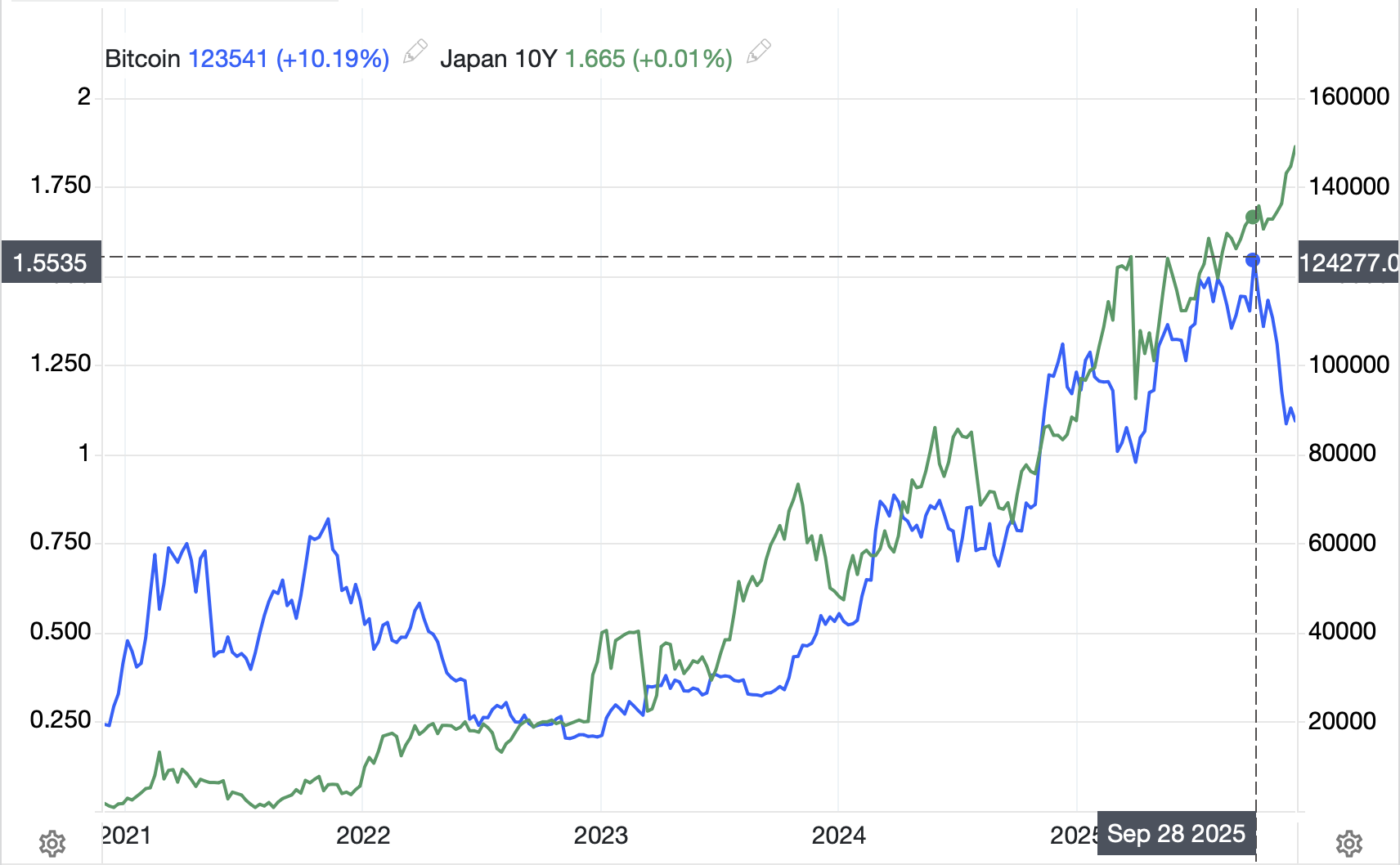
The one exception here is Japan, which has seen 10-year yields march consistently higher over the past year with the past 10 sessions showing consistently higher yields.  Perhaps their debt chickens are finally coming home to roost.

Source: tradingeconomics.com

Turning to commodities, oil’s (+0.85%) modest bounce continues but it remains nearer the bottom than the top of its recent trading range.  The EIA data yesterday showed a surprisingly large draw in crude oil as well as gasoline stocks with reduced imports, so this does make sense.  In the metals markets, yesterday’s rally is being reversed this morning with the major markets all lower by about -0.4%.

Finally, the dollar remains quite uninteresting excepting two currencies; NOK (+0.6%) which is clearly benefitting from the recent rebound in oil while JPY (-0.4%) is under further pressure as there appears to be an increase in short JPY carry trades being initiated, especially against the dollar as more traders discount the idea the Fed is even going to cut 25bps next month.  Otherwise, there is nothing noteworthy here this morning.

We finally get data this week as follows: Initial (exp 225K) and Continuing (1960K) Claims, Philly Fed (7.0), Flash PMI (Manufacturing 49.5, Services 54.2) and Existing Home Sales (3.92M).  We also hear from Atlanta Fed president Bostic this morning, but I do believe the market remains almost entirely focused on Powell’s speech tomorrow.  Of course, if the semiconductor space continues to underperform, that would be an entirely different kettle of fish and likely create some serious market adjustments.  

Net, it is difficult for me to remain too bearish the dollar overall, especially if the market starts to price out a rate cut in September.

Good luck

Adf
Seek the Abyss

As so often has been the case
The market is in Trump’s embrace
Will he make a deal
And sell it with zeal
Or will Putin spit in his face
 
Because of the focus on this
Though PPI data did miss
Most markets held tight
With highs still in sight
As naysayers seek the abyss


Based on the fact that equity markets in the US were all essentially unchanged yesterday, I think it is reasonable to assume that investors are waiting to see the outcome of today’s Trump-Putin meeting in Alaska.  I have no opinion on how things will work out, although I am certainly rooting for a result that includes a ceasefire and the next steps toward a lasting peace.  From a direct market perspective, arguably oil (-0.75% this morning) is the one place where the outcome will have an impact.  Any type of deal that results in the promised end to sanctions on Russian oil seem likely to push prices lower.  In this vein, we continue to see the IEA and EIA reduce their demand forecasts (although some of this is because they keep expecting BEVs to replace ICE engines and that is not happening at the pace they would like to see). However, away from oil, I expect that this will be much more important to overall sentiment than anything else.

But sentiment matters a lot.  As does the attention span of traders, which as we already know, approximates the life of a fruit fly.  For instance, yesterday’s PPI data was unambiguously hotter than expected, with both headline and core monthly jumps of 0.9%.  Surprisingly for many economists, it was not goods prices that rose so much, but rather the price of services.  For the narrative, it is much harder to blame service price hikes on tariffs, than goods price hikes, but not to worry, economists are working hard to make that case.  As well, the near universal claim is that CPI is going to rise much more quickly going forward as evidenced by this rise in PPI.  A quick look at the chart below of annualized PPI shows that we are starting to rise above levels last seen in 2018, but if you recall, CPI then was very low, sub 2.0%. The relationship between the two, CPI and PPI, is not as strong as you might expect.

The contra argument here is that corporations, which were able to raise prices rapidly during the pandemic response are finding it more difficult to do so now.  We have discussed several times how corporate profit margins remain extremely high relative to history and what we may be seeing is the beginnings of those margins starting to compress as companies absorb more of the costs, be they tariffs or labor.  I also couldn’t help but notice the article in the WSJ this morning working to explain why tariffs haven’t boosted inflation as much as many economists expected.  Their answer at least according to this research, is that the many exemptions have resulted in tariffs being collected on only about half of imports, which despite all the headlines touting tariffs are now, on average, somewhere near 18%, makes the effective rate below 10%, higher than in the past, but not devastatingly so.  And remember, imports represent about 14% of GDP.  Let’s do that math.  If half of imports are excluded and the average tariff is more like 9%, we’re looking at 60 basis points of price increases, of which corporates are absorbing a great deal.  

One other thing in the article was how it highlighted the exact result that President Trump is seeking when explaining that more companies are searching for alternative sources of goods in the US.

The tariffs, are however, impacting other nations with China last night reporting a much weaker batch of data as per the below:

                                                                                                              Actual          Previous            Forecast

The property market there continues to drag on the economy, but government efforts to prop up consumption seem to be failing and clearly tariffs are impacting IP as less orders from the US result in less production.  Arguably, though, President Xi’s greatest worry is the rise in Unemployment as the one thing he REALLY doesn’t want is a lot of unemployed young males as that is what foments a revolution.  The interesting thing about the market response here is that while the Hang Seng (-1.0%) fell sharply, the CSI 300 (+0.7%) rallied, seemingly on hopes of additional stimulus being necessary and implemented.  One other thing to note about Chinese markets is that yesterday, 40-year Chinese government yields fell below 30-year Japanese yields for the first time ever, a sign that expectations of future Chinese activity are waning.  With this in mind, even though the renminbi has been gradually appreciating this year (even if we ignore the April Liberation Day spike), the Chinese playbook remains mercantilist at its heart.  I would look for a weaker CNY going forward, although the overnight move was just -0.1%.

Source: tradingeconomics.com

Ok, let’s look at the rest of markets ahead of the Alaska summit and today’s data.  Tokyo (+1.7%) had a strong session as GDP data from Japan was stronger than expected allaying worries that the tariffs would crush the economy there and bringing rate hikes back onto the table.  Australia (+0.7%), too, had a good session on solid corporate and bank earnings but the rest of the region was pretty nondescript with marginal moves in both directions.  In Europe, gains are the order of the day on the continent (DAX +0.3%, CAC 0.65%, IBEX +0.35%, FTSE MIB +1.1%) as hopes for a formalized trade deal being finalized grow.  However, UK stocks are unchanged on the session as investors here seem to be biding their time ahead of the Trump-Putin summit.  US futures are higher led by DJIA (+0.7%) although that appears to be on news that Berkshire Hathaway has taken a stake in United Health after the stock’s recent beatdown.

In the bond markets, Treasury yields are unchanged this morning although they reversed course yesterday, closing higher by 5bps rather than the -3bp opening, pre-PPI, levels.  But that rebound in yields has been seen throughout Europe where sovereigns on the continent are higher by between 3bps and 4bps and JGB yields (+2bps) rose overnight after the stronger than expected GDP data.

Away from oil, metals markets are doing very little this morning as it appears much of the activity has to do with option expirations in the ETFs SLV and GLD, so price action is likely to be choppy, but not instructive.

Finally, the dollar is softer this morning despite the higher Treasury yields.  One of the interesting things is that despite the hotter PPI data, the probability for a September cut, while falling from a chance of 50bps, to a 92.6% probability of a 25bp cut, is still pricing in an almost certain cut.  Remember, we are still a month away from that meeting and we have Jackson Hole in between as well as another NFP and CPI report so lots of potential drivers to change views.  And there is still a lot of talk of a 50bp cut, although for the life of me, I don’t understand the economic rationale there.  But softer the dollar is, falling against all its G10 brethren, on the order of 0.25% or so, and most EMG counterparts, with many having gained 0.4% or so.  But this is a dollar story today.

On the data front, ahead of the summit, which I believe starts at 2:30pm Eastern time, we see Retail Sales (exp 0.5%, 0.3% -ex autos, 0.4% Control Group) and Empire State Mfg (0.0) at 8:30, as well as IP (0.0%), Capacity Utilization (77.5%) at 9:15 and then Michigan Sentiment (62.0) at 10:00.  Retail Sales should matter most as a strong number there will encourage the equity bulls while a weak number will surely bring out the naysayers.  I still have a bad feeling about markets here, but that is my gut, not based on the data right now.  As to the dollar, there are still huge short positions out there and if rate cuts become further priced in, it can certainly decline further.

Good luck and good weekend

Adf

Lest ‘Flation Has Spice

The market absorbed CPI
And equities started to fly
Though Core prices rose
T’was Headline, I s’pose
Encouraged investors to buy
 
As well, Fed funds futures now price
The Fed will cut rates this year thrice
The upshot’s the buck
Is down on its luck
Beware though, lest ‘flation has spice


Core prices rose a bit more than forecast in yesterday’s CPI report although the headline numbers were a touch softer.  The problem for the Fed, if they are truly concerned about the rate of inflation, is that the strength of the numbers came from core services less shelter, so-called Supercore, a number unimpeded by tariffs, and one that has begun to rise again.  As The Inflation Guy™ makes clear in his analysis yesterday, it is very difficult to look at the data and determine that 2% inflation is coming anytime soon.  I know the market is now virtually certain the Fed is going to cut in September, but despite President Trump’s constant hectoring, I must admit the case for doing so seems unpersuasive to me.

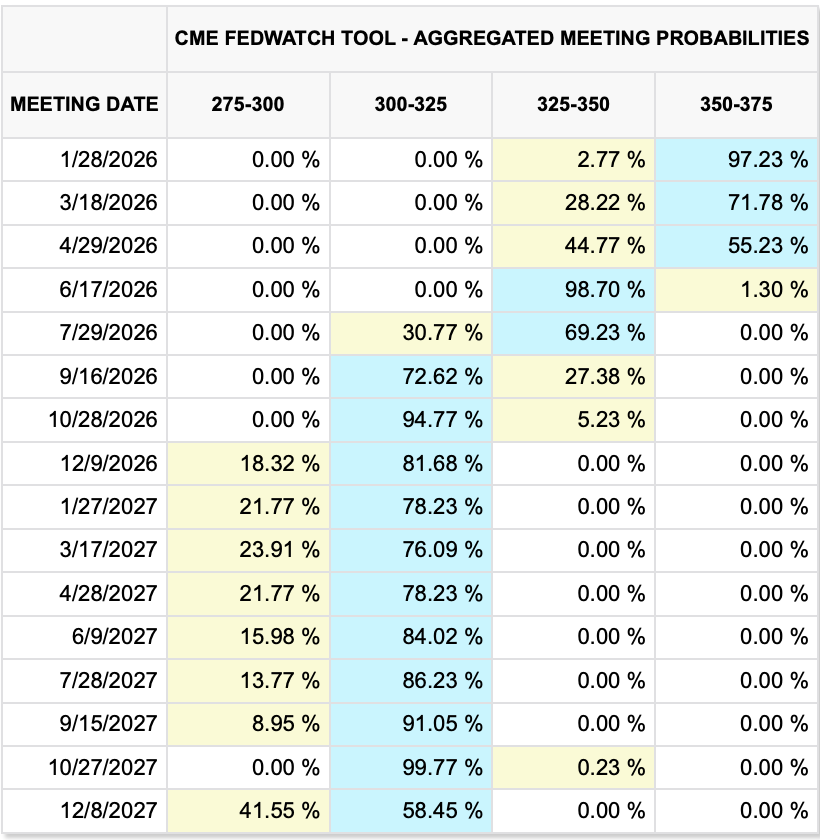
Here are the latest aggregated probabilities from the CME and before you say anything, I recognize the third cut is priced in January, but you need to allow me a little poetic license!

However, since I am just a poet and neither institutions nor algorithms listen to my views, the reality on the ground was that the lower headline CPI number appeared to be the driver yesterday and into today with equities around the world rallying in anticipation of Fed cuts.  As well, the dollar is under more severe pressure this morning on the same basis.  However, it remains difficult for me to look at the situation in nations around the world and conclude that the US economy is going to underperform in any meaningful way over time.  

So, to the extent that a currency’s relative value is based on long-term economic fundamentals, it is difficult to accept that the dollar’s relative fiat value will decline substantially, and permanently, over time.  I use the euro as a proxy for the dollar, which is far better than the DXY in my opinion as the Dollar Index is a geometric average of 6 currencies (EUR, JPY, GBP, CAD, SEK and CHF) with the euro representing 57.6% of the basket.  And I assure you that in the FX markets, nobody pays any attention to the DXY.  Either the euro or the yen is seen as the proxy for the “dollar” and its relative value.  At any rate, if we look at a long-term chart of the euro below, we see that the twenty-year average is above the current value which pundits want to explain as a weak dollar.  Too, understand that back in 1999, when the euro made its debut, it started trading at about 1.17 or so, remarkably right where it is now!

Source: finance.yahoo.com

My point is that the dollar remains the anchor of the global financial system, and given the current trends regarding both economic activity and the likely ensuing central bank policies, as well as the ongoing performance of US assets on a financial basis, while short-term negativity on the dollar can be fine, I would be wary of expecting it to lose its overall place in the world.

Speaking of short-term views, especially regarding central bank activities, it appears clear that the market is adjusting the dollar’s value on this new idea of the Fed cutting more aggressively.  If that is, in fact, what occurs, I accept the dollar can decline relative to other currencies, but I really would be concerned about its value relative to things like commodities.  And that has been my view all along, if the Fed does cut rates, gold is going to be the big beneficiary.

Ok, let’s review how markets have absorbed the US data, as well as other data, overnight.  Yesterday’s record high closings on US exchanges were followed by strength in Tokyo (+1.3%), Hong Kong (+2.6%), China (+0.8%) despite the weakest domestic lending numbers in the history of the series back to 2005.  In fact, other than Australia (-0.6%) every market in Asia rallied.  The Australian story was driven by bank valuations which some feel are getting extreme despite the RBA promising further rate cuts, or perhaps because of that and the pressure it will put on their margins.  Europe, too, is rocking this morning with gains across the board led by Spain (+1.1%) although both Germany (+0.9%) and France (+0.6%) are doing fine.  And yes, US futures are still rising from their highs with gains on the order of 0.3% at this hour (7:45).

In the bond market, Treasury yields have slipped -3bps this morning, with investors and traders fully buying into the lower rate idea.  European sovereigns are also rallying with yields declining between -4bps and -5bps at this hour.  JGBs are the exception with yields there edging higher by 2bps, though sitting right at their recent “home” of 1.50%.  as you can see from the chart below, 1.50% appears to be the market’s true comfort level.

Source: tradingeconomics.com

In the commodity space, oil (-0.6%) continues to slide as hopes for an end to the Russia-Ukraine war rise ahead of the big Trump-Putin meeting on Friday in Alaska.  Nothing has changed my view that the trend here remains lower for the time being as there is plenty of supply to support any increased demand.

Source: tradingeconomics.com

Metals, meanwhile, are all firmer this morning with copper (+2.6%) leading the way although both gold (+0.4%) and silver (+1.7%) are responding to the dollar’s decline on the day.

Speaking of the dollar more broadly, its decline is pretty consistent today, sliding between -0.2% and -0.4% vs. almost all its counterparts, both G10 and EMG.  This is clearly a session where the dollar is the driver, not any particular story elsewhere.

On the data front, there is no primary data coming out although we will see the weekly EIA oil inventory numbers later this morning with analysts looking for a modest drawdown.  We hear from three Fed speakers, Bostic, Goolsbee and Barkin, with the latter explaining yesterday that basically, he has no idea what is going on and no strong views about cutting or leaving rates on hold.  If you ever wanted to read some weasel words from someone who has an important role and doesn’t know what to do, the following quote is perfect: “We may well see pressure on inflation, and we may also see pressure on unemployment, but the balance between the two is still unclear.  As the visibility continues to improve, we are well positioned to adjust our policy stance as needed.”  

And that’s all there is today.  The dollar has few friends this morning and I see no reason for any to materialize today.  But longer term, I do not believe a dollar weakening trend can last.

Good luck

Adf
Misguided

On Friday, the news was a sign
Of imminent US decline
The Fed was a hawk
And all of the talk
Was Trump’s actions wiped off the shine
 
But yesterday, markets decided
That Friday’s response was misguided
They’ve come to believe
A Fed funds reprieve
By Powell will soon be provided


As I have frequently written in the past, markets are perverse.  The narrative Friday was about the dire straits in which the US found itself with the employment situation collapsing and the recession that has been forecast for the past three years finally upon us.  Part of this story was because of the Fed’s seeming intransigence regarding interest rates as made clear by Chairman Powell’s relatively hawkish comments at the FOMC press conference last week.

But that story is sooo twenty-four hours ago. In the new world, the huge bond market rally that was seen on Friday, and equally importantly, the changing pricing of Fed funds rate cuts has the new narrative as, the Fed is going to cut so buy stonks!  Confirmation of this new narrative was provided by SF Fed President Mary Daly who remarked yesterday evening, “time is nearing for rate cuts, may need more than two.”  All I can say is wow!  

The below chart shows the daily moves, in basis points, of the 2-year Treasury note which is seen as the market’s best indicator or predictor of future Fed funds rates.  On Friday, the yield fell nearly 25bps, essentially pricing in one additional rate cut coming, and as we saw with the Fed funds futures market, that pricing is now anticipating three cuts this year.  Ms Daly merely reconfirmed that news.

Source: https://x.com/_investinq/status/1951356470877925408?s=46

Perhaps it is fair to ask why Daly has taken so long to come around to this view.  After all, she is a known dove and has been for her entire time at the Fed.  As I have asked before, why haven’t the other known doves, like Governors Cook and Jefferson, been out there talking about rate cuts?  For anyone who wants to continue to believe that the Fed is apolitical, nonpartisan or above politics, this is exhibit A as to why it is not.  In fact, if you look, only one Board member was considered a hawk in this analysis by In Touch Markets, and she just resigned.  The other hawks are all regional Fed presidents.  Perhaps this is why they were so slow to raise rates when inflation was roaring in 2022 and why they were so anxious to cut rates in 2024 on virtually no news other than the upcoming election. 

To be clear, until Friday’s NFP data, it was difficult to make the case, in my mind, for a cut because I continue to see inflationary pressures beyond any tariff impacts.  But if the labor market is weaker than had been assumed, that will certainly open the door to more cuts.  Of course, the conundrum is, if the economy is so weak that the Fed needs to cut, why are stocks rallying?  Arguably, a weak economy would foretell weaker earnings growth, a direct negative to equity valuations.  But that appears to be old-fashioned thinking.  I guess I am just an old-fashioned guy.

Ok, let’s turn to the overnight activity.  Starting with bonds, since the big move Friday, Treasury yields have been little changed, climbing 2bps overnight to 4.21%, but still hovering near the bottom of their recent trading range with only the Liberation Day announcement panic showing yields below the current level.  This is a great boon for the Treasury as auctions of 3-, 10-, and 30-year Treasuries are due this week starting with the 3-year today.

Source: tradingeconomics.com

European sovereign yields have also edged higher by 1bp across the board after PMI data was released this morning, pretty much exactly at expected levels.  The outlier last night was JGB yields which slipped -4bps and continue to slide away from designs of a BOJ rate hike.

In the equity markets, yesterday’s US rally was followed almost universally in Asia (Japan +0.65%, China +0.8%, Hong Kong +0.7%, Australia +1.2%) with only India (-0.3%) lagging there.  As to Europe, it too is having a good day with the DAX (+0.8%) leading the way although strength almost everywhere as the PMI data was good enough to keep spirits higher.

In the commodity markets, oil (-1.1%) is slipping for a fourth consecutive day, but is still right in the middle of its $60 – $70 trading range.  There remain so many potential geopolitical issues with saber rattling between the US and Russia and President Trump’s threatened excess tariffs on nations who buy Russian oil that it remains difficult to discern supply/demand characteristics.  Certainly, if the US is heading into a recession, that is likely to dampen demand for a while, but that remains unclear at this time.  As to the metals, gold (-0.65%) is giving back some of its post NFP gains but if I look at the chart below, all it shows is a relatively narrow trading range with no impetus in either direction.  

Source: tradingeconomics.com

The rest of the metals complex is being dragged lower by gold this morning, but not excessively so.

Finally, the dollar is a touch stronger today, despite the rate cut talk, as the euro (-0.4%) and yen (-0.55%) lead the G10 currencies down.  While I understand the rationale for the dollar to soften in the short- and medium-term vs its counterparts, it is very difficult for me to look at the political and economic situations elsewhere in the world and think I’d rather be investing there.  Europe is a mess as is Japan.  And don’t get me started on the emerging market bloc.  So, remember, while day-to-day movements can be all over the map and are impacted by things like data releases or announcements, structural strength or weakness remains largely in place, and the US situation appears stronger than most others for now.   Touching briefly on EMG currencies, the dollar is firmer vs. virtually all of them, mostly on the order of 0.4% or so.

On the data front, today brings the Trade Balance (exp -$61.4B) and then ISM Services (51.5) at 10:00.  We don’t get the first post-FOMC speech until tomorrow by Governor Cook, so it will be interesting to see if there are more doves who are willing to show their colors.  But in the end, as demonstrated by the quick reversal of the narrative from Friday to Monday, there remains an underlying bid to risk assets and we will need to see substantial economic weakness to remove that bid, even temporarily.

Good luck

Adf