Cold Growth

Winter approaches
Both cold weather and cold growth
Plague Japan’s future


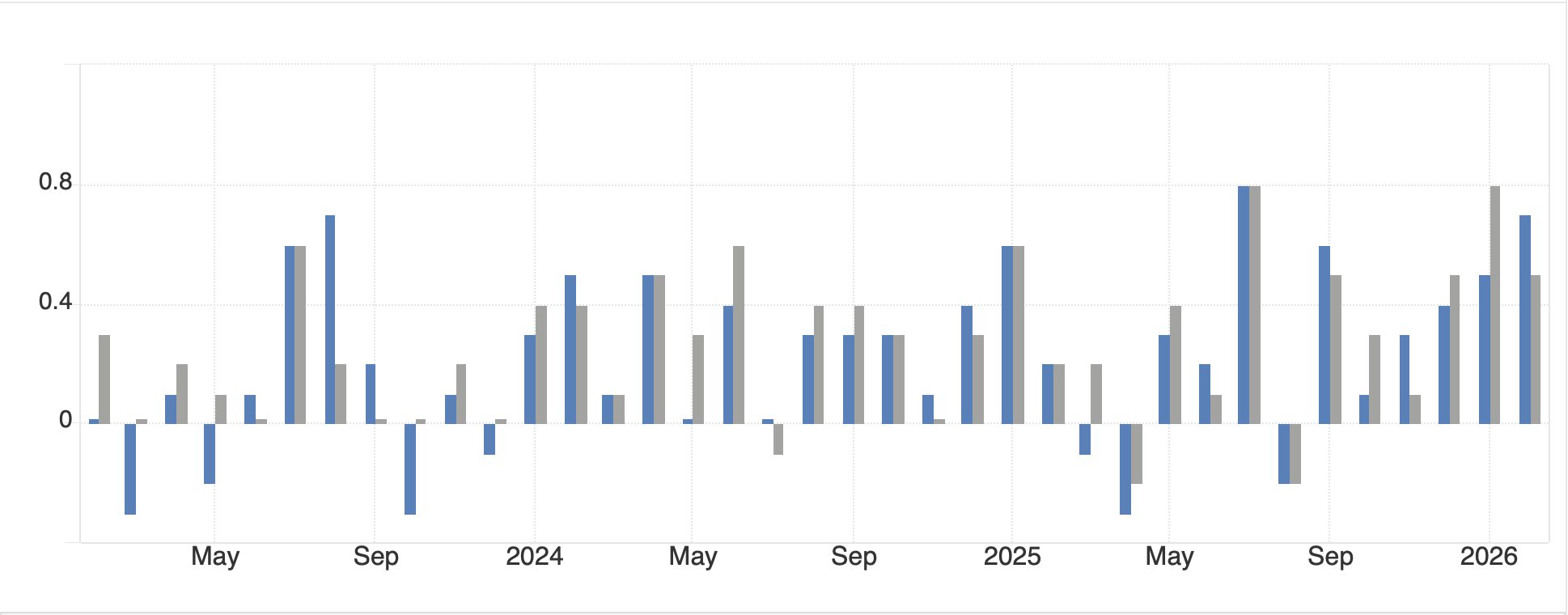
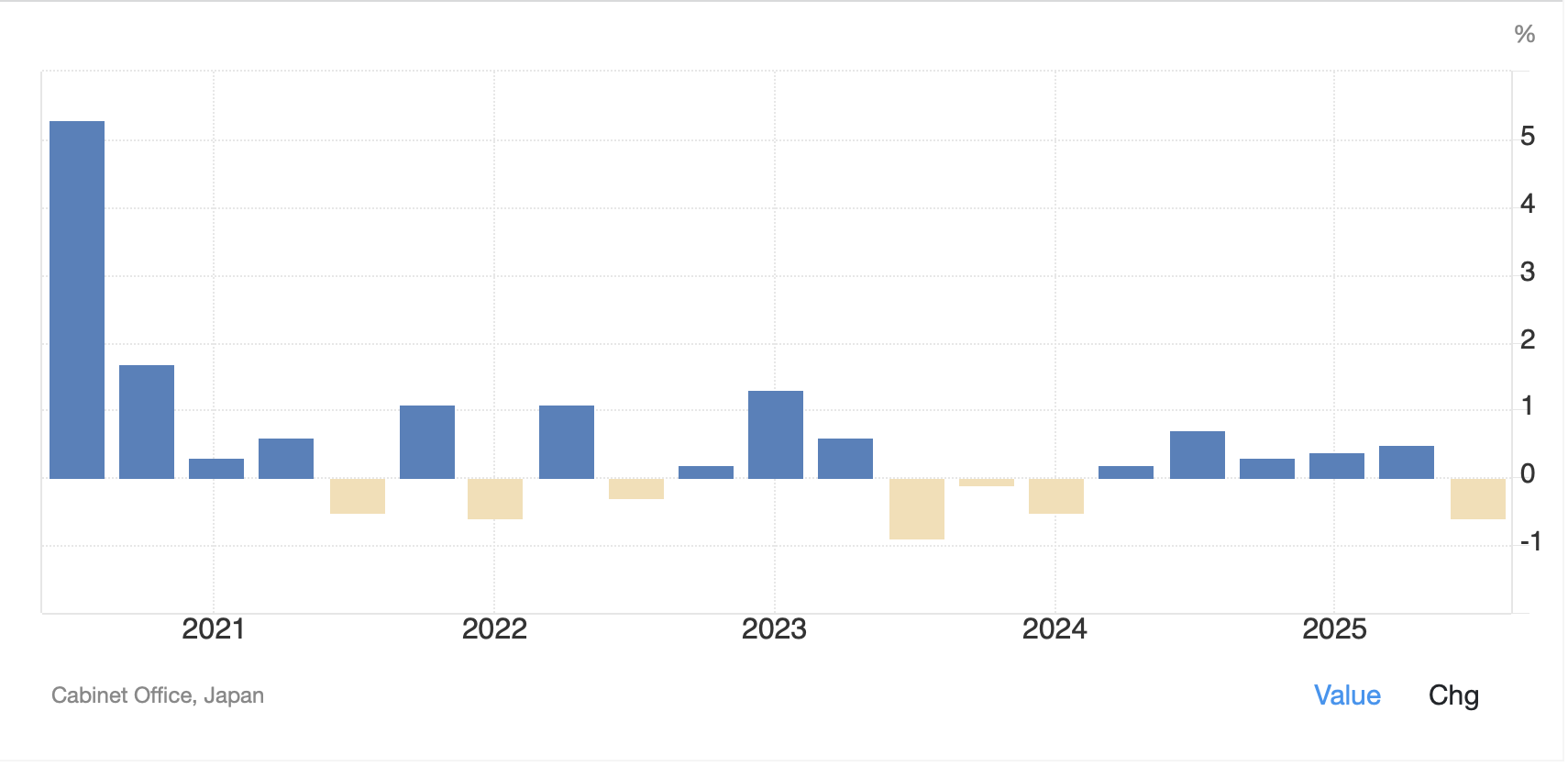
It’s not a pretty picture, that’s for sure.  A raft of Japanese data was released early Sunday evening with GDP revised lower (-0.6% Q/Q, -2.6% Y/Y) and as you can see from the Q/Q chart below, it is hard to get excited about prospects there.

Source: tradingeconomics.com

Of course, this is what makes it so difficult to estimate how Ueda-san will act in a little less than two weeks’ time.  On the one hand, inflation remains a problem, currently running at 3.0% and showing no signs of declining.  Recall, the BOJ has a firm 2.0% target, so they are way off base here.  Add to that the fact that inflation in Japan had been virtually zero for the prior 15 years and the population is starting to get antsy.  However, if growth is retreating, how can Ueda-san justify raising rates?

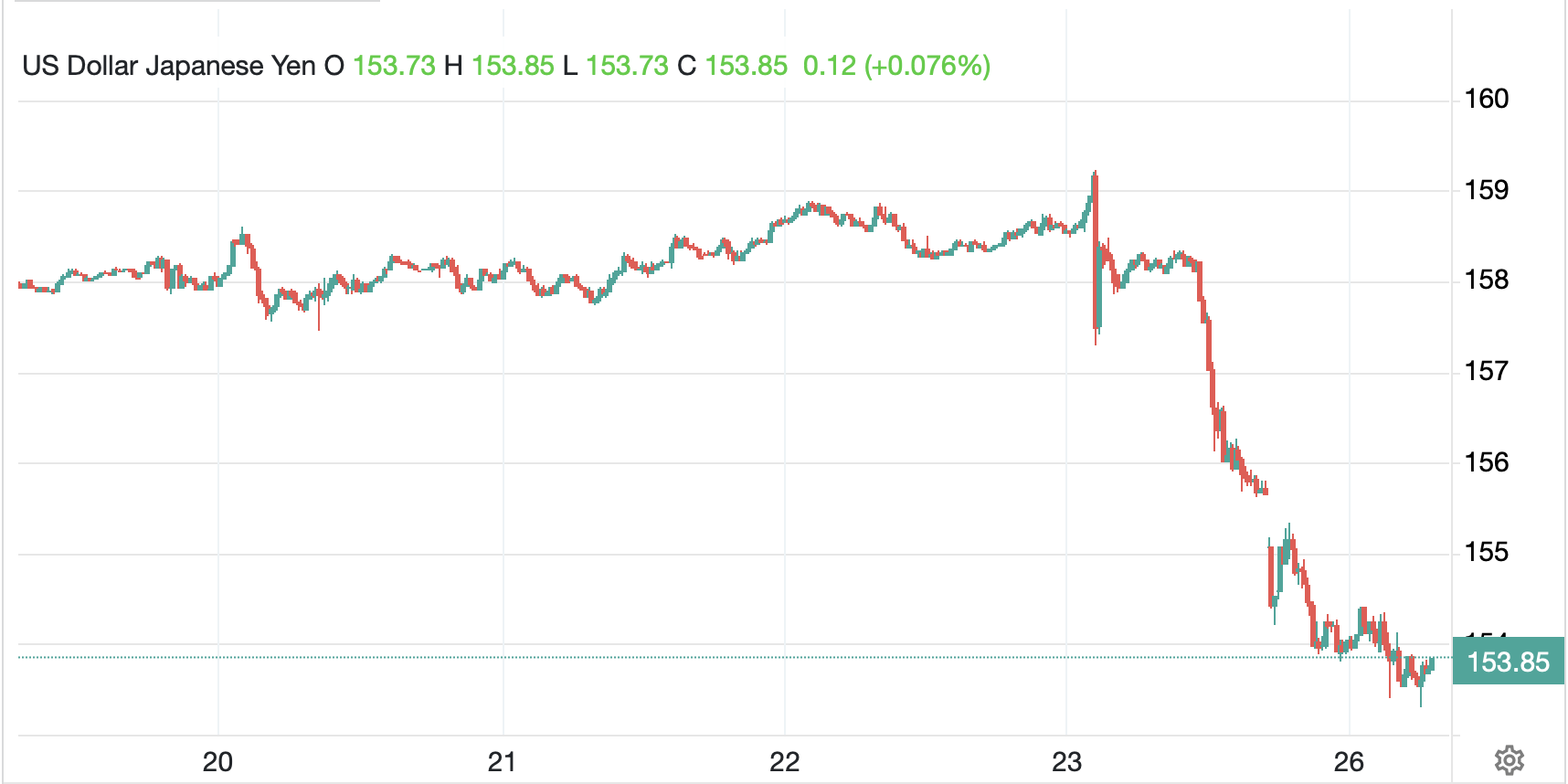
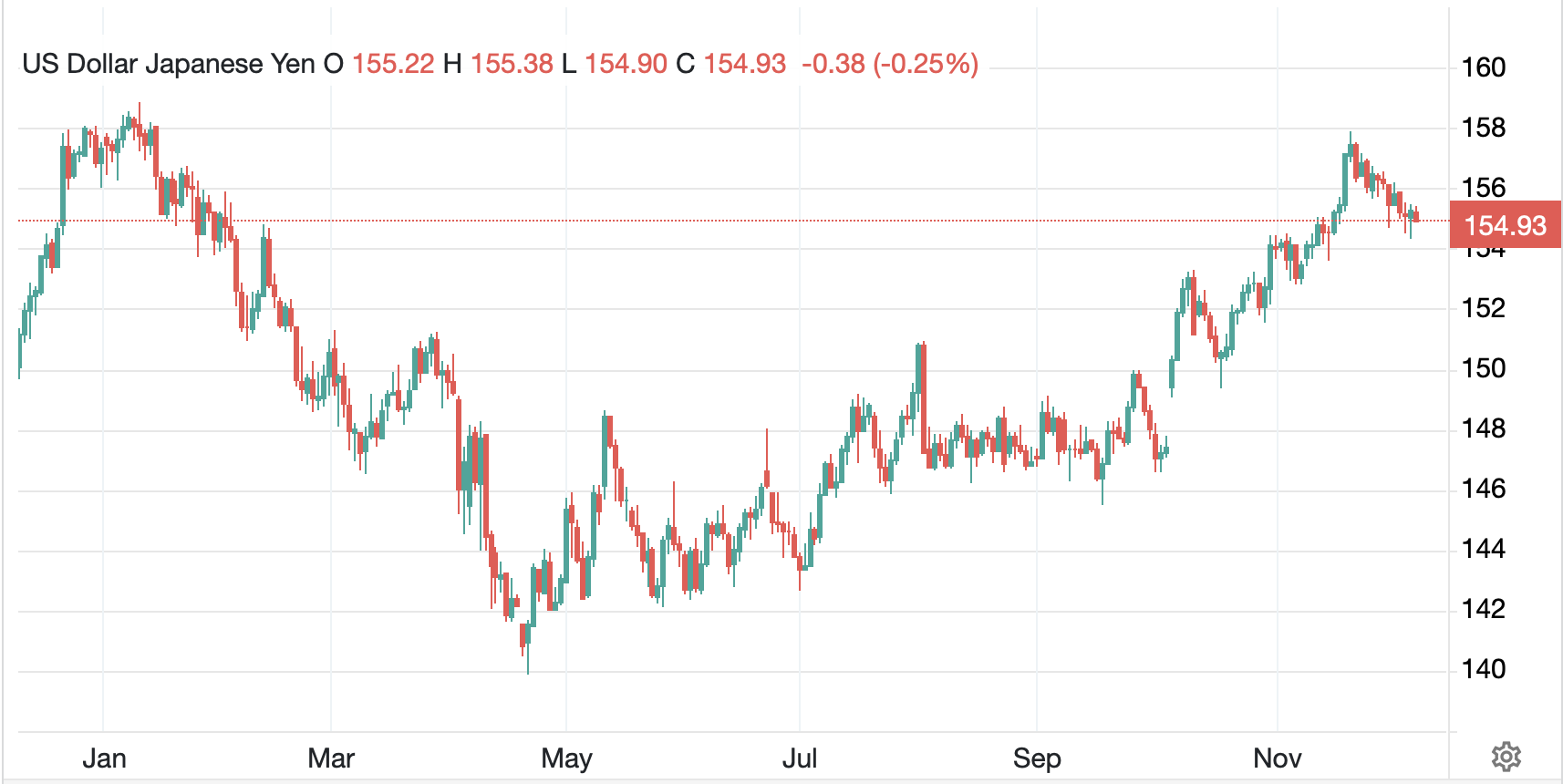
In the meantime, the punditry is having a field day discussing the yen and its broad weakness, although for the past three weeks, it has rebounded some 2% in a steady manner as per the below chart,

Source: tradingeconomics.com

As well, much digital ink has been spilled regarding the 30-year JGB yield which has traded to historic highs as per the below chart from cnbc.com.

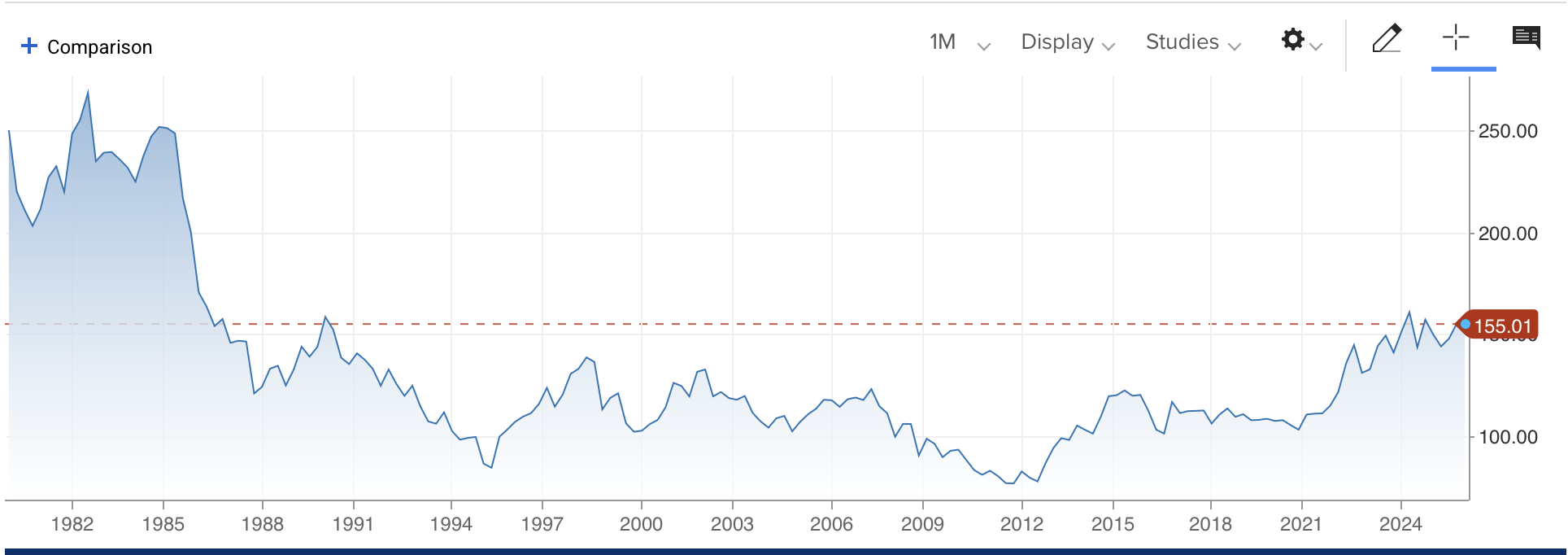
There are many pundits who have the view that the Japanese situation is getting out of control.  They cite the massive public debt (240% of GDP), the fact that the BOJ holds 50% of the JGB market, the fact that the yen has declined to its lowest level (highest dollar value) since a brief spike in 1990 and before that since 1986 when it was falling in the wake of the Plaza Accord.

Source: cnbc.com

Add in weakening economic growth and growing tensions with China and you have the makings of a crisis, right?  But ask yourself this, what if this isn’t a crisis, but part of a plan.  Remember, the carry trade remains extant and is unlikely to disappear just because the BOJ raises rates to 0.75% in two weeks.  This means that Japanese investors are still enamored of US assets, notably Treasuries, but also stocks and real estate, as a weakening yen flatters their holdings.  Too, it helps Japanese companies compete more effectively with Chinese competitors who benefit from a too weak renminbi as part of China’s mercantilist model.  Michael Nicoletos, one of the many very smart Substack writers, wrote a very interesting piece on this subject, and I think it is well worth a read.  In the end, none of us know exactly what’s happening but it is not hard to accept that some portion of this theory is correct as well.  The one thing of which I am confident is the end is not nigh.  There is still a long time before things really become problematic.

And the yen?  In the medium term I still think it weakens further, but if the Fed gets very aggressive cutting rates, that will likely result in a short-term rally.  But much lower than USDJPY at 145-150 is hard for me to foresee.

Turning to the other noteworthy news of the evening, the Chinese trade surplus has risen above $1 trillion so far in 2025, with one month left to go in the year.  This is a new record and highlights the fact that despite much talk about the Chinese focusing more on domestic consumption, their entire economic model is mercantilist and so they continue to double down on this feature.  While Chinese exports to the US fell by 29% in November, and about 19% year-to-date, they are still $426 billion.  However, China’s exports to the rest of the world have grown dramatically as follows: Africa 26%, Southeast Asia 14% and Latin America 7.1%.  Too, French president Emanuel Macron just returned from a trip to Beijing, meeting with President Xi, and called out the Chinese for their export policies, indicating that Europe needed to take actions (raise tariffs or restrict access) before European manufacturing completely disappears.  (And you thought only President Trump would suggest such things!)

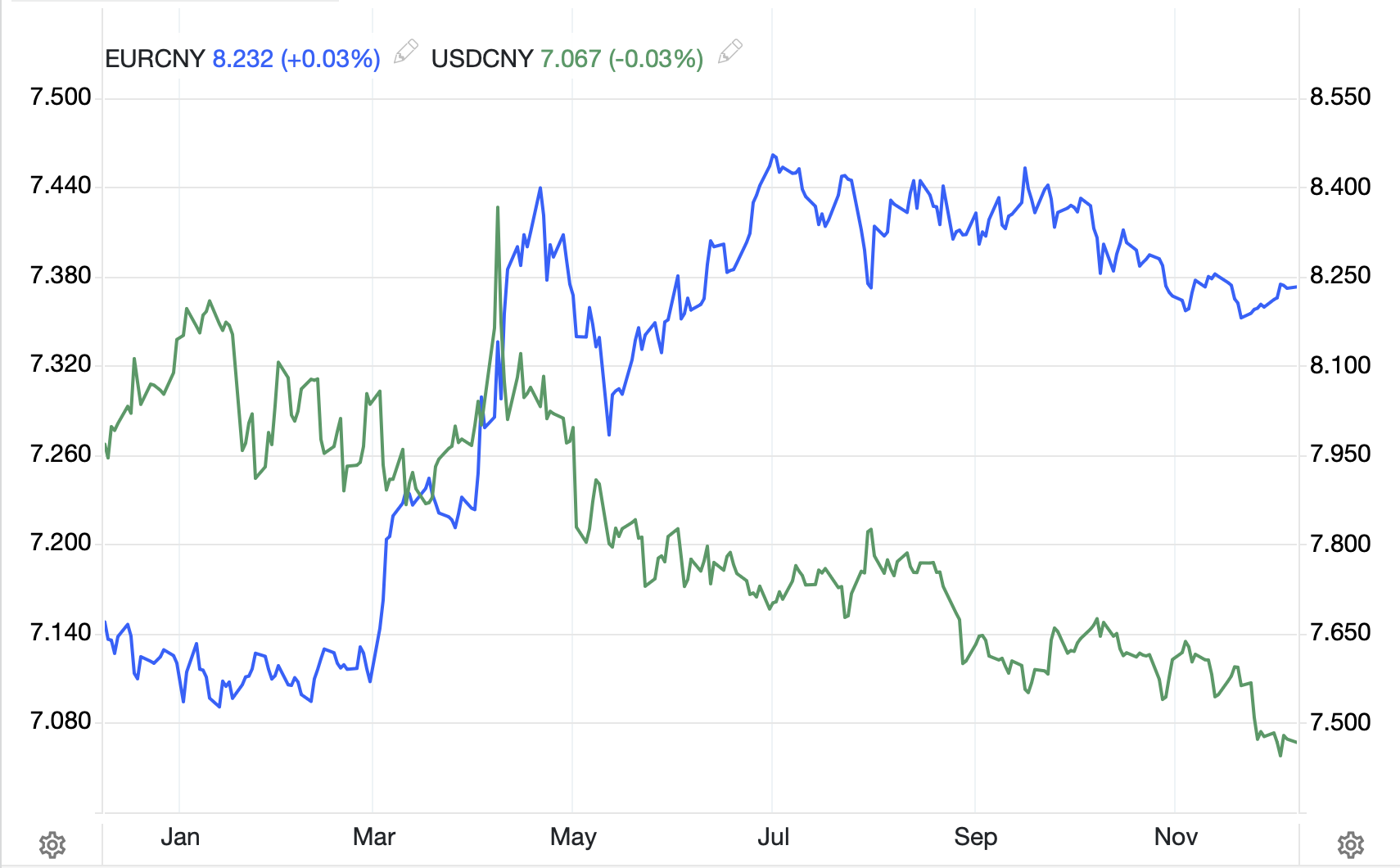
So, how did markets respond to this?  Well, the CSI 300 rose 0.8% (although HK fell -1.2%) and the renminbi was unchanged.  But I think it is worth looking at the renminbi’s performance vs. other currencies, notably the euro, to understand Monsieur Macron’s concerns.

Source: tradingeconomics.com

It turns out that the CNY has weakened by nearly 7.5% vs. the euro this year, a key driver of the growing Chinese trade surplus with Europe (and now you better understand the Japanese comfort with a weaker JPY).  My observation is that the pressure on Chinese exports is going to continue to grow going forward, especially from the other G10 nations.  Expect to hear more about this through 2026.  It is also why I see the eventual split of a USD/CNY world.

Ok, let’s look around elsewhere to see what happened overnight.  Elsewhere in Asia, things were mixed with Tokyo (+0.2%) up small, Korea (+1.3%) having a solid session along with Taiwan (+1.2%) although India (-0.7%) went the other way.  As to the smaller, regional exchanges, they were mixed with small gains and losses.  In Europe, it is hard to get excited this morning with minimal movement, less than +/- 0.2% across the board.  And at this hour (7:25) US futures are little changed.

In the bond market, yields are continuing to rise around the world.  Treasury yields (+2bps) are actually lagging as Europe (+4bps to +6bps on the continent and the UK) and Japan (+3bps) are all on the way up this morning.  This is Fed week, so perhaps that is part of the story, although the cut is baked in (90% probability).  Perhaps this is a global investor revolt at the fact that there is exactly zero evidence that any government is going to do anything other than spend as much money as they can to ensure that GDP continues to grow.  QE will be making another appearance sooner rather than later, in my view, and on a worldwide basis.

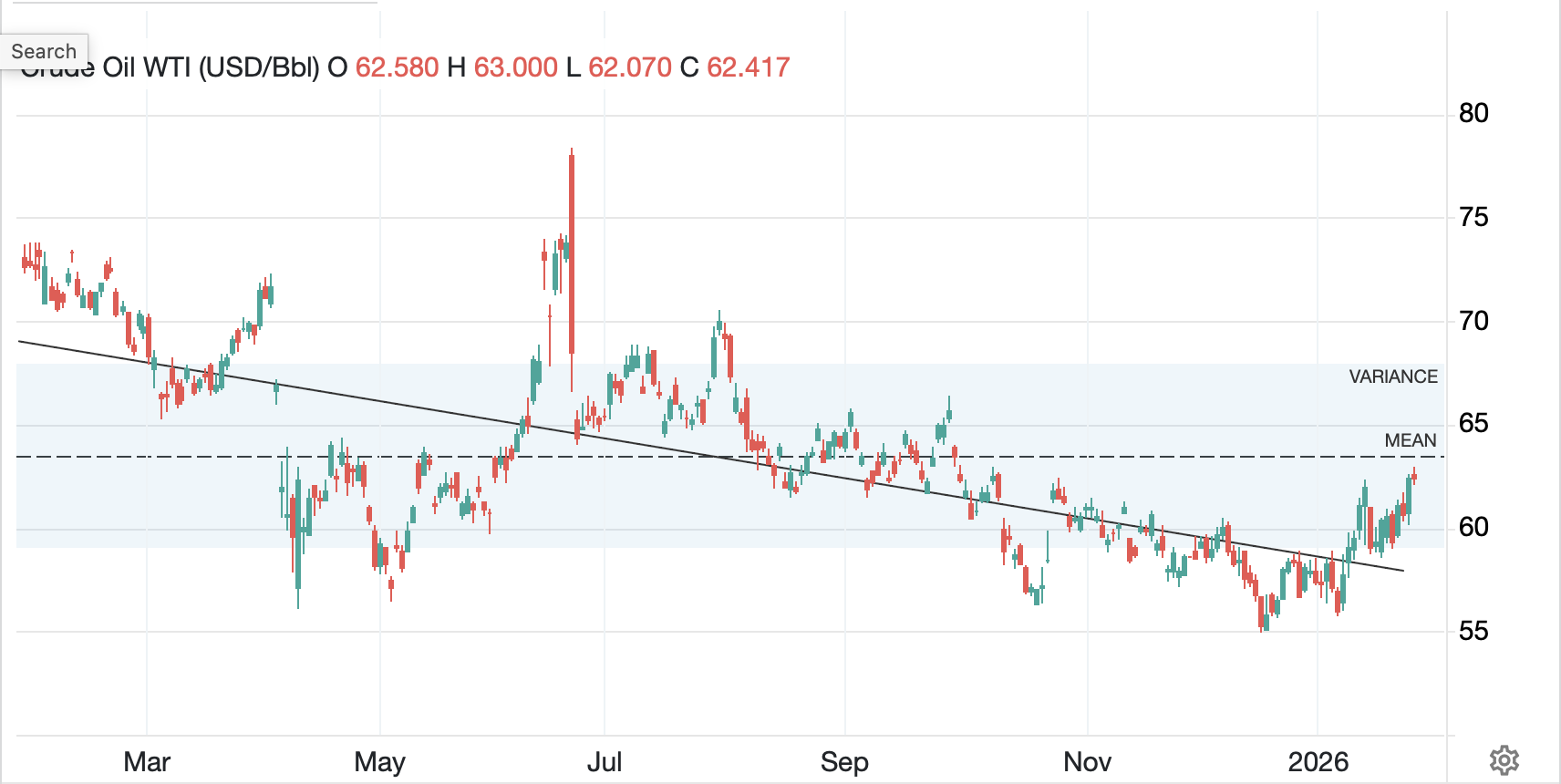
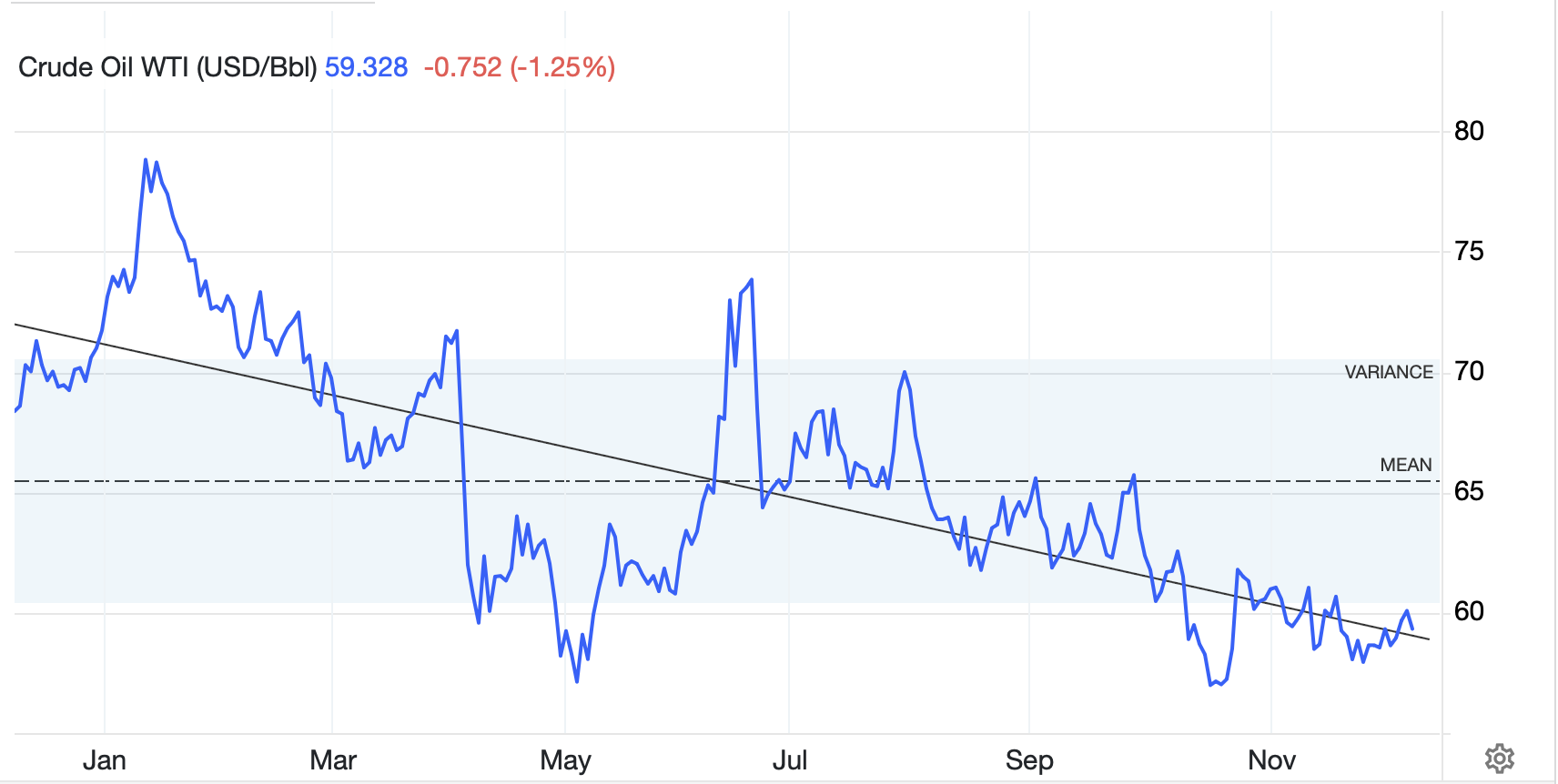
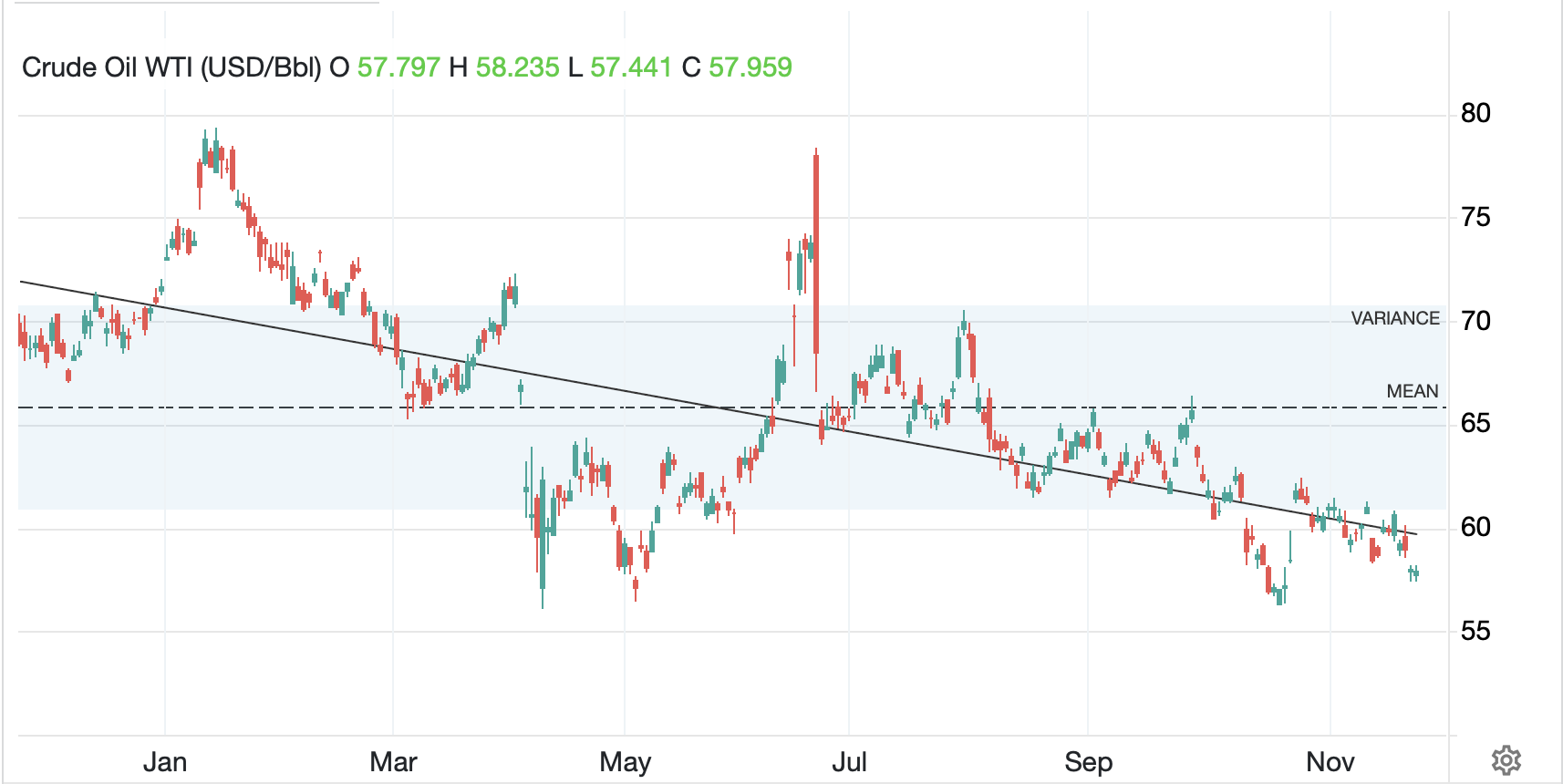
When we see that, commodity prices seem likely to rise even further, at least metals prices will and this morning that is true across the precious metals space (Au +0.3%, Ag +0.3%, Pt +1.2%) although copper is unchanged on the day.  Oil (-1.2%) though is not feeling the love this morning despite growing concerns of a US invasion of Venezuela, ongoing Ukrainian strikes against Russian oil infrastructure and the prospects of central bank rate cuts to stimulate economic activity.  One thing to note in the oil market is that China has been a major buyer lately, filling its own SPR to the brim, so buying far more than they consume.  If that facility is full, then perhaps a key supporter of prices is gone.  I maintain my view that there is plenty of oil around and prices will continue to trend lower as they have been all year as per the below chart.

Source: tradingeconomics.com

Finally, nobody really cares about the FX markets this morning with the DXY exactly unchanged and all major markets, other than KRW (+0.5%) within 0.2% of Friday’s closing levels.  There is a lot of central bank activity upcoming, and I suppose traders are waiting for any sense that things may change.  It is worth noting that a second ECB member, traditional hawk Olli Rehn, was out this morning discussing the potential need for lower rates as Eurozone growth slows further and he becomes less concerned about inflation.  Expect to hear more ECB members say the same thing going forward.

On the data front, things are still messed up from the government shutdown, but here we go:

TuesdayRBA Rate Decision3.6% (unchanged)
 NFIB Small Biz Optimism98.4
 JOLTS Job Openings (Sept)7.2M
WednesdayEmployment Cost Index (Q3)0.9%
 Bank of Canada Rate Decision2.25% (unchanged)
 FOMC Rate Decision3.75% (-25bps)
ThursdayTrade Balance (Sept)-$61.5B
 Initial Claims221K
 Continuing Claims1943K

Source: tradingeconomics.com

There is still a tremendous amount of data that has not been compiled and released and has no date yet to do so.  Of course, once the FOMC meeting is done on Wednesday, we will start to hear from Fed speakers again, and Friday there are three scheduled (Paulson, Hammack and Goolsbee).

As we start a new week, I expect things will be relatively quiet until the Fed on Wednesday and then, if necessary, a new narrative will be created.  Remember, the continuing resolution only goes until late January, so we will need to see some movement by Congress if we are not going to have that crop up again.  In the meantime, there is lots of talk of a Santa rally in stocks and if I am right and ‘run it hot’ is the process going forward, that has legs.  It should help the dollar too.

Good luck

Adf

Circumspect

Said Williams, I really don’t think
Inflation will get us to blink
The jobs situation
Has led the narration
That growth has now started to shrink
 
But is that assumption correct?
In truth, it’s quite hard to detect
Atlanta’s Fed states
The ‘conomy’s great
And so, rate cuts are circumspect


Friday, John Williams was the latest FOMC member to regale us with his views and left us with the following:

“I view monetary policy as being modestly restrictive, although somewhat less so than before our recent actions. Therefore, I still see room for a further adjustment in the near term to the target range for the federal funds rate to move the stance of policy closer to the range of neutral, thereby maintaining the balance between the achievement of our two goals…

“My assessment is that the downside risks to employment have increased as the labor market has cooled, while the upside risks to inflation have lessened somewhat. Underlying inflation continues to trend downward, absent any evidence of second round effects emanating from tariffs.”

The reason his comments are important is because, not only is he a permanent voting member as NY Fed president, but he is also deemed quite close to Chairman Powell, and the belief is Powell okayed the text, implying Powell is still leaning toward a cut.  The Fed funds futures market certainly thinks so as the probability of a cut jumped from 32% on Thursday to 75% this morning.  In fact, that seemed to be the driver of the rebound in equity markets on Friday as futures market started their all-day rally right as he spoke at 7:30 in the morning.

Source: tradingeconomics.com

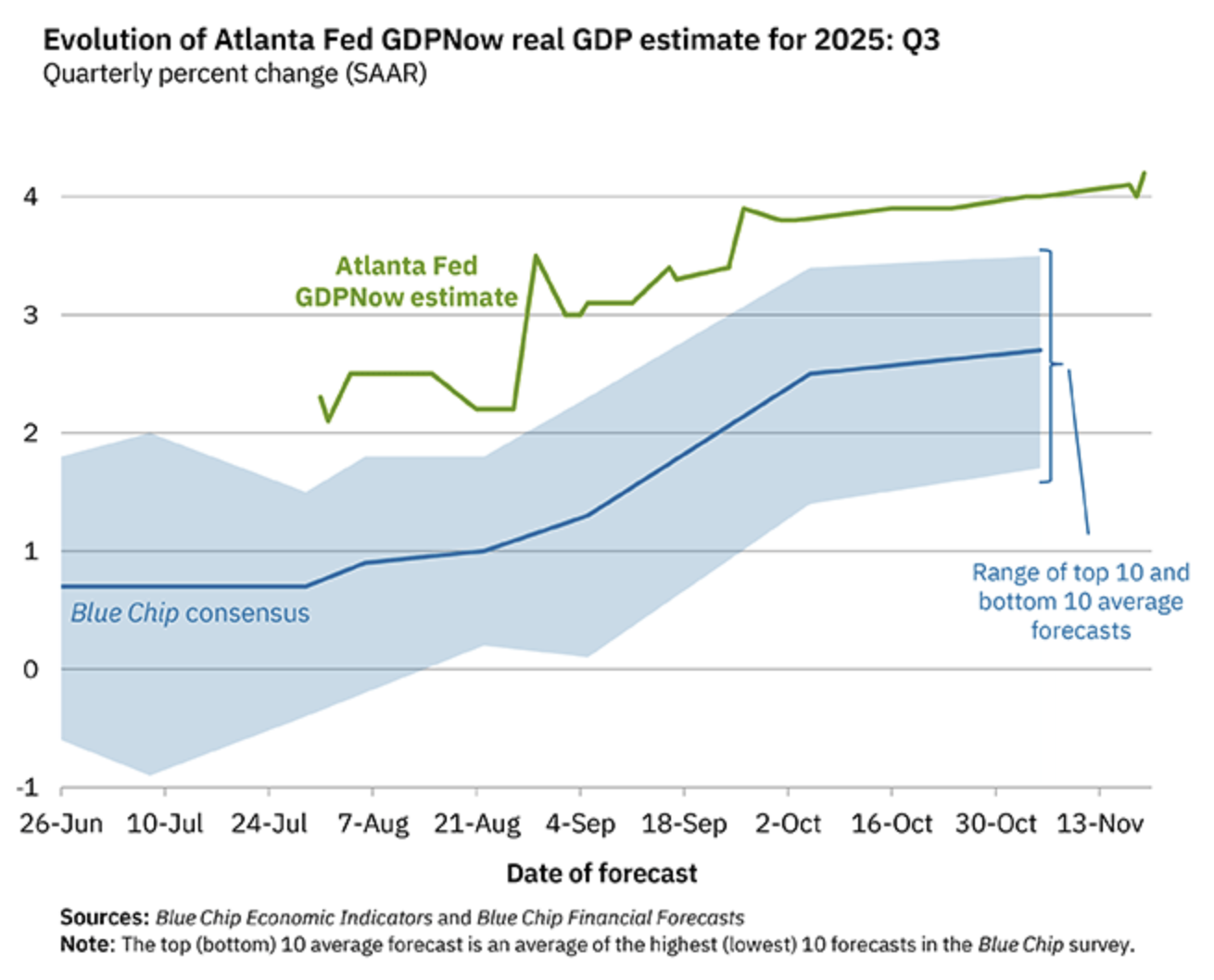
As to the Atlanta Fed’s GDPNow forecast, it ticked higher on Friday and is now sitting at 4.2% for Q3, certainly not synchronous with a major employment crisis.

This week, we will start to get much more information from the BLS and BEA although there is still a huge hole in that output, notably CPI, PCE and GDP.  It will likely take several more months before the rhythm of data gets back to the pre-shutdown cadence and more importantly, it offers the same level of completeness that existed back then.  I guess the FOMC will have to earn their keep for a while longer.

But Williams triggered a solid risk-on session with equities rallying and Treasury yields slipping, while the dollar held tight.  However, I want to touch on one more thing before looking at markets, where the overnight session was rather bland, and that is in reference to a Substack article by Michael Green I read over the weekend that offered a more quantitative approach toward understanding why despite what appears to be solid economic activity, so many people are so unhappy, unhappy enough to believe Socialism is a better choice for the nation going forward. 

The essence of the article, which is very well worth reading as he does all the math to prove his points, is that the delineation of poverty in the US (and I suspect in many Western nations) is laughably low.  For instance, the current poverty line is $31,200, which we all know is far below livable, while the current family median wage in the US is ~$80,000.  Seemingly, most folks should have no problems.  But Green does the calculations to show that if a family of 4 earns less than ~$140,000, they are going to struggle, even if they live in a lower cost area, not NYC where you probably need $350,000 to live.  Between health care, childcare, housing and food, etc., less than that $140k means you are not only living paycheck to paycheck but falling behind as well.

Read the article, linked above, and afterward, you can get a better appreciation for how Zohran Mamdani was elected Mayor of New York City, promising all sorts of free stuff, even though he has approximately zero chance of delivering any of it.

At any rate, that is background for the week ahead.  In Asia, Japan was closed for Workers Day, but Takaichi-san continues to make news regarding her hawkish stance on China.  Meanwhile, bourses in the region had a mixes session with some nice gainers (HK +2.0%, Australia +1.3%, Indonesia +1.85%) although the bulk of the rest of the region saw relatively little overall movement, +/-0.2% or so.  I guess they didn’t understand the benefits of the Fed potentially cutting rates. 🙃

Meanwhile, in Europe, things are far less interesting with a mix of gainers (Spain +0.5%, Germany +0.3%) and laggards (France -0.3%, Italy -1.1%) and the only notable news released being the German Ifo Expectations which slipped although remain solidly within its recent range.  Turning to US futures, at this hour (7:00), they are pointing higher by 0.5%.

In the bond market, Treasury yields continue to slide, down -2bps this morning and now back at 4.05%.  Clearly, the change in sentiment regarding the Fed rate cuts is dragging this yield lower for now.  In Europe, sovereign yields are little changed, overall, with some showing a -1bp decline and others completely lifeless.  Of course, JGB yields are unchanged given the Tokyo holiday.

In the commodity space, oil (-0.25%) continues to drift lower and the trend remains very much in that direction as can be seen in the chart below.  There was a very interesting article by Doomberg on Substack this week, reviewing their call that the idea of peak cheap oil is a myth, and there is a virtually unlimited supply of hydrocarbons available with only the politics preventing more production. (For instance, consider the UK essentially shutting down their North Sea oil production despite being in the midst of a self-inflicted energy crisis with the highest electricity prices in the world.  That’s not geology, that’s politics.)  But geology shows there is plenty to go around and growing supply will continue to pressure prices lower.

Source: tradingeconomics.com

Meanwhile, the metals markets are fairly quiet this morning with gold (+0.25%) and silver (+0.1%) showing far less movement than we have seen of late.  The one thing to note is that while both these metals are well off their highs from last month, they both seem to have found a comfortable resting place for now, and nothing about the global macroeconomic situation leads me to believe that the direction is lower from here.

Finally, the dollar is a touch softer this morning with the euro (+0.25%) the largest gainer in the G10 although JPY (-0.3%) remains under pressure overall.  However, in the EMG bloc, INR (+0.5%) and the CE3 (HUF +0.4%, CZK +0.4%. PLN +0.5%) are all firmer with many other currencies in this bloc creeping higher by 0.2% or so.  Interestingly, the DXY has barely slipped and remains above 100 for now.

This week, we are going to see a lot of the delayed September data come out, so like the NFP report from last week, which was old news, the question is, will we learn anything?  But here is a listing to keep in mind:

TuesdaySep Retail Sales0.4%
 -ex autos0.4%
 Sep PPI0.3% (2.7% Y/Y)
 -ex food & energy0.3% (2.7% Y/Y)
 Case Shiller Home Prices1.4%
 Consumer Confidence93.5
WednesdaySep Durable Goods0.2%
 -ex Transport0.2%
 Initial Claims227K
 Chicago PMI43.8
 Fed’s Beige Book 

Source: tradingeconomics.com

Obviously, Thursday is the Thanksgiving holiday and Friday there is nothing slated to be released.  Housing Data, Personal Income and Spending and PCE data are all still up in the air as to when, and what exactly, will be released.  The good news is it appears the entire FOMC is taking the week off as no Fed speakers are currently on the calendar.

If I recap what we know, the market remains beholden to the idea that the economy needs a Fed rate cut and was encouraged by Williams’ comments Friday.  However, questions about AI accounting methods are being raised and there is a growing split between those looking for an equity correction and those who think the near-future is going to be all roses.  From this poet’s perspective, nothing has changed my view that the Fed wants to cut rates, they just need cover to do so, and some softer data will give that cover.  But I also look around the world and find almost every other nation is in a worse situation than the US from a macroeconomic perspective, and it is that issue that informs my view that the dollar remains the best of a bad lot.  So, while fiat currencies will remain under pressure vs. commodities, I’d rather hold dollars than yen, euros, pesos or pretty much anything else.

Good luck

Adf

Divergent Views

This morning, we all must feel blessed
Nvidia is still the best
Its’s earnings were great
Which opened the gate
For buyers, much more, to invest
 
But contra to that piece of news
The Minutes showed divergent views
On whether to slash
Next month, rates for cash
Or else wait for more weakness clues


Whatever your view of AI and the entire discussion, one must be impressed with Nvidia’s performance as a company, and as an equity.  Last night’s earnings release was clearly better than expected as CEO Jensen Huang indicated that revenues for Q1 should grow to ~$65 billion as there is still significant demand for the buildout of data centers.  He also pushed back on the idea that AI was a bubble.  Of course, he would do that given he is at the center of the discussion.  Nonetheless, after modest gains in US equities yesterday, despite much more hawkish than expected FOMC Minutes (discussed below), US futures are rising sharply this morning, with NASDAQ futures currently higher by 1.6% (6:15) and taking all the indices with it.  Life is good!

Which takes us to the FOMC Minutes and our first look at dissention in the Eccles building.  I think the following paragraph, directly from the Minutes [emphasis added], does a good job in describing the wide range of views that currently exist around the table at the Fed, and make no mistake, I am hugely in favor of a wide range of views as I would contend it has been the groupthink in the past that led us to the current, unfavorable situation.

“In considering the outlook for monetary policy, participants expressed a range of views about the degree to which the current stance of monetary policy was restrictive. Some participants assessed that the Committee’s policy stance would be restrictive even after a potential 1/4 percentage point reduction in the policy rate at this meeting. By contrast, some participants pointed to the resilience of economic activity, supportive financial conditions, or estimates of short-term real interest rates as indicating that the stance of monetary policy was not clearly restrictive. In discussing the near-term course of monetary policy, participants expressed strongly differing views about what policy decision would most likely be appropriate at the Committee’s December meeting.”

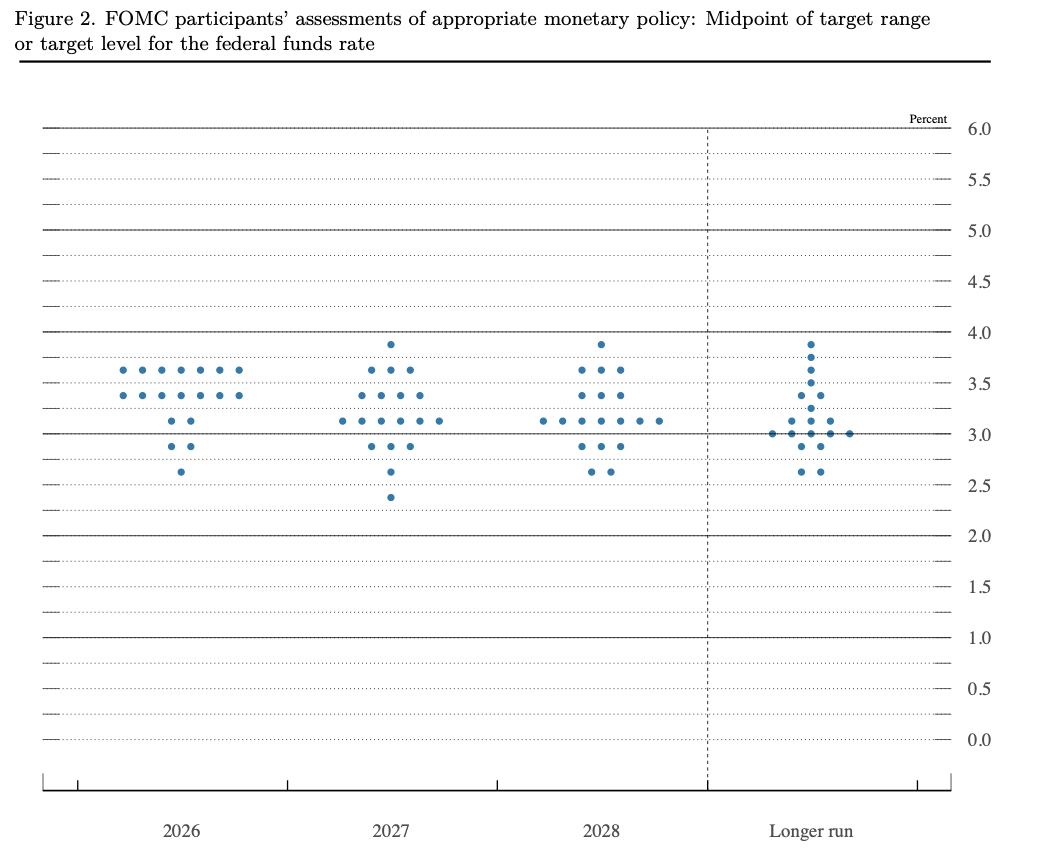
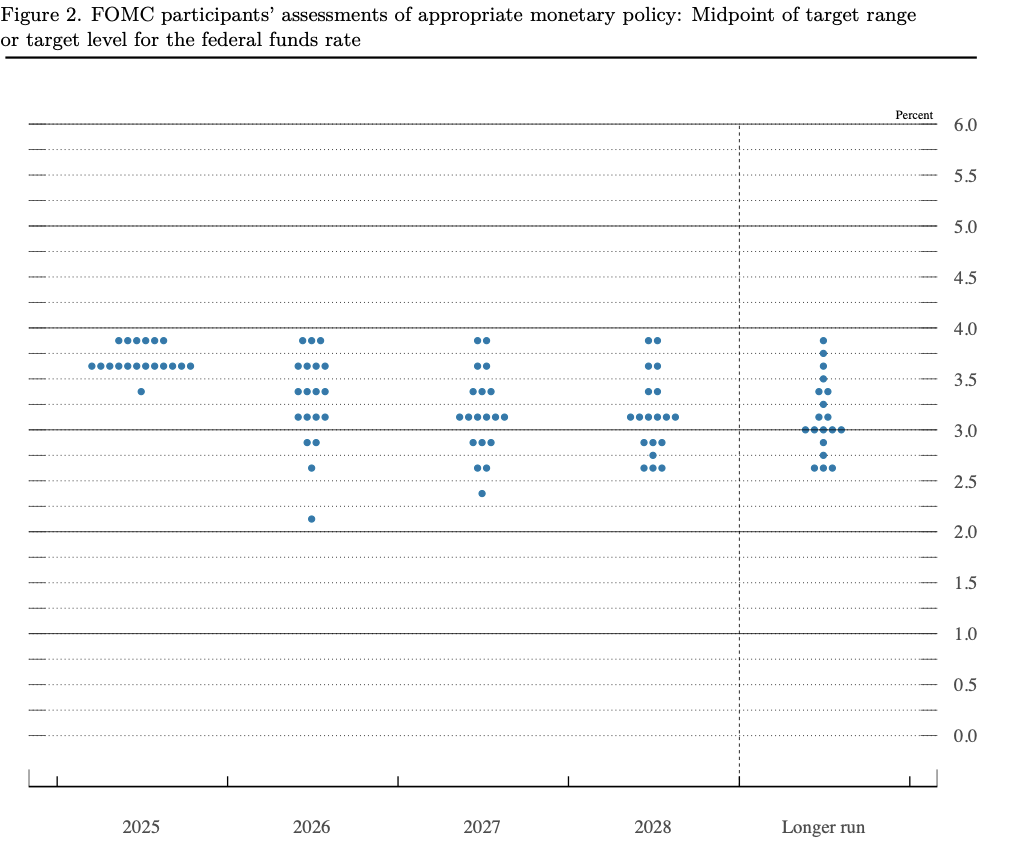
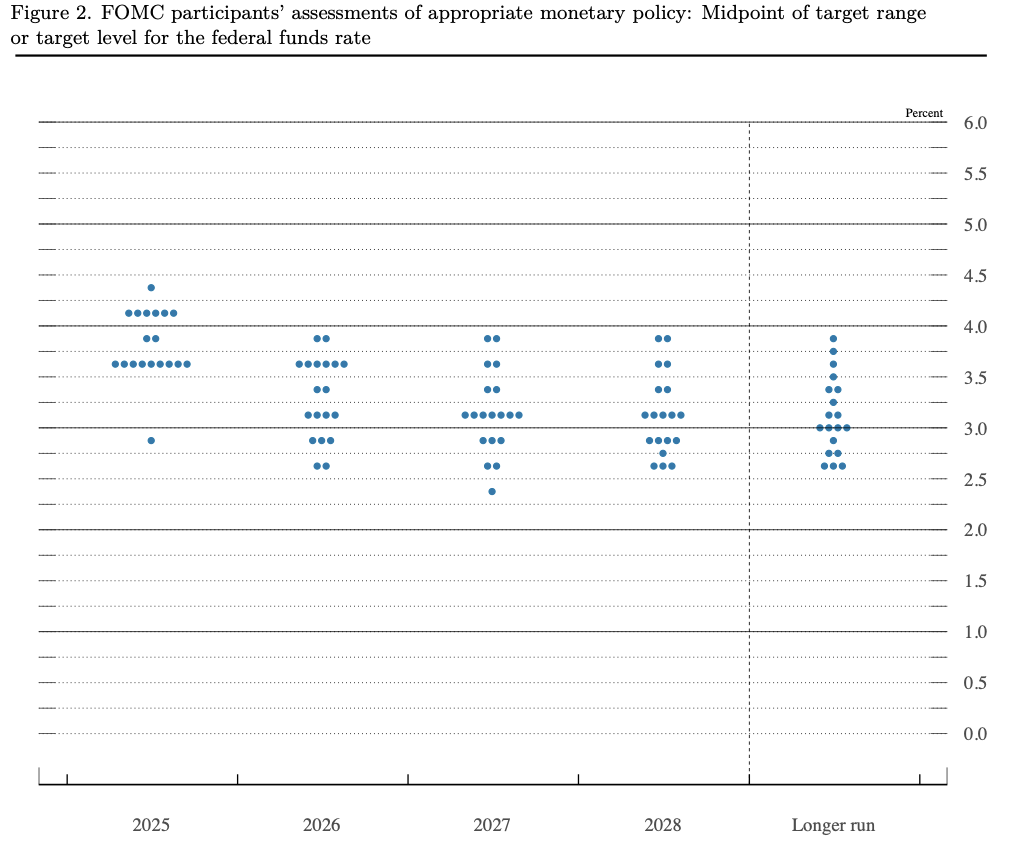
Below I have copied the dot plot from the September meeting, which contra to most previous versions shows a particularly wide range of views regarding the future level of Fed funds.  I have to wonder, though, after reading the Minutes, if those dots will be stretched even wider apart from top to bottom in the December report.

Of course, our interest is how did the market respond to this release?  Well, it can be no surprise that the Fed funds futures market repriced further and is now showing just a 32% probability for a cut next month and 78% probability of the next cut coming in January.  That said, the market remains convinced that rates must go lower over time, something that does not appear in sync with equity market growth expectations and seems to be completely ignoring the announced inward investment flows to the US from around the world.

Source: cmegroup.com

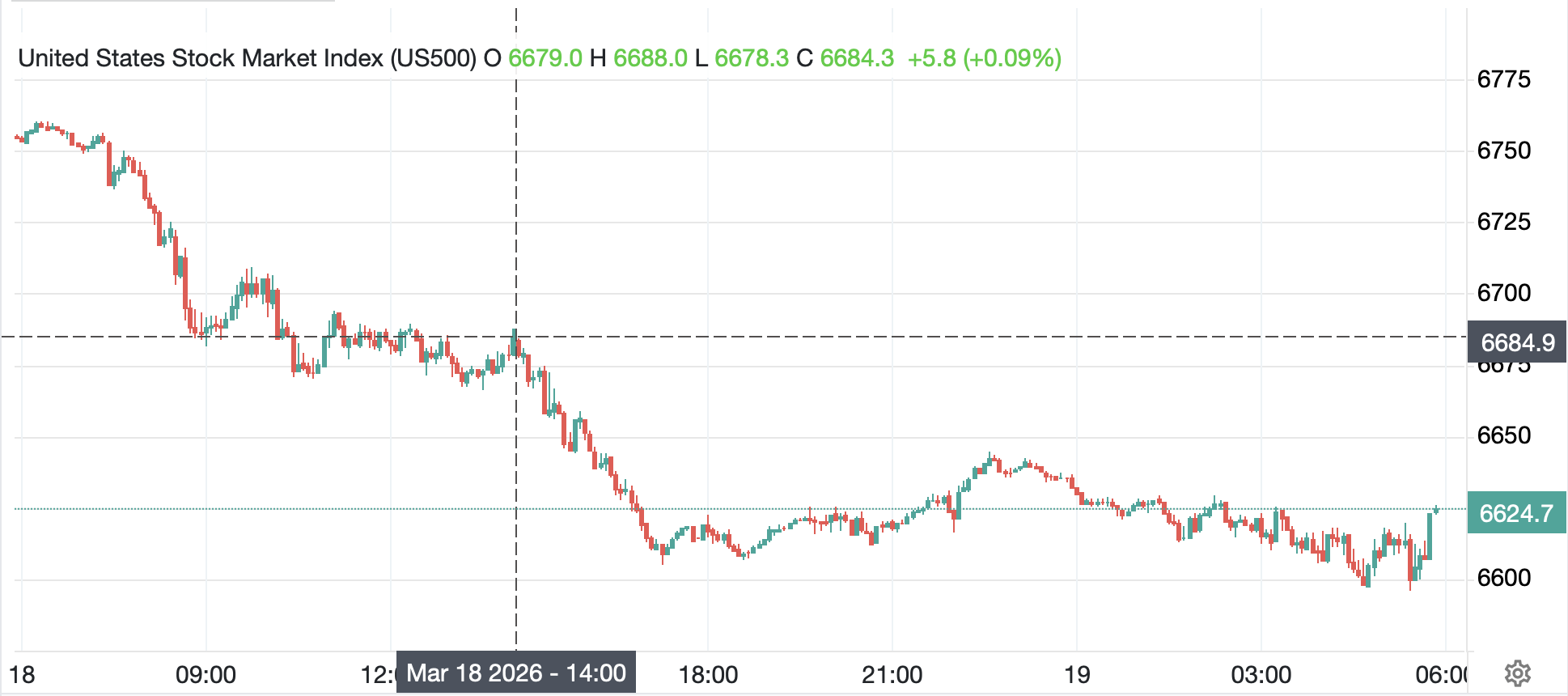
As to the equity market response, the two vertical lines show the release of the Minutes and then the release of Nvidia earnings.  You can see for yourself which matters more to the market.

Source: tradingeconomics.com

Between the GDPNow data, which continues to show growth remains robust, and more announcements of inward investment on the back of trade deals, with the Saudis ostensibly promising $1 trillion after the recent White House dinner, I will take the over on future economic activity.  Remember, too, the government is actively supporting mining, drilling and manufacturing and all of that is going to feed into economic growth here.  My view is the Fed funds futures market is completely wrong, and we will not see rates back at the 3.0% level anytime in the next few years.  I’m not suggesting we won’t see an equity market correction, just that the end is not nigh.

Each day the yen slides
Intervention creeps closer
Yen traders beware

Turning to the dollar, it continues to strengthen across the board with the DXY trading back above 100 this morning, and now that the Fed seems more hawkish, looking like it may have legs.  But let us focus on the yen, quite beleaguered of late, as it appears to be accelerating its downfall.  Not only is this evident on the chart below, but we also have heard concerns for the third time, as per the following quotes from Minoru Kihara, the chief cabinet secretary:

The yen is experiencing sudden, one-way movements that are concerning and which require close monitoring.  Excessive fluctuations and disorderly movements in exchange rates must be monitored with vigilance.  We are concerned about the recent one-way and sudden movements in the foreign exchange market. It’s important for exchange rates to remain stable, reflecting fundamentals.”

In the past six months, the yen has fallen >10% vs. the dollar and is lower by nearly 4% in the past month.  At the same time, JGB yields are starting to accelerate higher, trading to yet another 20-year high at 1.82% and the price action there is remarkably similar to that of USDJPY as per the below chart.  The problem for the JGB market is the BOJ already owns more than 50% of the outstanding debt, so buying more doesn’t seem to be a solution, whereas buying JPY in the FX market will have an impact, albeit short-term if they don’t change policies.   

Source: tradingeconomics.com

The upshot of all this is the world is awash in debt, with global debt/GDP exceeding 3x.  The lesson is that not all this debt will be repaid, in fact probably not that much at all.  Be careful as to what you hold.

Ok, let’s briefly tour the markets I have not yet touched.  Tokyo equities (+2.65%) loved the Nvidia earnings as did Korea (+1.9%), Taiwan (+3.2%) and most of Asia although China (-0.5%) and HK (0.0%) didn’t play along last night.  I guess the ongoing restrictions on sales of Nvidia chips to China is still a negative there, as are recurring concerns over the property market as there is talk of yet another attempt to fix things by the government.  Europe, too, is firmer this morning, although clearly not on tech bullishness given the lack of tech on which to be bullish.  But there is talk of a Russia/Ukraine peace deal which may be a benefit.  At any rate, gains are widespread on the order of +0.6% or so across the board.

In the bond market, Treasury yields rose a couple of ticks yesterday and are higher by 1 more basis point this morning, but still at just 4.14%.  The front of the curve rose by more on the back of the Minutes.  European yields are also higher this morning, between 2bps and 3bps with UK gilts the outlier, unchanged on the day, as softer inflation has traders expecting a rate cut at the next BOE meeting on December 18th.

Oil (+1.0%) has rebounded off its recent lows and is trading back at…$60/bbl, the level at which it is clearly most comfortable these days.  Meanwhile, gold (0.0%) gave back yesterday’s overnight rally to close mostly unchanged with the same true across the other metals although this morning silver (-0.7%) is slipping a bit further.

Finally, other currency movements beyond the yen (-0.3% today) are of a similar size across both the G10 and EMG blocs.  Using the DXY as proxy, this is the third test above 100 since August 1st with many analysts are calling for a breakout at last.  

Source: tradingeconomics.com

Perhaps this is true given the word is the Russia/Ukraine peace deal was negotiated entirely between the US and Russia without either Ukraine or Europe involved, demonstrating how insignificant Europe, and by extension the euro, have become.  Just a thought.

On the data front, the big news is the September employment report is going to be released this morning along with some other data:

Nonfarm Payrolls50K
Private Payrolls62K
Manufacturing Payrolls-8K
Unemployment Rate4.3%
Average Hourly Earnings0.3% (3.7% Y/Y)
Average Weekly Hours34.2
Participation Rate62.3%
Philly Fed-3.1
Existing Home Sales4.08M

Source: tradingeconomics.com

On the one hand, the data is stale.  On the other hand, it is all we have, so it will likely have greater importance than it deserves.  I have a hard time looking at the economy and seeing substantial weakness, whether because of corporate earnings, inward investment announcements or the Fed’s growing concern over higher inflation.  All that tells me the dollar is going to be in demand going forward.

Good luck

Adf

Basically Fictive

For Fedniks it must be addictive
To say rates are “somewhat restrictive”
It seems like a show
As how can they know
Since R-star is basically fictive
 
Investors, though, lap up this stuff
In fact, they just can’t get enough
Of comments that hint
There is a blueprint
For policy, though that’s a bluff


Yesterday, both Richmond Fed president Barkin and Governor Jefferson explained that current Fed policy is “somewhat restrictive”.  This takes to seven the number of FOMC members who have used this phrase with Powell, Kugler, Hammack, Schmid and Collins all having used it before, as did Jefferson two weeks ago.  And they are all referring to the concept of R-star, the mythical rate at which policy is neither restrictive nor accommodative.  In fact, R-star has become the Fed’s north star, with the key difference being, we can actually see the north star while R-star, even they will admit, is unobservable.  Of course, that hasn’t stopped them from basing policy decisions on the variable.

I highlight this because the tone of virtually every one of these speeches has been one of caution, with the implication being they are very close to their nirvana so the last steps will be small.  However, we cannot forget that though the last steps may be small, there is still confidence amongst the entire body that the direction of travel is toward lower rates. certainly, as you can see from the aggregated meeting probabilities from the Fed funds futures market below, there is zero expectation that rates will rise anytime during the next two years and a decent chance of another 100bps of cuts over that time.

Source: cmegroup.com

I might contend that is a pretty negative outlook on the US economy by the Fed.  Given the Fed’s models assume that a key to lower inflation is slowing economic growth, the idea that rates are going to fall implies slower growth to help them achieve the inflation portion of their mandate.  But that seems out of step with both the Atlanta Fed’s GDPNow forecast shown below and currently sitting at 4.1% annualized for Q3 and with earnings forecasts in the equity markets.

Asking Grok, the average current earnings growth forecasts for 2026 for the S&P 500 is somewhere in the 13% – 14% range with revenue growth running at ~6.9%, which is typically in line with nominal GDP growth.  (I understand that current forward PE ratios are extremely high at 23x, so be careful that companies hit their targets while their share prices fall anyway.)  But if nominal GDP is going to run at nearly 7%, and let’s assume inflation is at 3.5%, which I think is a reasonable possibility, then the math tells us that GDP is growing at 3.5% on a real basis.  With Fed funds currently at 4.0%, why would they need to decline further?

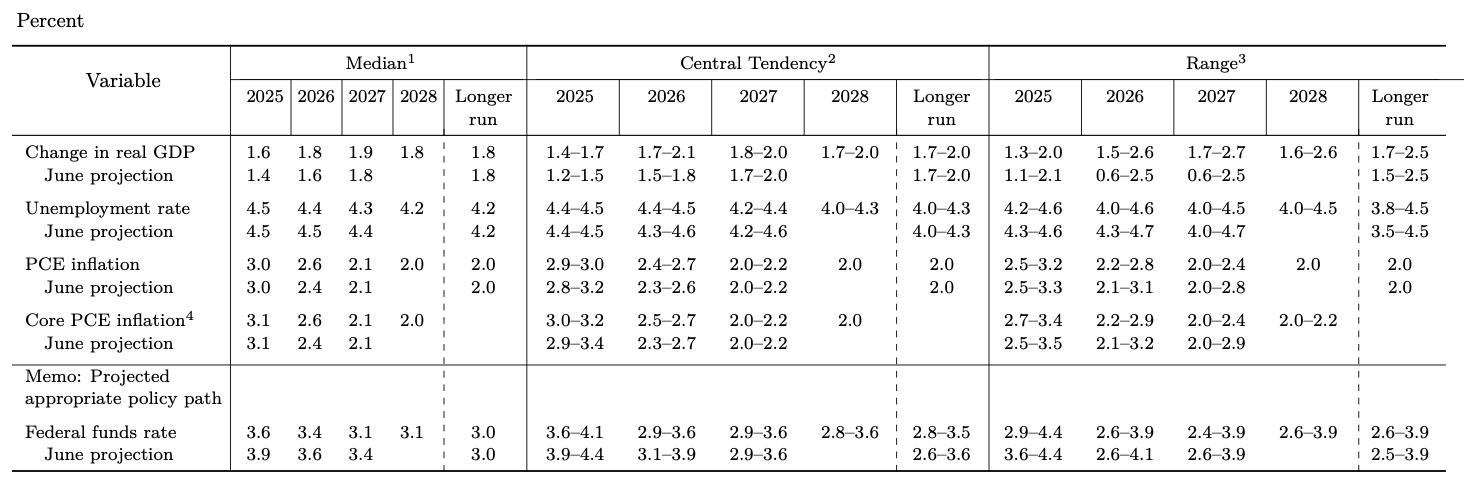
Looking back at the Fed’s September Summary of Economic Projections, it appears that the Fed sees a very different economy than the markets see.  In fact, you can see that they believe nominal GDP in the long run is going to average <4.0% (sum of longer run GDP and PCE in the table below).  

That is a really big difference, one that is the type that can lead to massive policy errors.  Now, if those 17 people cloistered in the Marriner Eccles building have a better handle on the economy than everybody else, I can understand why they believe rates need to fall further.  But is that the case?  

Here’s something else to ponder, I asked Grok about the relationship between nominal GDP and Fed funds and the below table is what it produced:

It is patently obvious how the Fed has developed its models and because of that, why they have been so wrong.  In fact, look at the SEP above and compare it to the period from 2001 – 2019, they are essentially identical.  But I would argue, and I’m not alone, that the economy from the dot.com crash up to the pandemic is no longer the reality on the ground.  The Fed’s backward-looking models seem set to make yet more errors going forward.

And with those cheery thoughts, let’s look at what happened overnight.  Yesterday’s continuation of the US stock decline seems to be finding a bottom, at least temporarily as Asian markets were mixed (Nikkei -0.3%, Hang Seng -0.4%, CSI 300 +0.4%) with the rest of the region showing a similar mixture of gainers (India, Malaysia, Indonesia, Philippines) and losers (Korea, Taiwan, Australia) as it appears the entire world is awaiting Nvidia’s earnings after the US close today.

Similarly, European bourses are edging higher this morning with the rout seemingly over for now.  This morning Spain (+0.5%) is leading the way higher followed by Germany (+0.3%) with the rest of the markets little changed overall, although leaning higher.  As to US futures, at this hour (7:30) they are pushing higher by about 0.4%.

In the bond market, Treasury yields are unchanged this morning, still sitting right around that 4.10% level while European sovereigns have seen demand with yields slipping -2bps to -3bps across the continent.  The UK is the outlier here, with yields unchanged after releasing inflation data that was bang on expectations, and below last month’s readings, though remains well above their 2.0% target.  I guess if I look at the chart below, I might be able to make the case that core UK CPI is trending lower, but similarly to the Fed, the last time they were at their target was July 2021.

Source: tradingeconomics.com

I would be remiss if I didn’t mention that JGB yields have moved higher by 3bps, pushing their decade long highs further along as concerns grow over the Japanese fiscal situation.

Oil prices (-2.4%) are falling this morning, slipping to the low side of $60/bbl after API inventories showed a surprise build of 4.4 million barrels.  However, I would contend that there is very little new here.  Perhaps the dinner last night where President Trump hosted Saudi Prince MbS has some thinking OPEC will increase production more aggressively going forward.  In the metals markets, they are all shining this morning led by silver (+3.1%) and platinum (+3.0%) with gold (+1.3%) and copper (+1.3%) lagging, although remember the latter two are much larger markets so need more interest to rise as quickly.

Finally, the dollar continues to find support, despite the precious metals gains, and this morning we see the DXY (+0.15%) pushing back toward that psychological 100.00 level.  JPY (-0.5%) has traded through 156 and certainly seems like it wants to push back to its YTYD highs of 158.80.  Interestingly, there was no Japanese commentary of note last night, but I presume if this continues, the MOF will be out warning of potential future action.  Another interesting fact is that while the dollar is firmer against virtually all G10 currencies, the EMG bloc is holding its own this morning led by HUF (+0.6%), PLN (+0.25%) and ZAR (+0.15%) with the rand obviously benefitting from gold’s rally.  The forint has benefitted from the central bank maintaining policy on hold at 6.5%, one of the highest available rates in Europe and that has helped drag the zloty along for the ride.

On the data front, this morning we see the August Trade Balance (exp -$61.0B) and then the EIA oil inventories where a small draw is expected.  We also get the FOMC Minutes at 2:00pm and hear from NY Fed president Williams this afternoon.

I cannot help but look at the difference between the Fed’s very clear view and the markets expectations and feel like the Fed is on the wrong side of the trade.  It is for this reason I fear higher inflation and ultimately, a much lower likelihood of further rate cuts.  If that is the case, the dollar will find even more support.  Interesting times.

Good luck

Adf

Far From It

Ahead of the FOMC
The pundits were sure they would see
A cut come December
As every Fed member
Saw joblessness to some degree
 
But turns out, dissent did abound
And Jay, to the press, did expound
December’s not destined
“Far from it”, when pressed, and
The bond market fell to the ground


The Fed cut the 25bps that were priced and they said they would end QT, the balance sheet runoff beginning December 1st.  As well, they indicated that as MBS matured, they would be replaced with T-bills.  So far, all pretty much as expected.  But…the vote was 7-2 for the cut.  One dissent was Stephen Miran, once again looking for 50bps but the real shocker was KC Fed president Jeffrey Schmid, who wanted to stand pat!  During the press conference, Powell explained [emphasis added], “there were strongly different views about how to proceed in December.  A further reduction in the policy rate at the December meeting is not a foregone conclusion.  Far from it!”

The Fed funds futures market jumped on that comment and as of this morning, the December probability fell from 92% to 70% with only a 3/4 probability of another cut after that by April, down from a near certainty by March previously.  

You won’t be surprised by the fact that the bond market sold off hard, with yields rising 10bps on the day, with seven of those coming in the wake of the press conference.  

Source: tradingeconomics.com

Stocks struggled, with the DJIA under modest pressure and the S&P 500 unchanged although the NASDAQ managed to rise yet again to a new high, as NVDA doesn’t pay attention to gravity.

So much has been written about this that I don’t think it is worth going into more detail.  FWIW, my view is the Fed is still going to cut in December, and that will become clearer as the government reopens (which I think happens by the end of the week) and data starts to trickle out again.  The employment situation remains their main focus, and it just doesn’t seem that positive right now.  I suspect next year, when the OBBB policies begin to be implemented and we see the fruits of the dramatic increase in foreign investment in the US, that situation can change, but things feel slow for now.  

In effect, that is why they are going to run the economy as hot as they can to try to prevent any recession and hopefully make it to the point where the government can back off and the private sector picks up the slack.  At least, that’s my read for now.  For the dollar, that means more support.  For stocks, the same.  And the inflation prospects will keep the precious metals supported.  Bonds feel like the worst place to be.

In other central bank news, the Bank of Canada cut 25bps, as expected, and in their commentary explained rates were now “at about the right level” for the economy based on their projections.  The market demonstrated they cared about this story for about 3 hours, as the initial move was modest CAD strength that evaporated as soon as Powell started speaking.

Source: tradingeconomics.com

The BOJ also met last night and left rates on hold, as widely expected, with the same two votes for a rate hike as the last meeting.  During the press conference, Ueda-san explained, “We held today as we want to see more data on domestic wage-setting behaviors, while uncertainty remains high in overseas economies. If we’re convinced, we’ll adjust rates regardless of the political situation.”  The yen (-0.6%) fared somewhat poorly, responding to Ueda-san’s comments regarding the relative lack of strength in the Japanese economy.  Ultimately, as you can see in the below chart, the yen fell to its weakest point since last February, although I suspect if I am correct regarding the Fed continuing its policy ease, that weakness will abate somewhat.

Source: tradingeconomics.com

While Spinal Tap got to eleven
Said Trump, t’was a twelve, not a seven
The deal that he struck
To get things unstuck
With China, it’s manna from heaven

The last big story was the long-awaited meeting between Presidents Trump and Xi last night, where the two sat down and agreed to cool the temperature regarding trade.  Key aspects include the US reducing tariffs on China, especially those regarding fentanyl, as well as rolling back the broad restrictions on Chinese companies, while China will purchase “tremendous amounts” of soybeans and pause their restrictions on the sale of rare earth minerals.  Tiktok came up, and that will be settled and overall, it appears that a great deal of progress was made.  This was confirmed by the Chinese as they announced the same things.
 
Clearly, this is an unalloyed positive for the global economy and while the situation is not back to its pre-Trump days, it offers the hope of some stability for the time being.  But the surprising thing about these announcements was how little they seemed to help financial markets.  For instance, both the Hang Seng (-0.25%) and CSI 300 (-0.8%) slipped during the session, as did India (-0.7%) and Australia (-0.5%) with the rest of the region basically unchanged.  That is a disappointing performance for what appears to be a very positive outcome.  I suppose it could be a ‘sell the news’ response, but in today’s markets, especially with the ongoing influx of central bank liquidity, I would have expected more positivity.
 
Turning to European markets, they are lower across the board led by Spain (-1.1%) and France (-0.6%) as the US-China trade deal had little impact, and investors responded to a plethora of data on GDP and inflation.  The odd thing about this is that the Q/Q GDP data was better than expected across the board (France 0.5%, Netherlands 0.4%, Germany 0.0%, Eurozone 0.2%) which was confirmed by positive confidence data and modest inflation.  While those growth numbers are hardly dramatic, at least they are not recessionary.  You just can’t please some people!  Meanwhile, at this hour (6:30) US futures are little changed to slightly softer.
 
If we turn to the bond markets, yesterday’s dramatic rise in Treasury yields is consolidating with the 10-year slipping -1bp this morning.  In Europe, sovereign yields are higher by 3bps across the board as they catch up to yesterday’s Treasury move.  At this hour, though, bond markets are doing little as investors and traders await Madame Lagarde’s announcements at 9:15 EDT although there is no expectation for any rate move.  In fact, looking at the ECB’s own website, there is currently a 5% probability of a rate hike!  (That ain’t gonna happen, trust me.)
 
In the commodity markets, oil (-0.5%) is softer this morning but is still right around $60/bbl with yesterday’s EIA inventory data showing a larger draw on inventories than expected.  That is what helped yesterday’s modest gains, but those have since been reversed.  In the metals markets, price action remains quite choppy, but this morning sees gold (+1.3%), silver (+1.0%) and platinum (+0.35%) all bouncing although copper (-0.2%) is a touch softer.  Nothing has changed my longer-term views here, but it does appear that there is a lot more choppiness that we will need to work through before the trend reasserts itself.
 
Finally, the dollar, which rose yesterday on the relatively hawkish Fed commentary is mixed this morning as it shows strength vs. the yen (now -0.8%), ZAR (-0.4%), KRW (-0.35%), and INR (-0.4%) with even CNY (-0.2%) following suit, although the rest of the currency universe has moved only +/-0.1% from yesterday’s closes.  Again, my view is the dollar is confined to a range, has been so for many months, and we will need to see some policy changes to break out in either direction.  Right now, those policy changes don’t seem to be imminent.
 
With data still MIA, the only things to which we can look forward are the ECB and the first post-meeting Fed speak with Governor Bowman and Dallas Fed president Logan up today.  I would have thought risk assets would be in greater demand this morning, but that is clearly not the case.  Perhaps, as we approach month-end, we are seeing some window dressing, but despite the ostensible hawkish outcome from yesterday’s FOMC, I don’t think anything has changed with their future path of more rate cuts no matter what.  As equity markets had a broadly positive October, rebalancing flows would indicate sales, but come Monday, I think the rally continues.  As to the dollar, there is still no reason to sell that I can discern.
 
Good luck
Adf


Curses and Squeals

Though data is scarce on the ground
This week has the chance to astound
Four central banks meet
And when it’s complete
Two cuts and two stays ought abound
 
Meanwhile, Mr Trump’s signing deals
In Asia, an act that reveals
His fervent desire
To drive markets higher
As foes let out curses and squeals


Some days, there’s very little to note, with the news cycle a rehash of stories that have been festering for weeks.  This is especially true in the political sphere, but also on the economic front.  As well, given the ongoing government shutdown and the lack of government data being released, a key market focus is missing.  But not today!

News across the tape moments ago is that President Trump has agreed a trade deal with South Korea, although the details of the deal are yet to be revealed.  When it comes to Trump and trade deals, it is always difficult to get through the hype to determine if things will actually improve, but if we use the KRW as a proxy for market sentiment, as you can see in the chart below, the announcement was seen as a benefit to the won.

Source: tradingeconomics.com

This is hardly definitive, and the nature of a trade deal is that it takes time to be able to determine its benefits for both sides, but for now, it appears markets are giving it the benefit of the doubt.  As well, it continues to be reported that Presidents Trump and Xi will be sitting down tomorrow (tonight actually) and that a trade framework has been agreed by Secretary Bessent and Chinese Vice Commerce Minister Li Chenggang which includes reduced tariffs, fentanyl, soybeans, semiconductors and rare earth minerals as key pieces of the puzzle.  

The ongoing competition between the US and China is not about to end with this deal, but perhaps it will be able to revert to a background issue rather than a headline one, and that is likely a positive for all.  Certainly, equity markets continue to believe that this dialog is a benefit as evidenced by their daily trips to new highs.

Which takes us to the other key discussion point in markets, central banks.  Over the next twenty-seven hours (it is 6:30am as I type) we are going to hear four major central banks explain their latest policy steps starting with the Bank of Canada (expected 25bps cut) at 9:45 this morning, then the FOMC at 2:00 this afternoon with their 25bps cut.  This evening at 11:00, NY time, the BOJ is expected to leave rates on hold, although there are those who believe a 25bps hike is possible, and then tomorrow morning at 9:15 EDT, the ECB will also leave rates on hold.  

While this is certainly a lot of new information, the question is, will it have any market impact?  Given the market pricing of these events, if any of the central banks do something different, you can be sure its markets will respond.  If I had to assess what might be different, both the BOC and FOMC could cut more than 25bps, and the ECB could cut 25bps rather than standing pat.  In all those cases, the currency would likely weaken sharply at first, although if all those things happened, I suppose it would simply create a new equilibrium.  But understand, I don’t think any of that WILL happen.

Regarding the Fed, though, there is another question and that is, what is going to happen to QT and the balance sheet.  Lately, there has been a great deal of discussion regarding how much longer the Fed will allow the balance sheet to shrink.  Last week I discussed the difference between ample and abundant reserves, but in numeric terms, the signals are coming from the SOFR (Secure Overnight Financing Rate) market, the one that replaced LIBOR.  It seems that there is increasing concern over the recent rise in the rate.  This is seen by numerous pundits, as well as by some in the Fed, as a signal that the reserve situation is getting tighter, thus offsetting the Fed’s attempts at ease. 

The below chart from the NY Fed shows the daily wiggles, but also, it is pretty clear that the recent trend has been higher.  You can see the September Fed funds cut in the sharp drop, and the first peak after that was September 30th, the quarter-end when banks typically look to spruce up their balance sheets, so borrow more aggressively.  But since then, this rate has been edging higher, an indication that there may not be sufficient reserves available for the banking system.

This begs the question; will the Fed end QT today?  Or wait until December?  My money is on today as they are growing concerned about the employment situation with the uptick in recent layoff announcements, and the pressure on SOFR is the best indicator they have that things have reached the point where their balance sheet no longer needs to shrink.  One other thing to keep in mind, at some point, it seems likely that the Fed is going to need to find more buyers of Treasuries as the market may develop indigestion given the amount being issued.  That pivot back to QE, whatever it is called, is easier if they are not simultaneously reducing their own balance sheet.

And one final point on the Fed.  Apparently, when they cut today, it will be the twenty-second time the Fed will have cut with stock indices at all-time highs, and of those previous twenty-one, twenty-one times equity markets were higher one year later.  Let’s keep that party rolling!

Ok, let’s look at how things have gone overnight.  Tokyo (+2.2%) was basking in the glow of all the love between President Trump and PM Takaichi, as it, too, traded to new all-time highs.  China (+1.2%) gained on the news of the trade framework, but interestingly, HK (-0.3%) did not follow suit.  And it should be no surprise that Korea (+2.1%) rallied on that trade news with India and Taiwan rising as well.  Australia (-1.0%) though, had a rougher go after a higher than forecast inflation print (3.5%) put paid to the idea that the RBA would be cutting rates again soon.

In Europe, Spain (+0.65%) is rallying on solid GDP data (1.1% Q/Q) although the rest of the continent is doing very little with virtually no change there.  In the UK, the FTSE 100 (+0.6%) is rallying on stronger corporate earnings from miners (metals are higher) and pharma companies.  As to US futures, at this hour (7:30) they are all nicely in the green, about 0.35% or so.

In the bond market, Treasury yields have backed up 2bps, but are still just below the 4.00% level, hardly signaling major concern right now.  European sovereign yields are all essentially unchanged this morning and overnight, only Australia (+5bps) moved after that CPI data Down Under.

Turning to commodities, oil (+0.5%) is bouncing after a couple of weak sessions, but net, we are right back to the $60 level which appears to be a comfortable level for both buyers and sellers.  It is also a high enough price to encourage continued exploration, so my take is we are likely to trade either side of this level for quite a while going forward.  My previous bearish views are being somewhat tempered, although I don’t foresee a major rally of any note.  

Source: tradingeconomics.com

In the metals markets, gold (+1.7%) is bouncing off its recent trading low and currently back above $4000/oz.  A look at the chart for the past month shows just how large the movements have been as the parabolic blow-off to near $4400 was seen through the middle of the month, and after a second try, the rejection was severe.  I don’t believe the long-term story in the precious metals has changed at all, the idea that fiat currencies are going to maintain their current status as reserve assets is going to be more and more difficult to defend with gold the natural replacement.  But in a market with a history of manipulation, don’t be surprised to see many more sharp moves ahead.

Source: tradingeconomics.com

As to the rest of the metals, they are all higher this morning with silver (+2.1%) leading the way and copper (+0.6%) and platinum (+1.6%) following in its wake.

Turning to those fiat currencies, the dollar is broadly firmer this morning, with only AUD (+0.15%) managing any gains against the greenback after that inflation print got traders thinking about higher rates Down Under.  But otherwise, in the G10, the dollar is ascendant.  In the EMG bloc, we already discussed KRW, but ZAR (+0.2%) is also gaining today on the back of the metals bounce.  Elsewhere, though, modest dollar strength is the rule.  What makes this interesting is the dollar is back to rallying alongside precious metals.

Ahead of the Fed, we only see EIA oil inventories with a small draw expected.  In theory, with President Trump in South Korea, one would expect him to be sleeping throughout most of today’s session, but apparently the man rarely sleeps.

The big picture is that run it hot remains the play, and that means equities should benefit, bonds should have a bit more trouble, but the dollar and commodities should do well.  I see no reason for that to change soon.

Good luck

Adf

A Pox

The world is a wonderful place
We know this because of the chase
For more and more risk
Though Washington’s fisc
Continues, more debt, to embrace
 
Investors can’t get enough stocks
And bonds have found buyers in flocks
But havens like gold
Are actively sold
As though they’ve come down with a pox


I’m old enough to remember when there was trouble all around the world; war in Ukraine was escalating, anxiety over a more serious fracture in the trade relationship between the US and China was growing, and President Trump was building a ballroom at the White House!  Ok, the last one is hardly a problem.  But just two weeks ago, risk assets were struggling and havens seemed the best place for investors to hide.  But that is sooooo last week.

By now you are all aware that the delayed CPI report on Friday came in on the soft side, thus reinforcing the Fed’s plans to cut rates tomorrow.   While Fed funds futures pricing, as seen below, has not changed very much at all, with virtual certainty of cuts tomorrow and in December, plus two more by the April meeting next year, the punditry is starting to float the idea that even more cuts are coming because of concern over the employment situation and the fact that inflation appears under control.

Source: cmegroup.com

Now, it is a viable question, I believe, to ask if inflation is truly under control, but the problem with this concern is that Chairman Powell told us, back in September, that they are not really focused on that anymore.  The fact that the official payroll data has not been released allows the Fed to avoid specific scrutiny, but literally everything I read tells me that the employment situation is getting worse.  The latest highlight was Amazon’s announcement yesterday that they would be reducing corporate staff by about 14,000 folks in the coming months as, apparently, AI is reducing the need for headcount.

In fact, I would contend the answer to the question; if the economy is doing so well, why does the Fed need to cut rates, is there is a growing concern over the employment situation which has been masked by the lack of data.

But we all know that the economy and the stock market behave very differently at times, and this appears to be one of those times.  Yesterday, yet again, equity markets in the US closed at record highs as earnings releases were strong virtually across the board.  Adding to the impetus was the news that Treasury Secretary Bessent announced a framework for trade between the US and China had been reached with the implication that when Presidents Trump and Xi meet later this week, a deal will be signed.

Putting it all together and we see the concerns that were driving the “need” for owning havens last week have virtually all dissipated.  While the Russia/Ukraine situation remains fraught, I don’t believe that equity markets anywhere in the world have paid attention to that war in the past two years.  Oil markets, sure, but not equity markets.

There is a fly in this ointment, though, and one which only infrequently gets much airtime.  The US is continuing to run substantial fiscal deficits.  Lately, as evidenced by the fact that 10-year yields have slipped back to their lowest level this year, and as you can see below, are clearly trending lower, this doesn’t seem to be an issue.  But ever-increasing federal deficits cannot last forever, and if the Trump plans to boost growth significantly does not work out, there will be a comeuppance.  I have described before my view that the plan is to ‘run it hot’ and nothing we have seen lately has changed that sentiment.  I sure hope it works for all our sakes!

Source: tradingeconomics.com

Ok, let’s see if the euphoria evident in the US markets has made its way around the world.  The answer is, no.  Interestingly, despite a high-profile meeting between President Trump and Japanese PM Takaichi, where Trump was effusive in his support for the new PM and her plans to increase defense spending, Japanese equities were under pressure all evening, slipping -0.6%.  Too, both China (-0.5%) and HK (-0.3%) could find no traction despite the news that a trade deal was imminent.  In fact, the entire region was under pressure with losses in Korea, Taiwan, Australia and virtually every market there.  Was this a sell the news event?  That seems unlikely to me, but maybe.  As to Europe, pretty much every major index is modestly softer this morning, down between -0.1% and -0.2%, so not terrible, but clearly not following the US.  As to US futures, at this hour (7:30), they are little changed to slightly higher.

Global bond markets are quiet this morning, with almost all unchanged or seeing yields slip -1bp.  While US yields have been trending lower, in Europe, I would say things are more that yields have stopped rising and, perhaps, topped, but are not yet really declining in any meaningful fashion yet.  Germany’s bund market, pictured below, exemplifies the recent price action.

Source: tradingeconomics.com

One interesting note is that JGB yields slipped -3bps overnight, despite PM Takaichi reaffirming that the defense budget was going up with no funding mentioned.  Like I said, the world is a better place this morning!

In the commodity markets, gold (-1.5%) continues to get punished as all those who were chasing the haven story have been stopped out.  The price went parabolic two weeks ago, and price action like that cannot hold for any length of time.  This has taken silver (-1.1%) and copper (-0.5%) lower as well, and I suspect that there could well be further to decline.  Oil (-1.1%) meanwhile seems far less concerned about the sanctions on Lukoil and Rosneft this morning.  The conundrum here is if the economy is performing well, that would seem to be a positive demand driver.  I have not seen word of major new oil sources being discovered to increase supply dramatically, but if you think back to last week, the narrative was all about a glut.  I guess we will learn more with inventory data this week.

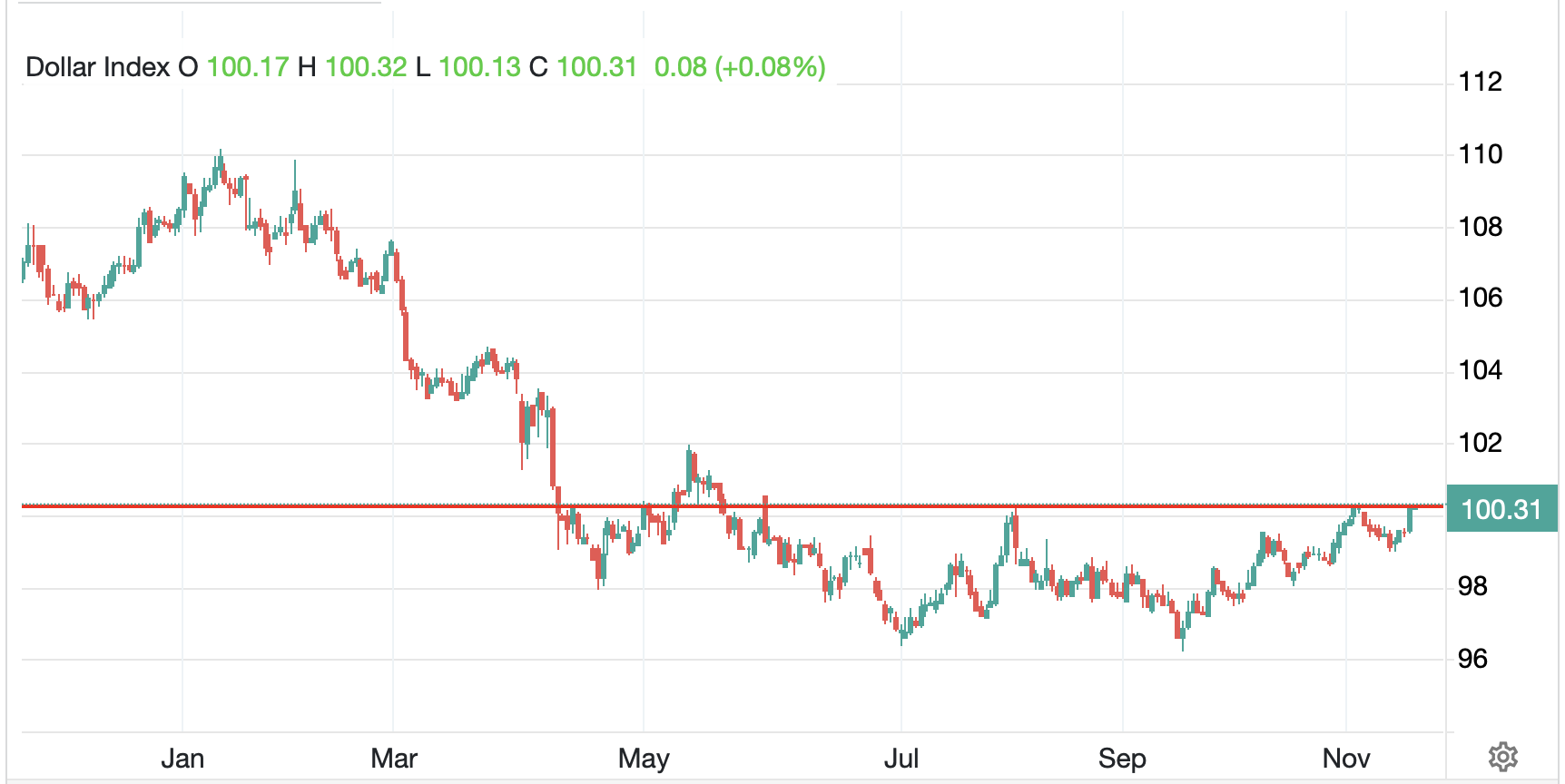
Finally, the dollar… well nobody really seems to care.  As you can see from the below chart of the DXY, it is approaching six months where the index has traded in a very narrow range, and we are pretty close to the middle.  I don’t know the catalyst that will be needed to change this story, but frankly, I suspect that nobody (other than FX traders) is unhappy with the current situation.

Source: tradingeconomics.com

It’s not that there aren’t currencies that move around on a given day, but there is no broad trend in place here.

On the data front, the key release today is the Case-Shiller Home Price Index (exp 1.9%) and then the Richmond Fed Manufacturing Index (-14) is also due later this morning.  However, all eyes are on tomorrow’s FOMC outcome with the focus likely to be more on QT and its potential ending, than on the rate cuts, which are universally expected.  One other thing, with the government shutdown ongoing, GDP and PCE data, which were originally scheduled for this week, will not be released.

Life is good!  That is the only conclusion I can draw right now based on the ongoing strength in risk assets, at least US risk assets.  Keynes was the one who said, markets can remain irrational longer than you can remain solvent, and I have a feeling that we are approaching some irrationality.  But for now, enjoy the ride and if FX is your arena, I just don’t see a reason for any movement.

Good luck

Adf

What Havoc it Wreaks

Today, for the first time in weeks
Comes news that will thrill data geeks
It’s CPI Day
So, what will it say?
We’ll soon see what havoc it wreaks
 
The forecast is zero point three
Too high, almost all would agree
But Jay and the Fed
When looking ahead
Will cut rates despite what they see


Spare a thought for the ‘essential’ BLS employees who were called back to the office during the shutdown so that they could prepare this month’s CPI report.  The importance of this particular report is it helps define the COLA adjustments to Social Security for 2026, so they wanted a real number, not merely the interpolation that would have otherwise been used.  Expectations for the outcome are Headline (0.4% M/M, 3.1% Y/Y) and Core (0.3% M/M, 3.1% Y/Y) with both still well above the Fed’s 2% target.  As an aside, we are also due Michigan Sentiment (55.0), but I suspect that will have far less impact on markets.

If we consider the Fed and its stable prices mandate, one could fairly make the case that they have not done a very good job, on their own terms, when looking at the chart below which shows that the last time Core CPI was at or below their self-defined target of 2.0% was four and one-half years ago in March 2021.  And it’s not happening this month either.

Source: tradingeconomics.com

Now, when we consider the Fed and its toolkit, the primary monetary policy tool it uses is the adjustment of short-term interest rates.  The FOMC meets next Tuesday and Wednesday and will release its latest statement Wednesday afternoon followed by Chairman Powell’s press conference.  A quick look at the Fed funds futures market pricing shows us that despite the Fed’s singular inability to push inflation back toward its own target using its favorite tool, it is going to continue to cut interest rates and by the end of this year, Fed funds seem highly likely to be 50bps lower than their current level.

Source: cmegroup.com

The other tool that the Fed utilizes to address its monetary policy goals is the size of its balance sheet, as ever since the GFC and the first wave of ‘emergency’ QE, buying (policy ease) and selling (policy tightening) bonds has been a key part of their activities.  As you can see from the chart below, despite the 125bps of interest rate cuts since September of 2024 designed to ease policy, they continue to shrink the balance sheet (tighten policy) which may be why they have had net only a modest impact on things in the economy.  Driving with one foot on the gas and one on the brake tends to impede progress.

But now, the word is the Fed will completely stop balance sheet shrinkage by the end of the year, something we are likely to hear next Wednesday, as there has been much discussion amongst the pointy-head set about whether the Fed’s balance sheet now contains merely “ample” reserves rather than the previous description of “abundant” reserves.  And this is where it is important to understand Fedspeak, because on the surface, those two words seem awfully similar.  As I sought an official definition of each, I couldn’t help but notice that they both are synonyms of plentiful.

These are the sorts of things that, I believe, reduces the Fed’s credibility.  They sound far more like Humpty Dumpty (“When I use a word, it means just what I choose it to mean – neither more nor less.”) than like a group that analyses data to help in decision making.  

At any rate, no matter today’s result, it is pretty clear that Fed funds rates are going lower.  The thing is, the market has already priced for that outcome, so we will need to see some significant data surprises, either much weaker or stronger, to change views in interest rate sensitive markets like bonds and FX.

As to the shutdown, there is no indication that it is going to end anytime soon.  The irony is that the continuing resolution passed by the House was due to expire on November 21st.  it strikes me that even if they come back on Monday, they won’t have time to do the things that the CR was supposed to allow.  

Ok, let’s look at what happened overnight.  Yesterday’s rally in the US was followed by strength in Japan (+1.35%) after PM Takaichi indicated that they would spend more money but didn’t need to borrow any more (not sure how that works) while both China (+1.2%) and HK (+0.7%) also rallied on the confirmation that Presidents Trump and Xi will be meeting next week.  Elsewhere, Korea and Thailand had strong sessions while India, Taiwan and Australia all closed in the red.  And red is the color in Europe this morning with the CAC (-0.6%) the main laggard after weaker than forecast PMI data, while the rest of Europe and the UK all suffer very modest losses, around -0.1%.  US futures, though, are higher by 0.35% at this hour (7:20).

In the bond market, Treasury yields edged higher again overnight, up 1bp while European sovereigns have had a rougher go of things with yields climbing between 3bps and 4bps across the board.  While the French PMI data was weak, Germany and the rest of the continent showed resilience which, while it hasn’t seemed to help equities, has hurt bonds a bit.  Interestingly, despite the Takaichi comments about more spending, JGB yields slipped -1bp.

In the commodity space, oil (+0.7%) continues its rebound from the lows at the beginning of the week as the sanctions against the Russian oil majors clearly have the market nervous.  Of course, despite the sharp rally this week, oil remains in the middle of its trading range, and at about $62/bbl, cannot be considered rich.  Meanwhile, metals markets continue their recent extraordinary volatility, with pretty sharp declines (Au -1.7%, Ag -0.9%, Pt -2.1%) after sharp rallies yesterday.  There seems to be quite the battle ongoing here with positions being flushed out and delivery questions being raised for both futures and ETFs.  Nothing has changed my long-term view that fiat currencies will suffer vs. precious metals, but the trip can be quite volatile in the short run.

Finally, the dollar continues to creep higher vs. its fiat compatriots, with JPY (-.25%) pushing back toward recent lows (dollar highs) after the Takaichi spending plan announcements.  But, again, while the broad trend is clear, the largest movement is in PLN (-0.4%) hardly the sign of a major move.

And that’s all there is today.  We await the data and then go from there.  Even if the numbers are right at expectations, 0.3% annualizes to about 3.6%, far above the Fed’s target and much higher than we had all become accustomed to in the period between the GFC and Covid.  But remember, central bankers, almost to a wo(man) tend toward the dovish side, so I think we all need to be prepared for higher prices and weaker fiat currencies, although still, the dollar feels like the best of a bad lot.

There will be no poetry Monday as I will be heading to the AFP conference in Boston to present about a systematic way to more effectively utilize FX collars as a hedging tool.  But things will resume on Tuesday.

Good luck and good weekend

Adf
Ere Recession Arose

There once was a Fed Chair named Jay
Who fought ‘gainst the prez every day
He tried to explain
That tariffs brought pain
So higher rates needed to stay
 
But data turned out to expose
The job market, which had no clothes
So, he and his friends
Were forced, in the end
To cut ere recession arose


The Fed cut 25bps yesterday, as widely expected (although I went out on a limb and called for 50bps) and markets, after all was said and done by Chair Powell, saw equities mixed with the DJIA rising 0.6% while the S&P 500 and NASDAQ both slipped slightly.  Treasury yields rose 5bps which felt much more like some profit taking after a month-long rally, than the beginning of a new trend as per the chart below.

Source: tradingeconomics.com

Gold rallied instantaneously on the cut news, trading above $3700/oz, but slipped back nearly 2% as Powell started speaking and the dollar fell sharply on the news but rebounded to close higher on the day as per the below chart from tradingeconomics.com.  See if you can determine when the statement was released and when Powell started to speak.

Did we learn very much from this meeting?  I think we learned two things, one which is a positive and one which is not.  On the positive side, there is clearly a very robust discussion ongoing at the Fed with respect to how FOMC members see the future evolving.  This was made clear in the dot plot as even the rest of 2025 sees a major split in expected outcomes.  But more importantly, looking into the future, there is certainly no groupthink ongoing, which is a wonderful thing.  Simply look at the dispersion of the dots for each year.

Source: federalreserve.gov

The negative, though, is that Chairman Powell is very keen to spin a narrative that seems at odds with the data that they released in the SEP.  In other words, the flip side of the idea that there is a robust discussion is that nobody there has a clue about what is happening in the economy, or at least Powell is not willing to admit to their forecasts, and that is a problem given their role in policy making.

It was a little surprising that only newly seated Governor Miran voted for 50bps with last meeting’s dissenters happy to go with 25bps.  But I have a feeling that the commentary going forward, which starts on Monday of next week, is going to offer a variety of stories.  If guidance from Fed speakers contradicts one another, exactly where is it guiding us?  (Please know I have always thought that forward guidance was one of the worst policy implementations in the Fed’s history.)

Moving on, the other central banks that have announced have done exactly as expected with both Canada and Norway cutting 25bps.  Shortly, the BOE will announce their decision with market expectations for a 7-2 vote to leave rates on hold, especially after yesterday’s 3.8% CPI reading.  Then, all eyes will turn to Tokyo tonight where the BOJ seems highly likely to leave rates on hold there as well.

If you think about it, it is remarkable that equity markets around the world continue to rally broadly at a time when central banks around the world are cutting rates because they are concerned that economic activity is slowing and they seek to prevent a recession.  Something about that sequence seems out of sorts, but then, I freely admit that markets move for many reasons that seem beyond logic.

Ok, having reviewed the immediate market response to the Fed, let’s see how things are shaping up this morning.  Asian equity markets had both winners (Tokyo +1.15%, Korea +1.4%, Taiwan +1.3%, India +0.4%) and laggards, (China -1.2%, HK 1.4%, Australia -0.8%, Malaysia -0.8%) with the rest of the region seeing more laggards than gainers.  The China/HK story seems to be profit taking related while the gainers all alleged that the prospect of another 50bps of cuts from the Fed this year is bullish.  Meanwhile, in Europe, while the UK (+0.2%) is biding its time ahead of the BOE announcement, there has been real strength in Germany (+1.2%), France (+1.15%) and Italy (+0.85%) while Spain (+0.25%) is only modestly firmer.  While there was no data of note released, we did hear from ECB VP de Guindos who said the ECB may not be done cutting rates.  Clearly that got some investors excited.  As to US futures, at this hour (6:55), they are solidly higher, on the order of 0.8% or more.

In the bond market, Treasury yields are backing off the highs seen yesterday and have slipped -4bps, hovering just above 4.0% on the 10-year.  European sovereign yields are essentially unchanged this morning as were JGB yields overnight.  It seems investors were completely prepared for the central bank actions and had it all priced in.  I guess the real question is are those investors prepared for the fact that the Fed is no longer that concerned about inflation and will allow it to rise further?  My guess there is they are not, but then, that’s where QE/YCC comes into play.

In the commodity markets, oil (-0.25%) is slightly lower this morning despite Ukraine attacking two more Russian refineries last night.  What makes that particularly interesting is that the EIA inventory data showed a massive net draw of oil and products last week of more than 11 million barrels, seemingly a bullish signal.  But hey, I’m an FX guy so maybe supply and demand in oil markets works differently!  In metals, gold (+0.2%) and silver (+0.4%) continue to rebound from their short-term lows from yesterday.  It is abundantly clear that there is growing demand for alternatives to fiat currencies.

Speaking of which, in the fiat world, rumors of the dollar’s demise remain greatly exaggerated.  After yesterday afternoon’s gyrations discussed above, it is largely unchanged this morning with some outlier moves in smaller currencies, NZD (-0.5%), ZAR (+0.3%), KRW (-0.3%) while amongst the true majors, only JPY (-0.25%) has moved any distance at all.  

***BOE Leaves rates on hold, as expected, with 7-2 vote, as expected.***

Turning to this morning’s data, we see the weekly Initial (exp 240K) and Continuing (1950K) Claims as well as Philly Fed (2.3), then at 10:00 we get Leading Indicators (-0.2%).  Something I read was that last week’s Initial Claims number of 263K was caused by a data glitch in Texas, implying it was overstated.  I imagine we will find out more on that this morning.  

Recapping all we learned yesterday and overnight, the Fed seems reasonably likely to cut at both of their last two meetings this year, but expect only one cut in 2026, which is at least 50bps less of cuts than had been expected prior to the meeting.  Meanwhile, equity markets don’t seem to care and continue to rally while bond investors remain under a spell, believing the Fed will fight inflation effectively.  Gold is under no such spell, and the dollar is the outlet for all of it, toing and froing on the back of various theories of the day.  If forced to guess, I do believe there is a bit more weakness in the dollar in the near-term, but do not look for a collapse.  In fact, I suspect that as investment flows into the US pick up, we will see a reversal of note by the middle of next year.

Good luck

Adf

Throw in the Towel

All eyes are on Chairman Jay Powell
And if he will throw in the towel
Or will he still fight
Inflation? Oh, right
He caved as the hawks all cried foul!
 
So, twenty-five’s baked in the cake
While fifty would be a mistake
If fighting inflation
Is his obligation
Though half may, Trump’s thirst, somewhat slake


Well, it’s Frabjous Fed Day and there will be a great deal of commentary on what may happen and what it all means.  Of course, none of us really knows at this point, but I assure you by this afternoon, almost all pundits will explain they had it right.  

At any rate, my take is as follows, FWIW.  I believe the huge revision to NFP data has got the FOMC quite concerned.  Prior to that, they were smug in their contention that patience was a virtue and their caution because of the uncertain price impact of tariffs was warranted given the underlying strength in the jobs market.  Now, not only has that underlying strength been shown to be a mirage, but the import price data released yesterday, showing that Y/Y, import prices are flat, is further evidence that tariffs have not been a significant driver of inflation.  If you look at the chart below of Y/Y import prices for the past 5 years, you can see that since April’s ‘Liberation Day’ tariff announcements, they have not risen at all.

Source: tradingeconomics.com

With that in mind, if you are the Fed, and you are data dependent, as they claim to be, and the data shows weakening employment and stable prices in the area you had been highlighting, you have no choice but to cut.  The question then becomes, 25bps or 50bps?  While the market is pricing just a 6% probability of a 50bp cut, given there are almost certainly three Governor votes for 50bps (Waller, Bowman and Miran) and the underlying central bank tendency is toward dovishness, I am going to go out on a limb and call for 50bps.  Powell and the Fed have already been proven wrong, and the only thing worse for them than seeming to cave to pressure from the White House would be standing pat and being blamed for causing a recession.  

With that in mind, my prognostications for market responses are as follows:

  • The dollar will weaken pretty much across the board with a move as much as -1% possible
  • Precious metals will rally sharply, making new highs for the move as this will be proof positive that the Fed has tacitly raised its inflation target from the previous 2%.  In fact, my take is 3% is the new 2%, at least until we spend a long time at 4%.
  • Equity markets will take the news well, at least initially, as the algos will be programmed to buy, but the concern will have to grow that slowing economic activity will impair earnings going forward, and multiples will suffer with higher inflation.  I continue to fear a correction here.
  • Bonds are tricky here as they have been rallying aggressively for the past six weeks and that could well have been ‘buying the rumor’ ahead of the meeting.  So, it is not hard to make the case that bonds sell off, and long end yields rise in response to 50bps.

On the other hand, if they cut 25bps, and sound hawkish in the statement or Powell’s presser, I don’t imagine there will be much movement of note.   I guess we’ll see in a while.

Until then, let’s look at the overnight price action.  Yesterday’s modest declines in US equities looked far more like consolidation after strong runs higher than like the beginning of the end.  The follow on in Asia was mixed with Tokyo (-0.25%) after export data was weak, especially in the auto sector, while HK (+1.8%) and China (+0.6%) both rallied on the prospect of reduced trade tensions between the US and China based on the upcoming meeting between Presidents Trump and Xi.  Elsewhere in the region, Korea, Taiwan and Australia fell while India, Malaysia and Indonesia all rallied, the latter on the back of a surprise 25bp rate cut by Bank Indonesia.

In Europe, the picture is also mixed with Germany (-0.2%), France (-0.4%) and Italy (-1.2%) all under pressure, with Italy noticeably feeling the pain of potential domestic moves that will hurt bank profitability with increased taxes there to offset tax cuts for individuals.  Spain is flat and the UK (+0.25%) slightly firmer after inflation data there showed 3.8% Y/Y headline, and 3.6% Y/Y core, as expected and still far higher than the BOE’s 2.0% target.  While the BOE meets tomorrow, and no policy change is expected, if the Fed cuts 50bps, do not be surprised to see 25bps from the Old Lady.  US futures at this hour (7:30) are essentially unchanged.

In the bond market, Treasury yields continue to creep lower ahead of the meeting, slipping another 2bps this morning and now trading at 4.01%, the lowest level since Liberation Day and the initial fears of economic disaster in the US.

Source: tradingeconomics.com

You can see the trend for the past six months remains lower and appears to be accelerating right now. Meanwhile, as is often the case, European sovereign yields are following Treasury yields and they are lower by between -1bp and -2bps across the board.  Nothing to see here.

Commodity markets have seen the most movement overnight with oil (-0.7%) topping a bit while gold (-0.65%), silver (-2.5%) and copper (-1.8%) have all seen some profit taking ahead of the FOMC meeting.  Now, there are plenty of profits to take given the 10% rallies we have seen in gold and silver in the past month.  In fact, I lightened up some of my gold position yesterday as well!

Finally, the dollar, which fell pretty sharply yesterday is bouncing a bit this morning.  Using the DXY as proxy, it came close to the lows seen back on July 1st, as you can see in the chart below. 

Source: tradingeconomics.com

But remember, as you step away from the day-to-day, the dollar is hardly weak.  Rather, it is much closer to the middle of its long-term price action as evidenced by the longer view below.

Source: finance.yahoo.com

There is a lot of discussion on FinX (nee FinTwit) about whether we are about to bounce or if the dollar is going to collapse.  But it is hard to look at the chart directly above and get the feeling that things are out of hand in either direction.  Now, relative to some other currencies, there are trends in place that don’t impact the DXY, but matter.  Notably, CNY and MXN have both been strengthening slowly for the bulk of the year and are now at levels not seen for several years.  given the importance of both these nations with respect to trade with the US, this is where Mr Trump must be happiest as it clearly is weighing on their export statistics.

Source: tradingeconomics.com

Ahead of the FOMC meeting, we do get a few data points, with Housing Starts (exp 1.37M) and Building Permits (1.37M) leading off at 8:30.  Then at 9:45 the BOC interest rate decision comes, with a 25bp cut expected and finally the Fed at 2:00.  Housing will not have any impact on the market in my view but the BOC, if they surprise, could matter, especially if they pre-emptively cut 50bps as that will get the juices flowing for the Fed to follow suit.  But otherwise, we will have to wait for Powell and friends for the next steps.

Good luck

Adf