A Fifth Wheel

Confusion is clearly what reigns
As even the punditry strains
To understand whether
Investors will tether
Their future to stocks or take gains


As there was no activity in the US financial markets yesterday, it seems there was time for analysts to consider the current situation and make pronouncements as to investor behavior.  Ironically, we saw completely opposite conclusions from two major players.  On the one hand, BofA posted the following chart showing that investors’ cash holdings are at 15-year lows, implying they remain fully invested and quite bullish.

Meanwhile, the WSJ this morning has a lead article on how bearish investors are, claiming they are the most bearish since November 2023 according to the American Association of Individual Investors.  Apparently, 47.3% of investors surveyed believe stock prices will fall over the next 6 months.

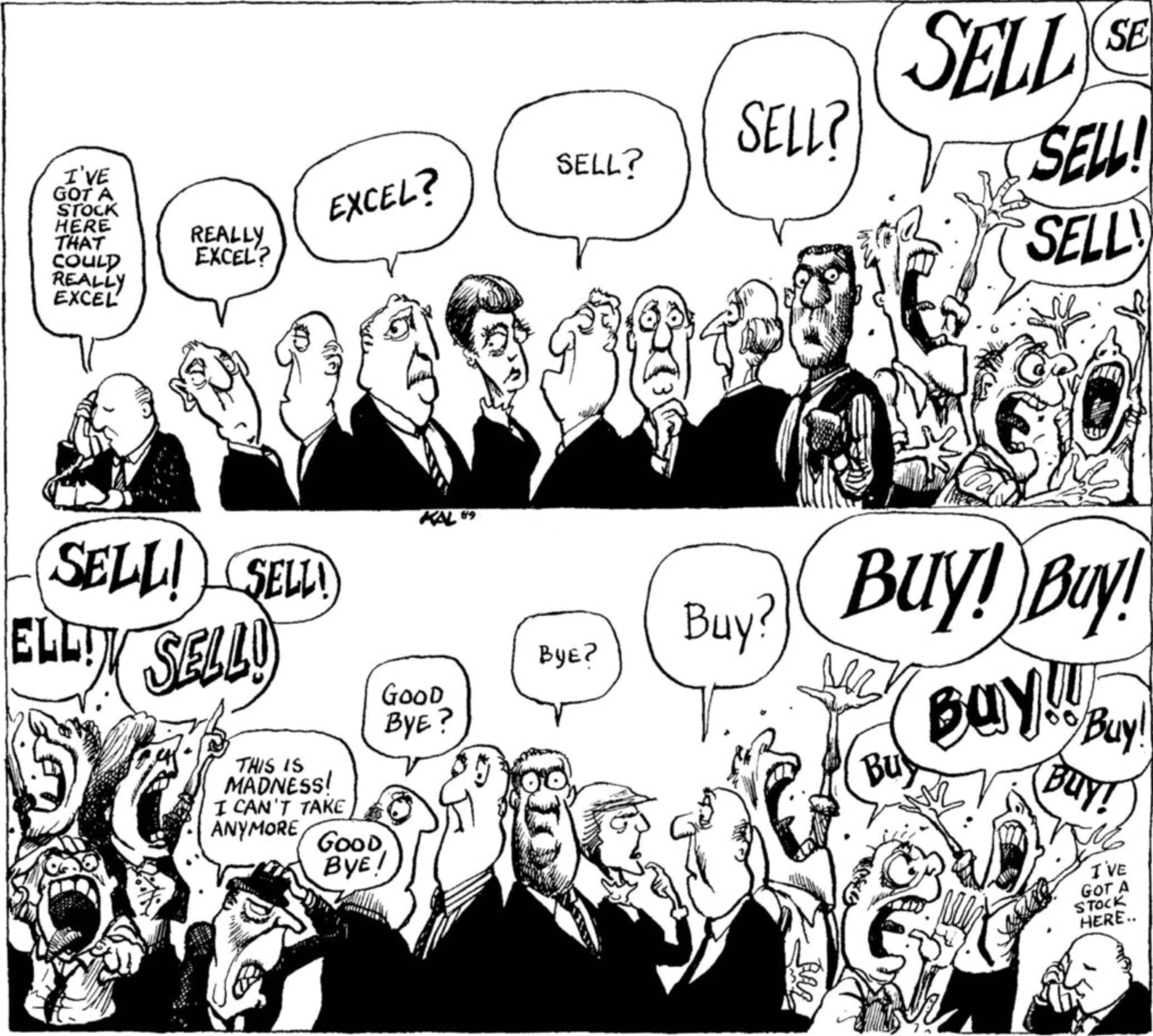
So, which is it?  Are investors bullish or bearish?  To me this is a perfect description of the current situation.  Everyone is overloaded with information, much of which is contradictory, and so having a coherent view has become extremely difficult.  This is part and parcel of my view that the only thing we can clearly expect going forward is an increase in volatility.  In fact, someone said that Donald Trump is the avatar of volatility, and I think that is such an apt description.  Wherever he goes, mayhem follows.  Now, I also believe that people knew what they were voting for as change was in demand.  But for those of us who pay close attention to financial markets, it will take quite the effort to keep up with all the twists and turns.

Fed speakers are starting to feel
Like they have become a fifth wheel
So, let’s get prepared
For Fed speaking squared
As they work, their views, to reveal

Away from the conundrum above, the other noteworthy thing is that FOMC members are starting to feel left out of the conversation.  Prior to President Trump’s inauguration, market practitioners hung on their every word, and they apparently loved the power that came with that setting.  However, now virtually every story is about the President and his policies with monetary policy falling to a distant issue on almost all scorecards.  Clearly, for a group that had grown accustomed to moving markets with their words, this situation has been deemed unacceptable.  The solution, naturally, is to speak even more frequently, and I fear believe this is what we are going to see (or hear) going forward.  

Yesterday was a perfect example, where not only, on a holiday, did we have multiple speakers, but they actually proffered different messages.  From the hawkish side of the spectrum, Governor Michelle Bowman, the lone dissenter to the initial 50bp rate cut back in September, explained caution was the watchword when it comes to acting alongside President Trump’s mooted tariff and other policies, “It will be very important to have a better sense of these policies, how they will be implemented, and establish greater confidence about how the economy will respond in the coming weeks and months.”  That does not sound like someone ready to cut rates anytime soon.

Interestingly, from the dovish side of the spectrum, Governor Christopher Waller, an erstwhile hawk, explained in a speech in Australia (on the day the RBA cut rates by 25bps for their first cut of the cycle and ending an 18 month period of stable rates) that, “If this wintertime lull in progress [on inflation] is temporary, as it was last year, then further policy easing will be appropriate.”  I find it quite interesting that Governor Waller suddenly sounds so dovish as many had ascribed to him the intellectual heft amongst the governors.  This is especially so given that is not the message that Chairman Powell articulated either after the last meeting or at his Humphrey-Hawkins testimony recently.  

So, which is it?  Is the Fed staying hawkish or are they set for a turn?  That will be the crux of many decision-making processes going forward, not just in markets but also in businesses.  We will keep tabs going forward.

Ok, on to the market’s overnight performances.  Lacking a US equity market to follow, everybody was on their own last night which showed with the mixed results.  Japan (+0.25%) showed modest gains while the Hang Seng (+1.6%) rocketed higher on the belief that President Xi is going to be helping the economy, notably the tech firms in China, many of which are listed in Hong Kong.  Alas, the CSI 300 (-0.9%) didn’t get that memo with investors apparently still concerned over the Trump tariff situation.  Elsewhere in the region, Korea and Taiwan rallied while Australia lagged despite the rate cut.  In Europe, unchanged is the story of the day with most bourses just +/-0.1% different than yesterday’s close.  Right now, in Europe, the politicians are trying to figure out how to respond to the recent indication that the US is far less interested in Europe than in the past, and not paying close attention to financial issues.  As to the US, futures at this hour (7:25) are pointing higher with the NASDAQ leading the way, +0.5%.

In the bond market, yields are climbing led by Treasuries (+4bps) with most of Europe seeing yields edge higher by 1bp or 2bps as well.  Remember, yesterday European sovereign yields rose smartly across the board.  Also, I must note JGB yields (+4bps) which have made further new highs for the move and continue to rise.  It appears last night’s catalyst was a former BOJ member, Hiroshi Nakaso, explained he felt more rate hikes were coming with the terminal rate likely to be well above 1.0%.  While I believe the Fed will be cautious going forward, I still think they are focused on rate cuts for now.  With that in mind and the ongoing change in Japanese policy, I am increasingly comfortable with my new stance on the yen.

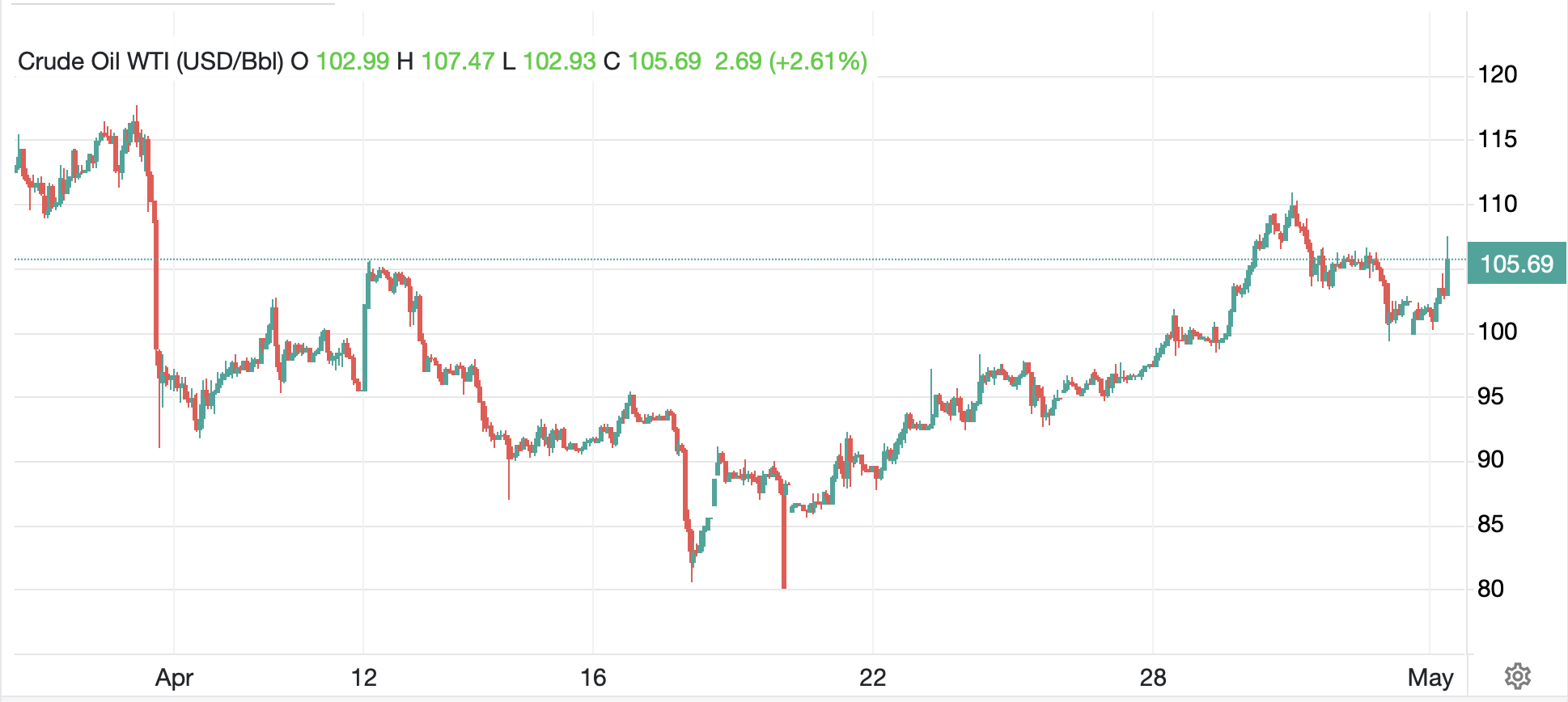
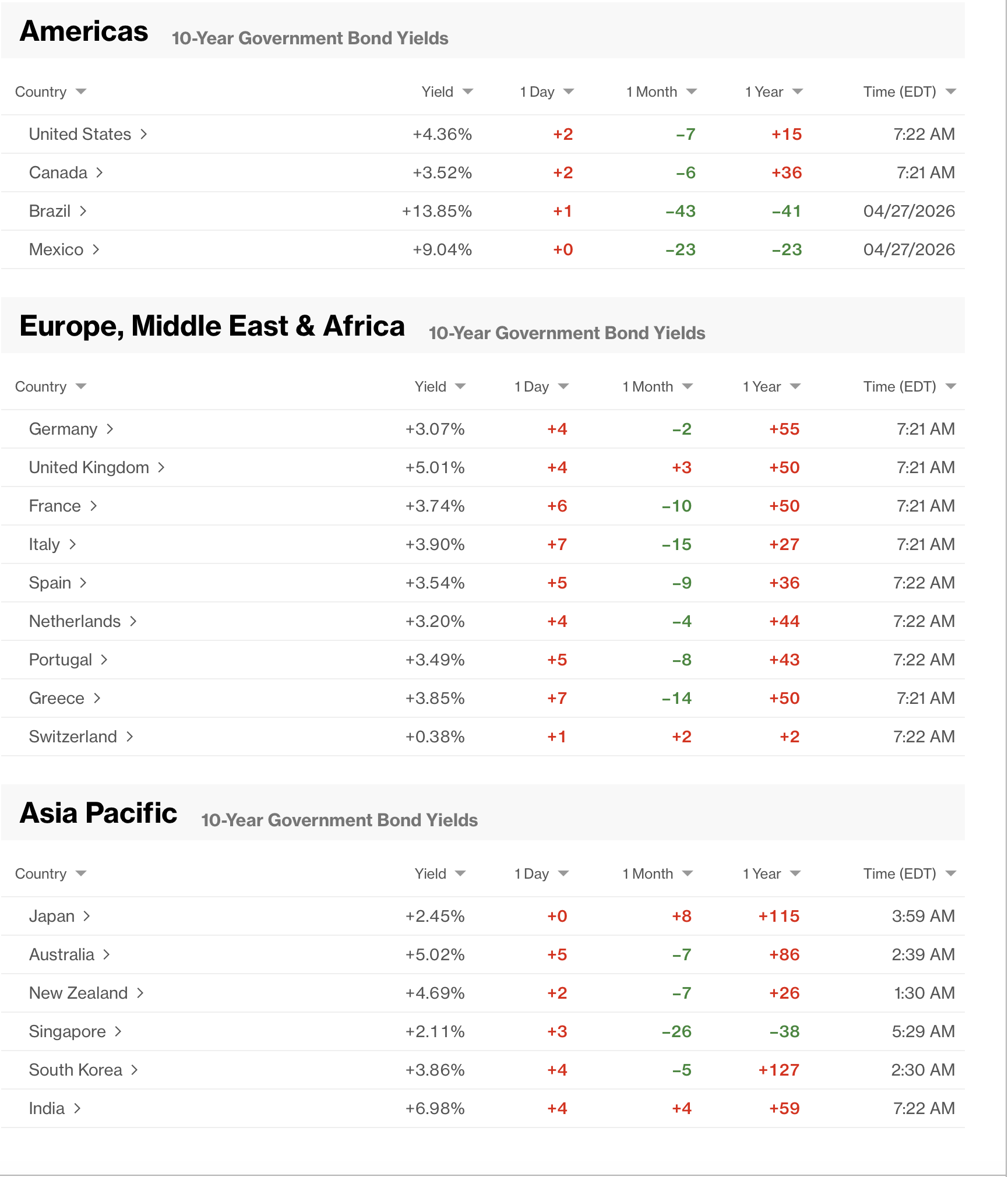
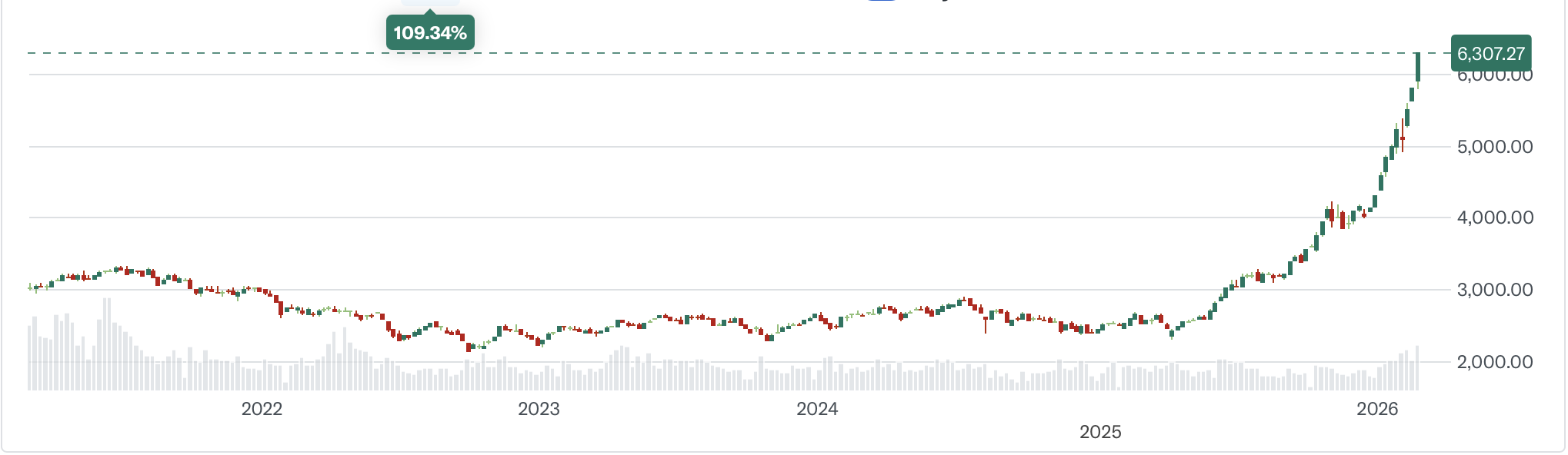
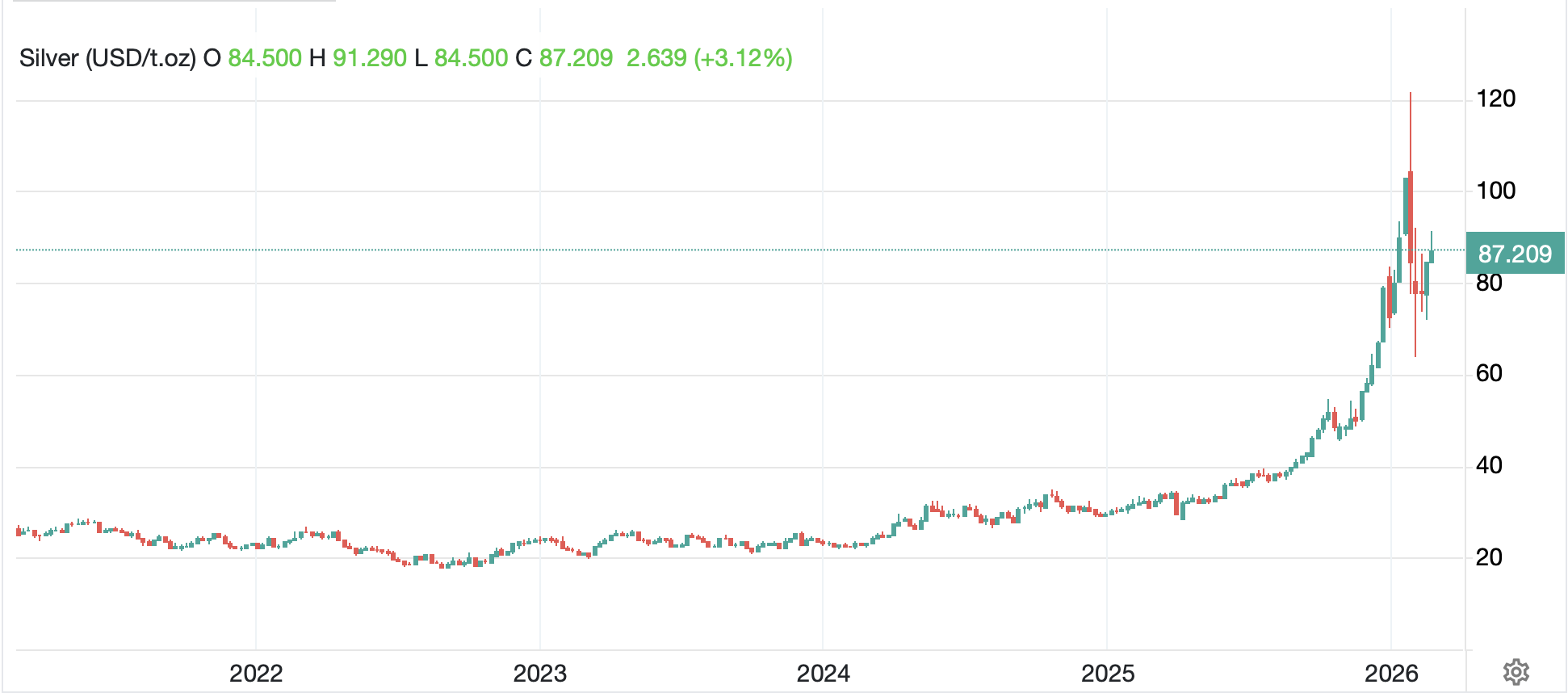
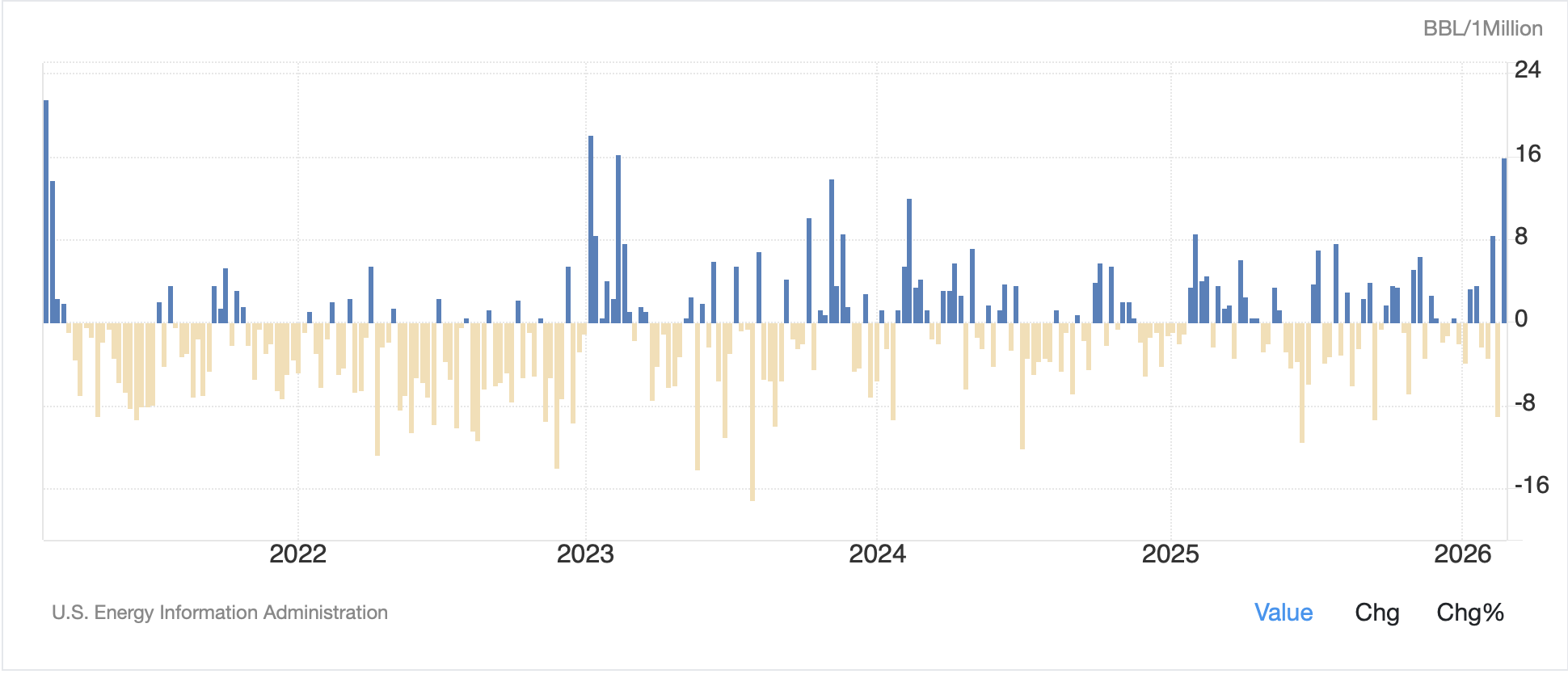
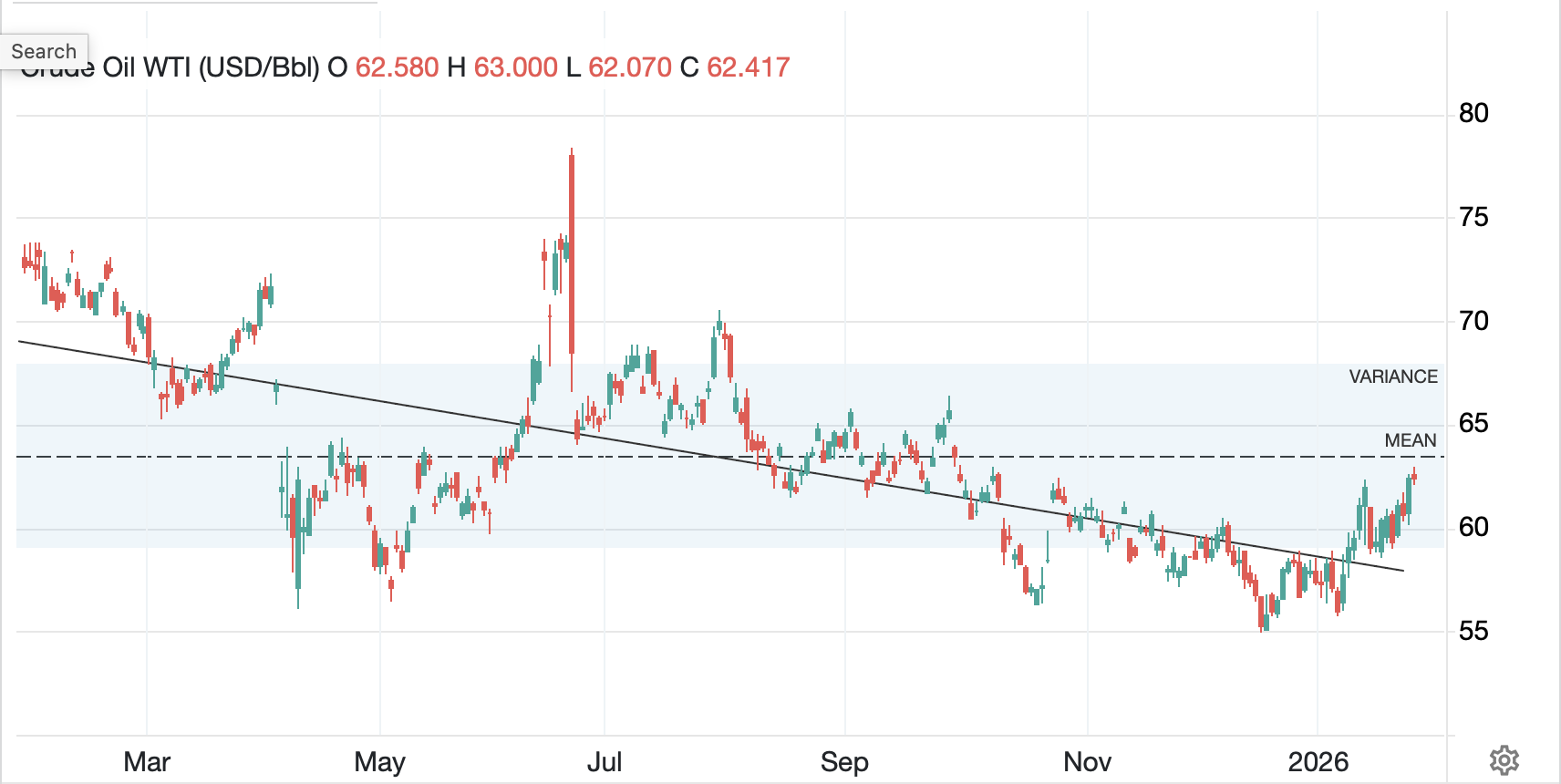
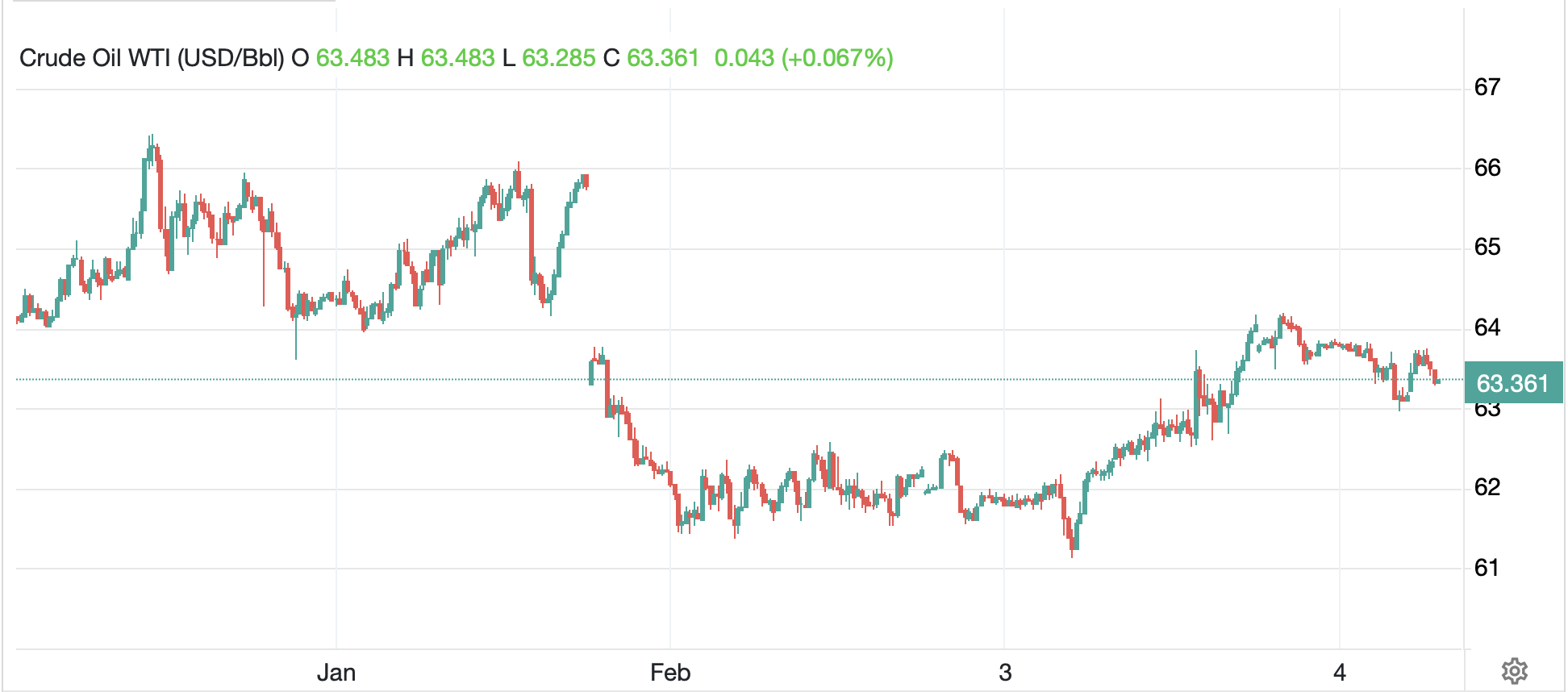
In the commodity markets, last Friday’s sell-off in the metals markets is just a bad memory with gold (+0.5%) rallying again and up more than 1% since Friday’s close.  I continue to believe those moves were positional and not fundamental.  Too, we are seeing gains in silver (+0.2%) and copper (+0.6%) to complete the triad.  Meanwhile, oil (-0.25%) continues to lag, holding above its recent lows but having a great deal of difficulty finding any buying impulse.  Whether that is due to a potential peace in Ukraine and the end of sanctions on Russian oil, or concerns over demand growth going forward is not clear to me, but the trend, as seen in the chart below, is clearly downward and has been so for the past year.

Source: tradingeconomics.com

Finally, in the FX markets, the dollar is firmer this morning rising against all its G10 counterparts with NZD (-0.6%) the laggard.  But losses of -0.2% are the norm this morning.  In the EMG bloc, we are seeing similar price behavior in most markets although MXN (+0.2%) is bucking the trend, seemingly benefitting from what appears to be a hawkish stance by Banxico and the still highly elevated interest rate differential in the peso’s favor.

On the data front, Empire State Manufacturing (exp -1.0) is the only data point although we will hear from two more Fed speakers, Daly and Barr.  I cannot believe that they have really changed their tune and expect that caution will remain their guiding principle for now, although I expect to hear that repeated ad nauseum as they try to regain their place in the spotlight.

Aside from my yen view, I still find it hard to be excited about many other currencies for now.  There is still no indication the Fed is going to move anytime soon, and other central banks are clearly in easing mode.  That bodes well for the dollar going forward.

Good luck

Adf
Soaring Like Eagles

Soaring like eagles
Japanese growth beats forecasts
Are rate hikes coming?


On this President’s Day holiday, when US markets are closed, arguably the most interesting financial story around is in the Land of the Rising Sun where Q4 GDP was released last night at 0.7%, significantly higher than forecast (0.2%) and Q3’s outcome (0.4%).  Japanese markets responded about as might be expected with the yen (+0.6%) rising alongside JGB yields (+3bps) with the 10yr now at 1.38%, its highest level since March 2010.  As to equity markets, the Nikkei (+0.1%) was caught between the positive GDP news and the stronger JPY.  Of course, much has been made of the BOJ’s overnight rate, which now sits at 0.50% after several hikes during the past year.  As well, expectations are for further hikes this year, with several analysts calling for a rate over 1.00% before the end of 2025.

But let us consider, for a moment, what the Japanese rate structure looks like in the context of the current inflation story in Japan.  As can be seen below, this is the current shape of the Japanese government bond yield curve, with 2yr yields at 0.80% while 30yr yields are up to 2.30%.

Source: Bloomberg.com

However, when looking at these yields, which as you can see from the column furthest to the right have risen substantially in the past 12 months, we must also remember the pace of inflation in Japan.  Since April 2022, every monthly CPI print in Japan has been above the target of 2.0%, with all but two of them above 2.5%.  In fact, as you can see from the chart below, the most recent data, as of December 2024 with the January data to be released Thursday night, shows the headline at 3.6%.  That is nearly three years of inflation data running above their target, yet the BOJ is unwilling to say inflation is stably at 2.0%.  I guess they are correct, it is stably at about 3.0%!

Source: tradingeconomics.com

But let’s add up this conundrum and perhaps we will better understand why GDP is growing so robustly in Japan.  If 10yr JGB yields are 1.38% and inflation is 3.60%, then real yields are running at… -2.22%.  That is a pretty loose monetary policy and one in which it is no surprise that economic activity is humming along.  In fact, unless we see a substantial decline in inflation, with no indication that is on the horizon, the BOJ has ample room to raise interest rates while maintaining accommodative monetary policy.

I know that there is much discussion regarding President Trump’s tariffs and whether Japan will be affected like other nations thus increasing uncertainty.  But the economic reality is that the BOJ remains highly stimulative to the economy which has been a driver of both economic growth and inflation.  I also know that this poet has been negative on the yen for a long time, in fact calling for USDJPY to reach 170 by the end of the year.  But as I observe the current situation, take into account the fact that President Trump very clearly wants the dollar to decline, and see more hints that the Japanese government is becoming more concerned over rising inflation in Japan, I am changing my tune here.  Add to these indications the fact that the yen, on any accounting, remains significantly undervalued, with estimates of as much as 50% (Big Mac Index claims it is 44% undervalued) and the case for yen strength is growing on me.

While over the past year, the yen has, net, done very little, the more recent trend is for yen strength as per the 1-month chart below.  My take is that we need to see a break below 150 before the fireworks start, but if that is the case, do not be surprised if we trade back to 130 before the year is over.

Source tradingeconomics.com

And really, that is the story of the evening.  The Chinese NPC will be meeting next week to discuss their economic plans and policies for the upcoming year, so that will be important.  As well, Europe has been put on notice by recent speeches from VP JD Vance and Secretary of State Marco Rubio that the relationship with the US is changing.  However, at this time, it is very difficult to discern if that means the euro will weaken further or rebound on increased internal activity.

Ok, let’s look at markets overnight.  It appears that with the US on holiday, many markets were reluctant to demonstrate leadership in any direction with not only Tokyo virtually unchanged, but the same being true throughout Asia (Hong Kong, 0.0%, China +0.2%, Australia -0.2%) and most of Europe with only the German DAX (+0.8%) showing any life at all.  It seems that several German defense contractors are benefitting from the idea that Europe may be increasing its defense expenditures locally.  US futures are little changed, although of course the market will not be open today.

Treasury bonds are also unchanged this morning with no trading but in Europe, yields are higher by between 3bps and 5bps, also on the rising defense expenditure story as there is an idea now floating around that there will be pan-European debt issuance to help fund that expenditure, thus adding supply to the market.  Certainly, despite the ECB maintaining a somewhat dovish stance, if European yields climb higher, that will likely support the single currency.

In the commodity markets, after Friday’s rout in the metals, where both precious and industrial metals sold off sharply, seemingly on no news, but more likely on position adjustments, this morning we are seeing a rebound, at least in gold (+0.5%) and silver (+0.6%) although copper (-1.3%) remains under pressure.  As to energy prices, oil (-0.35%) is continuing to hover closer to the bottom than top of its recent trading range as there is no clarity at all regarding how a potential Ukrainian peace will impact Russian production.  The one consistency is that European NatGas continues to decline on hopes that Russian gas deliveries will resume going forward.

Finally, the dollar is doing mixed this morning with the yen the outlier showing strength against the greenback, but ZAR (-0.5%) and MXN (-0.4%) showing weakness.  The rest of the G10 has seen only modest movement and that is generally true for the rest of the EMG bloc.  Traders remain highly uncertain over the future that President Trump will usher in.

On the data front, it is a pretty light calendar overall.

TuesdayEmpire State Manufacturing0.0
WednesdayHousing Starts1.4M
 Building Permits1.46M
 FOMC Minutes 
ThursdayInitial Claims215K
 Continuing Claims1860K
 Philly Fed16.3
 Leading Indicators-0.1%
FridayFlash Manufcturing PMI51.2
 Flash Services PMI53.2
 Existing Home Sales4.13M
 Michigan Sentiment67.8

Source: tradingeconomics.com

As well as this data, we see the EIA oil inventories and hear from 11 more Fed speakers.  But again, after Powell made clear they are on hold for now, and there has been no data to change that perception, and President Trump continues to dominate the spotlight, I don’t anticipate any new information here.

With the holiday today, I anticipate things will be quite slow.  Traders will take advantage of the time off to rest given the rising volatility we have seen.  Going forward, I will be reevaluating my longer-term views based potential changes in fiscal policies around the world.  But for now, other than the yen, I don’t see any clear changes yet.

Good luck

Adf
Loathing and Fear

On Friday, the jobs situation
Explained there was little causation
For loathing or fear
That later this year
Recession would soon drive deflation
 
Meanwhile, in the Super Bowl’s wake
The president’s set to forsake
Economists’ warning
That tariffs are scorning
Their views, and are quite a mistake


Let’s start with a brief recap of Friday’s employment report which was surprising on several outcomes.  While the headline was a touch softer than forecast, at 143K, revisions higher to the prior two months of >100K assuaged concerns and implied that the job market was still doing well.  You may recall that there were rumors of a much higher Unemployment Rate coming because of the annual BLS revisions regarding total jobs and population, but in fact, Unemployment fell to 4.0% despite an increase in the employed population of >2 million.  Generally, that must be seen as good news all around, even for the Fed because the fact that they have paused their rate cutting cycle doesn’t seem to be having any negative impacts.

Alas for Powell and friends, although a real positive for the rest of us, the Earnings data was much stronger than expected, up 0.5% on the month taking the annual result to a 4.1% increase.  Recall, one of Powell’s key concerns is non-core services inflation, and that is where wages have a big impact.  After this data, it becomes much harder to anticipate much in the way of rate cuts soon by the Fed.  This was made clear by the Fed funds futures market which is now pricing only an 8.5% probability of a rate cut in March, down from 14% prior to the data, and only 36bps of cuts all year, which is down about 12bps from before.

Securities markets didn’t love the data with both stocks and bonds declining in price, although commodities markets continue to rally alongside the dollar, a somewhat unusual outcome, but one that makes sense if you consider the issues.  Inflation is not yet dead, hurting bonds, while the fact the Fed is likely to remain on hold for longer supports the dollar.  Stocks, meanwhile, need to see more economic growth because lower rates won’t support them while commodities are seen as that inflation fighting haven.

Of course, it wouldn’t be a day ending in Y if we didn’t have another discussion on tariffs during this administration.  The word is that the president has two things in mind, first, reciprocal tariffs, meaning the US will simply match the tariff levels of other countries rather than maintaining their current, generally lower, tariff rates.  As an example, I believe the EU imposes a 10% tariff on US automobile imports, while the US only imposes a 2.5% tariff on European imports.  The latter will now rise to 10%.  It will be very interesting to see how the Europeans complain over the US enacting tariffs that are identical to their own.  

A side story that I recall from a G-20 meeting during Trump’s first term was that he offered to cut tariffs to 0% for France if they reciprocated and President Macron refused.  The point is that while there is a great deal of huffing and puffing about free trade and that Trump is wrecking the world’s trading relationships, the reality appears far different.  If I had to summarize most of the world’s view on trade it is, the US should never put tariffs on any other country so they can sell with reckless abandon, while the rest of the world can put any tariffs they want on US stuff to protect their home industries.  This is not to say tariffs are necessarily good or bad, just that perspective matters.

The other Trump tariffs to be announced are on steel and aluminum imports amounting to 25% of the value. This will be impactful for all manufacturing industries in the US, at least initially, so we will see how things progress.  Interestingly, the dollar has not responded much here because these are not country specific, so a broad rise in the dollar may not be an effective mitigant.

Ultimately, as I have been writing for a while, volatility is the one true change in things now compared to the previous administration.  Now, with that as backdrop, and as we look ahead to not only CPI data on Wednesday, but Chair Powell’s semi-annual congressional testimony on Tuesday at the Senate and Wednesday at the House, let’s look at how markets have responded to things.

As mentioned above, US equity markets fell about -1.0% on Friday after digesting the Unemployment data. However, the picture elsewhere, especially after these tariff discussions, was more mixed.  In Asia, Japanese shares were essentially unchanged although Hong Kong (+1.8%) was the big winner in the region.  But Chinese shares (+0.2%) did little, especially after news that the number of marriages in China fell to their lowest since at least 1986, another sign of the demographic decline in the nation.  Elsewhere in the region, there was more red (India, Taiwan, Australia) than green (Singapore).  European shares, though, are holding up well, with modest gains of about 0.2% – 0.4% across the board despite no real news.  US futures are also ticking higher at this hour (7:10), about 0.5% across the board.

In the bond market, Friday saw Treasury yields jump 6bps with smaller gains seen in Europe.  This morning, though, the market is far quieter with Treasury yields unchanged and European sovereigns similarly situated, with prices between -1bp and +1bp compared to Friday’s closing levels.  Of note, JGB yields have edged higher by 1bp and now sit at 1.31%, their highest level since April 2010.  With that in mind, though, perhaps a little bit of longer-term perspective is in order.  A look at the chart below shows 10-year JGB yields and USDJPY since 1970.  Two things to note are that they have largely moved in sync and that both spent many years above their current levels.  While it has been 15 years since JGB yields were this high, they are still remarkably low, even compared to their own history.  I know that many things have changed over that time driving fundamentals, but nonetheless, this cannot be ignored.

Source: tradingeconomics.com

Sticking with the dollar, it has begun to edge higher since I started writing this morning and sits about 0.2% stronger than Friday’s close.  USDJPY (+0.5%) is once again the leader in the G10, although weakness is widespread in that bloc.  In the EMG bloc, there were a few gainers overnight (INR +0.3%, KRW +0.3%) although the rest of the world is mostly struggling.  One interesting note is ZAR (0.0%) which appears to be caught between the massive rally in gold (to be discussed below) and the increased rhetoric about sanctions by the US in the wake of the ruling party’s ostensible call for a genocide of white South Africans to take over their property.  This has not been getting much mainstream media press, but it is clear that Mr Trump is aware, especially given that Elon Musk is South African by birth.  However, there is no confusion in the South African government bond market, which, as you can see below, has seen yields explode higher in the past week since this story started getting any press at all.

Source: tradingeconomics.com

Finally, the commodity markets continue to show significant movement, especially the metals markets.  Gold (+1.6%) is now over $2900/oz, another new all-time high and calling into question if this is just an arbitrage between London and New York deliveries.  Silver (+1.4%) continues to be along for the ride as is copper (+0.6%) which is the biggest gainer of the past week, up more than 7%.  Ironically, aluminum, the only metal where tariffs are involved, is actually a touch softer this morning.  As to oil (+1.2%) while the recent trend remains lower, it does appear to be bottoming, at least if we look at the chart below.

Source: tradingeconomics.com

Turning to the data this week, it will be quite important as CPI headlines, but we also see Retail Sales and other stuff and have lots of Fedspeak.

TuesdayNFIB Small Biz Optimism104.6
 Powell Testimony to Senate 
WednesdayCPI0.3% (2.9% Y/Y)
 -ex food & energy0.3% (3.1% Y/Y)
 Powell Testimony to House 
ThursdayPPI0.3% (3.4% Y/Y)
 -ex food & energy0.3% (3.3% Y/Y)
 Initial Claims216K
 Continuing Claims1875K
FridayRetail Sales-0.1%
 -ex autos0.3%
 IP0.2%
 Capacity Utilization77.7%

Source: tradingeconmics.com

In addition to Powell, we will hear from five more Fed speakers, although with Powell speaking, I imagine their words will largely be ignored.  Overall, the world continues to try to figure out how to deal with Trump and his dramatic policy changes from the last administration.  One thing to keep in mind is that so far, polls show a large majority of the nation remains in support of his actions so it would be a mistake to think that his policy set is going to be altered.  Net, the market continues to believe this will support the dollar, as will the fact that the Fed seems less and less likely to start cutting rates soon.  Keep that in mind as you consider your hedges going forward.

Good luck

Adf
Is Past Prologue?

The Japanese tale
Now sees brighter times ahead
Yen buyers rejoice


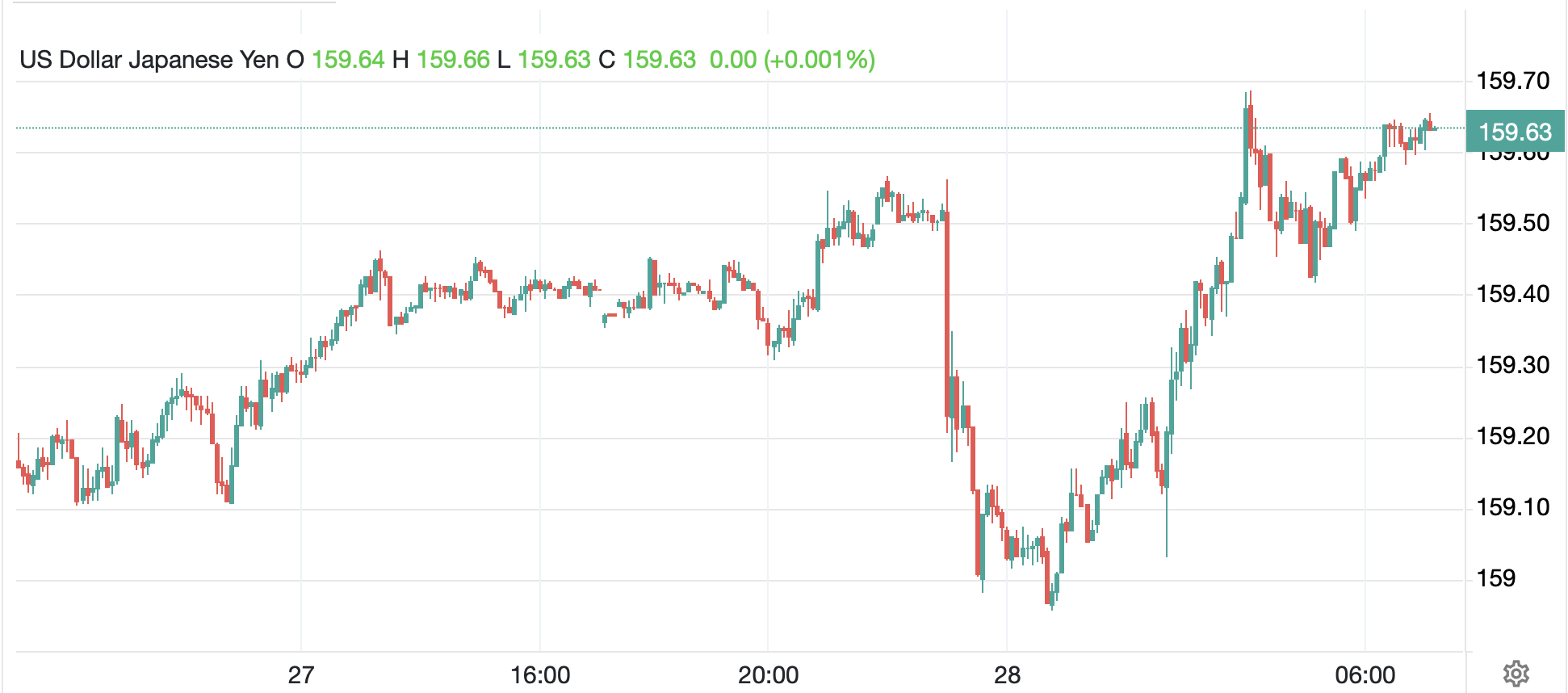
While its movement has been somewhat choppy, for the past month, the yen has been the best performing currency in the G10, gaining more than 3.0% during that time.  This strength seems to have been built on several different themes including a more hawkish BOJ, better growth prospects based on PMI data, rising wages, and some underlying risk aversion.  A quick look at the chart shows that the trend is clearly lower and there have been far more down days for the dollar than up days during this period.

Source: tradingeconomics.com 

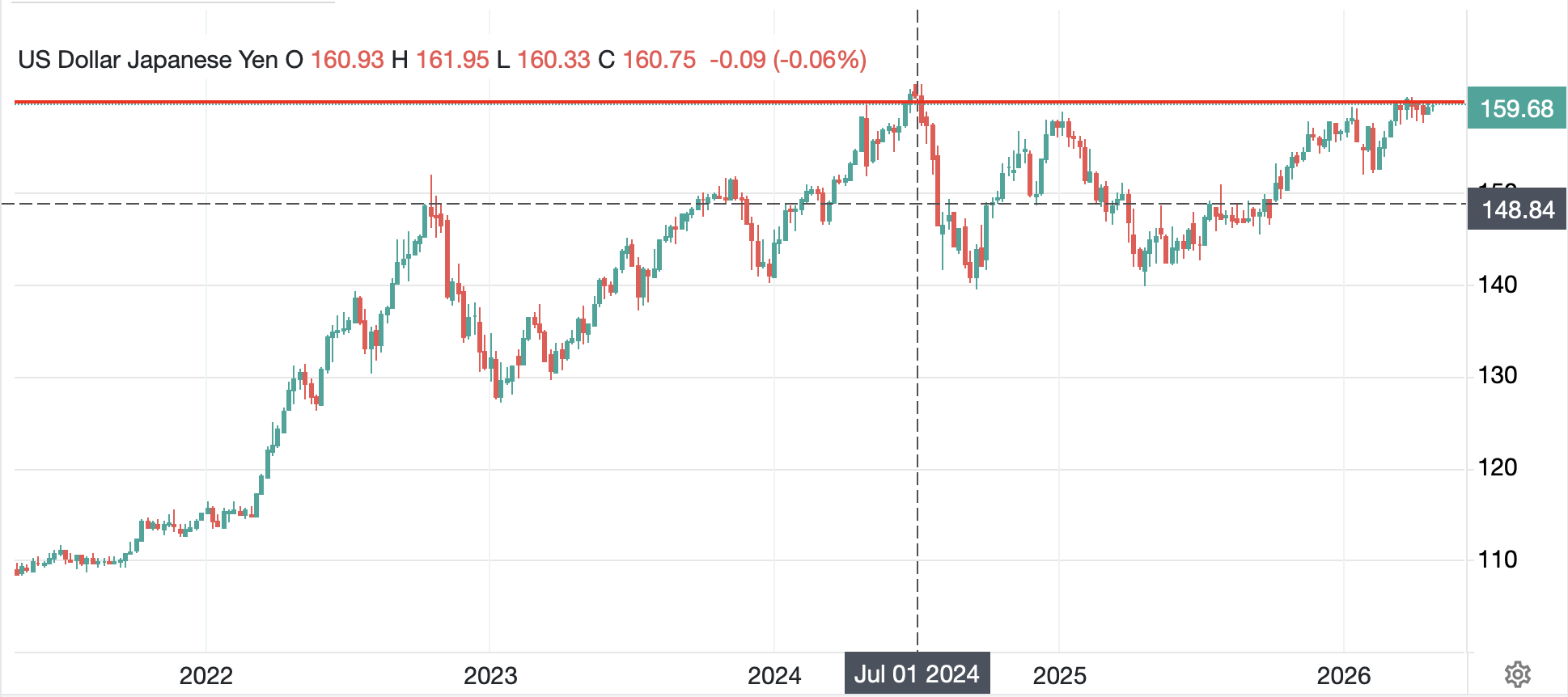
Of course, as I regularly remind myself, and you my good readers, perspective is an important thing to keep in mind, especially when making statements about longer term prospects of a currency.  When looking at USDJPY over a longer term, say the past 5 years where long-term trends have been entrenched based on broad macroeconomic issues as well as the day-to-day vagaries of trading, the picture looks quite different.  In fact, as you can see from the below chart, the past month’s movement barely registers.

Source: tradingeconomics.com

My point is that we must be careful regarding the relative importance of information and news and keep in mind that short-term movements may very well be just that, short-term, rather than major changes in long-term trends.  The latter require very significant macro changes regarding interest rate policy and economic activity, at least when it comes to currencies, not simply a single central bank policy move.

So, the question at hand is, are we at the beginning of a major set of policy shifts that will change the long-term trajectory of the yen?  Or is the yen’s recent strength merely normal noise?

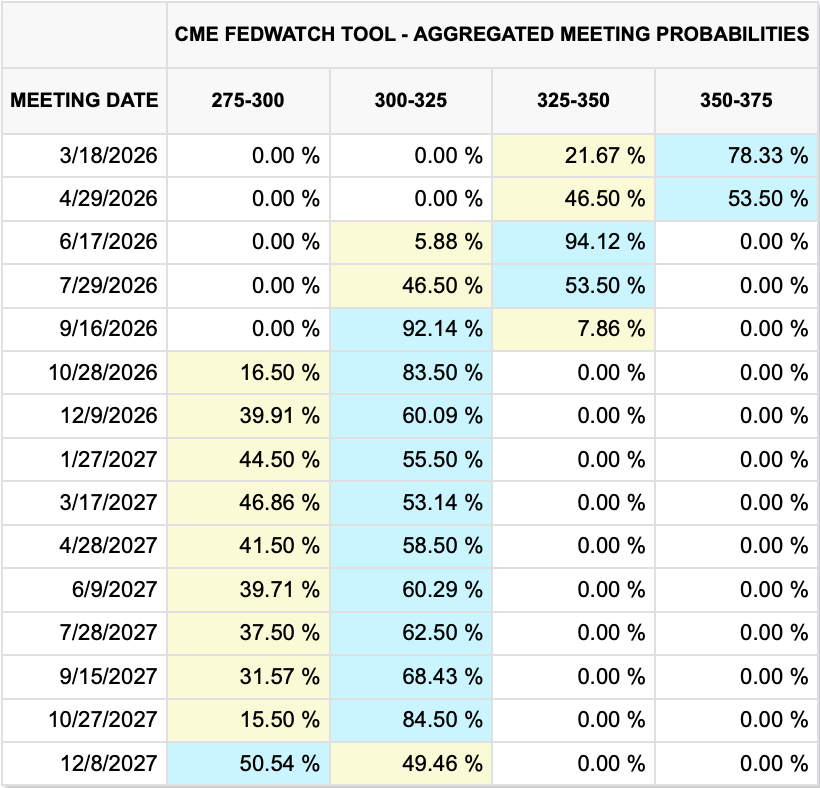
While almost everybody has their own opinion on how the Fed is going to proceed going forward, I think it is instructive to look at the Fed funds futures market and the pricing for future rate activity.  For instance, a look at the current market, especially when compared where these probabilities were one month ago tells us that expectations for Fed rate cuts have diminished pretty substantially, arguably implying that there is more reason to hold dollars.

Source: CME.org

You can see in the lower right-hand corner of the chart that the probability of a rate cut has fallen from nearly 44% to just 16.5% over the past month.  However, during that same period, the BOJ has not only raised interest rates by 25bps, but they have made clear that further rate hikes are coming based on wage settlements and sticky inflationary readings.  One potential way to incorporate this relative movement is to look at the change in forecast interest rates, which in the US have risen by ~7bps (27% *25bps) while Japanese interest rates have risen by 25bps with expectations for another 25bps coming soon.  That is a powerful incentive to be long yen or at least less short yen, than previous positioning.  And we have seen that play out as the yen has strengthened as per the above.

The real question is, can we expect this to continue?  Or have we seen the bulk of the movement?   Here, much will depend on the future of the Fed’s actions as the market is seeing a bifurcation between those who believe rates are destined to fall further once inflation starts to ease again, vs. those, like this poet, who believe that inflation is showing no signs of easing, and therefore the Fed will be hard-pressed to justify further rate cuts.  While I am not the last word on the BOJ, from every source I see, expecting their base rate to be raised above 1.00% anytime in the next several years is aggressive.  Just look at the below chart showing the history of the BOJ base rate.  The last time the rate was above 0.50%, its current level, was September 1995.  That is not to say they cannot raise it, just that as you can see, several times in the intervening years they tried to do so and were forced to reverse course as the economy fell back into the doldrums with inflation quickly falling as well.  

Source: tradingeconomics.com

Is past prologue?  Personally, my take is above 1.0% is highly unlikely any time in the next several years.  Meanwhile, if inflation remains the problem it is in the US, Fed cuts will be much harder to justify.  This is not to say that the yen cannot strengthen somewhat further, but I am not of the opinion we have had a sea change in the long-term trend.

Ok, after spending way too much time on the yen, given that there hasn’t even been any tariff discussion on Japanese products, let’s look elsewhere to see how things moved overnight.

Yesterday saw further relief by equity investors that tariffs are a key Trump negotiating tactic rather than an effort to raise revenue and US markets all gained, especially the NASDAQ.  However, the movement in Asia was more muted with the Nikkei (+0.1%) barely higher while both Hong Kong (-0.9%) and China (-0.6%) fell amid the Chinese tariffs remaining in place.  As to the regional markets, there were some notably gainers (Korea and Taiwan), but away from those two a more mixed picture with less absolute movement was the order of the day.  In Europe, Spain’s IBEX (+1.0%) is the standout performer after the PMI data showed only a modest slowing, and a much better result than the rest of the continent.  Perhaps this explains why the rest of the continent is +/- 0.2% on the session.  As to US futures, they are lower at this hour (7:30) on the back of weaker earnings data from Google after the close last night.

In the bond market, yields have fallen across the board (except in Japan where JGB yields made a run at 1.30%) with Treasury yields lower by 4bps this morning and 12bps from the highs seen yesterday morning.  European sovereign yields are all lower as well, between -4bps and -7bps, as the weaker PMI data has traders convinced that the ECB is going to respond to weakening growth rather than sticky inflation and are now pricing in 100bps of cuts this year with the first 25bps coming tomorrow.

In the commodity space, gold (+1.0%) is the god of commodities right now, rallying more than $100/oz over the past five sessions.  There continue to be questions as to whether this is a major short squeeze as COMEX contracts come up for delivery, but it is not hard to write a narrative that there is increased uncertainty in the world and gold is still seen as the ultimate safe haven.  This gold rally continues to pull other metals higher (Ag +0.8%, Cu +0.2%) although I have to believe this is going to come to a halt soon.  Meanwhile, energy prices have fallen again (oil -1.0%, NatGas -1.5%) as fears over supply issues have dissipated completely.

Finally, the dollar is under pressure overall, certainly one of the reasons the yen (+1.0%) has performed so well overnight, but elsewhere in the G10, we are seeing the euro, pound and Aussie all gain 0.4% or so.  In the EMG bloc, CLP (+1.0%) is gaining on that renewed copper strength while ZAR (+0.5%) is shaking off the Trump threats regarding recent legislative changes and benefitting from gold’s massive rally.  The one outlier is MXN (-0.4%) which seems to be caught between the benefits of stronger silver prices (Mexico is a major exporter of silver) and weaker oil prices.

On the data front today, we start with ADP Employment (exp 150K) then the Trade Balance (-$96.6B) and get ISM Services (54.3) at 10:00.  We also see the EIA oil inventory data with a modest build anticipated across all products.  Four more Fed speakers are on the docket but as we continue to hear from more and more of the FOMC, the word of the moment is caution, as in, the Fed needs to move with caution regarding any further rate cuts.

I don’t blame the Fed for being cautious as President Trump has the ability to completely change perspectives with a single announcement.  While yesterday was focused on Gaza, not really a financial market concern, who knows what today will bring?  It is for this reason that I repeatedly remind one and all, hedging is the best way to moderate changes in cash flows and earnings, and consistent programs, regardless of the situation on a particular day, are very valuable.

Good luck

Adf
Will It Matter?

Will Japan hike rates?
How much will it matter if
They do?  Or they don’t?


Market activity and discussion has been somewhat lacking this week as the real fireworks appear to be in Washington DC where President-elect Trump’s cabinet nominees are going through their hearings at the Senate.  Certainly, between that and the ongoing fires in LA, the news cycle is not very focused on financial markets in the US.  This, then, gives us a chance to gaze Eastward to the Land of the Rising Sun and discuss what is happening there.

You may recall yesterday I mentioned a speech by BOJ Deputy Governor Himino where he explained that given the inflation situation as well as the indication that wages would continue to rise at a more robust clip in Japan, a rate hike may be appropriate.  Well, last night, Governor Ueda basically told us the same thing.  Alas, it seems that the BOJ takes a full day to translate speeches into English because there are no quotes from Ueda, but we now have the entire Himino speech from the day before.

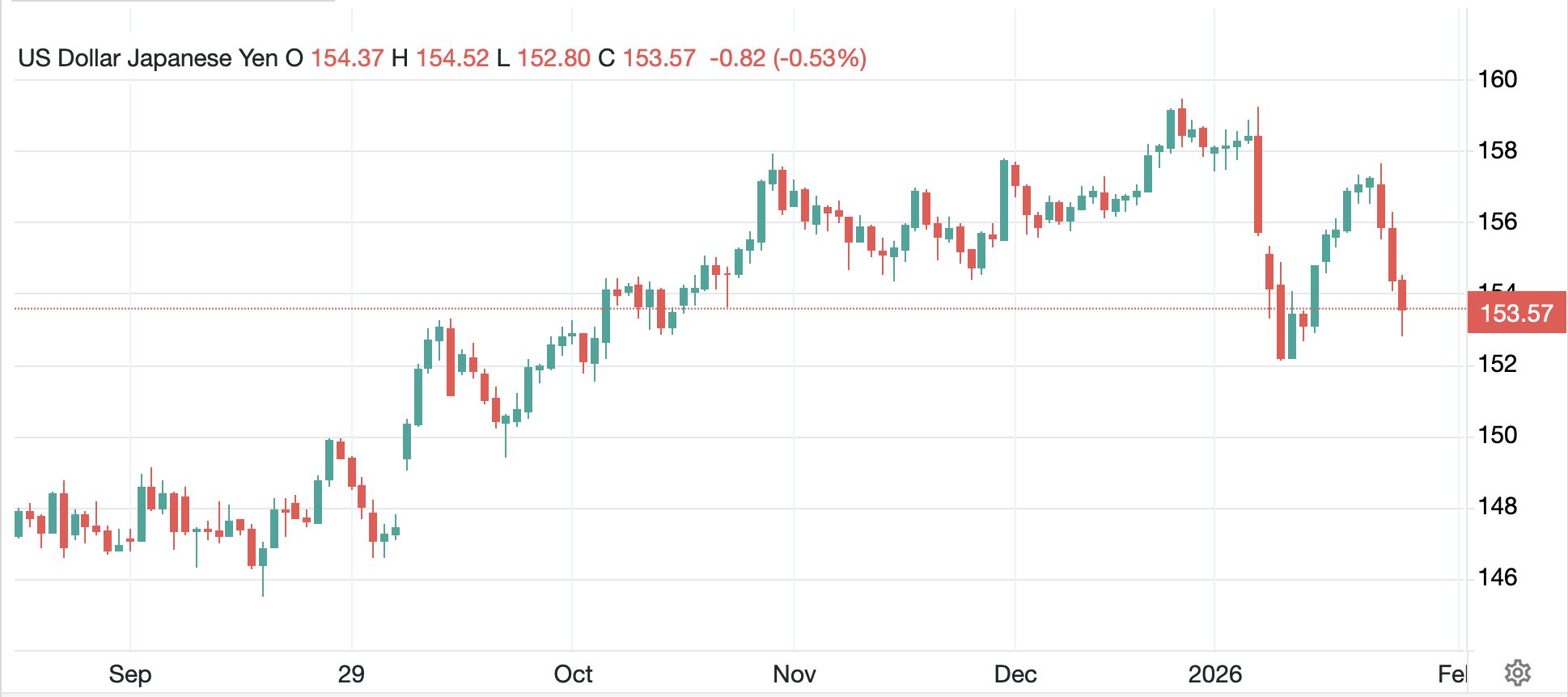
Regardless, the essence of the story is that the BOJ is carefully watching the data and awaiting the Trump inauguration to see if there are any surprise tariff outcomes against Japan (something that has not been discussed) while they await their own meeting at the end of next week.  Market pricing now has a 72% probability of a 25bp rate hike next week, up from about 60% yesterday, and last night the yen did rally, climbing 0.7%.  However, a quick look at the chart below might indicate that the market is not overly concerned about a major yen revaluation.

Source: tradingeconomics.com

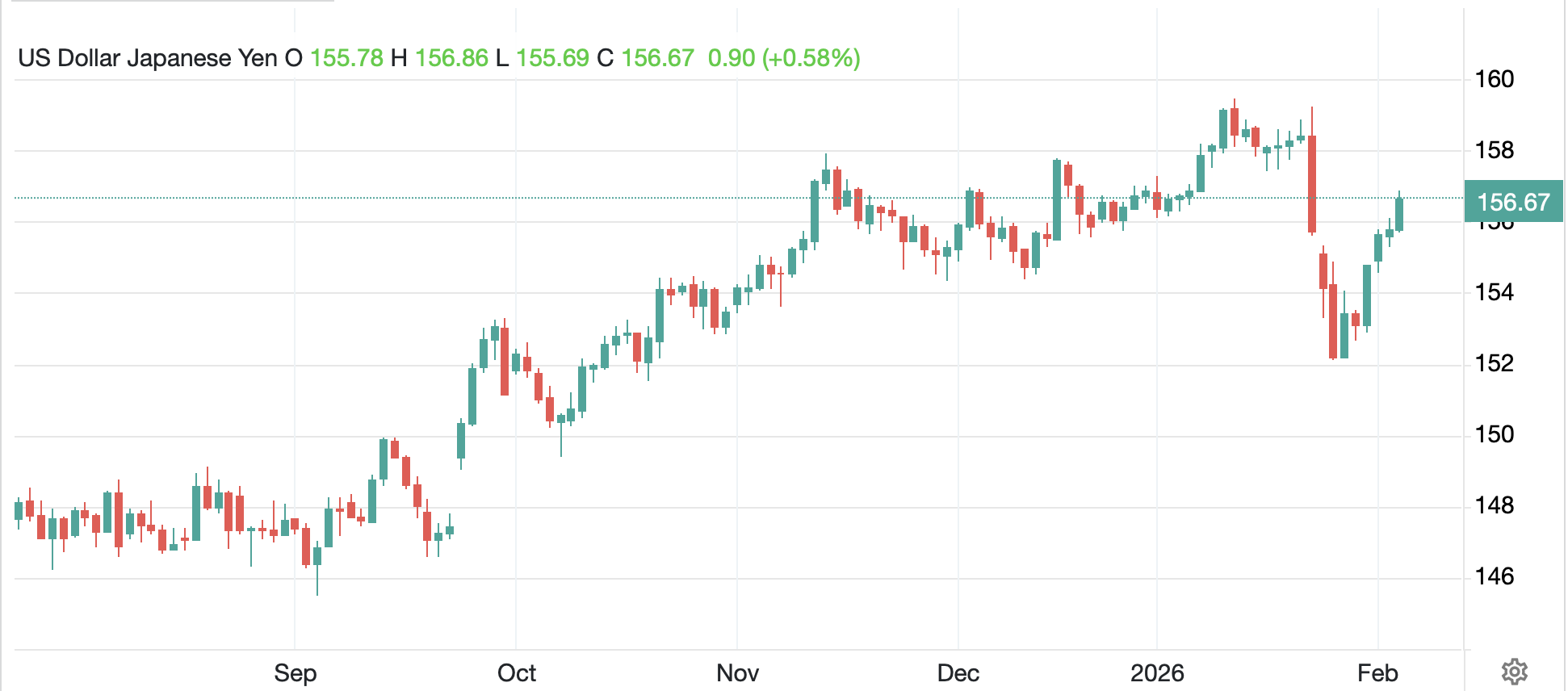
In fact, since the last BOJ meeting in December, when they sounded a bit more dovish than anticipated, the yen has done very little overall, treading water between 156.50 and 158.50.  While a BOJ rate hike would likely support the yen somewhat, there is another dynamic playing out that would likely have the opposite effect.  At the beginning of the year I prognosticated that the Fed may well hike rates by the end of 2025 as inflation seems unlikely to cooperate with their prayers belief that 2.0% was baked in the cake.  At the time, that was not a widely held view.  However, in a remarkably short period of time, market participants are starting to discuss the idea that may, in fact, be the case.  Even the WSJ today had a piece on the subject from James Mackintosh, one of their economics writers laying out the case.  The point here is that if tighter monetary policy by the Fed is in the cards, I suspect the yen will have a great deal of difficulty climbing much further.  Let’s keep an eye on the 156.00 level for clues that things are changing.

In England, inflation is rising
Less quickly than some theorizing
Meanwhile in the States
Jay and his teammates
Are hoping for data downsizing

Turning now to the inflation story, European releases were generally right on forecast except for the UK, where the headline rate fell to 2.5% while the core fell to 3.2%, 1 tick and 2 ticks lower than expected respectively.  Certainly, that is good news for the beleaguered people in the UK and it has now increased the odds that the BOE cuts rates at their next meeting on February 6th.  However, we cannot forget that the BOE’s inflation target, like that of the Fed, is 2.0%, and there is still limited belief that they will achieve that level even in 2025. But the markets did respond to the data with the FTSE 100 (+0.75%) leading the European bourses higher while 10-year Gilt yields (-8bps) have seen their largest decline in several weeks and are also leading European sovereign yields lower.  Interestingly, the pound has been left out of this movement as it is essentially unchanged on the day.  Perhaps there is a message there.

Which brings us to the US CPI data this morning.  after yesterday’s PPI data printed softer than expected at both the headline and core levels, excitement is building for a soft print and the resumption of the Fed cutting cycle.  However, it is important to remember that despite the concept that these prices should move together, the reality is they really don’t.  Looking at the monthly core movements below, while the sign is generally the same, the relationship is far weaker than one might imagine.

Source: tradingeconomics.com

In fact, since January 2000, the correlation between the two headline series is 0.04%, or arguably no relationship at all.  I would not count on a soft CPI print this morning based on yesterday’s PPI.  Rather, I am far more concerned that the ISM Services Prices Paid index last week was so hot at 64.1, a better indicator that inflation remains sticky.  But I guess we will all learn in an hour or two how it plays out.

Ahead of that, let’s look at the rest of the overnight session.  Yesterday’s mixed US equity performance (the NASDAQ lagged) was followed by mixed price action overnight with the Nikkei (-0.1%) edging lower on the modestly stronger yen and talk of a rate hike, while the Hang Seng (+0.3%) managed a gain on the back of Chinese central bank activity as the PBOC added more than $130 billion in liquidity ahead of the Lunar New Year holiday upcoming.  However, mainland shares (CSI 300 -0.6%) did not share the Hong Kong view.  Elsewhere in the region Taiwan (-1.25%) was the laggard while Indonesia (+1.8%) jumped on a surprise rate cut by the central bank there.

In Europe, though, all is green as gains of 0.4% (CAC) to 0.8% (DAX) have been driven by ECB comments that rate cuts are coming as concerns grow over the weakness of the economies there.  Germany released its GDP data and in 2024, Germany’s GDP shrank by -0.2%, the second consecutive annual decline and the truth is, given the combination of their insane energy policy and the fact that China is eating their proverbial lunch with respect to manufacturing, especially in the auto sector, it is hard to look ahead and see any positivity at all.  Meanwhile, US futures are higher by 0.5% or so at this hour (7:00) clearly with traders looking for a soft CPI print.

In the bond market, Treasury yields are lower by 3bps this morning but remain just below 4.80% and the 5.0% watch parties are still hot tickets.  European yields have also softened away from Gilts, with the entire continent lower by between -2bps and -4bps.  Right now, with dreams of a soft CPI, bond bulls are active.  We shall see how that plays out.

In the commodity space, oil (+0.3%) is modestly firmer after a reactionary sell-off yesterday.  The IEA modestly raised its demand forecast and supplies in the US, according to the API, were a bit tighter yesterday, so that seems to be the support.  NatGas is little changed right now while metals markets (Au +0.4%, Ag +0.5%, Cu +0.4%) are edging higher although mostly remain in a trading range lately.  Activity here has been lackluster with no new story to drive either direction.

Finally, the dollar is a touch softer overall, but away from USDJPY, most movement is of the 0.1% variety. Right now, the FX markets are not garnering much interest overall.

On the data front, expectations for CPI are as follows: Headline (0.3%, 2.9% Y/Y) and Core (0.2%, 3.3% Y/Y).  As well, we see Empire State Manufacturing (3.0) and then the Beige Book at 2:00pm.  We also have three Fed speakers, Williams, Kashkari and Barkin, but are they really going to alter the cautionary message?  I doubt it and the market continues to price a single 25bp cut for all of 2025.  The real fireworks will only come if/when price hikes start to get priced in as discussed above.

It is hard to get excited for market activity today as all eyes remain on the confirmation hearings and LA.  As such, I suspect there will be very little to see today.

Good luck

Adf
Falling Further

Like a stone toward earth
The yen keeps falling further
Beware Kato-san


While we have not discussed the yen much lately, its recent weakness, in concert with the dollar’s broad strength, has begun to cause some discomfort in Japan.  Last night, Japanese FinMin Katsunobu Kato explained, “We will take appropriate action if there are excessive movements in the currency market.”  He went on that he is “deeply concerned” by the recent weakness, especially moves driven by those evil pesky speculators.

The problem, of course, is that all those expectations that the BOJ would be tightening policy to fight domestic inflation while the Fed would continue to ease policy since they “beat” inflation, with the result being the yen would regain its footing, have proven to be false hope.  Instead, as you can see from the below chart, since the Fed first cut rates back in September, the yen has tumbled nearly 13% and very much looks like it is going to test the previous four-decade highs seen last summer.

Source: tradingeconomics.com

Last year, the MOF/BOJ spent about $100 billion in their efforts to stem the yen’s weakness.  They still have ample FX reserves to continue with that process, but ultimately, history has shown that maintaining a cap on a currency that is weakening for fundamental reasons is nigh on impossible.  If a weak yen is truly seen as existential in Tokyo, then Ueda-san needs to be far more aggressive in tightening monetary policy.  This is especially so given the Fed continues to back away from earlier expectations that it would be aggressively loosening policy.  Now, while JGB yields have moved higher over the past several sessions, trading now at 1.18%, which is their highest level since April 2011, that is not going to be enough to stem this tide.  From what I read, inflation is an issue, but not the same as it was in the US in 2022, so Ueda-san is not getting the same pressure to address it as Powell did back then.  My read is the BOJ remains on hold this month and hikes rates in March while the yen continues its decline.  Look for another bout of intervention when we test the 162 level, but that will not stop the rot.  Nothing has changed my view of 170 or higher in USDJPY by year end.

Though Treasury yields have been rising
Most credit spreads have been downsizing
So, corporate supply
Is ever so high
An outcome that’s somewhat surprising

In the bond market, government bond yields continue to rise around the world (China excepted) as investors increase their demands in order to hold the never-ending supply of new bonds.  Ironically, despite this ongoing rout in government bonds across the board, corporate debt issuance looks as though it will set new records this month.  One thing to remember here is that corporates have a lot of debt coming due over the next two years as all that issuance during the ZIRP period needs to be rolled over.  But the other thing to recognize is that corporate credit spreads, the amount of yield investors require to own risky corporate bonds vis-à-vis “safe” government bonds, has fallen to its lowest levels in years, and as can be seen in the chart below, the extra yield available for high-yield investors is shrinking faster than for investment grades.

Potentially, one reason for this is the dramatic increase in the amount of Private Credit, the latest investment fad where weaker credits go directly to funds designed to lend money rather than to their banks, and investors ostensibly remove one of the middlemen from the process.  As such, there is less of this debt around than there otherwise might be, hence increasing demand and reducing that credit spread.  But the other reason is that there continues to be a significant amount of investable assets looking for a home, and with global yields near the highest they have been in a decade or more, and with the equity market dividend yield down to just 1.27% or so, a record low, there are lots of investors who are comfortable with clipping 5% or 5.5% coupons on BBB corporate bonds.

The question I would ask is, if government bond yields continue to climb, and I see no reason for that to stop given the trend in inflation and necessary issuance, at what point are investors going to get scared?  We are likely still a long way from that point, but beware if the new Treasury Secretary, Scott Bessent, follows through with his hinted views of reducing T-bill issuance and increasing coupon issuance, yields could go much higher absent the Fed implementing QE.  That would cause some serious market ructions!

Ok, let’s see how things look around markets this morning after yesterday’s sell-off in the US equity markets.  It seems Japanese stocks were caught between the weaker yen (generally a stock positive) and the tech sell-off (generally a stock negative) with the Nikkei closing lower by -0.25% on the session.  Meanwhile, the Hang Seng (-0.9%) suffered a bit more on the tech move, although Mainland shares (-0.2%) were not as badly affected.  An interesting story here is that the chief economist at state-owned SDIC Securities made comments at an international forum run by the Peterson Institute that really pissed off President Xi.  Gao Shanwen said the quiet part out loud when he claimed that actual GDP growth in China for the past several years has likely been much closer to 2% than the 5% published.  That story has been widespread in the West, although has never been given official credence.  And for Xi, 2% growth is not going to get it done, what with the property bubble still imploding and consumption declining despite promises of more stimulus.  Stay tuned to this story to see if we start to see more Western analysts reduce their expectations.  Elsewhere in Asia, the picture was mixed with gainers (Korea, Australia, Singapore) and laggards (Taiwan, Malaysia, Philippines).

In Europe, red is today’s color, led by the CAC (-1.0%) although we are seeing losses across the board. Eurozone data showed declining Consumer Confidence, Economic Sentiment and Industrial Sentiment all while inflation expectations remain stubbornly high.  That stagflationary hint is typically not an equity market benefit so these declines should be expected.  The story on the continent is not a positive one and I maintain that the ECB is going to have to cut rates more aggressively than their inflation mandate would suggest.  That might support equities a bit, but it will be hell on the euro!  Finally, US futures are a touch softer (-0.2%) at this hour (7:05) although they were higher most of the overnight session before this.

As mentioned above, bond yields are higher with Gilts (+9bps) leading the way as not only is the economy suffering from some very poor policy decisions by the Starmer government, but it seems that the ongoing political crisis regarding grooming gangs has investors shying away.  But yields continue to rise across the board with continental yields up between 3bps and 6bps, Treasury yields higher by another 1bp this morning after a 10bp rise in the previous two sessions, and JGB yields, as mentioned, higher by 5bps.  This trend is very clear!

In the commodity markets, oil (+0.5%) keeps on keeping on, as API data showed a greater than 4mm barrel draw on inventories, far more than expected and indicating a reduced supply around.  Cold temperatures are keeping NatGas (+5.0%) firm as well.  In the metals markets, both precious and base are under a touch of pressure this morning, down less than -0.2%, largely in response to the dollar’s rebound.

Speaking of the dollar, it is higher against all its counterparts this morning with the pound (-1.2%) the G10 laggard although weakness on the order of 0.5% is pretty common this morning.  In the EMG bloc, ZAR (-1.5%) is the worst performer, after weaker than expected PMI data called into question the economic path forward.  But here, too, we are seeing weakness like MXN (-0.9%), CLP (-0.8%), PLN (-0.8%) and KRW (-0.5%).  I would be remiss to ignore CNY (-0.25%), which is trading below (dollar above) 7.3600 in the offshore market, and is now 2.4% weaker than last night’s fixing rate.  This is also the weakest the renminbi has been since it touched this level back in September and then November 2007 prior to that.  Those Chinese problems are coming home to roost for President Xi.

On the data front, ADP Employment (exp 140K) leads the day followed by Initial (218K) and Continuing (1870K) Claims.  These are being released this morning because of tomorrow’s quasi holiday regarding the late President Carter, when US markets will be closed.  This afternoon, the FOMC Minutes arrive and will be scrutinized closely to see just how hawkish they have become.  We also hear from Governor Waller this morning with caution being the watchword from virtually every Fed speaker of late.

It is all playing out like I anticipated, with the ISM data showing strength yesterday, not just in the headline number, but also in the Prices Paid number.  The Fed will have no chance to cut rates again, and I look for the dollar to continue to rise.

Good luck

Adf
A New Denouement

The story is that the Chinese
Will speed up their policy ease
Creating for Yuan
A new denouement
Of currency weakness disease
 
Their problem is that in the past
That weakness could happen too fast
So, how far will Xi
Be willing to see
Renminbi decline at long last?


As we await the US CPI data this morning, the story du jour in markets revolves around the Chinese renminbi and whether President Xi will allow, or encourage, the PBOC to weaken the currency.  Strategically, Xi has made a big deal to the rest of the world that the Chinese currency will remain strong and stable as he seeks other nations to increase their use of the renminbi in commercial transactions as well as a store of value.  I believe part of this is a legitimate goal but that there is also a significant fear underlying these actions as history has shown the Chinese people will flee the currency if it starts to weaken too quickly.  It is the latter issue that has been the primary driver of the PBOC’s efforts to continuously fix the renminbi at stronger than market levels.
 
This process worked well enough for the past four years as the Biden administration, while certainly not friendly to China, was not aggressively attacking the nation’s efforts to expand its influence.  However, that situation is about to change with the Trump administration and as Mr Trump has already threatened numerous new tariffs on various parts of China’s production economy, Xi’s calculus must change.  This puts Xi in a difficult situation; allow the currency to weaken more aggressively to offset the impact of any tariffs and suffer through capital flight or maintain the renminbi’s value and see exports decline along with overall economic activity.  It is easy to see in the chart below when the story about allowing a weaker currency hit the tape.  However, there is not nearly enough information to take a longer-term view on the subject.


Source: tradingeconomics.com

One other thing to remember is that Chinese interest rates are continuing to decline with 10-year yields trading to yet another new low last night at 1.88%.  As the spread between US and Chinese yields continues to widen, by itself that will put pressure on the renminbi to decline.  The problem for Xi is that no matter the control the PBOC has over the FX markets in China, now that there is an offshore market, if the Chinese people become concerned over the value of the renminbi, it has the ability to decline far more quickly than the government would want to allow.

For those of you with Chinese assets on your balance sheet or Chinese denominated revenues, I would be looking to maximize my hedges for now.  As an aside, there were a number of forecast changes by major banks overnight with many calls for USDCNY to reach 7.50 or higher by the end of next year now.

The market’s convinced
A rate hike is on the way
Why won’t the yen rise?

The other story overnight focused on Japan, or more precisely the BOJ meeting to be held in one week’s time.  It seems that there is a lot of dissent amongst the analyst community regarding whether or not the BOJ will hike rates.  As an example of how thin all the analyst gruel really is, one of the key rationales for the belief in a rate hike was that last week, Toyoaki Nakamura, perceived as the most dovish BOJ board member, indicated he didn’t object to a rate hike, although wanted to see more data before declaring one was appropriate for December.  However, just last night the BOJ added a speech and press briefing to their calendar for Deputy Governor Ryozo Himino right before the January meeting.  This has the punditry now expecting the BOJ to wait until then rather than move next week.  The below chart shows the change in the market’s expectations for a rate hike over the past week.

As I said, the tea leaves that the punditry are reading really don’t say very much at all.  Perhaps we can look at the economic data to get a sense.  Over the past month, we have seen CPI for both the nation and Tokyo print higher than forecast and continue to slowly climb.  As well, PPI printed higher and GDP continues to grow, albeit at a modest pace.  Of greater concern is that earnings data is lagging the CPI data.  

A look at the FX market would indicate that traders are losing their taste for a rate hike next week, at least as evidenced by the yen’s recent weakness.  As you can see in the past week, it has slipped nearly 2%, hardly a sign that higher Japanese rates are expected.  But something that is not getting much press is the potential Trump impact, where the incoming president would like to see the yen, specifically, strengthen as it is truly historically undervalued.  FWIW, which is probably not that much, I am in the rate hike camp for next week and expect the yen will find some support soon.

Source: tradingeconomics.com

Ok, enough Asian currency talk.  Let’s see how everything else behaved ahead of this morning’s data.  Yesterday’s modest US equity declines were followed by virtually no movement in Japanese shares although most of the rest of Asia followed the US lower.  Hong Kong (-0.8%) and Taiwan (-1.0%) were the worst performers and the one outlier the other way was Korea (+1.0%) as the KOSPI continues to recoup the losses made after the martial law fiasco.  European bourses are mostly little changed on the day with Spain’s IBEX (-1.1%) the lone exception which has been negatively impacted by Q3 results from Inditex (the parent company of Zara).  As to US futures, at this hour (7:25) they are little changed.

In the bond market, yields continue to edge higher in Treasuries (+2bps) and European sovereigns with gains on the order of 1bp to 2bps across the board.  While there is some discussion regarding fiscal questions in Europe, ultimately, nothing has broken the connection between US and European yields, and I would contend they are all awaiting this morning’s CPI.

In the commodity markets, oil (+1.4%) is rebounding although remains below $70/bbl, which seems to be a trading pivot for now.  The China stimulus story remains the key in the market with a growing belief that if China does successfully stimulate, oil demand will increase.  Meanwhile in the metals markets, gold is unchanged this morning after another nice rally yesterday while both silver and copper are under modest pressure.  I would contend, however, that the trend for all metals remains slightly upward.

Finally, the dollar is firmer against virtually all its counterparts this morning with most G10 currencies softer on the order of -0.3% or so although CAD and CHF are little changed on the session.  In the EMG bloc, KRW (+0.3%) is rebounding alongside the KOSPI as the excesses from the martial law story last week continue to be unwound, but elsewhere in the bloc, modest weakness, between -0.2% and -0.4%, is the rule.  However, this is all dollar focused today.

On the data front, it is worth noting that yesterday’s NFIB Small Business Optimism Index shot higher in November in the wake of the election results, heading back toward its long-term average just above 100.  As to this morning, forecasts for Headline (exp 0.3%, 2.7% Y/Y) and Core (0.3%, 3.3% Y/Y) CPI continue to indicate that the Fed may be overstating the case in their belief that inflation pressures are ebbing.  Rather, I continue to believe that we have seen the bottom in the rate of inflation and a gradual increase is in our future.  Two other things of note are the BOC rate decision (exp 50bps cut) this morning and then the Brazilian Central Bank rate decision (exp 75bp HIKE) this afternoon.  The latter is clearly an attempt to rein in the BRL’s recent dramatic decline.

With no Fed speakers, if the data this morning is significantly different than expectations, I would look for the Fed Whisperer, Nick Timiraos, to publish something before the end of the day in order to get the Fed’s latest views into the market.  Absent that, nothing has gotten in the way of the higher dollar at this stage so stay sharp.

Good luck

Adf
Looking Elsewhere

The Middle East story is back
With fears that Iran might attack
So, oil is rising
And it’s not surprising
The dollar is leading the pack
 
But til anything happens there
The market is looking elsewhere
The Payrolls report
May well be the sort
That causes Chair Powell to care


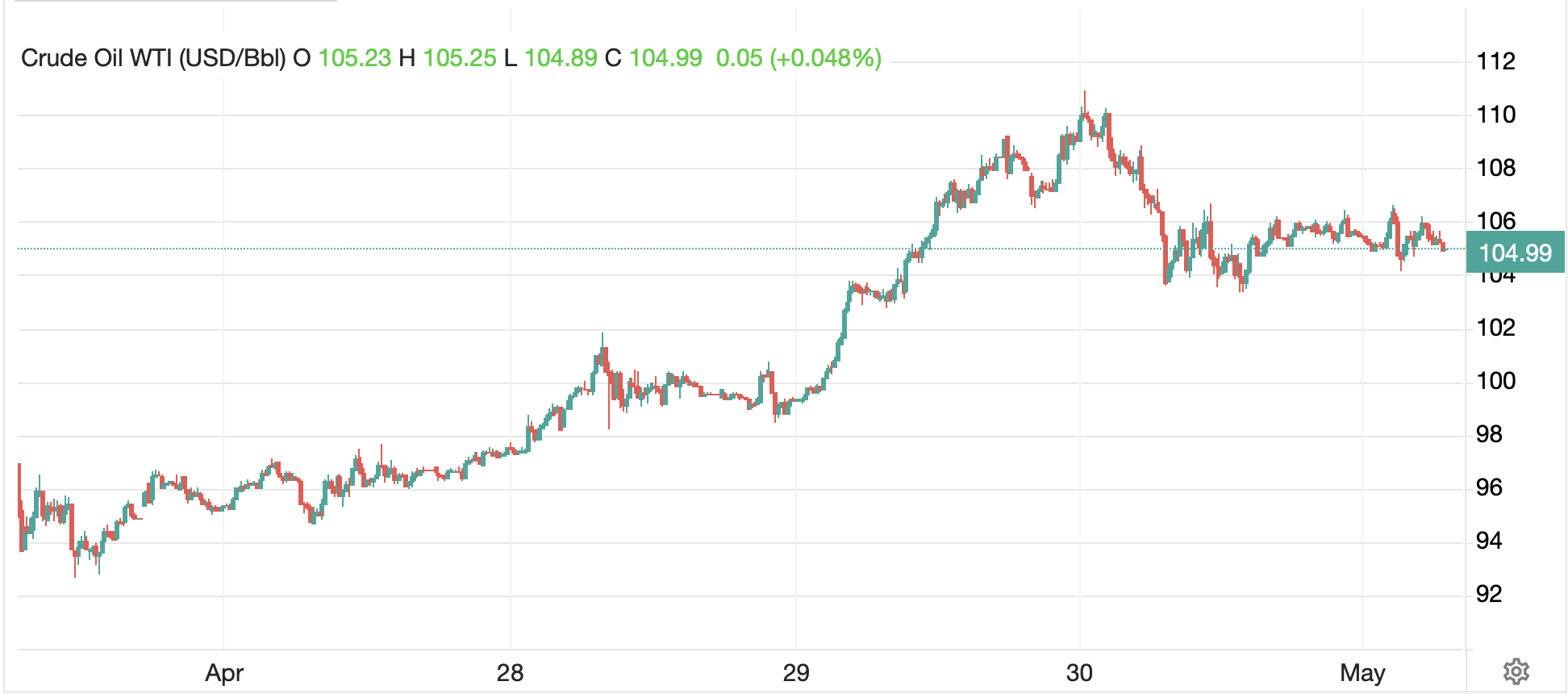
It was only a week ago when the Israeli response to the Iranian missile barrage was seen by market participants as a clear de-escalation of tensions in the Middle East.  The market’s response was to reduce the risk premium in the price of oil which promptly fell $5/bbl amid signs of slowing growth in China as well.  Alas, as can be seen in the chart below, that was Monday’s story and no longer pertains.  Rather, the new concern is that Iran is planning to launch yet another attack, this time via proxies in Iraq, with Israel vowing to respond more severely.  You cannot be surprised that oil has regained its levels prior to Monday’s narrative.

Source: tradingeconomics.com

Adding to the buying pressure for oil has been the better than expected growth data from China (Caixin Mfg PMI printing better than expected 50.3) and solid US GDP data on Wednesday along with stronger Personal Income and Spending data yesterday.  And remember, the market is also looking ahead to the Standing Committee of the National People’s Congress in China to add significant fiscal stimulus there, with CNY 10 trillion (~$1.4 trillion) the most popular number being bandied about.  If that comes to pass, it will seemingly increase demand for oil on China’s part.

Of course, there is another piece of news that the market is awaiting with the potential for a significant impact, today’s Employment Report.  Ahead of the release, these are the current consensus forecasts:

Nonfarm Payrolls113K
Private Payrolls90K
Manufacturing Payrolls-28K
Unemployment Rate4.1%
Average Hourly Earnings0.3% (4.0% Y/Y)
Average Weekly Hours34.2
Participation Rate62.5%
ISM Manufacturing47.6
ISM Prices Paid48.5

Source: tradingeconomics.com

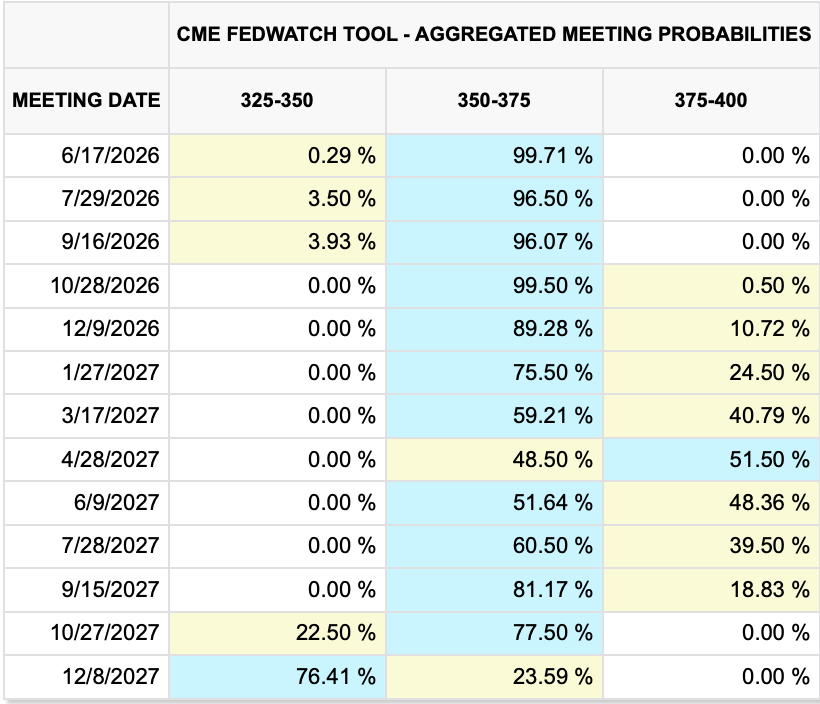
You may remember that last month, the NFP number printed much higher than expected at 233K which began the questioning of the Fed’s expected rate cutting path.  Frankly, the data since then has done very little to argue for much policy ease as Retail Sales have held up, GDP was solid and prices appear to be moving higher, not lower.  In fact, you can see how things have played out over the past month in the chart/table below from the CME showing the market priced probability of future Fed funds rates.  Check out where things were a month ago, just prior to the last NFP report.

The market was pricing a more than 50% probability of at least 75 basis points of rate cuts by December. Obviously, that is no longer the case and if this morning’s data proves stronger than forecast (remember, ADP Employment was significantly stronger than expected) many more people are going to call into question the assumption that the Fed is going to be cutting rates at all.  If you think about it, GDP is growing above trend at 2.8%, inflation remains above target with core CPI 3.3% and Unemployment is at a still historically low 4.1%.  if I look at those three major economic guideposts, the one that stands out to be addressed is inflation, not Unemployment, and that takes tighter policy.

Now, maybe this morning’s data will be awful, with a 50K NFP print and a jump in the UR to 4.3%.  That would certainly bring the doves out more aggressively but absent something like that, I continue to scratch my head as to why the Fed is so keen to cut the Fed funds rate.  Let’s put it this way, if the data surprises to the upside, I expect the December rate cut probability to fall close to 50%.

At any rate, those are the topics du jour, away from the election stories that are suffocating most everything else.  So, let’s see how things behaved overnight.

Well, I guess there has been one other story that has gotten tongues wagging, the fact that US equity markets had their worst session in two months with all three major indices falling sharply.  This was blamed on weaker than forecast earnings releases from several companies in the tech sector, where even if the actual earnings were solid, there were other issues like guidance or breakdowns of revenues, that disappointed.  It is far too early to declare that the love affair with the tech sector, especially AI, is ending, but there are a few names in the sector that are suffering greatly.  This certainly bears close watch going forward, because if this theme starts to lose adherents, even in the short run, it appears there is ample room for a move lower in stocks.

Turning to other markets overnight, Tokyo (-2.6%) led the way lower in Asia with most regional exchanges falling and only Hong Kong (+0.9%) bucking the trend.  There are those who believe there is a causal relationship between the Nikkei, the NASDAQ and USDJPY with one theory that it is the FX rate that drives these movements.  While it is certainly true that we have seen correlation amongst these three markets, I find it difficult to make the case that USDJPY is the driver.   A quick look at all three on the same chart certainly shows that they regularly move in similar directions, but I have a harder time claiming which one is the leader.

Source: tradingeconomics.com

However, despite the negativity from yesterday’s US moves and the overnight sell-off and the sharp rise in oil prices, European bourses are all in the green today, higher by about 0.5% across the board.  In fact, this is in sync with US futures which are also trading higher, by about 0.4%, this morning.

In the bond market, other than UK Gilt yields, which rose 7bps net yesterday although traded as high as 20bps higher than Wednesday’s close during the session, the rest of the bond markets were quiet.  It seems that UK bond investors are not that happy with the recently promulgated budget, and neither are voters as there was a by-election in a “safe” Labour seat that went to Nigel Farage’s Reform UK party.  I have a feeling that bond markets are going to be the epicenter of market activity over the next week or two as huge differences of opinion remain regarding the potential outcomes of the US election.

Away from oil (+1.9%) this morning, the rest of the commodity sector is also doing well today with both precious and base metals all in the green.  But they have not recouped yesterday’s declines which saw gold fall back -1.5% with even larger losses in silver (-3.2%) although copper (-0.6%) didn’t have nearly as bad a day.  This morning, the metals are higher by between 0.2% (gold ) and 0.6% (silver), so it seems like it was a month-end position adjustment and profit-taking exercise.

Finally, the dollar is strong this morning, rallying against most of its G10 counterparts with JPY (-0.4%) the laggard while the pound (+0.1%) seems to be benefitting from higher yields.  Versus the EMG bloc, the dollar is also broadly higher with only MXN (+0.2%) showing any life.  The peso has a number of issues ongoing with concerns that a Trump victory may lead to tariff increases and strain on the economy while domestic issues have arisen over the potential resignation of eight of their Supreme Court Justices which will have a big impact on the judicial system and potentially the Morena party’s ability to rule effectively.  However, after a steady weakening of the peso throughout October, it appears we are seeing a bit of a bounce this morning.

And that’s really what we have today.  At this point, we will all await the NFP and respond accordingly.  Something to keep in mind is that the hurricanes last month could well impact the data, so whatever the outcome, you can be sure that there will be those saying to ignore it as incomplete.  Regarding the dollar, it is still hard to bet against in my mind given the US economic data continues to be the best around.

Good luck and good weekend

Adf

Full Throat

The news cycle’s still ‘bout the vote
With Harris and Trump in full throat
‘Bout why each should be
The one filled with glee
When voters, to prez, they promote
 
Meanwhile, out of China we hear
More stimulus is coming near
The rumor is on
That ten trillion yuan
Is how much Xi’ll spend through next year


The presidential election continues to be the primary source of news stories and will likely remain that way until a winner is decided.  The vitriol has increased on both sides, and that is unlikely to stop, even after the election as neither side can seem to countenance the other’s views on so many subjects.  

As we watch Treasury yields continue to rise, many are ascribing this move to the recent polls that show former President Trump gaining an advantage.  The thesis seems to be that his proffered plans will increase the budget deficit by more than Harris’s proffered plans, but I find all this a bit premature as budget deficits are created by Congress, not presidents, so the outcome there will have a significant impact on the budget.  With that in mind, though, if we continue to see the yield curve steepen as long-end rates rise, my take is the dollar will continue to perform well.

But the election is still a week away and while there is no new data of note today, we do see important numbers starting tomorrow.  In the meantime, one of the big stories is that the Chinese National People’s Congress is now considering a total stimulus package of CNY 10 Trillion to help support the economy, and that if Trump wins, that number may grow larger under the assumption that he will make things more difficult for the nation.  This report from Reuters indicates that there would be a lot of new debt issuance to help support local governments repay their current borrowings as well as support the property market.  

Now, this is very similar to what was reported last week, although the totals are larger, but there is nothing in the story indicating that President Xi is going to give money to citizens, nor focus on new production.  This all appears to be an attempt to clean up the property market mess (remember, most local government debt problems are a result of the property debacle as well), which while necessary is not sufficient to get China back to its pre-pandemic growth trend.

As it happens, this story did not print until after the Chinese equity markets closed onshore, so the CSI 300’s decline of -1.0% has been reversed in the futures aftermarket.  As well, given that Hong Kong’s market doesn’t close until one hour later, it had the opportunity to rebound before the close and finished higher on the day by 0.5%.  As to the rest of Asia, it mostly followed the US rally from yesterday with the Nikkei (+0.8%) performing well and gains seen across virtually all the other markets there.

Turning to Europe, the only data of note was the German GfK Consumer Confidence index which rose to -18.3.  While this was better than last month and better than expected, a little perspective is in order.  Here is the series over the past ten years.

Source: tradingeconomics.com

While it seems clear that consumers are feeling a bit more confident than they have in the past year, ever since the pandemic, the German consumer has been one unhappy group!  And the other story from Germany this morning helps explain their unhappiness.  VW is set to close at least 3 factories and reduce wages by 10% as they try to compete more effectively with Chinese EV’s.  I can only imagine how confident that will make the people of Germany!

Now, the interesting thing about confidence is that while it offers a view of the overall sentiment in markets, it doesn’t really correlate to any specific market moves.  For instance, the euro (-0.2%) remains rangebound albeit slightly lower this morning, while the DAX (+0.25%) has actually rallied a bit, although that is likely on the basis of the VW news helping to convince the ECB that they need to cut rates further and faster.  In fact, most European bourses are firmer this morning on the lower rate thesis I believe, although Spain’s IBEX (-0.25%) is lagging after some moderately worse earnings news from local companies.

Turning to the commodities sector, it should be no surprise that they are higher across the board as the combination of proposed Chinese stimulus and potential future inflation in the US based on a possible Trump victory (although there is nothing in the Harris policies that seem likely to reduce inflation) means that commodities remain a favored outlet for investors.  After a couple of days of choppiness, we are seeing oil (+1.2%) rise nicely (perhaps the decline was a bit overdone on position adjustments) and the metals complex rise as well (Au +0.3%, Ag +1.3%, Cu +1.1%) as all three will benefit from all the new spending that is likely to occur in the US as well as China.  

One other thing to note, which disappointed the gold bulls, as well as the dollar bears, is that the BRICS meeting in Kazan, Russia resulted in…nothing at all regarding a new currency to ‘challenge’ the dollar.  Toward the bottom of their proclamation, they indicated they would continue to look for ways to work more closely together, but there is nothing concrete on this subject.  As I have been writing for the past several years, and paraphrasing Mark Twain, rumors of the dollar’s demise have been greatly exaggerated.  So, there will be no BRICS currency backed by gold or anything else, no new payment rails and Treasuries are going to remain the haven asset of choice alongside gold.

As to the dollar vs. its other fiat counterparts, it is a bit stronger this morning alongside US yields (Treasuries +3bps) with even the commodity bloc having difficulty gaining ground.  Of note is USDJPY, which is higher by 0.35% and now firmly above 153.00.  Last night, we did hear our first bout of verbal concern from a MOF spokesman explaining they are watching the yen carefully.  I’m sure they are, but I believe they will be very reluctant to enter the market when US yields are rising, and the BOJ is not keeping pace.  In fact, while the November rate cut is baked in at this point, the probability of the Fed cutting in December continues to slowly decrease (now 71%).  If we see a good NFP number Friday, I would look for that to decrease more rapidly and the dollar to see another leg higher.

And that’s all the market stuff today.  On the data front, Case Shiller Home Prices (exp 5.1%) and the JOLTS Job Openings data (7.99M) are the major releases.  As well, the Treasury is auctioning 7-year Notes this morning after a tepid 2-year auction yesterday.  It is very possible investors are starting to get a bit nervous about the US fiscal situation and if that continues, the irony is that higher yields will beget a higher dollar despite the concerns.

It is difficult to get away from the election impact on markets, and it seems that as momentum for Trump builds, the market is going to continue to push yields and stocks higher with the dollar gaining ground alongside gold.  Go figure.

Good luck

Adf
Surprise!

Ishiba explained
He was just kidding about
Tight money…surprise!


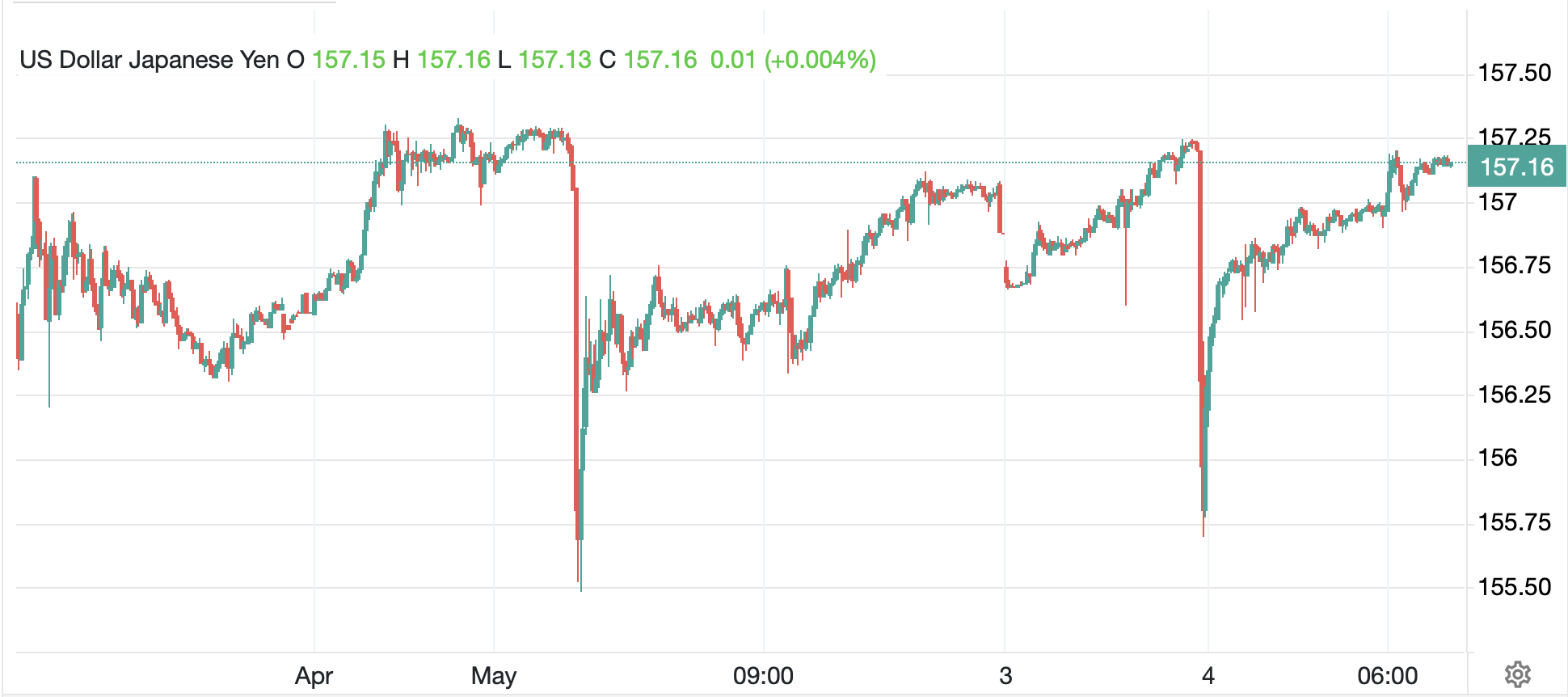
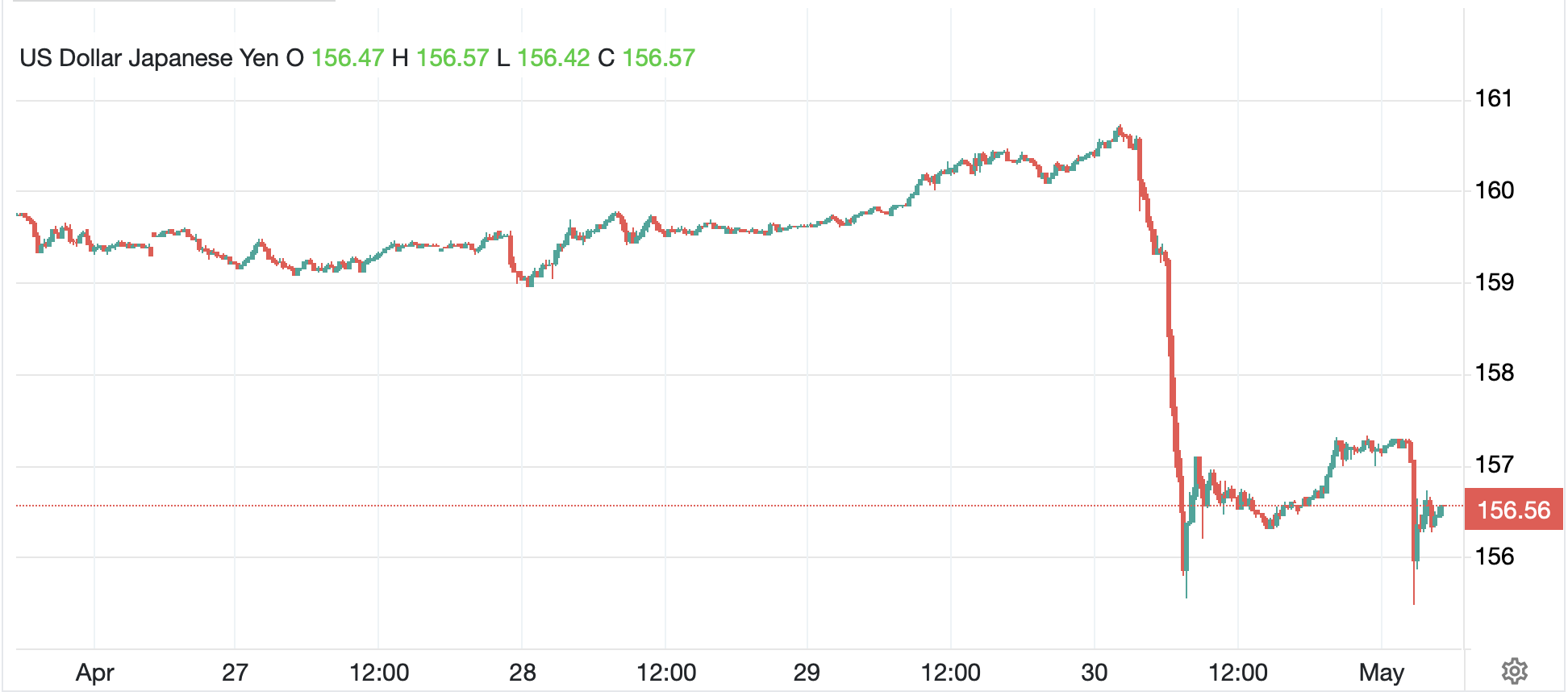
So, yesterday’s biggest mover was JPY (-2.1%), where the market responded to comments by new PM Ishiba that all his previous comments regarding policy normalization were not really serious (and you thought Kamala flip-flopped!)

Here are his comments in the wake of that massive 12% decline in the Nikkei back in early August:
“The Bank of Japan (BOJ) is on the right policy track to gradually align with a world with positive interest rates,” ruling party heavyweight Shigeru Ishiba told Reuters in an interview.

“The negative aspects of rate hikes, such as a stock market rout, have been the focus right now, but we must recognize their merits, as higher interest rates can lower costs of imports and make industry more competitive,” he said.

And here are his comments after meeting with BOJ Governor Ueda Wednesday morning in Tokyo:

“From the government’s standpoint, monetary policy must remain accommodative as a trend given current economic conditions.”

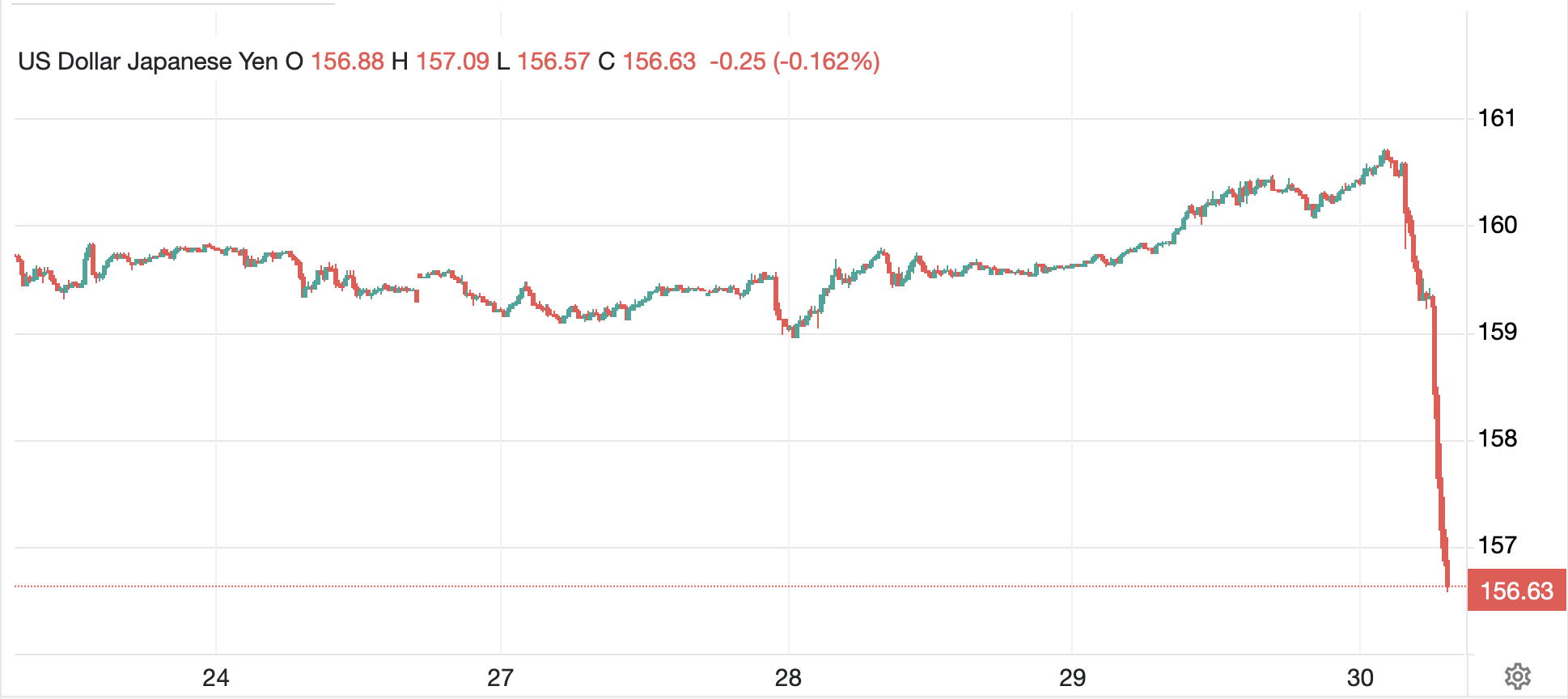
See if you can tell the difference.  The below chart includes the market response to his election last week as well as its response since uttering those last words early yesterday morning.

Source: tradingeconomics.com

Remember the idea that the carry trade was dead and completely unwound?  Well, now the talk is its coming back with a vengeance between Powell sounding less dovish, Ishiba sounding more dovish and then yesterday’s ADP Employment Report printing at a higher-than-expected 143K.  Maybe all those rate cuts that had been priced are not going to show up in traders’ Christmas stockings after all.  Certainly, the Nikkei (+2.0%) was pleased with the weaker yen which has fallen further this morning (-0.2%) after further comments from BOJ member Noguchi calling for more time to evaluate the situation before considering tighter policy.  In fairness, though, Noguchi-san is a known dove and voted against the rate hikes back in July.  Summing it all up here, it is hard to make a case currently for the yen to strengthen too much from here.  Rather, a test of 150 seems the next likely outcome.

In England, the Old Lady’s Guv
Explained that he’s really a dove
He’ll be more aggressive
Though not quite obsessive
While showing investors some love

The other big mover this morning is the British pound (-1.1%) which is responding to an interview BOE Governor Bailey had in The Guardian where he explained he could become “a bit more aggressive” in their policy easing stance provided inflation data continues to trend lower.  Now, prior to the interview, the OIS market was already pricing in a 25bp cut at the next meeting in November, and 45bps of cuts by year end, and it is not much changed now.  But for whatever reason, the FX market decided this was the news on which to sell pounds.  

Remember, as I’ve repeatedly explained, the dollar’s demise is likely to be far slower than dollar bears believe because now that the Fed has begun cutting rates, and nothing is going to stop them going forward for a while, other central banks will feel empowered to cut as well.  The only way the dollar falls sharply is if the Fed is the most dovish central bank of the bunch, but Monday, Chairman Powell made clear that was not the case.  In fact, yesterday, Richmond Fed president Barkin was the latest to explain that things look good, but they are in no hurry to cut aggressively.  Other central banks are now in a position to ease policy more aggressively, something many had been seeking to do as economic activity was slowing in their respective countries, without the fear of a currency collapse. 

It was just a few days ago that I highlighted key technical levels the market was focused on, which if broken might herald a much weaker dollar.  Across the board, we are more than 2% from those levels (EUR 1.12, GBP 1.35, DXY 100.00) and traveling swiftly in the other direction.  A quick peek at the chart below shows that while the exact timing of these moves was not synchronized, the outcome is the same.

Source: tradingeconomics.com

Moving beyond the FX market, where the dollar is stronger literally across the board, the economic story continues to muddle along.  Services PMI data was released this morning with most of Europe looking a bit better, although the Italians were lagging, but not enough to get people excited about European assets in general.  Equity markets on the continent are mixed with both the DAX (-0.6%) and CAC (-0.8%) under pressure while Spain’s IBEX (+0.1%) and the FTSE 100 (+0.25%) buck the trend on the back of Spain’s best in class PMI data and, of course, the UK rate cut frenzy.  As to last night’s Asian markets, while China remains closed, the Hang Seng (-1.5%) gave back some of yesterday’s gains and the rest of the region was unconvinced in either direction.  While US markets eked out the smallest of gains yesterday, futures this morning are pointing lower by -0.4% or so at this hour (6:45).

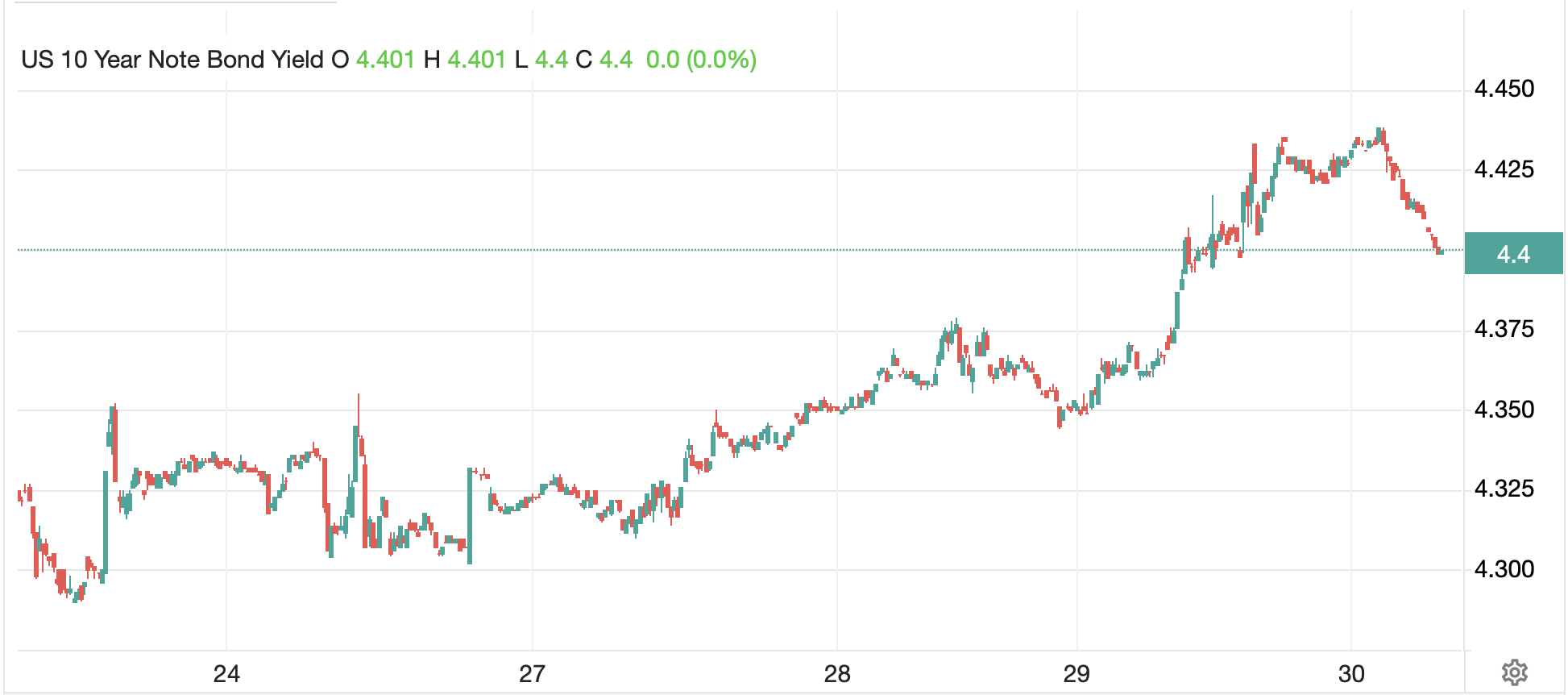
In the bond market, Treasury yields are higher by 3bps this morning, as the market absorbs the idea that the Fed may not be cutting in 50bp increments each meeting and traders responded to a much better than expected ADP Employment Report yesterday (143K, exp 120K) so are prepping for a good NFP number tomorrow. Meanwhile, European sovereign yields are all higher by between 5bps and 7bps as they catch up to yesterday’s Treasury move, much of which occurred after European markets were closed.  One thing to keep in mind here is that bond markets, at least 10-year and longer maturities, are far more concerned with the inflation outlook than the central bank discussion.  Right now, as the world awaits Israel’s response to the Iranian missile attack, concerns are rife that oil prices could move much higher and take inflation readings along for the ride.  If you add that to the idea that 3% is the new 2% for central bank inflation targets, something which is also gaining credence in the market, the case for higher bond yields is strong.

Speaking of oil markets, once again this morning the black sticky stuff is higher (+2.0%) amid those Middle East conflagration fears.  As I highlighted yesterday, if Israel were to attack Iran’s oil fields and knock a large portion offline, I would expect oil to get back to $100 in a hurry.  And if the damage was sufficient to keep it offline for many months, we could stay there.  However, the combination of the stronger dollar and higher oil prices has taken a toll on the metals markets with all the major metals weaker this morning (Au -0.5%, Ag -1.1%, Cu -1.5%).  This strikes me as a short-term phenomenon as the fundamental supply/demand issues remain in favor of higher prices and anything that drives inflation higher will help price as well.  But not today.

As to the dollar, I have already discussed its broad-based strength with gains against literally all its G10 and EMG counterparts.  It will take some pretty bad US data to change this story today.

Speaking of the data, as it’s Thursday, we get the weekly Initial (exp 220K) and Continuing (1837K) Claims data as well as ISM Services (51.7) and Factory Orders (0.0%).  Yesterday, in a surprise, EIA oil inventories rose, a welcome outcome, but not enough to offset the Middle East fears.  The only Fed speaker on the calendar today is Atlanta Fed president Bostic, one of the more hawkish members, so my guess is he is likely to continue to preach moderation in rate cuts.  Speaking of the Atlanta Fed, their GDPNow reading fell to 2.5% for Q3 after the weaker than expected construction spending the other day, but it remains above the Fed’s estimated long-term trend growth rate.

Putting it all together, I can see no good reason for the dollar to reverse this morning’s gains absent a Claims number above 250K.  The hyper dovishness that had been a critical part of the dollar decline story has been beaten back.  Of course, tomorrow brings the NFP report, so anything can still happen.  

Good luck

Adf