A Centruy Hence

A century hence
The BOJ’s equities
May well have been sold
 
But policy rates
Were left unchanged yet again
What of inflation?


Finishing up our week filled with central bank meetings, the BOJ left rates untouched last night, as universally expected, and really didn’t indicate when they might consider the next rate hike.  Ueda-san has the same problem as Powell-san in that inflation continues to run hotter than target while the economy appears to be struggling along.  In addition, the political situation in Tokyo is quite uncertain as PM Ishiba has stepped down and a new LDP leadership election is set to be held on October 4th with the two leading candidates espousing somewhat different views of the future.  If I were Ueda, I wouldn’t do anything about rates either.  Interestingly, there were two dissents on the BOJ board with both calling for another rate hike.

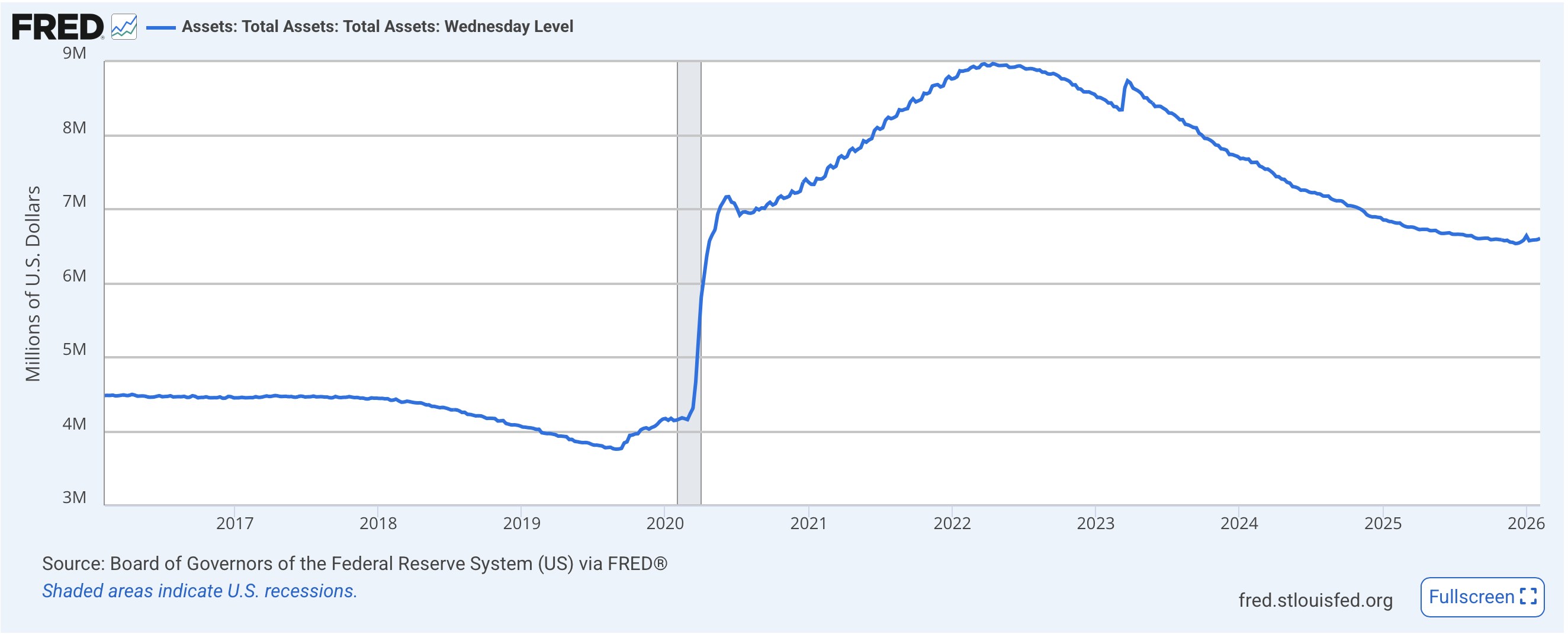
But there was a policy change, albeit one that does not feel like it is going to have a significant impact for quite some time.  The BOJ has decided to start to sell its equity and ETF holdings, which currently total about ¥37.2 trillion, at the annual rate of…¥330 billion.  At this pace, it will take almost 113 years for the BOJ to unwind the “temporarily” purchased equities acquired during the GFC to support the market.  While the Nikkei initially fell about 2% after the announcement, it rebounded over the rest of the session to close lower by a mere -0.6%.  However, in a strong advertisement for the concept of buy and hold, a look at the below chart shows when they started buying and how well the BOJ has done.

Source: finance.yahoo.com

There is no indication that the BOJ has unrealized losses on their balance sheet like the Fed does!

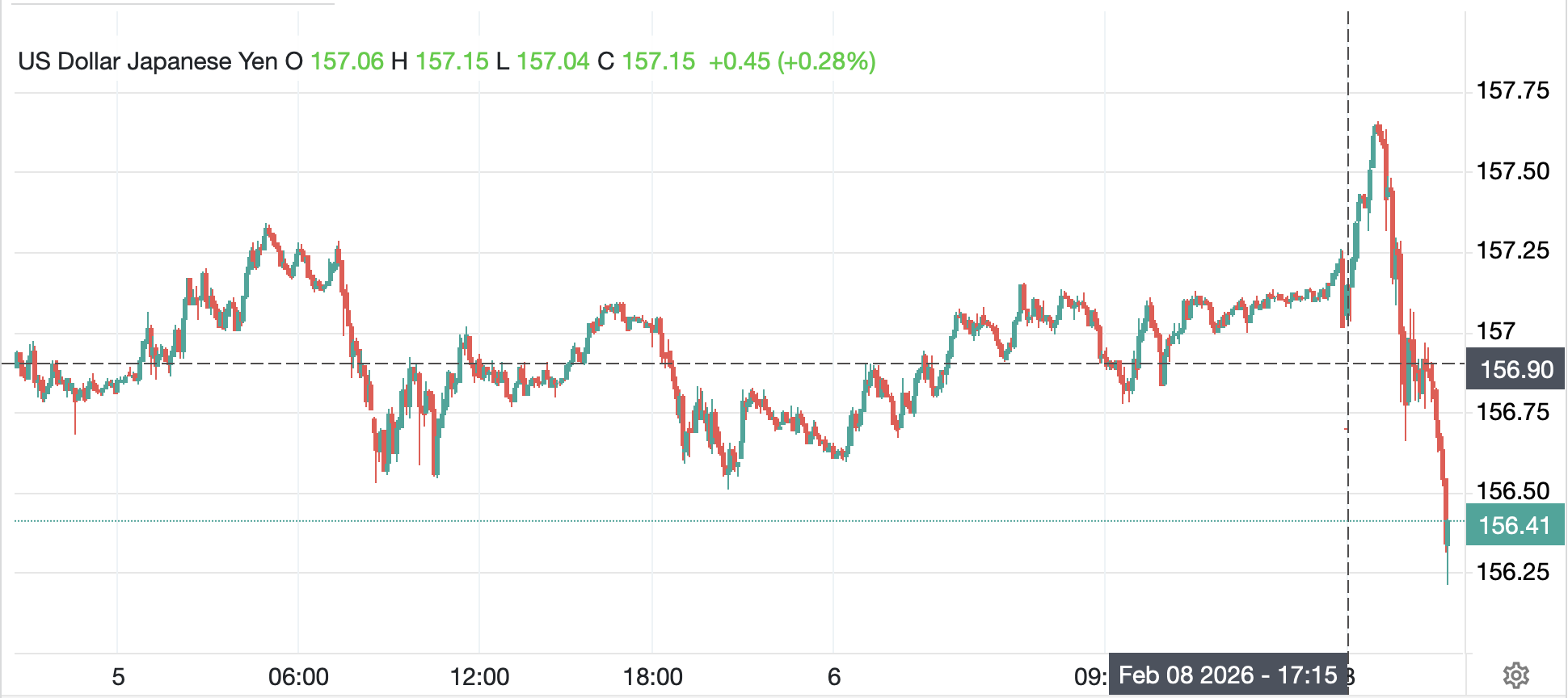
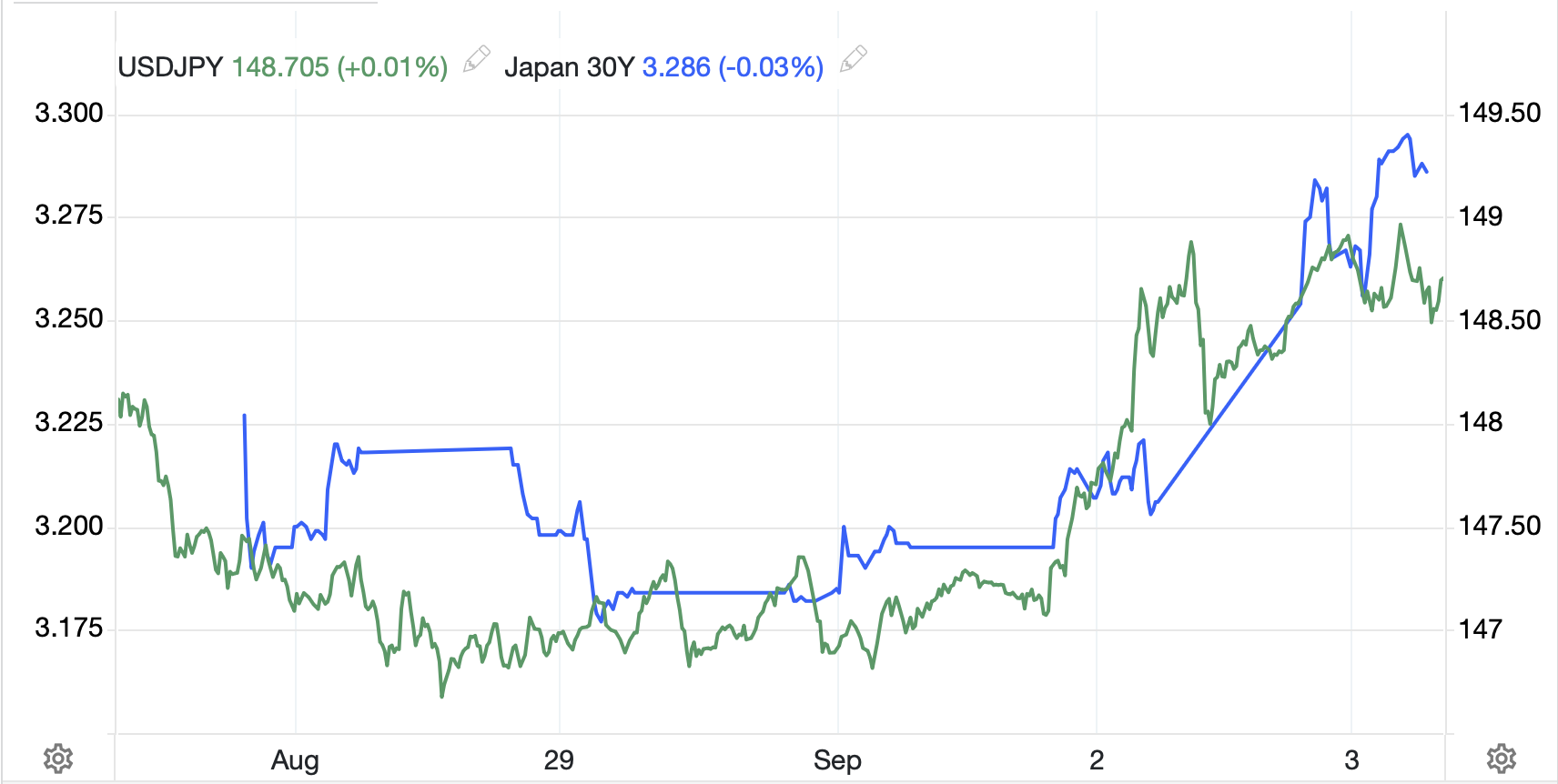
What of USDJPY you might ask?  And the answer is, nothing.  It is essentially unchanged on the day and in truth, as you can see from the chart below, it has done very little for the past 5+ months, trading at the exact same level as prior to the Liberation Day tariff announcements.  While there was an initial decline in the dollar then, that was a universal against all currencies, but we are back to where we were.

Source: tradingeconomics.com

Consider, too, that over the course of the past year, the Fed has cut Fed funds by 125bps while the BOJ has raised their base rate by 60bps, and yet spot USDJPY is effectively unchanged.  Perhaps, short-term interest rate differentials aren’t always the driver of the FX market after all. 

In fact, there is a case to be made that the driver in USDJPY is the capital flowing out of Japan by fixed income investors as they seek a less chaotic situation than they have at home.  This could well be the reason for the ongoing rise in long-dated JGB yields to record after record, while Treasury yields seem to have found a top.  Recall, in the latest 10-year auction, dealers took down only 4% of the auction with foreign interest rising to 71%.  While there has been much discussion amongst the punditry of how nobody wants to buy Treasuries and they are no longer the haven asset of old, the nobody of whom they speak are foreign central banks.  But foreign private investors seem pretty happy to scoop them up and are doing so at a remarkable pace.  I think there are a few more years left before the dollar disappears.

Ok, let’s tour the markets here as we reach the end of the week.  Record highs across the board in the US yesterday as investors apparently decided that the Fed was just like Goldilocks, not too hawkish and not too dovish.  And the hits keep on coming this morning as futures are all higher by about 0.25% at this hour (7:15).  As to Asia, we discussed Japan already, and both China and HK were unchanged.  But elsewhere in the region, the euphoria was not apparent as Korea, India, Taiwan, Singapore and Thailand all fell by at least -0.3% or more while Australia, New Zealand and Indonesia were the only gainers, also at the margin on the order of 0.3% or so.

Europe this morning is also mixed with the DAX (-0.2%) lagging after weaker than expected PPI data indicated that economic activity is slowing more rapidly than anticipated, while both the CAC (+0.2%) and IBEX (+0.4%) are edging higher absent any new data.  There was a comment by an ECB member, Centeno from Portugal, that the ECB needs to be wary of “too low” inflation, a particularly tone-deaf comment after the past several years!  But I guess that is the first hint that the ECB is ready to cut again.

In the bond market, Treasury yields have been bouncing since the FOMC meeting and are now higher by 13bps since immediately after the FOMC statement.  Again, my view is this is a case of selling the news after the market was pricing in the rate cut ahead of the meeting.  I would argue that no matter how you draw the trend line of the decline in yields over the past several months, we are nowhere near testing it.

Source: tradingeconomics.com

And in what cannot be a surprise, European sovereign yields are all rising alongside Treasuries, with today’s bump up of another 1bp to 2bps adding onto yesterday’s 5bp to 7bp raise across the board.  As well, we cannot ignore JGBs which have jumped 4bps after the BOJ meeting last night.  I guess Japanese investors didn’t get any warm and fuzzy feelings about how Ueda-san is going to fight inflation.

Turning to commodities, oil (-0.4%) remains firmly within its recent range, ignoring Russai/Ukraine news as well as inventory data and economic statistics.  I don’t know what it will take to change this equation, but it certainly seems like we will be in this range for a while yet.  Peace in Ukraine maybe does it, or a major escalation there.  Otherwise, I am open to suggestions.  Gold (+0.2%) continues to be accumulated by central banks around the world as well as retail investors in Asia, although Western investors appear oblivious despite its remarkable run.  Silver (+0.7%) too is rallying and has been outperforming gold of late.  Perhaps of more interest is that the precious metals are doing so well despite the dollar’s rebound in the FX markets.

Speaking of which, this morning the dollar is firmer by 0.25% to 0.4% vs most of its G10 counterparts although some of the Emerging Market currencies are holding up better.  So, the euro (-0.25%), pound (-0.5%), AUD (-0.25%), CHF (-0.35%) and SEK (-0.6%) are defining the G10 with only the yen (0.0%) bucking the trend.  As to the EMG currencies, HUF (-0.65%), KRW (-0.6%) and PLN (-0.3%) are the laggards with the rest showing far less movement.  However, while short dollar positions are rife, there is not much joy there lately.  I grant that the trend in the dollar is lower, and we did see a new low for the move print in the immediate aftermath of the FOMC meeting, but it appears that people have not yet abandoned the greenback entirely.  Perhaps the lure of more new record highs in the stock market is enough to get foreigners to reconsider their “end of American exceptionalism” idea.

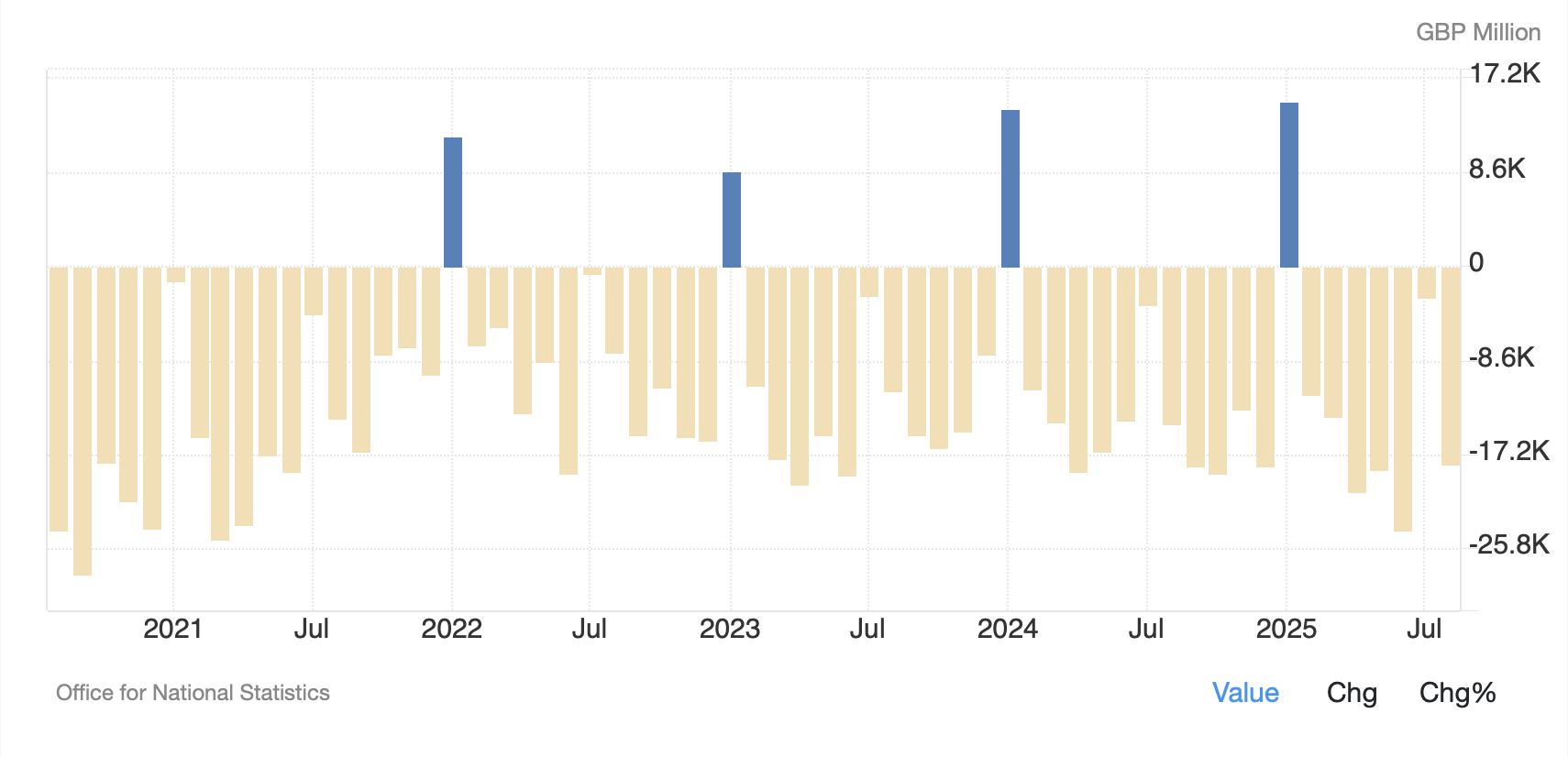
There is no data today nor are any Fed speakers on the calendar.  Perhaps the most notable data we have seen is UK Public Sector Net Borrowing, which fell to -£17.96B, a massive jump from last month and much worse than expected.  As you can see from the chart below, while there is much angst over US budget deficits, at least the US has the reserve currency on which to stand.  The UK has nothing, and the fiscal situation there is becoming more dire each day.  Yet another reason that the Starmer government can fall sooner rather than later.

Source: tradingeconomics.com

It is hard to look at that chart and think, damn, I want to buy the pound!  

For all the hate it gets, the dollar is still the cleanest dirty shirt in the laundry, and while it may trade somewhat lower in the near term, it will find its legs and rebound.

Good luck and good weekend

Adf

Voters Have Doubt

In France, Monsiuer Bayrou is out
In Norway, though, Labor held stout
Japan’s been discussed
And Starmer’s soon Trussed
In governments, voters have doubt
 
Investors, though, see all this news
And none of them have changed their views
Just one thing they heed
And that’s market greed
At some point they’ll all sing the blues


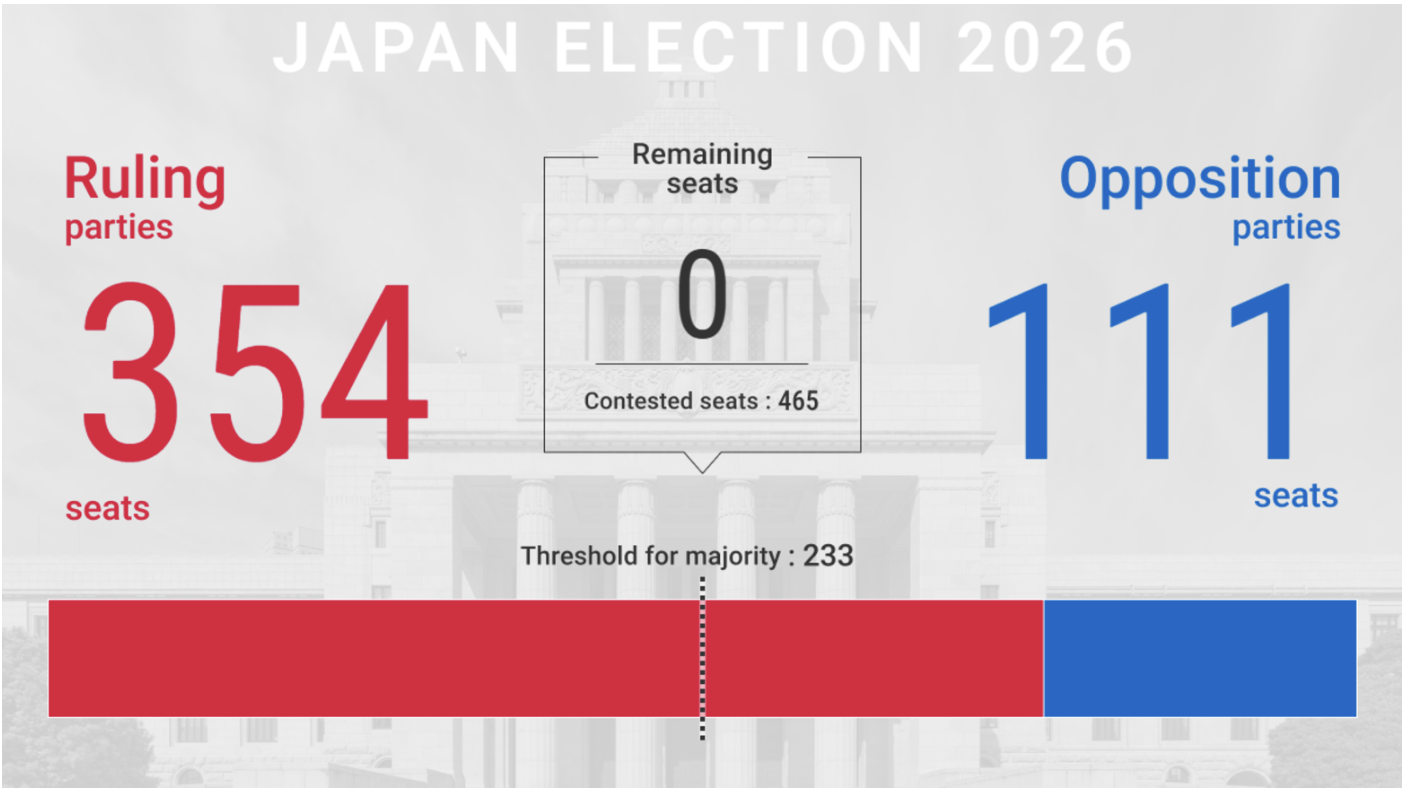
Here we are on Wednesday and already we have seen two major (Japan and France) and one minor (Nepal) nations make governmental changes.  Actually, they haven’t really changed yet, they just defenestrated the PM and now need to figure out what to do next.  In Japan, it appears there are two key candidates vying to lead a minority LDP government, Sanae Takaichi and Shinjiro Koizumi, although at this point it appears too close to call.  Regardless, it will be rough sledding for whoever wins the seat as the underlying problems that undermined Ishiba-san remain.  

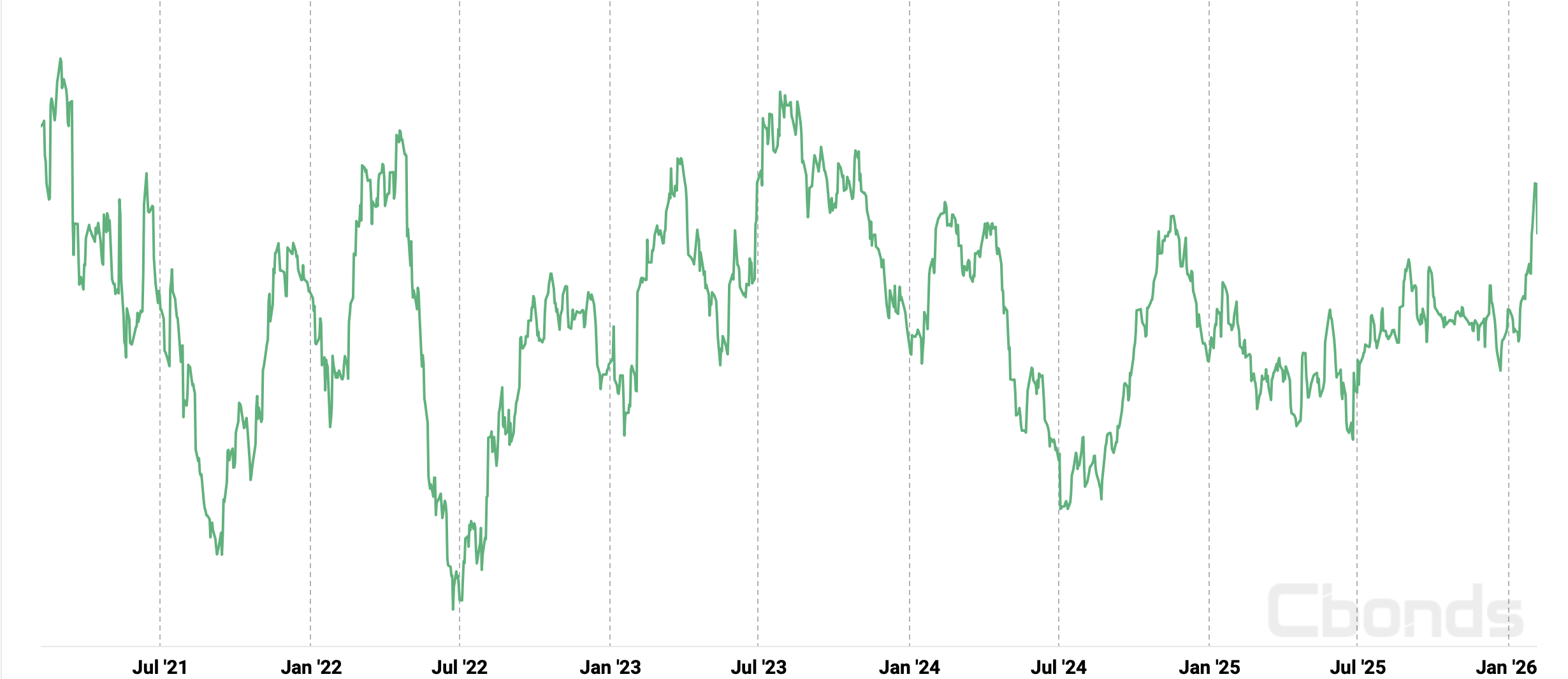
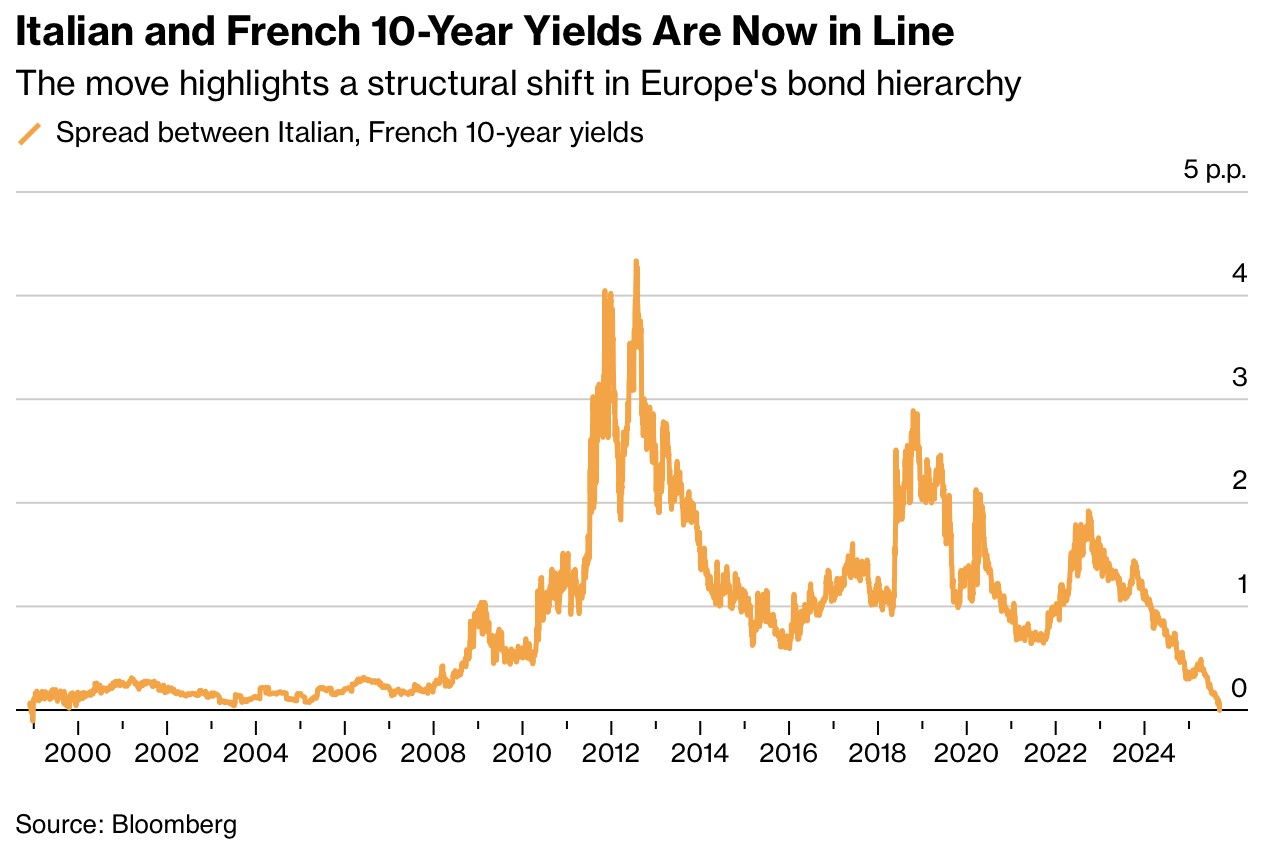
In France, President Macron has, so far, said he will not call for new elections, nor will he resign despite increasing pressure from both the left and the right for both measures.  He will appoint a new PM this week and they will go through this process yet again as the underlying issue, how to rein in spending and reduce the budget deficit, remains with nobody willing to make the hard decisions.  A side note here is that French 10-year OATs now trade at the same level as Italian 10-year BTPs, a catastrophic decline over the past 15 years as per the below chart. 

Recall, during the Eurozone crisis in 2011, Italy was perceived as the second worst situation after Greece in the PIGS, while France was grouped with Germany as hale and hearty.  Oh, how the mighty have fallen.

Nepal is clearly too insignificant from a global macroeconomic perspective to matter, but it strikes me that the fall of the PM there is merely in line with the growing unhappiness of populations around the world with their respective governments.

A friend of mine, Josh Myers, who writes a very thoughtful Substack published last night and it is well worth the read.  He makes the point that the Washington Consensus, which has since the 1980’s, underpinned essentially all G10 activity and focused on privatization of assets, free trade and liberalized financial systems, appears to have come to the end of the road.  I think this is an excellent observation and fits well with my thesis that the consensus views of appropriate policies are falling apart.  Too many people have been left behind as both income and wealth inequality in the G10 is rampant, and those who have fallen behind are now angry enough to make themselves heard.  

This is why we see governments fall.  It is why nationalist parties are gaining strength around the world as they focus on their own citizens rather than a global concept.  And it is why those governments still in power are desperately struggling to prevent their opponents from being able to speak.  This is the genesis of the restrictions on speech that are now rampant in Germany and the UK, two nations whose governments are under extreme pressure because of policy failures, but don’t want to give up the reins of power and are trying to prevent anybody from saying anything bad about them, thus literally jailing those who do!

And yet…investors are sanguine about it all!  At least that seems to be the case on the surface as equity indices around the world continue to trade higher with most major equity markets at or within a few percent of all-time highs.  This seems like misplaced confidence to me as the one thing I consistently read is that markets are performing well in anticipation of the FOMC cutting Fed funds next week, with hopes growing that it will be a 50bp cut.  

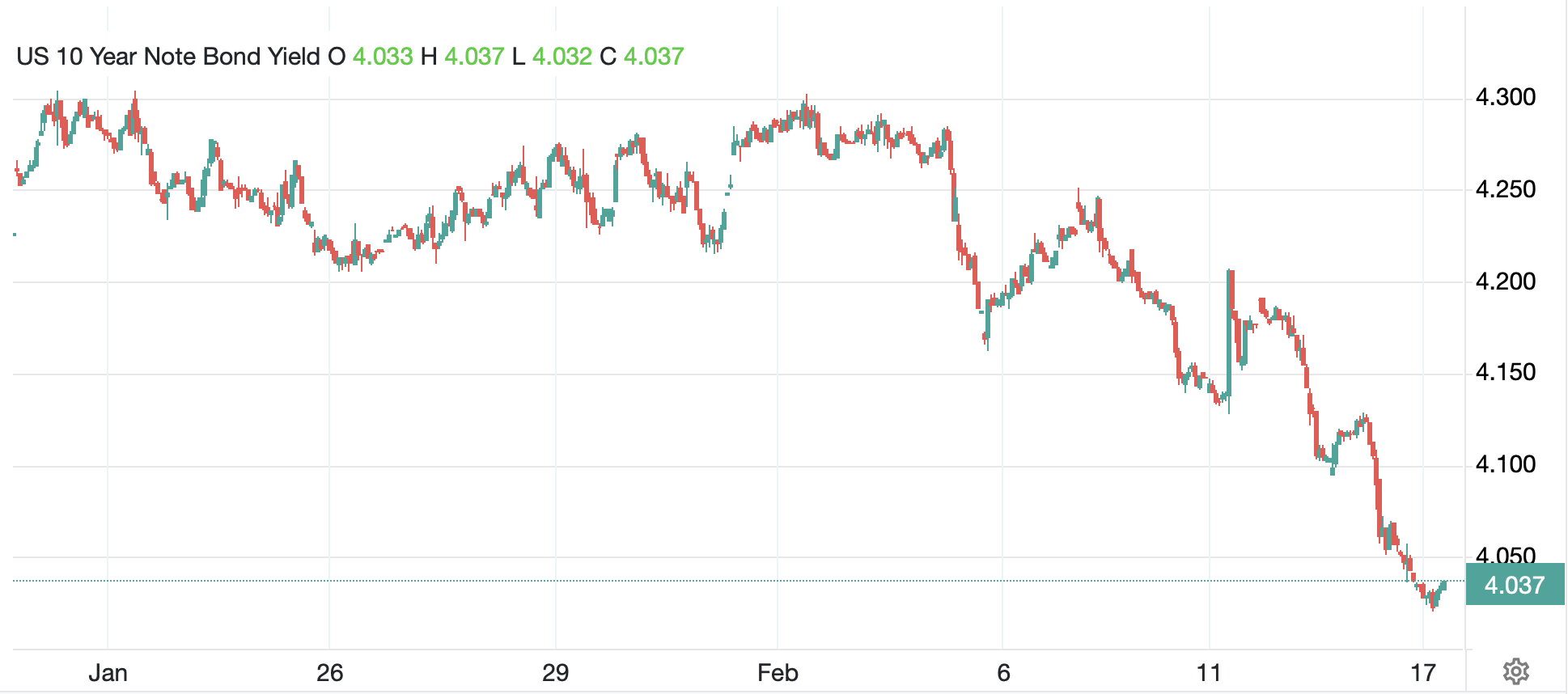
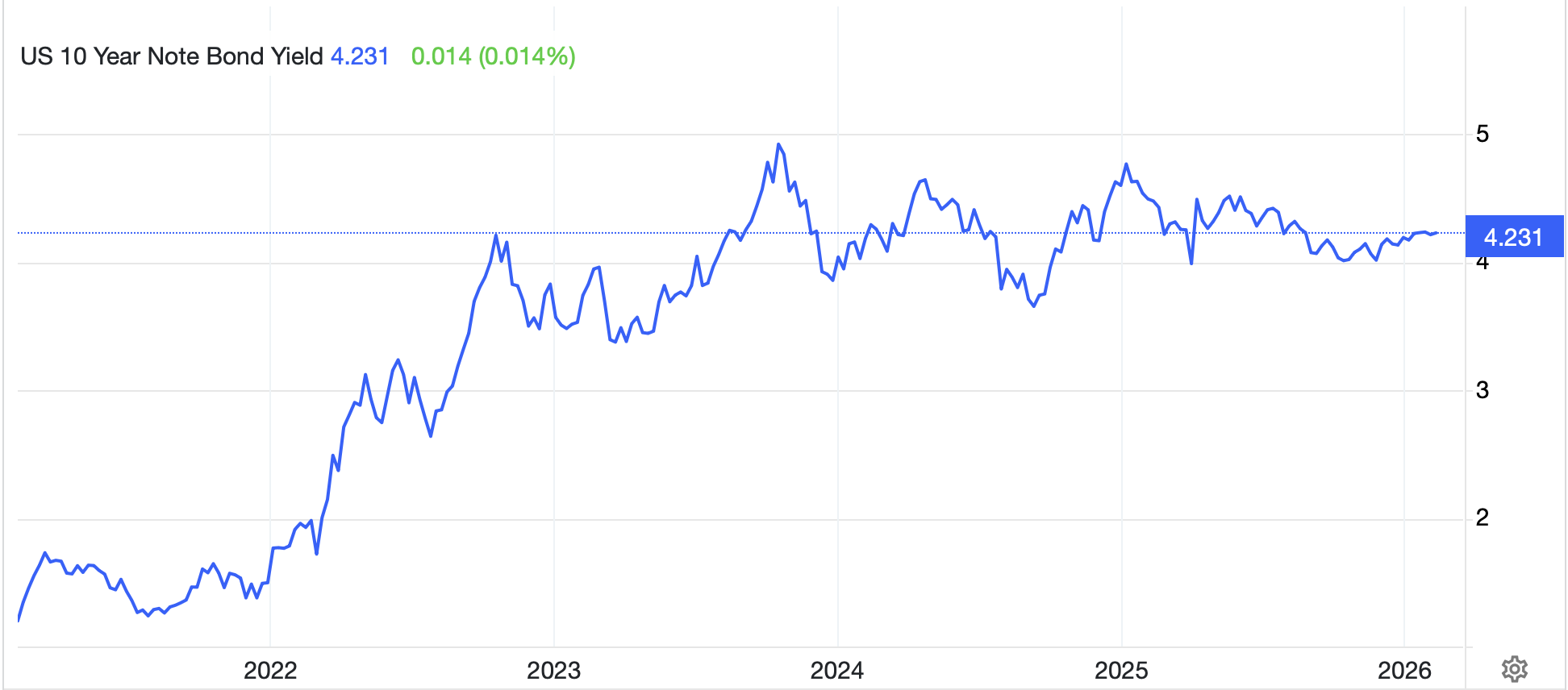
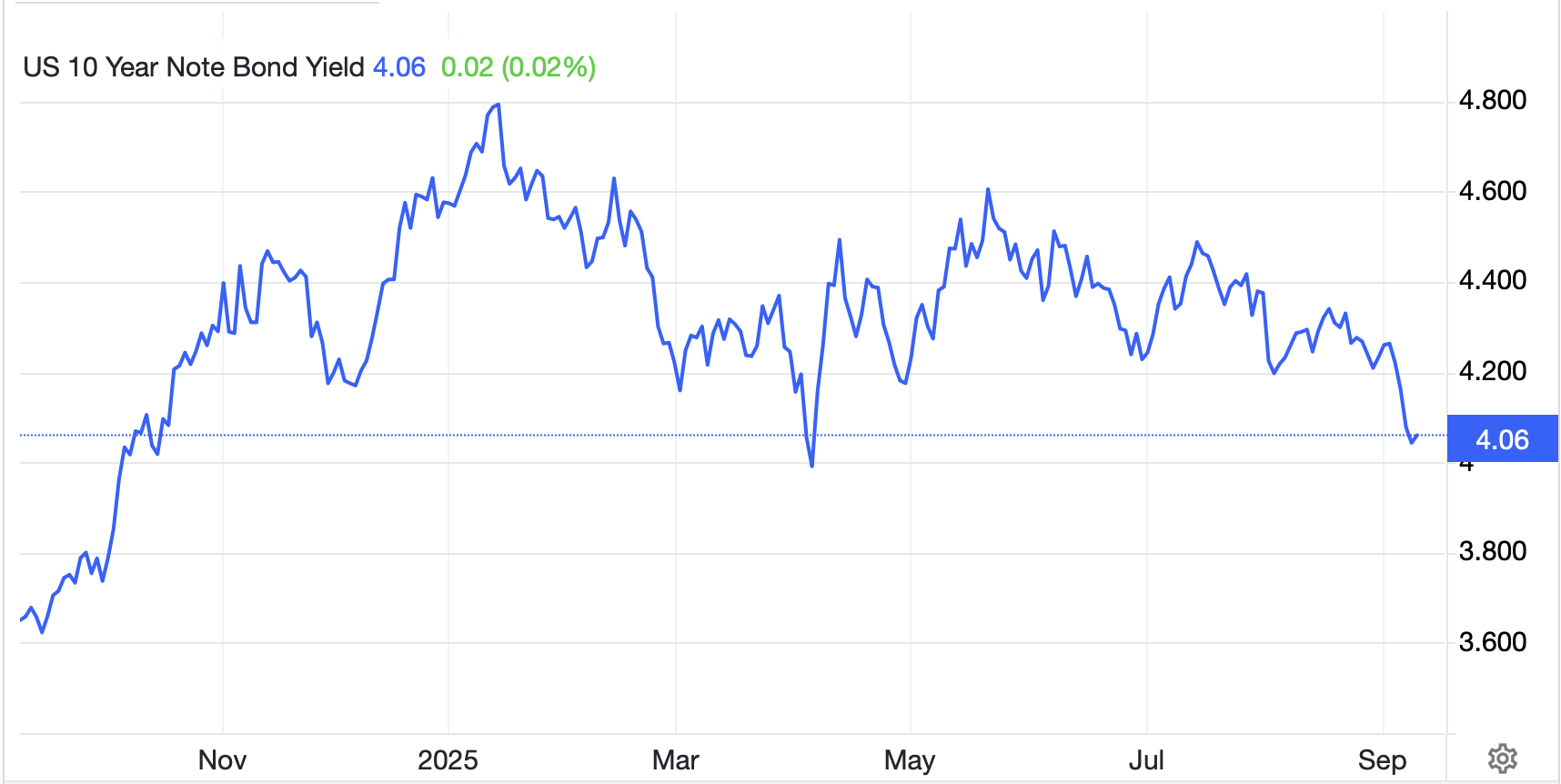
But if we look at the Treasury market, which has seen yields slide steadily since the beginning of the year, with 10-year yields now lower by 75bps since President Trump’s inauguration, it is difficult to square that circle.  

Source: tradingeconomics.com

Bond yields typically rise and fall based on two things, expected inflation and expected growth as those two have been conflated in investor (and economist) minds for a while.  The upshot is if yields are declining steadily, as they have been, it implies investors see slowing economic activity which will lead to lower inflation.  Now, if economic activity is set to slow, it strikes me that will not help corporate profitability, and in fact, has the potential to exacerbate the situation by forcing layoffs, reducing economic activity further.  Alas, it is not clear if that will drive inflation lower in any meaningful way.  The point is the bond market and the stock market are looking at the same data and seeing very different future outcomes.

Is there a tiebreaker we can use here?  The FX market might be one place, but the weakness in this idea is that FX rates are relative rates, not descriptive of the global economy.  Sure, historically the dollar has been the ultimate safe haven with funds flowing there when things got rough economically, but its recent weakness does not foretell that particular story.  Which brings us to the only other asset class around, commodities.  And the one thing we have seen lately is commodity prices continuously rising, or at least metals prices doing so, specifically gold.  Several millennia of history showing gold to be the one true store of value is not easily forgotten, and that is why the barbarous relic has rallied 39% so far in 2025.  

A number of analysts have likened the current situation to that of Wile E Coyote and I understand the idea.  It certainly is a potential outcome so beware.

Well, once again I have taken much time so this will be the lightning round.  Starting with bonds, this morning, yields in the US and Europe are higher by 2bps across the board, with one exception, France which has seen yields rise 6bps as discussed above.  JGB yields are unchanged as it appears investors there don’t know what to think yet and are awaiting the new PM decision.

In equities, yesterday’s very modest late rallies in the US were followed by a mixed session in Asia (Japan -0.4%, China -0.7%, HK +1.2%) although there were more winners (Korea, India, Taiwan, Thailand) than laggards (Australia, New Zealand, Indonesia) elsewhere in the region.  In Europe, mixed is also the proper adjective with the CAC (+0.4%) remarkably leading the way higher despite lousy IP data (-1.1%) while Germany (-0.4%) and Spain (-0.4%) both lag.  As to US futures, at this hour (7:20) they are marginally higher, 0.15% or so.

Oil (+0.8%) continues to trade back and forth each day with no direction for now.  I’m sure something will change the situation here, but I have no idea what it will be.  Gold (+0.5%) meanwhile goes from strength to strength and is sitting at yet another new all-time high, above $3600/oz.  While silver and copper are little changed this morning, the one thing that seems clear is there is no shortage of demand for gold.

Finally, the dollar is arguably slightly lower this morning, although mixed may be a better description.  The euro (-0.15%) is lagging but JPY (+0.6%) is the strongest currency across both G10 and EMG blocs.  Otherwise, it is largely +/-0.2% or less as traders ponder the data.

While CPI is released on Thursday, I think this morning’s NFP revision is likely to be the most impactful number we see this week, and truly, ahead of the FOMC next week.

TodayNFP Revision-500K to -950K
WednesdayPPI0.3% (3.3% Y/Y)
 -ex food & energy0.3% (3.5% Y/Y)
ThursdayECB Rate Decision2.0% (unchanged)
 CPI0.3% (2.9% Y/Y)
 -ex food & energy0.3% (3.1% Y/Y)
 Initial Claims235K
 Continuing Claims1950K
FridayMichigan Sentiment58.0

Source: tradingeconomics.com

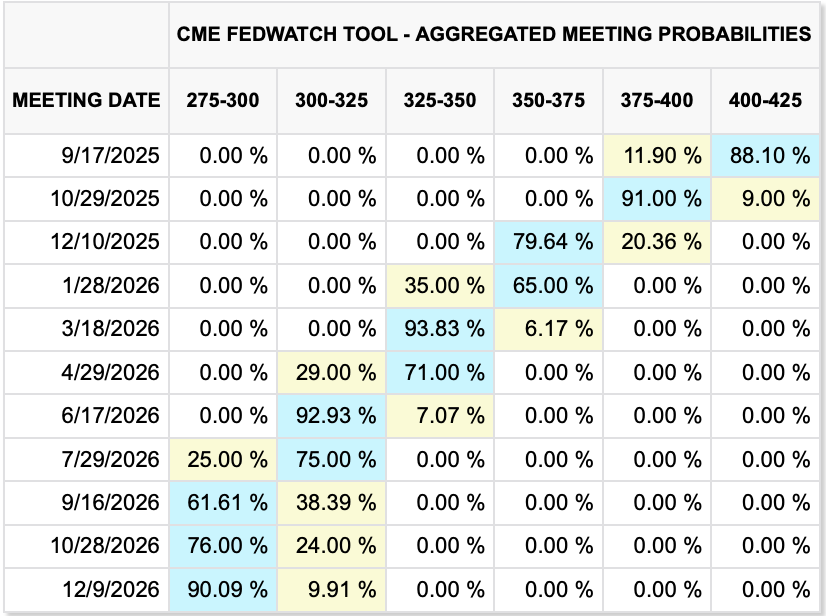
As I type, the Fed funds futures market is pricing a 12% probability of a 50bp cut next week and an 80% chance of 75bps this year.

Source: cmegroup.com

If the NFP revisions are more than -500K, I suspect that rate cut probabilities will rise sharply with the dollar falling, gold rising, and bond yields heading lower as well.  Equity markets will probably rally initially, although it strikes me that this type of bad news will not help corporate earnings.  So, buckle up for the fun this morning on a release that has historically been ignored but is now clearly center stage.

Good luck

Adf

Got Smote

There once was a poet that wrote
‘Bout bonds and the fact they got smote
So, yields, they did rise
And to his surprise
Most pundits, this news did promote
 
Now turning to stories today
The biggest one, I’d have to say
Is how, in Japan
Ishiba’s grand plan
Has failed, thus he’ll be swept away


The number of stories this morning regarding the synchronous rise of long-dated bond yields around the world has risen dramatically.  While yesterday, I highlighted this fact, I certainly didn’t expect it to be the key narrative this morning.  But such is life, and virtually every news outlet is focusing on the subject as both a reason for the poor equity performances yesterday as well as a way to highlight government profligacy.  I do find it interesting, though, that the same publications that push for more spending for their preferred causes have suddenly become worried about too much government spending.  But double standards are nothing new.   A smattering of examples show ReutersBloomberg and the WSJ all feigning concern over too much government spending.

I say they are feigning concern because all these publications are perfectly willing to support excess government spending if it is spent on the things they care about.  Regardless, the fact that this has become one of today’s key talking points is evidence that some folks are starting to recognize that trees cannot grow to the sky.  Even though almost every major central bank is in easing mode, long-term yields keep rising.  Alas, the almost certain outcome here, albeit likely still well into the future, is some form of yield curve control as central banks will be forced to prevent yields from rising too high lest their respective governments go bust.  I expect that the initial stages will be regulations requiring banks and insurance companies, and maybe private, tax-advantaged accounts like IRA’s and 401K’s, to hold a certain percentage of Treasuries.  But I suspect that eventually, only central banks will have the wherewithal to prevent runaway yields.  Welcome to the future; got gold?

However, you can read about this everywhere, and after all, I touched on it yesterday so let’s move on.  Government stability/fragility is the topic du jour in this poet’s eyes.  We already know that the French government is set to fall on Monday when PM Bayrou loses a confidence vote.  It is unclear what comes next, but French finances are in bad shape and getting worse and they don’t print their own currency.  This tells me that we could see a lot more social unrest in France going forward given the French penchant for nationwide strikes.  

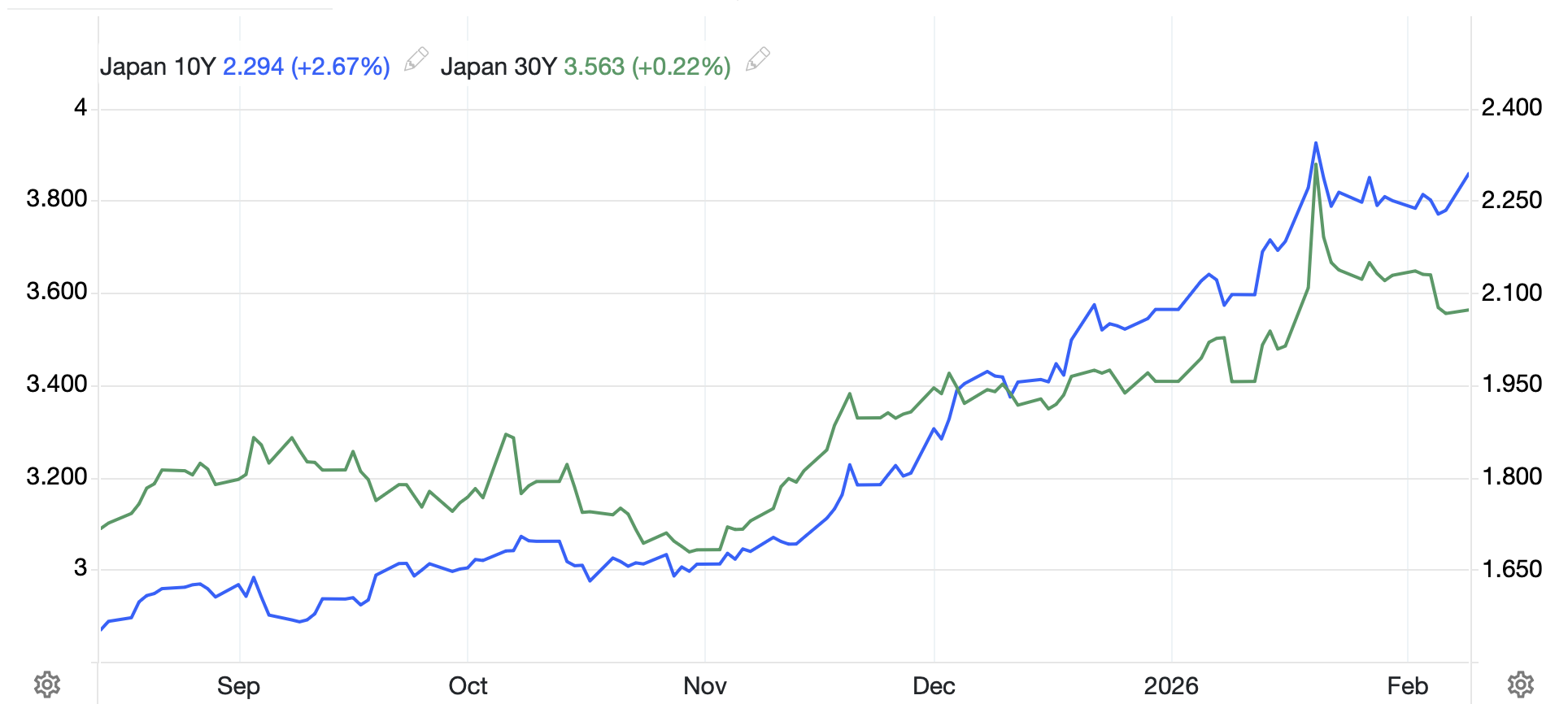
But a story that has gotten less press is in Japan, where PM Ishiba saw the LDP majority decimated in the Upper House two weeks ago and is now heading a minority government as the LDP does not have a majority in either house in the Diet.  One of the key members of the LDP, and apparently the glue that was holding together the fragile coalition was Hiroshi Moriyama, the LDP Secretary General, and he is now resigning along with several of his lieutenants, so it appears that Japan’s government is about to fall as well.  The upshot here is that the BOJ seems unlikely to raise interest rates given the political uncertainty, which is not only pressuring long-dated JGB’s but also the yen. (see chart below from tradingeconomics.com)

While I have not written extensively about the UK’s government, the situation there is quite similar, with massive fiscal problems driving yields higher while the government focuses on removing the right of free speech amongst its people if that speech is contra to the government’s policies.  While the next UK election need not be held for another 4 years, my take is it will be much sooner as PM Starmer has destroyed his legitimacy with recent policy decisions and will soon be unable to govern.  It will only be a matter of time before his own party turns on him.

The governments in Japan, France and the UK are all under increasing pressure as their policy prescriptions have not tackled the key problems in their respective economies.  Inflation in Japan and the UK and benefits in France need to be addressed, but it is abundantly clear that the current leadership will not be able to do so effectively.  Once again, please explain why people are so bearish the dollar, at least in the long run.  While inflation will be higher worldwide and fiat currencies will all suffer vs. real assets, on a relative basis, the dollar doesn’t appear so bad after all.

Ok, let’s move on to the overnight activity as it gets too depressing highlighting all the government failures around the world.  While US stocks closed above their worst levels of the session, they were all lower yesterday.  That bled into Asia with Japan (-0.9%), Hong Kong (-0.6%) and China (-0.7%) all falling with worse outcomes in some other parts of the region (Australia -1.8%, Philippines -0.75%) although there were winners as well (Korea, India, Taiwan) albeit in less impressive fashion.  Perhaps the surprise was Chinese underperformance after PMI Services data there printed at its highest level since May 2024.

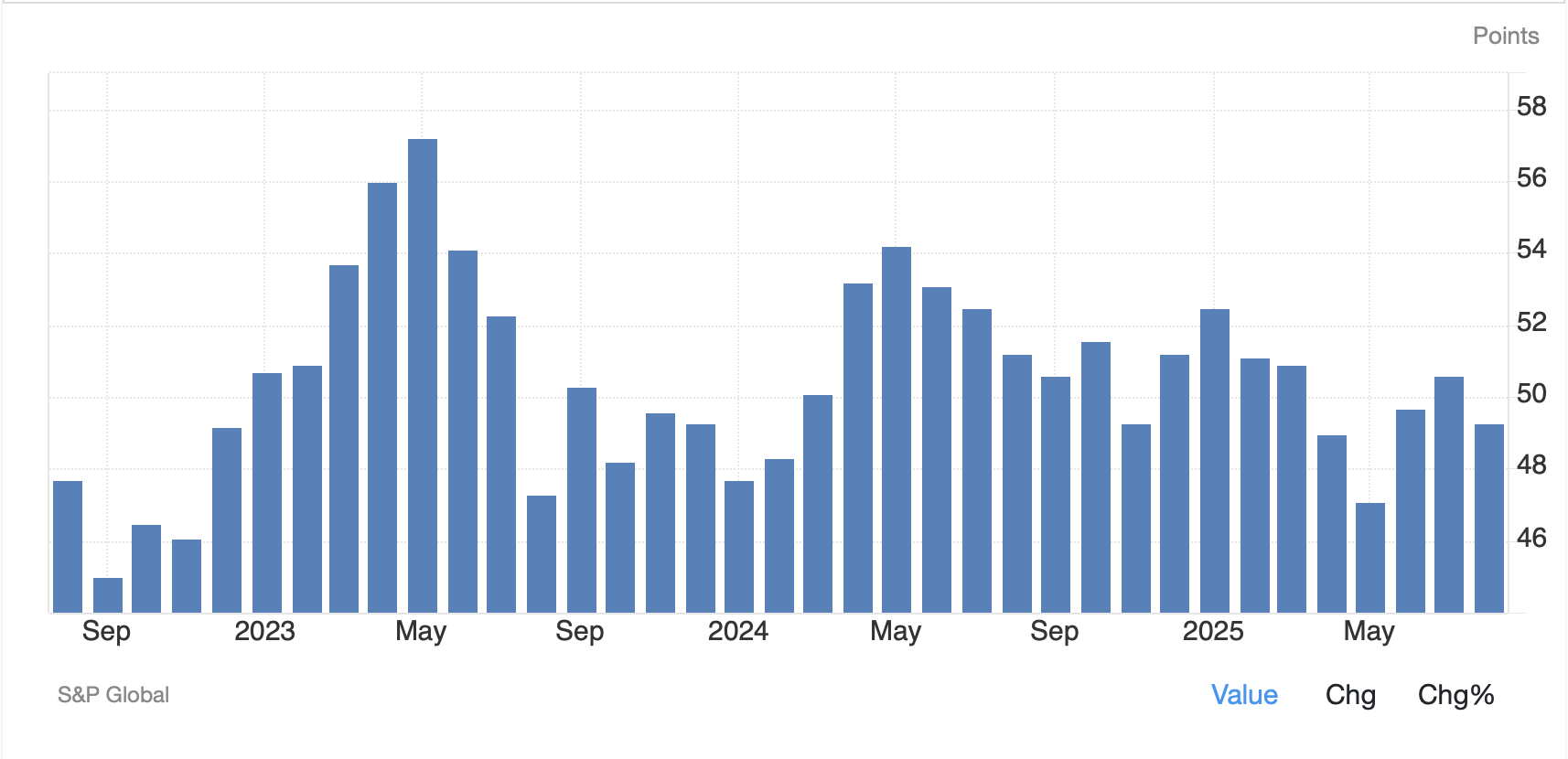
But whatever the negativity that existed in Asia was, it did not translate to European shares as they are all higher (CAC +1.0%, DAX +0.8%, FTSE 100 +0.55%, IBEX +0.2%).  Now, clearly it is not confidence in government activity that has investors excited.  The only data of note was Services PMI, which was mostly as expected except in Germany where it fell to 49.3, far lower than the initial estimate of 50.1 and based on the chart below, seemingly trending lower.

Source: tradingeconomics.com

US futures, too, are higher this morning, with gains of 0.5% to 0.75% for the S&P and NASDAQ.

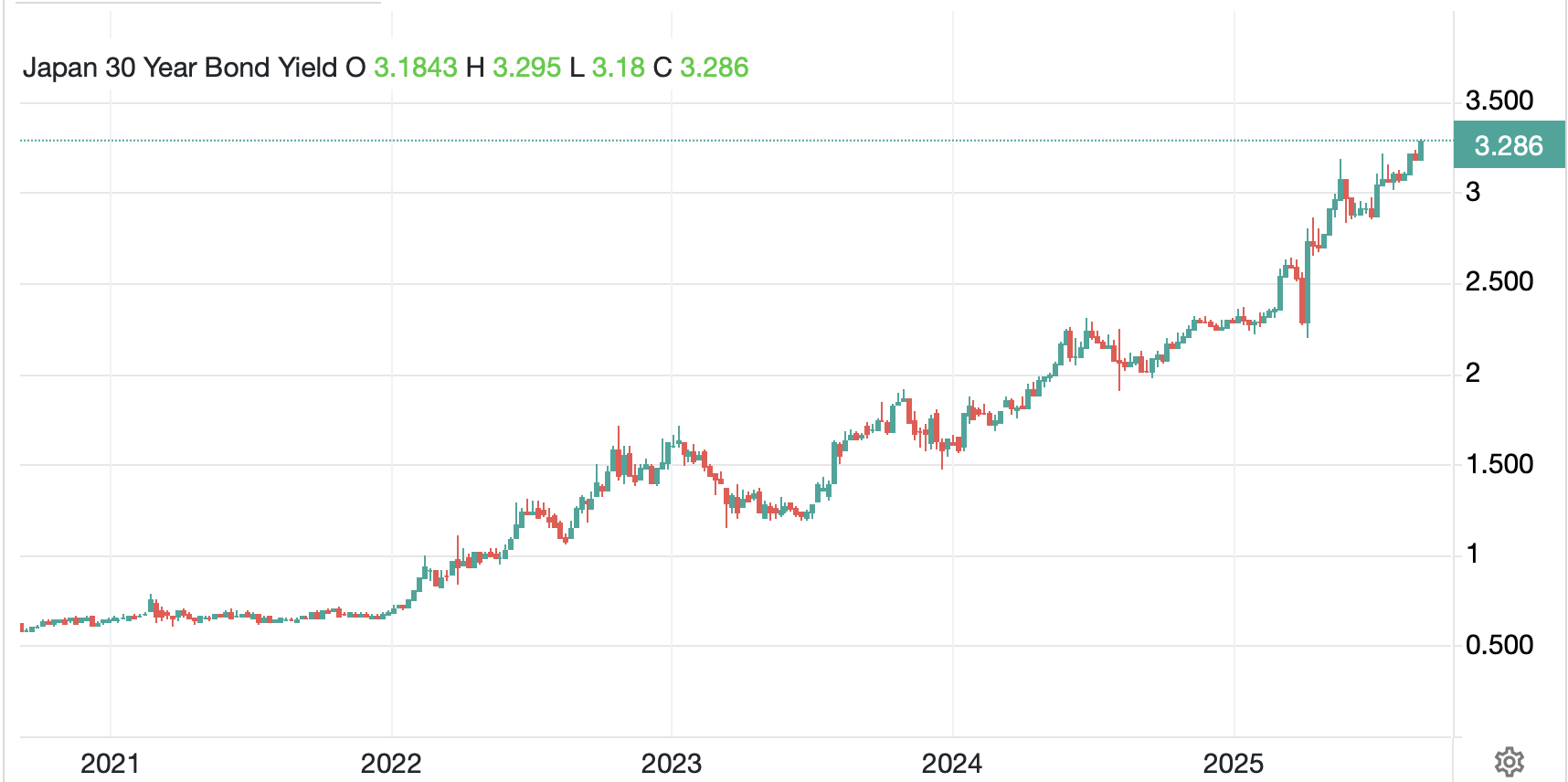
You won’t be surprised that bond yields continue to drift higher, even in the 10-year space with Treasuries higher by 2bps, although most European sovereign yields have edged down by -1bp in the 10-year space.  It is the longer dated yields that continue to see the most pressure with 30-year yields across the US, Europe and Japan all pushing to new highs for the move, and in the case of Japan, new all-time highs.

Source: tradingeconomics.com

This, of course, is the underlying story for virtually all markets right now.

In the commodity markets, oil (-2.1%) has given back yesterday’s gains after reports that OPEC+, which is meeting this weekend, will be raising their output yet again.  Whatever the situation is in Russia, whether Ukrainian attacks are reducing supply or not, it seems clear that OPEC is unperturbed and wants to pump as much as possible. In the metals markets, gold (+0.3%) has set another new all-time high and appears to be breaking out from its recent consolidation pattern.  I am no market technician (I’m a poet after all), but a consensus seems to be forming that $3700 is coming soon and $4000 will be achieved by early next year.

Source: tradingeconomics.com

The rest of the metals space is little changed this morning with silver holding at its 11-year highs and copper treading water at the levels that existed pre-tariff threats.

Finally, the currency markets, which saw the dollar rally sharply yesterday, are taking a breather with the dollar giving back some of those gains amid a consolidation.  In the G10, movement is 0.2% or less, so really nothing and in the EMG bloc, HUF (+0.6%), KRW (+0.5%) and ZAR (+0.3%) are the biggest gainers, with the latter following gold, while traders see the central bank in Hungary maintaining higher rates to fight still, too high inflation of 4.3%.  As to Korea, better than expected GDP data helped drive inflows to the currency.

On the data front today, we see JOLTs Job Openings (exp 7.4M) and Factory Orders (-1.4%) this morning and the Fed’s Beige Book is released at 2:00pm.  We also hear from two Fed speakers, which given the row over Governor Cook’s tenure at the Fed, may be interesting to see.  The market continues to price a 92% probability of a 25bp cut in two weeks’ time, but I suspect that Friday’s NFP data may be the ultimate arbiter there.

I cannot look at the world and conclude that the US is the biggest problem around.  However, if we do see weak data on Friday and the market starts to price 50bps of cuts by the Fed, the dollar will decline in the near term.  But longer term, the more I read, the more bullish I get on the greenback, at least relative to other currencies.

Good luck

Adf

Kvetched

The story on everyone’s lips
A central bank apocalypse
If Trump fires Powell
The markets will howl
With yields rising numerous bips
 
However, said Trump, it’s farfetched
Despite plans that he’d clearly sketched
Thus, markets reversed
While bears, losses, nursed
And “right-thinking” people all kvetched


If you had Trump fires Powell on your White House Bingo card, congrats, it looked like a winner.  That was the story all morning yesterday, overshadowing PPI data that was quite benign, printing at 0.0% M/M for both headline and core, as the punditry postulated the problems with Trump doing that.  At this point, we are all familiar with the fact that the Fed Chair can only be fired for “cause” although exactly what “cause” represents is unclear.  Too, we know that in Trump’s efforts to reduce the size of the government, the Supreme Court gave him authority to remove the heads of many departments but explicitly carved out the Fed from that process.

In the end, though, despite rampant rumors that he had composed a letter for just such an occasion, at a press conference with Bahraini Crown Prince, Salman bin Hamad Al Khalifa, he said it was “highly unlikely” he was going to fire Powell, although he once again castigated him for not cutting rates. Most markets, after getting all excited about the prospects of this action, reverted to the previous solemnitude of doing nothing over the summer.  The below chart of the S&P 500 was replicated in virtually every market.

Source: finance.yahoo.com

It is also no surprise that the Fed Whisperer was out in the WSJ this morning defending his bread-and-butter relationship, but my take is this is just a feint on the president’s part to move the discussion away from issues he doesn’t like.  Given that Supreme Court protection and given that the Supreme Court has been very good for Mr Trump, I’m pretty confident that Powell will serve out his full term as Chair and be replaced next year.  I would, however, look for a candidate to be announced at the earliest possible time.

While that was the story that sucked up all the oxygen yesterday, life still goes on and this morning, arguably the biggest news is that UK Unemployment rose to 4.7% with earnings slipping and the Claimant count rising.  The punditry continues to harp on how the US is set to go into stagflation because of Trump’s tariffs which are driving inflation higher while weakening the economy (despite all evidence to the contrary) while ignoring the UK which saw inflation rise faster than expected yesterday, to 3.6% while Unemployment is rising.  That feels a lot closer to the stagflation story than in the US, and as we heard from BOE Governor Bailey yesterday, it’s all Trump’s fault because of the tariffs.  Talk about deflection.  However, a little sympathy for the Guv is in order as he really doesn’t know what to do.  After today’s data, there is more discussion of another rate cut by the BOE when they next meet on August 7th.  Certainly, the pound (-0.1%) is behaving as though a rate cut is coming as evidenced by the chart below.

Source: tradingeconomics.com

However, remember that the UK government of PM Starmer has proven its incompetence on virtually every issue it has addressed, both domestically and on an international basis, so the pound’s decline could well be a general exit from the UK by investors.  Speaking of currencies, the dollar is having quite a positive day across the board.  Aussie (-0.9%) is the laggard across both G10 and EMG blocs as its employment situation report showed a much weaker economy than expected, although the yen (-0.4%) is starting to feel real pressure as the Upper House Election approaches.  In fact, there is growing talk that USDJPY above 150 is likely if the PM Ishiba’s LDP loses their majority in the Upper House, or even if it wins given the amount of increased deficit spending they are promising.  Does anyone remember all the talk of the end of the yen carry trade and how the yen was going to rise dramatically?  There’s a theme that did not age well.  As to the rest of the currency market, the dollar is rising vs. everybody with a rough average gain of ~ 0.4%.  The dollar is not dead yet.

Heading back to equities, despite all the angst about Powell yesterday, US indices all managed a gain on the day.  In Asia, most markets performed well with Japan (+0.6%) and China (+0.7%) indicative of the movement.  Australia (+0.9%) responded to its jobs data with growing expectations of an RBA rate cut and there were many more regional exchange gainers than losers overnight.  In Europe, green is also today’s theme, with both the CAC (+0.9%) and DAX (+0.8%) having very nice sessions and most of the rest of the continent climbing around 0.5%.  The only data of note was the final CPI reading for the Eurozone, which was right on the button at 2.3% core.  However, at this hour (7:00) US futures are essentially unchanged.

Bonds were actually the biggest concern yesterday on the Powell news with a huge divergence between the 2-year and 30-year as the rumors flew, although most was forgiven after Mr Trump said he would not be firing Powell.  The Chart below shows that divergence and the retracement although 2-year notes did remain lower for the session.

Source: tradingeconomics.com

But that was yesterday.  This morning, 10-year Treasury yields have edged higher by 1bp, and European sovereigns have largely followed suit.  In Asia, though, it is noteworthy that Australian government bonds saw yields decline -5bps after the data, and JGB yields slid -2bps as election promises seem to imply more QE, not less.

Lastly, commodity prices also got the whipsaw treatment on the Powell story, but this morning, with the dollar showing strength across the board, we see metals prices slipping (Au -0.6
%, Ag -0.25%, Cu -0.15%) although oil (+0.5%) is finding a bottom it seems as per the below chart from tradingeconomics.com.

On the data front, in addition to the weekly Initial (exp 235K) and Continuing (1970K) Claims data, we also get Retail Sales (0.1%, 0.3% ex autos) and Philly Fed (-1.0).  We hear from one Fed speaker, Governor Kugler, but if anything, after yesterday’s Powell drama, I expect everybody we hear from to rally round the Chair, so there will be no talk of rate cuts.  Aside from yesterday’s PPI data, the Fed’s Beige Book indicated modest economic growth, again, not a reason to cut interest rates.

Let me leave you with a thought experiment though.  Last night, the Senate passed the first (of many we hope) rescission bill to actually reduce spending.  Tariff income has grown as evidenced by last month’s budget surplus.  What if Trump and his team are correct, and through reduced regulations as well as tariff and increased inward investment, the private economy grows more strongly and the budget deficit declines far more than current estimates, perhaps achieving Secretary Bessent’s goal of 2%?  Will yields rise or fall?  Will the dollar rise or fall?  Will equities rise or fall?  On the White House Bingo card, I would suggest very few believe in this outcome and are not managing their portfolios to address this.  But I would also suggest it is a non-zero probability, although not my base case.  Just remember, stranger things have happened.

Good luck

Adf

A Wing and a Prayer

The CPI data was hot
Or cool, all depending on what
It is that you buy
Though pundits will try
To tell you that Trump’s a tosspot
 
But stock markets don’t really care
Though bond markets are quite aware
Inflation’s not dead
Which means that the Fed
Relies on a wing and a prayer


These were the headlines yesterday in the wake of the CPI report:

WSJ – Inflation Picks Up to 2.7% as Tariffs Start to Seep Into Prices

NY Times – U.S. Inflation Accelerated in June as Trump’s Tariffs Pushed Up Prices

Washington Post – Inflation picked up in June as tariffs began to lift prices across the economy

And here are a couple from this morning:

WSJ – Trump Effect Starts to Show Up in Economy

Bloomberg – US Trade Wars Will Hit Households Worldwide, BOE’s Bailey Warns

As I forecast yesterday, the higher inflation would be blamed on President Trump’s actions regardless of the outcome.  In fairness, that was not a hard prediction to make given the current state of the mainstream media and their general views of the president.  But is that an accurate representation?  As always, on matters of CPI I turn to @inflation_guy, Mike Ashton, to get his take, which has generally been the least hysterical and most cogent of analysts around.  Here is his summary of yesterday’s CPI data.  

In essence, the higher Y/Y readings are partially due to base effects (the number twelve months ago that is leaving the calculation was very low so even a moderate number will result in a higher print) and partially due to ongoing price changes in the economy.  Goods prices did rise, but services prices were not as affected.  Notably lodging away from home (i.e. hotels) saw prices fall -2.5% on the month, likely perhaps a result of less illegal immigrants being housed in cities around the country.  In the end, as Mike explains, median inflation has been running at ~3.5% annually for the past several years and shows no signs of declining much further.  I fear, that is the new normal for inflation going forward.

(This is a good time to mention that one way to maintain the purchasing power of your money is to own USDi, the only inflation-linked stable coin around which accretes the rise in CPI to its price on an ongoing basis.  Below is a chart showing how this has performed (and by extension what has happened to inflation) since the coin was initiated on March 1st of this year.  (And yes, we know exactly where the price will be going forward through the rest of the summer based on the mechanics of the way CPI is reported.)

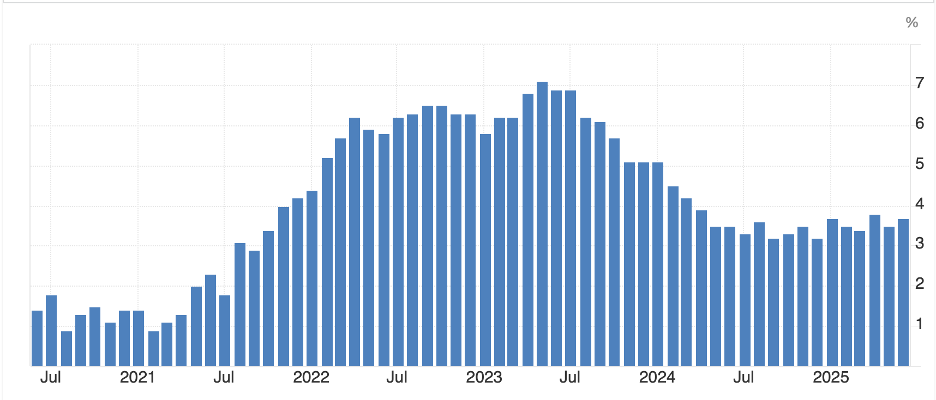
But the US is not the only place where inflation is starting higher.  Exhibit A here is the UK, which reported its CPI figures this morning where they rose to 3.6% headline and 3.7% core.  Now, looking at the chart of CPI in the UK, it is abundantly clear that prices have been consistently rising for the past twelve months, at least.  Interestingly, while the Starmer government has demonstrated remarkable incompetence across many factors, they have not been imposing tariffs on all their trade partners and yet inflation is still rising.  Perhaps tariffs are not necessarily the inflation driver that the punditry is keen to describe.  But a look at the last five years of core inflation in the UK shows pretty clearly that price rises, while having slowed from their fastest levels in the wake of the pandemic, have bottomed and appear to be accelerating again.  (Arguably, that is why BOE Governor Bailey was explaining Trump was to blame for his failures.)

Source: tradingeconomics.com

In the end, though, the market adjusted to the inflation data yesterday and overnight things have been far more muted.  This is true, even in the UK, where gilt yields have edged up only 2bps and the pound (+0.1%) is barely higher after having fallen more than 2% since the beginning of July.  In fact, my take is that markets are just not that interested in very much these days as evidenced by the much-reduced volumes that we see across all markets.

So, with that in mind, let’s see how things behaved overnight.  Starting with the bond market, treasury yields have slipped -1bp this morning, but that is after having gained 6bps yesterday after the data.  As well, Fed funds futures are now pricing less than a 3% probability of a rate cut at the end of this month with far less discussion about the Waller and Bowman comments regarding those cuts.  Meanwhile, in Europe, away from the UK, yields have also slipped -1bp across the board, although yields there did rise about 3bps after the US CPI report.  Remember, all these bond markets are tightly linked.  As to Asia, JGB yields edged higher by 1bp overnight.

In the equity markets, yesterday’s broad down session in the US (Nvidia rose on China sales news which propped up the NASDAQ) was followed by modest weakness throughout most of Asia (China -0.3%, HK -0.3%, Korea -0.9%, Australia -0.8%) although Japan was essentially unchanged.  European shares, though, are mostly a touch firmer led by the IBEX (+0.5%) although the DAX (+0.3%) and FTSE 100 (+0.2%) are also in the green despite there being no obvious catalysts here.  US futures are essentially unchanged at this hour (7:10).

In the commodity space, oil (-0.9%) has been dragging lower over the past several sessions and is now down -3.5% in the past week.  This is a reversal of the recent price action and accords far better with the fundamentals of supply coming on from OPEC with the still strong belief that economic activity is set to slow given the Trumpian tariff impact around the world.  Metals markets continue to range trade as well, with gold (+0.3%) higher this morning, although it gave back yesterday morning’s gains and based on the way it has been trading, seems likely to do that again today.  In fact, the entire metals complex has been showing similar behavior, gains overnight that retrace in the US.

Finally, the dollar is little changed this morning although it has been trending ever so slightly higher over the past several weeks.  I haven’t discussed yen in a while, but all thoughts of the end of the carry trade have been banished as the yen has declined by more than 3% since the beginning of the month and is now back to levels last seen in April.  On the day, as I look across the screen, NOK (-0.5%) is the largest mover in either G10 or EMG space, arguably responding to the fact that oil has been sliding over the past week.  But here, as in the other markets, there is no excitement.

On the data front, this morning brings PPI (exp 0.2%,2.5% headline, 0.2%, 2.7% core) as well as IP (0.1%), Capacity Utilization (77.4%) and then the Fed’s Beige Book this afternoon.  We also hear from three more Fed speakers today although yesterday’s group gave no indication that a move was in the offing.  Instead, the only speaker with a differing opinion than the group, Waller, talked about stablecoins, not monetary policy.

I sincerely doubt that anything of note will happen today from either the data or market internals as pretty much the only thing that moves markets these days are White House announcements.  And I have no idea if any of those are coming.  Look for another quiet session overall.

Good luck

Adf

Heartburned

There’s no one surprised that the Fed
Did nothing, and here’s what Jay said
We’re not in a hurry
To cut, but don’t worry
If things change, we can cut ahead
 
The narrative now has returned
To Trump, which has many concerned
That in the short run
The things that he’s done
Will leave many traders heartburned


As universally expected, the Fed left policy unchanged yesterday.  Everything we had heard from FOMC members prior to the quiet period indicated they had to be patient to see how things played out regarding the impact of tariffs.  Apparently, Chairman Powell used the term “wait” or some version of that idea 22 times in the press conference.  Tomorrow, the Fed speakers hit the circuit again, but absent some change in data, which will take at least another month or two, I don’t see that the Fed is relevant again for a while.  

I will note that the market is currently pricing only about a 17% chance of a cut at the June 18 meeting though they are still pricing in 3 cuts for the year.  It appears that the idea of a H2 recession is gaining ground amongst both the punditry and the futures market.

However, contra to that message, the bigger news of the day is that President Trump will be announcing, at 10am, the first trade deal in the new era, this one with the UK.  It strikes me that this should be the easiest of trade deals to negotiate since both economies produce the same types of things.  Neither has a labor cost advantage, and there is great commonality between them with respect to the overall culture.  Arguably, the biggest advantage the US has is its energy sector has not been destroyed by the government, something PM Starmer is working hard to accomplish on his end.  Realistically, the trade deal here is going to be more about services than goods I suspect, given that’s what drives both economies.  I guess we will learn later today.

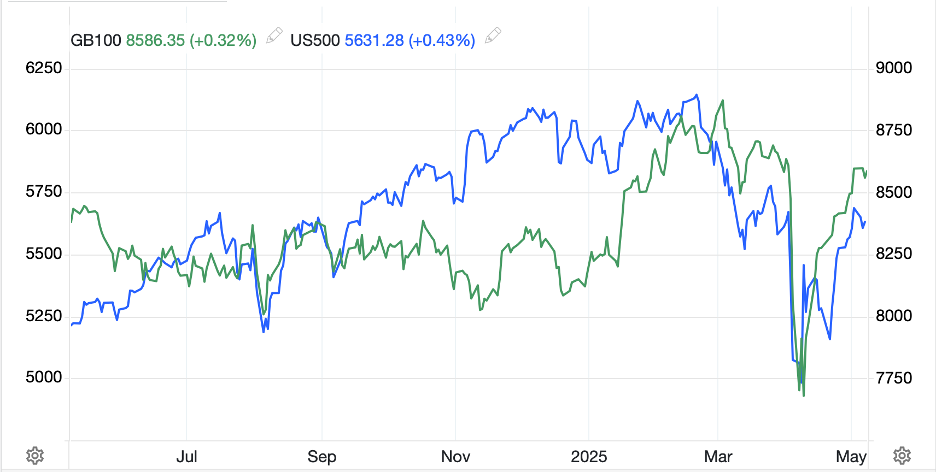
In a modest surprise, UK equities (FTSE 100 +0.4%) do not seem to see the benefits of such a deal, as they lag most of the rest of Europe.  Too, the BOE is expected to cut its base rate by 25bps this morning, which in isolation would ordinarily be seen as a positive for stock markets.  Perhaps, this is why the UK is the first to say yes, things there may be worse than meet the eye.  After all, the stock market there is higher by just 2% in the past year, hardly a breathtaking performance.  In fact, as you can see below, the FTSE 100 and S&P 500 have had very similar performances this year, tracking each other closely, although despite all the angst about recent volatility in US markets, the S&P is still 8% higher in the past year, decently outperforming the UK.

Source: tradingeconomics.com

Stepping back for a moment from individual markets, my take is the following: President Trump is keen to sign a number of key trade deals in this 90-day window.  If they agree deals with the UK, Japan, South Korea, Taiwan, Canada and Mexico, all of which seem quite possible, it will reduce the uncertainty and accompanying stress in markets.  If, as well, Congress can get the ‘big, beautiful budget bill’ passed, thoughts of recession will quickly dissipate.  Obviously, the China trade talks will still be outstanding, but both sides need to find a solution here.  While the punditry in the US will continue to harp on how those tariffs are going to kill the US economy, China has already shown they are having problems and need to come to an agreement.  It is quite possible that Mr Trump can be successful in his aims to reorder the nature of world trade such that the US reduces its deficits without destroying the world.  I think I am going to take the over on this question.

In the meantime, let’s see how markets have behaved overnight.  Yesterday saw US equity markets rally modestly after the Fed and that followed through in Asia, with modest gains being the best description.  The Nikkei (+0.4%), Hang Seng (+0.4%) and CSI 300 (+0.5%) all seemed to benefit from the US and hopes for a reduction in trade anxiety.  Of note in Asia was India (-0.5%) and perhaps more tellingly Pakistan (-6.0%) as the escalation in military conflict between those two nations has grown even hotter.  I expect that market impact will remain more isolated as neither market is a key destination of foreign capital, at least if the actual military conflict doesn’t spread into other areas.

Turning to Europe, both Germany (+1.1%) and France (+1.0%) are having very good days with both markets ostensibly responding to the news of the impending UK trade deal and perhaps some hopes there will be one with the EU.  As well, German IP data was released at a much better level than expected (3.0% vs. 0.8% expected), an indication that companies there are gearing up for all that mooted military spending.  As to US futures, at this hour (7:00) they are all higher by at least 1.0% with the NASDAQ higher by 1.6%.  

In the bond market, Treasury yields are higher by 4bps this morning, having recouped the declines yesterday.  But still, the 10-year hovers either side of 4.30% and has done for the past month as you can see in the chart below.  If anything, it appears that the trend remains toward modestly lower rates.

Source: tradingeconomics.com

In Europe, sovereign yields are also climbing slightly, higher by between 2bps and 3bps this morning and we saw similar movement in JGB markets overnight.  Frankly, bond markets have not been very exciting lately.

In the commodity markets, oil (+1.6%) is continuing its recent bounce from the lows seen Sunday night, but WTI remains below $60/bbl.  There is growing talk that at current prices, capex is going to decline and supply along with that, but you cannot look at what is happening in Guyana, for instance, as they seek to exploit the massive new oilfield discovered in their coastal waters last year and think that oil supply is going to shrink.  As well, OPEC+ looks set to produce all out.  I do not see a good case for higher oil prices in the near term.  Meanwhile, gold (-1.0%) is giving back some of its recent rebound gains, but nothing about the recent price action indicates to me that the bigger picture trend higher is over.  However, today, it is weighing on both silver (-0.2%) and copper (-0.8%).  

As aside about copper.  The red metal has been nicknamed Dr Copper given its importance in industrial activity.  Hence, when demand is strong, it foretells strong economic activity and vice-versa.  With that in mind, what does the below chart of copper tell you about economic activity?

Source: tradingeconomics.com

What it tells me is that this, too, is a former economic signal that had been reliable in the old world view but has lost its way as a signpost of future activity in the new world view.

Finally, the dollar is modestly stronger this morning, most notably vs. the yen (-0.6%) and INR (-0.8%). The latter is clearly suffering on the impacts of some negative military news, having lost several fighter jets and drones, while the former seems to be responding to the story that Mr Trump will not lower tariffs with China ahead of the first meetings that are upcoming this weekend, and that had been demanded requested by the Chinese to start talking.  Too, NZD (-0.6%) is softer but elsewhere, there is far less of interest overall with the euro unchanged and the pound edging higher by 0.25% after the BOE cut rates 25bps, as expected, but the vote was 7-2, with two MPC members voting for no change, a slightly more hawkish outcome than expected.

On the data front, this morning brings the weekly Initial (exp 230K) and Continuing (1890K) Claims data as well as Nonfarm Productivity (-0.7%) and Unit Labor Costs (5.1%).  Yesterday’s EIA oil inventory data showed modest draws, as expected and didn’t seem to matter much to the market.  It is difficult to get too excited about much these days as the landscape remains highly uncertain.  If, and it’s a big if, President Trump can come to agreement on trade deals with a number of countries, I suspect that we will see uncertainty wane and markets continue higher.  But the Fed won’t be cutting rates in that scenario.  Ultimately, though, I do believe that a lower dollar will be part of many of these deals, and for now, a lower dollar still seems the most likely outcome.

Good luck

Adf

They Will Get Burned

In Europe, the corporate elite
Have started, their worries, to bleat
They’re now quite concerned
That they will get burned
If dollar sales start to retreat
 
For years, when the dollar was rising
Weak unit sales, it was disguising
But now the buck’s falling
Which they find appalling
As earnings forecasts, they’re downsizing
 

Markets are very interesting constructs.  Not only do they help find a clearing price for supply and demand of something, but they also tend to take on anthropomorphic characteristics in many eyes as some type of creature beyond anyone’s control, but with a tinge of malevolence.  Part of that latter feeling comes from markets’ ability to make every pundit seem like a fool.  After all, it was just 3 days ago when I was reliably informed by the punditry that equity values were set to collapse as the US economy entered a depression.  It seems we may have to wait a few more days for that situation to play out.  And, in fact, they have now changed their tune.  While ascribing the rebound to President Trump’s reversal on some issues, the overall doom and gloom story has moved to the background.  But if there is one thing I have continuously discussed since Trump’s election is that volatility was very likely to increase, and that has certainly been the case. 

Shifting our focus to the FX markets, though, I couldn’t help but chuckle at a Bloomberg article this morning titled, The Dollar’s Slide is Raising Red Flags for Corporate Earnings.  As I am based in the US, the fact that this was a front-page article had me somewhat confused.  A long career in speaking with corporate accounts on FX made it clear that a weak dollar was the best thing for earnings of US multinationals.  Generally, when the dollar was strong, CFOs would ascribe any earnings problems to that issue as a catch-all excuse, but when the dollar declined, outperformance by a company was the result of brilliant execution.

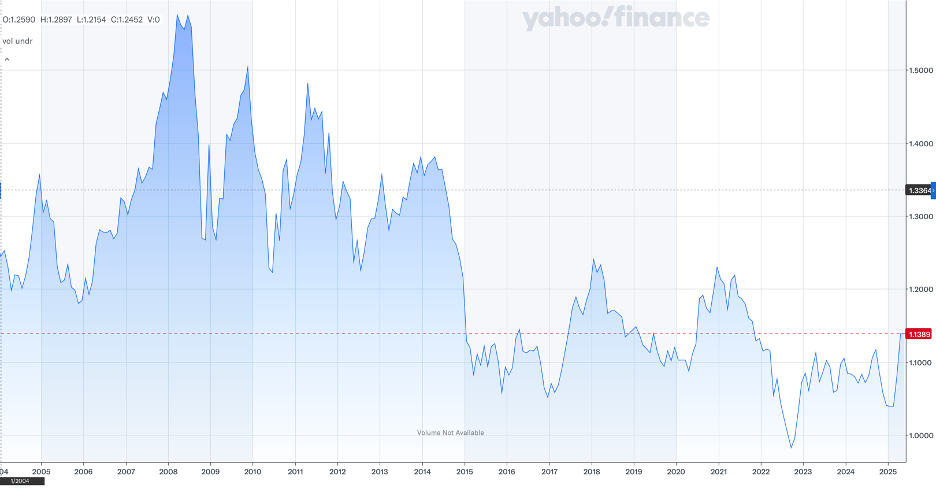
So, you can understand my initial confusion.  But upon reading the article, it turns out they were talking about European corporates, who for the first time in three years find that hedging their US dollar sales is critical.  Not only that, but they have also been quick to highlight that all new hedges will be at worse rates and therefore future earnings are already sure to be impacted.  Now, a quick look at the chart below does show that the euro has risen to its highest level in three years.  But it also shows that compared to the past 20 years, the euro is nowhere near high levels. In fact, it sits well below the median price (somewhere in the 40th percentile actually).  Perhaps European corporate Treasurers have simply forgotten their history.  Or more likely, just like US corporate Treasurers when the dollar is rising, they are seeking a scapegoat.

I cannot emphasize enough that the FX rate is not the driver, but the release valve for all the things that happen in the global economy.  Other actions take place, whether interest rate changes, policy or market, economic adjustments, policy or market, or exogenous events, and the FX rate is the place where equilibria are found.  In fact, arguably, that is the biggest flaw in the Trump administration’s idea that if they weaken the dollar, it will solve policy problems.  The dollar is the tail to the economy’s dog.

In the meantime, the reason one runs a hedge program with consistency is to mitigate the big moves in FX and their impacts on earnings.  But remember, even the best hedge programs lag large secular moves.

Ok, I’ll step down off my high horse and let’s look at how markets behaved overnight.  After yesterday’s second consecutive rally in the US, the picture elsewhere in the world is more mixed.  In Asia, the Nikkei (+0.5%) continued its rebound but the Hang Seng (-0.75%) and CSI 300 (-0.1%) saw no benefit overnight.  Elsewhere in the region winners and losers were pretty evenly split and nobody saw a movement of more than 0.8% in either direction.  In Europe, red is today’s color, but it’s a pale red with losses across the board of the 0.1% to 0.25% variety.  The only news overnight was German Ifo data, which showed a bit of a surprising uptick in the current business climate as well as expectations.  Perhaps the promise of more German fiscal largesse is outweighing concerns over tariffs.  As to US futures, they, too, are lower by about -0.15% at this hour (7:20).

In the bond market, yields are sliding around the world with Treasuries (-3bps) continuing to back away from their recent highs while European sovereigns see yields decline between -3bps and -4bps.  Even JGB yields slipped -1bp overnight.  My take is some of the fear has ebbed away from the market.

In the commodity markets, oil (+1.1%) remains in its recent trading range, with a still very large gap above the market in price terms.  The demand story seems fixed at weakening demand because of either slowing growth, or the electrification of everything or something like that, while the supply story is starting to see hints that oil companies are going to back off production with prices at current levels.  The latter feels like the larger short-term risk, although nothing has changed my longer-term view of lower prices here.  In the metals markets, gold (+0.7%) is rebounding after a difficult two days, arguably some real profit taking was seen.  Meanwhile silver (-0.5%) which actually outperformed gold for the past two sessions is giving some of those gains back and copper (+0.8%) is continuing its rebound after a dramatic decline from the all-time highs seen just one month ago.  Talk about a V-shaped recovery!

Source: tradingeconomics.com

Finally, the dollar is softer this morning, giving back about half of yesterday’s 1% gains.  In the G10, SEK and NOK (both +1.1%) are leading the way although the euro (+0.6%) is having a good day, as is the yen (+0.75%). The pound (+0.5%) is a bit of a laggard but after seeing this interview of Ed Miliband (UK Secretary of Energy and Climate Change), and his either inability to understand the implications of his policy, or his willingness to lie about it, I cannot believe the pound will continue to track the euro.  The UK’s energy policy appears designed to destroy the UK economy.  Consider that solar power is a key pillar of their future efforts to achieve net zero carbon emissions, and the UK is the nation that gets the least solar coverage in the world.  After all, it rains there half the time.  Meanwhile, the government is keen to end all other sources of energy.  No matter what you think of President Trump’s policies, they are not nationally suicidal like the UK’s.

Turning to the EMG bloc, gains are the norm, but not universal.  The CE4 are doing well but ZAR (-0.2%) and KRW (-0.6%) with the latter suffering from weaker than expected GDP growth in Q1 while the former, after a strong run since early in April, appears to merely be taking a breather.

We finally see some notable data this morning with Initial (exp 222K) and Continuing (1880K) Claims, Durable Goods (2.0%, 0.3% ex-Transport) and the Chicago Fed National Activity Index (0.11) all at 8:30, then at 10:00 we get Existing Home Sales (4.13M).  Yesterday saw New Home Sales pick up more than expected and the Beige Book indicate that economic activity was unchanged from the past, but uncertainty had risen.

Here’s what we know; the world is not ending but it is continuing to change from the structures created in the post WWII period.  This process is just beginning and anybody who claims to know where things are headed is lying.  I continue to believe in my bigger picture views, but day to day, there is no rhyme or reason, especially given the importance of headline bingo.

Good luck

Adf

Hard to Kill

Inflation just won’t go away
As evidenced by the UK
This year started out
Removing all doubt
The Old Lady’s work’s gone astray
 
And elsewhere, the problem is still
Inflation is quite hard to kill
Though central banks want
More rate cuts to flaunt
Those goals are quite hard to fulfill


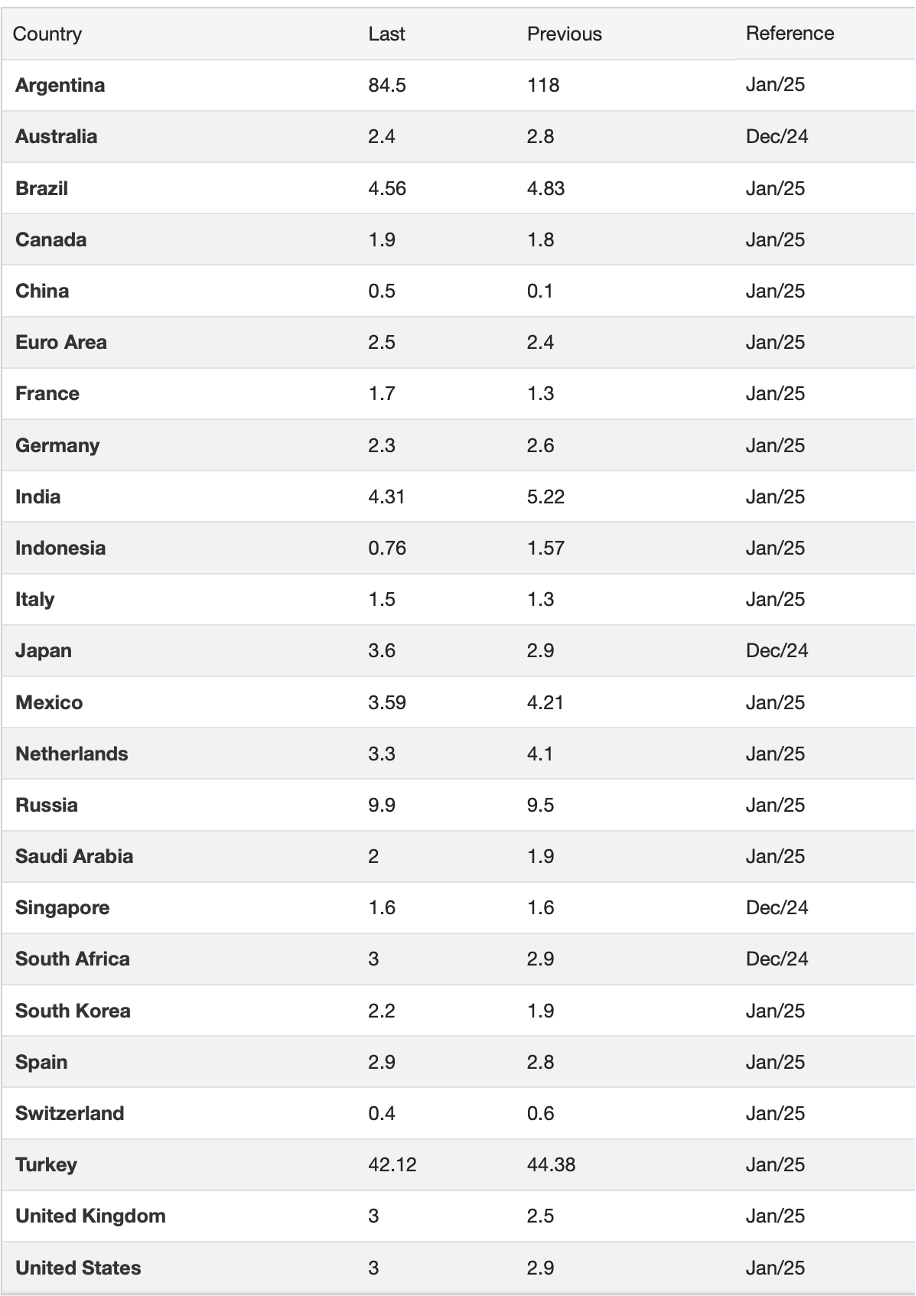
While most eyes remain on President Trump with his ongoing efforts to reduce the size of the US government, as well as his tariff discussions and efforts to negotiate a lasting peace in Ukraine, we cannot ignore the other things that go on around the world.  One of the big issues, which has almost universally been acclaimed a problem, is that inflation is higher than most of the world had become accustomed to pre-Covid.  As well, the virtual universal central bank goal remains the local inflation rate, however calculated, to be at 2.0%.  Alas for the central bankers in their seats today, that remains quite a difficult reach.  A quick look at the most recent headline CPI readings across the G20 shows that only 5 nations (counting the Eurozone as a bloc since they have only one monetary policy) are at or below that magic level as per the below table.

Source: tradingeconomics.com

Of those nations who are below, two, China and Switzerland, are actually quite concerned about the lack of price pressure and seeking to raise the inflation rate, and the other three (Canada, Singapore and Saudi Arabia) are right on the number, with core inflation readings tending higher than the headline reported here.

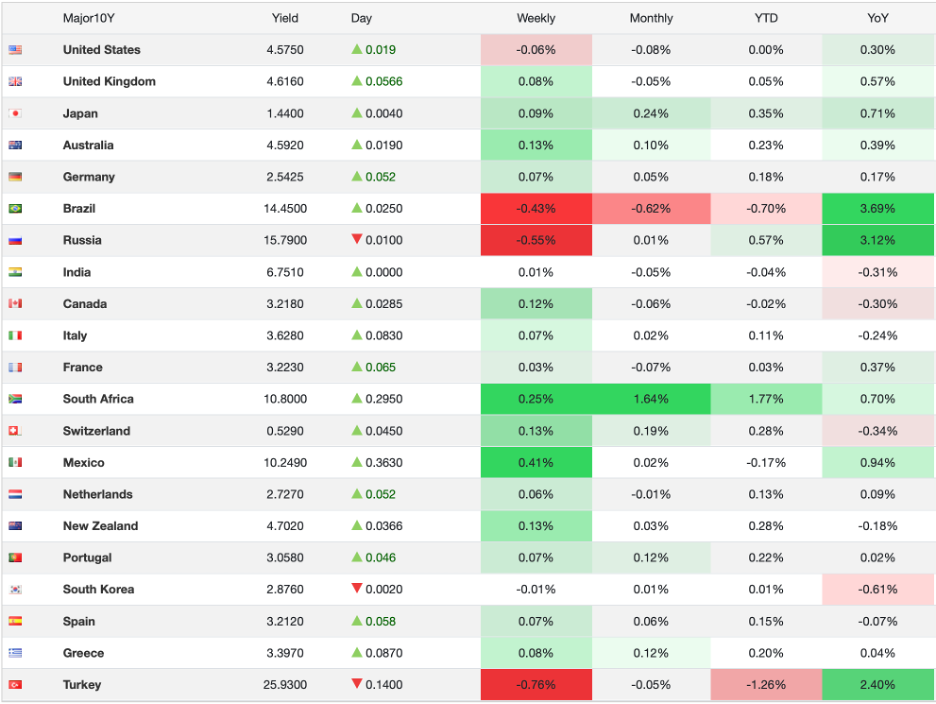
Perhaps a better way to highlight the problem is to look at the 10-year bonds of most countries and see how they have been behaving of late as an indication of whether investors are comfortable with the inflation fighting efforts by each nation.  While it is not universal, you can look at the column on the far right of the below table and see that 10-year yields have been rising for the past year.

Source: tradingeconomics.com

I only bring this up because, despite the fact that I have been downplaying central bank, especially the Fed’s, impact on markets, ultimately, every nation tasks their central bank to manage inflation.  That seems reasonable since inflation, as Milton Friedman explained to us in 1963, is “always and everywhere a monetary phenomenon.”  But perhaps you don’t believe that and are schooled in the idea that faster growth leads to higher wages and therefore higher inflation.  Certainly, Paul Samuelson’s iconic textbook (as an aside, Dr Samuelson was my Economics 101 professor in college) made clear that was the pathway.  Alas, as my good friend, @inflation_guy Mike Ashton, wrote yesterday, there is no evidence that is the case.  Read the article, it is well worth it and can help you start looking elsewhere for causes of inflation, like perhaps the growth in the money supply!

Of course, the reason that we continue to come back to inflation in our discussions is because it is critical to the outcomes in financial markets.  And that is our true focus.  It is the reason there is so much discussion regarding President Trump’s mooted tariffs and how inflationary they will be.  It is the reason that parties out of power continue to highlight any prices that have risen substantially in an effort to disparage the parties in power.  And it is the reason that central banks remain central to the plot of all financial markets, at least based on the current configuration of the global economy.  If there was only one financial lesson from the pandemic response, it is that Magical Money Tree Modern Monetary Theory is a failed concept of how to run policy.  This poet’s fervent hope is that Treasury Secretary Bessent is smart enough to understand that and will address fiscal issues in other manners.  I believe that to be the case.

Back to the UK, where CPI printed at 3.0%, 2 ticks higher than the median forecast, while core CPI printed at 3.7%.  This cannot be comforting for the BOE as most of the MPC remain committed to helping PM Starmer’s government find growth somehow and are keen to cut rates in support.  The problem they have is that inflation will not fade despite extremely lackluster GDP growth.  Recall, last week, even though the Q/Q GDP print of 0.1% beat forecasts, it was still just 0.1%.  Not falling into recession hardly seems a resounding victory for policy in the UK, especially since stagnation, or is it now stagflation, is the end result.  It should be no surprise that market participants have sold off the pound (-0.3%), Gilts (+5bps) and UK equities (-0.4%) and it is hard to find a positive way to spin any of this.  Again, while I have adjusted my views on Japan, the UK falls squarely in the camp of in trouble and likely to see a weaker currency.

Ok, let’s look elsewhere to see how things behaved overnight.  After a very modest rise in US equity indices yesterday, the Asian markets were mixed with the Nikkei (-0.3%) and Hang Seng (-0.15%) slacking off a bit although the CSI 300 (+0.7%) managed to find buyers after President Xi met with business leaders and the expectation is for further government stimulus, as well as a reduction in regulations, to help support the economy.  Australia (-0.7%) is still under pressure despite yesterday’s RBA rate cut as the post-meeting statement was quite hawkish, indicating caution is their approach for now given still sticky inflation.  (Where have we heard that before?)

In Europe, the only color on the screen is red with declines of between -0.4% and -0.9% as investors seem to be taking some profits after a solid run in most of these markets.  I guess the fact that European governments have been shown to be powerless in the world has not helped investor sentiment either as it appears these nations may be subject to more outside forces than they will be able to address adequately.  Lastly, US futures are unchanged at this hour (7:40).

In the bond market, as per the table above, yields are higher across the board with Treasuries (+2bps) the best performer as virtually all European sovereign issues have seen yields rise between 5bps and 7bps.  It simply appears that confidence in the Eurozone is slipping and demand for Eurozone assets is falling alongside that.

In the commodity markets, it should be no surprise that gold (+0.1%) continues to edge higher.  The barbarous relic continues to find price support despite the fact that interest in gold, at least in Western economies, remains lackluster at best.  There is much discussion now about an audit of the US’s gold reserves at Fort Knox and in the NY Fed, something that has not been performed since 1953.  Not surprisingly, there are rumors that there is much less gold in storage than officially claimed (a little over 8 tons) and rumors that there is much more which has not been reported but was obtained via seizures throughout history.  This story has legs as despite the lack of institutional interest in the US, it is picking up a retail following and we are seeing the punditry increasingly raise their price forecasts for the coming years.  As to oil (+0.8%) it is higher again this morning but remains in a tight trading range with market technicians looking at the $70/bbl level as a key support to hold.  A break there could well see a quick $5/bbl decline.

Finally, the dollar is modestly firmer this morning against most of its counterparts with most G10 currencies showing declines similar to the pound’s -0.2%, although the yen (+0.15%) is bucking that trend.  However, versus its EMG counterparts, the dollar is having a much better day, rising vs. PLN (-0.9%), ZAR (-0.7%) and BRL (-0.5%) on various idiosyncratic stories.  The zloty seems to be suffering from its proximity to Ukraine and the uncertainty with the future regarding a potential peace effort.  The rand is falling after the FinMin delayed the budget speech as internal squabbling in the governing coalition seems to be preventing a coherent message while the real is under pressure as inflation remains above target and the central bank’s tighter policy has been negatively impacting growth in the economy.

On the data front, this morning brings Housing Starts (exp 1.4M) and Building Permits (1.46M) and then this afternoon we see the FOMC Minutes from the January meeting.  That will be intensely parsed for a better understanding of what the committee is thinking.  We do hear from Governor Jefferson after the market closes, but generally, the cautious stance remains the most popular commentary.

Has anything really changed?  The market remains uncertain over Trump’s moves, the Fed remains on hold and cautious, and data shows that the economy continues to tick along nicely with price pressures unwilling to dissipate.  I see no reason to abandon the dollar at this point.

Good luck

Adf

A Future Quite Noeth

All eyes will be on NFP
As pundits are hoping to see
A modest result
That can catapult
The market to its apogee
 
If strong, the concern is that growth
Will strengthen and Jay will be loath
To cut rates once more
Which bulls will deplore
Implying a future quite noeth
 
If weak, then the problem for stocks
Is earnings will suffer a pox
So even if rates
Are cut in the States
The NASDAQ may still hit the rocks


It’s payroll day and especially after yesterday’s day of respect for the late President Carter closed equity markets in the US, investors are anxious to get back to business.  Here are the latest consensus estimates for the key figures to be released

Nonfarm Payrolls160K
Private Payrolls135K
Manufacturing Payrolls5K
Unemployment Rate4.2%
Average Hourly Earnings0.3% (4.0% Y/Y)
Average Weekly Hours34.3
Participation Rate62.8%
Michigan Sentiment73.8

Source: tradingeconomics.com

As well, there will be annual revisions to the household report today, which is the portion of the process that calculates the Unemployment Rate.  Next month we will see the annual revisions to the NFP, where estimates are already circulating that the number of jobs created in 2024 will be revised down by more than 1 million, nearly one-half of the claimed number (~2.2 million) created.

But ultimately, the reason this data point gets so much press is that it is half of the Fed’s mandate and so is closely watched by the FOMC as they consider any policy stance.  Yesterday, St Louis Fed president Musalem became the seventh or eighth Fed speaker since the last meeting to explain that more caution was warranted as the Fed tries to reduce what they still believe is a modest tightening bias.  “… [rate reductions] have to be gradual – and more gradual than I thought in September,” according to Musalem.  So, caution remains the watchword for every member of the FOMC and accordingly, the market is pricing just a 5% probability of a rate cut later this month.

The thing that has really changed over the past several months is the market’s reaction function to the data.  Part of this is based on the fact that it appears the Fed’s reaction function has changed a bit, and part of this is because the economic situation remains so confusing.

Regarding the Fed, given the fact that the data since they started cutting rates in September has been quite robust and given the fact they no longer have a political/partisan motive to cut rates, it strikes me it will be far harder for Powell and friends to justify further rate cuts from here.  After all, if GDP is growing at 3.0% and inflation is running at 3.3%, absent all other information, that data would truthfully argue for rate hikes.  However, there remains a large camp of analysts that continue to expect a significant slowdown in economic activity, with a number of well-respected voices claiming that we are already in a recession and have been in one since sometime in 2024.  

My view is that this confusion remains best explained by the concept of the K-shaped recovery where a smaller portion of the population, notably those with assets and investments in the markets, have been huge beneficiaries of Fed policies as they not only have seen their portfolios climb in value, but their cash is earning a nice return.  Meanwhile, a much larger percentage of the population, although a group that receives far less press from the financial reporters, continues to struggle given still rising prices and less overall opportunity for advancement.  This is the genesis of the labor strife we have seen, but there are many who remain left behind.  The problem for the Fed is they don’t really see this second cohort as their constituents, at least based on their policy actions.

As to today’s release, if we look at the recent Initial Claims data, it is consistent with a stronger number rather than a weaker one.  However, from a market perspective, I believe that a strong NFP number, something like 200K, will see a risk sell-off as the market continues to remove pricing for any rate cuts in 2025.  This will hurt stocks and likely bonds, although it will help the dollar and, surprisingly, commodities, as the market is likely to see increased demand forthcoming.

Elsewhere, aside from the wildfires in LA, which are a terrible tragedy, the other story in markets today revolves around the ongoing, slow motion disintegration of any remaining credibility in the UK government and its ability to address the many problems there.  Gilt yields continue to rise sharply, although I continue to hear many rationales as to why this is NOT like the October 2022 Gilt crisis.  Alas, while certainly the speed of this decline in Gilts is not quite as dramatic as we saw back then, the duration of the problem is far greater, and we have moved further now than then.  As you can see from the below chart, Gilt yields have risen 110bps since the middle of September, outpacing even Treasury yields and 10yr Gilts now yield 15bps more than Treasuries.  

Source: tradingeconomics.com

In fact, UK 10-year yields are the highest in the G10, although in fairness, they are not yet approaching levels like Mexico (10.6%), Brazil (14.75%) or Turkey (26.4%).  Perhaps Chancellor Reeves has those targets in mind.

OK, let’s see how markets behaved in the lead-up to the data this morning.  There was no joy in Mudville Asia last night as the Nikkei (-1.05%) slid amid new stories that the odds of a BOJ rate hike in two weeks are rising, while Chinese shares (Hang Seng -0.9%, CSI 300 -1.2%) were also under pressure amid news that the PBOC would stop buying bonds (ending QE) and additionally might be selling some to reduce liquidity in Hong Kong as they attempt to slow the decline of the renminbi.  The rest of the region was similarly under pressure across the board. 

In Europe, the picture is more nuanced with the DAX (+0.4%) and CAC +0.3%) showing some modest gains after slightly better than expected French IP data.  However, the FTSE 100 (-0.4%) and other continental bourses (IBEX -0.9%) are not quite as positive, with the FTSE clearly feeling pressure from the overall negative sentiment on the UK, while mixed data elsewhere is undermining any investor sentiment.  US futures at this hour (7:15) are pointing lower by about -0.25% across the board.  Fears of a strong number?

In the bond market, Treasury yields continue to climb, as they are holding onto yesterday’s rise of 5bps and this morning we are seeing European sovereign yields all creep higher by 1bp to 2bps.  JGB yields also rose 2bps overnight as part of that BOJ rate hike story.  In fact, the only market that didn’t see yields rise is China, where they remain within 2bps of their recent all-time lows

In the commodity markets, oil (+3.2%) is skyrocketing as continued cold weather increases heating demand while the reduction in inventories in Cushing, Oklahoma (the main point for NYMEX contract settlements) has raised concern over available supply of crude.  Meanwhile, metals prices continue to climb steadily with gold (+0.3%) continuing its run alongside silver (+0.8%) and copper (+0.45%).  The demand for “stuff” remains strong as nations around the world slowly lose confidence in government bonds as an effective store of value.

Finally, the dollar is, net, little changed this morning with some gains and some losses although few large moves.  On the dollar’s plus side we see KRW (-0.5%), ZAR (-0.55%) and BRL (-0.35%) while the yen and renminbi have both seen modest gains (+0.1%) on the back of the liquidity reduction stories in both nations.  However, we must keep in mind the dollar, as measured by the DXY, remains above 109 and continues to strongly trend higher.  My take is the highs seen in autumn 2022 are the next target, so look for the euro to sink below parity and the pound well below 1.20, probably 1.15, before too long.

There are no Fed speakers on the schedule today, although I imagine we will hear from somebody after the data since they cannot seem to shut up.  However, after today, they head into their quiet period ahead of the next FOMC meeting, so until then we will need to rely on Nick Timiraos from the WSJ to understand what Powell is thinking.

While nothing is that clear, and we could easily see a weak NFP report, my take is we are far more likely to see a strong one with stocks and bonds selling off and the dollar rising further.

Good luck and good weekend

Adf

Quite a Fuss

Inflation is still somewhat higher
Though currently nor quite on fire
Thus, further reductions
In rates may cause ructions
In markets, which we don’t desire


With regard to the outlook for inflation, participants expected that inflation would continue to move toward 2 percent, although they noted that recent higher-than-expected readings on inflation, and the effects of potential changes in trade and immigration policy, suggested that the process could take longer than previously anticipated. Several observed that the disinflationary process may have stalled temporarily or noted the risk that it could. A couple of participants judged that positive sentiment in financial markets and momentum in economic activity could continue to put upward pressure on inflation.” [emphasis added]

I think this paragraph from the FOMC Minutes was the most descriptive of the evolving thought process from the committee.  Since then, we have heard every Fed speaker discuss the need for caution going forward with regard to further rate reductions although to a (wo)man, they all remain convinced that they will achieve their 2% target while still cutting rates further, just more slowly.  While today is a quasi-holiday, with the Federal government closed along with the stock exchanges, although banks and the Fed are open and making payments, I anticipate activity will be somewhat reduced.  This is especially so given tomorrow brings the NFP data which will be closely monitored given the recent strength seen in other economic indicators.  If that number is strong, I anticipate the market will reduce pricing for future rate cuts towards zero from this morning’s 40bps total for 2025.  This, my friends, will serve to underpin the dollar going forward.

In England, there is quite a fuss
As traders begin to discuss
Can Starmer and Reeves
Address what aggrieves
The nation, or are they now Truss?

The situation in the UK seems to be going from bad to worse.  Even ignoring the horrifying stories regarding the cover-up of immigrant grooming gangs and their actions with young girls, the economic and policy story is a disaster.  While the exact genesis of their fiscal issues may not be certain, the UK’s energy policy, where they have doubled down on achieving Net Zero carbon emissions and continue to remove dispatchable power from their grid, is a great place to start looking.  UK electricity prices are the highest in Europe, even higher than Germany’s, and that is destroying any ability for industry to exist, let alone thrive.  The result has been slowing growth, reduced tax receipts and a growing government budget deficit.

Some of you may remember the Gilt crisis of September/October 2022, when then PM Liz Truss proposed a mini-budget focused on growth but with unfunded aspects.  Confidence in Gilts collapsed and pension funds, who had been seeking sufficient returns during ZIRP to match their liabilities and had levered up their gilt holdings suddenly were facing massive margin calls and insolvency.  The upshot is that the BOE stepped in, bought loads of Gilts to support the price and PM Truss was booted out of office.

While the underlying issues here are somewhat different, the market response has been quite consistent with both Gilts (+5bps this morning, +34bps in past week) and the pound (-0.6% this morning, -2.0% in past week) under significant pressure again this morning.  Unlike the US, with the global reserve currency, the UK doesn’t have the ability to print as much money or borrow as much money as they would like to achieve their political goals.  In fact, the UK is far more akin to an emerging market than a G7 nation at this stage, running a massive fiscal deficit with rising inflation and a sinking currency amid slowing economic growth.  There are no good answers for the BOE to address these problems simultaneously.  Rather, they will need to address one thing (either inflation and the currency by raising rates, or economic activity by cutting them) while allowing the other problem to become worse.  

It is very difficult to view this situation as anything other than a major problem for the UK.  While it occurred before even my time in the markets, back in the 1970’s, the UK was forced to go to the IMF to borrow money to get them through a crisis.  There are some pundits saying they may need to do this again.  For some perspective, the chart below shows GBPUSD over the long-term.

Source: tradingeconomics.com

The history is the pound was fixed at $2.80 at Bretton Woods and then saw several devaluations until 1971 when Nixon closed the gold window, and Bretton Woods fell apart.  The spike lower in the 1970’s was the result of the UK policies driving them to the IMF.  The all-time lows in the pound were reached in 1985, when the dollar topped out against its G10 brethren, and that resulted in the Plaza Accord.  But since then, and in truth since the beginning, the long-term trend has been for the pound to depreciate vs. the dollar.  

It continues to be difficult for me to see a strong bull case for the pound as long as the current government seems intent on destroying the economy.  FX option markets have seen implied volatility spike sharply, with short dates rising from 8% to 13% in the past week while bids for GBP puts have also exploded higher.  Meanwhile, the gilt market cannot find a bid.  Something substantive needs to change and don’t be surprised if it is political, with Starmer or Reeves, the Chancellor of the Exchequer, finding themselves out of office and a new direction in policy.  However, until then, look for both these markets to continue lower.

I apologize for the history lesson, but I thought it best to help understand today’s price action in all things UK.  And that’s really it for discussion.  Yesterday’s mixed US session was followed by weakness in Asia (Nikkei -0.95%, Hang Seng -0.2%, CSI 300 -0.25%) with the rest of the region also lower.  However, this morning in Europe other than the DAX, which is basically unchanged, modest gains are the order of the day.  Surprisingly, the FTSE 100 (+0.55%) is leading the way higher, but given the large majority of companies in this index benefit from a weaker pound, perhaps it is not so surprising after all.

In the bond market, Treasury yields are 3bps lower this morning, although still near recent highs above 4.65%, while European sovereigns continue to rise as the global interest rate structure climbs amid growing concerns nobody is going to adequately address the ongoing inflation.  Even Chinese yields rose 2bps despite CPI data showing deflation at the factory gate continues and consumer demand remains moribund.

Commodity prices are modestly firmer this morning with oil (+0.2%) stabilizing after a sharp decline yesterday on supply concerns after a large build of product inventories in the US.  Metals prices continue to be supported (Au +0.4%, Ag +0.8%, Cu +1.2%) despite the dollar’s ongoing strength as it appears investors want to hold real stuff rather than financial assets these days.

Finally, the dollar continues to climb with most currencies sliding on the order of -0.2% aside from the pound mentioned above and the yen (+0.3%) which seems to be acting as a haven this morning.  Nonetheless, this remains a dollar focused process for now.

There is no economic data to be released today although I must note that Consumer Credit was released yesterday afternoon and fell -$7.5B, a much worse outcome than expected.  As you can see from the below chart, declining consumer credit, while not completely unheard of, is a pretty rare occurrence.  You can clearly see the Covid period and the best I can determine is the December 2015 decline is a data adjustment, not an actual decline.  The point to note, though, is that despite lots of ostensibly strong economic data, this is a warning.

Source: tradingeconomics.com

I keep looking for something to turn the tables on the dollar, but for now, it is hard to make the case that the greenback is going to suffer in any broad-based manner.  Tomorrow, though, with NFP should be quite interesting.

Good luckAdf