A Day to Give Thanks

Today is a day to give thanks
To those who flew planes and drove tanks
In multiple wars
And too many tours
No matter which service or ranks
 
Now, turning to markets at hand
The bulls, yesterday, had command
So, risk assets rose
While pundits compose
A narrative, things are just grand


And the thing is, there is just not that much new of note to discuss this morning.  As it is Veteran’s Day here in the US, banks and the bond market are closed, although equities and commodities markets are open.  But the news cycle overnight was led by the fact that Softbank sold their NVDA stake for a $5.8 billion profit.  And that’s pretty thin gruel for someone who writes about market activities.  Everything else is about who won/lost regarding the shutdown and frankly, that is something markets tend to ignore.

With that in mind, and given the absence of any substantive data, let’s go right into market activity overnight.  Asian equity markets were mixed although I would say there was more red (Japan, China, Taiwan, Australia, Indonesia, Thailand, Philippines) than green (HK, Singapore, Malaysia, Korea, India) but it appears most of the activity had limited volumes and there are few stories of note as drivers.  

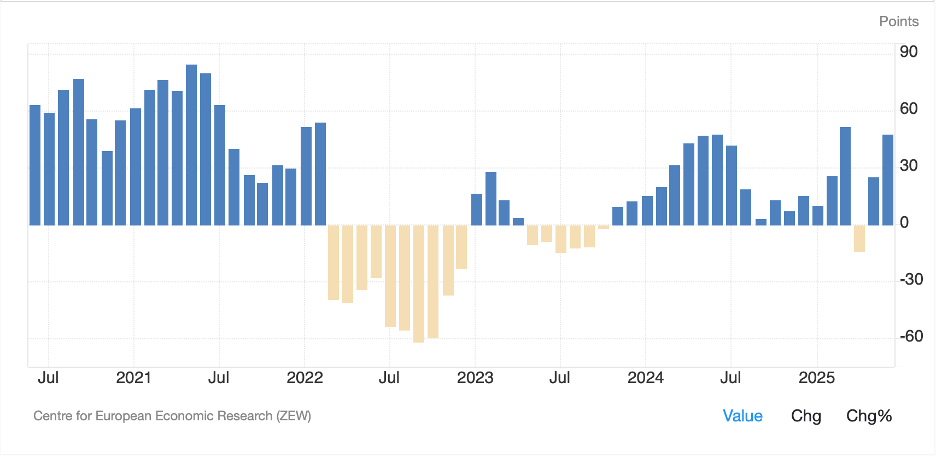
In Europe, though, things are looking better with all the major bourses higher this morning, led by the UK (+0.8%) where bad news was good for stocks as the Unemployment Rate ticked higher, to 5.0%, which has markets now pricing an 80% probability of a rate cut by the BOE next month.  This has been enough to help most European markets higher (CAC +0.65%, IBEX +0.5%) except for the DAX (0.0%) which is lagging after the ZEW Sentiment Index was released at a weaker than forecast 38.5, which was also down from last month’s reading.  

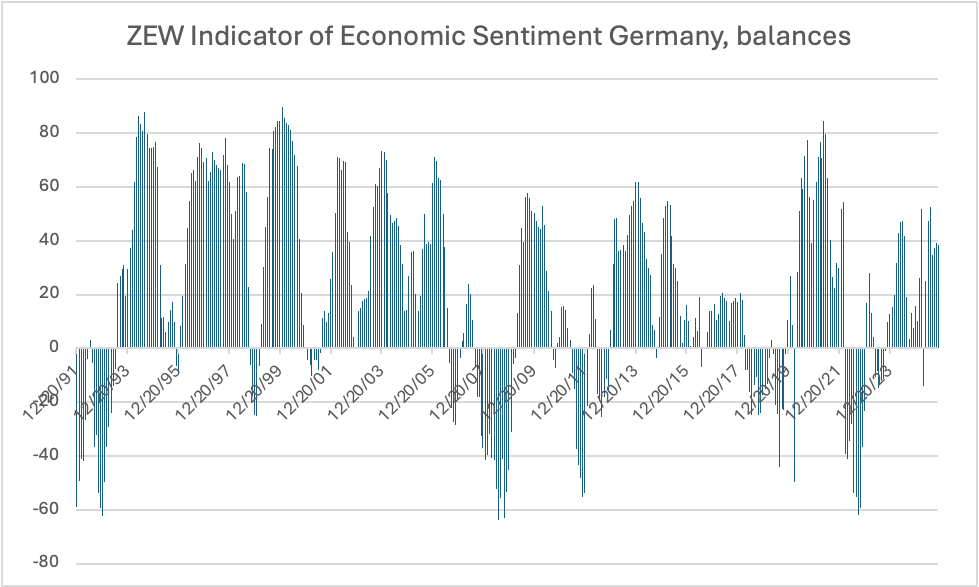
I think it might be worthwhile, though, to take a longer-term perspective on this sentiment survey.  As you can see from the chart below (data from ZEW.de), the current level is very middle of the pack.  In fact, the long-term average reading is 21.3, but of course, that includes numerous negative readings during recessions.  I might argue that things in Germany are not collapsing, but nowhere near robust.  My concern, if I were a German policymaker, is that it appears the survey has peaked at a much lower level than history, an indication that the best they can hope for is still mediocre.
Finally, US futures are pointing slightly lower, -0.2% or so, at this hour (7:50), arguably a little hangover from yesterday.

In the bond market, of course, Treasury yields aren’t trading, but European sovereigns are essentially unchanged as well, except for UK Gilts, which have seen yields slip -7bps on that higher Unemployment data driving rate cut expectations.  Given the ongoing fiscal issues in the UK, where they cannot seem to come up with a budget and all signs point to a worsening debt position, I’m not sure why yields there would decline, but that’s what’s happening.

Turning to the commodity markets, oil (+0.5%) continues to trade either side of $60/bbl, making no headway in either direction.  I listened to an excellent podcast yesterday with Doomberg, who once again highlighted his view that the long-term direction of the price of oil is lower.  The case he makes is that on an energy basis, NatGas, even though it is up 48% in the past year, remains significantly cheaper than oil, one-quarter the price, and that the arbitrage will close driving the price of oil lower and the price of NatGas higher.  Remember, politics is far more impactful on oil drilling than geology.  Ask yourself what will happen to the price of oil if Venezuela’s government falls and is replaced by a pro-US government allowing the oil majors in to help tap the largest oil reserves on the planet.  I assure you that is not bullish for the price of oil.

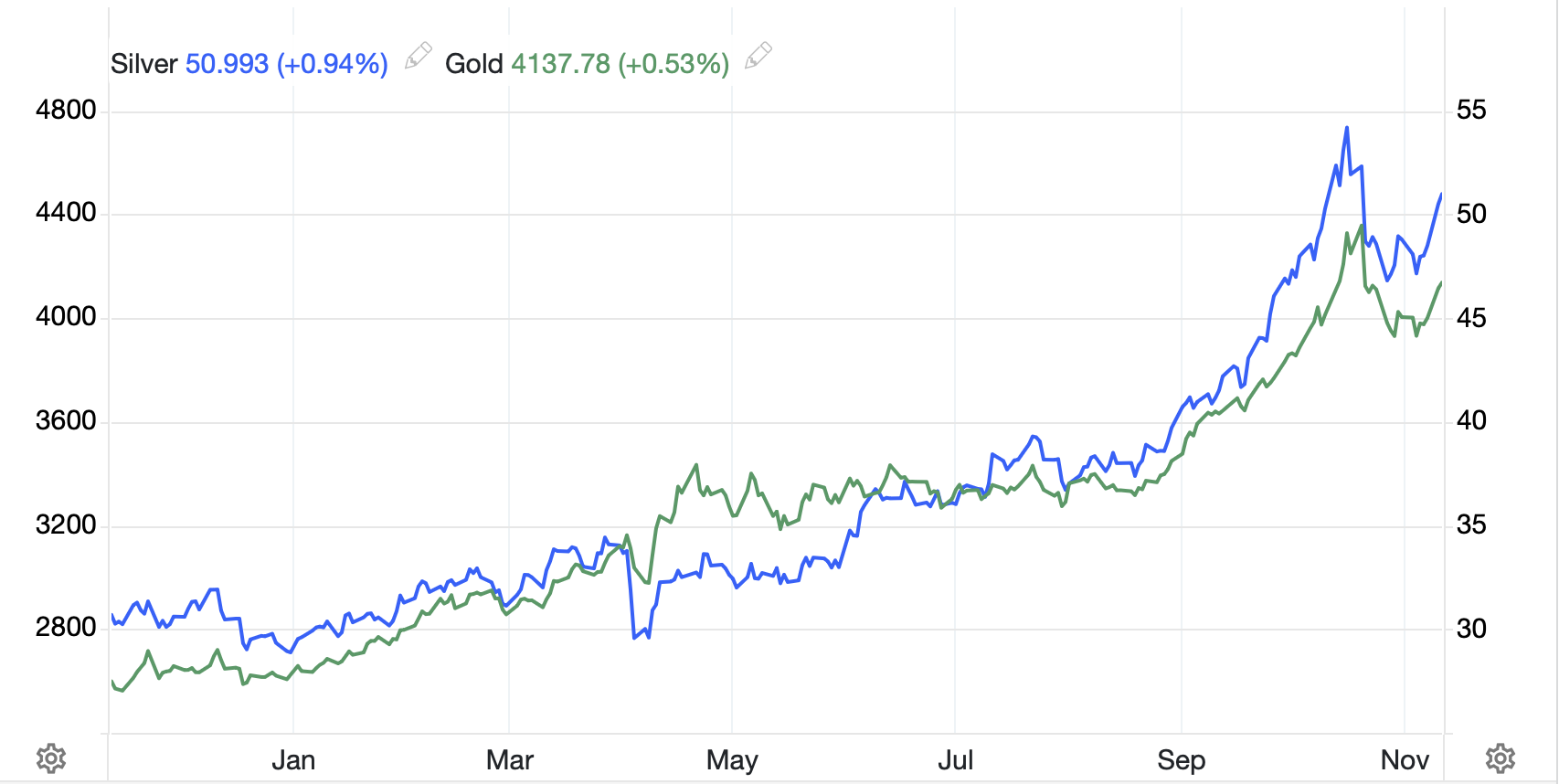
As to the metals markets, after yesterday’s very impressive moves, they are continuing higher this morning, at least the precious metals are with gold (+0.5%), silver (+0.8% and now over $50/oz) and platinum (+0.75%) all extending their gains.  These are the same charts in the metals, and my take is we had a blowoff run which has now corrected, and we could easily see another leg higher of serious magnitude.
Source: tradingeconomics.com

Finally, the dollar is mostly drifting lower this morning, although not universally so.  While the euro (+0.15%), CHF (+0.6%) and Scandies (NOK +0.6%, SEK +0.4%) are all firmer, the pound (-0.2%) and Aussie (-0.2%) are suffering a bit.  Yen is unchanged along with CAD.  In the EMG bloc, it is also a mixed bag with INR (+0.25%) and PLN (+0.25%) having solid sessions although KRW (-0.6%) is going the other way and the rest of the bloc is +/- 0.1% or so different.  Again, the dollar is just not that exciting in its own right.

There is a new data point coming out, ADP Weekly Employment change, seemingly in an effort to fill in gaps until the BLS gets back to work.  However, given its newness, it is not clear what value it will have to markets.  There is also a speech by Governor Barr but tomorrow is when the Fedspeak really hits.

It is shaping up to be a quiet day, and I suspect absent a major equity move, or some White House bingo, FX markets are going to drift nowhere of note.

Good luck

adf
Dine and Dash

The president left in a flash
Completing a quick dine and dash
But so far, no word
On what, this move, spurred
Though I’ve no doubt he’ll make a splash
 
Then last night the BOJ passed
On hiking, though none was forecast
And Germany’s ZEW
Implied there’s a view
That growth there will soon be amassed


I have to admit that when I awoke this morning, I expected there to have been significantly more news regarding the Iran/Israel conflict based on President Trump’s early departure from the G-7 meeting.  But, from what I see so far, while markets have reversed some of yesterday’s hope that a ceasefire was coming soon, my read is we are back to overall uncertainty in the situation.  Of course, the concept of the fog of war is well known, and I expect that we will not find out very much until those in control of the information, whether the IDF or the US military, or Iranian sources, choose to publicize things.  The one thing we know is that everything we learn will be biased toward the informants’ view, so needs to be parsed carefully.  I do think that Trump’s comments to the press when he was leaving the G-7 about seeking “an end. A real end. Not a ceasefire, an end,” to the ongoing activities is telling.  It appears the Israelis planned on a 2-week campaign and that is what they are going to complete.

From a market perspective, as we have already seen in the price of oil, and generally all asset classes, absent a significant escalation, something like a tactical nuclear strike by the Israelis to destroy the Iranian nuclear bomb-making capabilities, I expect choppiness on headlines, but no trend changes.  At some point, the fighting will end, and markets will return their focus to economic and fiscal concerns and perhaps central banks will become relevant again.

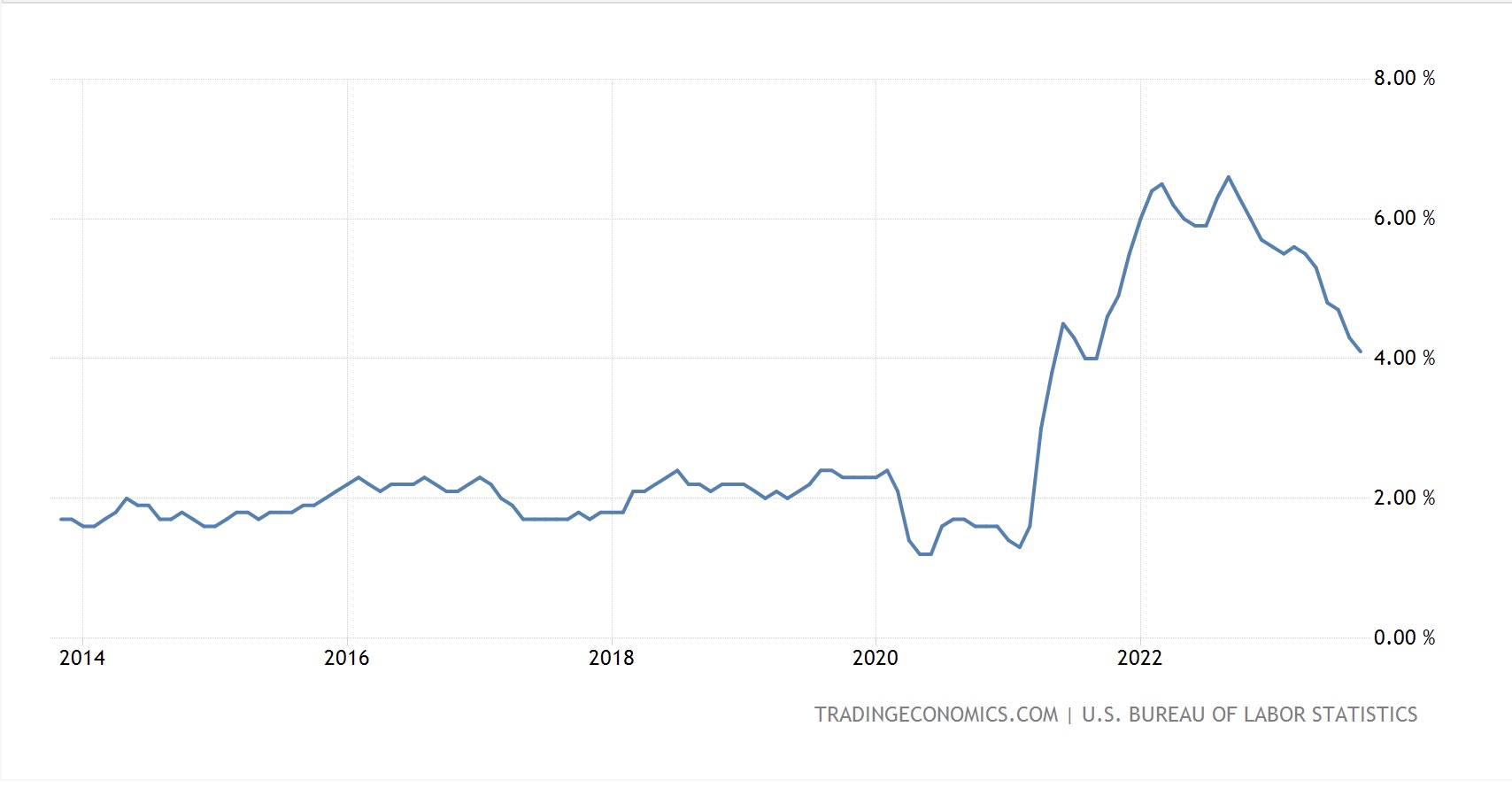
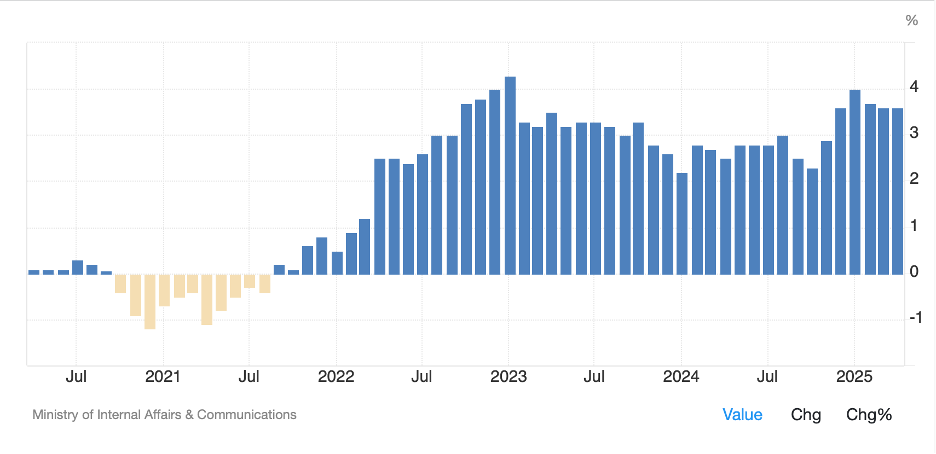
So, let’s turn to that type of news which leads with the BOJ leaving policy rates on hold, although they did reduce the amount of QE to ¥200 billion per month, STARTING IN APRIL 2026!  You read that correctly.  The BOJ, which has been buying ¥400 billion per month of JGBs while they raised interest rates in their alleged policy tightening, has decided that ten months from now it will be appropriate to slow the pace of QE.  Yes, inflation has been running above their 2.0% target for more than three years (April 2022 to be exact) as you can see in the below chart, but despite a whole lot of talk, action has been slow to materialize.

Source: tradingeconomics.com

You may recall about a month ago when Japanese long-end yields, the 30-year and 40-year bonds, jumped substantially, to new all-time highs and there was much discussion about how there had been a sea change in the situation in Japan.  Expectations grew that we would start to see Japanese institutions reduce their holdings of Treasuries and bring their funds home to invest in JGBs, leading to a collapse in the dollar.  The carry trade was going to end, and this was another chink in the primacy of the dollar’s hegemony.  Well, if that is the case, it is going to take longer than the punditry anticipated, at the very least, assuming it happens at all.  As you can see from the charts below of both USDJPY and the 40-year JGB, all that angst has at the very least, been set aside for now.

Source: tradingeconomics.com

Elsewhere, the German ZEW data released this morning was substantially stronger than both last month and the forecasts for an improvement.  As you can see from the chart below, it is back at levels that are consistent with actual economic growth, something Germany has been lacking for several years.  It appears that a combination of the continued tariff truce, the promises of massive borrowing and spending by Germany to rearm itself and the ECB’s easy policy have German business quite a bit more optimistic that just a few months ago.

Source: tradingeconomics.com

Ok, while we await the next shoe to drop in Iran or Israel, let’s see how markets have behaved overnight. Yesterday’s nice rally in the US was followed by a mixed picture in Asia with the Nikkei (+0.6%) gaining after the BOJ showed that tighter policy is not coming that soon.  Elsewhere in the region, China, HK and India were all down at the margin, less than 0.4% while Korea and Taiwan managed some gains with Taiwan’s 0.7% rise the biggest mover overall.  In Europe, though, the excitement about a truce in Iran is gone with bourses across the continent lower (DAX -1.25%, CAC -1.05%, IBEX -1.5%, FTSE 100 -0.5%).  Apparently, there is fading hope of trade deals between the US and Europe and concerns are starting to grow as to how that will impact European activity.  I guess the ZEW data didn’t do that much to help.  US futures at this hour (7:00) are all pointing lower by about -0.5%, largely unwinding yesterday’s gains.

In the bond market, Treasury yields, which backed up yesterday, are lower by -3bps this morning, essentially unwinding that move.  However, European sovereign yields have all edged higher between 1bp and 2bps with Italy’s BTPs the outlier at +3bps.  Quite frankly, it is hard to have an opinion as to why bond yields move such modest amounts, so I’m not going to try to explain things.

In the commodity space, fear is back in play as oil (+1.7%) is rallying as is gold (+0.4%) which is taking the rest of the metals complex (Ag +2.3%, Cu +0.3%, Pt +3.0%) with it.  These are the markets that are most directly responding to the ongoing ebbs and flows of the Iran/Israel situation, and I expect that will continue.  In the end, I continue to believe the long-term trend for oil is toward lower prices while for gold and metals it is toward higher prices, but on any given day, who knows.

Finally, the dollar doesn’t know which way to turn with modest gains and losses vs. different currencies in both G10 and EMG blocs.  The euro, pound and yen are all within 0.1% of yesterday’s closing levels while we have seen KRW (-0.4%) and INR (-0.3%) suffer and NOK (+0.4%) and SEK (+0.4%) both gain on the day.  However, those are the largest movers across the board, so it is difficult to make a case that anything of substance is ongoing.

On the data front, yesterday’s Empire State Manufacturing index was quite weak at -16, not a good look.  This morning, we see Retail Sales (exp -0.7%, +0.1% ex-autos), IP (0.1%), and Capacity Utilization (77.7%).  As well, the FOMC begins their meeting this morning with policy announcements and Powell’s press conference scheduled for tomorrow.  Helpfully, the Fed whisperer, Nick Timiraos, published an article this morning in the WSJ to explain why the Fed was going to do nothing as they consider inflation expectations despite the lack of empirical evidence that those have anything to do with future inflation.  But it is a really good sounding theory.

For now, the heat of the Iran/Israel situation will hold most trader’s attention, but I suspect that this will get tiresome sooner rather than later.  The biggest risk to markets, I think, is that the Iranian regime collapses and a secular regime arises, dramatically reducing risks in the Middle East and reducing the fear premium in oil substantially.  If that were to be the case, I expect the dollar would suffer as abundant, and cheap, oil would help other nations more than the US on a relative basis given the US already has its own supply.  But a major change of that nature would have many unpredictable outcomes.  In the meantime…

Good luck

Adf

Lately Downturned

The story is still ‘bout the Fed
And whether, when looking ahead
They see skies are blue
And so, they eschew
A rate cut the bears will all dread
 
But if they are growing concerned
The ‘conomy’s lately downturned
Then fifty will be
What we all will see
And bears, once again, will be spurned


As we move closer to the FOMC announcement and Powell press conference, the nature of the discussion has focused entirely on the size of the rate cut that will be announced tomorrow.  Yet again this morning, the Fed whisperer, Nick Timiraos at the WSJpublished an article on the subject, once again making the case for 50 basis points.  The money quote is below:

“Fed officials aren’t likely to regret a larger rate cut this week if the economy chugs along between now and their next meeting, in early November, because rates will still be at a relatively high level, he said. But if the Fed makes a smaller move and the labor market deteriorates more rapidly, officials will feel greater regret.”

As well, the futures market is growing more and more certain 50bps is coming as evidenced by the pricing this morning as per the below chart from the CME:

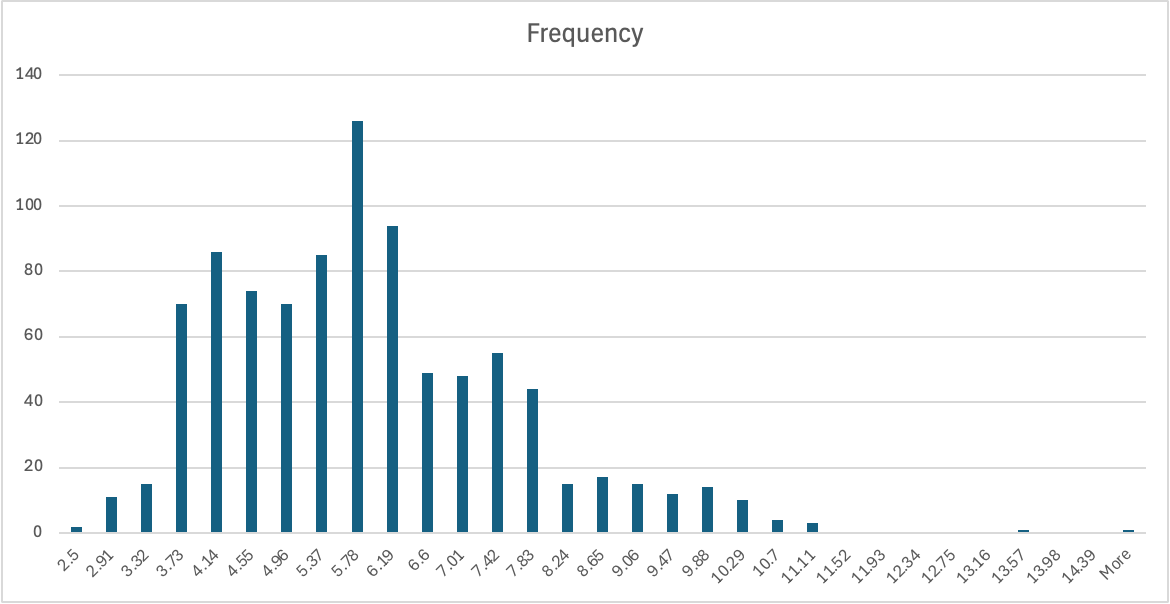
The interesting thing is that an unbiased (if such a thing exists) look at the data does not scream out to me that the economy is collapsing such that an aggressive start to an easing cycle is necessary.  Unemployment remains in the lowest quintile of outcomes over the past 76 years.  For reference, the median reading since January 1948 has been 5.5%, the average has been 5.7% and today it is at 4.2%.  The chart below shows the distribution of outcomes over the entire data series from the FRED database.

Data source: FRED database; calculation: fx_poetry.com

It is difficult to look at this chart and think the economy is imploding.  And let us consider another thing, the widely mentioned long and variable lags by which monetary policy impacts the economy.  Whatever the Fed does tomorrow, the impact on almost the entire economy will not be felt for at least a year, if not much longer than that.  After all, do companies really make a borrowing decision based on the marginal 25bps of interest cost per annum?  I would argue that most corporate borrowing is based entirely on their current schedule of maturing debt and any forecast needs for capex or other funding.  It strikes me that whether the Fed funds rate is 5.25% or 5.00% is not going to change much in the real economy.

Markets, of course, are a different kettle of fish in this discussion, but let’s face it, the bond market has already priced in 250 basis points of cuts in the next twelve months, so whether they start with 25 or 50 seems less relevant than the destination.  Certainly, the equity market will try to goose things on a 50bp cut, and will almost certainly fall if the cut is only 25bps, at least initially, but again, will corporate profits change that much in the short-run because of this move?

In the end, I fear we make far too much of the outcome, at least in this case.  Now, if Powell and the Fed were to decide that the recent call for a 75bp cut by three senators was an eloquent argument and did that, the market surprise would be substantial and the initial move in risky assets would be higher.  But something like that would also engender fears that the Fed knows something bad about the economy that the rest of us have missed, and that would result in its own negative consequences. I guess the good news is we only have another 30 hours or so before we find out.

As to the market activity overnight, yesterday’s mixed US equity performance, with the DJIA making new all-time highs while the NASDAQ fell -0.5%, led to weakness in Tokyo (Nikkei -1.0%) as tech shares underperformed, but strength in HK (+1.4%) and much of the rest of Asia that was open.  Both China and South Korea remained closed for holidays.  In Europe, though, given the virtual lack of technology shares available, the DJIA was the template with all markets higher this morning led by Spain’s IBEX (+1.25%)), but with robust gains elsewhere on the order of +0.6% to +0.8%.  As to US futures, at this hour (7:30), they are higher by about 0.25%.

In the bond market, yields continue to edge lower overall.  While Treasuries are unchanged this morning, that follows another 2bp decline yesterday afternoon.  In Europe this morning, sovereign yields are all lower by between -1bp and -3bps, catching up (down?) to the Treasury market as well as responding to pretty awful German ZEW numbers (Sentiment 3.6 vs. 17.0 expected and 19.2 last month; Current Conditions -84.5 vs. -80.0 expected and -77.3 last month).  Germany remains the sick man of Europe and there is no doubt that they need to see the ECB start to cut rates more aggressively to help support their withering manufacturing sector.  And one more thing, JGB yields fell -2bps last night and are now at 0.81% in the 10yr.  While the focus will turn to the BOJ at the end of the week after the FOMC announcement tomorrow, the market does not appear to be particularly concerned over aggressive tightening there.

In the commodity markets, WTI (+0.15%) has crept back above $70/bbl for the first time in nearly two weeks as the big story in the market revolves around the net speculative Comex positioning which has turned negative for the first time ever.  That means that hedge funds and speculators are net short oil futures.  While they may have a negative outlook, the positioning does indicate there is an opportunity for a massive short-squeeze sometime going forward.  As to the metals markets, they are little changed this morning, broadly holding their recent gains with both precious and industrial metals all showing healthy gains in the past week.  A 50bp cut should support prices across the board here.

Finally, the dollar is softer again this morning, but by a modest amount, about -0.1% across the board.  Those are the types of gains we have seen across the G10 and most of the EMG currencies with one outlier, MXN (-0.9%).  However, the peso, which had strengthened nearly one full peso in the past four trading sessions looks more like it is responding to that movement than to any fundamental changes.  The judicial review story is now old news although there may be some concerns that Banxico will cut more aggressively next week if the Fed does so tomorrow.

On the data front, this morning brings Retail Sales (exp -0.2%, ex autos +0.2%) as well as IP (0.2%) and Capacity Utilization (77.9%).  We also hear from Dallas Fed president Logan this morning.  It’s funny, a strong Retail Sales number could well weigh on the chances for a 50bp cut as further evidence that things continue to be moving along fine.  Remember, even though inflation has been trending lower, it is not yet nearly at its target.  Retail Sales strength would indicate that employment remains robust as people spend money more readily when they have a paycheck, so the need for more stimulus may just not be that critical.

In the end, my best take is the Fed is going to cut 50bps tomorrow and the market is going to increasingly price that in as the session unfolds.  This will be especially true if Retail Sales is weaker than forecast, but even if it surprises on the upside, I remain convinced Powell wants to cut 50bps based on the number of articles discussing the idea in the mainstream press.  Ultimately, I think the dollar will suffer a bit further on that move and commodities will be the big winners.

Good luck

Adf

Data Confusion

The ongoing data confusion
Is certainly not an illusion
Some numbers are solid
While others are squalid
And each begs a different conclusion
 
Last night, Chinese data revealed
The ‘conomy there hasn’t healed
And Germany’s ZEW
Showed weakness, beaucoup
More rate cuts will soon be, out, wheeled
 
But here in the US we learned
The NFIB, up, had turned
And yesterday showed
Inflation has slowed
Investors, though, still are concerned


As we await today’s US PPI data, and more importantly, tomorrow’s US CPI data, the one consistency we have observed is that the data remains all over the map.  Or does it?  The below chart (data from NY Fed, chart from @fx_poet) shows the median readings of 1-year ahead and 3-year ahead inflation expectations, based on a survey of 1300 households.  While the 1-year ahead expectations are unchanged at 3.0%, the 3-year ahead expectations fell to 2.3%, the lowest in the series’ history since the NY Fed began the survey in June 2013.

If you’re Jay Powell, that certainly must be good news as the Fed puts great stock into the idea that inflation expectations lead inflation outcomes. While this is not a universally held belief amongst economists and analysts, it is certainly the majority view.  However, given that the Fed is a strong believer in this theory, the fact that inflation expectations, as measured here, are declining will help inform their decisions going forward.  Based on this, it is easy to believe that September will bring a 50 basis point cut.

Of course, one might ask, why are inflation expectations declining?  And that is not part of the data that is collected, or at least not reported.  If the expectation is that the economy is headed into recession, that implies there is still great concern amongst households going forward.  However, if this result is due to a strong belief in the Fed’s policies, then economic optimism should abound.  As such, we need to see other data to help interpret things.

Perhaps the first piece we can observe is this morning’s NFIB Small Business Optimism Index, which printed at 93.7, its highest level since March 2022.  That is certainly encouraging as given the importance of small businesses to the overall economy, if things there are starting to look up, it should translate into stronger growth going forward.  On the flip side, in the anecdata department, earnings calls from Expedia, Marriott, Airbnb and Hilton indicated that there is real weakness in the travel economy.  This WSJ report indicates that perhaps things are not as strong as might be indicated by other data.

Now, if we look overseas, the data is also mixed, but there is more negative than positive.  For instance, Chinese money and lending data was released at substantially lower levels than last month and well below expectations.  As well, the PBOC is becoming very concerned about the Chinese bond market inflating a bubble.  Last week, ostensibly, they told several banks to renege on deals to buy Chinese government bonds because they are trying to prevent the back end of the yield curve from declining too far.  It seems they are worried (and probably rightly so) that regional Chinese banks don’t have the capability to manage interest rate risks effectively.  But slowing loan growth and a weak equity market continue to indicate that the Chinese economy is lagging.

As to Europe, the German ZEW data was released and it was, in a word, putrid.  The Economic Sentiment Index fell from 41.8 to 19.2, far below expectations while the Current Conditions index fell to -77.3.  Granted, these surveys were taken the week after the weak NFP data in the US when people were screaming for an emergency 75bp rate cut, so perhaps they are not reflective of the ongoing situation.  But this highlights the problems with survey data, if you are asked about something on a day when the world seems to be ending, your response is likely to be more negative than not.  In fact, this is a caution for all survey data.

So, what are we to make of all this mixed information?  Well, we are right where we started, with no clearer picture of the current situation, let alone how the future may unfold.  In fact, this is why unfettered markets are so important.  Markets are excellent indicators of both future activity and sentiment, and when they are manipulated for political outcomes, investors lose a great deal of information.

But let’s see what the markets are telling us today.  Yesterday’s US session was mixed with modest gains and losses across the board.  But I’ll tell you what, last night Tokyo took the bull by the horns and continued its strong rebound from the previous week’s collapse with the Nikkei rallying 3.5%.  it seems that not only was this move a continuation after the Monday holiday of last week’s rebound, but a former BOJ official, Makoto Sakurai, explained, “they [the BOJ] won’t be able to hike again, at least for the rest of the year.  it’s a toss-up whether they can do one hike by next March.”  You will not be surprised that traders and algorithms jumped on those comments to buy more stocks.  As to the rest of the major markets in Asia, they mostly edged slightly higher, but only about 0.2% or so.  In Europe, there are more laggards than gainers, with the CAC (-0.3%) the worst of the bunch, but as you can see by the relatively small decline, markets here are also quiet.  Finally, US futures are up 0.4% at this hour (8:15).

In the bond market, yields are edging lower this morning with Treasuries down -1bp while European sovereigns are lower by between -2bps and -3bps.  Given the tenor of the economic data, this should be no surprise.  Interestingly, JGB yields remain unchanged at 0.83%, well below that 1.00% critical level and hardly indicative that the BOJ is going to tighten further.

In the commodity space, oil (-0.5%) after touching $80/bbl for WTI yesterday, is slipping a bit as traders await the apparently imminent Iranian attack on Israel to see if a wider war starts.  Meanwhile, the metals complex is lower across the board with gold (-0.4%) giving back some of yesterday’s gains while copper (-1.0%) is also under pressure, arguably on the weak economic story.

Lastly, the dollar is firmer this morning, notably against the yen (-0.3%) and CHF (-0.4%) although there are exceptions to this rule.  I find it quite interesting that the yen carry trade unwind story has basically ended with several large banks explaining that the alleged $20 trillion that was outstanding has been unwound.  Personally, I think that is ridiculous and that there is plenty left in place.  Remember, this trade has been building since the Fed began raising interest rates in 2022 and there are many investors whose entry points are far, far below the current spot level.   A quick look at USDJPY over the past 5 years shows that while the latest batch of entrants may have left the building, there is likely still a lot of borrowed yen funding other positions.

A graph with a line drawn on it

Description automatically generated

Source: tradingeconomics.com

When the Fed started raising interest rates, USDJPY was about 115.  I assure you the carry trade has not ended.

Turning to the data, this morning brings PPI (exp headline 0.2%, 2.3% Y/Y) and (core 0.2%, 2.7% Y/Y), although I believe the data will need to be very different for traders and investors to change their view that inflation is continuing to decline.  And later this afternoon, Atlanta Fed President Bostic speaks.

I believe the narrative remains that the soft-landing is still in play and that the Fed’s cut in September will be adequately timed to prevent a recession.  As of this morning, the futures market is still pricing in a 50:50 chance of either a 25bp or 50bp cut.  Right now, my money is on 25bps, but there is a lot to learn between now and then.  In the meantime, it is hard to turn too negative on the dollar as everybody else is cutting rates as well, and growth elsewhere seems anemic at best.

Good luck

Adf

Ending Debates

There once was a banker named Jay
Who lived deep inside the Beltway
His words, when he spoke
Would sometimes evoke
A dovish response on the day
 
On Monday, we all got to hear
His views, and to some he was clear
Quite soon he’ll cut rates
Thus, ending debates
‘Bout ‘flation the rest of the year


While the market awaits this morning’s Retail Sales data (exp 0.0%, 0.1% ex autos), the focus for most traders and investors has been on Chairman Powell’s speech and discussion yesterday at the Economic Club of Washington DC.  The following headlines came from his prepared remarks and were highlighted all over the tape:

*POWELL: LAST THREE INFLATION READINGS DO ADD TO CONFIDENCE 

*POWELL: LABOR MARKET ESSENTIALLY NO TIGHTER THAN PRE-PANDEMIC 

*POWELL: JOB MARKET DOESN’T HAVE SLACK, ESSENTIALLY EQUILIBRIUM 

Then, following up in a Q&A, the money lines were these, “Now that inflation has come down and the labor market has indeed cooled off, we’re going to be looking at both mandates.  They’re in much better balance.”  

Not surprisingly, the market took this as confirmation that rate cuts are coming soon, although the futures market continues to price September as the likely first move.  While the meeting in 2 weeks has only a 9% probability priced in for a 25bp cut, looking at September’s pricing, 25bps are guaranteed and there are now some traders/investors looking for a 50bp cut, with that probability at 12.5%.  

Personally, I think there is a better chance of a July cut, especially if the PCE data next week are as soft as the CPI data were last week, than a 50bp cut in September.  My sense is that to get 50bps in September we would need to see the Unemployment Rate rise to 4.7% by that meeting with NFP pushing toward zero.  And while anything is possible, that seems highly unlikely in terms of the speed of the adjustment for those economic data series.  Other than the pandemic, even during deep recessions in the past, the rate didn’t rise that quickly.

As such, the market is now quite comfortable with the idea that the long-awaited initial rate cut will be here before the Autumnal equinox.  So, if that is the case, what does it mean?

One cannot be surprised that equity markets remain buoyant as we continue along the goldilocks trail of solid growth with slowing inflation.  Cutting rates into this environment will just add fuel to the equity fire.  There has been much made in financial discussions about the recent performance of small-cap stocks during the past several sessions.  It seems they have finally awoken from their deep slumber and have performed quite well, better even than the mega-cap tech names.  This has generated great excitement and we have seen several analysts raise their equity forecasts ever higher.  It seems that S&P 500 at 6000 is now a conservative view!

In the Treasury market, the yield curve has been slowly reverting to its more normal shape with 2-year yields falling more rapidly than 10-year yields.  This is the bull steepening that many had been anticipating, where yields overall decline, it’s just that the front end of the curve falls faster than the back.  History has shown that this type of movement typically foreshadows a recession, as the steepening accelerates when the Fed is slashing rates as the economy heads into a tailspin.  But maybe this time is different.  Ultimately, it can be no surprise that the yield curve is moving back to its normal shape of long-term yields higher than short-term yields.  After all, this inversion has been the longest in history.  I am just concerned that the speed of the onset of the coming recession may be much faster than most people assume.

As to commodity markets and the dollar, if the Fed is moving into a policy easing cycle, then commodity prices, especially precious metals and energy, ought to rally from here.  There may be a delay in industrial metals as a weak economy will weigh on demand there.  And the dollar will likely have a considerable down leg as well, although it will be tempered as central banks elsewhere around the world feel emboldened to be more aggressive with their own policy easing.

So, with that as a framework ahead of any potential future Fed actions, let’s look at what happened in the immediate wake of the Powell comments.  (As an aside, SF Fed President Daly also spoke yesterday and reiterated her concerns over the rise in the Unemployment Rate, indicating she was ready to cut.  Too, Chicago Fed president Goolsbee explained he was on the same page.)

Of course, given the Powell commentary, it is no surprise that US equity markets rallied yesterday with a new record high close from the DJIA although neither the NASDAQ nor S&P 500 could hold their record highs into the close.  Nonetheless, it was a strong day in the US markets.  In Asia, though, the picture was more mixed with the Nikkei (+0.2%) edging higher alongside a small move higher in USDJPY, and mainland Chinese shares (CSI 300 +0.6%) also gaining on hopes for some positivity from the Third Plenum.  But the Hang Seng (-1.6%) fell on fears of a Trump victory and the imposition of more tariffs on goods from there. The rest of the APAC space saw mixed reviews with some gainers (Taiwan, New Zealand, Korea) and some laggards (Australia, Malaysia, Singapore) although most of this movement was in small increments, 0.25%-0.35%.

European bourses, though, are having a tougher day as they are all lower on the session.  It seems that concerns over a Trump victory are manifesting themselves in concerns over European sales into the US or the imposition of tariffs here as well.  Adding to the misery, German ZEW data revealed a turn back down after several positive months, as concerns over the political situation in France and declining exports there weighed on the reading.  The upshot is that there is weakness everywhere, led by the CAC (-0.8%) in Paris and the IBEX (-0.8%) in Madrid.  (I think I wrote that exact sentence yesterday!). In the end, after a nice run as investors started to bet on ECB rate cuts, that story seems to be diminishing.  As to US futures, at this hour (7:30) they are modestly firmer, 0.2% or so.

In the bond market this morning, it appears that everyone around the world is excited about the possibility of Fed rate cuts as yields are lower across the board.  Treasury yields are down 6bps and European sovereign yields have fallen between 3bps and 5bps.  Even JGB yields slid 3bps overnight.  As has been the case for quite a while, the US yield story leads the global yield story.  If the Fed is going to start to cut, I expect that yields around the world are going to decline further, at least until inflation returns.

In the commodity markets, oil (-1.6%) is under pressure after weak oil demand data from China overnight undermined hopes that the Third Plenum would result in more government stimulus from the Xi government. This weakness is evident in industrial metals as well with both Cu (-0.65%) and Al (-1.0%) sliding further. However, precious metals are responding as one would expect to rate cuts, especially with inflation still around, as both gold and silver higher by 0.7% this morning, taking gold to new all-time highs.

Finally, the dollar continues to range trade overall with the DXY little changed on the day and hanging out just above 104, which happens to be its 60-year average!  While most currencies in both the G10 and EMG blocs are within +/-0.2% of yesterday’s closes, the one outlier is ZAR (+0.8%), which seems to be responding to some domestic plans to increase infrastructure investment in conjunction with private companies.

Other than the Retail Sales data mentioned above, there is nothing of note on the calendar today, although we will hear from new Fed governor Adriana Kugler.  At this point, I think it is becoming clear that the entire FOMC is on the same page; higher for longer is dead, long live the beginning of policy ease.  It is setting up to be a quiet session although I expect to see continues support for rate sensitive products like equities and precious metals.  The dollar, though, seems stuck as every central bank is ready to cut!

Good luck

Adf

Price Rise Regimes

Ahead of today’s CPI
Investors would not really buy
But neither would they
Sell short, as they weigh
If Jay is a foe or ally

Meanwhile, amongst pundits it seems
The world is split into extremes
Some see prices falling
And for cuts, are calling
While others fear price rise regimes

Market activity has been subdued overnight as we all await this morning’s big CPI report.  Currently the consensus views are for a 0.1% rise in the headline, leading to a 3.3% Y/Y number, down substantially from last month’s 3.7% reading, and a 0.3% rise in the core, leading to an unchanged Y/Y reading of 4.1%.  Here’s the thing, as can be seen in the below chart of core CPI, although it is clear inflation appears to be trending lower, it is still a LONG way from where anybody is comfortable.

Something else to remember is the different ways in which we all experience, and think about, inflation.  When writing about inflation, all analysts look at the rate of change of a percentage move as an indicator of what is happening.  But when you go to the grocery store, or your favorite restaurant, or when you order stuff on-line, especially things that you regularly buy, the price changes over the past two years have been so substantial, and taken place in such a short time, that we all remember the pre-covid prices.  The fact that prices may not be rising as fast as they did last year does not make the stuff any cheaper this year.  I would contend that is why virtually all of us consider the inflation data to be suspect, because the package of toilet paper that used to cost $4.99 now costs $8.99, and while it may not go higher anytime soon, it is still nearly double what we remember.  This perception is critical, in my mind, to understanding the national mood, and it is one that nobody in the Fed, or likely the administration, considers.  We know this because there are so many articles in the mainstream media about how things are really great, and people just don’t understand how good a job those two groups are doing.  

At any rate, if pressed, I would say that there are more deflationistas these days, who believe that inflation is going to quickly head back to 2% and that the Fed is going to be cutting rates early next year to prevent overtightening of policy.  The crux of their argument is that M2 is declining at a record pace (as can be seen in the below chart), and therefore is highly deflationary.  

I would counter that argument, though, with the fact that the velocity of money (see chart below) is rising at a record pace, offsetting those declines, and supporting ongoing inflationary tendencies.  

As some of us may remember from our macroeconomics classes, the identity to describe growth and inflation is:

                                                MV = PQ

The argument that a decline in M2 money supply (the “M”) will lead to lower prices assumes the velocity of money (the “V”) remains stable.  But as you can clearly see from the second chart, the velocity of money is rising sharply.  I would contend there is little chance that deflation is coming to a screen near you at any point in the next several years absent a depression brought on by a collapse in the bond market.  And ultimately, that means that the price of all those things we buy regularly is not going to retreat to pre-covid levels.

Away from the CPI drama, there were two things of note overnight.  First, Japanese FinMin Suzuki was on the tape explaining the government would take all possible steps necessary to respond to currency moves.  The market response was a very short-term rise in the yen, with the currency popping 0.35%, but giving back most of those gains within the hour and currently, it sits largely unchanged on the session.  There has been no evidence that the BOJ has intervened since October 2022, but it appears that 152.00 may be a sensitive spot right now.  The other thing he said was they were preparing a package to help citizens cope with the weakening yen which is driving inflation there.  That said, there is no indication yet they are going to raise the deposit rate from its current -0.10% level.  Net, I still think the yen has further to decline, at least until policy changes in Tokyo.

The other noteworthy occurrence was word from China that they were considering an additional CNY 1 trillion of support for the housing market as things on the mainland continue to slow despite Xi’s best efforts.  It seems when you blow a 20-year property bubble of such enormous proportions, such that the property sector consumes > 25% of your growing economy, slowing that down without collapsing the economy is a tough job.  I continue to think of King Canute and his command that the tide recedes every time I think about KingPresident Xi trying to stop the property market collapse.  At any rate, as can be seen by the fact that equity markets in China and Hong Kong did virtually nothing last night, the market is not excited by the prospects of more Chinese money sloshing around.

As to the rest of the equity markets, yesterday’s trading in the US was pretty limited with modest gains and losses in the indices while the Nikkei managed to gain 0.3% overnight.  European bourses are also mixed, with the continent a bit firmer while the UK is under some pressure.  Perhaps the marginally better than forecast German ZEW reading of 9.8 vs 5.0 expected and -1.1 last month is the driver on the continent, while UK employment data was arguably a bit better than forecast, with the Unemployment Rate remaining unchanged at 4.2% rather than ticking higher as expected, and so hopes for a quick BOE rate cut have faded a bit.

Too, in the bond market, activity has been extremely subdued with Treasury yields 2bps softer this morning while European sovereign yields are essentially unchanged across the board.  Last night in Asia, we saw little movement as well, with JGB yields slipping just 1bp and hanging around their new home at 0.85%.

While commodity prices managed to rally a bit yesterday, this morning, what little movement there is across energy and metals markets is ever so slightly lower.  Yesterday saw the EIA raise its forecast for oil demand slightly, and there is word that the administration is bidding for 1.2 million barrels of oil to start to refill the SPR, but sentiment in this space is clearly negative with the recession fears the driving force across all these markets.

Finally, the dollar, too, is very little changed this morning which should be no surprise given the lack of movement elsewhere.  If anything, it is trending a bit softer, but only just, as the deflationistas seem to be preparing themselves for a soft CPI print and want to get on board for that first Fed rate cut.  As we currently stand, at least according to the Fed funds futures market, the first cut is priced in for the June meeting, although the first hints of a cut show up in March.  That said, the probability of a rate hike in December has edged higher to 15% from below 10% last week.  There is still a great deal of confusion as to how market participants believe this is going to play out over time.

Aside from the CPI data, we hear from 3 more Fed speakers today, Barr, Mester and Goolsbee, while Governor Jefferson, in a speech in Zurich early this morning, didn’t really touch on current monetary policy, rather he was discussing uncertainty in a broad manner.  I suspect that the 3 speakers will generally reiterate Powell’s message from last week that the future is uncertain but higher for longer is the way forward.  As such, it is all about the data.  A hot print, certainly a M/M of 0.2% headline or 0.4% core will likely see bonds sell off along with stocks while the dollar rallies.  However, anything else, meaning a soft print or even an as expected print, will likely encourage risk buying and dollar selling.  We shall see,

Good luck

Adf

Hikes Are Impending

In London on Threadneedle Street
The Old Lady’s not been discrete
Some hikes are impending
With rates soon ascending
Before they shrink their balance sheet

The BOE has made it quite clear that they are itching to raise interest rates pretty soon in order to address rising inflation.  Today’s employment data, which saw the Unemployment Rate fall to 4.5% while employment grew by 235K on a 3M/3M basis, has helped to cement the idea that the economy is continuing to rebound sharply and price pressures are likely to continue to grow.  With CPI at 3.2%, already well above the 2.0% target, and tipped to rise much further by the end of the year given the rapid rise in energy and commodity prices, the BOE has come to believe they need to do something to prevent inflation from getting out of control.  Unlike the Fed, the BOE has also indicated they are quite comfortable raising interest rates before shrinking their balance sheet back to pre-pandemic levels.

The risk they face, which has become the talk of the market today, is that by raising rates so soon, especially before the Fed acts, they will simultaneously destroy the nascent growth impulse while failing to address the cause of the inflation.  And in truth, that could well happen.  Alas, that is a result of trying to address a stagflationary environment with the limited tools available to a central bank.  For the time being, the biggest decision a central bank has is to determine which affliction is a bigger problem, rising prices or slowing economic activity.  Since this seems to be the situation in almost every developed nation, we are going to witness a lot of variations on this theme going forward.

The interesting thing about the pound is that its behavior amid pending rate hikes, as well as the market narrative about the pound, seems to be quite negative.  For some reason, there has been a connection made between an early rate hike in the UK and a falling pound.  This is opposite what we have seen in most other countries, where those rate hikes have been supportive of the currency as would normally be expected.  But there is now talk that the UK is going to make a policy error by tightening ahead of the Fed.  This argument seems specious, however, as economic growth has rarely been a short-term driver of exchange rates, while interest rate changes are critical.  The idea that suddenly traders and investors are critiquing the long-term ramifications of the BOE is preposterous.  Instead, I would offer that any pound weakness, although an early decline after the data release has already been reversed, is far more likely due to the dollar’s continuing broad strength.  So, as I type, the pound is essentially unchanged on the day.

Of course, this begs the question, is the Fed going to start to tighten policy with their potential tapering decision next month.  My answer is leaning towards no.  The reasoning here is that we will have already seen the first estimate of Q3 GDP by the time the Fed meets, and the early indications are that GDP growth has really declined sharply with the Atlanta Fed’s GDPNow forecast declining to 1.306% after the payroll data on Friday.  Tightening policy into a clearly slowing economy seems highly improbable for this Fed regardless of the inflation situation.  It seems far more likely that a weak GDP print will result in the Fed walking back their tapering language by describing the slowing growth as an impediment from achieving that vaunted “substantial further progress” on their employment goals and thus tapering is not yet appropriate.  Remember, after nearly a decade of worrying about deflation, not inflation, concern over rising prices is not their normal response.  Despite talk of the tools they have available to fight inflation, there is no indication the Fed has the gumption to use them if the result would be a recession, or more frighteningly for them, a stock market decline.

Thus, the question that remains is, how will the market respond to a Fed that decides not to taper with inflation still rising?  Much of the current discussion regarding the Treasury market is around the idea that tapering is the driver of the steeper yield curve, although there is a strong case to be made it is simply consistently higher inflation readings doing the work.  For our purposes in the FX markets, it’s not clear the underlying driver matters that much.  The key is where do rates and yields go from here.  If they continue to rise, I expect the dollar has further room to rise as well.

Ok, with markets back to full strength today, a look around sees a pretty negative risk sentiment.  Equities in Asia (Nikkei -0.95%, Hang Seng -1.4%, Shanghai -1.25%) were all under pressure with the latter two dealing with yet another property company that is defaulting on a USD bond.  The China story appears to be getting a bit less comfortable as we watch what seems to be a slow motion implosion of the real estate bubble there.  As to Europe, its all red there as well (DAX -0.4%, CAC -0.5%, FTSE 100 -0.4%) as London is suffering despite the strong data and Germany seems to be feeling the weight of stagflation after PPI (+13.2% Y/Y in Sept) rose to its highest level since 1974 while the ZEW Surveys all fell even further than expected.  At this hour, US futures are either side of unchanged.

On this risk off day, bond markets are seeing a bit of a bid, but in truth, it is not that impressive, especially given how far they have fallen recently.  So, Treasury yields (-1.6bps) have edged just below 1.60% for now while European sovereigns (Bunds -0.6bps, OATs -0.8bps, Gilts -1.4bps) have also seen very modest demand.

Oil prices (+0.4%) continue to lead the way higher for most commodities, although today’s movement has been less consistent.  The trend, however, remains firmly upward in this space.  So, while NatGas (-1.6%) is lower on the session, we are seeing gains in gold (+0.5%) and aluminum (+0.7%) although copper (-0.25%) is consolidating today.  Many less visible commodity prices are rising though, things like lumber (+5.5%) and cotton (+2.3%) which are all part of the same trend.

Finally, the FX markets have seen a very slight amount of dollar weakness net, although there are quite a number of currencies that have fallen vs. the greenback as well.  In the G10, NOK (+0.7%) is the leader on oil price rises while AUD (+0.4%) and NZD (+0.4%) are following on the broader commodity price trend.  Interestingly, JPY (0.0%) is not seeing any bid despite a declining risk appetite.  This seems to be a situation where the spread between Treasuries and JGB’s has widened sufficiently to interest Japanese investors who are selling yen/buying dollars to buy bonds.  As long as Treasury yields continue to rise, look for USDJPY to follow.  After all, it has risen 1.7% in the past week alone.

In the emerging markets, THB (+1.3%) has been the big winner after the government eased restrictions for travelers entering the country thus opening the way for more tourism, a key part of the economy there.  ZAR (+0.85%) and MXN (+0.5%) are the next best performers on the strength of the commodity story.  On the downside, many APAC currencies (TWD (-0.35%, KRW -0.3%, INR -0.2%) saw declines on a combination of continued concerns over the potential implications of the Chinese real estate issue as well as rising commodity prices as all these nations are commodity importers.

Data-wise, NFIB Small Business Optimism was just released at a slightly weaker than expected 99.1, hardly a harbinger of strong future growth, while the JOLTS Jobs report (exp 10.954M) is due at 10:00 this morning.  There are three Fed speakers on the slate with vice-Chair Clarida at the World Bank/IMF meetings and Bostic and Barkin also due.  It will be interesting to see the evolution of the narrative as it becomes clearer that GDP growth is slowing rapidly.  But given that has not yet happened, I expect more taper talk for now.

There is no reason to think that the dollar’s recent strength has reached its peak.  If anything, my take is we are consolidating before the next leg higher so hedge accordingly.

Good luck and stay safe
Adf

Still Disrespected

According to data last night
The future in Germany’s bright
While right now, it stinks
Most everyone thinks
By Q3, they’ll all be alright

And yet, markets haven’t reflected
The positive vibe ZEW detected
Stock markets are dire
The dollar is higher
While oil is still disrespected

The one constant in the current market and economic environment is that nothing is consistent. For example, in Germany, the lockdown measures were extended for two weeks the day before Frau Merkel said that they would start to ease some restrictions, allowing small shops to open along with some schools. Then, this morning, the ZEW surveys were released with the Current Situation index printing at a historically low -91.5, well below the already dire forecasts of a -77.5 print. And yet, the Expectations index rose to +28.2, far higher than the median forecast of -42.0. Essentially, the commentary was that while Q1 and Q2 would be awful, things would be right as rain in Q3. But here’s a contradiction to that view, Oktoberfest, due to begin in late September, has just been canceled despite the fact that it is five months away and that it is in the middle of Q3, when things are ostensibly going to be much better there. My point is that, right now, interpreting signals of future activity is essentially impossible. Alas, that is what I try to do each morning.

So, what have we learned in the past twenty-four hours? Arguably, the biggest story was oil where the May WTI futures contract closed at -$37.63/bbl. In other words, the contract buyer is paid to take delivery of oil. And that’s the rub, storage capacity is almost entirely utilized while demand destruction continues daily. The IEA reported that current global production is running around 100 million barrels/day, with current demand running around 70 million barrels per day. In other words, plenty of oil is looking for a temporary home, and more of it is coming out of the ground each day. Arguably, this is a great opportunity for the US government to take delivery for the Strategic Petroleum Reserve, especially since they would be getting paid for the oil. But that would require a nimbleness of action that is unlikely to be seen at any government level. This morning, June WTI futures are under further pressure, down by another 20% at $16.50/bbl as I type, simply indicating that there is limited hope for a rebound in the near term. But the curve remains in sharp contango, with prices at $30/bl in December and higher further out. This price action is simply the oil market’s manifestation of the current economic view; negative growth in Q1 and Q2 with a rebound coming in Q3. However, despite the logic, seeing any commodity, let alone the world’s most important commodity, trading below zero is a strange sight indeed.

With the oil market grabbing the world’s focus, it can be no surprise that the dollar has responded by rallying strongly, especially against those currencies that are seen as tightly linked to the price of oil. So, in the G10 space, NOK (-1.7%) and CAD (-0.7%) are suffering, with the Nokkie the worst performer in the group. But AUD (-0.95%), NZD (-1.25%) and GBP (-0.95%) are all under significant pressure as well. It seems that Kiwi has responded negatively to RBNZ Governor Orr’s musings regarding additional stimulus in May, while Aussie has suffered on the back of the weak pricing in energy markets as well as lousy employment data. Meanwhile, today’s pressure on the pound seems to stem from a renewal of the Brexit discussion, and how a hard exit will be deleterious. In addition, there are still those who claim the UK’s response to the pandemic has been inadequate and the impact there will be much worse than elsewhere. Interestingly, UK employment data released this morning did not paint as glum a picture as might have been expected. While we can ignore the Unemployment Rate, which is February’s number, the March Claims data was surprisingly moderate. I expect, however, that next month’s data will be far worse. And I continue to think the pound has far more downside than upside here.

Turning to the EMG bloc, we cannot be surprised to see RUB as the worst performer in the group, down 1.3%, nor, given the growing risk-off sentiment, that the entire space is lower vs. the dollar. As today is a day that ends in ‘y’, MXN is lower, falling 0.7% thus far, as the market is increasingly put off by both the ongoing oil price declines as well as the ongoing incompetence demonstrated by the AMLO administration. (As an aside here, it seems that many Mexican financial institutions see much further peso weakness in the future as they are actively selling pesos in the market.) The other underperformers are HUF (-0.85%), ZAR (-0.8%) and KRW (-0.75%). Working in reverse order, the won is suffering as questions arise about the health of North Korean leader Kim Jong-un, who according to some reports, is critically ill and close to death. The concern is there is no obvious successor in place, and no way to know what the future will hold. Meanwhile, the rand is under pressure from the weakness throughout the commodity space as well as the realization that the carry that can be earned by holding the currency has diminished to its lowest level since 2008. For a currency that has been dependent on foreign holdings, this is a real problem.

I guess, given that the euro is only lower by 0.2%, it is actually a top performer of the day, so perhaps the German data has been a support to the single currency. The thing is, given the export orientation of the German (and Eurozone) economy, unless things pick up elsewhere, growth expectations will need to be modified lower for Q3. Don’t be surprised if we see this in the survey data going forward.

Elsewhere, equity markets everywhere are in the red, with European indices down between 1.7% and 2.5%. Asian stock markets were also lower, by similar amounts, and after yesterday’s US declines, the futures this morning show losses of between 0.7% for the NASDAQ and 1.5% for the Dow. Bond yields continue to fall, with 10-year Treasuries lower by 3bps this morning, and overall, risk is being sold.

The only data this morning is Existing Home Sales from March, with the median expectation for a 9% decline to 5.25M. As to Fed speakers, the quiet period ahead of next Wednesday’s FOMC meeting has begun so there is nothing to hear there. Of course, given what they have already done, as well as the fact that every act is unanimously accepted, I don’t see any value add from their comments in the near-term.

Last week saw a net gain in the equity markets as the narrative embraced the idea that the infection curve was flattening and that we were past the worst of the impact. This week, despite the ZEW data, I would contend investors are beginning to understand that things will take a very long time to get back to normal, and that the chance for new lows is quite high. In this environment, the dollar is likely to remain well bid.

Good luck and stay safe
Adf


Cashiered!

In China, a virus appeared
That seems to be worse than first feared
It’s spreading so quickly
That markets turned sickly
And stock market bulls got cashiered!

Some of you may remember the SARS virus from the winter of 2002-3, when a respiratory illness, emanating from Guangdong in China, spread quickly around the world resulting in some 800 odd deaths, but more importantly from the market’s perspective, created a very real risk-off environment. As an example, from January through March of 2003, the Dow Jones fell more than 16%, largely on fears that the virus would continue to spread and ultimately reduce economic activity worldwide. Fortunately, that was not the case, as those diagnosed with the virus were isolated and the spread of the disease ended. Naturally, risk was reignited and all was right with the world…until 2008.

I remind everyone of this history as this morning, there is another coronavirus that has been discovered in central China, this time Wuhan seems to be ground zero, and has begun to spread rapidly from human to human. In just a few weeks, more than 200 cases have been reported with several deaths. However, the big concern is that the Lunar New Year celebration begins on Saturday and this is the heaviest travel time of the year within China and for Chinese people around the world. And if your goal was to spread a virus, there is no better way to do so than by getting infected people on airplanes and sending them around the world! Of course, this is nobody’s goal, however it is a very real potential consequence of the confluence of the new virus and the Lunar New Year. The market has reacted just as expected, with risk aversion seen across markets (equities lower, bonds higher) and specific stocks reacting to anticipated direct effects. For example, every Asian airline stock has been aggressively sold lower, while manufacturers of things like latex gloves and face masks have rallied sharply.

Now, while none of this should be surprising, a quick look at market levels shows us that the current impact of this virus has been widespread, at least from a market perspective. For example, equity markets have suffered across the board, although Asia was worst hit (Nikkei -0.9%, Hang Seng -2.8%, Shanghai -1.4%, DAX -0.25%, CAC -0.85%, FTSE -1.0%). Treasury yields have fallen 2bps, although bund yields are actually higher by 0.5bps this morning on the back of stronger than expected ZEW survey data.

And in the currency market, the dollar is broadly, although not universally, higher. It can be no surprise that APAC currencies are under the most pressure given the risk-off causality, with KRW -0.75% and CNY -0.55%, its largest daily decline since last August. But we are also seeing weakness throughout LATAM with both BRL (-0.45%) and MXN (-0.35%) among the day’s worst performers.

In the G10 space, the results have been a bit more mixed, and actually seem more related to data than the general risk sentiment. For example, the pound is today’s big winner, +0.35% after UK Employment data was released with much better than expected results. While the Unemployment Rate remained unchanged at 3.8%, the 3M/3M Employment Change rose 208K, nearly double expectations and the first really good piece of data seen from the UK in two weeks (recall PMI data was a bit better than expected). This has resulted in some traders questioning whether the BOE will cut rates next week after all. Futures markets continue to price a 61% probability, although that is down from 70% on Friday.

Elsewhere, the euro reversed small early losses and now has small gains after the ZEW Expectations data (26.7 vs. 15.0 expected), while the yen has benefitted ever so slightly on two different fronts. First, the broad risk-off market flavor has helped keep the yen underpinned, but more importantly, the BOJ met last night, and although they left policy unchanged, as universally expected, there continues to be a growing belief that the next move there is going to be a tightening! This was reinforced by the BOJ raising its growth estimates for both 2019 (0.8%, up from 0.6%) and 2020 (0.9% up from 0.7%). Of course, offsetting that somewhat was the decline in the BOJ’s inflation forecast, down to 0.8% in 2020 from the previous expectation of 0.9%. In the end, it is difficult to get overly excited about the Japanese economy’s prospects, with a much greater likelihood of significant yen strength emanating from a more severe risk-off event.

Looking ahead to the week, not only is the Fed in its quiet period, but there is a very limited amount of US data set to be released.

Wednesday Existing Home Sales 5.43M
Thursday Initial Claims 214K
  Leading Indicators -0.2%

Source: Bloomberg

Of course, there are two other events this week that may have a market impact, although my personal belief is that neither one will do so. This morning the US Senate takes up the Articles of Impeachment for President Trump that were finally proffered by the House of Representatives. And while the politicos in Washington and the talking heads on TV are all atwitter over this situation, financial markets have collectively yawned throughout the entire process. I see no reason for that stance to change at this point.

The other event is the World Economic Forum in Davos, the annual get together of the rich and famous, as well as those who want to be so, to pontificate on all things they deem important. However, it beggars belief that anything said from this conference is going to change any investment theories, let alone any fiscal or monetary policies. This too, from the market’s perspective, is unlikely to have any impact at all.

And that’s really it for today. Lacking catalysts, I anticipate a quiet session overall. Short term, the dollar still seems to have some life. But longer term, I continue to look for a slow decline as the effects of the Fed’s QE begin to be felt more keenly.

Good luck
Adf

A New Paradigm

In Germany for the first time
In months, there’s a new paradigm
The pundits are cheering
A rebound that’s nearing
As data, released, was sublime

Perhaps sublime overstates the case a bit, but there is no doubt that this morning’s German ZEW data was substantially better than forecast, with the Expectations index rising to 10.7, its highest level since March 2018. This follows what seems to be some stabilization in the German manufacturing economy, which while still under significant pressure, may well have stopped declining. It is these little things that add up to create a narrative change from; Germany is in recession (which arguably was correct, albeit not technically so) to Germany has stabilized and is recovering on the back of solid domestic demand growth. On the one hand, this is good news for the global growth story, as Germany remains the fourth largest economy in the world, and if it is shrinking that bodes ill for the rest of the world. However, for all those who are desperate for German fiscal stimulus, this is actually a terrible number. If the German economy is recovering naturally, it beggars belief that they will spend any more money than currently planned.

It is important to remember that the Eurozone fiscal stimulus argument is predicated on two things: the fact that monetary policy is now impotent to help stimulate growth throughout the Eurozone; and the belief that if the German government spends more money domestically, it will magically flow through to those nations that really need help, like Italy, Portugal and Greece. Alas for poor Madame Lagarde, this morning’s data has likely lowered the probability of German fiscal stimulus even more than it was before. The euro, however, seems to like the data, edging higher by 0.15% this morning and working its way back to the levels seen just before the US payroll report turned the short-term crowd dollar bullish. There was other Eurozone data released, but none of it (French and Italian IP) was really that interesting, printing within a tick of forecasts. On the euro front, at this point all eyes are on the ECB to see what Lagarde tells us on Thursday. Remember, the last thing she wants is to come across as hawkish, in any manner, because the ECB really doesn’t need the added pressure of a strong euro weighing on already subpar inflation data.

With two days remaining before the UK election, the polls are still pointing to a strong Tory victory and a PM Boris Johnson commanding a majority of Parliament. At this point, the latest polls show the Tories with 44%, Labour with 32% and the LibDems with just 12%. The pound is higher by 0.2% on the back of this activity, despite a mildly disappointing GDP reading of 0.0% (exp 0.1%). A quick look back at recent GBP movement shows that since the election was called on October 30, the pound has rallied 1.8%. While that is a solid move, it isn’t even the largest mover during that period (NZD is higher by 2.45% since then). In fact, the pound really gained ground several weeks earlier after Boris and Irish PM Leo Varadkar had a lunch where they seemed to work out the final issues for Brexit. Prior to that, the pound had been hovering in the 1.22-1.24 area, but gained sharply in the run up to the previous Brexit deadline.

I guess the question is; just how much higher the pound can go if the polls are correct and Boris wins with a Tory majority. There are two opposing views, with some analysts calling for another solid leg higher, up toward 1.40, as the rest of the market shorts get squeezed out and euphoria for UK GDP growth starts to rebound. The other side of that argument is that the shorts have already been squeezed, hence the move from 1.22 to 1.32 in the past two months, and that though finalization of Brexit will be a positive, there are still numerous issues to address domestically that will prevent a sharp rebound in the UK economy. As I’m sure you are all aware, I fall into the second camp, but there is certainly at least a 25% probability that a larger move is in the cards. The one thing that seems clear, though, is that market implied volatility will fall sharply past the election if the Tories win as uncertainty over Brexit will recede quickly.

Turning south of the border, it seems that the USMCA is finally making its way through Congress and will be enacted shortly. The peso has been the quiet beneficiary of this news over the past week as it has rallied 2% in the past week in a very steady fashion, although so far, this morning, it is little changed. One other thing of note regarding the Mexican peso has been the move in the forward curve over the past three weeks. For example, since November 19, 1-month MXN forwards have fallen from 1030 to this morning’s 683. In the 1-year, the decline has been from 10875 to this morning’s 10075. The largest culprit here appears to be the very large long futures position, (>150K contracts) that need to be rolled over by the end of the week, but there is also a significant maturity of Mexican government bonds that will require MXN purchases. At any rate, added to the USMCA news, we have a confluence of events driving both spot and forward peso rates higher. It is not clear how much longer this will continue, so for balance sheet hedgers with short dated exposures, this is probably a great opportunity to reduce hedging costs.

Beyond these stories, there is far less of interest in the market. This morning’s US data consists of Nonfarm productivity (exp -0.1%) and Unit Labor Costs (3.4%) neither of which is likely to move the needle. This is especially so ahead of tomorrow’s FOMC meeting and Thursday’s ECB meeting and UK election. Equity markets are pointing lower this morning, but that feels more like profit taking than a change of heart, as bonds are little changed alongside oil and gold. In other words, look for more choppy markets with no direction ahead of tomorrow’s CPI data and FOMC meeting.

Good luck
Adf