All But Assured

A cut has been all but assured
Though since last time we have endured
Some fears Jay’s a hawk
So, when he does talk
Will this cut, at last, be secured?
 
And now there’s a narrative view
Though rates will fall, what he will do
Is try to convey
Now it’s out the way
Another one may not come through


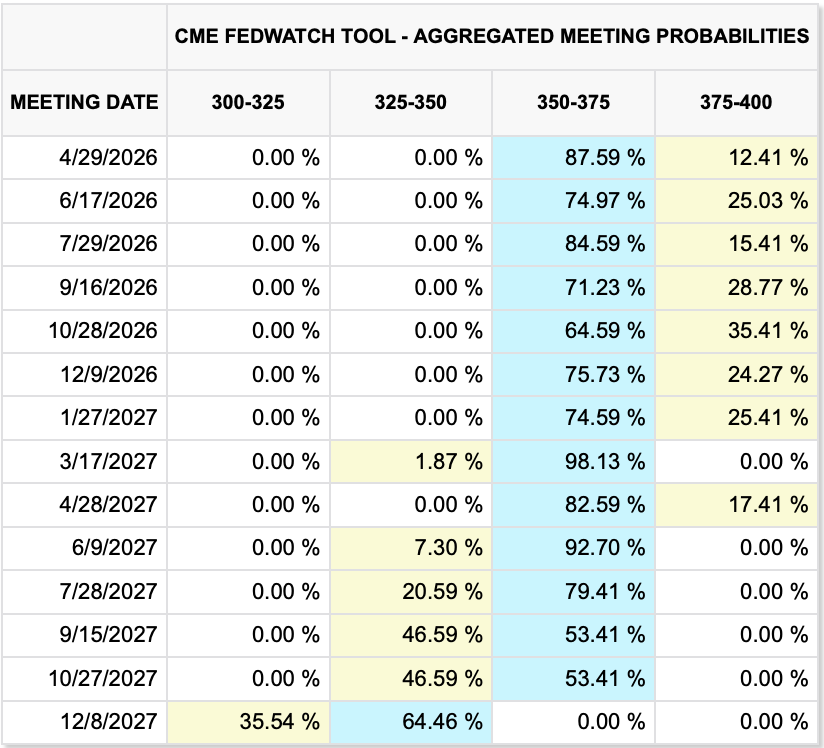
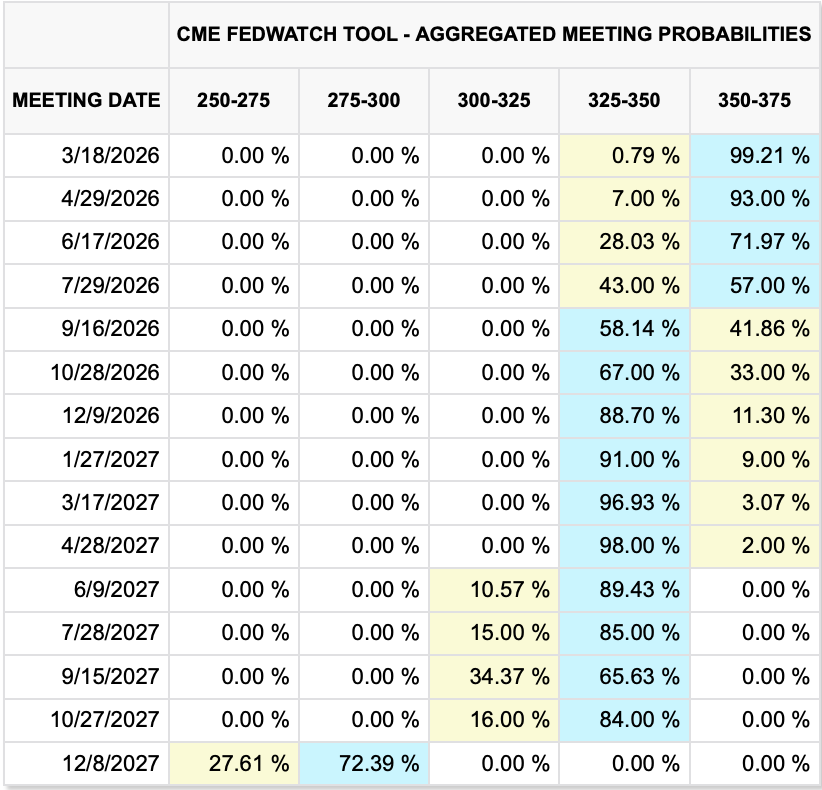
Good morning all and welcome to Fed Day.  The question, of course, is will this be a frabjous day?  As I write this morning, the Fed funds futures market continues to price a roughly 90% probability of a 25bp cut this afternoon, but the prospects for future rate cuts have greatly diminished as you can see in the table below from the CME.

It wasn’t long ago when the market was pricing 100bps more of rate cuts by the end of 2026, meaning a Fed funds rate of 2.50% – 2.75%.  However, the narrative has shifted over the past several weeks after very mixed signals from FOMC speakers and data releases that have indicated the economy is not cratering (e.g. yesterday’s JOLTS data printing at 7.658M, >400K higher than expected).  You may recall that shortly after the last FOMC meeting at the end of October, the probability of today’s rate cut had fallen to just 30%.

It appears that the new discussion point is this will be a hawkish cut, an idiom similar to jumbo shrimp.  At this point, the bulk of the discussion has been around how many dissents will be recorded with the subtext being, what will Chairman Powell have to promise potential dissenters in order to bring them along to his side of the ledger.  My take is if you thought the last press conference was hawkish, you ain’t seen nothin’ yet.  In fact, I would not be surprised to see a virtually categoric call to this being the end of the cutting cycle for the foreseeable future.

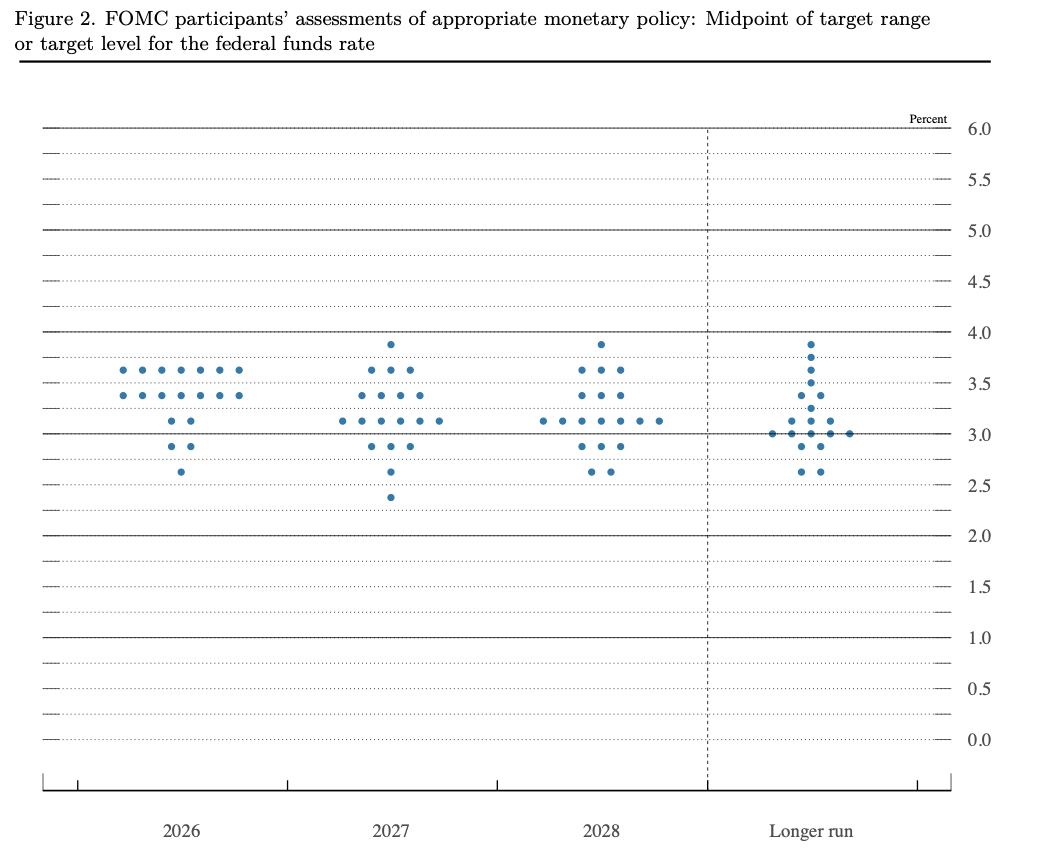
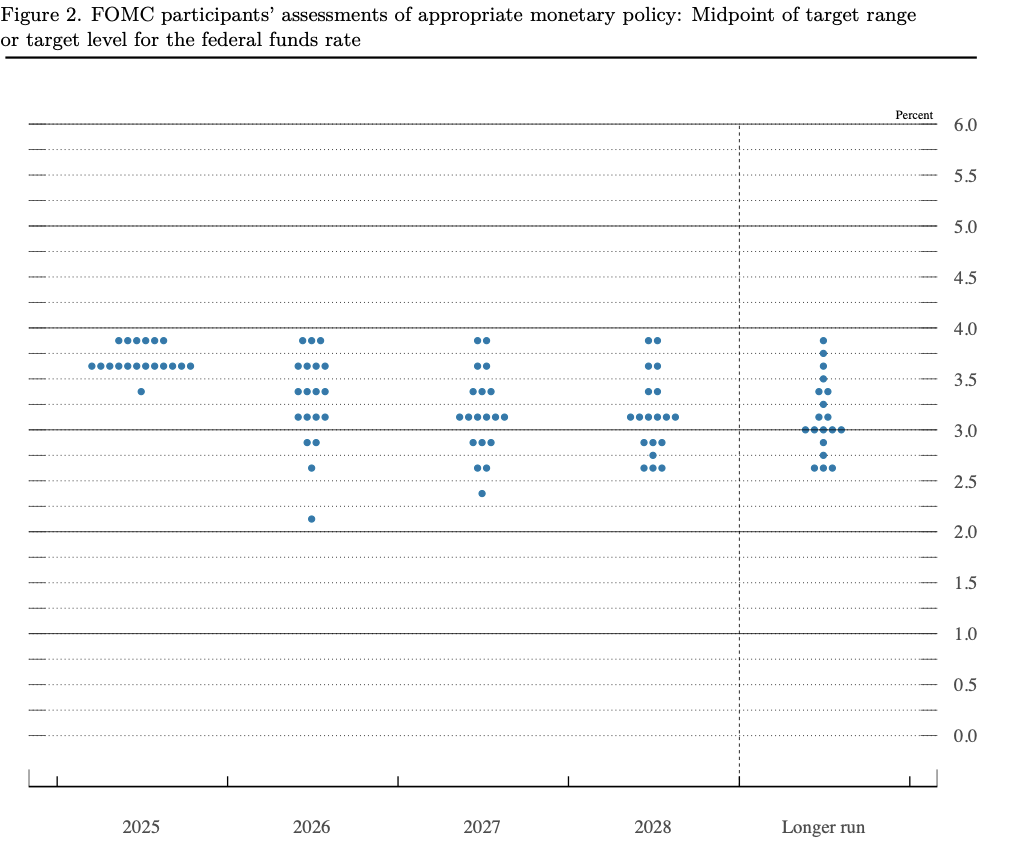
Remember, we also will see the new dot plots and SEP which will help us understand the broad picture of where FOMC members currently stand on the matter.  Personally, I expect to see a wide disparity between the ends of the distribution, and it wouldn’t surprise me to see some expectations of no rate changes for 2026 with other calls for 150bps of cuts and no consensus view at all. 

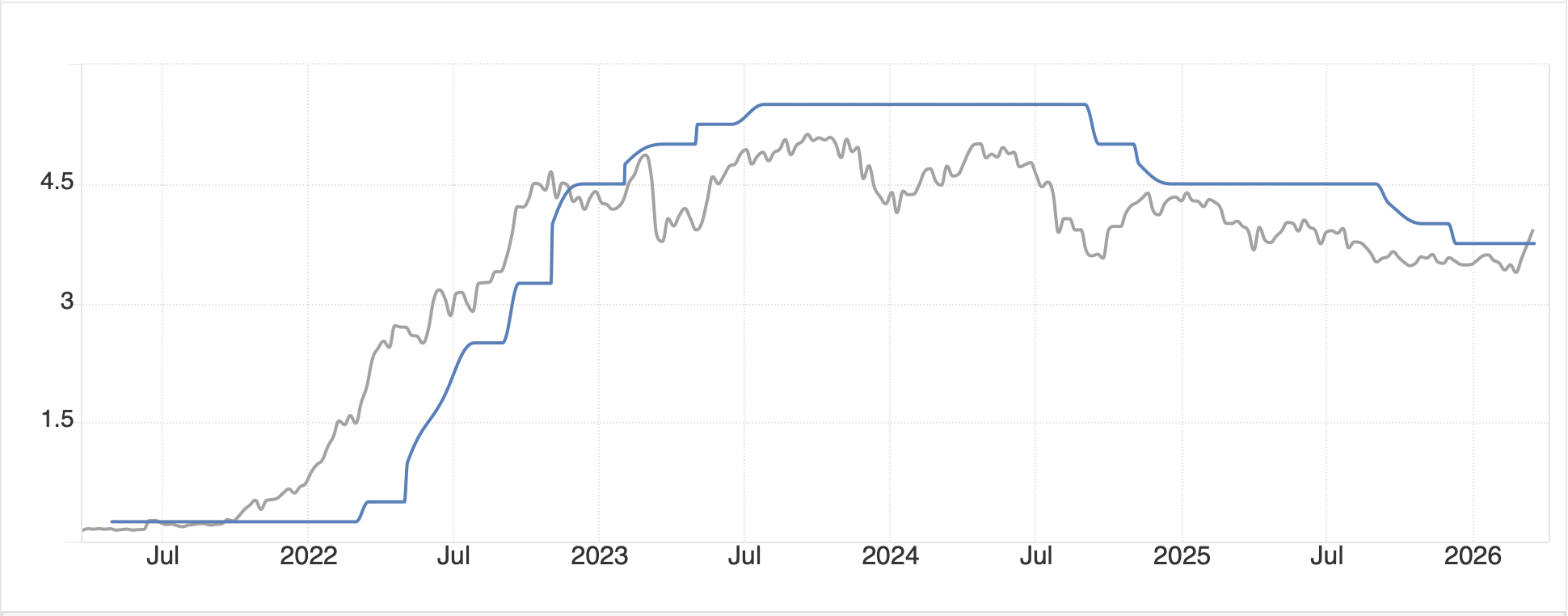
At this point, all we can do is wait.  However, the market discussion has centered on the fact that 10-year Treasury yields (+1bp) have been climbing lately, and that this morning they have touched 4.20% again while, at the same time, 2-year Treasury yields (no change) have been slipping as per the below chart I created from FRED data.

The steepening yield curve, which now appears to be turning into a bear steepener (when long dated yields rise more quickly than short-dated yields) is ringing alarm bells in some quarters.  The narrative is that there are growing concerns over both the quantity of debt outstanding and its rate of growth as well as the fact rate cuts will engender future inflation.

A key part of the discussion is the fact that what had been a synchronous system of global central bank policy easing is now starting to split up.  While we have known the BOJ is in a hiking cycle, albeit a slow one, today, the BOC is not only expected to leave rates on hold but explain they have bottomed.  We have heard that, as well, from the RBA earlier this week, and the commentary from the ECB may be coming along those lines.  So, is the US the outlier now?  And will that weaken the dollar?  Those are the key questions we will need to address going forward.

But before we move on, there is one market I must discuss, silver, which exploded to new historic highs yesterday, trading through $60/oz and is higher again this morning by 0.6% and trading at $61/oz.  someone made the point yesterday that for the second time in history, you need just 1 ounce of silver to buy one barrel of WTI.  The first time was back during the silver squeeze in January 1980, but that was quite short-lived (see chart below from macrotrends.com).  This one appears to have legs.  

I don’t know that I can find another indicator that better expresses my views of fiat currency debasement alongside an expanding availability of oil.  To my mind, both these trends remain quite strong, and this is the embodiment of them both combined.

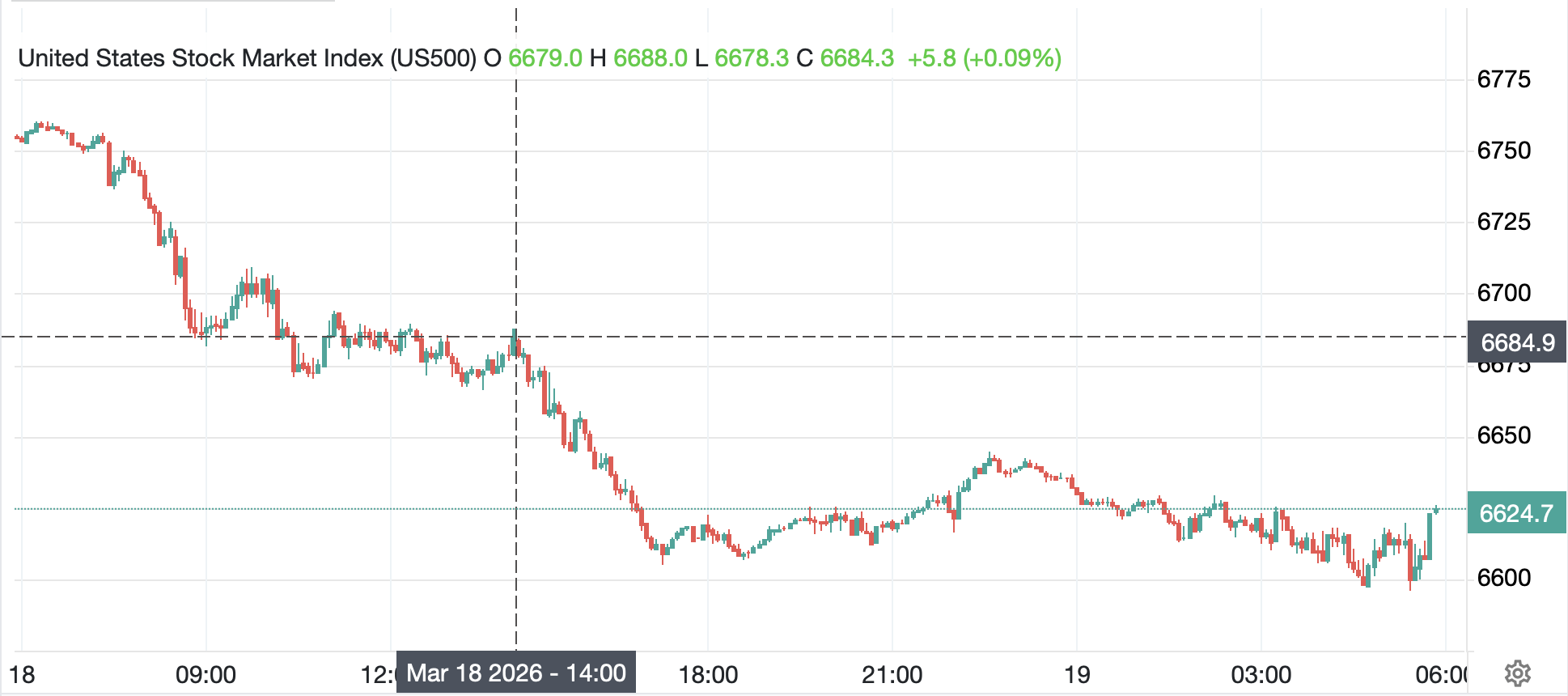
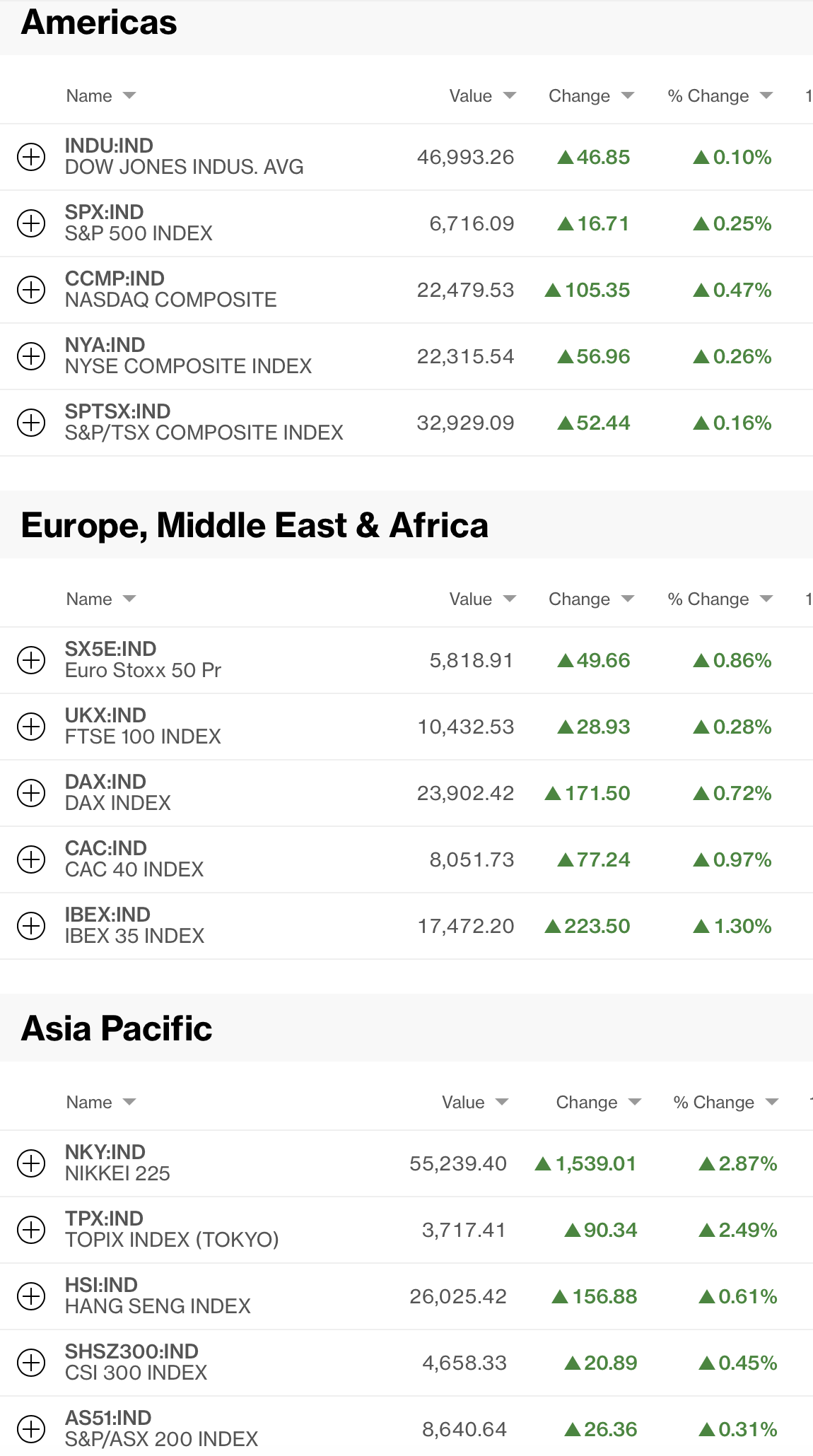
Ok, so as we await the FOMC, let’s see if anybody is doing anything in financial markets of note.  As testament to the fact that virtually everybody is awaiting the Fed this afternoon, US equity markets barely moved yesterday, and Asian markets were similarly quiet, with only Taiwan (+0.8%) moving more than 0.4% in either direction.  The large markets were +/- 0.2% overall.  In Europe, the movement has been slightly larger, but still not impressive with Germany (-0.4%) the laggard of note while the UK (+0.3%) is the leader.  A smattering of data released from the continent doesn’t seem to be having any real impact, nor did comments by Madame Lagarde claiming the rates are in a good place and displaying some optimism on future GDP growth.  Of much greater concern is the headlong rush to a digital euro CBDC, where they are seeking to exert control over the citizenry.  If for no other reason, I would be leery of expecting great things from the Eurozone going forward.  Not surprisingly, at this hour (7:30) US futures are little changed ahead of the meeting.

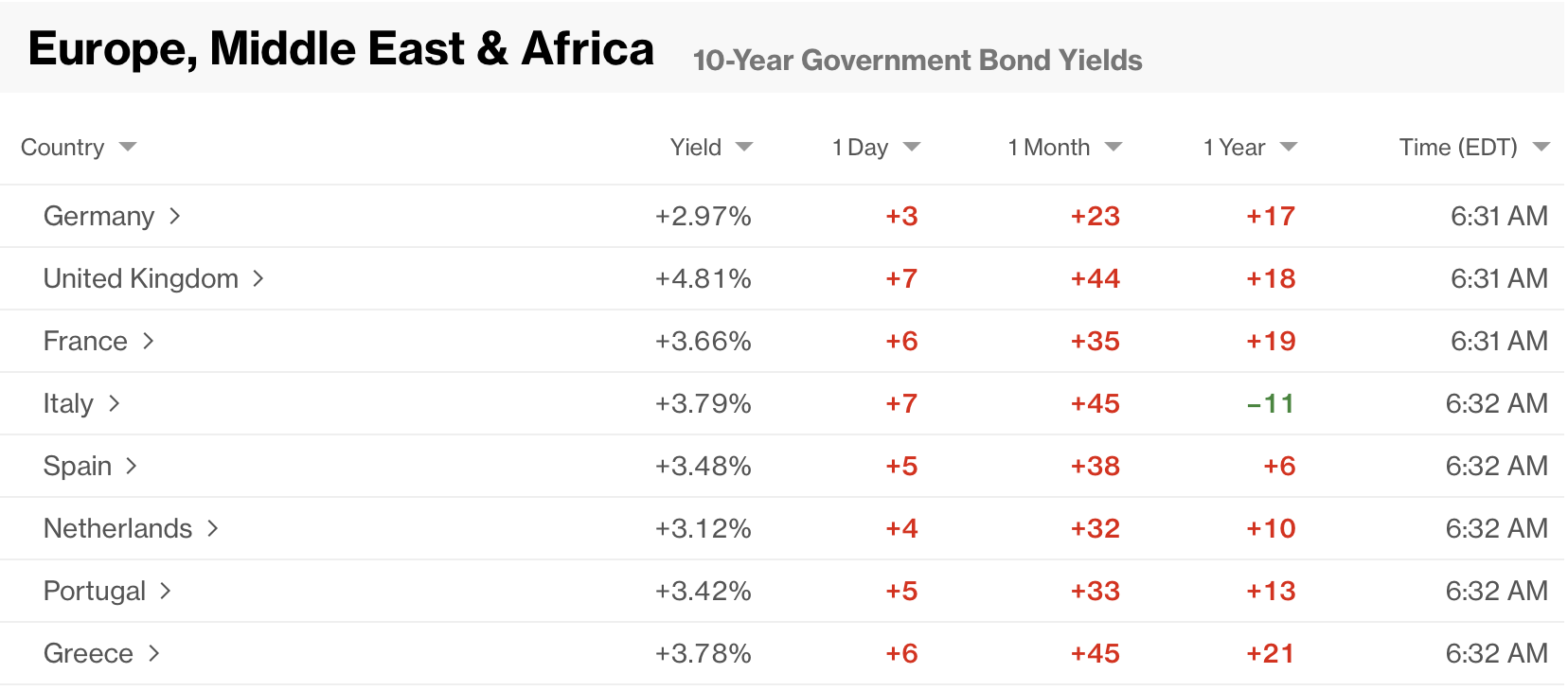
In the bond market, yields are creeping higher all around the world with European sovereign yields higher between 2bps and 4bps this morning.  Perhaps investors are taking Madame Lagarde’s views to heart.  Or perhaps the fallout from the recently released US National Security Strategy, where the US basically dismisses Europe as strategic, has investors concerned that European governments are going to be spending that much more on defense without having the financial wherewithal to do so effectively, thus will be borrowing a lot and driving yields higher.  At this point, European sovereign yields have risen to levels not seen since the Eurozone bond crisis in 2011, but it feels like they have further to climb (see French 10-year OAT yields below from Marketwatch.com).

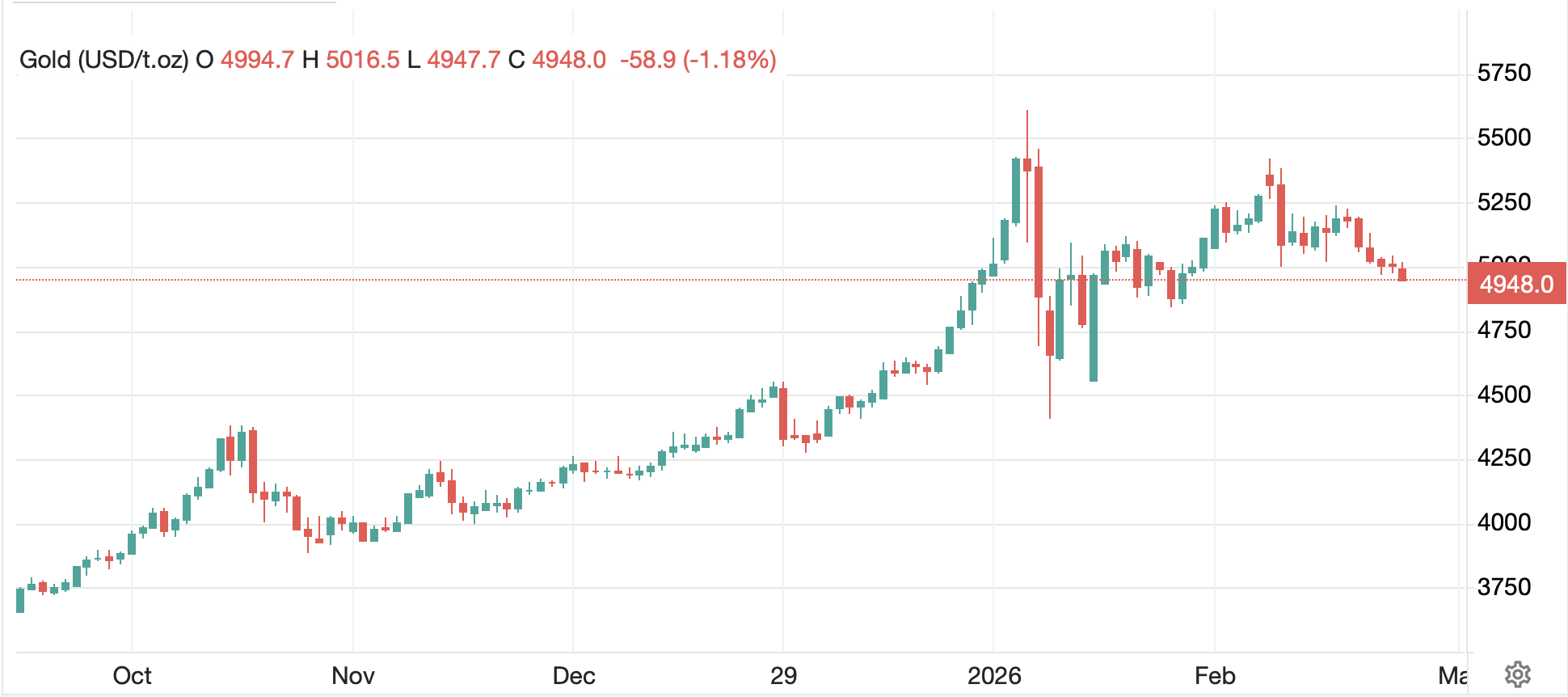
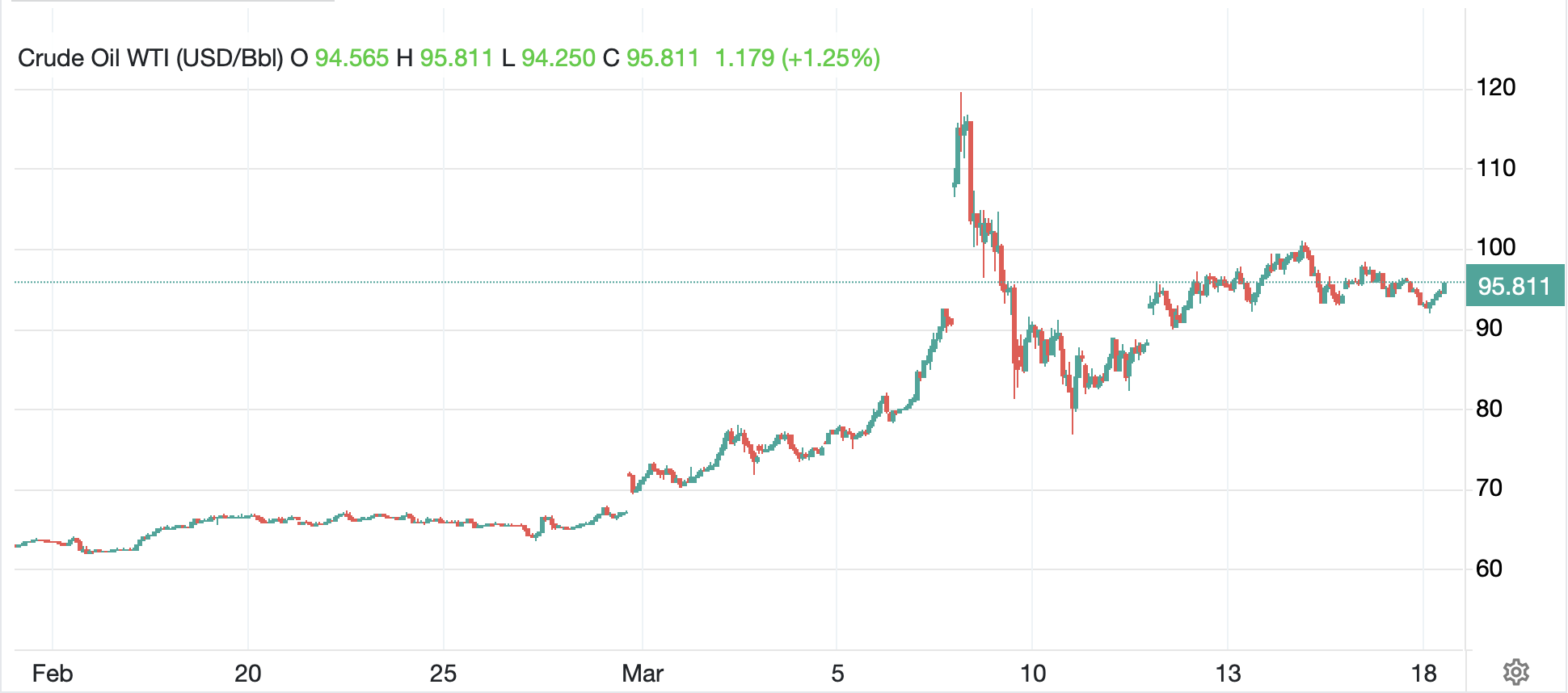
In the commodity market, oil (+0.5%) cannot get out of its own way.  While it is a touch higher this morning, it sits at $58.50/bbl, and that long-term trend remains lower.  We’ve already discussed silver and gold (-0.25%) continues to trade either side of $4200 these days, biding its time for its next move (higher I believe).  Copper (+1.4%) is looking good today, although it is hard to find economic news that is driving today’s price action.

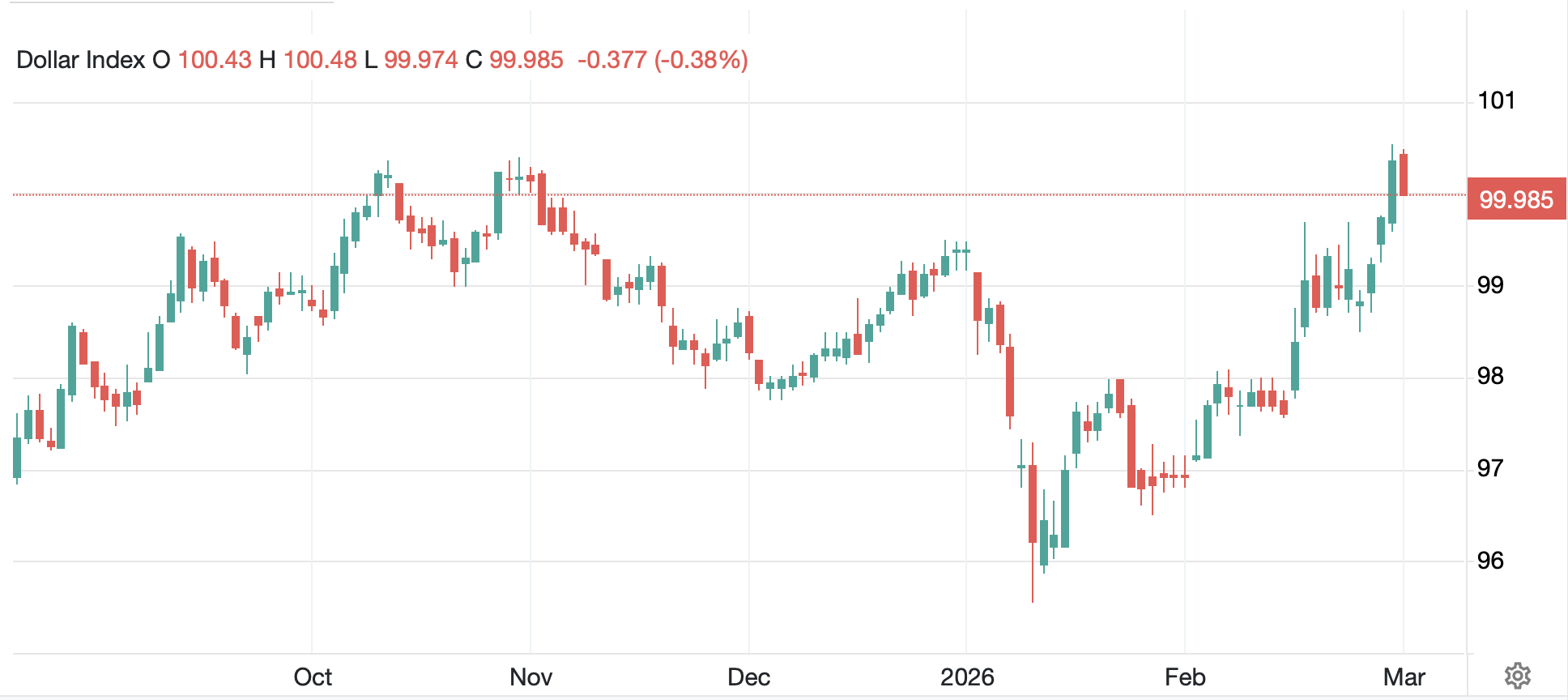
Finally, the dollar is a touch softer this morning, about 0.1% in the DXY as well as virtually every major currency in the G10.  Interestingly, today’s outlier is SEK (+0.4%) which is rallying despite data showing GDP (-0.3%) slipping on the month while IP (-6.6%) fell sharply.  As to the EMG bloc, there is very little movement of note with the biggest news this evening’s Central Bank of Brazil meeting where they are expected to leave their overnight SELIC rate at 15.0% as inflation there, released this morning at a remarkably precise 4.46% continues to run at the top of their target range of 3.0% +/- 1.5%.

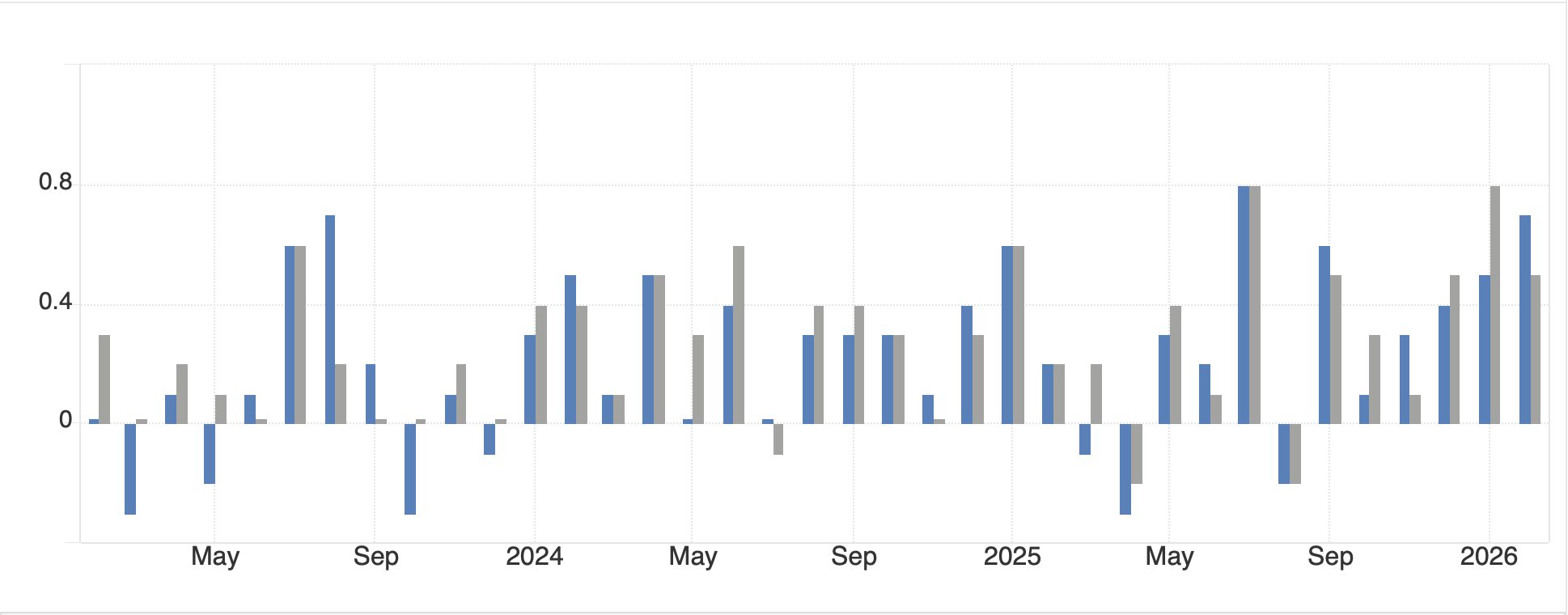
Ahead of the FOMC, we only see the Employment Cost Index (exp 0.9%), a number the Fed watches more closely than the market, and we hear from the BOC who are universally expected to leave Canadian rates on hold at 2.25%.

And that’s really it.  I wouldn’t look for much movement ahead of the 2pm statement release and then the fireworks at 2:30 when Powell speaks can drive things anywhere.  The most compelling story will be the number of dissents on the vote, as there will almost certainly be several.  According to Kalshi, 3 is the majority estimate.  With President Trump continuing to discuss the next Fed chair, I have a feeling there will be 4 and that will be a negative for bonds (higher yields) and a short-term negative for the dollar.  In fact, it is just another reason to hold precious metals.

Good luck

Adf
It Won’t End Well

From Europe, we’re hearing some squawks
They’ve not been included in talks
‘Bout war and Ukraine
So, to inflict pain
They’ve threatened a US detox
 
It seems they believe if they sell
All Treasuries held we would yell
Please stop, it’s too much
And lighten our touch
Methinks, for them, it won’t end well


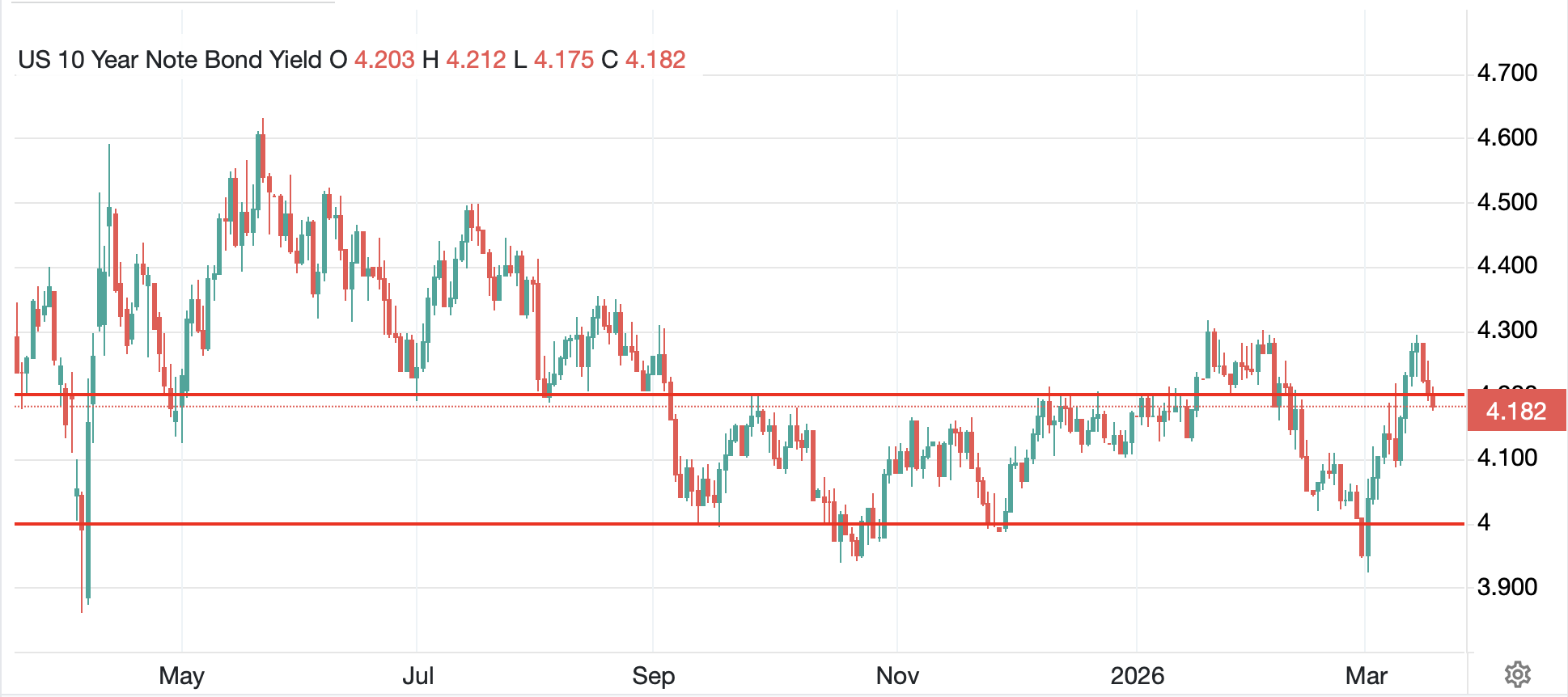
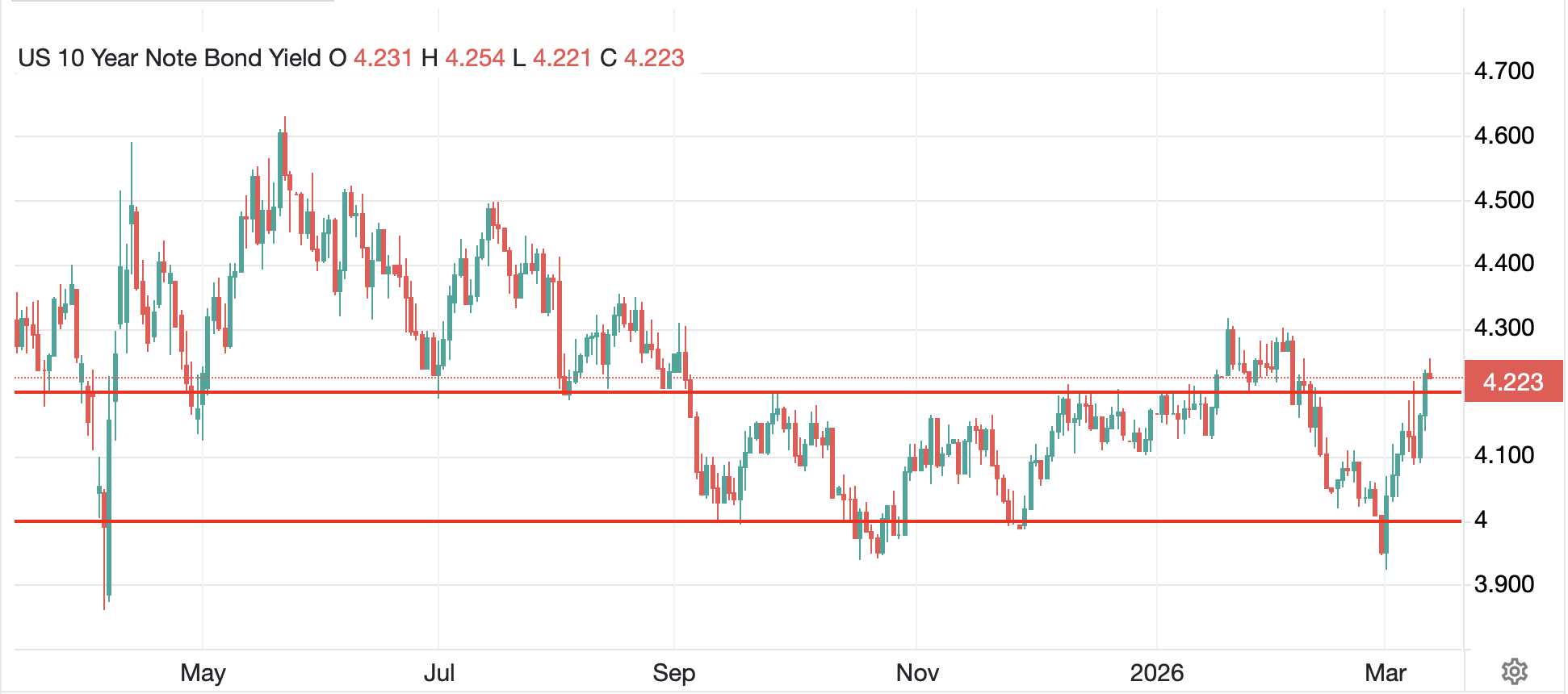
Markets continue to be dull these days.  While we are clearly not in the summer (it is 15° here in NJ this morning), doldrums certainly seem to be descriptive of the current situation.  Equities bounce back and forth each day, neither trading to new highs, nor falling sharply.  The same is true with the dollar, with oil, with gold of late and even, on a slightly longer-term view, of Treasury bonds.  I guess that could be the exception, depending on your horizon, but as you can see from the chart below, it has been several months since 10-year yields have traded outside the 4.0% – 4.2% range.

Source: tradingeconomics.com

Now, much digital ink has been spilled trying to explain that the latest 15bp rise in yields is a signal that the US economy is about to collapse under the weight of its $38+ trillion in debt, but I sense that is more about reporters trying to get clicks on their articles than a reflection of reality.

However, this morning I saw a story that I think is worth discussing, even though it is only a hypothetical.  Making the rounds is the story that Europe and the UK are extremely unhappy with President Trump’s approach to obtaining a peace in Ukraine and so have threatened their so-called ‘nuclear option’ of selling all their Treasury holdings to crash the US bond market and the US economy alongside it.  From what I have seen, if you sum up all the holdings in Europe and the UK it totals $2.3 trillion or so, although it is not clear if that is controlled by the governments, or there are private holdings included.  My strong suspicion is the latter, although I have not yet been able to confirm that.

But let’s assume those holdings are completely under the control of European central banks and governments and they decide that’s what they want to do.  What do you think will happen?  Arguably, much depends on how they go about selling them.  After all, it’s not as though there is anybody, other than the Fed, who can step up and show a bid on the full amount.  So how can they do this?  I figure there are only two viable options:

  1. They can sell them slowly and steadily over time, perhaps $200 billion/day (FYI daily Treasury market volume averages about $900 billion).  That would clearly put significant downward pressure on prices and push yields higher but would likely encourage the hedge fund community to double up on the bond basis trade thus slowing the decline.  However, if they did that for 11 days, US yields would undoubtedly be higher.  Too, remember that if the market started to get unstable, the Fed would step in and absorb whatever amount they deemed necessary to prevent things from getting out of hand.
  • Perhaps, since their ostensible goal is to destabilize the US bond market, they would literally all coordinate their timing and try to sell them all at once.  At that point, since nothing happens in the bond market without the Fed being aware, it would likely have an even smaller impact as the Fed would certainly step in and take down the entire lot.  After all, through QT, their balance sheet has shrunk about $2.3 trillion over the past 18 months, so they have plenty of capacity.

My point is, I believe this is an empty threat, as it seems most European threats tend to be.  Consider that the Eurodollar market remains the major source of funding throughout Europe, and it requires collateral (i.e. Treasury bills and bonds) in order to function.  If Europe no longer had that collateral, it feels like they might have a lot more problems funding anything on the continent.  

Another issue is that if we assume they successfully sell all their Treasuries, that means they will be holding $2.3 trillion in cash.  Exactly what are they going to do with that?  If they convert it into euros and pounds, the dollar will certainly fall sharply, meaning both the euro and pound will rise sharply.  Please explain how that will help their economies and their exporters.  They are getting killed right now because their energy policies have made manufacturing ridiculously expensive.  See how many cars VW or Mercedes sells overseas if the euro rallies 15%.

Now, the article linked above is from the Daily Express, not a website I trust, but they reference a WSJ article.  However, despite searching the Journal, and asking Grok to do the same, I can find no actual article that mentions this idea.  Ostensibly, if you want to search, it came out on December 1st, although if that is the case, why is it only getting press now?

It is a sign of the absence of market news that this is a story at all.  With market participants inhaling deeply so they may hold their breath until 2:00 tomorrow afternoon when the FOMC statement is released, they need something to do.  I guess this was today’s distraction.  As I said above, this is clickbait, not reality.

Ok, let’s tour markets. US equity market slipped a bit yesterday and Asian markets were dull as well with modest gains and losses almost everywhere.  The exception was HK (-1.3%) which suffered based on concern the FOMC will provide a ‘hawkish’ cut tomorrow and that will be the end of the road.  But China (-0.5%) was also soft despite hopes that when the Politburo meets in the next weeks, they will focus on more domestic stimulus (🤣🤣) just like they have been saying for the past three years.  Australia (-0.5%) slipped as the RBA left rates on hold and sounded more hawkish, indicating there were no cuts in the offing.

European bourses are mixed, although starting to lean lower.  The CAC (-0.6%) is the laggard here although Italy and Spain are also softer while Germany (+0.2%) leads the gainers after a slightly better than expected Trade Balance was reported this morning.  The hiccup here is that the balance improved because imports fell (-1.2%) so much more than exports rose (0.1%).  Hardly the sign of economic strength.

We’ve discussed bonds on a big picture basis, and recall, yields rose yesterday in both the US and Europe.  This morning, though, yields are little changed in the US and in Europe, with sovereign yields, if anything slightly lower.  JGB yields also slipped -1bp last night and the big mover was Australia after the RBA, with yields climbing 5bps.

In the commodity markets, while the trend remains slightly lower in oil (+0.3%), as you can see from the chart below, $60/bbl is home.  As I have written before, absent an invasion of Venezuela or peace in Ukraine, it is hard to see what changes this for now.  I guess if China stops filling up its SPR, demand could shrink and that would accelerate the decline.

Source: tradingeconomics.com

In the metals markets, $4200/oz has become gold’s (+0.3%) home lately while silver (+0.9%) has found comfort between $58/oz and $59/oz.  Neither is seeing much in the way of volatility or new interest, but both trends remain strongly higher. 

Finally, the dollar, which rallied a bit yesterday, is little changed this morning.  USDJPY is interesting as it has traded back above 156 this morning, contradicting all that talk of a Japanese repatriation trade.  Again, it is difficult for me to look at the yen chart below and conclude the dollar has peaked.

Source: tradingeconomics.com

Elsewhere in the space, this is one of those days where 0.2% is a major move.  Historically, December is not a time when FX traders are active.

On the data front, the NFIB report rose to 99.0 this morning, its highest reading in three months and the underlying comments showed a modest increase in optimism with many businesses looking to hire more people but having trouble finding qualified candidates.  This is quite a juxtaposition with the narrative that small businesses are firing workers that I have read in several different places and is backed by things like the recent Challenger Gray survey which indicated that US businesses have fired more than 1.1 million workers so far this year.  This lack of clarity is not going to help the FOMC make decisions, that’s for sure.  As to the rest, the ADP Weekly Survey is due to be released as well as JOLTS Job Openings (7.2M) and Leading Indicators (-0.3%) at 10:00.

The very fact that the biggest story I could find was a hypothetical is indicative of the idea that there is nothing going on.  Look for a quiet one as market participants await Powell and friends tomorrow.

Good luck

Adf
Cold Growth

Winter approaches
Both cold weather and cold growth
Plague Japan’s future


It’s not a pretty picture, that’s for sure.  A raft of Japanese data was released early Sunday evening with GDP revised lower (-0.6% Q/Q, -2.6% Y/Y) and as you can see from the Q/Q chart below, it is hard to get excited about prospects there.

Source: tradingeconomics.com

Of course, this is what makes it so difficult to estimate how Ueda-san will act in a little less than two weeks’ time.  On the one hand, inflation remains a problem, currently running at 3.0% and showing no signs of declining.  Recall, the BOJ has a firm 2.0% target, so they are way off base here.  Add to that the fact that inflation in Japan had been virtually zero for the prior 15 years and the population is starting to get antsy.  However, if growth is retreating, how can Ueda-san justify raising rates?

In the meantime, the punditry is having a field day discussing the yen and its broad weakness, although for the past three weeks, it has rebounded some 2% in a steady manner as per the below chart,

Source: tradingeconomics.com

As well, much digital ink has been spilled regarding the 30-year JGB yield which has traded to historic highs as per the below chart from cnbc.com.

There are many pundits who have the view that the Japanese situation is getting out of control.  They cite the massive public debt (240% of GDP), the fact that the BOJ holds 50% of the JGB market, the fact that the yen has declined to its lowest level (highest dollar value) since a brief spike in 1990 and before that since 1986 when it was falling in the wake of the Plaza Accord.

Source: cnbc.com

Add in weakening economic growth and growing tensions with China and you have the makings of a crisis, right?  But ask yourself this, what if this isn’t a crisis, but part of a plan.  Remember, the carry trade remains extant and is unlikely to disappear just because the BOJ raises rates to 0.75% in two weeks.  This means that Japanese investors are still enamored of US assets, notably Treasuries, but also stocks and real estate, as a weakening yen flatters their holdings.  Too, it helps Japanese companies compete more effectively with Chinese competitors who benefit from a too weak renminbi as part of China’s mercantilist model.  Michael Nicoletos, one of the many very smart Substack writers, wrote a very interesting piece on this subject, and I think it is well worth a read.  In the end, none of us know exactly what’s happening but it is not hard to accept that some portion of this theory is correct as well.  The one thing of which I am confident is the end is not nigh.  There is still a long time before things really become problematic.

And the yen?  In the medium term I still think it weakens further, but if the Fed gets very aggressive cutting rates, that will likely result in a short-term rally.  But much lower than USDJPY at 145-150 is hard for me to foresee.

Turning to the other noteworthy news of the evening, the Chinese trade surplus has risen above $1 trillion so far in 2025, with one month left to go in the year.  This is a new record and highlights the fact that despite much talk about the Chinese focusing more on domestic consumption, their entire economic model is mercantilist and so they continue to double down on this feature.  While Chinese exports to the US fell by 29% in November, and about 19% year-to-date, they are still $426 billion.  However, China’s exports to the rest of the world have grown dramatically as follows: Africa 26%, Southeast Asia 14% and Latin America 7.1%.  Too, French president Emanuel Macron just returned from a trip to Beijing, meeting with President Xi, and called out the Chinese for their export policies, indicating that Europe needed to take actions (raise tariffs or restrict access) before European manufacturing completely disappears.  (And you thought only President Trump would suggest such things!)

So, how did markets respond to this?  Well, the CSI 300 rose 0.8% (although HK fell -1.2%) and the renminbi was unchanged.  But I think it is worth looking at the renminbi’s performance vs. other currencies, notably the euro, to understand Monsieur Macron’s concerns.

Source: tradingeconomics.com

It turns out that the CNY has weakened by nearly 7.5% vs. the euro this year, a key driver of the growing Chinese trade surplus with Europe (and now you better understand the Japanese comfort with a weaker JPY).  My observation is that the pressure on Chinese exports is going to continue to grow going forward, especially from the other G10 nations.  Expect to hear more about this through 2026.  It is also why I see the eventual split of a USD/CNY world.

Ok, let’s look around elsewhere to see what happened overnight.  Elsewhere in Asia, things were mixed with Tokyo (+0.2%) up small, Korea (+1.3%) having a solid session along with Taiwan (+1.2%) although India (-0.7%) went the other way.  As to the smaller, regional exchanges, they were mixed with small gains and losses.  In Europe, it is hard to get excited this morning with minimal movement, less than +/- 0.2% across the board.  And at this hour (7:25) US futures are little changed.

In the bond market, yields are continuing to rise around the world.  Treasury yields (+2bps) are actually lagging as Europe (+4bps to +6bps on the continent and the UK) and Japan (+3bps) are all on the way up this morning.  This is Fed week, so perhaps that is part of the story, although the cut is baked in (90% probability).  Perhaps this is a global investor revolt at the fact that there is exactly zero evidence that any government is going to do anything other than spend as much money as they can to ensure that GDP continues to grow.  QE will be making another appearance sooner rather than later, in my view, and on a worldwide basis.

When we see that, commodity prices seem likely to rise even further, at least metals prices will and this morning that is true across the precious metals space (Au +0.3%, Ag +0.3%, Pt +1.2%) although copper is unchanged on the day.  Oil (-1.2%) though is not feeling the love this morning despite growing concerns of a US invasion of Venezuela, ongoing Ukrainian strikes against Russian oil infrastructure and the prospects of central bank rate cuts to stimulate economic activity.  One thing to note in the oil market is that China has been a major buyer lately, filling its own SPR to the brim, so buying far more than they consume.  If that facility is full, then perhaps a key supporter of prices is gone.  I maintain my view that there is plenty of oil around and prices will continue to trend lower as they have been all year as per the below chart.

Source: tradingeconomics.com

Finally, nobody really cares about the FX markets this morning with the DXY exactly unchanged and all major markets, other than KRW (+0.5%) within 0.2% of Friday’s closing levels.  There is a lot of central bank activity upcoming, and I suppose traders are waiting for any sense that things may change.  It is worth noting that a second ECB member, traditional hawk Olli Rehn, was out this morning discussing the potential need for lower rates as Eurozone growth slows further and he becomes less concerned about inflation.  Expect to hear more ECB members say the same thing going forward.

On the data front, things are still messed up from the government shutdown, but here we go:

TuesdayRBA Rate Decision3.6% (unchanged)
 NFIB Small Biz Optimism98.4
 JOLTS Job Openings (Sept)7.2M
WednesdayEmployment Cost Index (Q3)0.9%
 Bank of Canada Rate Decision2.25% (unchanged)
 FOMC Rate Decision3.75% (-25bps)
ThursdayTrade Balance (Sept)-$61.5B
 Initial Claims221K
 Continuing Claims1943K

Source: tradingeconomics.com

There is still a tremendous amount of data that has not been compiled and released and has no date yet to do so.  Of course, once the FOMC meeting is done on Wednesday, we will start to hear from Fed speakers again, and Friday there are three scheduled (Paulson, Hammack and Goolsbee).

As we start a new week, I expect things will be relatively quiet until the Fed on Wednesday and then, if necessary, a new narrative will be created.  Remember, the continuing resolution only goes until late January, so we will need to see some movement by Congress if we are not going to have that crop up again.  In the meantime, there is lots of talk of a Santa rally in stocks and if I am right and ‘run it hot’ is the process going forward, that has legs.  It should help the dollar too.

Good luck

Adf
Nothing is Clear

Though next week the Fed will cut rates
The bond market’s in dire straits
‘Cause nothing is clear
‘Bout growth, and Jay’s fear
Is he’ll miss on both his mandates


In the past week, 10-year Treasury yields have risen 13bps, as per the below chart, even though market pricing of a Fed rate cut continues to hover around 88%.  Much to both the Fed’s and the President’s chagrin, it appears the bond market is less concerned with the level of short-term rates than they are of the macroeconomics of deficit spending, and total debt, as well as the potential for future inflation.

Source: tradingeconomics.com

I don’t think it is appropriate to describe the current bond market as being run by the bond vigilantes, at least not in the US (Japan may be another story) but it is unquestionable that there is a growing level of discomfort in the administration.  This morning, we will see the September PCE data (exp 0.3%, 2.8% Y/Y headline; 0.2% 2.9% Y/Y Core) which will do nothing to comfort those FOMC members who quaintly still believe that inflation matters.

It’s funny, while the President consistently touts how great things are in the economy, both he and Secretary Bessent continue to push hard for lower interest rates, which historically had been a sign of a weak economy.

But as I have highlighted before, the data is so disparate, every analyst can find something to support their pet theory.  For instance, on the employment front, the weak ADP reading on Wednesday indicated that small businesses were under pressure, yet the Initial Claims data yesterday printed at a remarkably low 191K, which on the surface indicates strong labor demand.  Arguably, that print was impacted by the Thanksgiving holiday so some states didn’t get their data in on time, and we will likely see revisions next week.  But revisions are not nearly as impactful as initial headlines.  Nonetheless, for those pushing economic strength, yesterday’s Claims number was catnip.

So, which is it?  Is the economy strong or weak?  My amateur observation is that we no longer have an ‘economy’ but rather we have multiple industrial and business sectors, each with its own dynamics and cycles, some of which are related but others which are independent.  And so, similar to the idea that the inflation rate that is reported is an average of subcomponents, each of which can have very different trajectories than the others (as illustrated in the chart below), the economy writ large is exactly the same.  So, an analogy might be that AI is akin to Hospital Services in the below chart while heavy industry is better represented by the TV’s line.

But, when we look at the Atlanta Fed’s GDPNow forecast below, it continues to show a much stronger economic impulse than the pundits expect.

And quite frankly, if 3.8% is the real growth rate, that is quite strong, certainly relative to the last two decades in the US as evidenced by the below chart I created from FRED data.  The orange line represents 4% and you can see that other than the Covid reopening, we haven’t been at that level for quite a while.

What is the reality?  Everybody has their own reality, just like everybody has their own personal inflation rate.  However, markets have been inclined to believe that the future is bright, which given my ongoing view of every nation ‘running it hot’ makes sense, so keep that in mind regardless of your personal situation.

Ok, let’s look at how markets behaved overnight.  Yesterday’s nondescript day in the US was followed by a mixed Asian session with Tokyo (-1.0%) slipping on concerns that the BOJ is going to raise rates.  I’m not sure why that is news suddenly, but there you go.  However, China (+0.8%), HK (+0.6%), Korea (+1.8%), India (+0.5%) and Taiwan (+0.7%) all continued their recent rallies.  The RBI did cut rates by 25bps, as expected, but that doesn’t seem to have been the driver.  Just good vibes for now.

In Europe, screens are also green this morning, albeit not dramatically so.  Frankfurt (+0.6%) leads the way but Paris (+0.3%), Madrid (+0.2%) and London (+0.1%) are all on the right side of the ledger.  Eurozone growth in Q3 was revised up to 0.3% on the quarter, although that translated into an annual rate of 1.4%, lower than Q2, but the positive revision was enough to get the blood flowing.  That and the idea that European defense companies are going to come back into vogue soon.  And as has been their wont, US futures are higher by 0.2% at this hour (7:35).

In the bond market, Treasury yields are higher by 2bps this morning and European sovereign yields are getting dragged along for the ride, up 1bp to 2bps across the board.  JGB yields also continue to climb and show no sign of stopping at any maturity.  A BOJ rate hike of 25bps is not going to be enough to stop the train of spending and borrowing in Japan, so I imagine there is much further to go here.

In the commodity space, silver (+1.8%) has been getting a lot more press than gold lately as there are ongoing stories about big banks, notably JPM, having large short futures positions that were designed to keep a lid on prices there, but the structural shortage of the metal has started to cause delivery questions on the exchanges all around the world.  So, while it has not yet breached $60/oz, my take is that is the direction and beyond.

Source: tradingeconomics.com

Gold’s (+0.4%) story has been told so many times, it is not nearly as interesting now, central bank buying and broader fiat debasement concerns continue to be the key here.  Copper (+1.8%) is also trading at new highs in London and the demand story here knows no bounds, at least not as long as AI and electrification are part of the mix.  As to oil (-0.25%), it is a dull and boring market and will need to see something of note (regime change in Venezuela or peace in Ukraine seem the most likely stories) to wake it up.

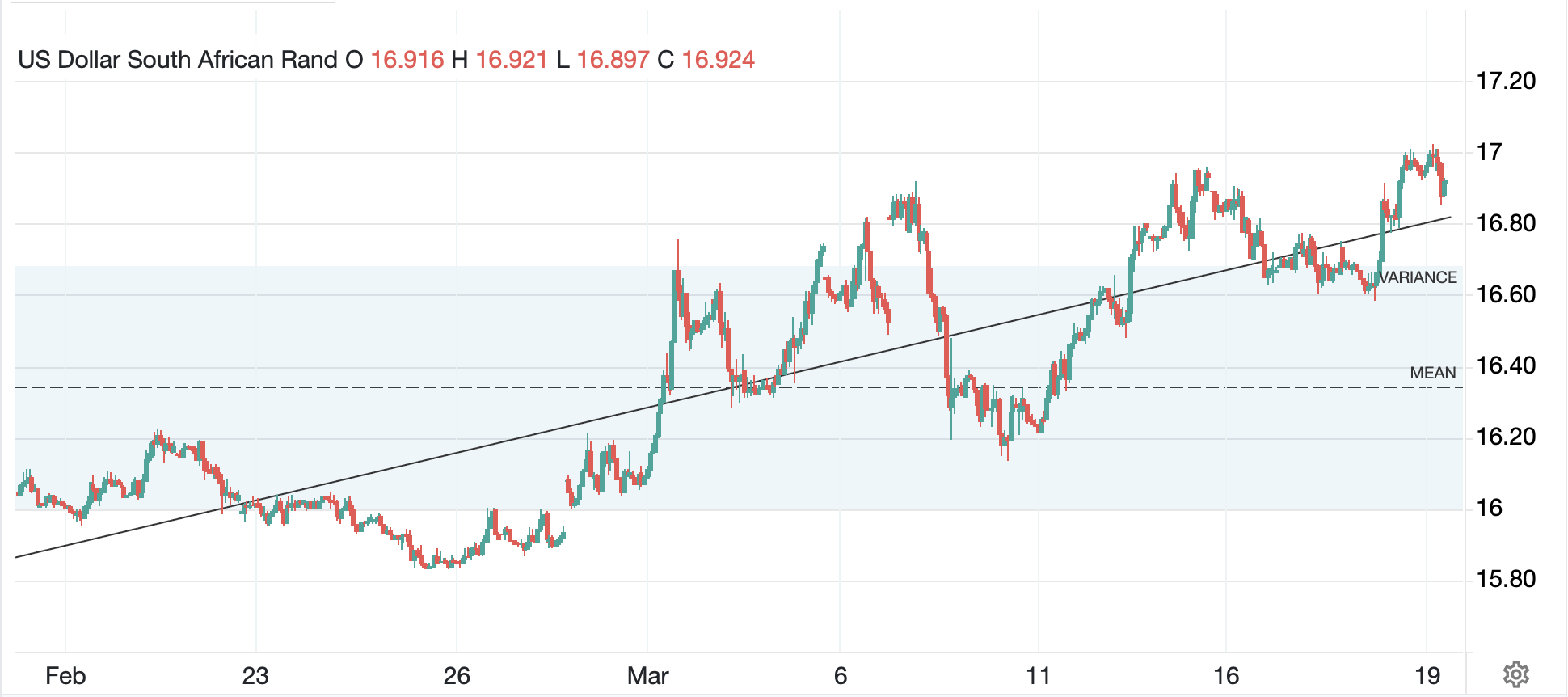
Finally, the dollar is still there.  The DXY is trading at 99, below its recent highs but hardly collapsing.  Looking for any outliers today ZAR (+0.4%) is benefitting from the gold rally (platinum rallying too) but otherwise there is nothing of note.  INR (-0.2%) continues to trade around its new big figure of 90.00, but has stopped falling for now, and everything else is dull.

As well as the PCE data, we get September Personal Income (exp 0.3%), Personal Spending (0.3%) and Michigan Sentiment (52.0) with only the Michigan number current.  We are approaching the end of the year and while with this administration, one can never rule out a black swan, my take is positions are being lightened up starting now, and when the December futures contracts mature, we may see very little of interest until the new year.  In the meantime, nothing has changed my big picture view.  For now, absent a very aggressive FOMC cutting rates, the dollar is still the best of a bad bunch.

Good luck and good weekend

Adf

Splitting More Hairs

The data continues to be
Uncertain, and so what we see
Is both bulls and bears
Just splitting more hairs
Til markets reach their apogee
 
Meanwhile, throughout Europe concern
Is building, that no one did learn
Their energy dreams
Are nought but grift schemes
And growth’s in a long-term downturn


Once again, macroeconomic stories are light on the ground with no overarching theme atop the headlines.  As data continues to be released in the US post the government shutdown, we are seeing a similar pattern as before the shutdown, namely lots of conflicting data.  Yesterday was a perfect example as ADP Employment data was far weaker than expected printing at -32K (exp +10K) and indicative of a slowing economy.  At the same time, ISM Services showed unexpected strength, printing 52.6 with every sub indicator printing higher than last month except prices, which slipped 5 points.  While there was September IP and Capacity Utilization data, given it was so old, it just didn’t seem relevant.  

Depending on your underlying view, it was once again easy to point to recent data and make either the bull case on the economy and stocks or the bear case.  But there’s more.  A look at the last 5 years of ADP data shows a very distinct downward trend in employment as per the below.

Source: tradingeconomics.com

But as with so many things in the economy lately, it is fair to ask if the data we have known in the past is reflective of the current economic situation.  After all, if the Trump administration has deported 500K individuals, and another 1.5 million have self-deported, as the administration claims, it ought not be surprising that employment numbers are declining.  The implication is that population is declining, which would make sense.  So, I ask, does the declining ADP data signal what it did 5 years ago or 10 years ago?  I don’t believe the answer is that straightforward.

One of the things that has concerned me lately is the measurement of GDP.  My thesis has been that counting government spending in Keynes’s equation Y = C + I + G + (X-M) is double counting because, after all, if the government spends money, it goes into the economy and is recorded by the people/companies who receive it.  But perhaps my queasiness over the GDP idea is caused by something else instead, the fact that GDP measures credit creation, not economic activity.  This article by Alasdair Macleod, a pretty well-known economic analyst with a long career observing markets and economies, does an excellent job of identifying some really interesting problems that get accepted and assumed by many in their analysis of the current situation.  

For a while we have all seen, and probably felt, there is a disconnect between the data published and the feeling we get with respect to the current situation.  I highlighted the cost-of-living problem last week with the Michael Green articles.  This is another arrow in the quiver of things are not what they appear and that’s why so many people are so unhappy (even taking away TDS).

For me, where I try to synthesize a market view based on the information available, it is a very difficult time because of all the inconsistencies relative to what I have known in the past.  As well, I am being forced to reconfigure my mental models as the world has changed.  I suggest everyone do the same, as there is no going back to pre-Covid, let alone pre-GFC.

But the US is relatively well-off compared to most of the rest of the G10 as evidenced by this morning’s Eurozone data where Construction PMIs were, in a word, dreadful as can be seen below:

Source: tradingeconomics.com

No matter how you slice it, the fact that every reading is below 50 is a telling statement on the economic situation in Europe.  Adding to this problem is the fact that it appears, the EU, under the guidance(?) of President Ursula von der Leyen, is getting set to force the appropriation of Russian assets that were frozen at the outset of the Ukraine war, an act that Russia has indicated would, itself, be an act of war and they would respond in kind.  The US has unequivocally said they will not defend Europe if that is their decision, although we will continue to sell them weapons.  

For 80 years, NATO has been the defense umbrella allowing Europe to spend their money on butter, not guns.  Despite all the plans of rearmament, if Europe goes down this road, I suspect that there is nothing they can do to defend themselves without the US.  Once again, it is difficult to look at fiat currencies around the world, especially in Europe, and think they have more staying power than the dollar.  

Ok, let’s tour markets.  A solid day in the US was followed by strength virtually across the board in Asia (Japan +2.3%, HK +0.7%, China +0.3%) with the rest of the region +/- 0.3%, so not overwhelmingly positive or negative.  The Japanese outlier was based on news about Fanuc signing a deal with Nvidia to make AI industrial robots and that took the whole tech sector in Tokyo higher.  In Europe, green is also today’s theme as despite the weak data shown above, we started to get the first hints that the ECB may consider rate cuts after all.  While Madame Lagarde has been on her high horse saying there is no need to adjust rates, Piero Cipollone, a board member has highlighted concerns over further potential economic weakness going forward.  I look for others to come to the same conclusion and talk of an ECB cut to start to increase although swaps markets do not yet reflect any changes.  And at this hour (7:40) US futures are pointing slightly higher, 0.15% or so.

In the bond market, Treasury yields are reversing some of yesterday’s modest decline, rising 2bps this morning and that has helped pull European sovereign yields higher by similar amounts across the board.  The one exception here is UK gilts, which given the ongoing weak data seem to be anticipating a greater chance of a BOE cut than before.  in Asia, JGB yields rose 4bps and now sit at 1.93%, a new high for the move, but there is no indication we are near a top.  There is growing confidence the BOJ will hike rates later this month, although I would expect that should help slow the rise as at least it will have a modest impact on inflation readings going forward.

In the commodity markets, oil (+0.5%) continues to chop back and forth making no new ground in either direction.  Stories about peace in Ukraine don’t seem to matter much, nor do stories about a US invasion of Venezuela.  In fact, nothing seems to matter too much to this market other than actual supply and demand, and that seems pretty balanced, at least as evidenced by  the fact that for the past 2+ months, we have gyrated either side of $60/bbl with no impetus in either direction.  (see below)

Source: tradingeconomics.com

Metals markets are slipping a bit this morning (Au -0.25%, Ag -1.8%, Cu -0.6%) but that is simply part of the recent consolidation.  After all, metals have rallied forcefully all year, so taking a breather is no surprise. 

Finally, the dollar is a nonevent today with the most noteworthy story the news that the PBOC fixing last night was 160 pips higher (weaker CNY) than forecast by the market.  As well, there have been several stories that Chinese state-owned banks are buying dollars in the market to help slow down the yuan’s recent appreciation.  I discussed the yuan yesterday so this should be no surprise.  The tension on China to maintain a weak enough currency to support their export industries is huge, so a quick appreciation would be extremely negative for the nation’s trade balance and economic activity.

On the data front, Initial (exp 220K) and Continuing (1960K) Claims lead us off and then Factory Orders from September (0.5%) come at 10:00.  There are still no Fed speakers, so markets remain subject to headline risk, notably from the White House.  As we are in December, my sense is that things will become increasingly uninteresting from a market perspective absent a major new event.  While price action will likely remain choppy, it is hard to see a major directional move until next year.

Good luck

Adf
The American Dream

To aid the American Dream
The most recent Trumpian scheme
Is new Trump Accounts
In proper amounts
To help stocks become more mainstream
 
One likely effect of this act
Is stocks will be forcefully backed
Though problems extant
May come back to haunt
For now, bearish plays will get whacked


Financial market news remains mostly uninspiring these days as the Fed story has largely gone back to a cut is coming next week (89.2% probability) thus the hawkish phase has passed.  AI is still the magical future, while precious metals continue to garner support overall as concerns rise about the ongoing debasement of fiat currencies.  Elsewhere, the war in Ukraine rages on as peace talks in Moscow were described as ‘constructive’ but have yet to resolve the issues.

The other piece of the Fed story, regarding the next Chair, has taken a modest turn as a series of interviews by the finalists in the process (allegedly Hassett, Warsh and Waller) with VP Vance, were suddenly canceled for no apparent reason.  As well, the president continues to hint that Mr Hassett is going to be the one.

But one of President Trump’s strengths is his ability to keep his ideas in the news, and nothing exemplifies that better than the new Trump Accounts.  This is the idea that the government should start investing in the next generation by way of establishing investment accounts in the name of children at birth with $1000 of seed money from the government.  If these accounts are invested in the S&P 500, for instance, with a historically average return of roughly 10%, by the time the child turns 18, the initial investment will have grown more than 5-fold.  As well, these accounts are eligible for additional contributions each year, up to $5000, so can really build some value in that circumstance.  

In addition, the news that Michael and Susan Dell will be donating $6.25 billion to add $250 to those accounts, tax free to the recipient, is another boon.  Estimates are that the total could rise to $4 billion/year of outlays, all of which will be required to go into the stock market.  It’s almost as though President Trump wants the government to support the stock market, but I’m sure that is a secondary consideration!

But away from that, the news has been sparse, so let’s look at market activity overnight.  yesterday’s US session played out like the opening, modest gains, and futures at this hour (7:15) indicate more of the same is on the way today.  In Asia overnight, while Tokyo (+1.1%) had a solid session, China (-0.5%) and HK (-1.3%) were far less fortunate.  Chinese PMI data continues to be soft but perhaps of more import is the fact that the yuan (+0.15%) continues to gradually strengthen, as it has been for the past year (see chart below).

Source: tradingeconomics.com

In fact, the yuan has reached its strongest level since September 2024.  The thing about a strong CNY is that it has definitive negative impacts on Chinese exporters.  While there has been very little discussion of the yuan regarding the trade talks between the US and China, the steady appreciation of the currency will certainly hurt Chinese company earnings, and by extension stock prices there.  One thing to note is that despite its recent strength, the yuan remains undervalued vs. the dollar based on a Real Effective Exchange Rate calculation by the World Bank as per the below chart, with the current USD value at 130.6 while the CNY sits at 113.1.  That is a substantial undervaluation that, if corrected, would likely have a significant impact on the respective economies of each nation as well as, maybe, the political rhetoric.

Elsewhere in the region, India was little changed even though the rupee (-0.4%) traded through 90.00 for the first time as the RBI has decided not to waste more reserves on supporting the currency.  It appears that capital outflows are driving the rupee, but that does not bode well for stocks there.  The rest of the region was mixed with more gainers (Korea, Taiwan, Australia, New Zealand) than laggards (Philippines, Thailand, Malaysia).

In Europe, both Spain (+1.5%) and Italy (+0.7%) are having solid sessions although much of the rest of the continent is less robust.  The story is that European defense companies have benefitted today based on the absence of a peace agreement, although Eurozone inflation readings coming in a tick hotter than forecast have put paid to any idea of an ECB cut anytime soon.

Moving on to bonds, Treasury yields (-3bps) have backed off a touch from highs yesterday and that has dragged European sovereigns down with them, with the entire continent seeing yields decline -1bp or so.  Overnight, JGB yields ticked up another 3bps, to further new highs for the move, as there is no indication that government spending is going to slow down while expectations of a BOJ hike remain in full force.

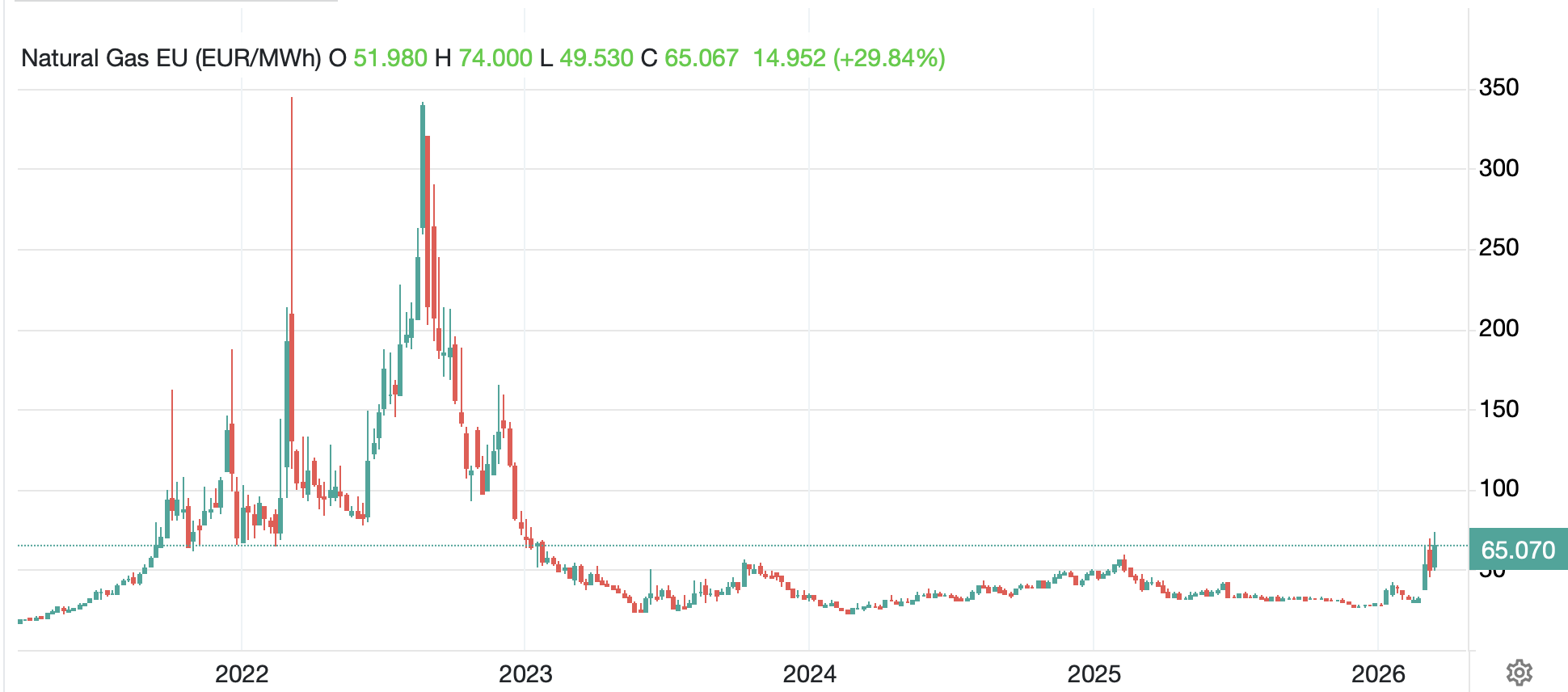
Commodity markets continue to show the most volatility with both oil (+1.3%) and NatGas (+2.3%) rising this morning, the former on the lack of peace talks, the latter on the expanding polar vortex which is driving cold weather in the Northeast.  Too, I would be remiss if I didn’t mention that European demand for US LNG is running at record rates as they try to wean themselves from Russian gas supplies.  FYI, NatGas is back to its highest level since late 2022, where it skyrocketed in the wake of the initial Russian invasion.  In the metals markets, after a bit of profit taking in yesterday’s session, both gold and silver have edged higher by 0.1% this morning as both continue to be accumulated by Asian central banks and Asian investors although Western investors don’t seem to believe in the idea.  Something to note is that silver has risen 102% so far in 2025, that’s a pretty big move!  Copper (+1.45%) has jumped on the back of news that Chinese smelters have reduced activity and inventories at the LME are limited.  Add to that the underlying electrification story, and demand seems likely to be pretty robust for a while yet.

Finally, the dollar is under pressure this morning with the DXY, though still in its range, trading below 99.00 for the first time in 3 weeks.  But looking at actual currencies, the euro (+0.4%), pound (+0.7%), NOK (+0.6%), SEK (+0.5%) and CHF (+0.4%) are all nicely higher this morning.  The rest of the G10 are in a similar state, albeit with slightly smaller gains.  In the EMG bloc, CLP (+0.5%) is climbing on the back of copper’s rise, while the CE3 are all following the euro higher rising in step.  ZAR (+0.1%), BRL (+0.1%) and MXN (+0.2%) are underperforming this morning, likely because the metals markets, other than copper, are underperforming.

Turning to the data, this morning brings ADP Employment (exp 10K), IP (0.0%), Capacity Utilization (77.3%) and then ISM Services (52.1) at 10:00.  Given the IP data is old, I expect ADP to be the number with the most possible influence.  But, given the market is already assuming a cut next week, it would have to be a dramatic negative number to change any views.

The big picture remains the same, run it hot, fiat currency debasement and the dollar should be the best of a bad lot, but on any given day, much can happen that doesn’t fit that story.  Today is one of those days.

Good luck

Adf
Remarkable Fragility

JGB yields have
Risen to multi-year heights
Is this why stocks fell?


Yesterday I highlighted that 10-year JGB yields had risen to their highest level since 2008.  As you can see below, the same is true for 30-year JGBs and essentially the entire curve there.

Source: tradingeconomics.com

Ostensibly, this move was triggered by comments from BOJ Governor Ueda indicating that a rate hike was coming this month.  However, the thing I find more interesting is that this move in JGB yields has become the bête noire of markets, now being blamed for every negative thing that happened yesterday.  

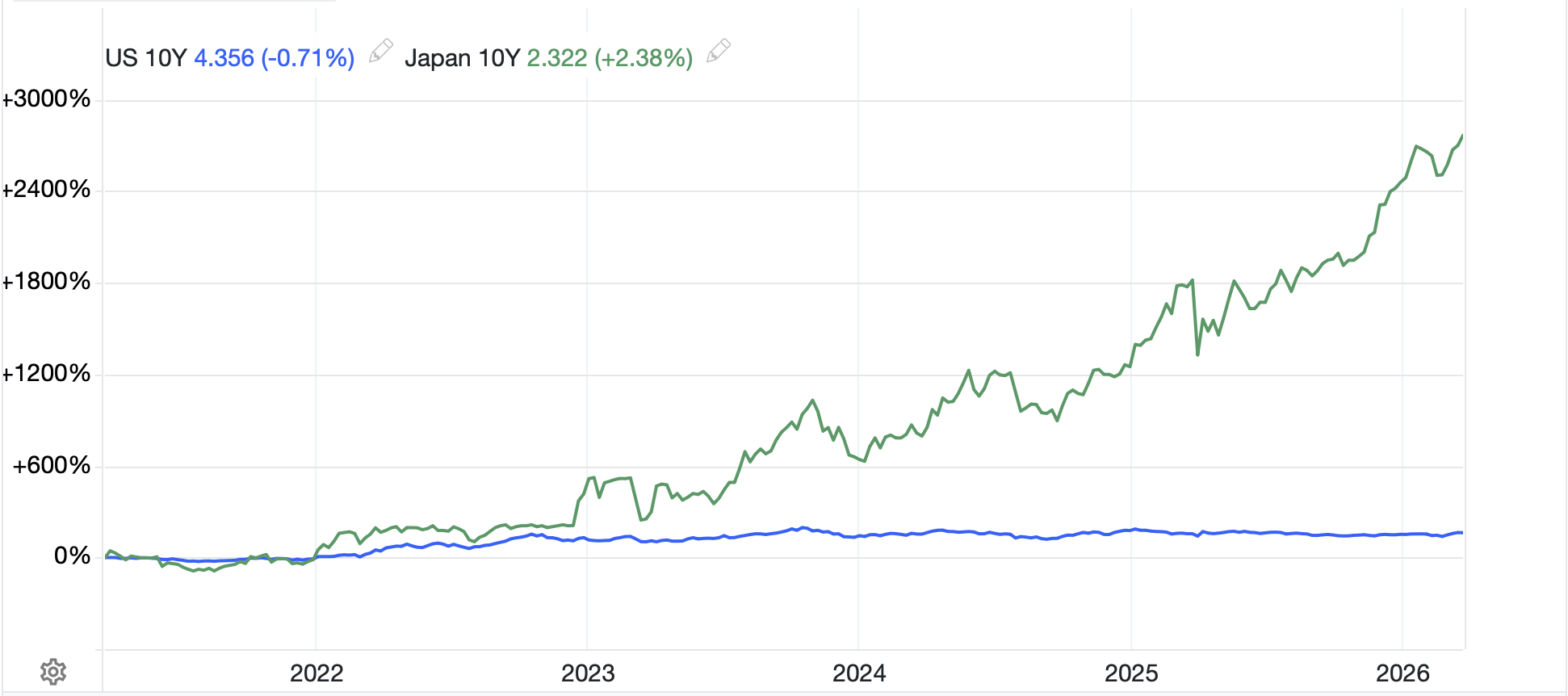
For instance, Treasury yields yesterday rose 7bps despite ISM data indicating that manufacturing activity remains sluggish at best.  In fact, the initial response to that data was that it confirmed the Fed will be cutting rates next week.  But the narrative seems to be that Japanese investors are now willing to repatriate funds, selling Treasuries to buy JGBs, in order to invest locally because they are finally getting paid to do so.  Certainly, looking at the chart above shows that Japanese yields had been tantamount to zero for a long time prior to 2024, and even then, have only started to show any real value in the most recent few months.  Of course, real 10-year yields in Japan remain significantly negative based on the latest inflation reading of 3.0%.  The upshot is, rising JGB yields are deemed the cause of Treasury market weakness.

Turning to risk assets, the story is the same for both stocks (which saw US equities decline across the board yesterday) and cryptocurrencies, notably Bitcoin.  Ostensibly, the rise in yields, and the prospect of a rate hike by the BOJ (to just 0.75% mind you) has been cited as the driver of an unwinding in leveraged trades as hedge funds seek to get ahead of having their funding costs rise thus crimping their margins.  

There is no doubt in my mind that the yen has been a critical funding currency for a wide array of carry trades, that is true.  In fact, that has been the case for several decades.  But is 25 basis points really enough to destroy all the strategies that rely on that process?  If so, it demonstrates a remarkable fragility in markets, and one that portends much worse outcomes going forward.  

If we look at the relationship between Bitcoin and 10-year JGBs, it appears that there has been a significant change in tone.  For the past two months, while JGB yields have continued to climb, BTC has broken its correlation with JGBs and has fallen dramatically instead. (see below chart from tradingeconomics.com). When it comes to crypto, I am confident that leverage levels are higher than anywhere else, in fact that seems part of the attraction, so it should not be as surprising to see something of this nature.  But again, it speaks to a very fragile market situation given there was no discernible change in the Japanese yield trend to drive a Bitcoin adjustment.

The upshot here, too, is that rising JGB yields are claimed to be the reason Bitcoin is declining.  In fact, nearly all the commentary of late seems to be focusing on JGBs as the driver of everything.  While I concede that Japanese yields are an important part of the USDJPY discussion, it is difficult for me to assign them blame for everything else.  I have seen numerous commentators explaining that the Japanese have been selling Treasuries because they don’t trust the US, and this has been ongoing for years.  I have also seen commentators explain that because Japanese surpluses had been invested internationally for years and funding so much of the world’s activity, now that they can invest at home, liquidity everywhere will dry up, and asset prices will fall.  

Responding to the first issue, especially with new PM Sanae Takaichi, I do not believe that is a concern at all.  If anything, I expect that the relationship between the US and Japan will deepen.  As to the second issue, that may have more import but the one thing of which we can be sure is that central banks around the world will not allow liquidity to dry up in any meaningful fashion.  Remember, the Fed ended QT yesterday and it won’t be long before the balance sheet starts to grow again, adding liquidity to the system.  One thing I have learned in my many years observing and trading in markets is, there doesn’t need to be a catalyst for markets to move in an unexpected direction.  Certainly not a big picture catalyst.

And with that, let’s look at how markets responded overnight to yesterday’s risk-off session in the US.  Looking at the bond market first, yesterday’s rise in yields was nearly universal with European sovereigns all following the Treasury market’s lead.  And this morning, across the board sovereigns are higher by 1bp, the same as Treasury yields.  While JGB yields didn’t budge overnight, we did see Australia and other regional yields catch up to yesterday’s rise.  I fear bond investors are stuck as they see the potential for inflation, but they also see weakening economic activity as a moderator there.  As an example, the OECD just reduced its US GDP forecast for 2026 to 2.9% this morning, from 3.2%.  Personally, I don’t think anything has changed the run it hot scenario.

In the equity markets, Asian bourses were mixed with Korea (+1.9%) and Taiwan (+0.8%) the notable gainers while elsewhere movement was much less substantial (Japan 0.0%, HK +0.2%, China -0.4%).  There was no single story driving things there.  As to Europe, things are brighter this morning led by Spain (+1.0%) and Italy (+0.5%) although there is no single driving issue here either.  US futures are edging higher at this hour as well, +0.2%, so perhaps yesterday was more like a little profit taking after last week’s strong rally, than anything else.

In the commodity sector, oil (-0.3%) is slipping after yesterday’s rally.  I suppose the potential peace in Ukraine is bearish, but that story has been dragging on for a while so I’m not sure when it will come to fruition.  In the metals markets, after a gangbusters rally yesterday, with silver trading to $59/oz, we are seeing a modest retracement this morning across the board (Au -0.6%, Ag -1.2%, Pt -2.0%) although copper (+0.4%) is holding its gains.  Nothing indicates that these metals have topped.

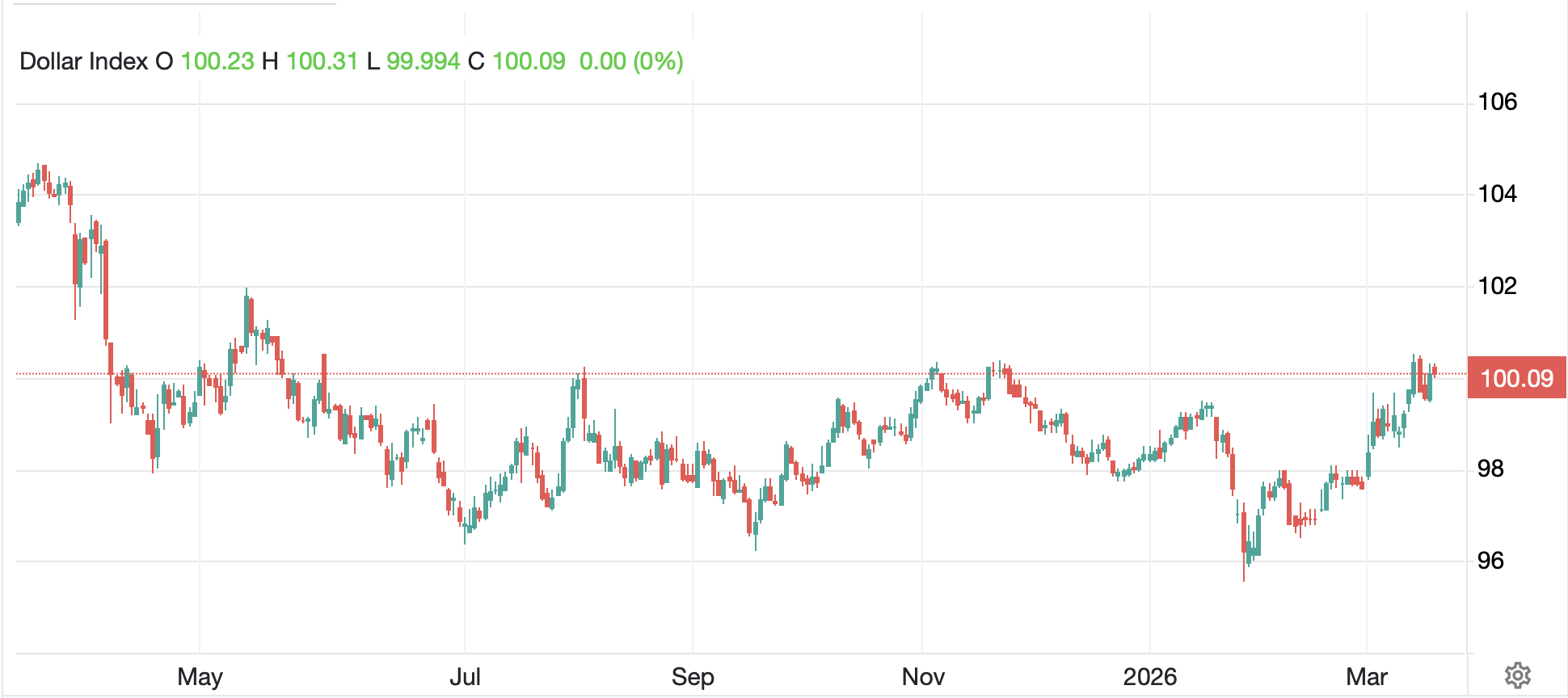
Finally, the dollar is little changed as I write, giving back some early modest strength.  JPY (-0.3%) continues to be amongst the worst performers, and although it has bounced from its recent lows, remains within a few percent of those levels.  My take here is we will need to see both a more aggressive Fed and a more aggressive BOJ to get USDJPY back to 150 even, let alone further than that.  If we look at the DXY, it is sitting at 99.45, and still well within its trading range for the past 6+ months as per the below.  For now, the dollar remains a secondary story.

Source: tradingeconomics.com

On the data front, here’s what comes the rest of this week:

WednesdayADP Employment 10K
 IP0.1%
 Capacity Utilization77.3%
 ISM Services52.1
ThursdayInitial Claims220K
 Continuing Claims1960K
 Trade Balance -$65.5B
FridayPersonal Income (Sep)0.4%
 Personal Spending (Sep)0.4%
 PCE (Sep)0.3% (2.8% Y/Y)
 -ex food & energy0.2% (2.9% Y/Y)
 Michigan Expectations51.2
 Consumer Credit$10.5B

Source: tradingeconomics.com

As the Fed is in its quiet period, there are no Fed speakers until Powell at the presser next week.  Given the age of the PCE data, I don’t see it having much impact.  Rather, ADP and ISM are likely the things that matter most for now.

Ultimately, I believe more liquidity is going to come to the market via central banks around the world, and that will support risk assets, as well as prices for the things we buy.  Nothing has changed in my view of the dollar either.

Good luck

Adf
A Latent Grim Reaper

The zeitgeist, of late, has been leaning
Toward welcoming gov intervening
Because costs have soared
So, folks once abhorred
Like Socialists, seem more well-meaning
 
Perhaps, though, the story’s much deeper
And points to a latent grim reaper
Elites on one side
Claim Trump’s only lied
While Populists serve as gatekeeper


Quite frankly, I feel like markets have become very secondary to an understanding of what is happening in the economy, and while there is intrigue over who may be the next Fed Chair, and correspondingly, if Mr Powell will resign from the FOMC when his chairmanship is up, I believe that pales in comparison to much larger macroeconomic issues with which we all have to deal on a daily basis.  Once again, my weekend reading has highlighted two key pieces that I believe do an excellent job of explaining much of what is going on, not just in the economy, but in the streets.

Last week, I highlighted Michael Green’s piece regarding a new estimate of what the poverty line looks like, putting paid to the idea that the official government level of $31,500 is appropriate, and that in suburban NJ (Caldwell to be exact) it is more like $140K.  Now, you will not be surprised that his piece garnered a great deal of attention given its premise, but I will not go into that.  However, he did write a follow-up piece which is worth reading and where he discusses the reaction.  In brief, whatever number is correct, it is clear that $31.5K is laughably low.   Ultimately, I believe this work has quantified the concept of the “vibecession” which has been making the rounds for a while.  People are allegedly making a decent living and yet are living paycheck to paycheck because the cost of living (not inflation) has risen so remarkably over time and priced many folks out of previously ordinary levels of attainment.

Which brings me to the second key piece I read this weekend, this from Dr Pippa Malmgren, which does a remarkable job explaining how the nation (and not just in the US, but we are more familiar here) has (d)evolved into two groups; Elites and Populists.  The former are the old guard politicians (both Democrats and Republicans), the global organizations like the World Bank, IMF, UN and WEF, and more perniciously in my mind, the so-called deep state.  The latter are personified by President Trump, but include NYC Mayor-elect Mamdani, AfD in Germany, Marine LePen in France and Victor Orban in Hungary, and their followers, to name a few.

The frightening conclusion Dr Malmgren drew was that there is no ability for a nation to continue to operate successfully if the population is split in this manner, and that eventually, one side is going to wind up victorious.  I would say this is the very definition of the 4th Turning and we are living through it.

So, we must ask, what are the potential ramifications from a financial markets perspective with this backdrop?  I have repeatedly highlighted that the Trump administration is going to “run it hot” going forward, meaning the goal will be to increase nominal GDP fast enough to outweigh the inevitable rise in prices.  The idea is if incomes rise quickly enough, people will be able to tolerate rising prices more easily.  

But the one thing of which I am increasingly confident is that prices and their rate of change are going to rise under this scenario.  As central banks leave policy easy, or ease further in an effort to support their respective economies, that is going to be the outcome.  A look at the chart below from the FRED data base of the St Louis Fed shows there is a very strong relationship between CPI and nominal GDP.  In fact, I ran the numbers and the correlation for the past 75 years has been 0.975!  Prices are going to rise friends, alongside M2.

What does this mean?  It means that the debasement of fiat currency is going to continue apace and so commodities, notably precious metals, but also base metals and property are going to be recognized as better stores of wealth.  If you wonder why gold (+0.9%) and silver (+2.2%) are continuing to rocket higher, look no further than this.  What about equities?  For now, I expect they will continue to perform well as all that liquidity will be looking for a home although this morning, not so much as US futures are lower by -0.5% across the board.  Bonds?  This is a tougher call, and I suspect that the yield curve will steepen further as central banks press short rates lower, but inflation undermines long duration fixed income assets.  Finally, the dollar remains, in my view, one of the best of the fiat currencies, but like all of them, will continue to degrade vs. gold and hard assets.

Keeping that in mind, there are two other stories of note this morning, only one of which is impacting markets.  The non-impactful one is that apparently President Trump has selected Kevin Hassett, currently the White House Economic Council Director, as the man to succeed Jay Powell in the chair.  He is a long-time political operative with deep ties in Washington and I presume will get through the vetting and be confirmed on a timely basis.  As I wrote above, it is not clear to me the Fed matters as much as other things in the current environment, although we will continue to hear about it.  In this light, the Fed funds futures market is currently pricing an 87.5% probability of a 25bp cut next week and is back to a 58% probability of a total of 100bps of cuts by the end of 2026 as per the below from the CME.

The other story of note, this one definitely impacting markets, is the news that Ueda-san hinted more definitively at a Japanese rate hike later this month, with Japanese swaps market raising the probability of that hike to 80% from about 60% last week.  The knock-on effects were that 10-year JGB yields jumped 7bps, to 1.86%, their highest level since 2008 and as you can see from the chart below, continue to trend strongly higher.  Of course, given that inflation in Japan remains well above target, it is not that surprising that yields are climbing.  

Too, the other outcome here has been the yen (+0.7%) gaining a little ground, as per the below chart from tradingeconomics.com, and perhaps we have seen a short-term low in the currency.  Certainly, the increasing probability of US rate cuts is weighing on the dollar overall, so that is part of the story, but it remains to be seen if there are going to be wholesale changes in investment allocations that would be necessary to completely reverse the yen’s remarkable weakness over the past nearly four years.

The move in JGB yields has been blamed for the rise in yields around the world with Treasury and European Sovereign yields uniformly higher by 3bps this morning while some other regional Asian yields climbed between 4bps and 6bps.  In the end, inflation remains a problem almost everywhere in the world and I think that is what we are witnessing here.

As well, the JGB move was seen as the cause for Japanese equities’ (-1.9%) very weak performance which also dragged down some other regional markets (Taiwan, Australia, Philippines) but was not enough to undermine the rest of the region.  The flip side of that weakness was China (+1.1%) and HK (+0.7%) where it appears that hopes for a Fed rate cut more than offset weaker than forecast PMI data from China.  Another interesting story from the mainland was that the monthly Housing price data that was compiled by two key private companies was squashed by the Chinese government after China Vanke, one of the largest Chinese property companies, explained they would be late on an interest rate payment.  One can only imagine what that data looked like!

Meanwhile, in Europe, red is the color led by Germany’s DAX (-1.5%) although with weakness across the board (CAC -0.8%, IBEX -0.6%, FTSE MIB -0.9%).  Apparently, the story that progress has been made regarding peace talks in Ukraine is not seen as a positive there.  After all, if there is peace, will European governments still be so keen to build out their military, spending billions of euros at local defense and manufacturing firms?  It seems after a very strong close to the month in November, there is a bit of profit taking underway this morning.

In the commodity space, oil (+1.3%) is bouncing back to its trend line after OPEC confirmed it will not be increasing production in Q1 next year at a meeting yesterday.  I would expect that a real peace deal would be negative for this market as some part of that would be the relaxation of sanctions, I would assume.  But maybe I’m wrong there.  However, I continue to believe the trend is modestly lower going forward as there is far more supply available.  As to the other metals, both copper (+0.6%) and platinum (+1.5%) are continuing their runs higher with no end currently in sight.

Finally, the dollar is softer overall this morning, and while the yen (+0.7%) is the leader, the euro (+0.3%), SEK (+0.3%) and CHF (+0.25%) are also nicely up on the day with the rest of the G10 little changed.  The real movement, though, has been in the EMG bloc with CZK (+0.75%), HUF (+0.5%), PLN (+0.5%), and CLP (+0.4%) all benefitting from the Fed rate cut story as well as Chile’s benefits from copper’s rally.  While a cut seems highly likely, I suspect the real dollar story will be about the dot plot and SEP as well as Powell’s presser next week.

I’ve already run too long so will just mention that ISM Manufacturing (exp 48.9) is due this morning and I will review the week’s data expectations tomorrow.  

The world is changing and I expect that we will continue to see volatility across markets as investors come to grips with those changes, whether simple central bank rate decisions or more complex social movements and electoral outcomes that lead to major policy changes.  Be careful out there.

Good luck

Adf
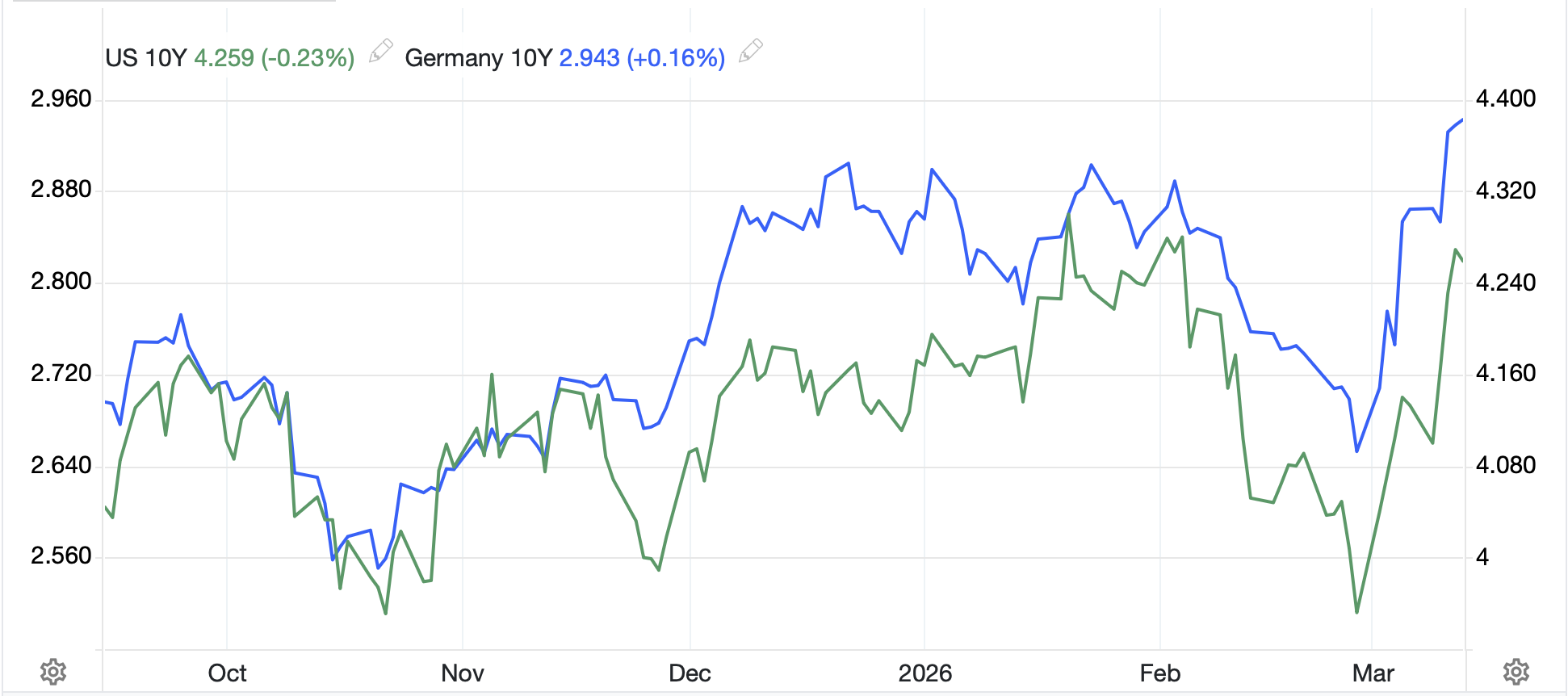
The Narrative’s Turned

Last Friday it certainly seemed
The bears had achieved what they’d dreamed
Most bulls were in hell
As stock markets fell
While bears felt that they’d been redeemed
 
But since then, the narrative’s turned
And short-sellers all have been burned
In fact, round our sphere
Investors all cheer
For Jay to cut rates, Fed hawks spurned


The holiday spirit is alive and well this morning, and in truth has been all week.  And not just in the US, but around the world.  Literally, I am hard-pressed to find a stock market that has declined in the past twenty-four hours, with most on multi-day rallies.  And so, I must wonder, has everything really gotten that much better in the world?

A quick tour around the world of problems extant includes:

  • Russia/Ukraine war
  • Chinese property deflation
  • Net zero insanity
  • TDS
  • K-shaped economies
  • Rise of Socialism
  • Excessive global debt/leverage
  • Cost of living

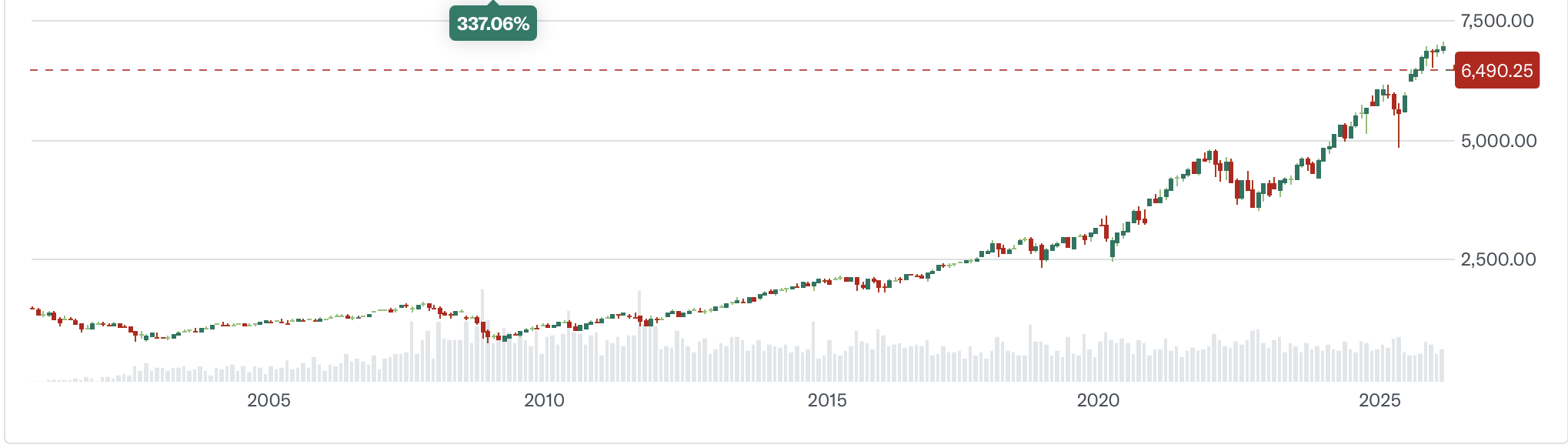
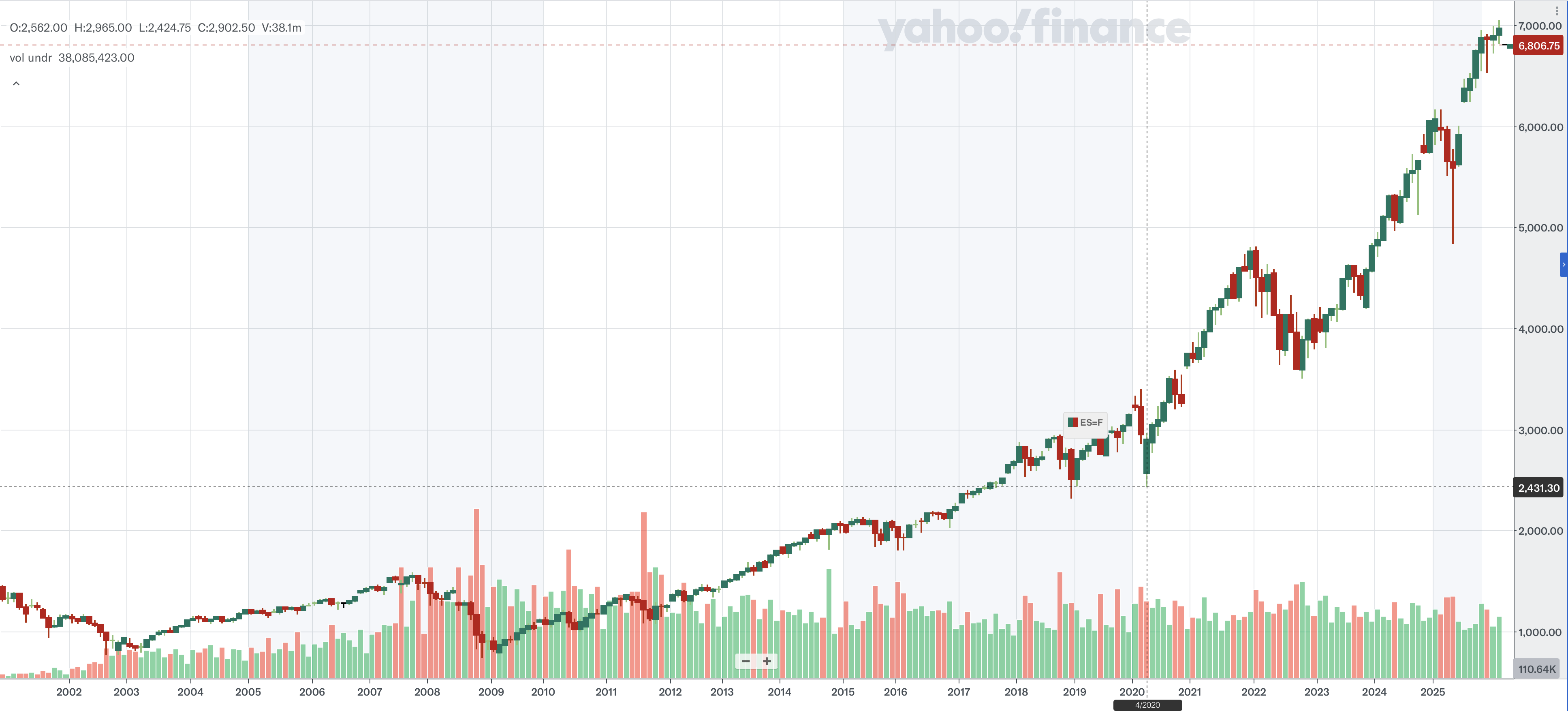
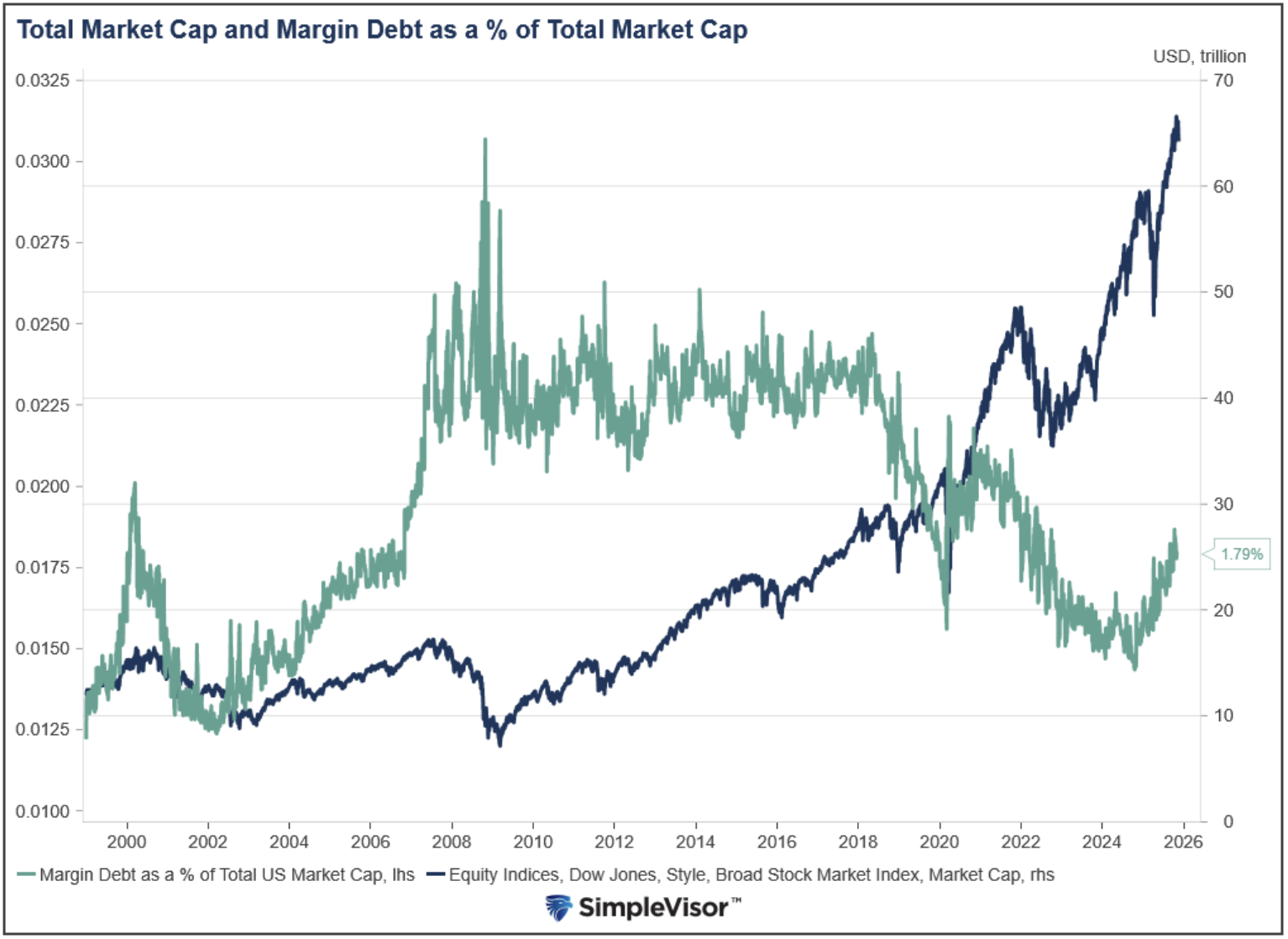
I’m sure there are others, but I just wanted to touch on a few and try to figure out why investors have turned so positive.  After all, a look at the S&P 500 chart below shows that we are less than 2% from the historic highs set back on October 29th.

Source: tradingeconomics.com

So, let’s run through the list.

  • The war in Ukraine continues apace, although we cannot ignore the uptick in ostensible peace talks that have been occurring in the past week.  I’m game to accept those talks as a positive.
  • The Chinese economy continues to overproduce amid weakening domestic demand as property prices show no signs of bottoming.  This is one of the major reasons for the massive global imbalances we have experienced over the past two decades and President Xi has basically proven that they only model he understands is mercantilism.  With President Trump addressing that directly, this will continue to generate uncertainty and volatility, so there will be up days, but also plenty of down ones.
  • The ongoing waste of resources in this Quixotic effort, especially by the Europeans will serve only to further depress their economies while adding debt to pay for their ill-advised policies.  As long as this continues, Europe will be poorer in the future and that doesn’t bode well for their equity markets.
  • Nothing will change TDS but its bifurcation of the population, and not just the US but globally, is likely to be a net negative for everything.
  • The K-shaped economy is a major problem, and not one restricted to the US.  As long as this remains the case, it will breed social unrest, as we continue to see, and have encouraged policies that have proven time and again to be disastrous, but sound good to those in the bottom leg of the K, i.e. Socialism.  I assure you, Socialism will not enhance market capitalization.
  • See above
  • The global debt problem continues to hang over the global economy like the Sword of Damocles, ready to decimate economies with just the right (wrong?) catalyst.  Of course, this is why rate cuts are so favored, and QE more so, but while those may be solutions for government accounts, they will simply exacerbate the last on this list
  • I specifically point to the cost of living since the economists’ concept of inflation, the rate of change of prices, is irrelevant to most people.  The price level is the key, and there is no world where the price level will decline absent a major depression, which is why run it hot is the favored plan.  If growth can be raised sufficiently so that people believe life is affordable again, it will alleviate the K-shaped problem as well as the socialism problem.  But that is a big IF.

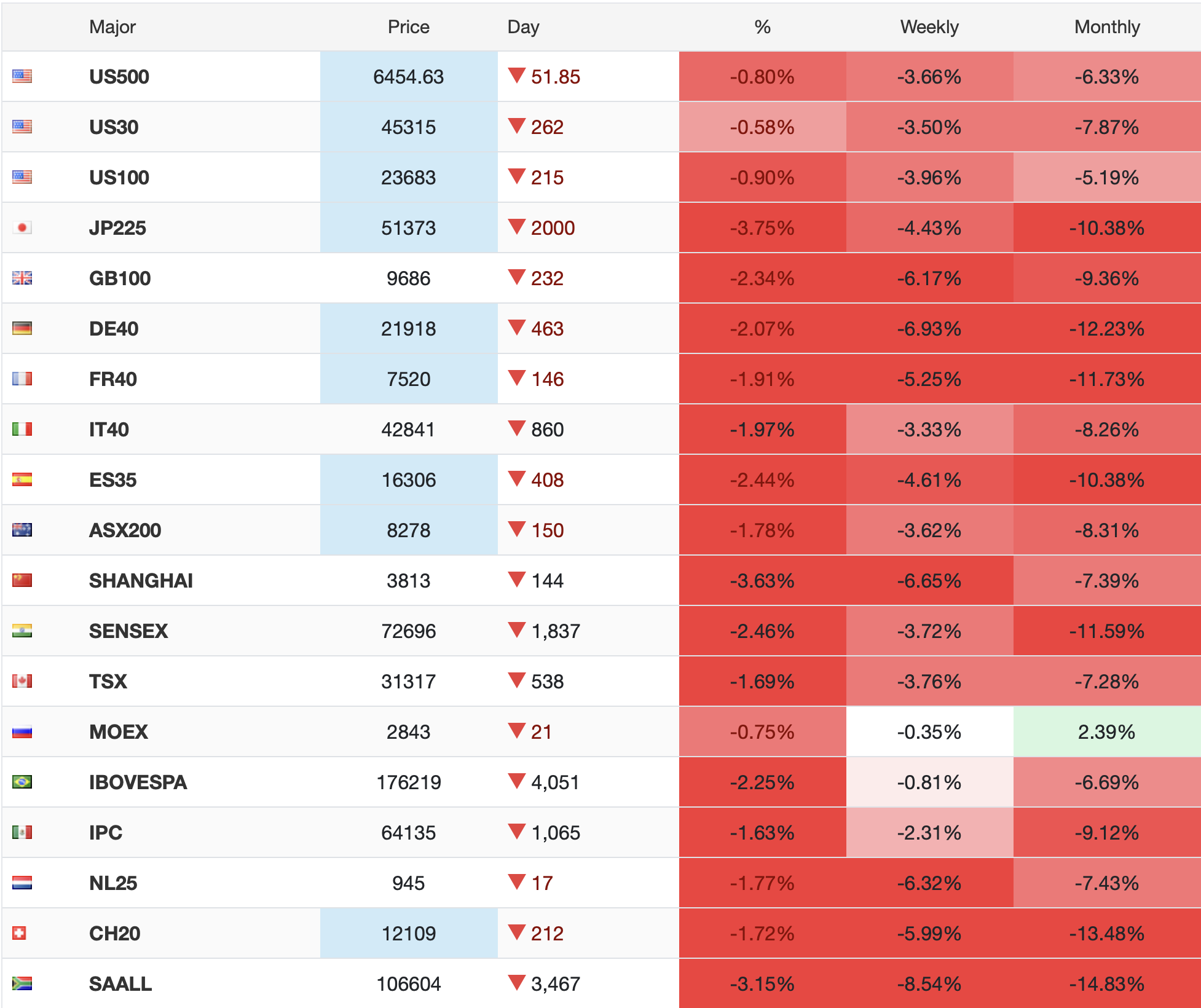
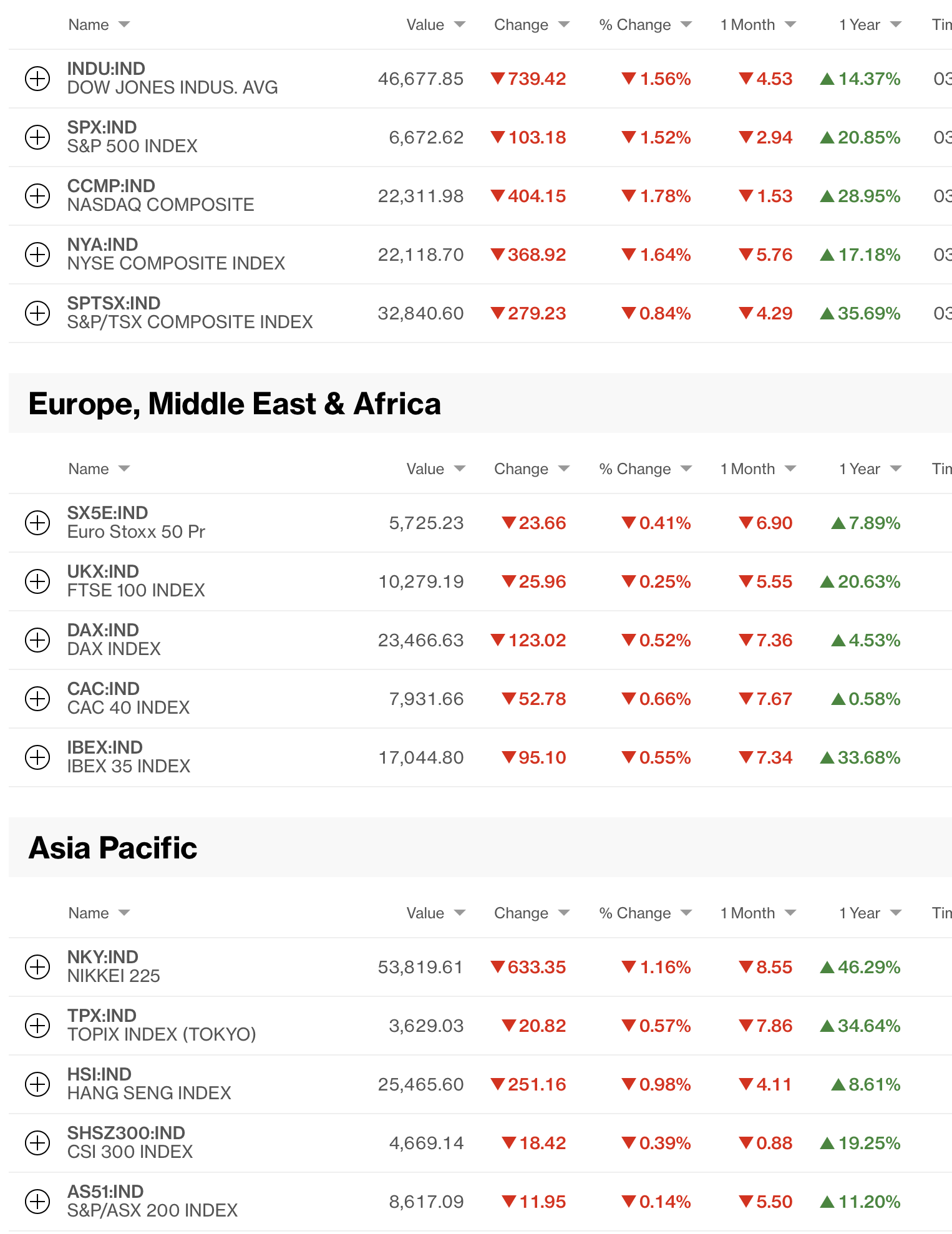
And yet, as you can see from this screenshot from Bloomberg.com, as I type, every market is in the green.

My conclusion is that either investors have grown to believe that the key short-term problems, like Russia/Ukraine will be effectively addressed, or under the guise of YOLO, they are all in on AI and the stock market and see it as the only way forward.  I wish I could be so sanguine, but then I am just an old misanthrope.  I hope they are right!

Ok, well, absent any real new news, and leading up to the Thanksgiving holiday here in the US, market signals are telling me everything is right with the world.  You see the equity markets above, and US futures are higher as well at this hour (7:30), albeit only about 0.2%.  

In the meantime, with risk in such demand, it is no surprise that bond yields are edging higher with Treasuries +2bps, after trading below 4.0% during yesterday’s session on a weak ADP weekly employment report (-13.5K) as well as PPI data that seemed less concerning.  European sovereign yields have all edged higher by 1bp this morning, again synchronous with risk on, and JGB yields also edged higher by 1bp after the government there explained they would be borrowing ¥11.5 trillion (~$73.5 billion) in extra debt to fund Takaichi-san’s supplementary budget.  The big outlier is Australia, where AGBs rose 10bps after CPI rose a hotter than expected 3.8% in October, not only putting paid any thoughts of a further rate cut but bringing rate hikes back into view.

In the commodity markets, oil (-0.2%) continues to slide lower, now below $58/bbl, and following its recent trend as per the below tradingeconomics.com chart.

Javier Blas, the widely respected Bloomberg oil analyst, put out an op-ed this morning explaining that he saw higher oil prices in the future.  That is at odds with my view, but I have linked it here so you can help determine if his reasons make sense.  I believe he underestimates both the impact of technology making it ever cheaper to get oil, and the political incentives to drill for more of the stuff by those nations that have it.  Net zero will not survive much longer in my view.

In the metals markets, prospects for lower interest rates have helped encourage further buying and this morning we see the entire complex higher (Au +0.7%, Ag +1.5%, Cu +1.3%, Pt +1.0%).  To the extent that the leverage story remains, and governments are going to continue to print money to pay their debts, metals prices across both precious and base, should continue to appreciate in price.

Finally, the dollar, which slipped a bit yesterday, is mixed this morning.  the yen (-0.3%) is sliding along with KRW (-0.6%), but really, there seem to be more gainers than that.  The biggest mover was NZD (+0.8%) after the RBNZ cut its base rate, as expected, but indicated the cutting cycle is over.  AUD (+0.3%) has also rallied on that inflation report.  I haven’t focused much on the renminbi (+0.1%) lately, largely because the daily movement is typically small, but if you look at the chart below, you can see that the trend has been steady all year, with CNY appreciating nearly 4% since the beginning of the year.  There are many analyses that indicate the renminbi is massively undervalued, so perhaps this is part of the trade deal with the US.  But it will be difficult for Xi to countenance too much strength as it will negatively impact his mercantilist policies.

Source: tradingeconomics.com

Lastly, the pound is gyrating this morning as Chancellor Rachel Reeves offers her budget.  The highlights are a larger than expected fiscal buffer of £22 billion achieved by raising taxes by more than £29.8 billion on gambling and real estate.  However, the recent history of tax hikes in the UK, as they try to tax the wealthy, is that the wealthy simply leave and the result is tax deficits.  Maybe it really is different this time!

And that’s what we have going into the weekend.  Data today brings September Durable Goods (exp 0.3%, 0.2% ex transport), Initial Claims (225K), Continuing Claims (1975K) and Chicago PMI (44.3).  I see no reason for this recent rebound to end as clearly everybody is feeling good into the holiday.  As I highlighted above, there remain myriad problems around, none of which will be solved soon, but apparently, that doesn’t matter.  So go with it!

There will be no poetry tomorrow or Friday so Monday, we will see how things have evolved.

Good luck and have a great holiday weekend

Adf
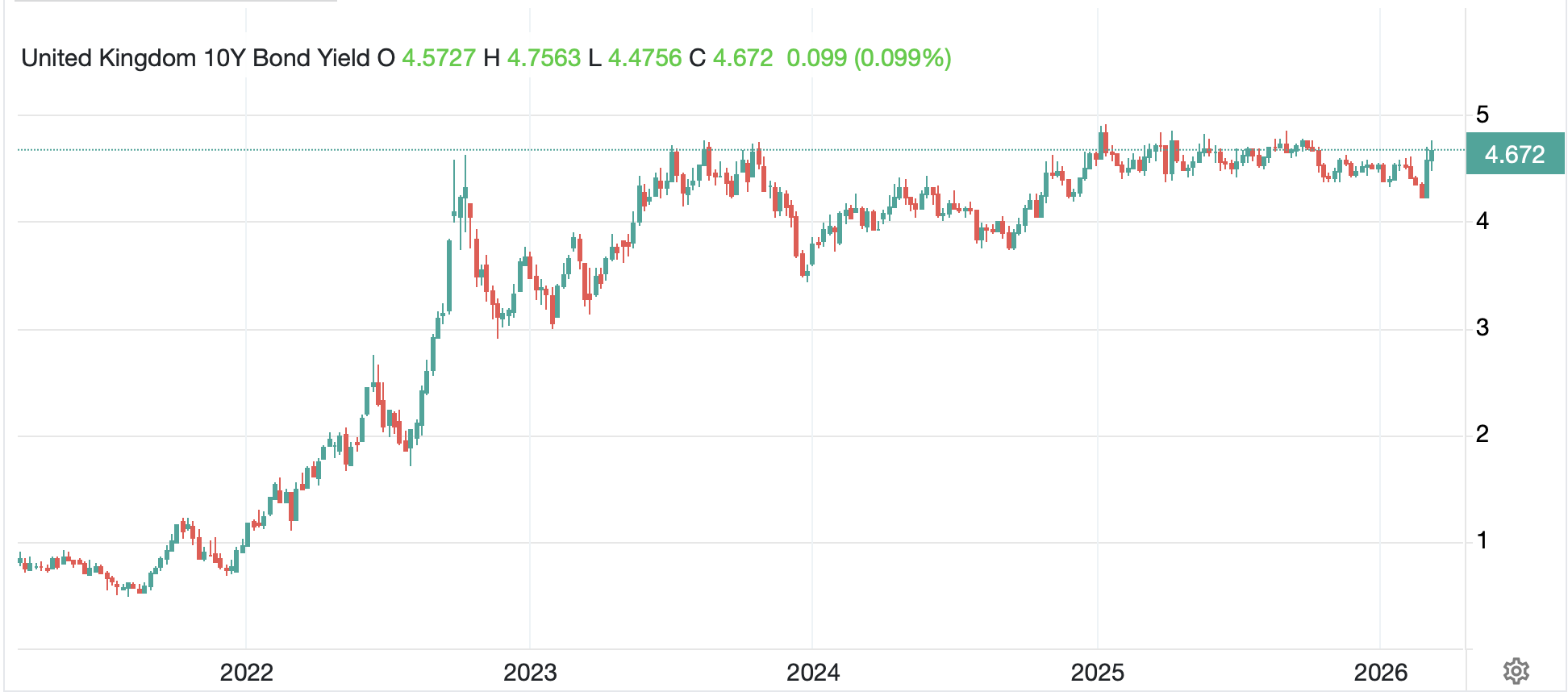
The Whisperer’s Roar

Most focus is still on the Fed
And what every Fed speaker said
But do not ignore
The Whisperer’s roar
That Jay’s got the votes, rates to shred
 
And this is why markets are soaring
While bond vigilantes are snoring
But, too, it’s why gold
Is bought and not sold
The question is, whose ox Jay’s goring?


One thing that is very clear right now, the demand for lower interest rates is extremely widespread, regardless of one’s political persuasion.  People may despise everything that President Trump has done or claims he will do, but those same folks are desperate for him to be able to force the Fed to cut rates further.  At least that’s my observation.  
But putting that aside, the narrative around next month’s FOMC meeting seems to be coming to a clearer point; a cut is in the cards, but a potentially long delay in the next move will follow.  While there were no Fed speakers on the calendar, at least the calendar I use, yesterday, we did hear from two more, the presidents of San Francisco and Boston, and though the former, renowned dove Mary Daly, was far more forthright in her views a cut was appropriate, the latter, centrist Susan Collins, clearly was amenable to the idea, though not forcefully so.  But we know that Chair Powell cares since the Fed Whisperer, Nick Timiraos, got top billing in this morning’s WSJ with the following article, “Fed Chair Powell’s Allies Provide Opening for December Rate Cut.”  

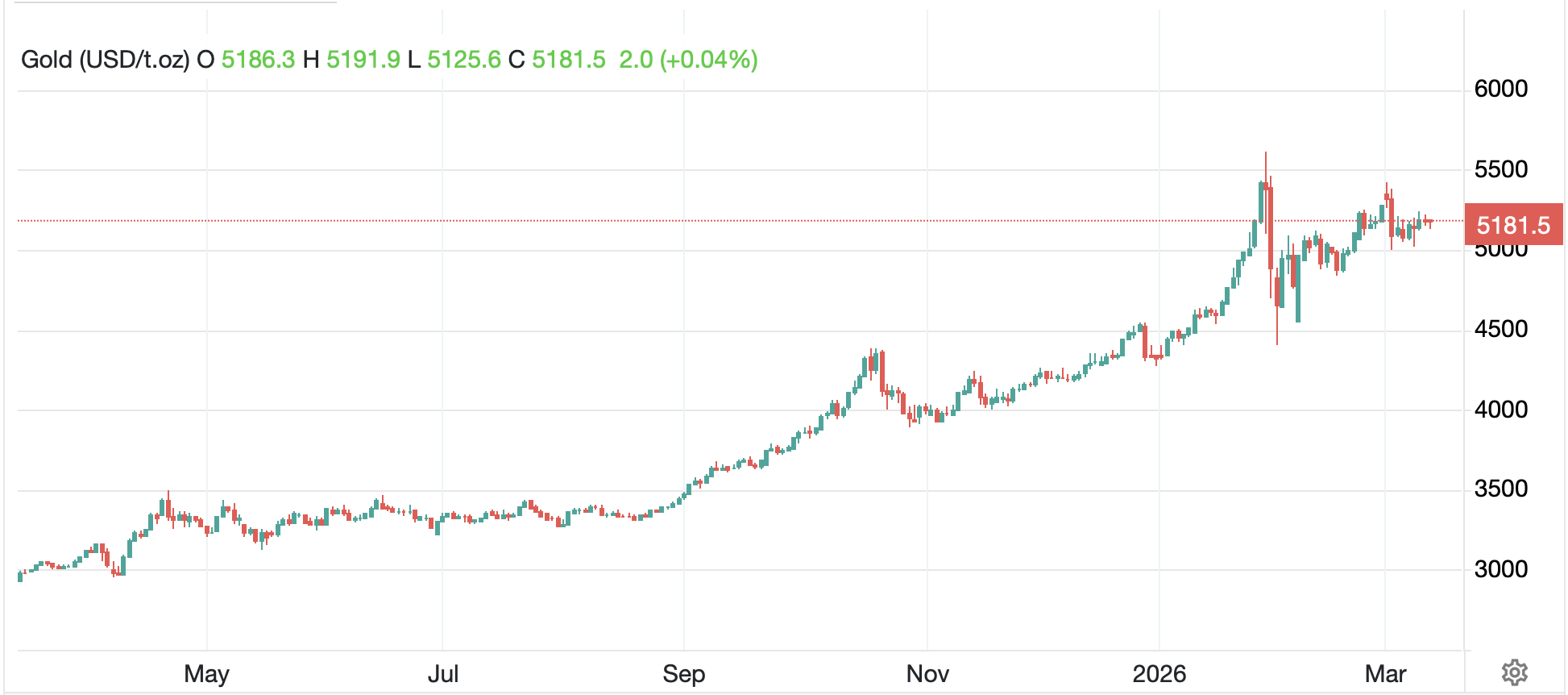
As this story was coming into view yesterday, we saw equity markets rise sharply in the US, or at least the tech portion (the DJIA managed only a 0.4% gain compared to the NASDAQ’s 2.7% jump).  We also have seen the Fed funds futures market up the pricing of a rate cut to 81% as of this morning, with the concerns last week about Powell’s hawkishness quickly forgotten.  One other thing of note was the strong rally in precious metals, with gold (0.0% this morning, +1.8% yesterday) and silver (-0.3% this morning, +2.6% yesterday) responding to the imminent further debasement of the dollar.  While both remain somewhat below their October highs, nothing indicates that their trends higher have ended.

Source: tradingeconomics.com

There continues to be a lot of discussion on two fronts, the state of the economy and the rationale for further equity market gains, and interestingly, they are completely independent discussions.  For the former, the dribs and drabs of data that have been released since the end of the government shutdown have been inconclusive as to what is going on, at least officially.  Yesterday brought nothing new, although this morning we are due to see September data on Retail Sales (exp 0.3%, 0.3% ex autos), PPI (2.7% for both headline and core) and House Prices (+1.4% Case Shiller) along with November Consumer Confidence (93.5, down slightly from last month).  It hardly seems this will change any views

But the market conversation is completely different.  Between talk of a Santa rally, the popping of the AI bubble (assuming there is such a thing) and growing certainty that a Fed cut will help goose the stock market, that economic uncertainty means nothing.  There remains a large swath of investors who are certain the Fed will not allow equity markets to fall in any meaningful fashion and who are prepared to continue to buy the dip.  

Interestingly, the place where these two issues meet, earnings forecasts, shows that while fixed income investors may feel uncertain about the economy’s future, 2026 earnings estimates of 14% growth have equity investors in a very different place.  While I don’t know which side is correct, I suspect that the ‘run it hot’ philosophy which has been driving everything this administration does will favor equities over bonds.  While a correction is still likely in my mind, there is still nothing to stop this train!  

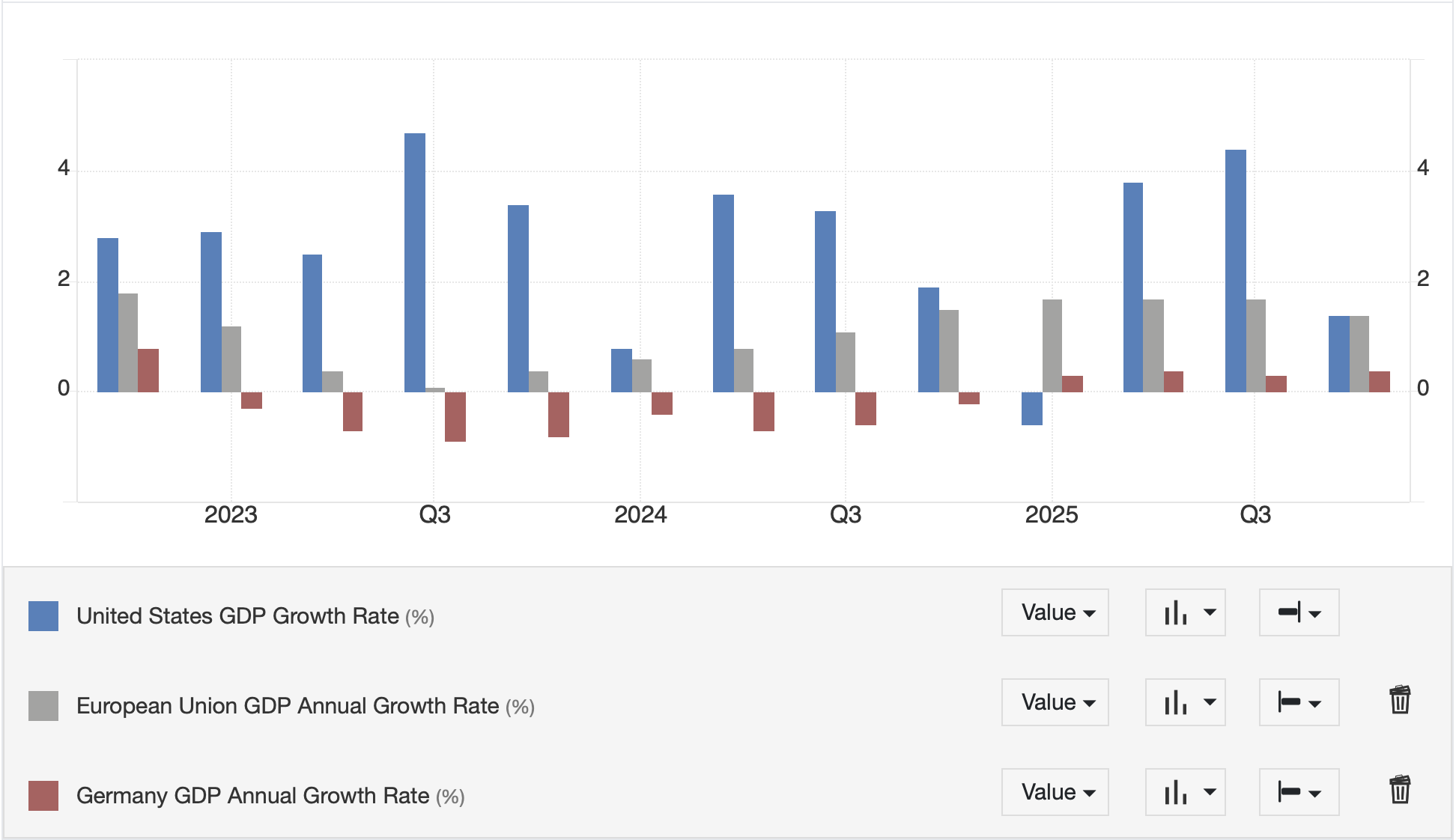
Ok, let’s turn to market performance overnight.  Japan (+0.1%) didn’t love the US tech story, which is somewhat surprising, although that may be because there continues to be growing concern regarding the JGB market and the spat with China.  China (+1.0%) and HK (+0.7%) however, both rallied on the US rate cut plus tech rally story.  Taiwan (+1.5%) and Thailand (+1.3%) also liked that story, but the rest of Asia was nonplussed, and more exchanges saw weakness than strength.  As to Europe, nobody there has a strong view this morning with every major bourse +/- 0.15% or less.  The only data was German GDP, which rose to…0.0% for Q3 and clocked in at +0.3% Y/Y! Look at the history of German economic activity over the past 3 years below and ask yourself if this is the powerhouse of Europe, why would anyone want to own any European assets?

Source: tradingeconomics.com

As well, the increased focus on a potential peace in Ukraine may be a negative for the continent.  While it has the potential to help them on the energy side, much of the rally seen across these nations was predicated on the military buildup that was coming.  However, if there is peace, I sense it will be difficult for a group of nations that are massively in debt to convince their populations to borrow more to defend themselves since the threat has abated.  After all, I’m willing to wager there isn’t a single person in the EU who if given the choice between defense spending for a potential future threat or an increased pension will opt for the former.  As to US futures, at this hour (7:25) they are unchanged.

In the bond market, Treasury yields are unchanged this morning after slipping another few basis points yesterday and are sitting at 4.03%.  Either the market is sanguine about the ongoing federal deficit spending or…everybody assumes the Fed is going to restart QE in some form or another if things start to deteriorate.  European sovereign yields are slipping this morning, down between -1bp and -3bps, with the UK on the larger end despite (because of?) tomorrow’s Budget announcement.  

While you may think the US has a fiscal problem, and it does, at least it has the global reserve currency and with it, the ability to live beyond its means for a long time.  The UK, however, simply has the first part, a fiscal problem, which they have exacerbated by adopting the most idiotic energy policies in the world (who would ever have thought that solar power made sense in the UK given the fact it rains, on average, 50% of the days in the year.)  It is unclear to me what the UK can do to right the ship with the current government and its stated priorities.  I suppose that we will see new regulations requiring UK financial institutions to hold more Gilts as otherwise nobody will buy them.  Before I leave this asset class, I cannot ignore the JGB market where back-end yields continue to climb.  As you can see from the below chart, the 10-, 30-, and 40-year yields are all at record highs and show no signs of stopping their multi-year rise.

Source: tradingeconomics.com

I had a long conversation with Charlie Garcia on Substack, someone you should all follow as he has very sharp ideas, on the causes, ramifications and potential outcomes of this unprecedented rise in yields there.  Needless to say, the end game will not be very good for anyone, but the timing remains in question.  As Keynes warned us all, markets can remain wrong longer than you can remain solvent.  But Japan has its own, unique fiscal problems along with every other nation in the world.

Turning to commodities, oil (-0.3%) continues to be the least interesting thing around, drifting slowly lower, but at an increasingly leisurely pace.  The glut narrative has calmed down, but I think there is more concern over the weakening economic story.  Hard for me to say from the outside, but lower is the direction of travel here.  The opposite is true for NatGas (-3.3%) which despite today’s decline is up 55% since October 16th!

Finally, the dollar is under modest pressure today with both the euro and pound stronger by 0.2%, a move that describes almost the entire G10.  One outlier here is NOK (-0.2%) which is clearly suffering on oil’s ongoing weakness.  In the EMG bloc, though, there has been more substantial movement with KRW (+0.7%) rising as traders position for the BOK to remain on hold while the Fed gets ready to cut, thus reversing some of the recent 7% decline in the won over the past quarter.  The CE3 have also rallied nicely, on the order of 0.5%, as they continue to demonstrate their excessive beta with the euro and even CNY (+0.3%) is moving this morning on the back of a potential thaw in relations between the US and China after Presidents Xi and Trump spoke by phone yesterday.  While my long-term perspective on the dollar remains positive, if the Fed does get aggressive, the greenback can certainly come under short-term pressure.

And that’s really all there is today.  With Thanksgiving coming, I expect that volumes will begin to decline so keep that in mind when trying to execute any trades.

Good luck

Adf