Soon Will Feel Pain

The future arrived yesterday
As Amazon’s cloud went astray
Along the East Coast
Much business was toast
The question is, who’s forced to pay?
 
Meanwhile, contradictions remain
In markets, which rose once again
Both havens and risk
Have seen, buying, brisk
I fear one side soon will feel pain


Arguably, the biggest story yesterday was the outage of Amazon Web Services on the East Coast yesterday morning with the impact dragging through the day.  Apparently a supposedly minor code update had an error of some sort, and that was all it took.  For every business that has been convinced that it is much cheaper and more efficient to move their computing capacity to the ‘cloud’ (and it certainly is on a daily operating basis), this is the risk being taken.  Ease and convenience are wonderful when they are there, but businesses are inherently more fragile because of the movement.  I guess the finance question comes down to how much do businesses save by outsourcing their computing vs. how much does it cost when those systems go down?

I am sure there will be lawsuits galore vs. Amazon for recompense.  I have no idea what the AWS contract looks like, and if they leave themselves an out for situations like this, a sort of force majeure, but you can bet we will hear a lot about it going forward.  Interestingly, Amazon’s stock price rose 1.6% yesterday despite the issue.  Clearly nobody is worried yet.

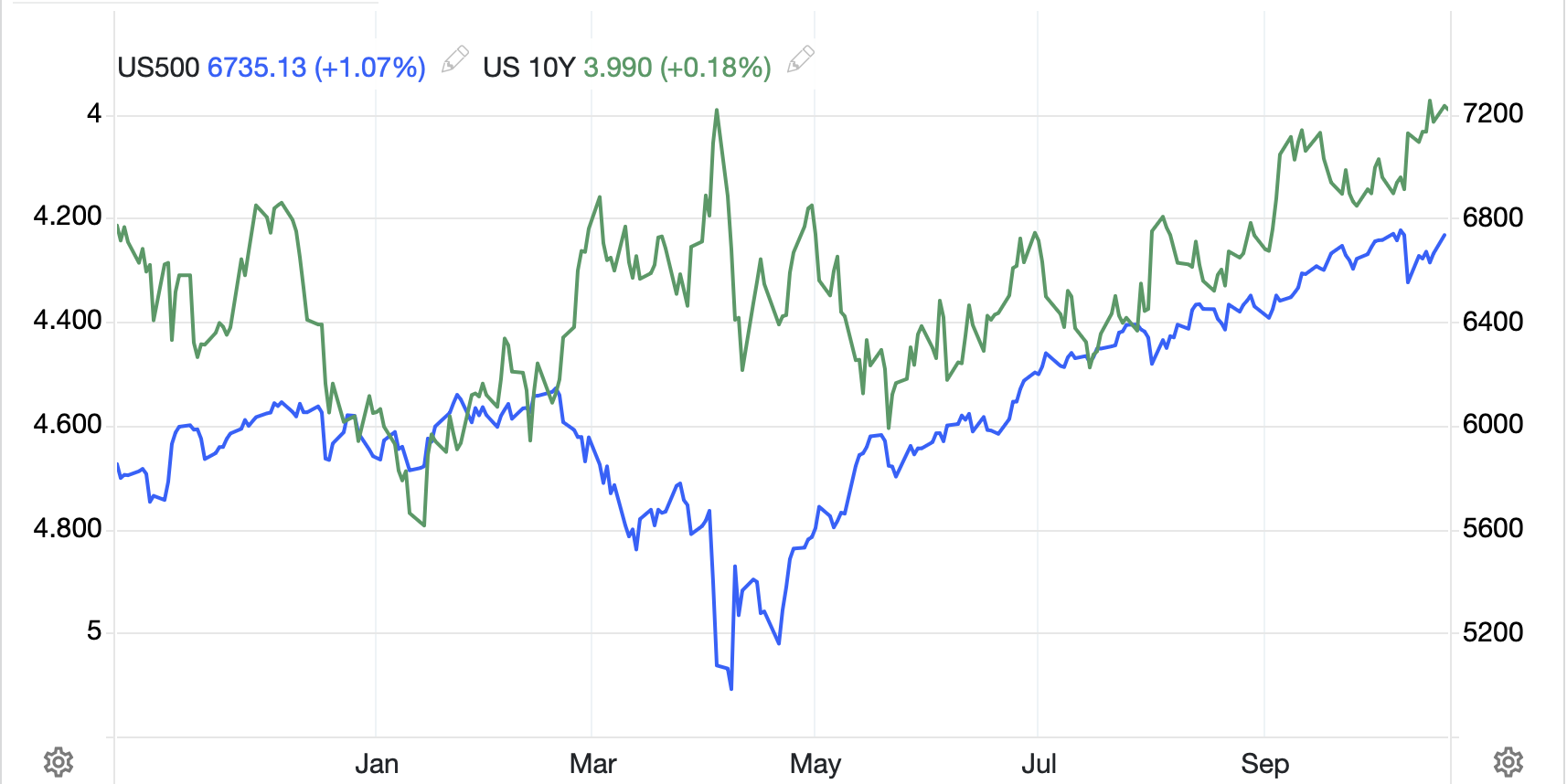
Speaking of rising stock prices, I continue to observe the ongoing equity rally alongside the ongoing bond market rally and wonder.  As you can see from the chart below, for the past three to four months, the S&P 500 has rallied alongside 10-year bonds (yields falling as the price rose).  For a very long time, those two markets were negatively correlated.  In fact, that was the very genesis of the 60:40 portfolio being a lower risk way to remain invested.  

The thesis was when stocks were rallying (the 60), things were good and while yields might rise, the gain in stocks would outperform the loss in bonds.  Meanwhile, in tough times, when stocks suffered declines, bonds would rally to mitigate some of the losses.  But lately, the two have traded synchronously.

Source: tradingeconomics.com

Perhaps, if we zoom out a little further, though, and look at this behavior over the past five years, we can make an observation.  Here is the same chart since late 2020.

Source: tradingeconomics.com

Now, who can remember anything that changed in 2022 in the economy?  That’s right, inflation re-entered the conversation in a very big way.  It turns out that the 60:40 portfolio, and all its adjuncts, like risk parity and volatility targeting, were all designed when inflation was low and stable.  But it appears that once inflation moves above the 3% level, the correlation that was the underlying basis of all those strategies flips.  I’m sure you all remember how awful 2022 was for most investors with both stocks and bonds showing negative returns.  As inflation continues to rise, and there is no reason to expect it to stop that I can see, be prepared for 2022 redux going forward.  Maybe not quite as dramatic, but similar directionally.

The one thing that can change that would be the reintroduction of QE or YCC or whatever they decide to call it, as that would, by definition, prevent bonds from selling off dramatically.  Of course, that will only stoke the inflationary fires, so there will still be many issues to address.

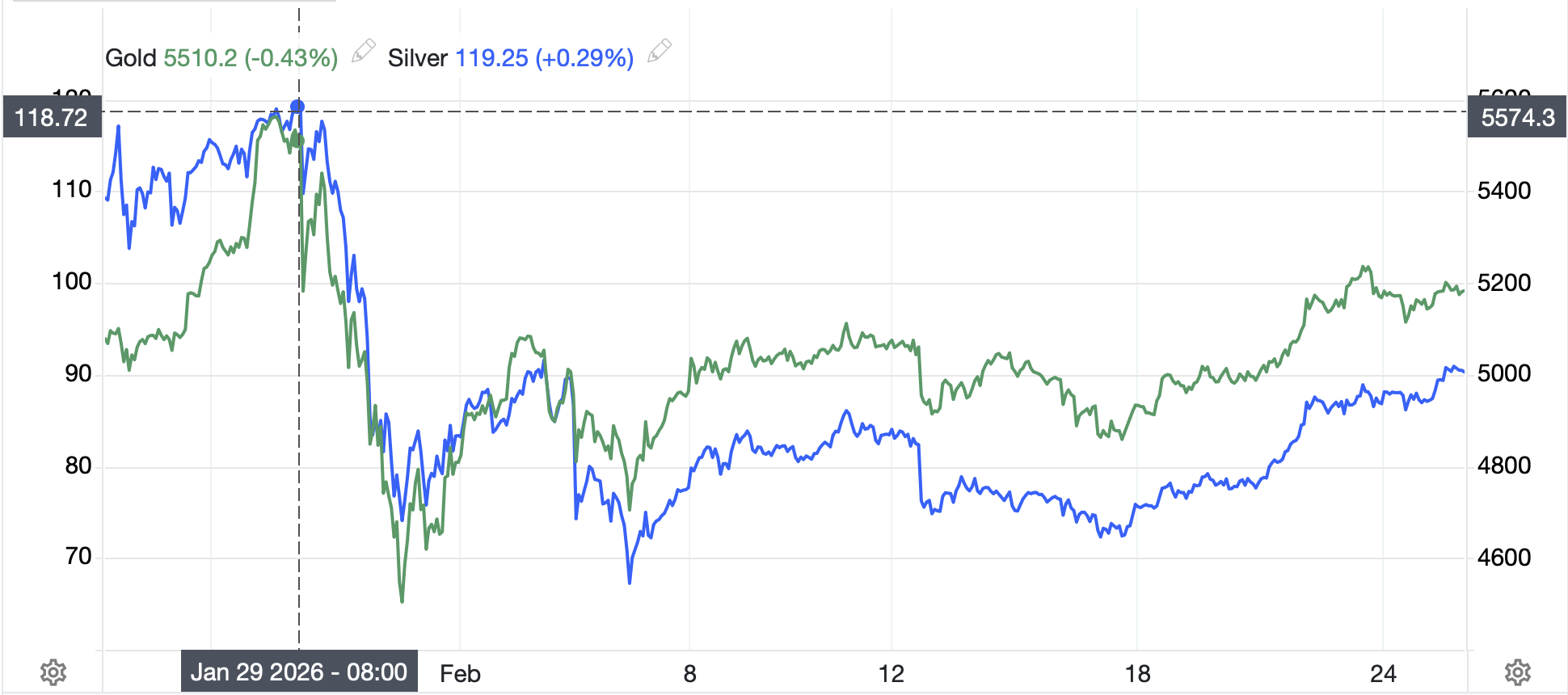
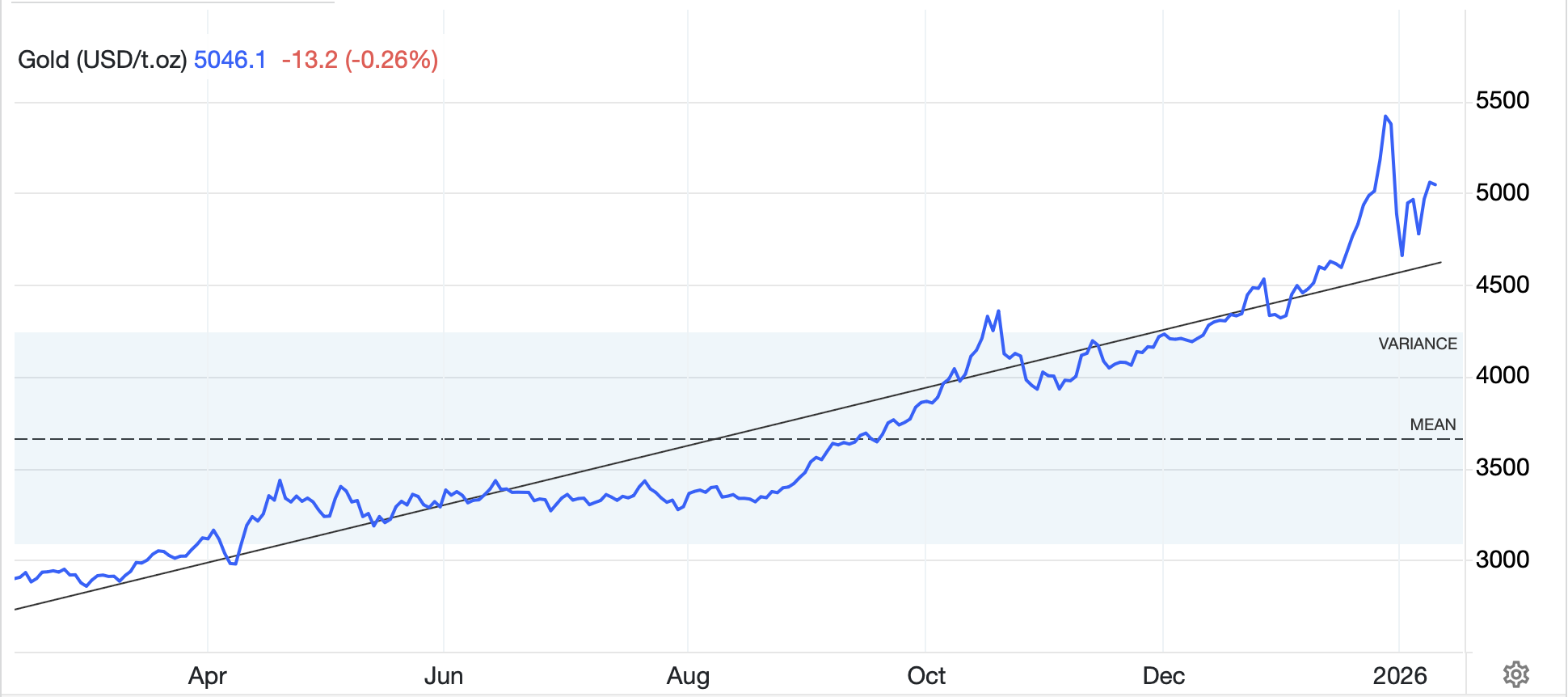
In the meantime, let’s see how markets behaved overnight, with the truly noticeable movement continuing in the precious metals space.  Markets are funny things, with the ability to move very far very quickly for no apparent reason.  With that in mind, a case can certainly be made that there is a serious amount of intervention in the precious metals markets lately.  While I am not expert in these markets, I am well aware of the stories that there are a number of major banks, JPM among them, that are running large short positions in these metals and have been charged with preventing the prices rising too far.  The concern seems to be the signal that a runaway gold or silver price would be to markets and people in general.  Last Friday was a major option expiration in the SLV contract and it was remarkable to see the price of silver tumble below a number of large open strike prices. Seemingly to prevent calls to deliver.  A look at the chart below, showing how quickly the price declined into the close, and it is easy to understand the genesis of those conspiracy theories.

Source: tradingeconomics.com

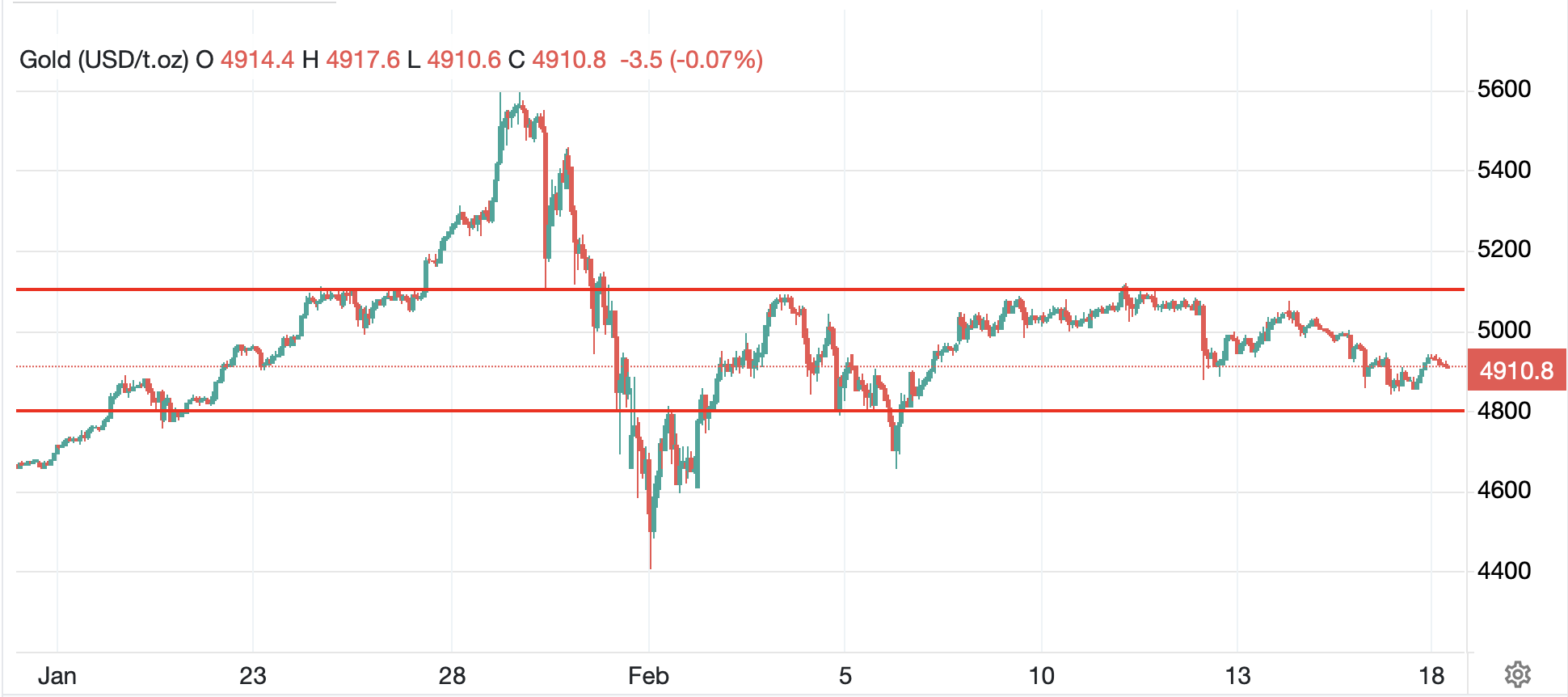
Yesterday, the metals all rallied nicely, but this morning, they are all, once again, under severe pressure (Au -2.2%, Ag -4.1%, Cu -1.5%, Pt -4.3%).  Generally, I follow the precious metals as a signal of overall market sentiment, as I believe they are better indicators of fear than bonds.  But I cannot get these movements out of my head as straight up price manipulations and so any signals we are getting are very murky.  This will not last forever, but for now, I expect them to remain quite volatile.  As to oil (+0.8%) it is getting a respite after a really tough run lately, with the price testing its recent lows and a growing chorus of analysts looking at the private data coming out and calling for a US recession.  I don’t know about that, but things are not fantastic, that’s for sure.

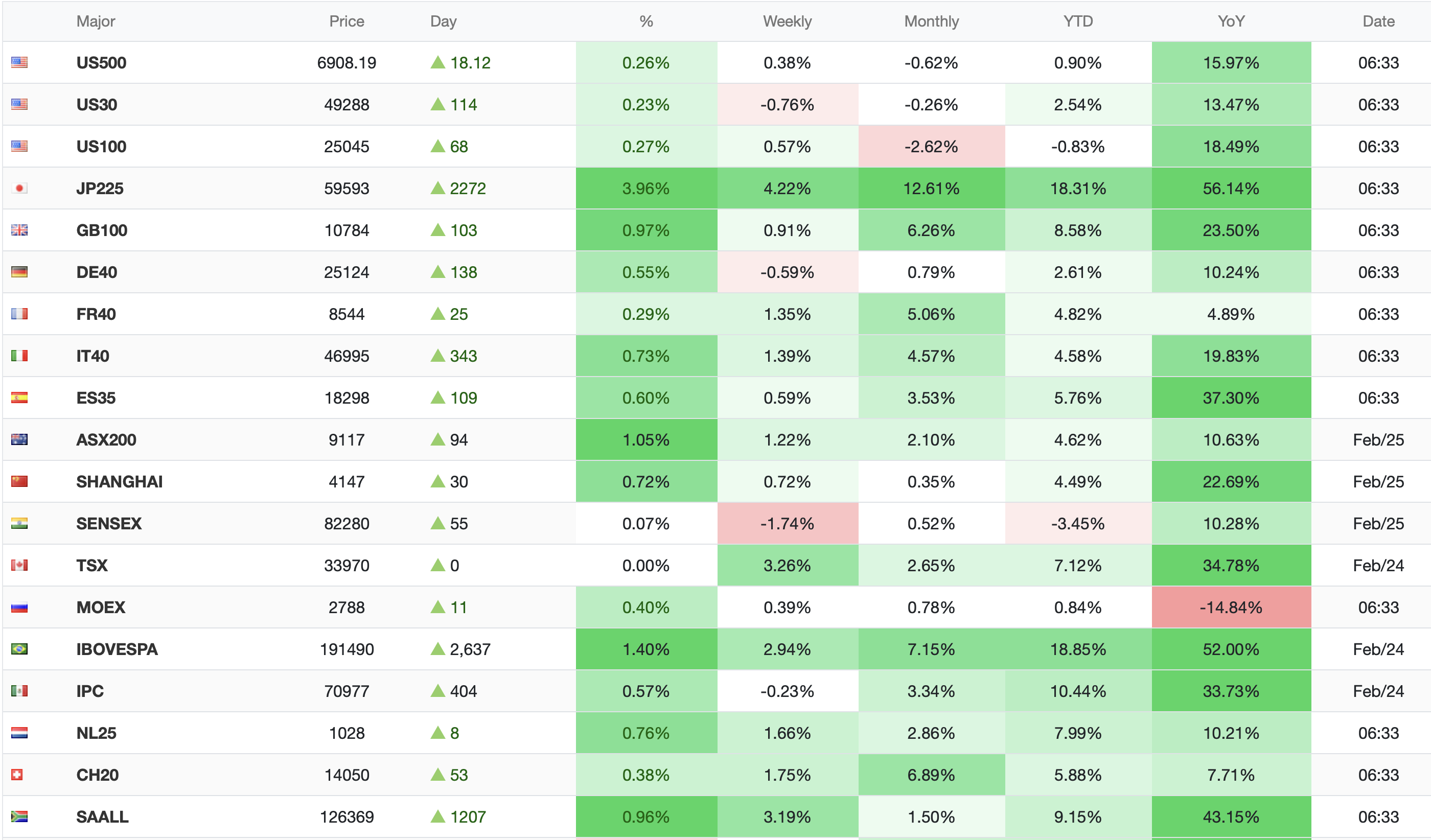
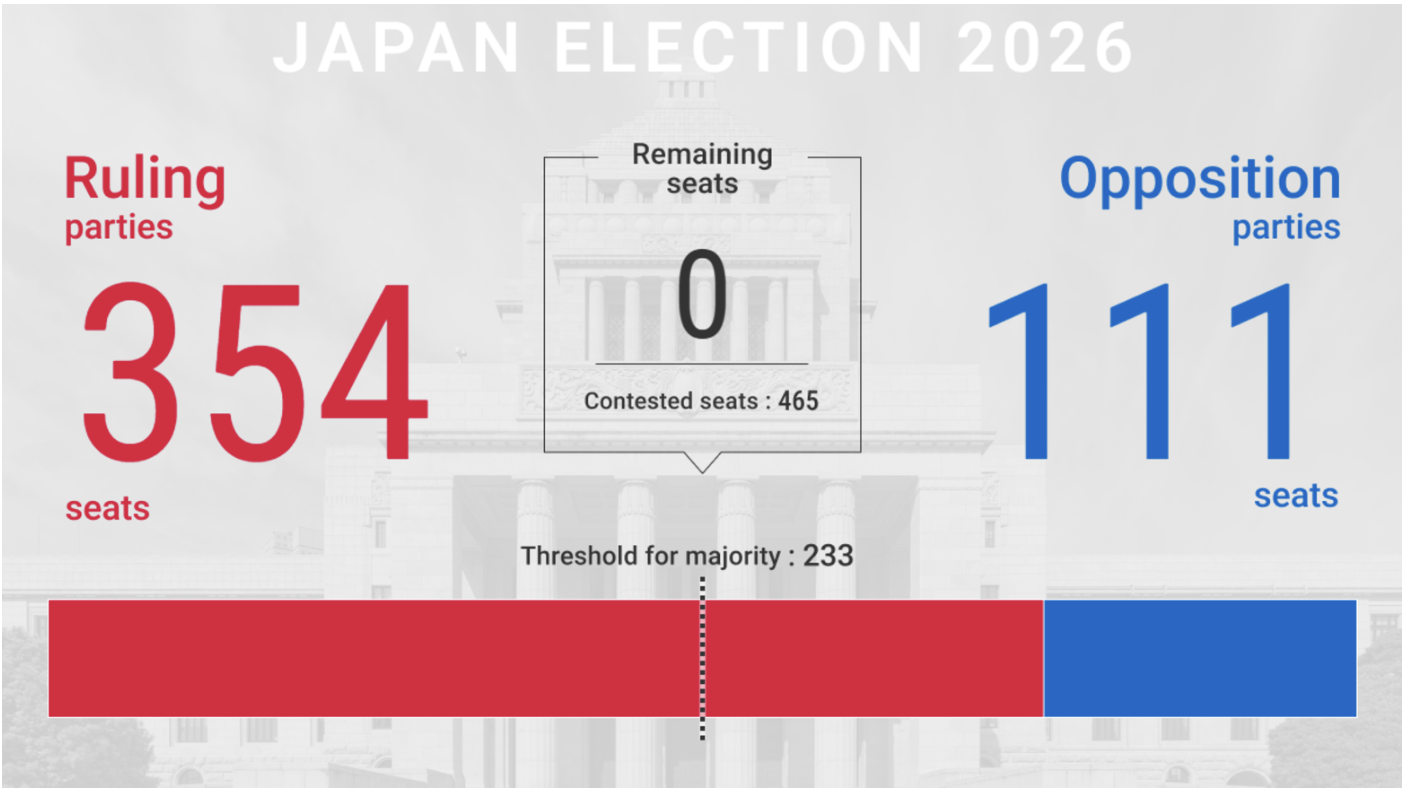
But equity markets feel no pain.  After yesterday’s US rally, with all three major indices rising by more than 1%, we saw gains throughout Asia (Nikkei +0.3%, Hang Seng +0.7%, CSI 300 +1.5%) as Takaichi-san was elected PM, as widely expected and investors believe that China is getting set to add fiscal stimulus as an outcome of their Fourth Plenum, with a focus on domestic demand, rather than exporting.  While it is certainly possible that is what they will do, I believe this is the third time, at least, that has been the narrative, and thus far, anything they have done has been ineffectual at best.  Remember, they still have a massively deflating property bubble which is weighing on the domestic economy there.  In the rest of the region, almost all bourses were higher, certainly those of larger nations, with Indonesia (+1.8%) the leader.

In Europe, gains are also widespread, albeit far less impressive with the CAC (+0.4%) the leader and the rest of the major indices higher by between 0.1% and 0.2%.  At this hour, (7:40) US futures are unchanged.

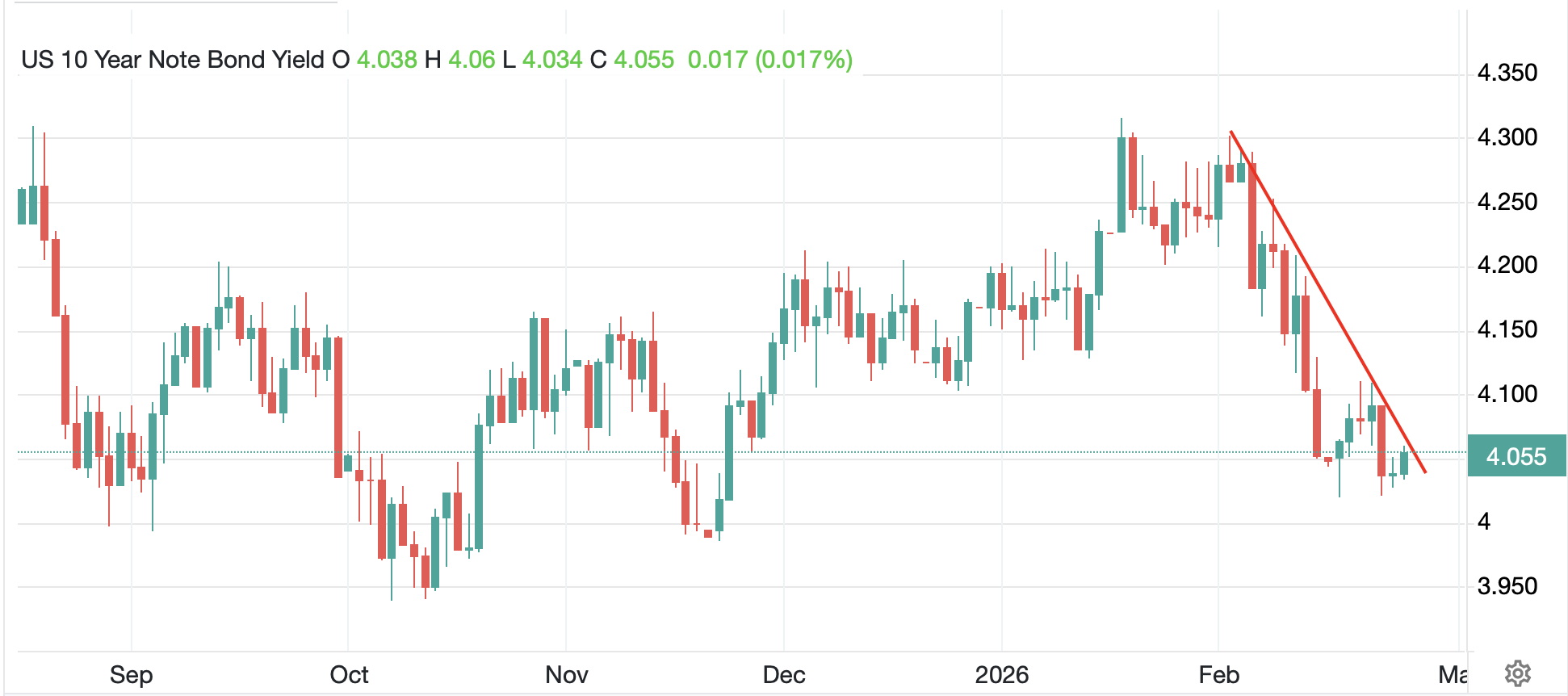
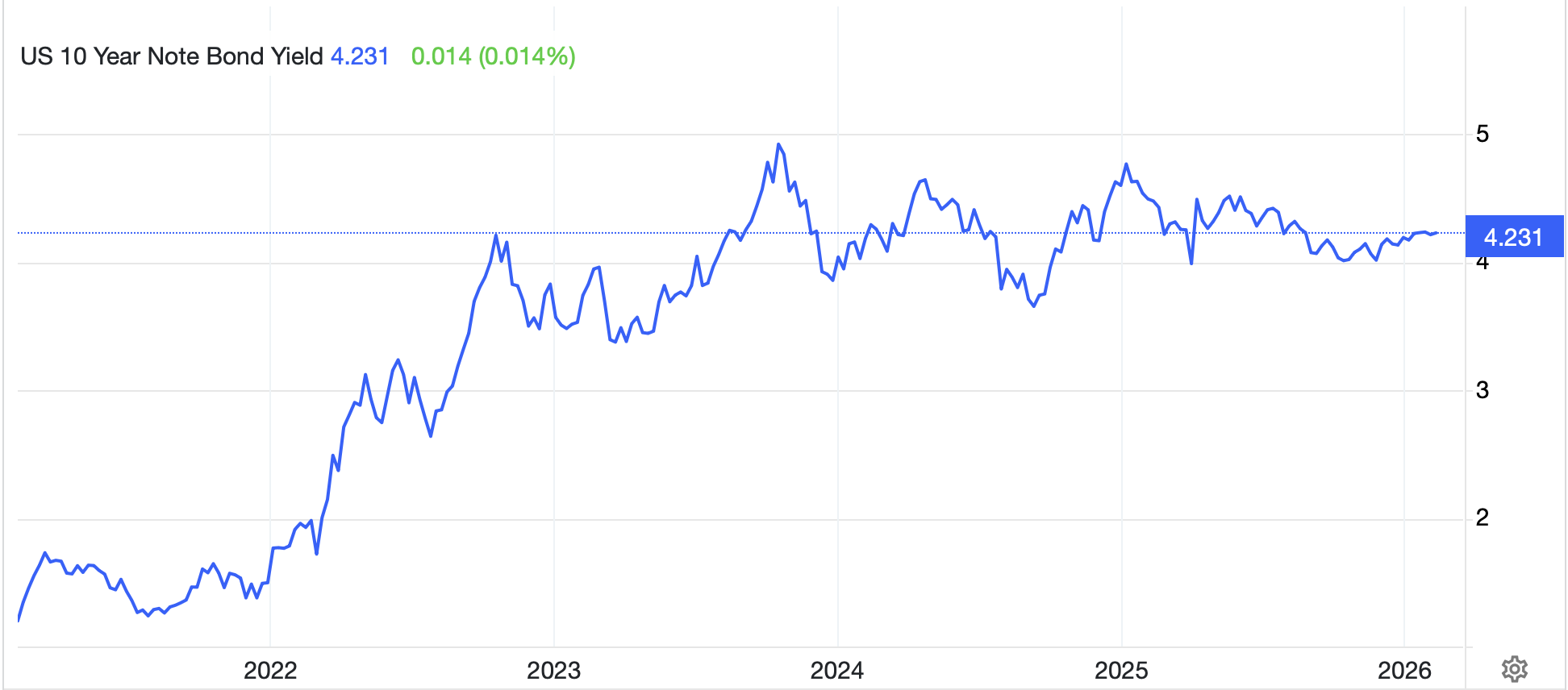
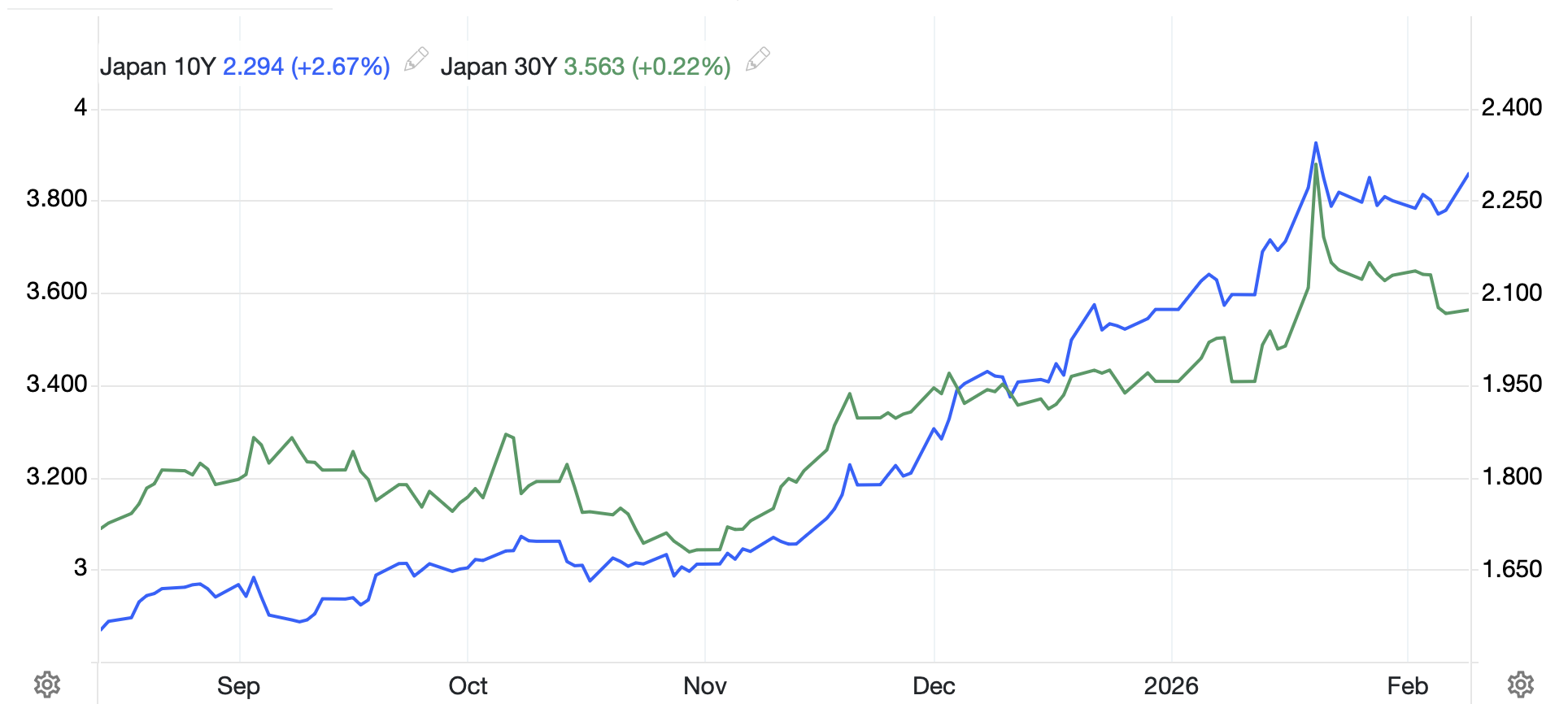
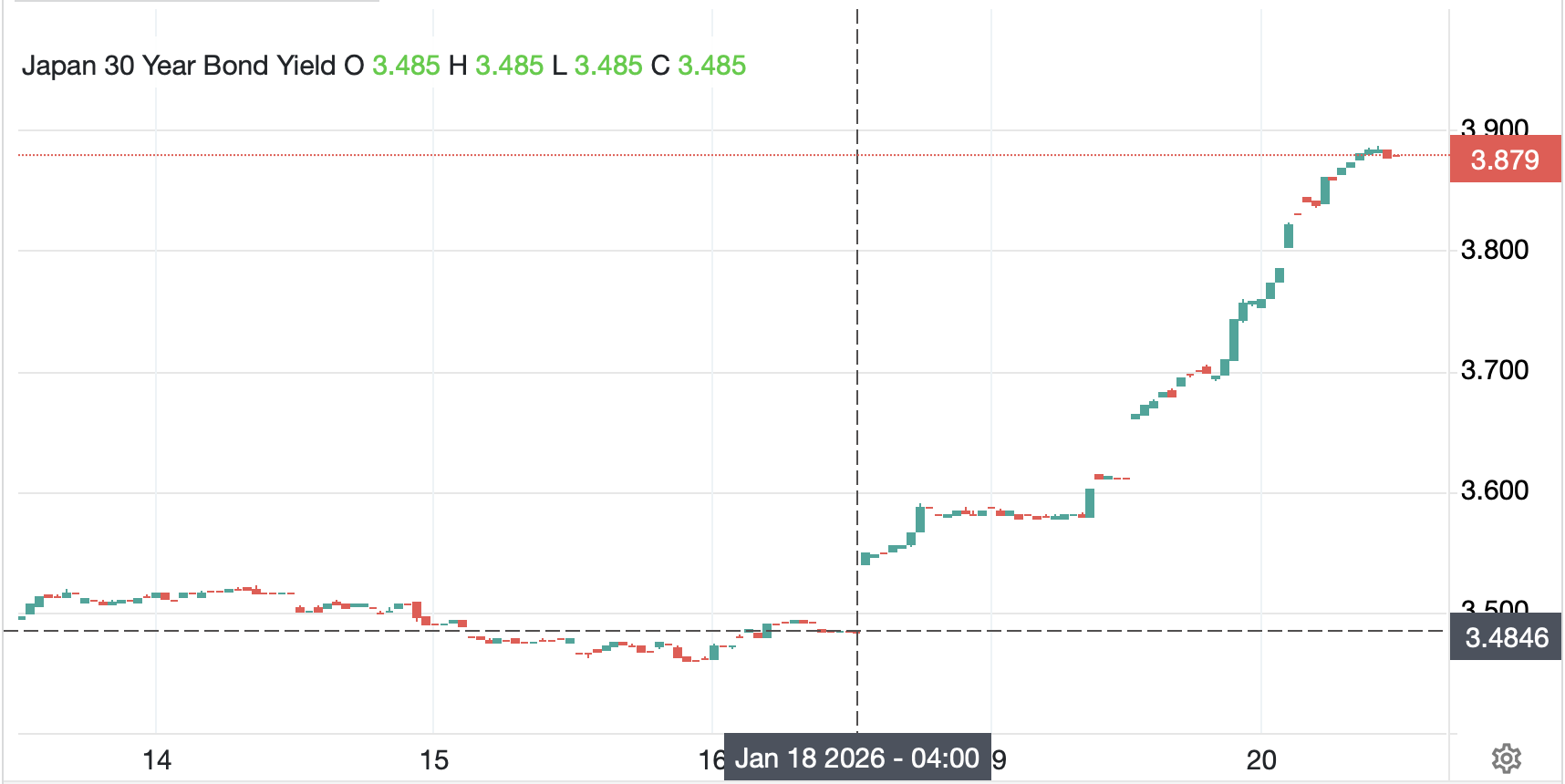
In the bond market, yields around the world continue to edge lower with Treasuries (-1bp) showing the way for all of Europe and for JGBs as well.  it is a bit surprising that JGBs are holding in so well given Takaichi-san’s platform of more unfunded spending.  Perhaps the BOJ is supporting there.

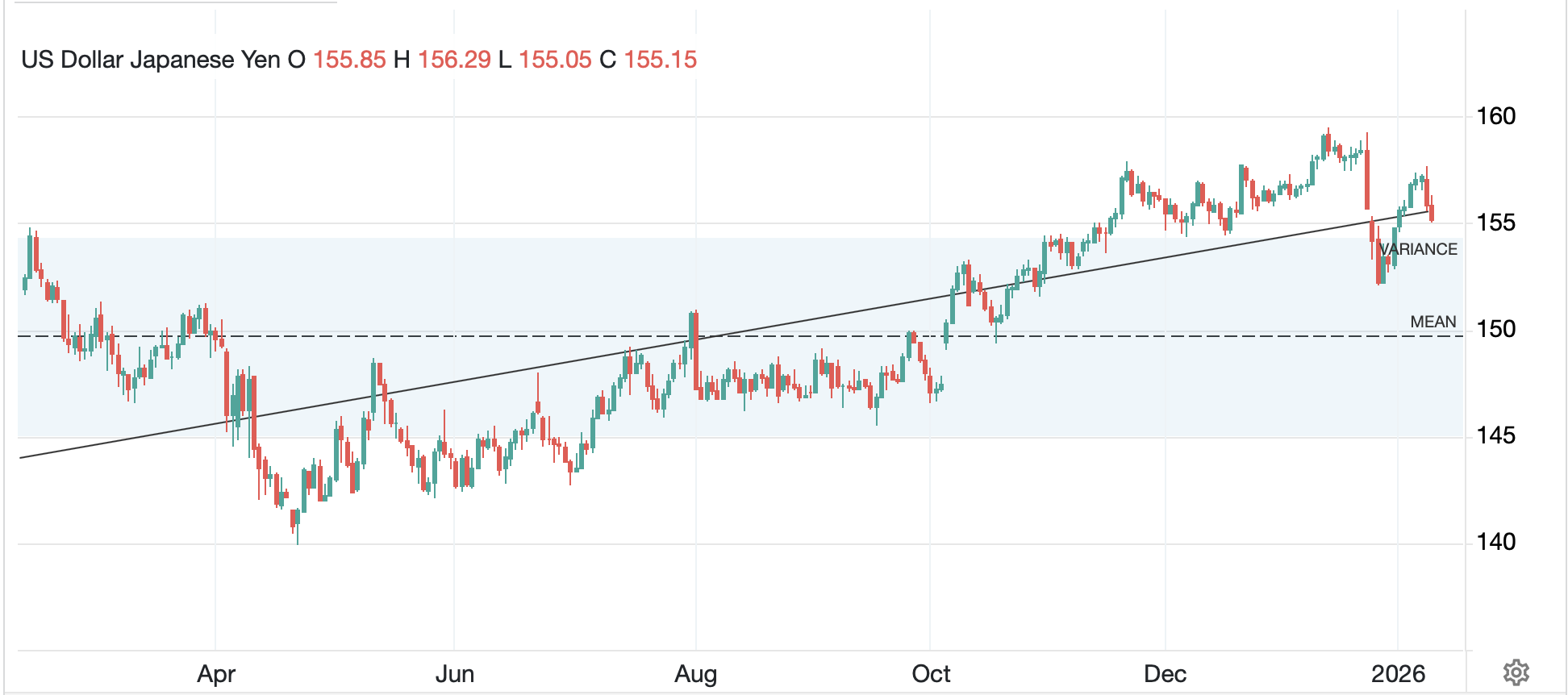
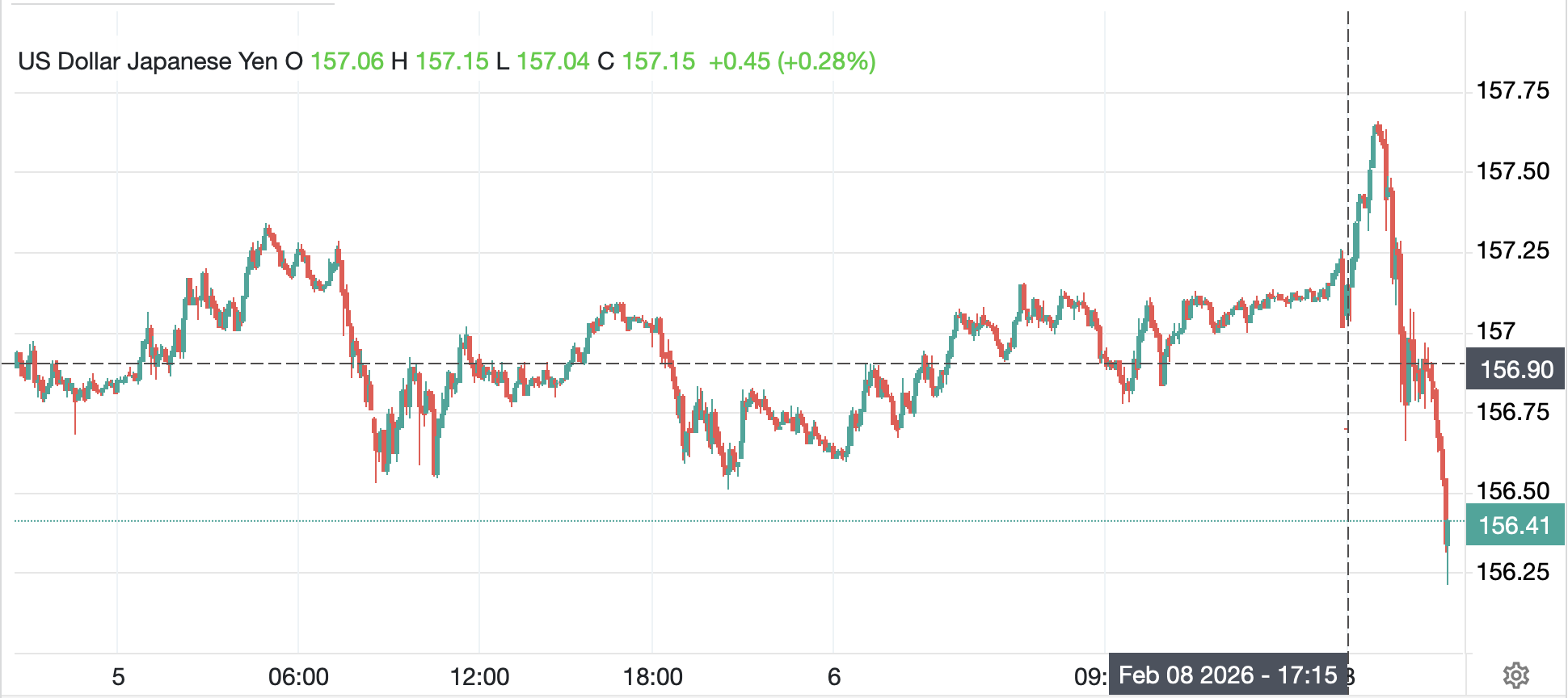
Finally, the dollar is firmer this morning rising against all its G10 counterparts with JPY (-0.8%) the laggard.  It seems the FX market has listened to Takaichi’s plans even if the JGB market hasn’t.  But otherwise, declines of -0.2% to -0.4% are the order of the day in the G10.  In the EMG bloc, ZAR (-0.5%) is feeling the weight of the precious metals rout, while KRW (-0.65%) is under pressure as well with lingering concerns over a trade deal with the US being reached.  Otherwise, though, that -0.2% level is a good proxy for the entire bloc.

The only data today is API oil inventories, and for some reason, despite the Fed’s quiet period, Governor Waller will be speaking today, although he will be making opening remarks at the Payments Innovation Conference in Washington, so will probably not focus on monetary policy.

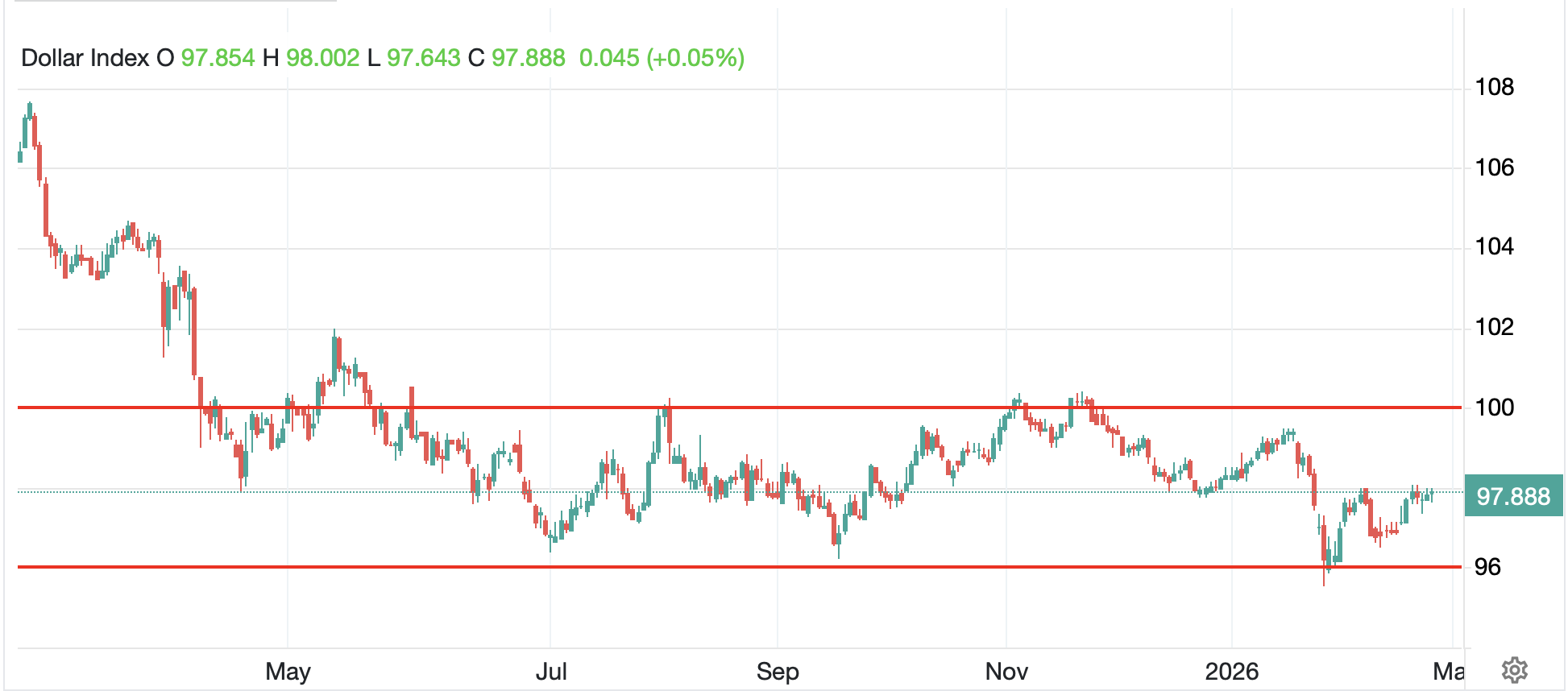
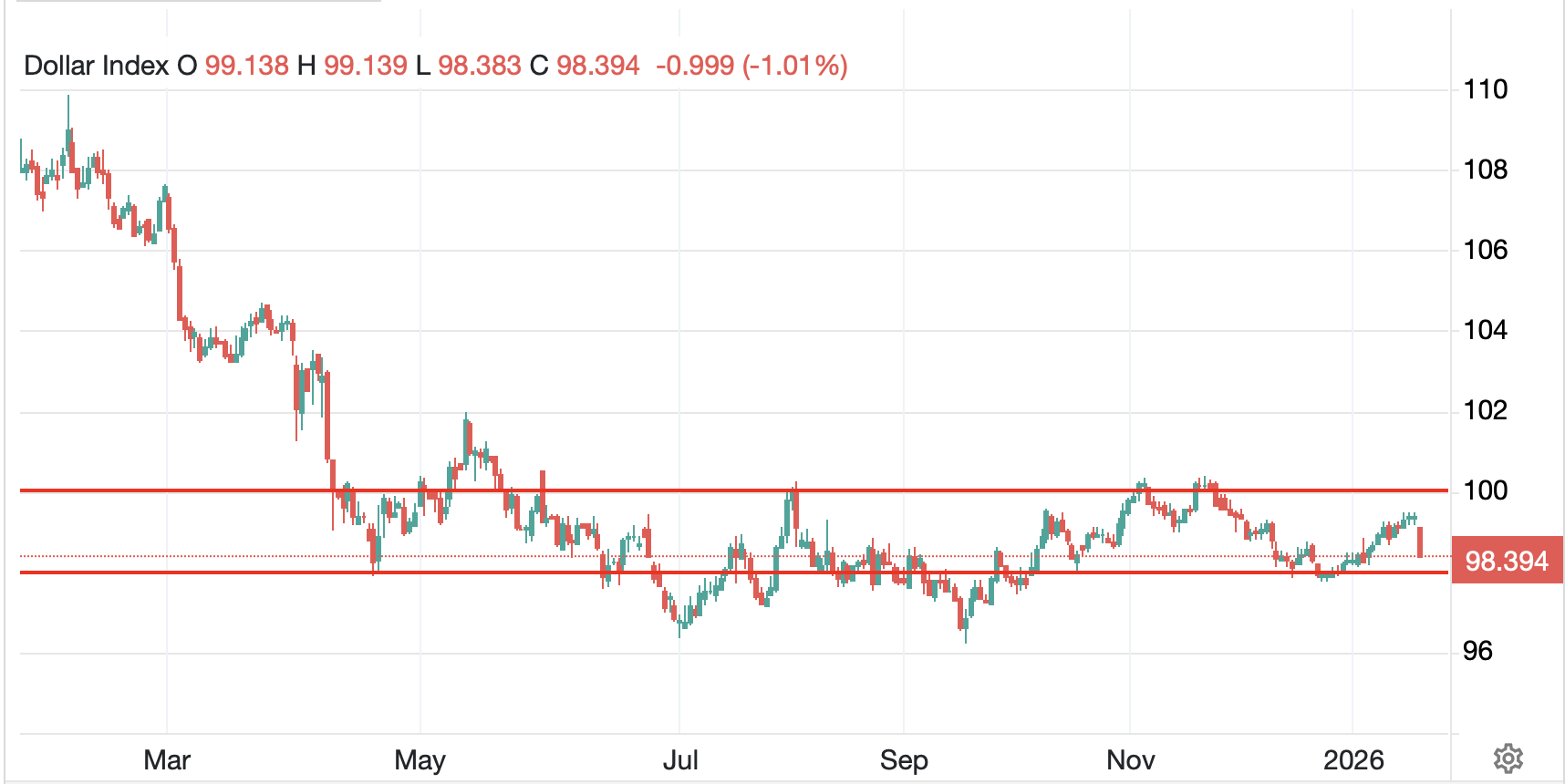
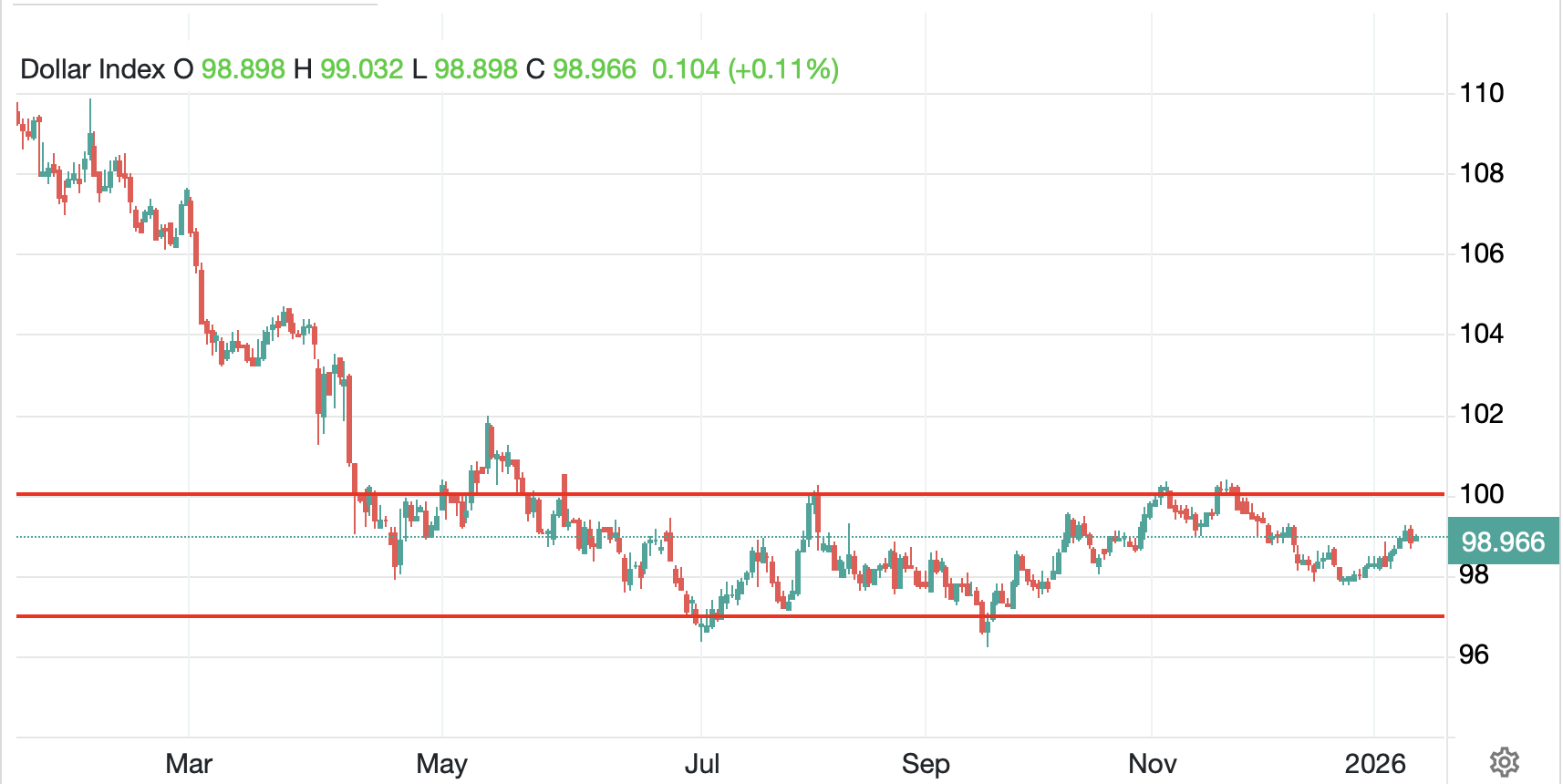
And that’s really the story.  The government remains shut down with no end to that in sight.  Metals markets are a mess with stories rampant about who is manipulating them, but through it all, stocks go higher, and the dollar remains right in the middle of its recent trading range.  I’m not sure what it will take to change that dynamic and I suspect it will be a gradual situation rather than a single catalyst.  In the end, though, I still like the dollar better than most other currencies.

Good luck

Adf
Alone in the Wilderness

Takaichi-san
Alone in the wilderness
No partners will play


In a major blow to Japan’s largest political party, the LDP, their long-time partner, Komeito, has withdrawn from the twenty-five year coalition.  Ostensibly, Komeito asked Takaichi for a commitment to address the financing corruption issue that was one of the reasons for the Ichiba government’s collapse and she either could not or would not do so immediately.  There seems to be a bit of he said, she said here but no matter, it is a major blow to the LDP.  While it remains the largest party in both Houses, it doesn’t have a majority in either one and there is the beginning of talk as to how a coalition of other parties may put forward a PM candidate leaving Ms Takaichi on the outside looking in.  

The one thing I have learned over the years is that all politics is temporary, at least when it comes to Western democracies.  So, whatever the headlines blare today, the opportunity for Komeito to rejoin the LDP remains wide open.  Additionally, after twenty-five years sharing power, I am pretty certain that they are unlikely to simply walk away and cede that benefit.  My take, and this is strictly from my observations of how politics works everywhere, is that this spat will be overcome and Takaichi-san will, in fact, become Japan’s first female Prime Minister.  

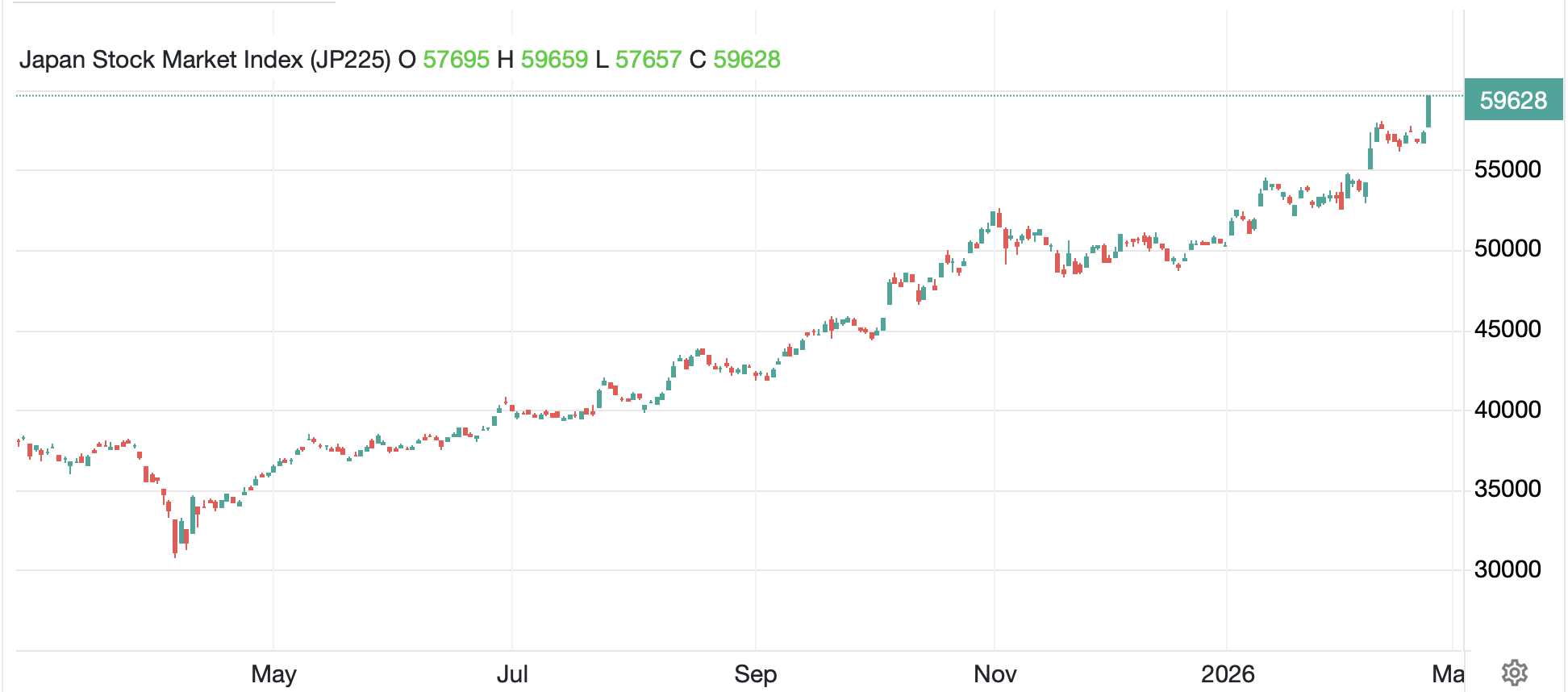
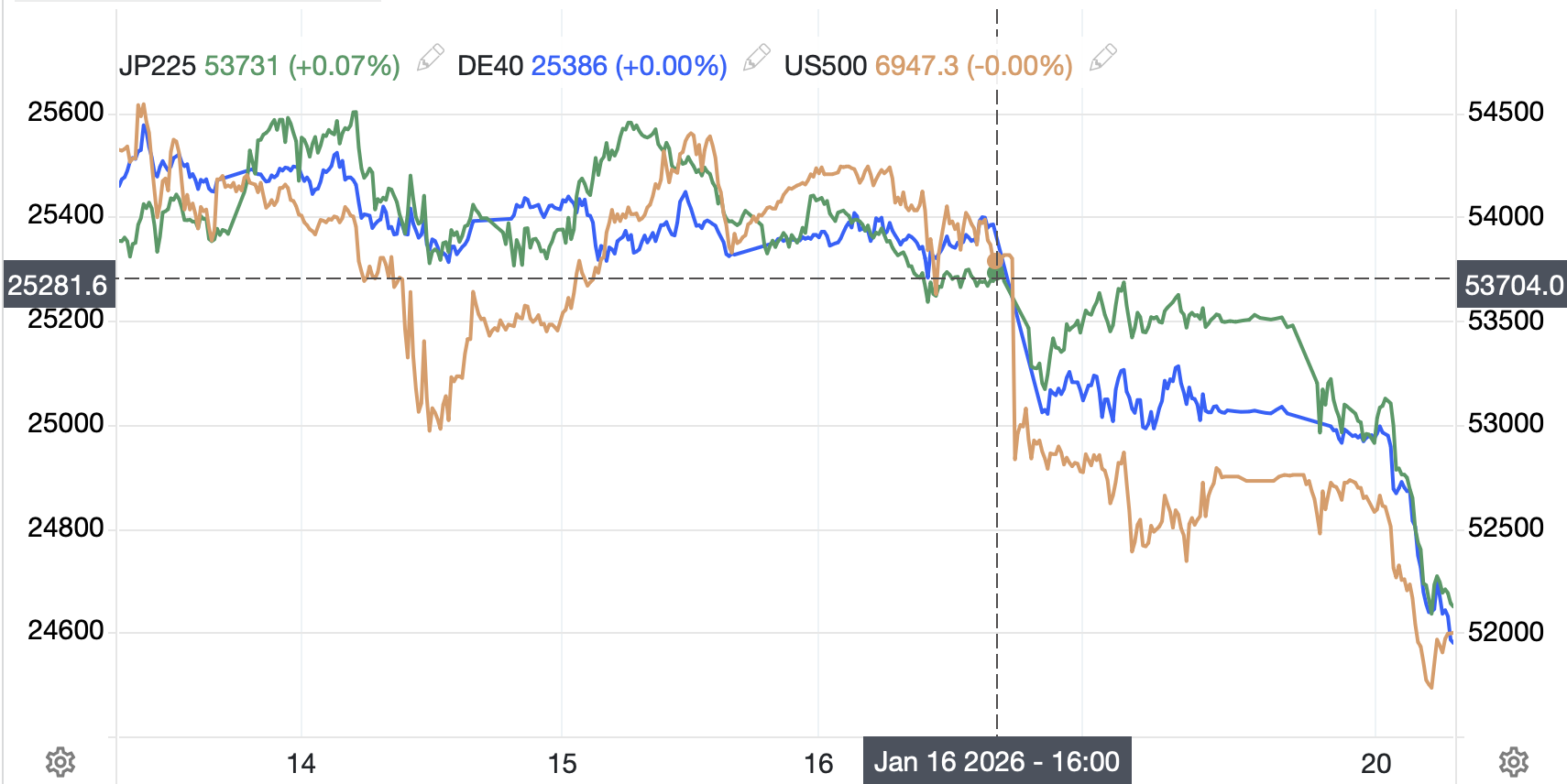
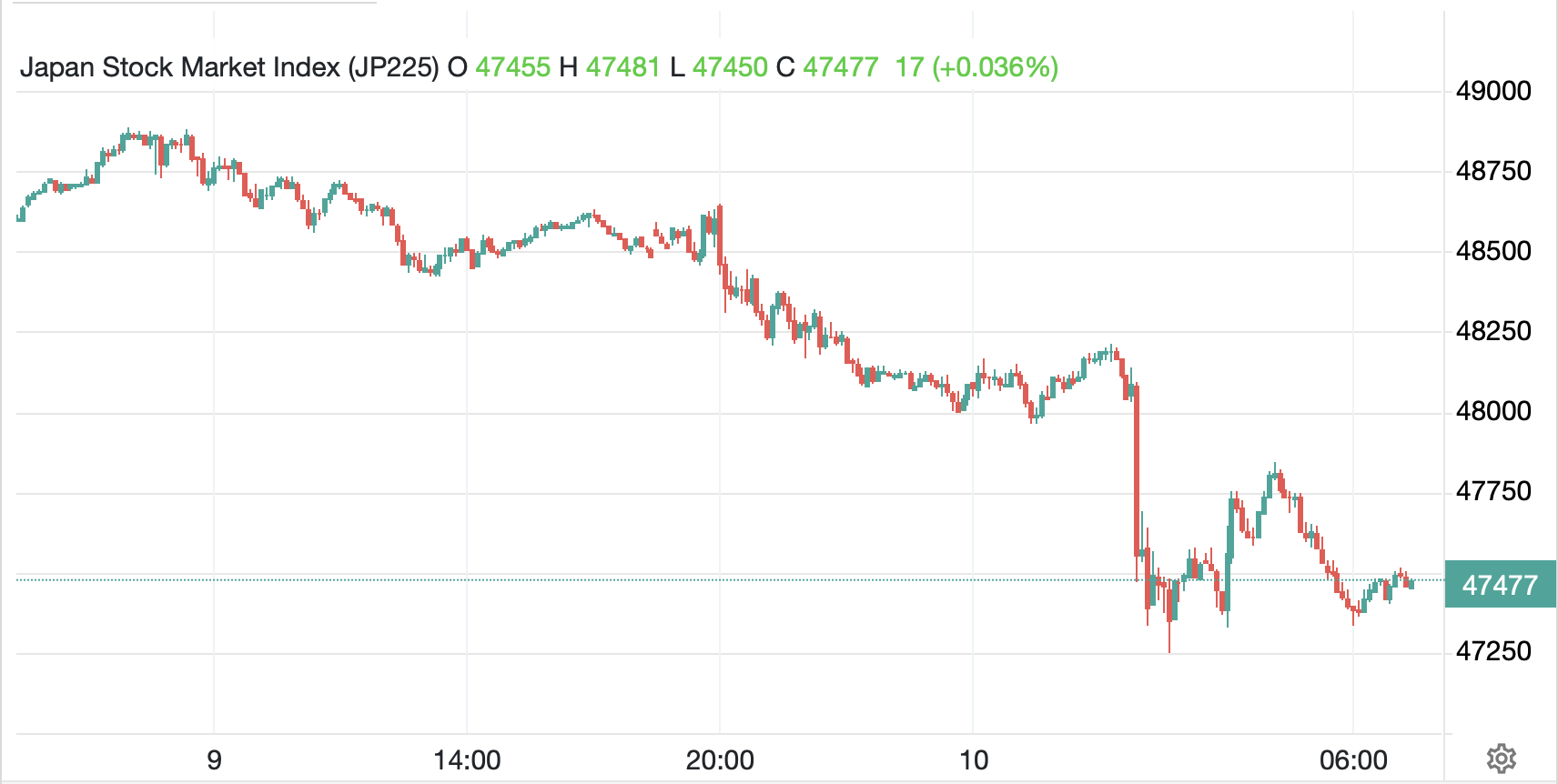
Japanese equity markets (-1.0%) were already closed ahead of the long weekend there (Japan is closed for Sports Day on Monday) when the news hit the tape, so it is not surprising that Nikkei futures fell further, another -1.25% (see chart below from tradingeconomics.com), but if I am correct, by Tuesday, all will be right with the world again.  As an aside, Japanese share weakness was a follow on from US equity weakness, and that sentiment was pervasive across all of Asia (China -2.0%, HK -1.7%, Thailand -1.8%) with only Korea (+1.7%) bucking the trend as it reopened for the first time in a week and was catching up to the rally it missed.

The Bureau of Labor Statistics
Though staffed by what often seems mystics
Has called some folks back
So that they can track
Inflation’s key characteristics

It turns out, the cost-of-living adjustments for Social Security payments are made based on the September CPI data which were originally due to be released on October 15th.  Of course, the government shutdown, which now heads into its second week, resulted in BLS employees being furloughed alongside many others.  However, it now appears that several of them have been called back into the office in order to prepare the report to be released some time before the end of the month, if not on the originally scheduled date.  One added benefit (?) of this is that the Fed, which meets on October 28thand 29th may have the data at the time of their meeting to help with their decision making.  Of course, the market continues to price a very high probability of a cut at that meeting, currently 95%, despite a continued mix of comments from Fed speakers.  Just yesterday, Governor Barr urged caution on further cuts, although we also have heard from others like Chicago Fed president Goolsbee, that the labor situation is concerning and that further cuts are appropriate.  Regarding the Fed, I think the doves outnumber the hawks and a cut is coming, if for no other reason than it is already priced in and they are terrified to surprise markets on the hawkish side.

Away from those two stories, all the market talk yesterday was on the early spikes in precious metals (gold touched $4058/oz, silver $50.93/oz) before they fell back sharply on what seemed to be either serious profit-taking or, more likely, a massive attempt to prevent these metals from rallying further.  There have long been stories that major banks have been manipulating prices, especially in silver, as they run huge short futures positions in their books.  I do not know if those stories are true or apocryphal, but there is no doubt that someone sold a lot during yesterday’s session.

Source: tradingeconmics.com

My friend JJ (Alyosha’s market vibes) made the observation that the price action felt as though suddenly algorithms, which have ignored these markets because they haven’t offered the opportunities that equity markets have, were involved.  If that is the case, it is very possible that we are going to see a very different characteristic to metals markets going forward, with much more controlled price action.  Food for thought.

Ok, let’s recap the rest of the markets ahead of the weekend.  The US equity declines were early with modest rallies into the close that left the major indices only slightly lower on the day.  We have already discussed Asian markets and looking at Europe, price action has been limited although Spain (+0.4%) is having a decent day for no particular reason.  Elsewhere, though, +/-0.2% describes the session.

Treasury yields (-3bps) are leading all government bonds higher (yields lower) with all European sovereigns seeing similar yield declines and even JGBs slipping -1bp.  The only data from the continent was Italian IP (-2.4%) which seems to be following in the footsteps of Germany.  Too, Spanish Consumer Confidence fell to 81.5, which while a tertiary data point, extends its recent downward trajectory.  In this light, and finally, the probability of an ECB cut at the end of the month has moved off zero, albeit just to 1%, but prior to today, futures were pricing a small probability of a rate hike!

Oil (-1.2%) has fallen back to the bottom of that trading range ostensibly because the Middle East peace process seems to be holding.  This is a wholly unsatisfactory thesis in my mind given my observation that the Israel/Gaza conflict seemed to have no impact on prices for a long time because of its contained nature.  Rather, Russia/Ukraine seems like it should have far more impact.  But then, I’m just an FX guy, so oil markets are not my forte.

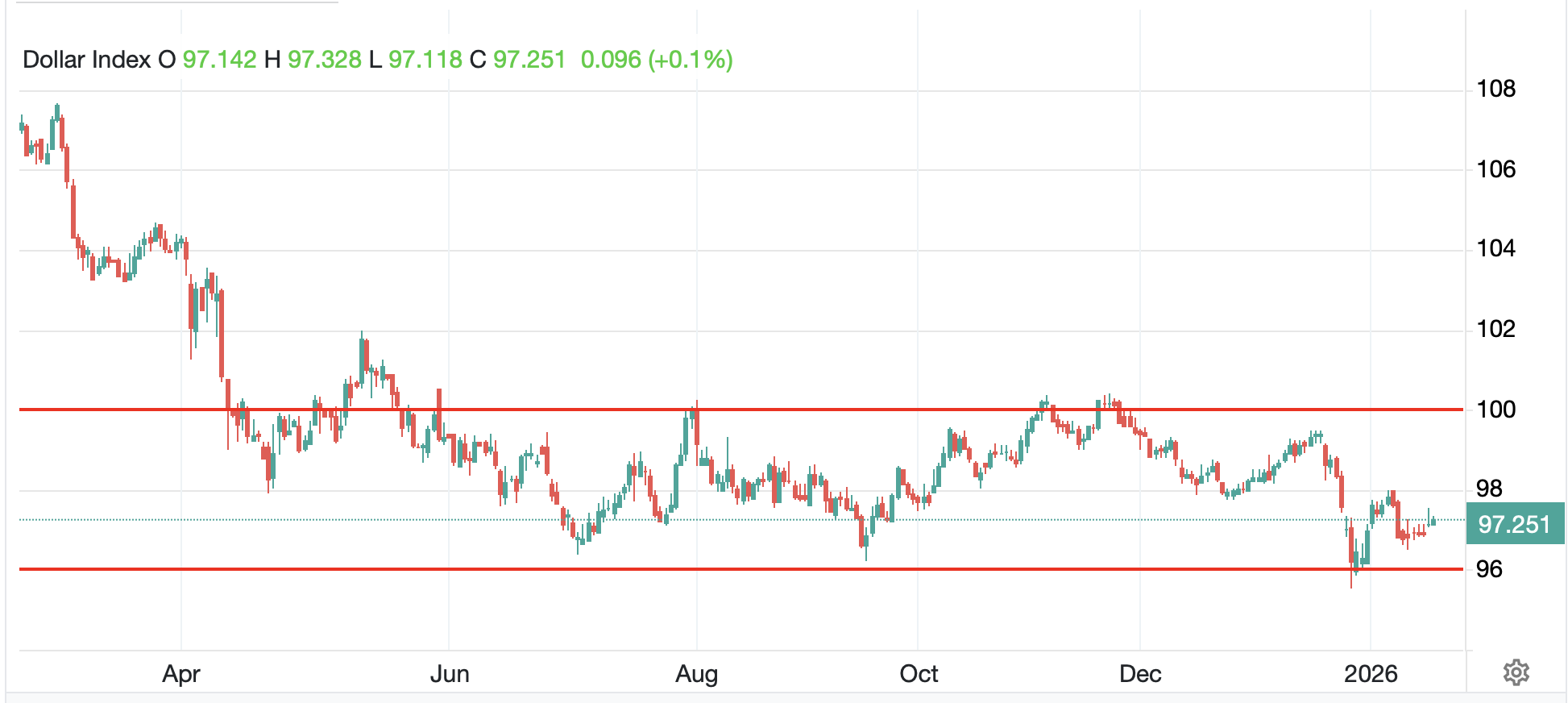
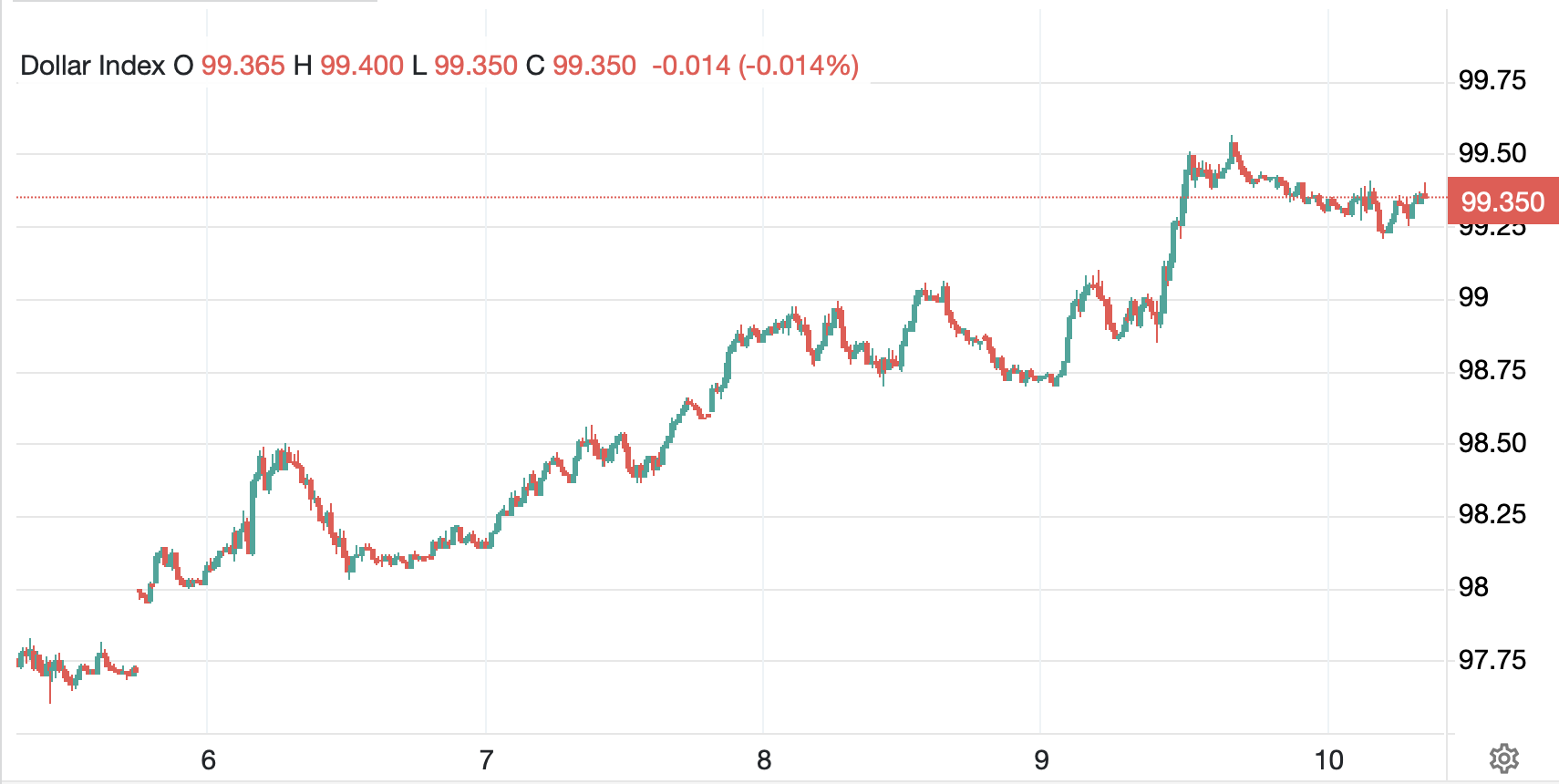
Finally, the dollar, which continues to rally in the face of all the stories about the dollar’s demise, is consolidating today after a pretty strong week.  Using the DXY as our proxy, this week’s trend is evident as per the below chart from tradingeconomics.com

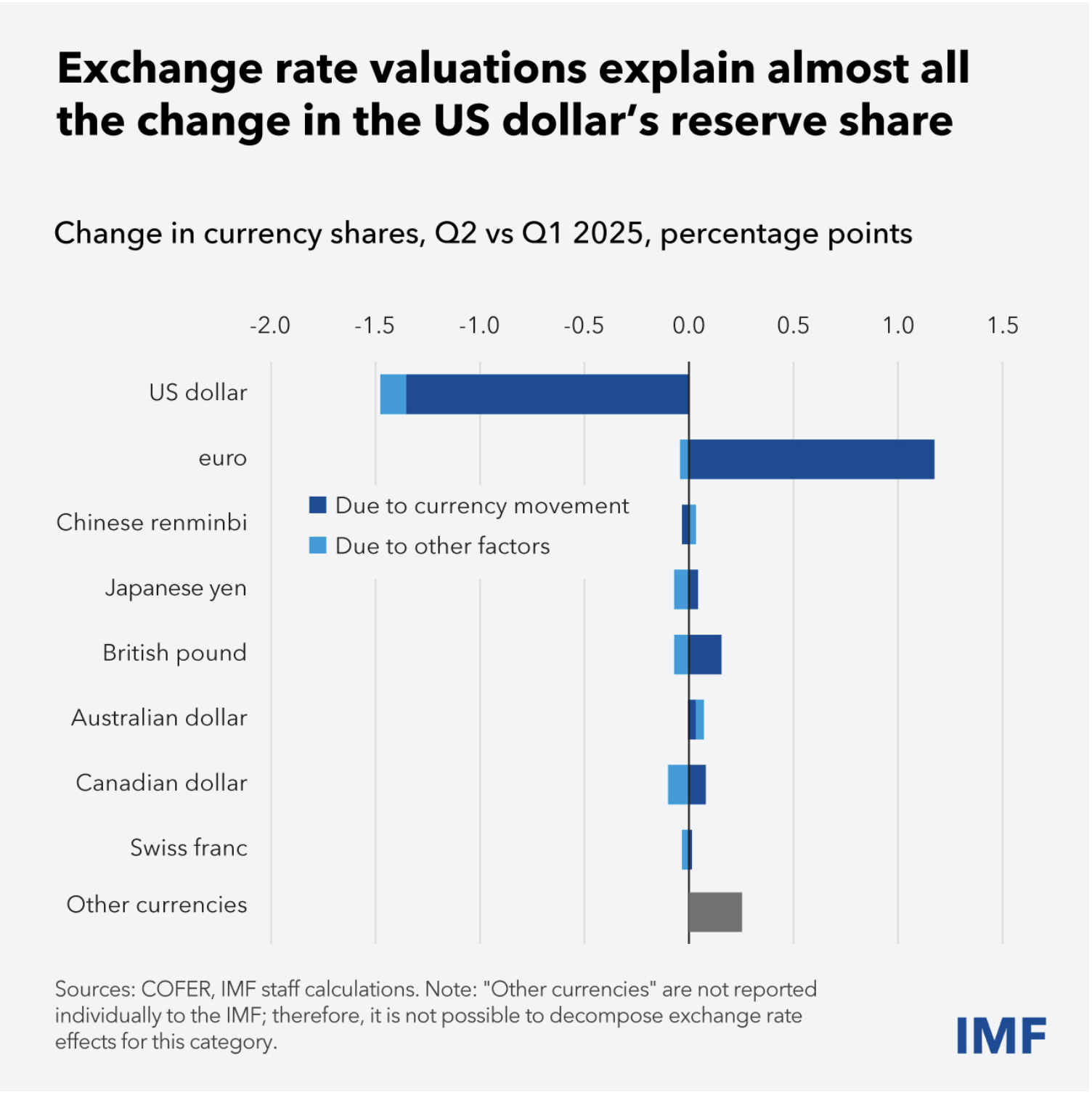
A popular narrative amongst the ‘dollar is doomed’ set is that a look at dollar reserves at central banks around the world shows a continuing reduction in holdings with central banks exchanging dollars for other currencies, (euros, pounds, renminbi, Swiss francs, etc.) or gold.  Now, there is no doubt that central banks have been buying gold and that has been a key driver of the rally in the barbarous relic’s price.  But the IMF, who is the last word on this issue, makes very clear that any change recently has been due to the FX rate, not the volume of dollars held.  As you can see below, in Q2 (the latest data they have) virtually the entire reduction in USD reserves worldwide was due to the dollar’s first half weakness.

There are many problems in the US, and the fiscal situation is undoubtedly a mess, but as of now, there is still no viable alternative to holding dollars, especially given the majority of world trade continues to be priced and exchanged using the buck.

And that’s all for today.  We do get the Michigan Confidence number (exp 54.2), which is remarkably low given the ongoing rally in equities.  As you can see from the below chart overlaying the S&P 500 (gray line) with Michigan Confidence (blue line), something has clearly changed in this relationship.  This appears to be as good an illustration of the K-shaped economy as any, with the top 10% of earners feeling fine while the rest are not as happy.

Source: tradingeconomics.com

As we head into the weekend, with US futures pointing higher, I have a feeling that yesterday will be the anomaly and the current trends will reassert themselves.

Good luck and good weekend

Adf