Hair All on Fire

There once was a group of old men
Who spoke via paper and pen
Last week, this odd choir
With hair all on fire
Explained that the world would soon end
 
I wonder if this week we’ll learn
This group now has nought left to burn
If so, we may find
That all of mankind
Could yet weather any downturn


I have no idea how this is going to play out and truthfully neither does anybody else.  While I am happy to admit that fact, my sense is others will not be so forthcoming.  President Trump made clear that he wanted to change the way things are done.  He was explicit in his efforts to rearrange the global trading system, and by extension the global economy, so that it was less punitive to American businesses.  At least in his mind.  

I think the other thing to remember is he was elected by Main Street, not Wall Street.  The MAGA movement was originally composed of small-town folks who had not benefitted from the financialization of the economy that really accelerated with the GFC.  And most of these folks don’t look at the stock market every day, nor the bond market nor the value of the dollar in the FX market.  They do see the price of gasoline at the pump, and the price of groceries in the store, but otherwise, market activity is not a primary focus.

I mention this because I think it is critical to remember Trump’s primary audience if we are to understand why he is doing what he is doing.  Bill Ackman screaming on X is not the president’s concern.  Redeveloping the US manufacturing base is his goal.

Now, will his actions lead to that outcome?  There are many naysayers and most of them write for major news outlets or are politically motivated (isn’t that the same thing?).  But remember, Trump doesn’t have to run for office again.  I suspect the fact that the Senate passed their version of the “big, beautiful bill” for taxes and the budget last week was of far more interest to the President than the fact that Senator Chuck Schumer is calling his actions reckless.  

My point here is to highlight that all those who believe that President Trump will succumb and change his stance because equity prices have fallen are still not listening to the man.

Speaking of prices at the pump, there was news last week that was missed by many, if not most, people, and that is likely to have a significant impact on oil prices.  It turns out, that in the wake of the tariff announcements, OPEC explained they would be increasing production by 411K bbl/day beginning in May with potentially larger increases going forward.  It appears that the loss of market share is becoming untenable in their eyes, and so they are on their way to regaining that, even if prices are to decline further.  

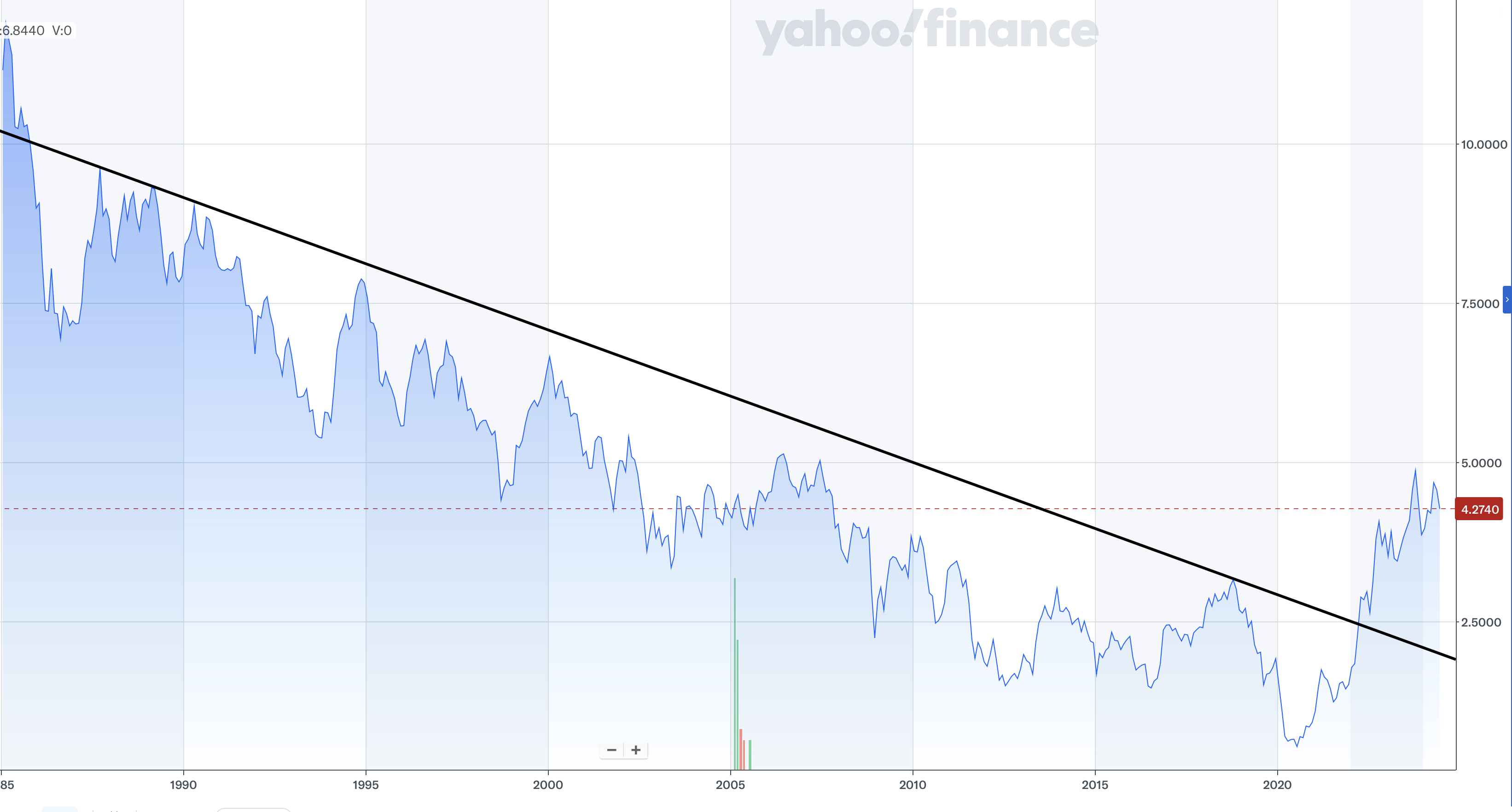
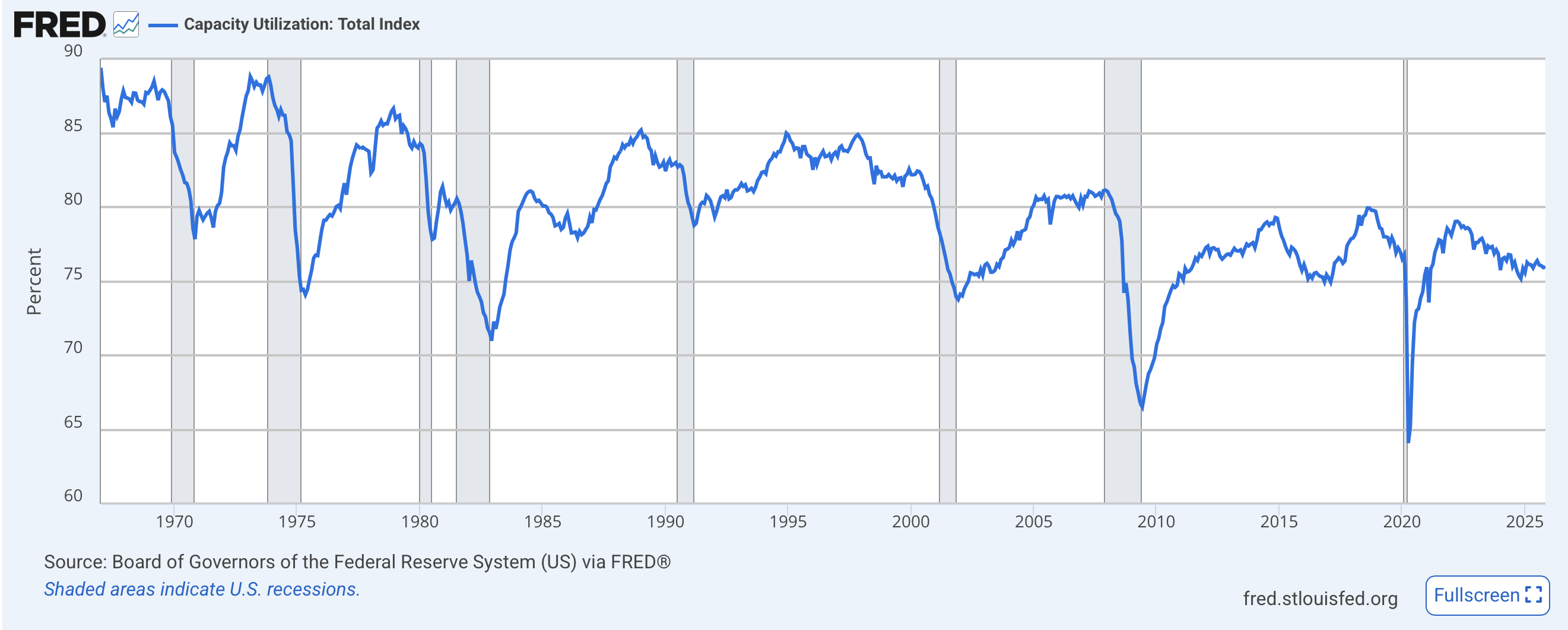
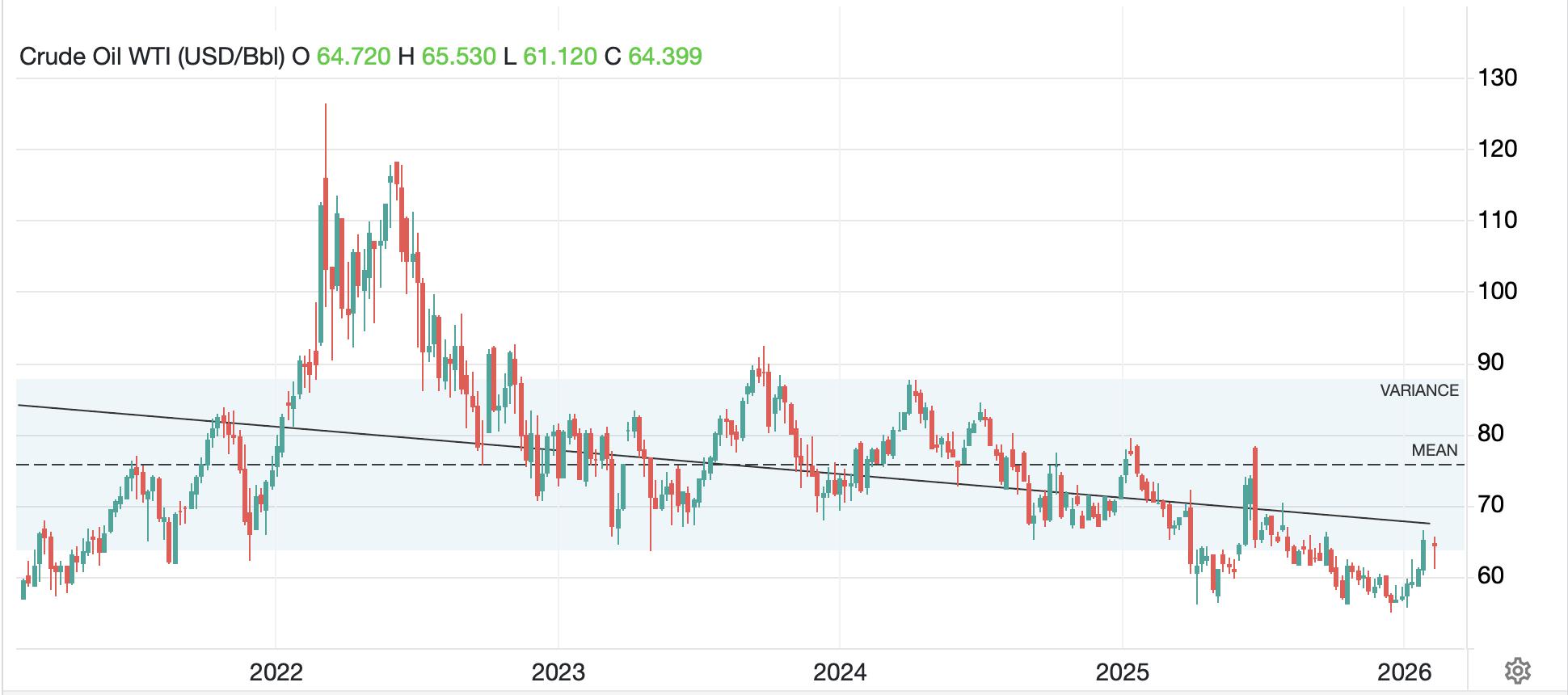
There are some who speak of a deal with President Trump, who you may recall has been seeking to lower oil prices, and I suppose that is quite possible.  But, regardless of the driving force behind the action, as my friend Alyosha on Substack explains eloquently, it is quite possible that we are entering a new regime in oil prices.  This chart from his most recent Substack posting is instructive.  

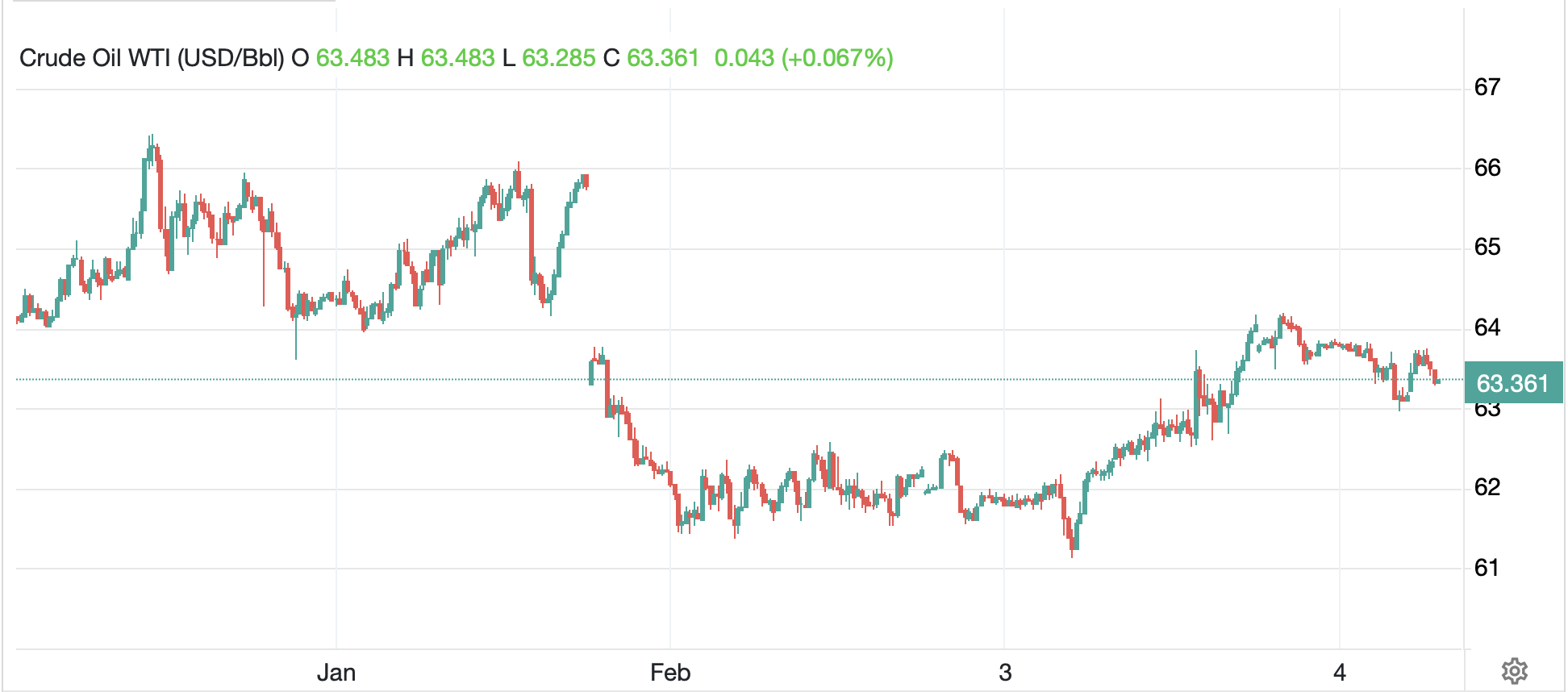
In essence, his theory, which this chart describes, is we may well be heading into a new long-term range of oil prices that is far below what we have been used to, especially since the Russian invasion of Ukraine.  Remember, if energy prices decline, that reduces cost pressures for the entire economy.  And here we are this morning with oil (-4.0%) breaking below $60/bbl and down -10% in the past month.  Despite all the headlines that tariffs are going to raise prices, this is something that will clearly offset any general rise in price pressures.

But markets are still digesting the tariff news and are not happy about it.  Apparently, several nations have reached out to the president to discuss what can be done to address this change in tariff behavior, including the UK, Japan and Taiwan.  As a negotiating tactic, it strikes me that Trump will not want to waver if he is to achieve better trade deals for the US.  And while he may be subject to the slings and arrows of a negative press in the US, there is nobody on the planet who is more capable of absorbing those and continuing on his merry way.

Ok, let’s see the damage wrought in the overnight markets, where adjustments are still being made.  Before we start, though, remember, US share prices were at extremely high valuations prior to all this with just seven companies representing nearly one-third of the value of the S&P 500.  The common refrain was that these conditions could not be maintained forever.  That refrain was correct, but the speed of the adjustment has clearly been more rapid than many had hoped expected.  The below reading of the Fear and Greed Index speaks for itself.  But remember, this is seen as a contra-indicator, where extreme fear is seen as a buying opportunity.

Source: cnn.com

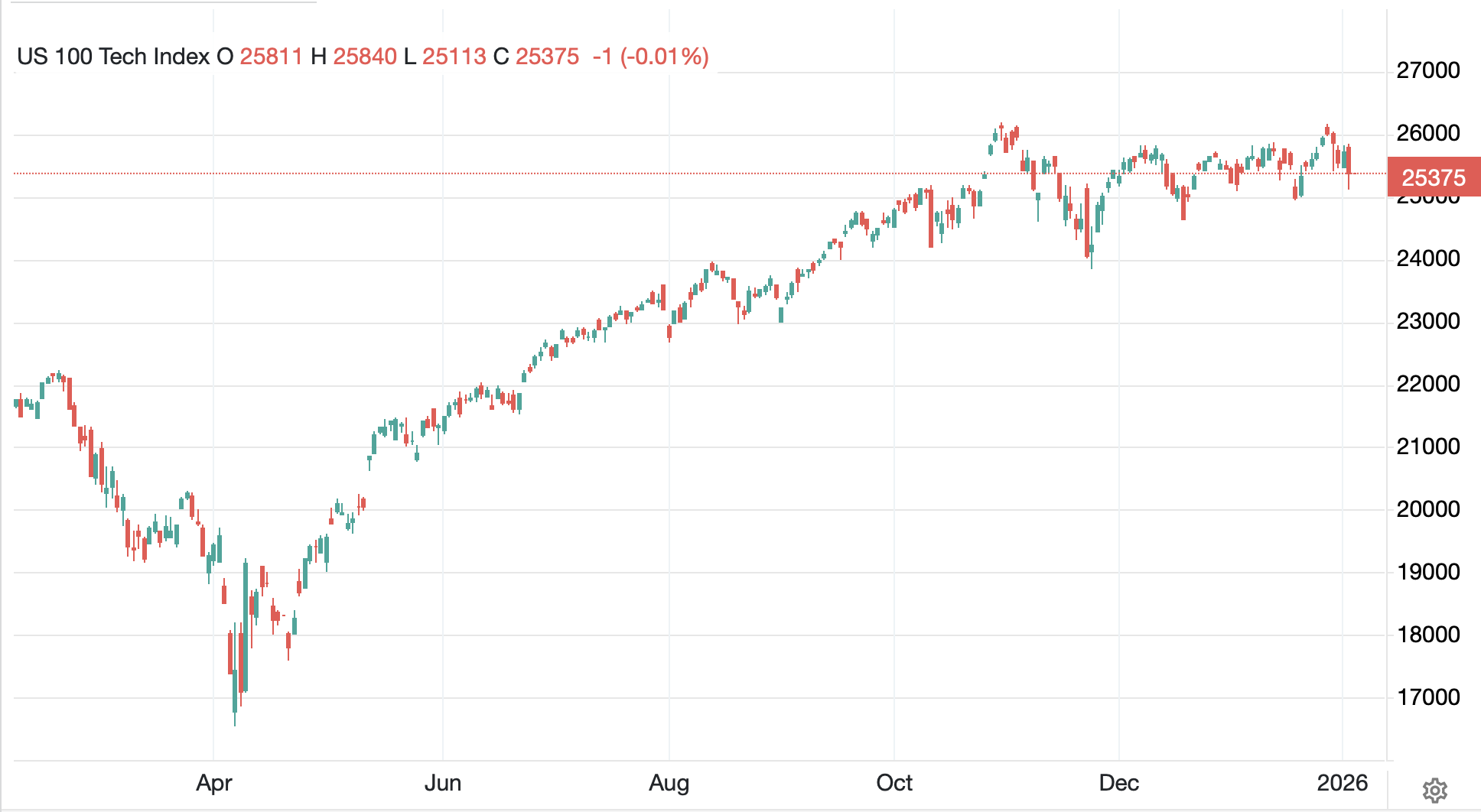
Ok, now to markets.  The nearly -6% declines across the board in the US on Friday have been followed by even large declines in Asia, with the Nikkei (-7.8%), Hang Seng (-13.2%) and CSI 300 (-7.1%) all suffering greatly.  Taiwan (-9.7%) and Singapore (-7.6%) were the other largest movers with the rest of the region declining on the order of -4.0% give or take a bit.  In Europe, the losses are not quite as severe, with declines on the continent averaging -6.2% or so and UK shares slipping “just” -4.8%.  interestingly, US futures, which had been down as much as a further -6.0% in the early part of the overnight session, have rebounded slightly and now (5:40) sit lower by around -3.4% or so.  It appears we are seeing the first nibbles of value buyers.

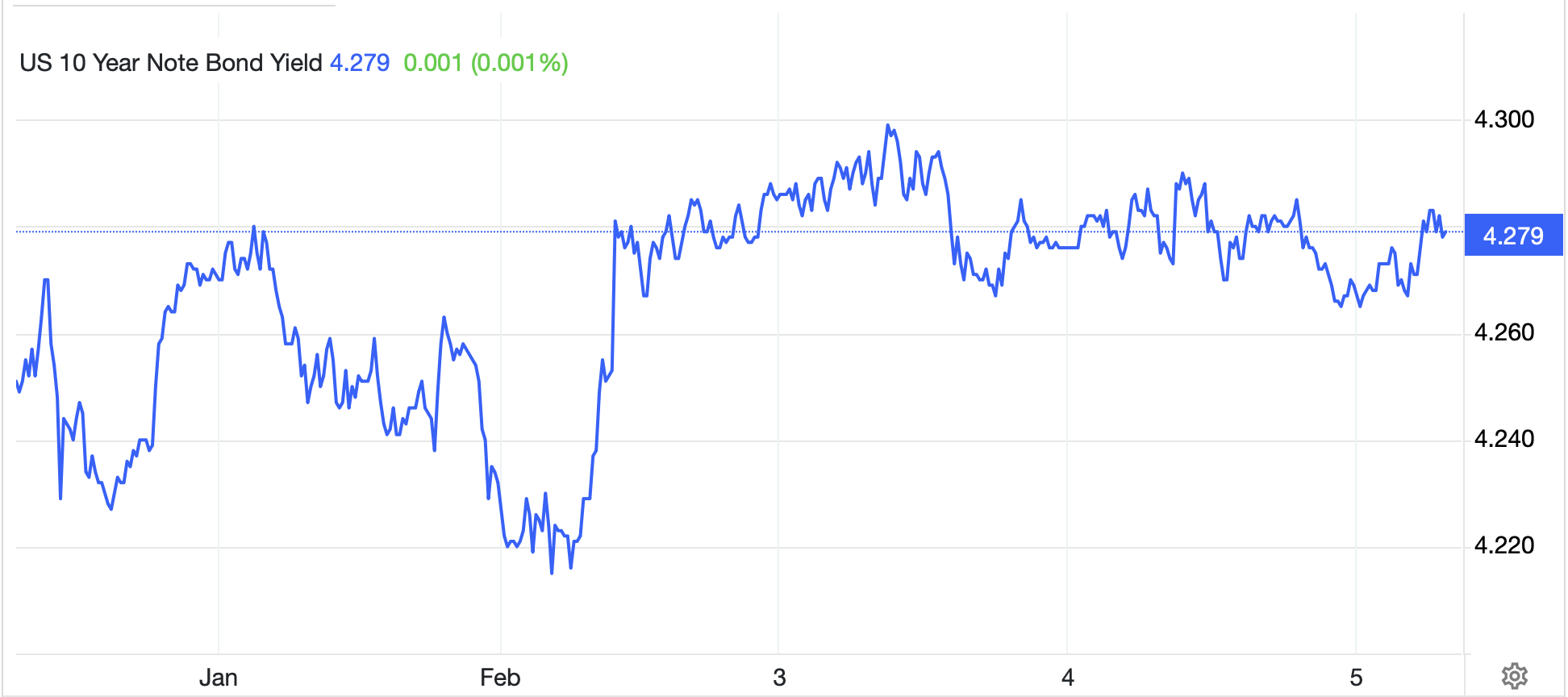
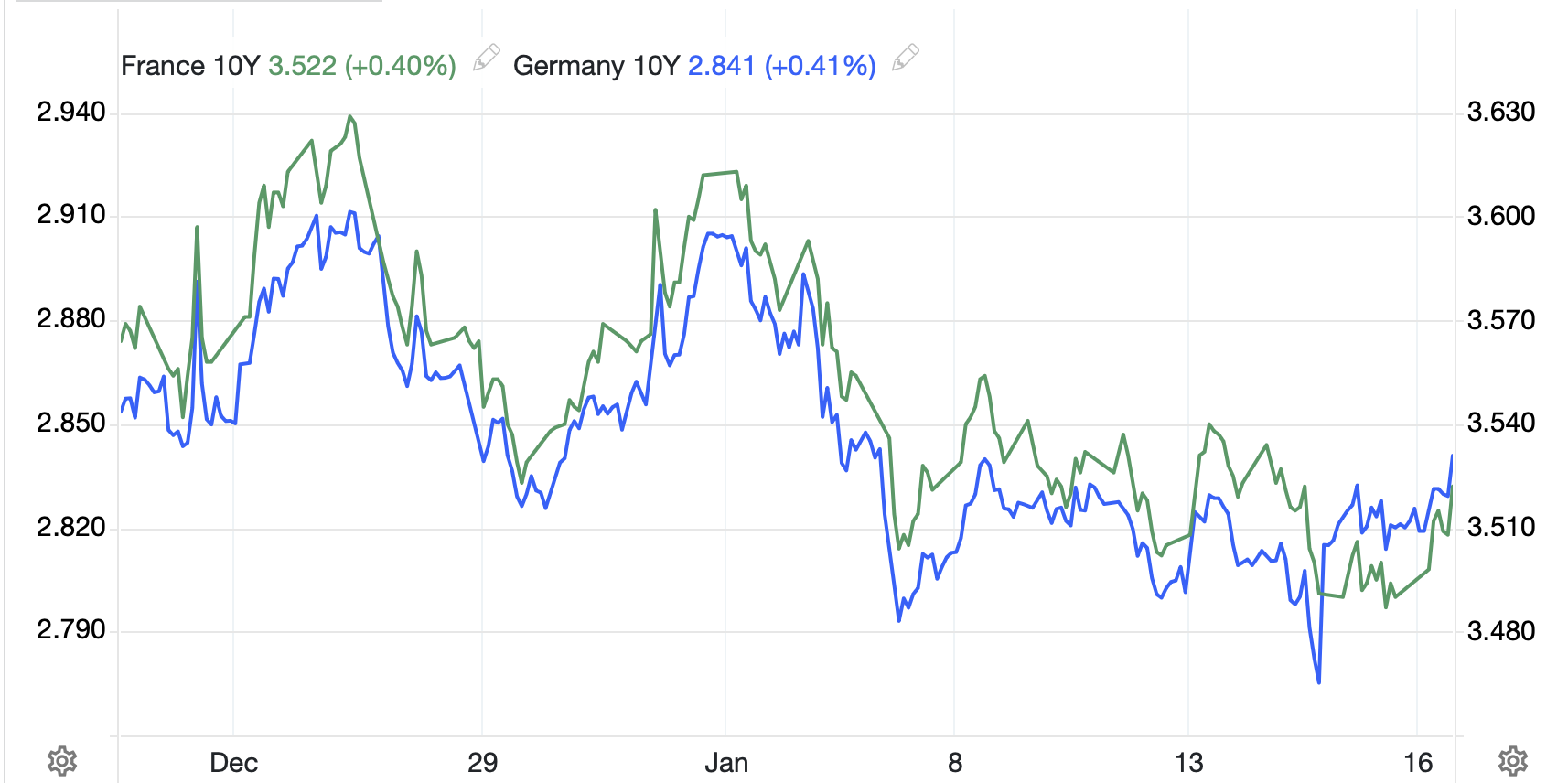
Bond yields continue to decline as the flight to the relative safety of government debt is rampant.  While Treasury yields (-4bps) are only a bit lower, in Europe, German bunds (-12bps) and French OATs (-8bps) are leading the way.  Recession concerns have risen everywhere, with the punditry now highly convinced a recession is a given and the only question is whether or not this will turn into a depression.  That feels premature to me, but I’m just a poet.  As to JGB yields, they, too, have tumbled further as funds flow back to Japan, and are down a further -8bps this morning, now yielding just 1.09%, a far cry from the 1.60% level just two weeks ago.

I’ve already discussed oil so a look at metals shows gold (-0.3%) consolidating last week’s declines and still above $3000/oz.  My take is gold’s decline was a result of equity losses and margin calls being covered by gold positions.  I do not believe the barbarous relic has seen its highs.  As to the other metals, silver (+2.3%) is bouncing this morning, although it did fall more than 10% in the past week, and copper (-1.4%) is under increasing pressure on the weakening economic growth story.

Finally, the dollar is all over the map, showing net strength this morning, but weaker vs. the two main havens, JPY (+0.55%) and CHF (+0.9%).  Interestingly, the euro is unchanged on the day as it appears traders cannot decide who will be more greatly impacted, the US or Europe.  But otherwise, the dollar is generally firmer with NOK (-1.75%) suffering alongside oil, MXN (-1.5%), ZAR (-1.3%) and CLP (-1.7%) all feeling the pressure from the tariffs.  Other G10 currencies are softer, but not as dramatically, with AUD and NZDZ (both -0.5%) and CAD (-0.3%) moving more in line with a normal session.  While we have gotten used to the idea that the dollar rallies on a risk-off thesis, given the nature of this particular version of risk-off, I have a feeling the dollar’s gains may be capped.  However, my previous thesis on the declining dollar is much harder to discern given the changing nature of economic outcomes.

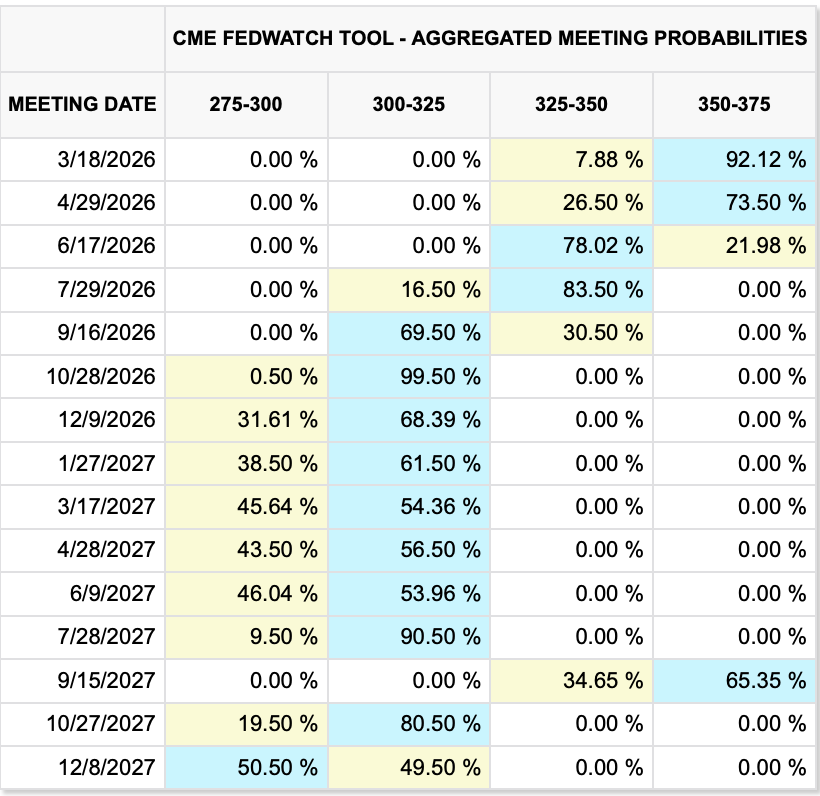
As an aside, the Fed funds futures market is now pricing a 50% probability of a Fed cut in May and a total of 113bps of cuts by the end of 2026.  However, this will all depend on the evolution of things going forward, and, similar to the fear and greed index above, may represent an extreme view right now.

On the data front, Friday’s better than expected NFP data was lost in the shuffle.  The front of this week doesn’t have much although we do get CPI on Thursday.

TodayConsumer Credit$15.2B
TuesdayNFIB Small Biz Optimism101.3
WednesdayFOMC Minutes 
ThursdayInitial Claims224K
 Continuing Claims1915K
 CPI0.2% (2.6% Y/Y)
 Ex food & energy0.3% (3.0% Y/Y)
FridayPPI0.1% (3.3% Y/Y)
 Ex food & energy0.3% (3.6% Y/Y)
 Michigan Confidence54.7

Source: tradingeconomics.com

It’s hard for me to believe the FOMC Minutes will matter much given all that has transpired since then.  We do hear from seven more Fed speakers this week, but their comments have been swallowed by the ether as none of them, Chairman Powell included, has any inside track as to how things will evolve going forward.  

My experience is that markets have a great deal of difficulty remaining in max fear mode for very long as it is simply too tiring for market participants.  I don’t ever recall seeing the fear and greed index at 4, even during Covid (it is only about 12 years old), but my take is we are likely to see at least a respite here, before any significant further declines in risk assets.  As to the dollar, if that is the case, I expect it will cede some of its recent gains, at least vs. the EMG bloc.  

Good luck (we all need it!)

Adf

Another Broadside

Investors don’t know where to hide
As Trump lands another broadside
Last night he did roil
All those who buy oil
From Vene, with tariffs applied
 
But yesterday, too, he amended
How tariffs would soon be extended
The lesson to learn
Is you’ll ne’er discern
His methods, so don’t be offended


Once again, the tariff game changed yesterday, although this time in two directions.  The first, and newest idea is that the US will impose “secondary” tariffs on all nations that buy oil from Venezuela.  The idea is to pressure Venezuela to concede to US demands by reducing the market for their one exportable commodity, at least the only one in demand (Tren de Aragua gang members, while a key export, have limited demand it seems).  This decision is being described as a new tool of statecraft, but it strikes me this is no different than previous international efforts like the apartheid movement, by isolating a nation for its behaviors.  Regardless, this was seen as bullish for oil prices.  The reason, as eloquently explained by Ole Hanson, Saxo Bank’s Head of Commodity Strategy, as per the below, is that Venezuelan and Iranian oil production has risen significantly over the past 4 years, offsetting the production cuts of the rest of OPEC+.  Take that oil out, and the demand/supply balance tips toward more demand.

It remains to be seen how this impacts specific countries, but apparently, China is the largest importer of sanctioned crude, so obviously, not a positive for President Xi.  Alas for Chevron, the deal they cut with the Biden administration to restart activity in Venezuela is looking shakier by the day.

But that is only one of the tariff stories.  The other was that there may be changes to previously expected actions come April 2nd, with imposition of tariffs being a bit more gradual nor as widespread as initially feared.  Recall, the idea of the reciprocal tariffs was almost every other nation charges higher tariffs on US goods than the US charges on their goods, so simply raising US tariffs to their levels would be effective.  The next step was focusing on the so-called “Dirty 15” nations that run the major trade surpluses with the US, but now he has indicated that some nations will get breaks.  I particularly loved this comment, “I may give a lot of countries breaks. They’ve charged us so much that I’m embarrassed to charge them what they’ve charged us, but it’ll be substantial, and you’ll be hearing about that on April 2.”

In any event, Trump’s specialty is his ability to think outside the box, or perhaps more accurately, break the box and move to a different container.  There is much consternation amongst business managers, and understandably, since planning is much more difficult in this environment.  However, as I have repeatedly written, the one thing on which we can count is continued higher volatility across all markets.  That condition requires a robust hedging plan for all those who have exposures, that is your only realistic protection.

Other than the tariff story, though, we have not seen much new information so let’s take a look at how markets have handled the latest tariff saga.  Yesterday’s broad US equity rally, on the back of a reduced tariff outlook, was followed by less positive price action in Asia.  While the Nikkei (+0.5%) rallied, potentially on the yen’s recent weakness, Hong Kong (-2.4%) was under great pressure on a weaker tech sector as earnings there were disappointing last quarter.  However, the CSI 300 (0.0%) which has far less tech in its makeup, didn’t budge.  As to the rest of the region, there were more gainers (Taiwan, Malaysia, New Zealand, Indonesia) than losers (Korea, Philippines, Thailand), so arguably the US rally and tariff story helped a bit.

In Europe, though, things are looking solid this morning with green everywhere on the screen and generally substantially so.  The DAX (+0.9%), CAC (+1.2%) and IBEX (+1.1%) are all having solid sessions after German Ifo Expectations data was released a touch better than expected at 87.7, but as importantly, 2 points better than last month.  However, a look at the history of this index shows that while recent data has turned mildly positive, compared to its long-term history, things in Germany remain in lousy shape.

Source: tradingeconomics.com

As to US futures, at this hour (7:10), they are little changed on the day as traders await the next pronouncements with great uncertainty.

In the bond market, though, yields have been climbing everywhere with Treasury yields higher by 2bps this morning after jumping 5bps yesterday.  In fact, we are back at the highest levels in a month, although still well below the peaks seen in early January or last spring.  But this move has dragged European sovereign yields along for the ride with across-the-board gains of 4bps-5bps and similar movement in JGBs overnight.  One of the alleged reasons for this bond weakness were hawkish comments from two ECB members, Slovakia’s Kazimir and Estonia’s Müller.  However, dovish comments from Greece’s Stournaras and Italy’s Cipollone would have seemed to offset that, and did so in the FX markets, but not in the bond market.

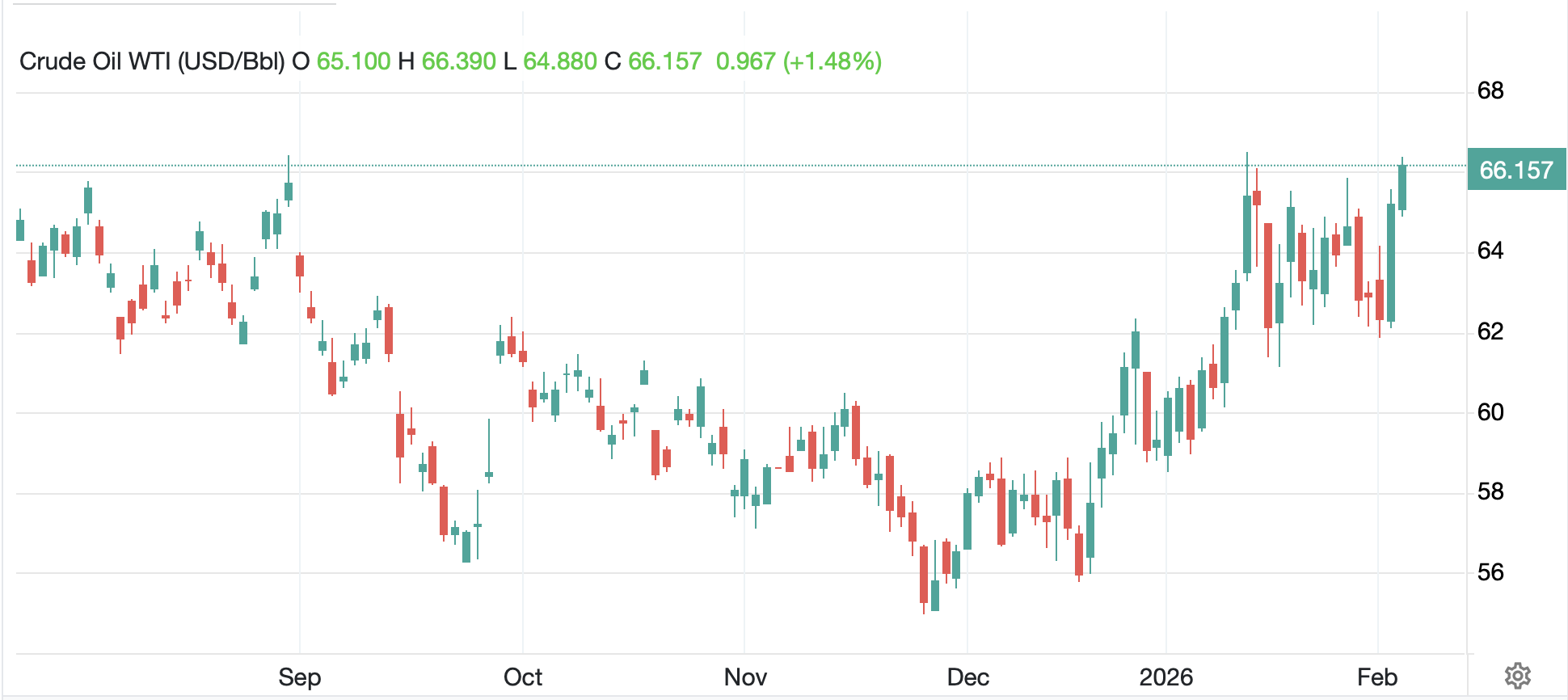
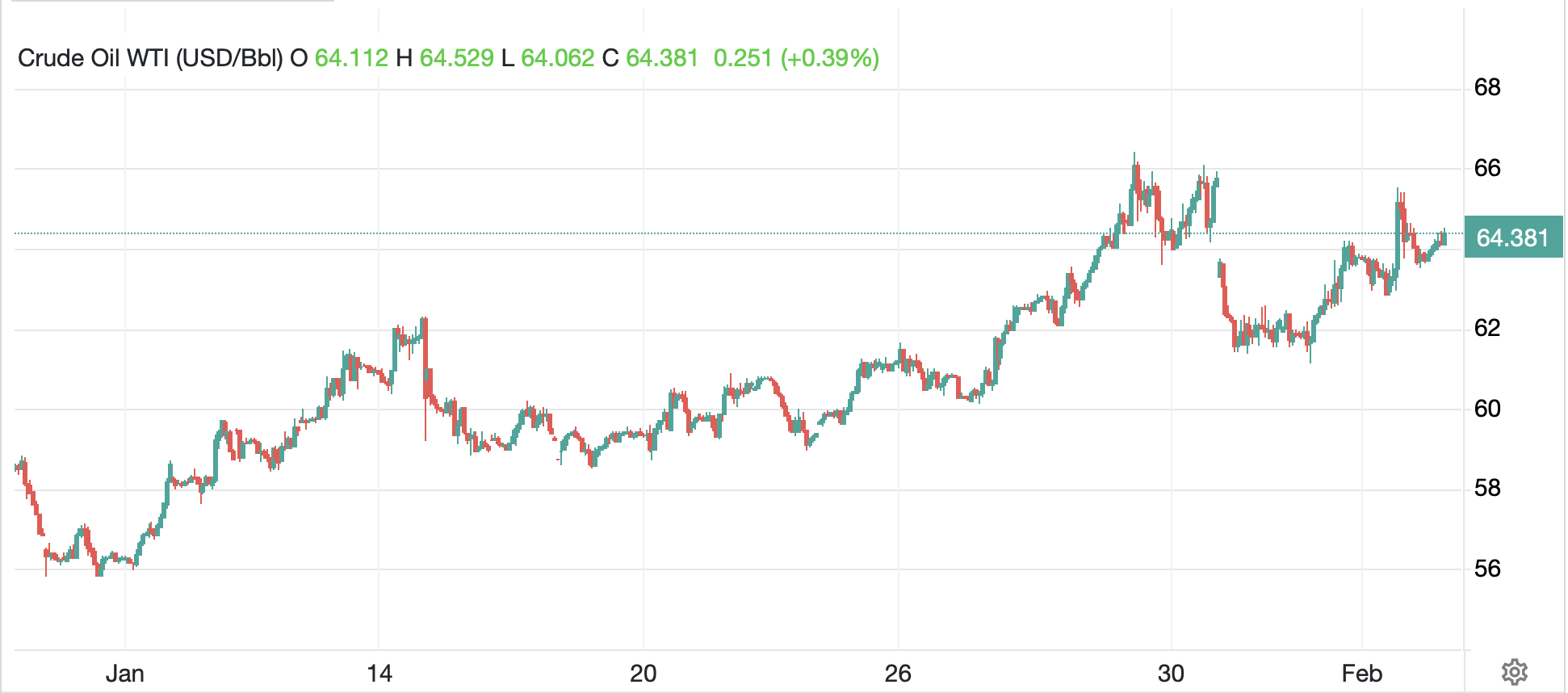
Turning to commodities, oil (+0.4%) continues to climb and is once again approaching $70/bbl.  In fact, since that fateful day, March 11th, it has rallied consistently as can be seen below.  I still don’t understand why that date seemed to offer a change of view, but there you go.

Source: tradingeconomics.com

In the metals markets, this morning is once again seeing a bullish tone with both precious and industrial metals in demand.  Gold (+0.5%) continues to be one of the best performing assets around, although so far this year silver (+1.5%) and copper (+1.15%) have been amongst the few things to beat it.  I believe this trend has legs.

Finally, the dollar is softer this morning, falling against both its G10 and EMG counterparts almost universally.  SEK (+0.9%) is the leader in the clubhouse, although we have seen solid gains from AUD (+0.5%) and NZD (+0.6%) with both the euro (+0.2%) and pound (+0.2%) lagging the pace but in the same direction.  JPY (+0.4%) which has suffered a bit lately, is following the broad dollar move this morning.  in the EMG bloc, the CE4 (+0.4% across all of them) is setting the tone with ZAR (+0.4%) right there.  Otherwise, the movement has been a bit more modest (MXN +0.2%, KRW +0.15%), but still putting pressure on the dollar.

Turning to the data, as I never got to show the week ahead, here we go:

TodayCase-Shiller Home Prices4.8%
 Consumer Confidence94
 New Home Sales680K
WednesdayDurable Goods-1.0%
 -ex Transport0.2%
ThursdayInitial Claims225K
 Continuing Claims1890K
 GDP Q4 Final2.3%
 GDP Final Sales Q43.2%
 Goods Trade Balance-$134.6B
FridayPersonal Income0.4%
 Personal Spending0.5%
 PCE0.3% (2.5% Y/Y)
 Core PCE0.3% (2.7% Y/Y)
 Michigan Sentiment57.9

Source: tradingeconomics.com

Obviously, the PCE data Friday will be the most interesting piece of data released, although we cannot ignore Case-Shiller today.  I keep looking at prices rising there at nearly 5% and wondering why economists expect inflation to fall.  If home prices are rising 5% per year, and they represent one-third of the CPI, it doesn’t leave much room for other prices to rise to achieve 2.0%.  Just sayin’.  In addition, we hear from seven different Fed speakers this week.  Now, I have been making a big deal about how Fedspeak doesn’t seem to matter as much anymore.  Perhaps this week, given the overall uncertainty across markets, it will matter.  However, the Fed funds futures market continues to price a bit more than two rate cuts for the rest of the year, which has not changed very much at all in the past month.  I still don’t think the Fed speakers matter right now.

Markets are highly attuned to whatever Trump says about tariffs.  Absent a new war, and maybe even if one starts, I suspect traders (or algos) will focus on that exclusively.  But despite all this, nothing has altered my longer-term view that the dollar will weaken, and commodities remain strong going forward.

Good luck

Adf

Eyes Like a Bat

The new Mr Yen
Is watching for excess moves
With eyes like a bat


While every day of this Trump presidency is filled with remarkable activity at the US government level, financial markets are starting to tune out the noise.  Yes, each pronouncement may well be important to some part of the market structure, but the sheer volume of activity is overwhelming investment views.  The result is that while markets are still trading, there seem to be fewer specific drivers of activity.  Consider the fact that tariffs have been on everyone’s mind since Trump’s inauguration, but nobody, yet, has any idea how they will impact the global macro situation.  Are they inflationary?  Will sellers reduce margins?  Will there be a strong backlash by the US consumer?  None of this is known and so trading the commentary is virtually impossible.

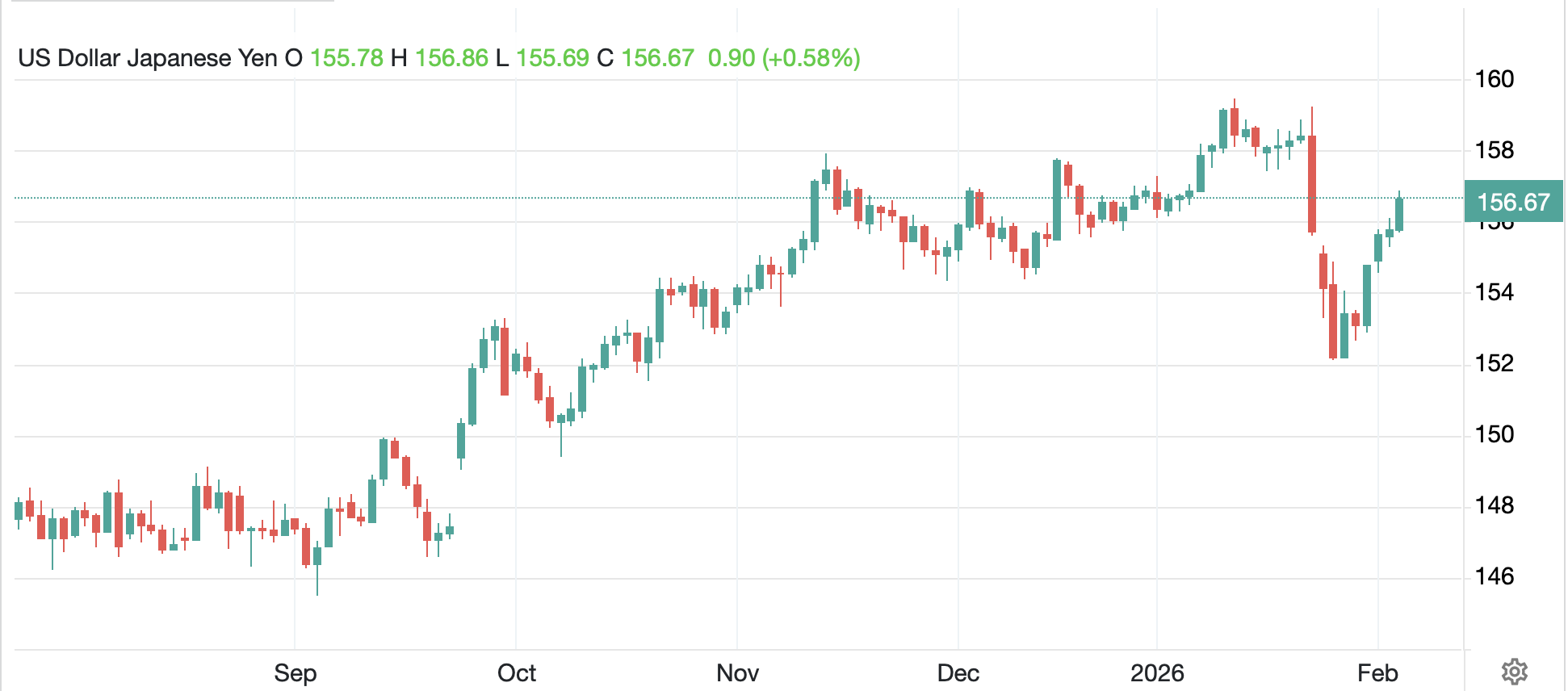
With that in mind, it is worth turning our attention this morning to Japan, where the yen (-0.4%) has been steadily climbing in value, although not this morning, since the beginning of the year as you can see from the chart below.

Source: tradingeconomics.com

Amongst G10 currencies, the yen is the top performer thus far year-to-date, rising about 5%.  Arguably, the key driver here has been the ongoing narrative that the BOJ is going to continue to tighten monetary policy while the Fed, as discussed yesterday, is still assumed to be cutting rates later in the year.  

Let’s consider both sides of that equation.  Starting with the Fed, just yesterday Atlanta Fed president Bostic explained to a housing conference, “we need to stay where we are.  We need to be in a restrictive posture.”  Now, I cannot believe the folks at the conference were thrilled with that message as the housing market has been desperate for lower rates amid slowing sales and building activity.  But back to the FX perspective, what if the Fed is not going to cut this year?  It strikes me that will have an impact on the narrative, and by extension, on market pricing.

Meanwhile, Atsushi Mimura, the vice finance minister for international affairs (a position known colloquially to the market as Mr Yen) explained, when asked about the current market narrative regarding the BOJ’s recent comments and their impact on the yen, said, “there is no gap with my view.  Amid high uncertainty, we have to keep watching the impact of any speculative trading on, not only the exchange market, but also financial markets overall.”  

If I were to try to describe the current market narrative on the yen, it would be that further yen strength is likely based on the assumed future narrowing of interest rate differentials between the US and Japan.  That has been reinforced by Ueda-san’s comments that they expect to continue to ‘normalize’ policy rates, i.e. raise them, if the economy continues to perform well and if inflation remains stably at or above their 2% target.  With that in mind, a look at the below chart of Japanese core inflation shows that it has been above 2.0% since April 2022.  That seems pretty stable to me, but then I am just a poet.

Source: tradingecomnomics.com

Adding it all up, I feel far better about the Japanese continuing to slowly tighten monetary policy as they have a solid macro backdrop with inflation clearly too high and looking like it may be trending a bit higher.  However, the other side of the equation is far more suspect, as while the market is pricing in rate cuts this year, recent Fed commentary continues to maintain that the current level of rates is necessary to wring the last drops of inflation out of the economy.

There is a caveat to this, though, and that is the gathering concern that the US economy is getting set to fall off a cliff.  While that may be a bit hyperbolic, I do continue to read pundits who are making the case that the data is starting to slip and if the Fed is not going to be cutting rates, things could get worse.  In fairness to that viewpoint, the Citi Surprise Index is pointing lower and has been declining since the beginning of December, meaning that the data releases in the US have underperformed expectations for the past two months. (see below)

Source: cbonds.com

However, a look at the Atlanta Fed’s GDPNow estimate shows that Q1 is still on track for growth of 2.3%, not gangbusters, but still quite solid and a long way from recession.  I think we will need to see substantially weaker data than we have to date to get the Fed to change their wait-and-see mode, and remember, employment is a lagging indicator, so waiting for that to rise will take even longer.  For now, I think marginal further yen strength is the most likely outcome as we will need a big change in the US to alter current Fed policy.

Ok, let’s see how markets have behaved overnight.  Yesterday saw a reversal of recent US equity performance with the DJIA slipping while the NASDAQ rallied, although neither moved that far.  In Asia, the Nikkei (+0.3%) edged higher as did the CSI 300 (+0.2%) although the Hang Seng (-0.3%) gave back a small portion of yesterday’s outsized gains.  The rest of the region, though, was under more significant pressure with Korea, Taiwan, Indonesia and Thailand all seeing their main indices decline by more than -1.0%.  In Europe, red is the most common color on the screen with one exception, the UK (+0.35%) where there is talk of resurrecting free trade talks between the US and UK.  But otherwise, weakness is the theme amid mediocre secondary data and growing concern over US tariffs.  Finally, US futures are nicely higher this morning after Nvidia’s earnings were quite solid.

In the bond market, Treasury yields (+4bps) have backed up off their recent lows but remain in their recent downtrend.  Traders keep trying to ascertain the impacts of Trump’s policies and whether DOGE will be able to find substantial budget cuts or not with opinions on both sides of the debate widely espoused.  European sovereign yields have edged higher this morning, up 2bps pretty much across the board, arguably responding to the growing recognition that Europe will be issuing far more debt going forward to fund their own defensive needs.  And JGB yields (+4bps) rose after the commentary above.

In the commodity markets, oil (+1.1%) is bouncing after a multi-day decline although it remains below that $70/bbl level.  The latest news is that Trump is reversing his stance on Venezuela as the nation refuses to take back its criminal aliens.  Meanwhile, gold (-1.1%) is in the midst of its first serious correction in the past two months, down a bit more than 2% from its recent highs, and trading quite poorly.  There continue to be questions regarding tariffs and whether gold imports will be subject to them, as well as the ongoing arbitrage story between NY and London markets.  However, the underlying driver of the barbarous relic remains a growing concern over increased riskiness in markets and rising inflation amid the ongoing deglobalization we are observing.

Finally, the dollar is modestly firmer overall vs. its G10 counterparts, with the yen decline the biggest in the bloc.  However, we are seeing EMG currency weakness with most of the major currencies in this bloc lower by -0.3% to -0.5% on the session.  In this case, I think the growing understanding that the Fed is not cutting rates soon, as well as concerns over tariff implementation, is going to keep pressure on this entire group of currencies.

On the data front, we see the weekly Initial (exp 221K) and Continuing (1870K) Claims as well as Durable Goods (2.0%, 0.3% ex Transport) and finally the second look at Q4 GDP (2.3%) along with the Real Consumer Spending piece (4.2%).  Four Fed speakers are on the calendar, Barr, Bostic, Hammack and Harker, but again, as we heard from Mr Bostic above, they seem pretty comfortable watching and waiting for now.

While I continue to believe the yen will grind slowly higher, the rest of the currency world seems likely to have a much tougher time unless we see something like a Mar-a Lago Accord designed to weaken the dollar overall.  Absent that, it is hard to see organic weakness of any magnitude, although that doesn’t mean the dollar will rise.  We could simply chop around on headlines until the next important shift in policy is evident.

Good luck

Adf
A Fifth Wheel

Confusion is clearly what reigns
As even the punditry strains
To understand whether
Investors will tether
Their future to stocks or take gains


As there was no activity in the US financial markets yesterday, it seems there was time for analysts to consider the current situation and make pronouncements as to investor behavior.  Ironically, we saw completely opposite conclusions from two major players.  On the one hand, BofA posted the following chart showing that investors’ cash holdings are at 15-year lows, implying they remain fully invested and quite bullish.

Meanwhile, the WSJ this morning has a lead article on how bearish investors are, claiming they are the most bearish since November 2023 according to the American Association of Individual Investors.  Apparently, 47.3% of investors surveyed believe stock prices will fall over the next 6 months.

So, which is it?  Are investors bullish or bearish?  To me this is a perfect description of the current situation.  Everyone is overloaded with information, much of which is contradictory, and so having a coherent view has become extremely difficult.  This is part and parcel of my view that the only thing we can clearly expect going forward is an increase in volatility.  In fact, someone said that Donald Trump is the avatar of volatility, and I think that is such an apt description.  Wherever he goes, mayhem follows.  Now, I also believe that people knew what they were voting for as change was in demand.  But for those of us who pay close attention to financial markets, it will take quite the effort to keep up with all the twists and turns.

Fed speakers are starting to feel
Like they have become a fifth wheel
So, let’s get prepared
For Fed speaking squared
As they work, their views, to reveal

Away from the conundrum above, the other noteworthy thing is that FOMC members are starting to feel left out of the conversation.  Prior to President Trump’s inauguration, market practitioners hung on their every word, and they apparently loved the power that came with that setting.  However, now virtually every story is about the President and his policies with monetary policy falling to a distant issue on almost all scorecards.  Clearly, for a group that had grown accustomed to moving markets with their words, this situation has been deemed unacceptable.  The solution, naturally, is to speak even more frequently, and I fear believe this is what we are going to see (or hear) going forward.  

Yesterday was a perfect example, where not only, on a holiday, did we have multiple speakers, but they actually proffered different messages.  From the hawkish side of the spectrum, Governor Michelle Bowman, the lone dissenter to the initial 50bp rate cut back in September, explained caution was the watchword when it comes to acting alongside President Trump’s mooted tariff and other policies, “It will be very important to have a better sense of these policies, how they will be implemented, and establish greater confidence about how the economy will respond in the coming weeks and months.”  That does not sound like someone ready to cut rates anytime soon.

Interestingly, from the dovish side of the spectrum, Governor Christopher Waller, an erstwhile hawk, explained in a speech in Australia (on the day the RBA cut rates by 25bps for their first cut of the cycle and ending an 18 month period of stable rates) that, “If this wintertime lull in progress [on inflation] is temporary, as it was last year, then further policy easing will be appropriate.”  I find it quite interesting that Governor Waller suddenly sounds so dovish as many had ascribed to him the intellectual heft amongst the governors.  This is especially so given that is not the message that Chairman Powell articulated either after the last meeting or at his Humphrey-Hawkins testimony recently.  

So, which is it?  Is the Fed staying hawkish or are they set for a turn?  That will be the crux of many decision-making processes going forward, not just in markets but also in businesses.  We will keep tabs going forward.

Ok, on to the market’s overnight performances.  Lacking a US equity market to follow, everybody was on their own last night which showed with the mixed results.  Japan (+0.25%) showed modest gains while the Hang Seng (+1.6%) rocketed higher on the belief that President Xi is going to be helping the economy, notably the tech firms in China, many of which are listed in Hong Kong.  Alas, the CSI 300 (-0.9%) didn’t get that memo with investors apparently still concerned over the Trump tariff situation.  Elsewhere in the region, Korea and Taiwan rallied while Australia lagged despite the rate cut.  In Europe, unchanged is the story of the day with most bourses just +/-0.1% different than yesterday’s close.  Right now, in Europe, the politicians are trying to figure out how to respond to the recent indication that the US is far less interested in Europe than in the past, and not paying close attention to financial issues.  As to the US, futures at this hour (7:25) are pointing higher with the NASDAQ leading the way, +0.5%.

In the bond market, yields are climbing led by Treasuries (+4bps) with most of Europe seeing yields edge higher by 1bp or 2bps as well.  Remember, yesterday European sovereign yields rose smartly across the board.  Also, I must note JGB yields (+4bps) which have made further new highs for the move and continue to rise.  It appears last night’s catalyst was a former BOJ member, Hiroshi Nakaso, explained he felt more rate hikes were coming with the terminal rate likely to be well above 1.0%.  While I believe the Fed will be cautious going forward, I still think they are focused on rate cuts for now.  With that in mind and the ongoing change in Japanese policy, I am increasingly comfortable with my new stance on the yen.

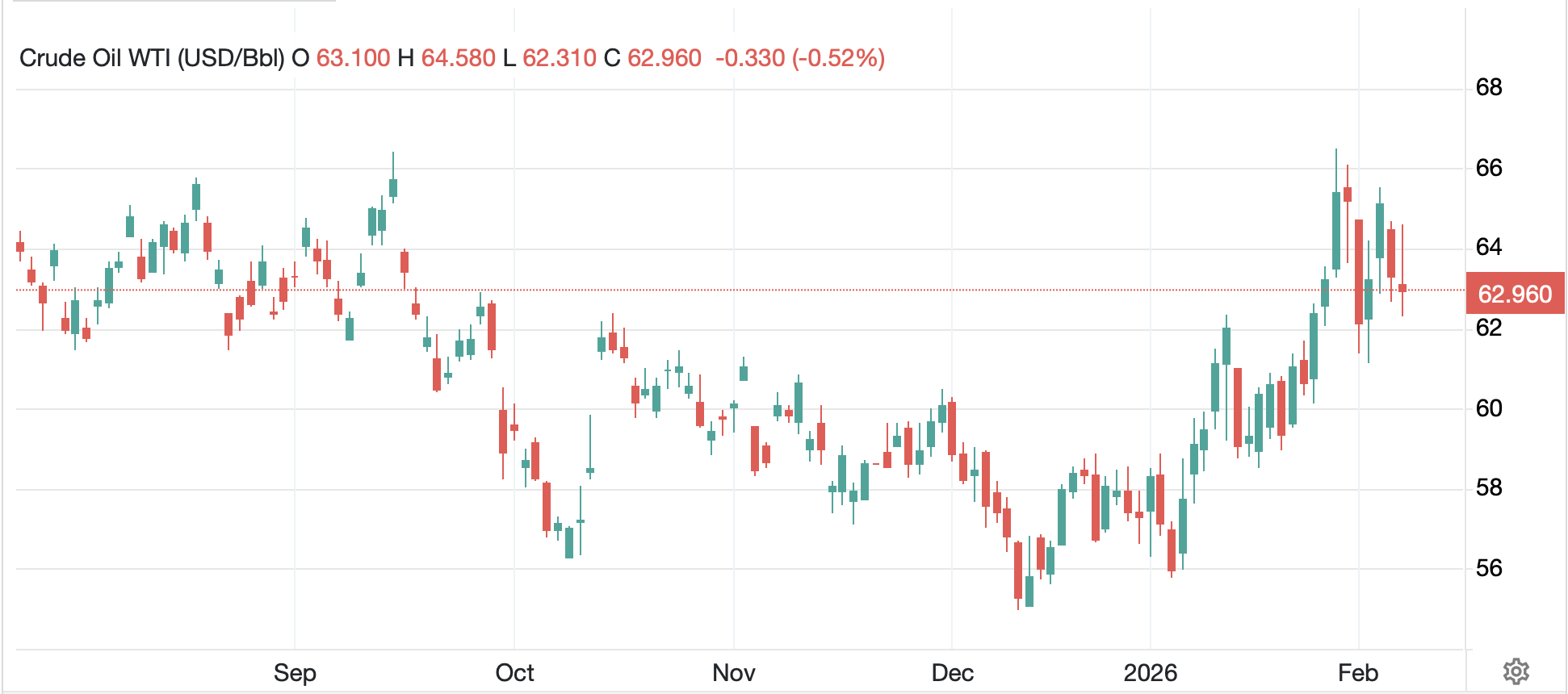
In the commodity markets, last Friday’s sell-off in the metals markets is just a bad memory with gold (+0.5%) rallying again and up more than 1% since Friday’s close.  I continue to believe those moves were positional and not fundamental.  Too, we are seeing gains in silver (+0.2%) and copper (+0.6%) to complete the triad.  Meanwhile, oil (-0.25%) continues to lag, holding above its recent lows but having a great deal of difficulty finding any buying impulse.  Whether that is due to a potential peace in Ukraine and the end of sanctions on Russian oil, or concerns over demand growth going forward is not clear to me, but the trend, as seen in the chart below, is clearly downward and has been so for the past year.

Source: tradingeconomics.com

Finally, in the FX markets, the dollar is firmer this morning rising against all its G10 counterparts with NZD (-0.6%) the laggard.  But losses of -0.2% are the norm this morning.  In the EMG bloc, we are seeing similar price behavior in most markets although MXN (+0.2%) is bucking the trend, seemingly benefitting from what appears to be a hawkish stance by Banxico and the still highly elevated interest rate differential in the peso’s favor.

On the data front, Empire State Manufacturing (exp -1.0) is the only data point although we will hear from two more Fed speakers, Daly and Barr.  I cannot believe that they have really changed their tune and expect that caution will remain their guiding principle for now, although I expect to hear that repeated ad nauseum as they try to regain their place in the spotlight.

Aside from my yen view, I still find it hard to be excited about many other currencies for now.  There is still no indication the Fed is going to move anytime soon, and other central banks are clearly in easing mode.  That bodes well for the dollar going forward.

Good luck

Adf
More Than a Tweet

In Davos, the global elite
Were treated to more than a Tweet
The president spoke
And in one broad stroke
Explained that he won’t be discreet
 
For oil, he wants prices falling
For Europe, he said it’s appalling
That nations don’t pay
Enough to defray
The costs of the war they’re forestalling


If, prior to yesterday, European leaders weren’t sure how things were going to play out now that Mr Trump is back in office, they have a whole lot better understanding now.  I imagine that all their fears were realized when Trump spoke via video at the WEF meeting in Davos, Switzerland.  It’s funny, Argentine president Javier Milei has been calling out the globalist agenda since his election last year and Europe didn’t care and didn’t change their behavior.  I guess that makes sense because the European press would never allow the narrative to change for a minor player like that.  Alas, for the European narrative now, the US, one of their largest trading partners and the nation that insures their safety via NATO membership, is calling them out for their behaviors, whether it is the rarely discussed tariffs they impose on US imports, or the lack of funding for a war they claim is critical to continue in Ukraine, and they are suddenly aware they better reconsider their positions. 

It will be very interesting to watch if things change in Europe (I think they will) and how quickly these changes will come (that could take more time).  Arguably, the biggest problem the current  European leaders have is that there are already large segments of their populations that are unhappy and have been voting accordingly, whether for AfD in Germany, or the RN in France to name two.  Trump’s comments are going to only foment more support for those positions.  I suspect the elections upcoming in Europe are going to see a further rightward swing, or perhaps simply a further swing against the incumbents given what appears to be a significant amount of dissatisfaction amongst the electorate.  No matter your view of Trump’s policies, we all must recognize he is a remarkable political force!

Fifty basis points
Is now Japan’s new baseline
Can it go higher?

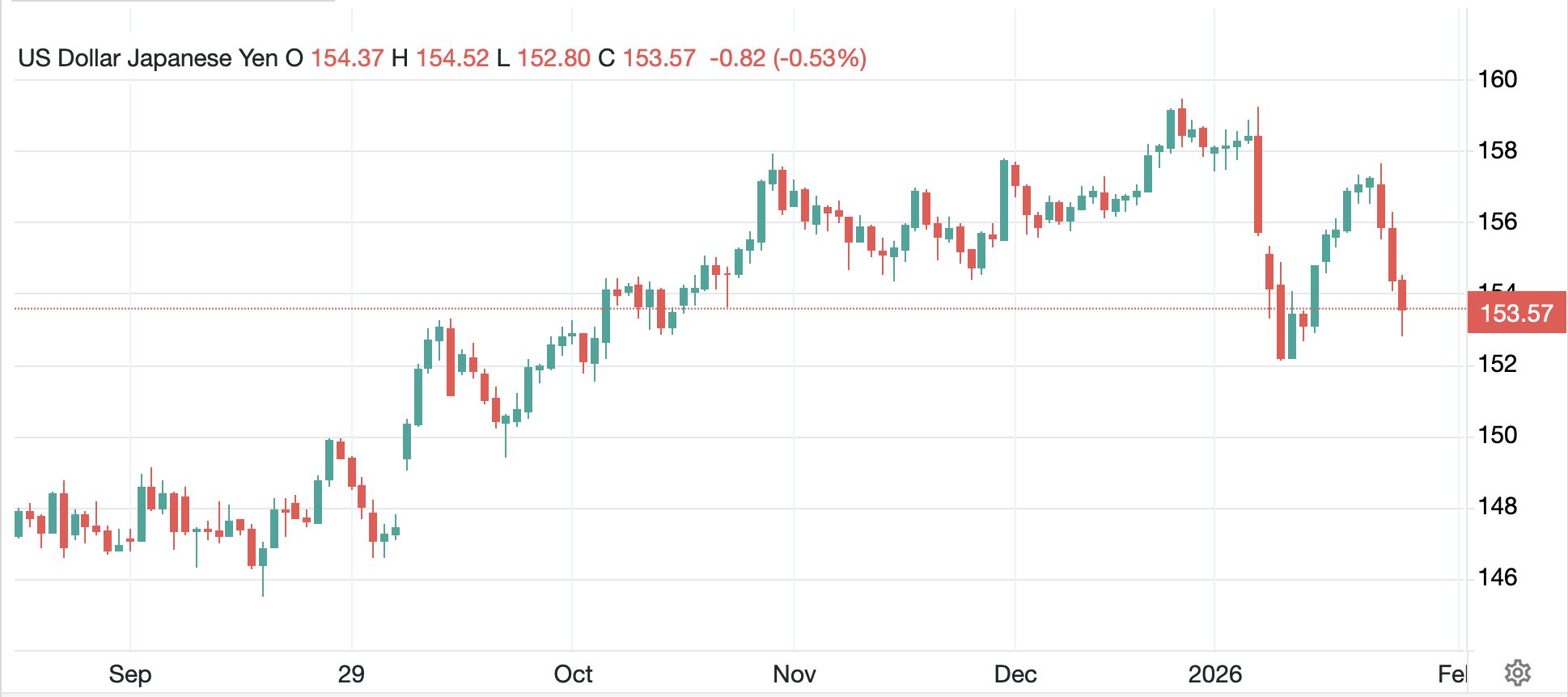
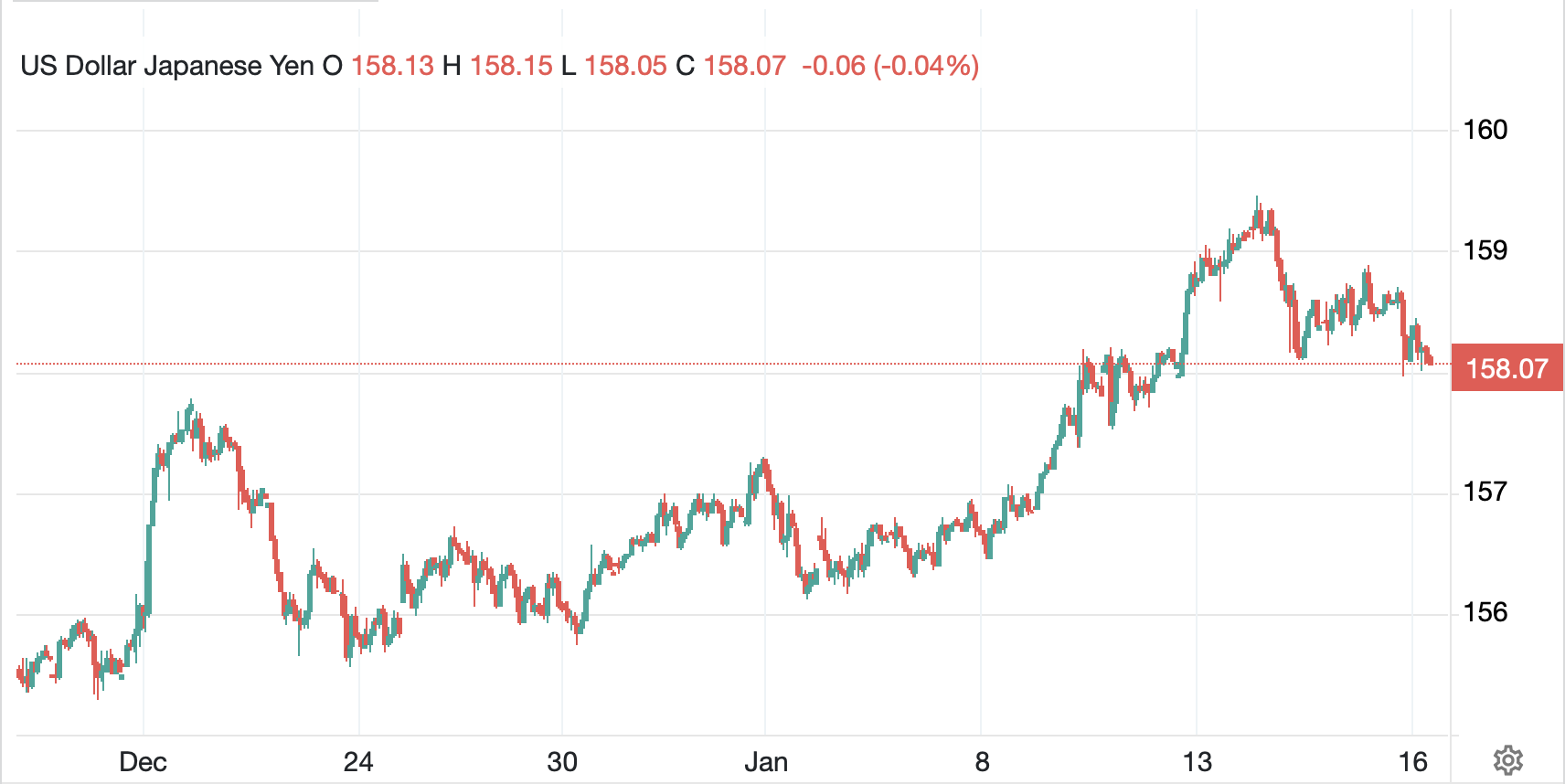
As widely expected, the BOJ hiked its base rate by 25bps last night to 0.50%, the highest levels since October 2008.  The immediate market response, as you can see in the chart below, was for the yen to rally (dollar decline) almost one full percent despite interest rate markets having fully priced in the hike.  However, as you can also see, the yen has given back virtually all those gains in the wake of Ueda-san’s press conference where he explained the BOJ was not “seriously behind the curve” which was taken as meaning that it will be a while before they move again.  

Source: tradingeconomics.com

While JGB yields did perk up 2bps on the session, it hardly seems like the start of a rout.  And, as I highlighted yesterday, the interest rate differential does not seem likely to have changed enough to alter investor plans. Going forward, I expect the yen to be entirely beholden to the dollar’s broad movement.  If, as I suspect, the market starts to price in a more hawkish Fed, USDJPY is likely to go back and test its highs from last summer.

Ok, let’s move on to the overnight market action.  Once again, US equities rallied yesterday, although at this hour (7:10), futures are essentially unchanged.  In Asia, Japanese shares shed early gains after the BOJ rate hike and Ueda presser and closed unchanged on the day.  However, both Hong Kong (+1.9%) and China (+0.8%) rallied on the news that Trump and Xi had a “friendly” conversation as traders and investors took that to mean that tariffs on Chinese goods were not coming right away.  As to the rest of Asia, once again there were both gainers (Korea, Taiwan, Australia) and laggards (India, Indonesia, Philippines) with the rest showing little net movement.  

In Europe, the picture is also mixed as the CAC (+0.9%) is leading the way higher as investors want to believe that Trump’s call for lower interest rates as well as lower oil prices will help the European economy, especially the luxury sector in France.  But elsewhere in Europe we see Germany (+0.3%) a bit higher while Spain (-0.4%) and the UK (-0.4%) are lagging with the former suffering from rising energy prices while the ongoing political mess in the UK has investors steering clear of the Kingdom for now.

In the bond market, Treasury yields are unchanged this morning, holding the recent 10bp bounce from the lows seen last week.  European sovereign yields are higher by 1bp to 2bps across the board, with activity quiet and we’ve already discussed JGBs.  

Ironically, after Trump’s call for lower oil prices, they are firmer this morning, up 0.6%, although in the broad scheme of things, relative to the recent price action, that is tantamount to unchanged.  Here is something to consider though, which is a little bit outside the box.  The Biden EO that cited the OCSLA of 1953 prohibited drilling across a series of areas including the Atlantic and Pacific Oceans as well as the Gulf of Mexico.  Now, what is one of the first things that Trump said?  He is renaming the Gulf of Mexico to the Gulf of America.  Does that nullify the EO?  (h/t Alyosha).  I’m sure that is a legal battle to be had, but it would be right in line with Trump’s MO.  It would also allow drilling to continue unabated there, which to my understanding, has the most fruitful potential new sites.

Meanwhile, in the metals markets, they are all rallying nicely this morning with gold (+0.85%) now just about 1% below the all-time high seen in October of $2826/oz.  There are many market technicians (and gold bugs) calling for a breakout to new highs, but there is a case to be made this remains a technical short squeeze into NY delivery next week.  However, gold has dragged both silver (+0.9%) and copper (+0.9%) along for the ride.

Finally, the dollar is under pressure this morning with the DXY (-0.5%) falling to its lowest level since mid-December.  Ironically, while the G10 weakness is widespread (EUR +0.7%, GBP +0.5%, AUD +0.5%) the yen, after the rate hike, is the massive underperformer.  In the EMG bloc, one of the biggest movers is CNY (+0.5%) which is clearly benefitting from that phone call, while SGD (+0.5%) is benefitting despite the MAS having eased monetary policy.  This is an indication of just how much of a dollar selling move this is this morning.  In fact, other than the yen’s modest decline, every other major counterpart currency is higher vs. the dollar today. 

On the data front, Flash PMI (exp 49.6 Manufacturing, 56.5 Services) leads off at 9:45 then at 10:00 we see Existing Home Sales (4.19M) and Michigan Sentiment (73.2).  With the Fed meeting next Tuesday and Wednesday, there are still no speakers.  Perhaps of more interest is the fact that we have not seen a single article from the Fed whisperer lately.  As the data is third tier this morning, I wouldn’t expect anything today either.  Too, next week there is limited data of note before the meeting so unless we see a narrative shift of substance, I imagine the Fed will do nothing next week and Powell will dodge any questions regarding the future.

For now, it is all Trump and his actions, comments and EOs.  And you can’t plan how to trade those.  Once again, this is why hedging is so important.

Good luck and good weekend

Adf

Looking Elsewhere

The Middle East story is back
With fears that Iran might attack
So, oil is rising
And it’s not surprising
The dollar is leading the pack
 
But til anything happens there
The market is looking elsewhere
The Payrolls report
May well be the sort
That causes Chair Powell to care


It was only a week ago when the Israeli response to the Iranian missile barrage was seen by market participants as a clear de-escalation of tensions in the Middle East.  The market’s response was to reduce the risk premium in the price of oil which promptly fell $5/bbl amid signs of slowing growth in China as well.  Alas, as can be seen in the chart below, that was Monday’s story and no longer pertains.  Rather, the new concern is that Iran is planning to launch yet another attack, this time via proxies in Iraq, with Israel vowing to respond more severely.  You cannot be surprised that oil has regained its levels prior to Monday’s narrative.

Source: tradingeconomics.com

Adding to the buying pressure for oil has been the better than expected growth data from China (Caixin Mfg PMI printing better than expected 50.3) and solid US GDP data on Wednesday along with stronger Personal Income and Spending data yesterday.  And remember, the market is also looking ahead to the Standing Committee of the National People’s Congress in China to add significant fiscal stimulus there, with CNY 10 trillion (~$1.4 trillion) the most popular number being bandied about.  If that comes to pass, it will seemingly increase demand for oil on China’s part.

Of course, there is another piece of news that the market is awaiting with the potential for a significant impact, today’s Employment Report.  Ahead of the release, these are the current consensus forecasts:

Nonfarm Payrolls113K
Private Payrolls90K
Manufacturing Payrolls-28K
Unemployment Rate4.1%
Average Hourly Earnings0.3% (4.0% Y/Y)
Average Weekly Hours34.2
Participation Rate62.5%
ISM Manufacturing47.6
ISM Prices Paid48.5

Source: tradingeconomics.com

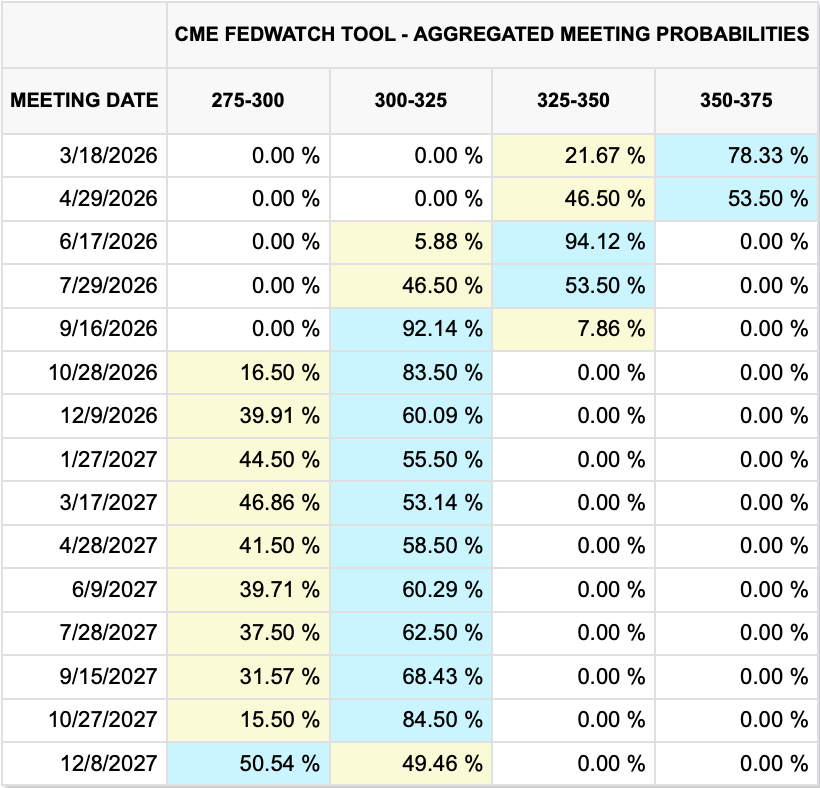
You may remember that last month, the NFP number printed much higher than expected at 233K which began the questioning of the Fed’s expected rate cutting path.  Frankly, the data since then has done very little to argue for much policy ease as Retail Sales have held up, GDP was solid and prices appear to be moving higher, not lower.  In fact, you can see how things have played out over the past month in the chart/table below from the CME showing the market priced probability of future Fed funds rates.  Check out where things were a month ago, just prior to the last NFP report.

The market was pricing a more than 50% probability of at least 75 basis points of rate cuts by December. Obviously, that is no longer the case and if this morning’s data proves stronger than forecast (remember, ADP Employment was significantly stronger than expected) many more people are going to call into question the assumption that the Fed is going to be cutting rates at all.  If you think about it, GDP is growing above trend at 2.8%, inflation remains above target with core CPI 3.3% and Unemployment is at a still historically low 4.1%.  if I look at those three major economic guideposts, the one that stands out to be addressed is inflation, not Unemployment, and that takes tighter policy.

Now, maybe this morning’s data will be awful, with a 50K NFP print and a jump in the UR to 4.3%.  That would certainly bring the doves out more aggressively but absent something like that, I continue to scratch my head as to why the Fed is so keen to cut the Fed funds rate.  Let’s put it this way, if the data surprises to the upside, I expect the December rate cut probability to fall close to 50%.

At any rate, those are the topics du jour, away from the election stories that are suffocating most everything else.  So, let’s see how things behaved overnight.

Well, I guess there has been one other story that has gotten tongues wagging, the fact that US equity markets had their worst session in two months with all three major indices falling sharply.  This was blamed on weaker than forecast earnings releases from several companies in the tech sector, where even if the actual earnings were solid, there were other issues like guidance or breakdowns of revenues, that disappointed.  It is far too early to declare that the love affair with the tech sector, especially AI, is ending, but there are a few names in the sector that are suffering greatly.  This certainly bears close watch going forward, because if this theme starts to lose adherents, even in the short run, it appears there is ample room for a move lower in stocks.

Turning to other markets overnight, Tokyo (-2.6%) led the way lower in Asia with most regional exchanges falling and only Hong Kong (+0.9%) bucking the trend.  There are those who believe there is a causal relationship between the Nikkei, the NASDAQ and USDJPY with one theory that it is the FX rate that drives these movements.  While it is certainly true that we have seen correlation amongst these three markets, I find it difficult to make the case that USDJPY is the driver.   A quick look at all three on the same chart certainly shows that they regularly move in similar directions, but I have a harder time claiming which one is the leader.

Source: tradingeconomics.com

However, despite the negativity from yesterday’s US moves and the overnight sell-off and the sharp rise in oil prices, European bourses are all in the green today, higher by about 0.5% across the board.  In fact, this is in sync with US futures which are also trading higher, by about 0.4%, this morning.

In the bond market, other than UK Gilt yields, which rose 7bps net yesterday although traded as high as 20bps higher than Wednesday’s close during the session, the rest of the bond markets were quiet.  It seems that UK bond investors are not that happy with the recently promulgated budget, and neither are voters as there was a by-election in a “safe” Labour seat that went to Nigel Farage’s Reform UK party.  I have a feeling that bond markets are going to be the epicenter of market activity over the next week or two as huge differences of opinion remain regarding the potential outcomes of the US election.

Away from oil (+1.9%) this morning, the rest of the commodity sector is also doing well today with both precious and base metals all in the green.  But they have not recouped yesterday’s declines which saw gold fall back -1.5% with even larger losses in silver (-3.2%) although copper (-0.6%) didn’t have nearly as bad a day.  This morning, the metals are higher by between 0.2% (gold ) and 0.6% (silver), so it seems like it was a month-end position adjustment and profit-taking exercise.

Finally, the dollar is strong this morning, rallying against most of its G10 counterparts with JPY (-0.4%) the laggard while the pound (+0.1%) seems to be benefitting from higher yields.  Versus the EMG bloc, the dollar is also broadly higher with only MXN (+0.2%) showing any life.  The peso has a number of issues ongoing with concerns that a Trump victory may lead to tariff increases and strain on the economy while domestic issues have arisen over the potential resignation of eight of their Supreme Court Justices which will have a big impact on the judicial system and potentially the Morena party’s ability to rule effectively.  However, after a steady weakening of the peso throughout October, it appears we are seeing a bit of a bounce this morning.

And that’s really what we have today.  At this point, we will all await the NFP and respond accordingly.  Something to keep in mind is that the hurricanes last month could well impact the data, so whatever the outcome, you can be sure that there will be those saying to ignore it as incomplete.  Regarding the dollar, it is still hard to bet against in my mind given the US economic data continues to be the best around.

Good luck and good weekend

Adf

A Brand-New World

Even in Japan
Incumbency is questioned
It’s a brand-new world


Yesterday’s elections in Japan brought about the downfall of yet another incumbent government as people around the world continue to demonstrate they are tired of the status quo.  Recently appointed PM, Shigeru Ishiba called for a snap election within days of his appointment following the resignation of previous PM Kishida on the heels of a funding scandal.  Ishiba’s idea was to receive a fresh mandate from the electorate so he could implement his vision.  Oops!  It turns out that his vision was not in sync with the majority of the population.  Ultimately, the LDP and its key ally, Komeito, won only 215 seats in the Diet (Japan’s more powerful Lower House), well below the 233 necessary for a majority and even further from the 293 seats they held prior to the election.  The very fact that this occurred in Japan, the most homogenous of G10 nations, is indicative of just how strong the anti-incumbent bias has grown and just how tired people are of current leadership (keep that in mind for the US election).

Now, turning to the market impact, the tenuous hold any government formed from these disparate results means that Japan seems unlikely to have a clear, coherent vision going forward.  One of the key issues was the ongoing buildup in defense expenditures as the neighborhood there increasingly becomes more dangerous.  But now spending priorities may shift.  Ultimately, as the government loses its luster and ability to drive decisions, more power will accrue to Ueda-san and the BOJ.  This begs the question of whether the gradual tightening of monetary policy will continue, or if Ueda-san will see the need for more support by living with more inflation and potentially faster economic growth.The yen’s recent decline (-0.25% today, -8.5% since the Fed rate cut in September) shows no signs of slowing down as can be seen from the chart below.  As the burden of policy activity falls to the BOJ, I expect that we could see further yen weakness, especially when if the Fed’s rate cutting cycle slows or stops as December approaches.  If this process accelerates, I suspect the MOF will want to intervene, but that will only provide temporary respite.  Be prepared for further weakness in the yen.

Source: tradingeconomics.com
 
This weekend’s Israeli response
To missile attacks from Iran-ce
Left bulls long of oil
In massive turmoil
As prices collapsed at the nonce

The other major market story this morning was the oil market’s response to Israel’s much anticipated retaliation to the Iranian missile barrage from several weeks ago.  The precision attacks on military assets left the energy sector untouched and may have the potential to de-escalate the overall situation.  With this information, it cannot be surprising that more risk premium has been removed from the price of oil and this morning the black, sticky stuff has fallen by nearly 6% and is well below $70/bbl.  This has led the entire commodity sector lower in price with not only the entire energy sector falling, but also the entire metals sector where both precious (Au -0.6%, Ag -0.9%) and base (Cu -0.2%, Al -1.1%) have given back some of their recent gains.  While declining oil prices will certainly help reduce inflationary readings over time, at least at the headline level, I do not believe that the underlying fundamentals have changed, and we are likely to continue to see inflation climb slowly.  In fact, Treasury yields (+3bps) continue to signal concern on that very issue.

Which takes us to the rest of the overnight activity.  Friday’s mixed session in NY equity markets was followed by a lot more green than red in Asia with the Nikkei (+1.8%) leading the way on the back of both lower energy prices and the weaker yen, while Chinese stocks (+0.2%) managed a small gain along with Korea (+1.1%) and India (+0.8%).  However, most of the other regional markets wound up with modest declines.  In Europe, mixed is the description as well, with the CAC (+0.25%) and IBEX (+0.4%) in good spirits while both the DAX and FTSE 100 (-0.1%) are lagging.  Given the complete lack of data, the European markets appear to be responding to ECB chatter, which is showing huge variety on members’ views of the size of the next move, and questions about the results of the US election, with President Trump seeming to gain momentum and traders trying to figure out the best way to play that outcome.  As to US futures, this morning they are firmer by 0.5% at this hour (7:20).

Although Treasury yields have continued their recent climb, European sovereign yields are a touch softer this morning, although only by 1bp to 2bps, as clarity is missing with respect to ECB actions, Fed actions and the US elections.  My sense is that we will need to see some substantial new news to change the current trend of rising yields for more than a day.

Finally, the dollar is net, a little softer today although several currencies are suffering.  We have already discussed the yen, and we cannot be surprised that NOK (-0.4%) is weaker given oil’s decline, but we are also seeing MXN (-0.3% and back above 20.00 for the first time since July) under pressure as that appears to be a response to a potential Trump electoral victory.  But elsewhere, the dollar is under modest pressure with gains on the order of 0.1% – 0.3% across most of the rest of the G10 as well as many EMG currencies.  There are precious few other stories of note this morning.

On the data front, it is a very big week as we see not only NFP data but also PCE data.

TuesdayCase-Shiller Home Prices5.4%
 JOLTS Job Openings7.99M
 Consumer Confidence99.3
WednesdayADP Employment115K
 Q3 GDP3.0%
ThursdayInitial Claims233K
 Continuing Claims1880K
 Personal Income0.2%
 Personal Spending0.4%
 PCE0.1% (2.1% Y/Y)
 Core PCE 0.1% (2.7% Y/Y)
 Chicago PMI47.5
FridayNonfarm Payrolls180K
 Private Payrolls160K
 Manufacturing Payrolls-35K
 Unemployment Rate4.2%
 Average Hourly Earnings0.3% (4.0% Y/Y)
 Average Weekly Hours34.2
 Participation Rate62.5%
 ISM Manufacturing47.5
 ISM Prices Paid48.2

Source: tradingeconomics.com

Of course, with the FOMC meeting next week, we are now in the Fed’s quiet period, so there will be no more official commentary.  The one thing to watch is if something unexpected occurs, then look for an article from the Fed whisperer, Nick Timiraos of the WSJ.  But otherwise, this is shaping up as a week that starts slowly and builds to the back half when the data comes.

Regardless of the election outcome, I expect that the budget situation will only devolve into greater deficits.  I believe that will weigh on the bond market, driving yields higher and for now, I think that will likely help the dollar overall, but not too much.  It remains difficult for me to see the dollar reverse course lower absent a much more aggressive FOMC, and that just doesn’t seem to be on the cards.

Good luck

Adf
Fervent Dreams

The FX Poet will be in Nashville at the AFP Conference October 21-22, speaking about effective ways to use FX options in a hedging program.  Please come to the presentation on Monday at 1:45 in Grand Ballroom C2 if you are there.  I would love to meet and speak.
 
Said Governor Waller, inflation
Is falling and so there’s temptation
To cut really fast
And if our forecast
Is right, there will be celebration
 
The problem is, if we are wrong
And price rises we do prolong
We’ll get all the blame
At which point we’ll frame
Our mandate as “jobs must be strong”
 
Meanwhile, in China it seems
That President Xi’s fervent dreams
Of finding more growth
Is stuck cause he’s loath
To listen to Pan Gongsheng’s schemes


First, a mea culpa, as while banks and the bond market were closed yesterday, the equity market was open, and the rally continued.  Although, that doesn’t really change anything I wrote yesterday.  But the stories that got the press yesterday were about Fed Governor Chris Waller and his speech.  Waller is considered one of the key FOMC members as his policy research has been consistent and more accurate than most others, as well as because he doesn’t appear to be nearly as partisan as some other governors.

At any rate, he eloquently made the case that the Fed was going to continue to cut rates, albeit perhaps more slowly than previously expected, because even though economic activity remains strong and inflation is above our goals, we remain confident that we are still going to achieve our targets.  In fact, I think his words are worth reading directly [emphasis added]:

Whatever happens in the near term, my baseline still calls for reducing the policy rate gradually over the next year. The median rate for FOMC participants at the end of 2025 is 3.4 percent, so most of my colleagues likewise expect to reduce policy over the next year. There is less certainty about the final destination…While much attention is given to the size of cuts over the next meeting or two, I think the larger message of the SEP is that there is a considerable extent of policy restrictiveness to remove, and if the economy continues in its current sweet spot, this will happen gradually.”

On to the next story, China and the still-to-come stimulus package.  According to Bloomberg, there is a new plan to allow local governments to swap up to CNY 6 trillion (~$840B) of their outstanding “hidden” debt, which is in the name of special funding vehicles, to straight local government debt, which should carry lower interest rates.  The problem is that both the size of this program and its ultimate effect are seen as insufficient to address the issues.  Certainly, reducing interest payments will help a bit, but the debt problem, along with the property problems, are so much larger than this, at least 10X the proposed CNY 6 trillion, that this will barely make a dent. 

Ultimately, the only solution that seems viable is that the central government borrows more money (its current outstanding debt is at just 25% of GDP) and funds new projects, gives it out to citizens in a helicopter money drop, or something other than investing in more production for exports.  This seemed to be where PBOC Governor Pan Gongsheng was headed several weeks ago.  Alas, President Xi has spent a decade stripping power away from the private sector and amassing his own.  I find it highly unlikely he will willingly cede any of that power simply to help his citizens.  Recent analyst updates for Chinese GDP growth in 2024 have fallen back below his 5.0% target, and I imagine they are correct.

Which brings us to this morning, where the biggest market mover is oil (-5.1%) which is falling on a combination of several things.  First, news that President Biden has convinced Israeli PM Netanyahu to not strike Iran’s oil fields, thus removing a key supply issue and war premium.  Next, the fact that China’s stimulus efforts are so weak implies lower demand from the world’s largest oil importer, and finally, OPEC just cut its forecast for oil demand for 2024 and 2025 although they have not reduced their supply estimates.  The upshot is that oil has given back all its gains of the past month and is presently back at its longer-term technical support level of $70/bbl.  Where it goes from here is anybody’s guess, but absent a resurgence of the Middle East war premium, I suspect it has further to decline.

As to the metals complex, gold (+0.2%) continues to ignore all the signs that it should be falling and is holding within 1% of its recent all-time high prints amid stories that global central banks continue to acquire the barbarous relic.  However, both silver and copper are feeling some stress amid the weaker Chinese growth story.  

In fact, that weaker Chinese growth story hit equities there hard with the CSI 300 (-2.7%) and Hang Seng (-3.7%) both falling sharply on the disappointing fiscal plans.  However, the rest of Asia took their cues from the US rally, and we saw strength virtually across the board.  Interestingly, Taiwan’s TAIEX (+1.4%) completely ignored the China story, perhaps an indication its economy is not nearly so tightly linked as in the past.  In Europe, the picture is mixed with the DAX (+0.3%) rallying on a slightly better than expected German ZEW Economic Sentiment Index (13.1, up from 3.6), while Spain’s IBEX (+0.3%) rallied on better than expected inflation data.  However, weakness is evident in France (CAC -0.8%) on weakness in the luxury goods sector (the largest part of the index) suffering from weaker Chinese demand.  US futures are essentially unchanged at this hour (7:15) as we await Retail Sales later this week.

In the bond market, yields have fallen across the board (Treasuries -3bps, Bunds -4bps, OATs -5bps) as lower oil prices and concerns over slowing growth have investors thinking inflation will continue its downward trend.  Well, at least some investors.  One of the more interesting recent market conditions is the performance of inflation swaps, which have seen implicit inflation expectations rise more than 50bps in the past five weeks as per the chart below from @parrmenidies from X (fka Twitter).

This likely explains the sharp yield rally since the Fed cut rates, but does not bode well for future inflation declining.

Finally, the dollar is little changed net this morning.  Not surprisingly, given the ongoing disappointment of China’s stimulus ,CNY (-0.5%) is amongst the worst performers of the session.  But we have seen weakness in ZAR (-0.3%), CLP (-0.4%) and KRW (-0.4%) to show that EMG currencies are under pressure.  As to the G10, movement has been much smaller with JPY (+0.3%) the biggest mover overall and one of the few gainers.

On the data front, Empire State Manufacturing (exp 2.3) is the only number coming out and we hear from three more Fed speakers (Daly, Kugler and Bostic).  That cleanest shirt analogy remains the most apt these days with the US spending its way to better short-term results and adding long-term problems.  But the market is happy for now.  With that in mind, I don’t see a reason for the dollar to suffer much in the near term.

Good luck

Adf
Impuissance

The world now awaits the response
Of Israel, which at the nonce
Has traders concerned
Restraint will be spurned
While mullahs pray for impuissance

Thus, oil continues to rise
And it oughtn’t be a surprise
The talk that inflation
Achieved its cessation
Has slowed while concerns crystalize

The most important market story this morning, I would contend, is the potential response by Israel after Iran’s missile attacks yesterday.  While only a handful of the approximately 180 missiles breached the Israeli aerial defenses, some damage was inflicted.  Israel has promised a response at their leisure and history has shown they have been effective in inflicting greater damage than they receive.

The major market concern is that Israel will attack Iran’s oil production capability, something which would certainly drive oil prices, which have spiked more than 8% in the past two sessions, higher still.  Currently, Iran is producing about 3.27 mm barrels/day, a solid 3% of global production and consumption.  Given the highly inelastic nature of the oil price, any attack there would have a substantial impact, at least in the short term.  Remember, though, that the Saudis have something along the lines of 3mm barrels/day of production shut in as OPEC+ has tried to support the price.  I expect that they would be able to bring that online quite quickly, so any price move would be short-lived.  The downside, though, is that it would use up the available spare capacity so any other event, say another hurricane which shuts in Gulf of Mexico production, would have an outsized impact.  Net, a response of that nature may only have a short-term impact on the price but would lead to more fragility overall.

As well, I am confident that the Biden administration is really working to convince Israel to leave the oil assets alone as during the campaign, a spike in oil, and by extension gasoline, prices will not be a welcome turn of events.  However, from Israel’s point of view, the destruction of Iran’s oil production capacity would result in a much weaker Iran, one that would have far more difficulty promoting their attacks on Israel.  At this point, we can only wait and see.

Away from that news, yesterday saw the PMI and ISM data releases which simply confirmed that global manufacturing activity remains in a slump.  The US report, printing at a weaker than expected 47.2, the 22ndmonth in the last 23 that the reading has been below the boom/bust line of 50.0, continues to drive concerns about economic weakness in the US.  Of course, manufacturing represents less than 25% of the economy directly, although many service jobs are dependent on the manufacturing sector.

Arguably, the perception of economic weakness that remains prevalent in the US stems from this situation, where manufacturing remains weak, and the ancillary activity typically driven by it remains weak as well.  These are the traditional blue-collar jobs, and it is those people who seem to be feeling the current economic malaise most severely.  In fact, this is as good an explanation as I can find for why despite some decent top line economic data, there are still so many people in the US who are highly stressed and living paycheck to paycheck.  While this is a macroeconomic discussion, it is also a key political discussion as it will highly likely be an important driver of voters come November.

As to the other topic that has traders engaged, central bank policy, the plethora of Fed speakers yesterday did nothing to alter any views on their next steps.  Currently, the Fed funds futures market is pricing a 35% probability of a 50bp cut in November, but still pricing an 85% probability that there will be 75bps of cuts by year end.  Now, this is less cutting than had been priced just a week ago, but that move was driven by Powell on Monday.  Given the amount of data that we will be receiving between now and the November meeting, including two NFP reports as well as a CPI and PCE report this month, and the first look at Q3 GDP, many views can change.

And that’s kind of it this morning.  Last night’s VP debate had no market impact, nor would I have expected it to do so.  Worries about the Middle East and questions about central bank policy are the current market drivers.

With that in mind, let’s see how things played out overnight after yesterday’s weak showing in US markets.  In Japan, the Nikkei (-2.2%) gave back Tuesday’s gains as the market tries to determine exactly how new PM Ishiba is viewing the economy and central bank.  In a statement, he indicated the government would work with the BOJ to achieve joint goals, and his initial hawkish perception has been walked back.  In fact, it is odd that Japanese stocks fell given JGB yields (-2bps) also declined alongside the yen (-0.7%) on those comments.  As to the rest of Asia, the Hang Seng (+6.2%) rocketed higher on the Chinese stimulus story (mainland markets are still closed for their holiday), but the other Asian markets that were open, including Korea, Malaysia and Indonesia, all saw selling pressure with declines on the order of -1.0%.

In Europe, continental bourses are all lower led by the DAX (-0.6%) and IBEX (-0.6%) although the FTSE 100 (+0.2%) has managed a small gain.  The UK move has been driven by energy stocks rallying on the Middle East story while the lack of energy stocks on the continent seems to be the key to losses as investors turn cautious.  As to US futures, at this hour (7:30), they are lower by between -0.2% and -0.4%.

Bond yields are lower this morning with Treasuries down -2bps while European sovereign yields have all fallen between -5bps and -6bps.  The weak PMI data there has increased the discussion about more aggressive policy ease from the central bank and the likelihood that inflation stays quiescent.

We have already discussed oil but a look at the metals markets shows that after a 1% rally yesterday, gold (-0.3%) is consolidating near its all-time highs, while both silver (+0.3%) and copper (+0.8%) continue to move higher.  For the latter two, everything I read is about how both metals are critical for building out the energy transition infrastructure and both metals are in structural shortage with stockpiles being utilized as mining output lags demand and getting new mines up and running is a decade long affair.  My take is both have further to rise.

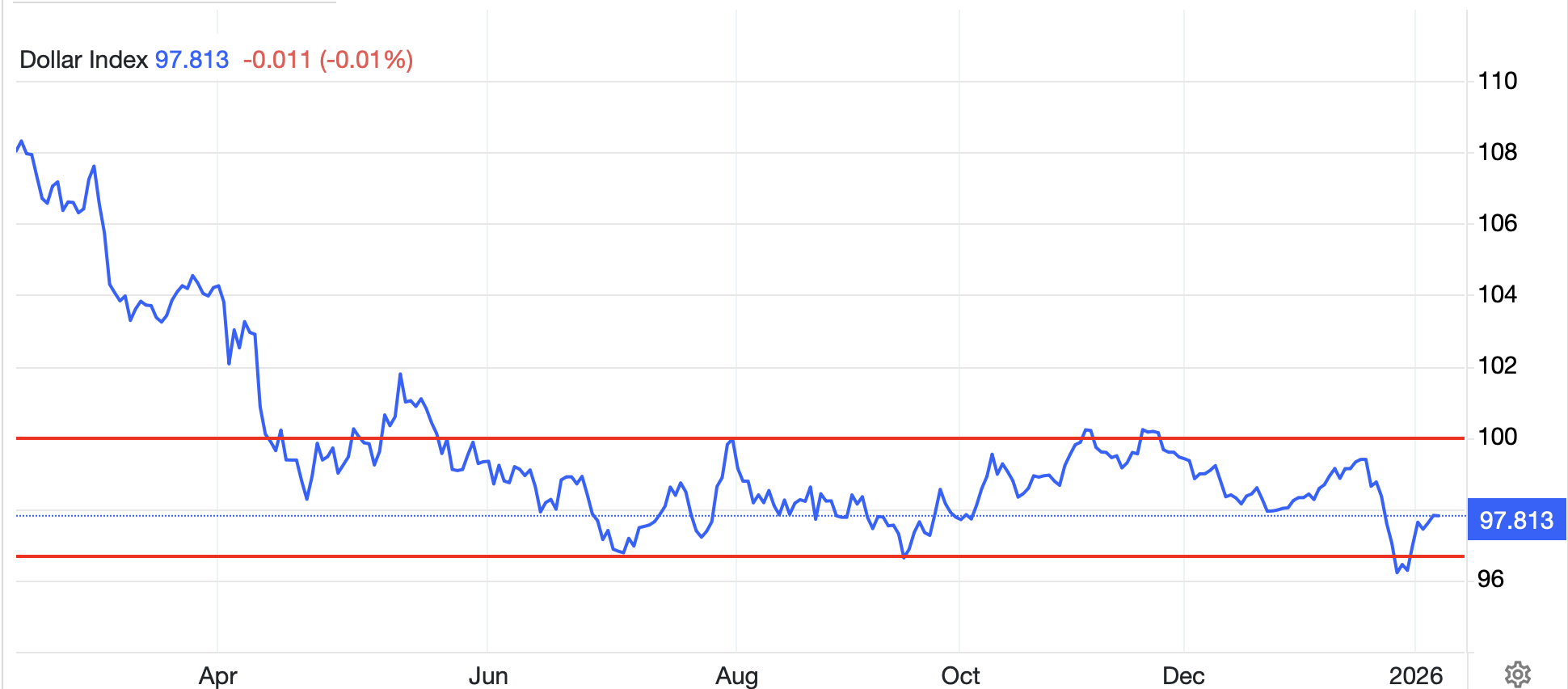
Finally, the dollar is net little changed this morning after a very solid two-day rally.  Remember it was just Monday that I was discussing key technical levels in the DXY (100.00), EUR (1.1200) and GBP (1.3500).  Well, we have moved well away from all those levels as the dollar weakness story takes a break.  When Chairman Powell explained he was in no hurry to cut rates rapidly, that part of the narrative needed to change quickly…and it did.  So, this morning, aside from the yen’s weakness mentioned above, the other large mover is NOK (+0.7%) which is simply responding to the oil rally.  In fact, the commodity currencies are doing exactly what they are supposed to be doing with CLP (+0.5%) tracking copper and MXN (+0.4%) tracking both silver and oil.  ZAR (unchanged) is actually the surprise here although it has been rallying steadily since April on a combination of the strong metals markets and continued belief in a better economic situation based on the new government’s business friendly policies.

On the data front, this morning brings only ADP Employment (exp 120K) and the EIA oil inventories where further inventory drawdowns are anticipated.  We also hear from four more Fed speakers although given Powell’s lack of concern regarding the speed of cuts, it will be hard for these speakers to change the market perception in my view.  This leaves us with the big picture.  Right now, employment remains the most important data for the Fed and their policy views.  As such, this morning’s ADP is likely to have more importance than it ordinarily would, despite the limited correlation between this data and the NFP to be released on Friday.

It seems that there are some subtle changes in central bank views with market perceptions of FX moves impacted.  The Fed is now seen as not quite as dovish, while the BOJ and ECB are seen as a touch more dovish, hence the dollar’s gains against both the yen and euro.  However, I think the central bankers realize they are still feeling their way in the dark and will be slow to respond to outlier data, so this vibe seems likely to hold in the near term.

Good luck
Adf
Lately Downturned

The story is still ‘bout the Fed
And whether, when looking ahead
They see skies are blue
And so, they eschew
A rate cut the bears will all dread
 
But if they are growing concerned
The ‘conomy’s lately downturned
Then fifty will be
What we all will see
And bears, once again, will be spurned


As we move closer to the FOMC announcement and Powell press conference, the nature of the discussion has focused entirely on the size of the rate cut that will be announced tomorrow.  Yet again this morning, the Fed whisperer, Nick Timiraos at the WSJpublished an article on the subject, once again making the case for 50 basis points.  The money quote is below:

“Fed officials aren’t likely to regret a larger rate cut this week if the economy chugs along between now and their next meeting, in early November, because rates will still be at a relatively high level, he said. But if the Fed makes a smaller move and the labor market deteriorates more rapidly, officials will feel greater regret.”

As well, the futures market is growing more and more certain 50bps is coming as evidenced by the pricing this morning as per the below chart from the CME:

The interesting thing is that an unbiased (if such a thing exists) look at the data does not scream out to me that the economy is collapsing such that an aggressive start to an easing cycle is necessary.  Unemployment remains in the lowest quintile of outcomes over the past 76 years.  For reference, the median reading since January 1948 has been 5.5%, the average has been 5.7% and today it is at 4.2%.  The chart below shows the distribution of outcomes over the entire data series from the FRED database.

Data source: FRED database; calculation: fx_poetry.com

It is difficult to look at this chart and think the economy is imploding.  And let us consider another thing, the widely mentioned long and variable lags by which monetary policy impacts the economy.  Whatever the Fed does tomorrow, the impact on almost the entire economy will not be felt for at least a year, if not much longer than that.  After all, do companies really make a borrowing decision based on the marginal 25bps of interest cost per annum?  I would argue that most corporate borrowing is based entirely on their current schedule of maturing debt and any forecast needs for capex or other funding.  It strikes me that whether the Fed funds rate is 5.25% or 5.00% is not going to change much in the real economy.

Markets, of course, are a different kettle of fish in this discussion, but let’s face it, the bond market has already priced in 250 basis points of cuts in the next twelve months, so whether they start with 25 or 50 seems less relevant than the destination.  Certainly, the equity market will try to goose things on a 50bp cut, and will almost certainly fall if the cut is only 25bps, at least initially, but again, will corporate profits change that much in the short-run because of this move?

In the end, I fear we make far too much of the outcome, at least in this case.  Now, if Powell and the Fed were to decide that the recent call for a 75bp cut by three senators was an eloquent argument and did that, the market surprise would be substantial and the initial move in risky assets would be higher.  But something like that would also engender fears that the Fed knows something bad about the economy that the rest of us have missed, and that would result in its own negative consequences. I guess the good news is we only have another 30 hours or so before we find out.

As to the market activity overnight, yesterday’s mixed US equity performance, with the DJIA making new all-time highs while the NASDAQ fell -0.5%, led to weakness in Tokyo (Nikkei -1.0%) as tech shares underperformed, but strength in HK (+1.4%) and much of the rest of Asia that was open.  Both China and South Korea remained closed for holidays.  In Europe, though, given the virtual lack of technology shares available, the DJIA was the template with all markets higher this morning led by Spain’s IBEX (+1.25%)), but with robust gains elsewhere on the order of +0.6% to +0.8%.  As to US futures, at this hour (7:30), they are higher by about 0.25%.

In the bond market, yields continue to edge lower overall.  While Treasuries are unchanged this morning, that follows another 2bp decline yesterday afternoon.  In Europe this morning, sovereign yields are all lower by between -1bp and -3bps, catching up (down?) to the Treasury market as well as responding to pretty awful German ZEW numbers (Sentiment 3.6 vs. 17.0 expected and 19.2 last month; Current Conditions -84.5 vs. -80.0 expected and -77.3 last month).  Germany remains the sick man of Europe and there is no doubt that they need to see the ECB start to cut rates more aggressively to help support their withering manufacturing sector.  And one more thing, JGB yields fell -2bps last night and are now at 0.81% in the 10yr.  While the focus will turn to the BOJ at the end of the week after the FOMC announcement tomorrow, the market does not appear to be particularly concerned over aggressive tightening there.

In the commodity markets, WTI (+0.15%) has crept back above $70/bbl for the first time in nearly two weeks as the big story in the market revolves around the net speculative Comex positioning which has turned negative for the first time ever.  That means that hedge funds and speculators are net short oil futures.  While they may have a negative outlook, the positioning does indicate there is an opportunity for a massive short-squeeze sometime going forward.  As to the metals markets, they are little changed this morning, broadly holding their recent gains with both precious and industrial metals all showing healthy gains in the past week.  A 50bp cut should support prices across the board here.

Finally, the dollar is softer again this morning, but by a modest amount, about -0.1% across the board.  Those are the types of gains we have seen across the G10 and most of the EMG currencies with one outlier, MXN (-0.9%).  However, the peso, which had strengthened nearly one full peso in the past four trading sessions looks more like it is responding to that movement than to any fundamental changes.  The judicial review story is now old news although there may be some concerns that Banxico will cut more aggressively next week if the Fed does so tomorrow.

On the data front, this morning brings Retail Sales (exp -0.2%, ex autos +0.2%) as well as IP (0.2%) and Capacity Utilization (77.9%).  We also hear from Dallas Fed president Logan this morning.  It’s funny, a strong Retail Sales number could well weigh on the chances for a 50bp cut as further evidence that things continue to be moving along fine.  Remember, even though inflation has been trending lower, it is not yet nearly at its target.  Retail Sales strength would indicate that employment remains robust as people spend money more readily when they have a paycheck, so the need for more stimulus may just not be that critical.

In the end, my best take is the Fed is going to cut 50bps tomorrow and the market is going to increasingly price that in as the session unfolds.  This will be especially true if Retail Sales is weaker than forecast, but even if it surprises on the upside, I remain convinced Powell wants to cut 50bps based on the number of articles discussing the idea in the mainstream press.  Ultimately, I think the dollar will suffer a bit further on that move and commodities will be the big winners.

Good luck

Adf