This is the End

Apparently, this is the end
So says every article penned
The markets are tanking
But nobody’s banking
On help to arrest the downtrend
 
The pundits’ unanimous line
Is things before Trump were just fine
Yes, debt was insane
But that gravy train
Allowed them to drink the best wine


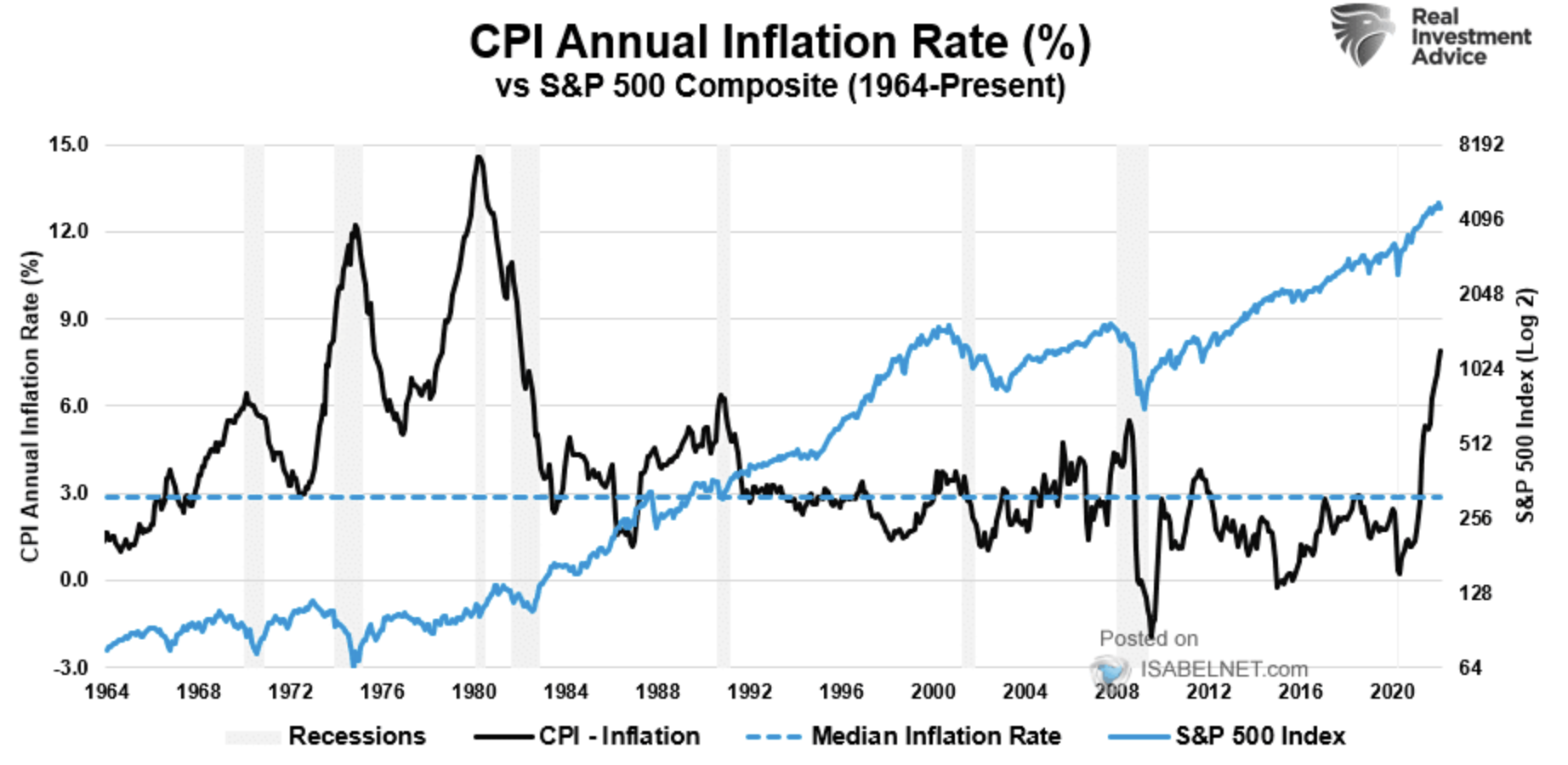
Every financial website lead this morning is how President Trump’s policies are causing the worst slide in equity prices in forever, with my favorite today in the WSJ describing this as the worst performance in April since 1932!  Much has been made about how President Trump is undermining the Fed’s credibility, as though the Fed has that much credibility to undermine.  This is the group that declared stable prices to be an increase in their favored indicator, core PCE, of 2.0% annually, and complained vociferously when inflation was slightly below that level for a decade.  In order to adjust things, they changed their target to an average of 2.0% over time, then watched their metrics, in the wake of the Covid fiscal response, explode higher.  Now, after more than four years of their target metric above their target, they are concerned they are losing their credibility because of President Trump.  

Source: tradingeconomics.com

Certainly, if they had been achieving their goals any time during the past four years, this argument might have had some force.  However, given the history, I am suspect.

Nonetheless, this is today’s narrative, that equity markets are falling sharply because of Trump.  It has nothing to do with the fact that US equity markets have been overvalued by nearly every measure since November 2012, (the last time the S&P 500 P/E ratio was at its mean of 16.14 vs today’s still very high 25.64).  This is not to say that the president’s tactics have necessarily been the best possible, but we have all long known that a catalyst would come along and adjust prices to a more sustainable level.  

Source: multpl.com

Once again, I will highlight that President Trump was elected with a mandate to make substantial changes to the way things work in the US, both the economy and other issues like immigration.  Remember, too, that many of his supporters are not heavily invested in equity markets, so this is not really a problem for them.  I believe he can tolerate a lot more downside in equity prices before feeling it necessary to address them.  And if he is successful in signing some trade deals during his 90-day time frame, I expect that things will calm down quite quickly.

But right now, investors are very unhappy, and since virtually everyone in the media is an investor, we are going to hear a lot more on this topic, especially since they almost certainly didn’t vote for President Trump.

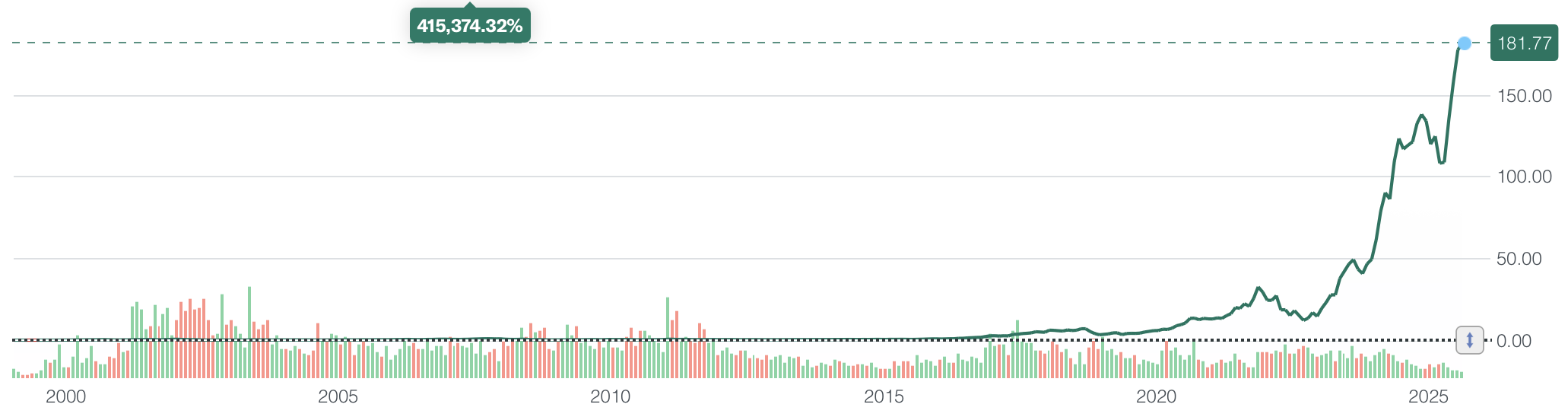
Here’s the thing about markets, overvaluations correct over time.  In fact, often they result in under valuations as markets tend to overshoot in both directions.  However, you have probably heard of the Buffett Indicator, which is Warren Buffett’s shorthand way of determining stock valuations.  He simply divides the total market capitlaization of US equities by GDP.  His view is that when that ratio is between 110% and 130%, equity markets are fairly valued.  Below that, things are cheap, and it is a good time to buy stocks.  Above that, like today, and good values are hard to find.  You are also probably aware that Berkshire Hathaway is currently holding its largest cash position ever, a sign that he still thinks things are overvalued.  One need only look at the below chart to see that while the recent decline in stocks has brought the indicator lower, its current level of 173% remains extremely overvalued.

Source: buffettindicator.net

All I am trying to do is offer some perspective on the recent movement.  Risk appetite was over extended while the US ran 7% budget deficits and issued a massive amount of debt to fund it.  Much of that funding went into risk assets.  That situation has clearly changed, or at least that is the goal of the Trump administration.  It is a painful transition, but likely one that we need to absorb for longer term fiscal and economic health.

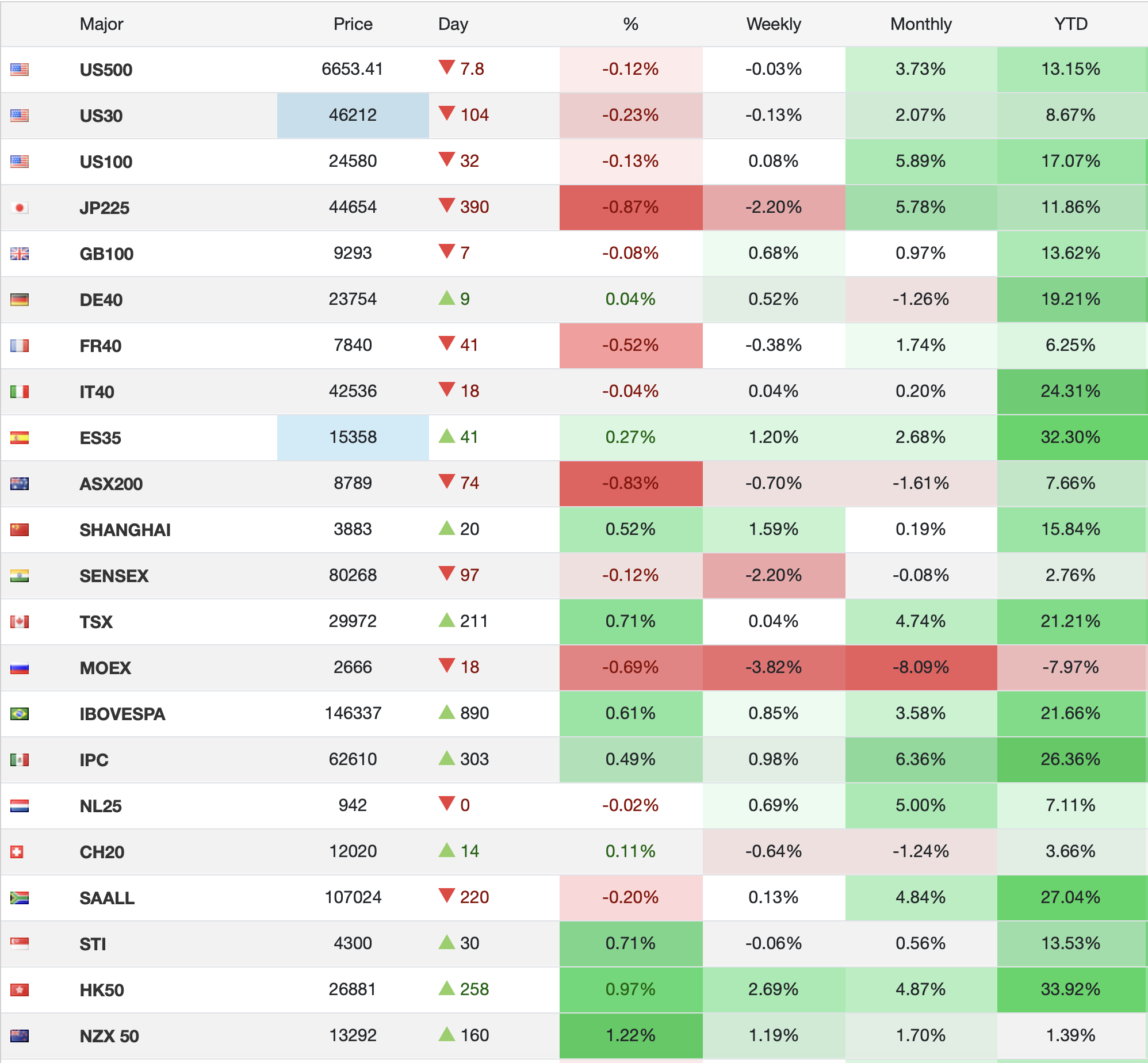
Ok, let’s see how market behaved overnight, after a rout in the US yesterday, now that everybody is back at their desks.  Major Asian markets were very quiet, with limited movement in Japan, China, Korea, Australia and India, although we did see sharp declines in Taiwan (-1.6%) and New Zealand (-2.25%) with the latter seeming to be one of the few markets tracking the US directly.  The only news there was a larger than expected trade surplus, which doesn’t seem the type of thing to cause a sell-off.  Meanwhile, in Europe, there is also little net movement with a couple of modest gainers (Spain, UK) and a couple of modest laggards (France Germany) with everything trading less than 0.5% different than their last closes.  Interestingly, US futures are all higher by about 1.0% at this hour (7:05).

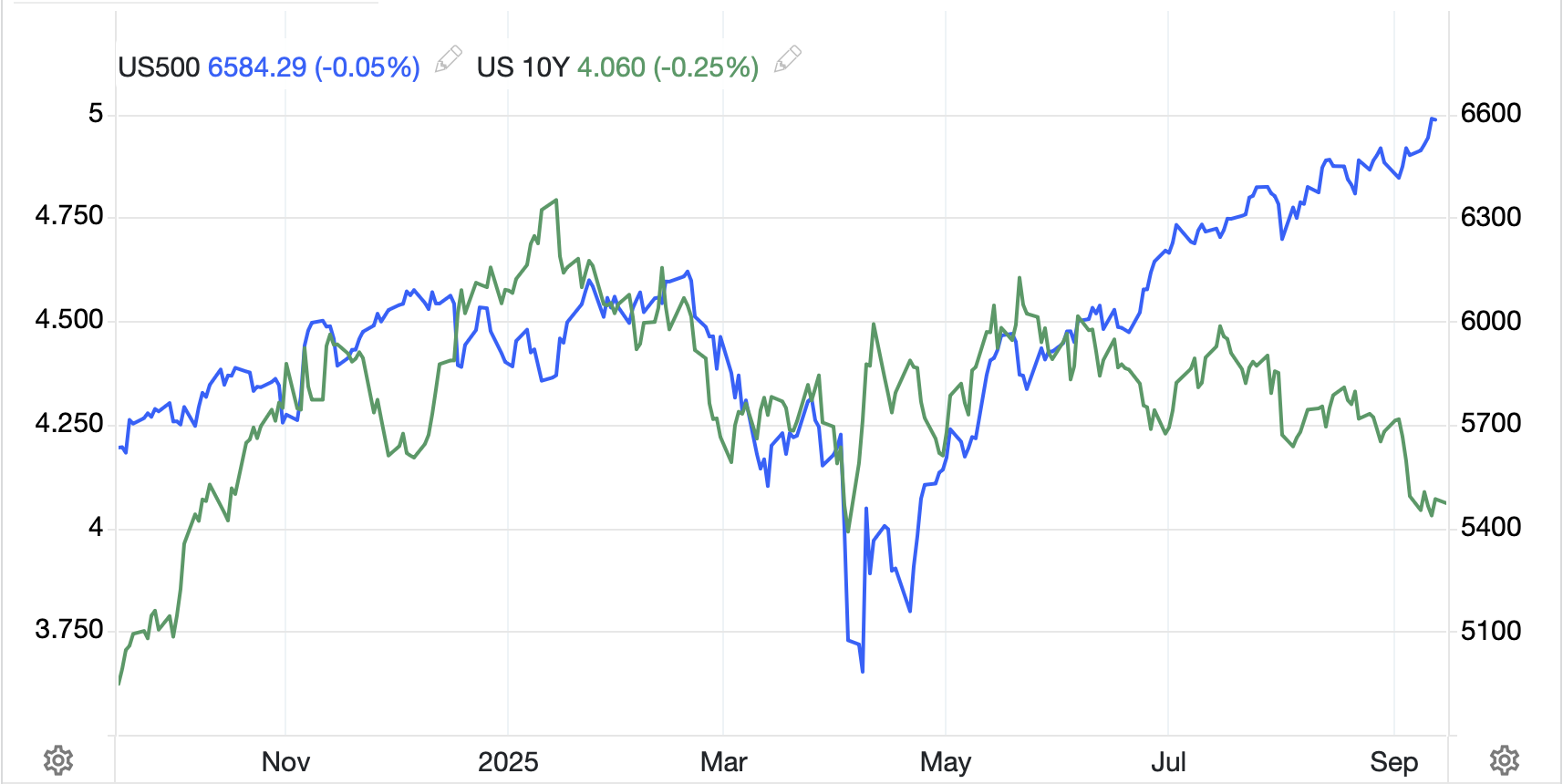
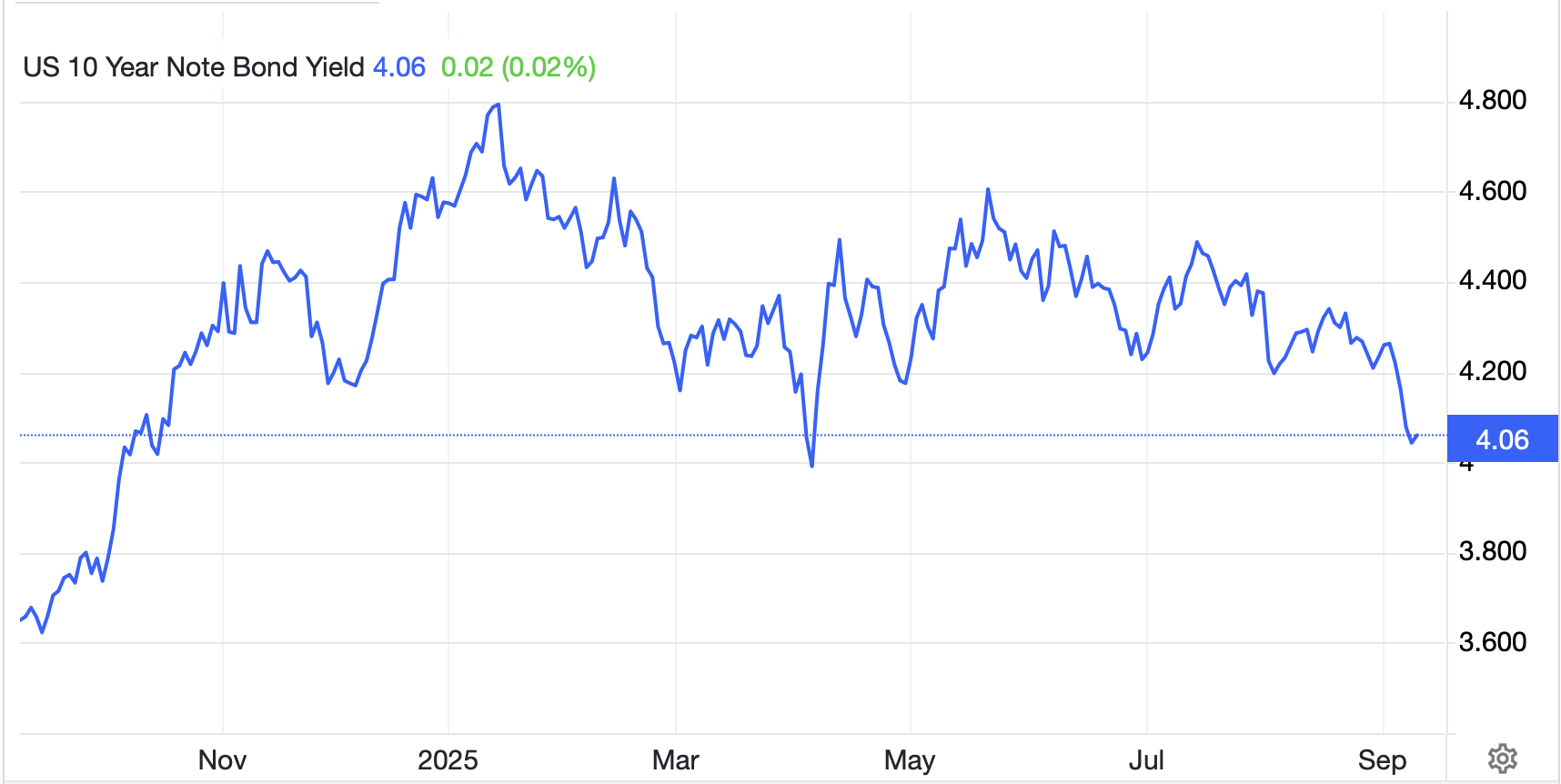
In the bond market, this morning is quiet everywhere with movements of +/-1bp the norm although yesterday did see Treasury yields climb 6bps in the session.  Something that is starting to move in fixed income markets are credit spreads, which have been abnormally tight for a long time and may be starting to widen out to previous historical levels.  If spreads start to widen, that will not help equity markets at all, and that could be the signal that policy adjustments are coming, both from the administration and the Fed.  We will keep an eye here.

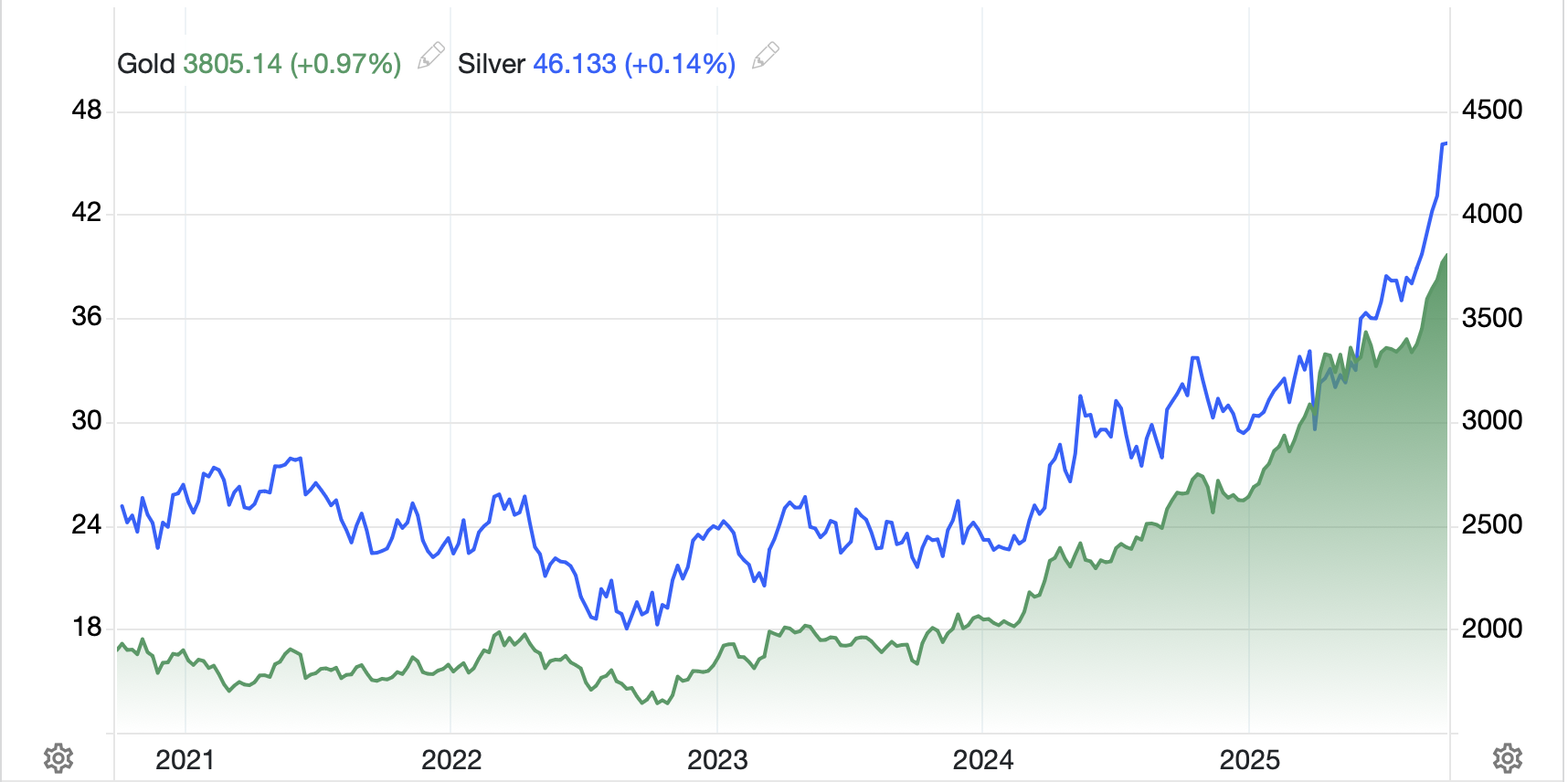
In the commodity markets, nothing is stopping the gold train, up another 0.7% this morning to another new high.  This movement is parabolic and that cannot last very long.  Beware of a correction.  

source: tradingeconomics.com

In the meantime, silver (-0.2%) and copper (+0.5%) are still hanging around, but without the same panache as gold.  In the oil market, WTI (+1.3%) has rebounded from yesterday’s decline as the latest stories are that capex by the oil majors is going to decline and with it, we will see a reduction in supply, hence higher prices.  On the flip side, if a deal with Iran is signed and their oil comes back on the market freely, that will weigh on prices for at least a while.

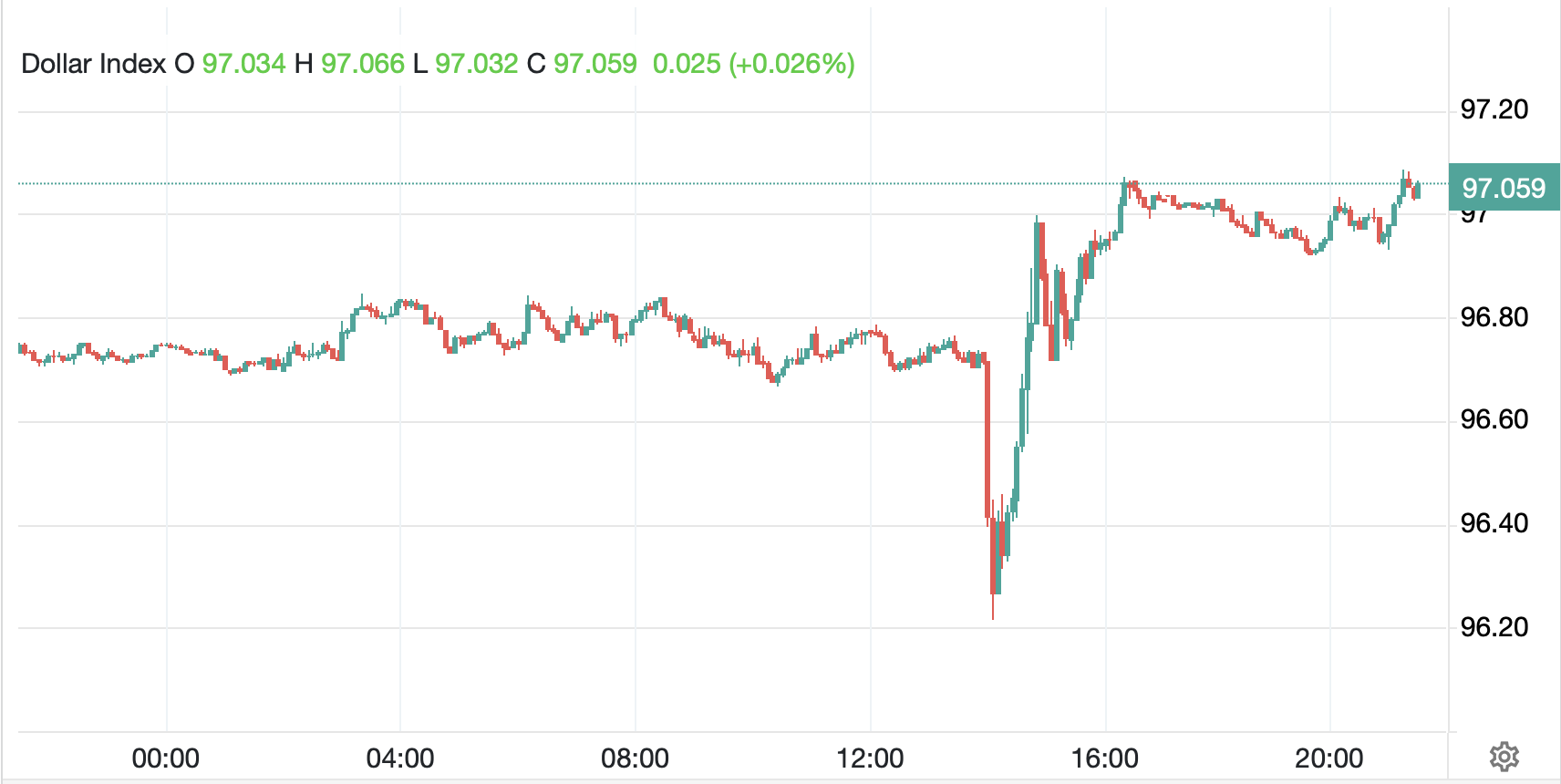
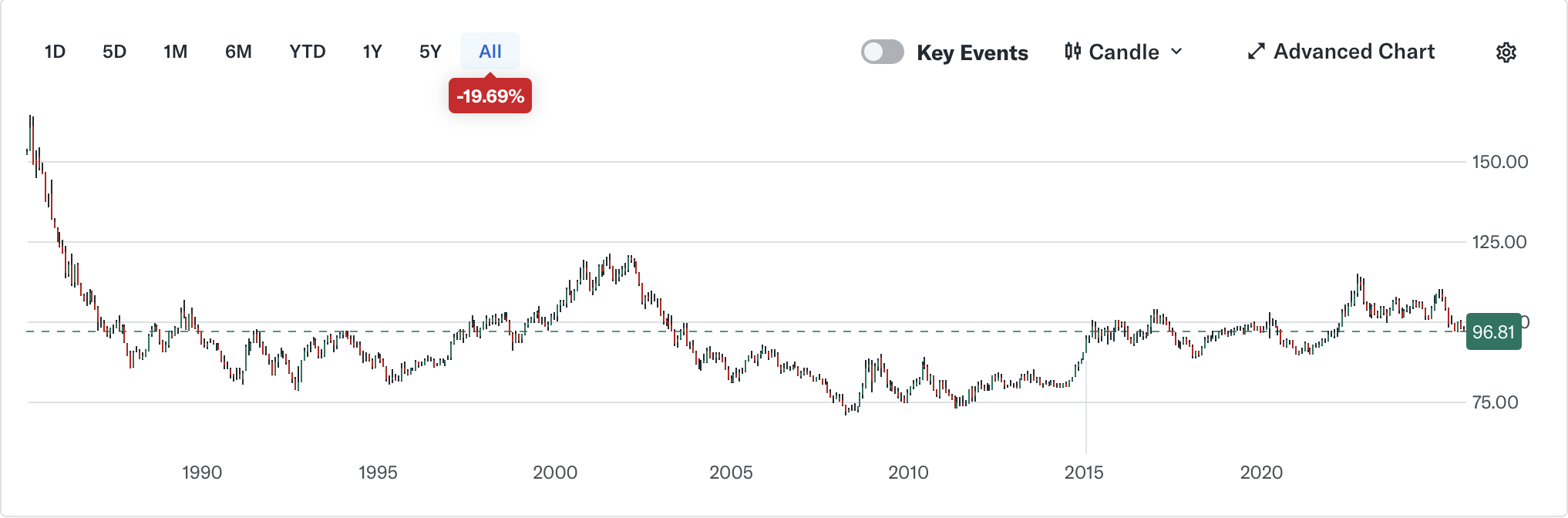
Finally, the dollar, which along with equities, has been sold aggressively of late, is bouncing slightly this morning.  This story remains perfectly logical as one of the reasons the dollar had been so strong was foreign investors bought dollars to buy the Mag7 and US equities in general.  With US equities weakening, these foreigners are likely to start to sell more and take their money home, or elsewhere, but nonetheless, they don’t need those dollars.  Certainly nothing has changed my bearish view here with today’s gains a modest correction.  There are two outliers this morning, with MXN (+0.6%) and ZAR (+0.5%) the only currencies of note rallying against the greenback, both seemingly following the commodity rally.

On the data front, there is nothing noteworthy this morning, but a bit of data later in the week.

WednesdayFlash Manufacturing PMI49.4
 Flash Services PMI52.8
 New Home Sales680K
 Fed’s Beige Book 
ThursdayInitial Claims221K
 Continuing Claims1880K
 Durable Goods2.0%
 -ex Transport0.2%
 Existing Home Sales4.13M
FridayMichigan Sentiment50.8
 Michigan Inflation Expected6.7%

Source: tradingeconomics.com

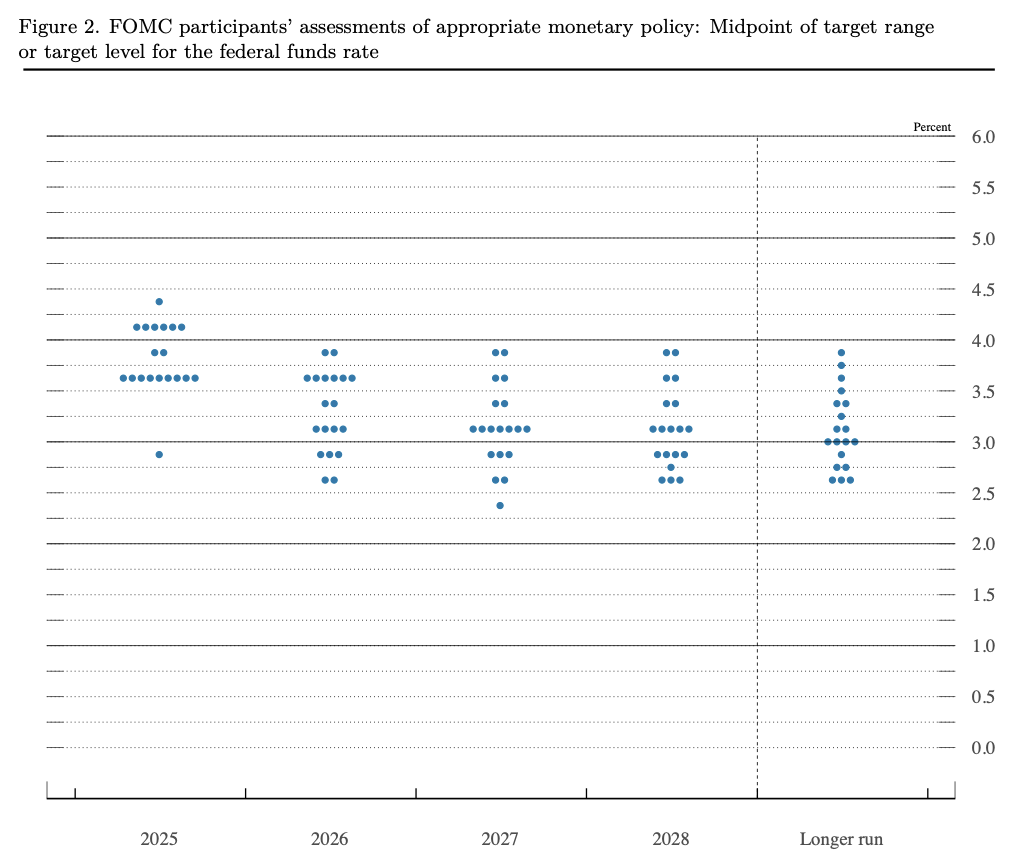
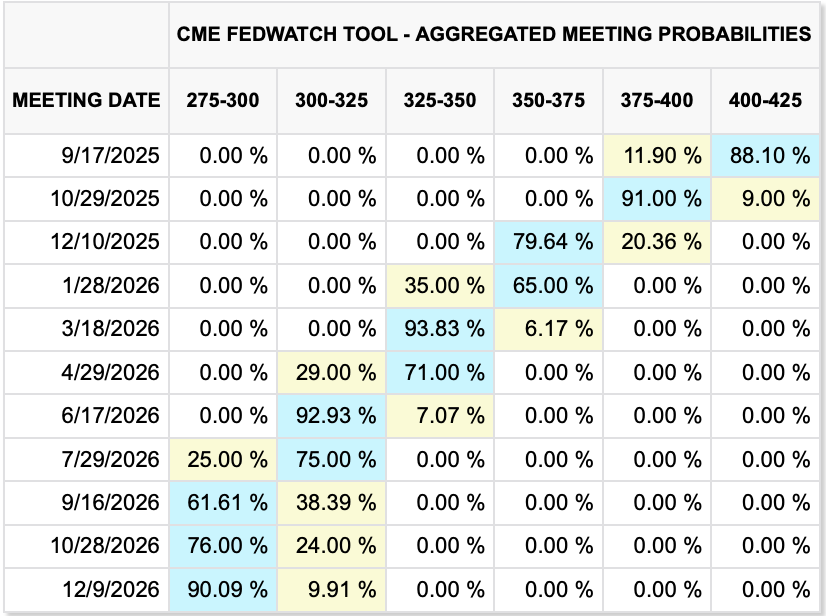
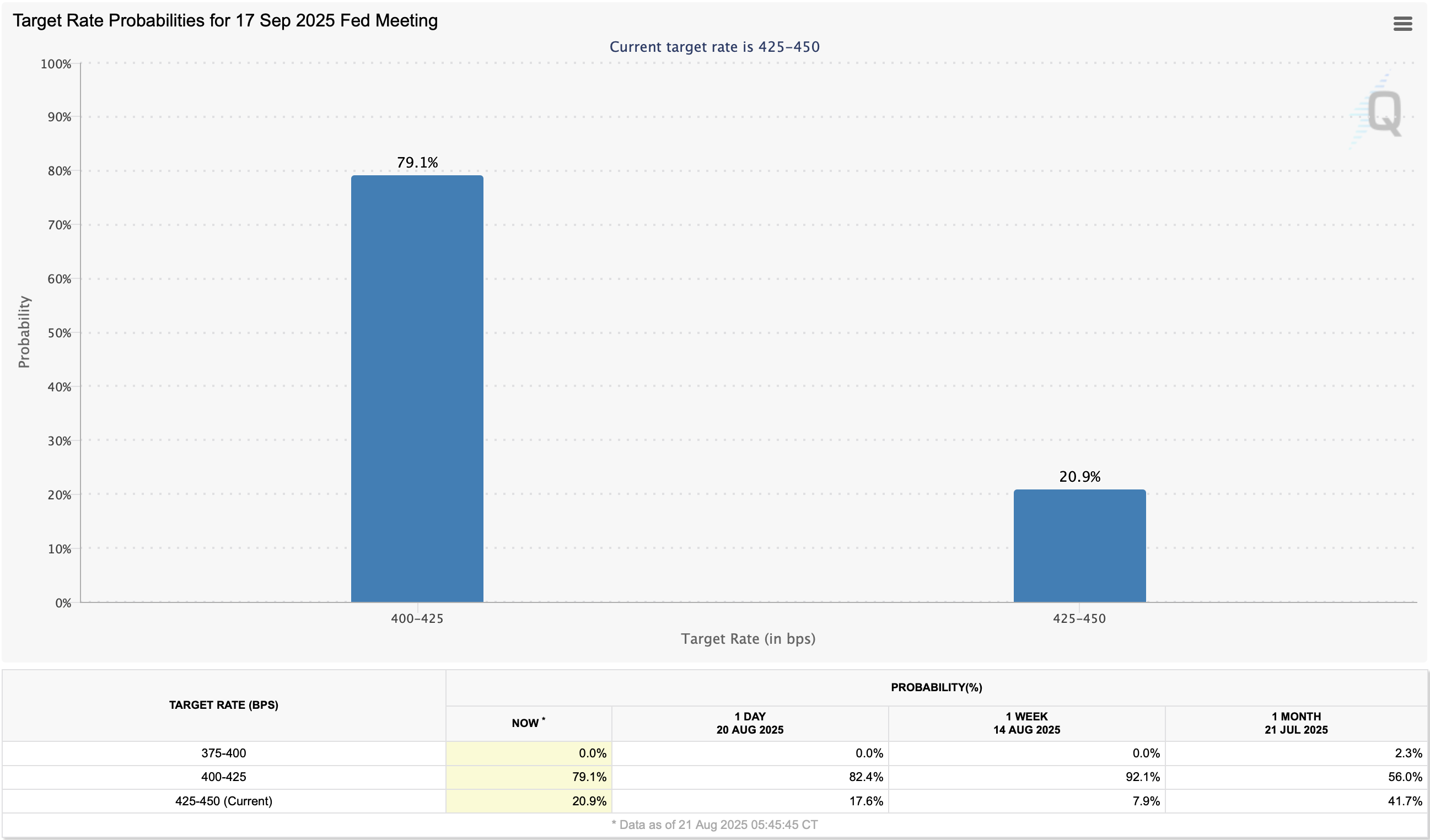
In addition, we have 7 Fed speakers over 8 venues this week, with four of them today.  However, it is not clear that they have much impact these days.  Expectations for a cut next month are down to 9% although the market is pricing 90bps of cuts this year.  But, once President Trump started implementing his policies, the Fed slipped into the shadows.  It is interesting that there are questions about the Fed’s credibility as lately, nobody has listened to them anyway.  I don’t expect anything other than patience from them for now as they await the “inevitable” decline in the economy.  However, until the data really starts to show something, and there is nothing forecast in this week’s releases, that points to economic weakness of note, they are on the sidelines.

Overall, I expect more volatility in risk assets, and I do believe the trend for foreign investors to reduce their exposure to the US will continue.  That, too, will weigh on the dollar.  Maybe not today, but another 10% this year is quite viable.

Good luck

Adf
Likely to Bleed

By now, everyone is aware
The world we had known is not there
While populist views
Are turning the screws
On governments ‘bout everywhere
 
The upshot is capital’s lead
O’er labor is like to recede
So, wages will rise
With yields, and surprise
Risk assets are likely to bleed


For the first time in quite a few sessions, certainly since ‘Liberation Day’, market activity has calmed down a bit.  It is not that markets have stopped moving, just that the wild gyrations have disappeared for the moment.  I would estimate that for most investors, and certainly for risk managers with hedging requirements, this is a blessing.  However, for the trading desks at Wall Street firms, maybe not so much.  I couldn’t help but notice the lead headline in the WSJ this morning, “Bank Trading Desks Are Minting Money From Tariff Chaos”  

Now, we cannot be surprised by this, as volatile markets are what traders, especially bank traders with customer flow, live for.  This is where they truly have an edge, even over the algos, because they have information the algos don’t have, the order flow.  This got me to thinking about the idea, one which I have embraced, that President Trump is concerned with Main Street, not Wall Street.  Well, if Wall Street is going to play second fiddle, I’m sure many there are perfectly comfortable with this situation.  Arguably, if this continues, we are going to see many internecine battles at the big Investment Banks as traders gain power at the expense of bankers, but the firms overall will be just fine.  (I know you were all worried 🤣.)

But let’s go back to the Main Street, Wall Street question.  Someone who I have been following on Substack, Russell Clark, a UK hedge fund manager, has described this point very well.  In the battle between labor and capital for corporate resources, Wall Street benefits when capital is favored by legislation/regulation while Main Street benefits when the rules turn in labor’s favor.  

For the past 25 years, the rules have been helping capital at labor’s expense.  Especially since the GFC, when the financialization of the economy really took off, this has been the case.  Just look at the extraordinary rise in corporate profits during this period compared to the long history.  This is a direct result of the globalization effort, with the outsourcing of much manufacturing to China and other low-wage nations.

Source: fred.stlouisfed.org

But let us consider what we have seen fomenting for the past decade, arguably since President Trump’s first election and Brexit occurred in 2016.  Those were populist outcomes.  And we have seen populism rise around the world.  It is couched as right-wing fascism by many in the media, but whether in Germany, France, Italy, the Netherlands, here in the US or many other Western nations, the people’s voice is being heard.  And what they are saying is, labor wants a bigger piece of the pie.

This idea offers solid explanations for several current situations.  Labor, aka Main Street, wants government to work for them, to protect their jobs and incomes.  They care far less about a company’s share price and far more about the company investing in the business and expanding.  Capital, aka Wall Street, wants the government to work for them, to keep financing costs down to increase capital productivity and drive share prices higher, whether through share repurchase or reduced expenses (aka job cuts).  

Right now, labor is in the ascendancy.  (It is ironic that labor’s ascent has been deemed right-wing, given the long history of its left-wing tendencies, but there you go).  As long as this remains the case, I think we need to consider how it will impact markets going forward.  Russell’s short-hand trade idea has been long GLD vs. short TLT (the long-bond ETF) and it has worked well for quite a while.  Can bond yields continue the rise that began in 2022?  Certainly.  Can gold continue its rally?  Of course.  Look at the chart below of gold and 10-year Treasury yields over the past 5 years.  There is nothing about the chart that says we are topping in either case.  Higher yields and higher gold prices seem contradictory, but they have been the reality for three years already.  I have explained numerous times that the world we knew is gone.  This may well be part of the new reality.  What about equities?  I have to believe multiples will be compressed which will not help them at all. And the dollar?  While higher rates seem like they should support the greenback, the case for capital flows leaving the US equity market is very real.  We could easily see the dollar decline further over time.

Source: tradingeconomics.com

Ok, let’s look at markets overnight.  Green continues to be the theme today after solid rallies yesterday in the equity markets.  I know this is not what I discussed above, but that is the long-term perspective, not the day-to-day.  Right now, the tariff pauses have traders and investors feeling a little more secure, as well as word that several nations are close to new trade deals with the US with significantly lower tariffs.  Yesterday’s modest US rally was followed by similar modest gains in Asia with the Nikkei (+0.8%) leading the way while both Hong Kong (+0.2%) and China (+0.1%) managed to gain, but only just.  Meanwhile, in Europe, the gains are somewhat better as the DAX (+1.0%) and IBEX (+1.2%) are leading the way with the FTSE 100 (+0.8%) and CAC (+0.25%) lagging a bit.  We did see some solid employment data from the UK with employment rising 206K over the past 3 months while earnings and the Unemployment Rate remained unchanged.  However, Germany is a bit more confusing given the ZEW Economic Sentiment Index there fell from 51.6 to -14.0, as the trade concerns really start to bite.  As to US futures, at this hour (7:20) they are slightly higher, about 0.15%.

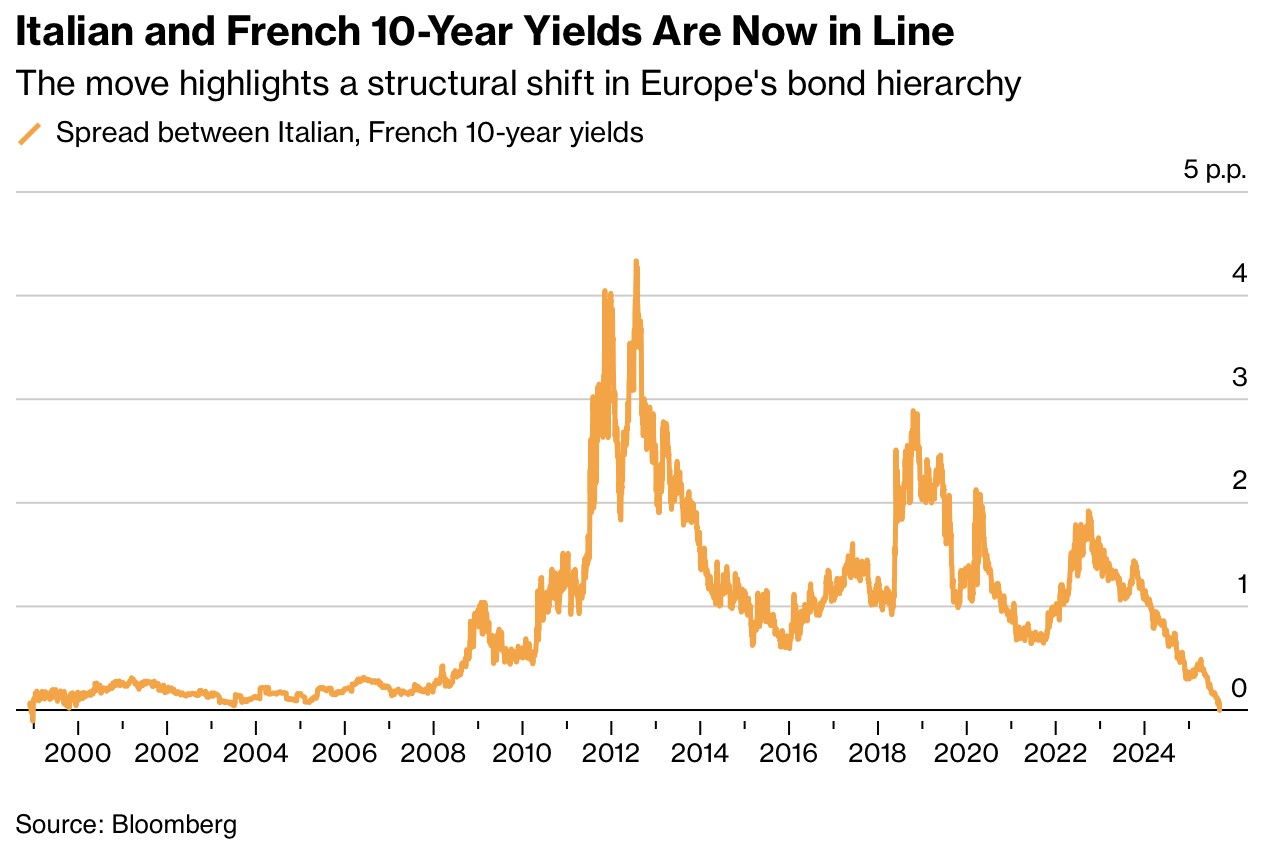
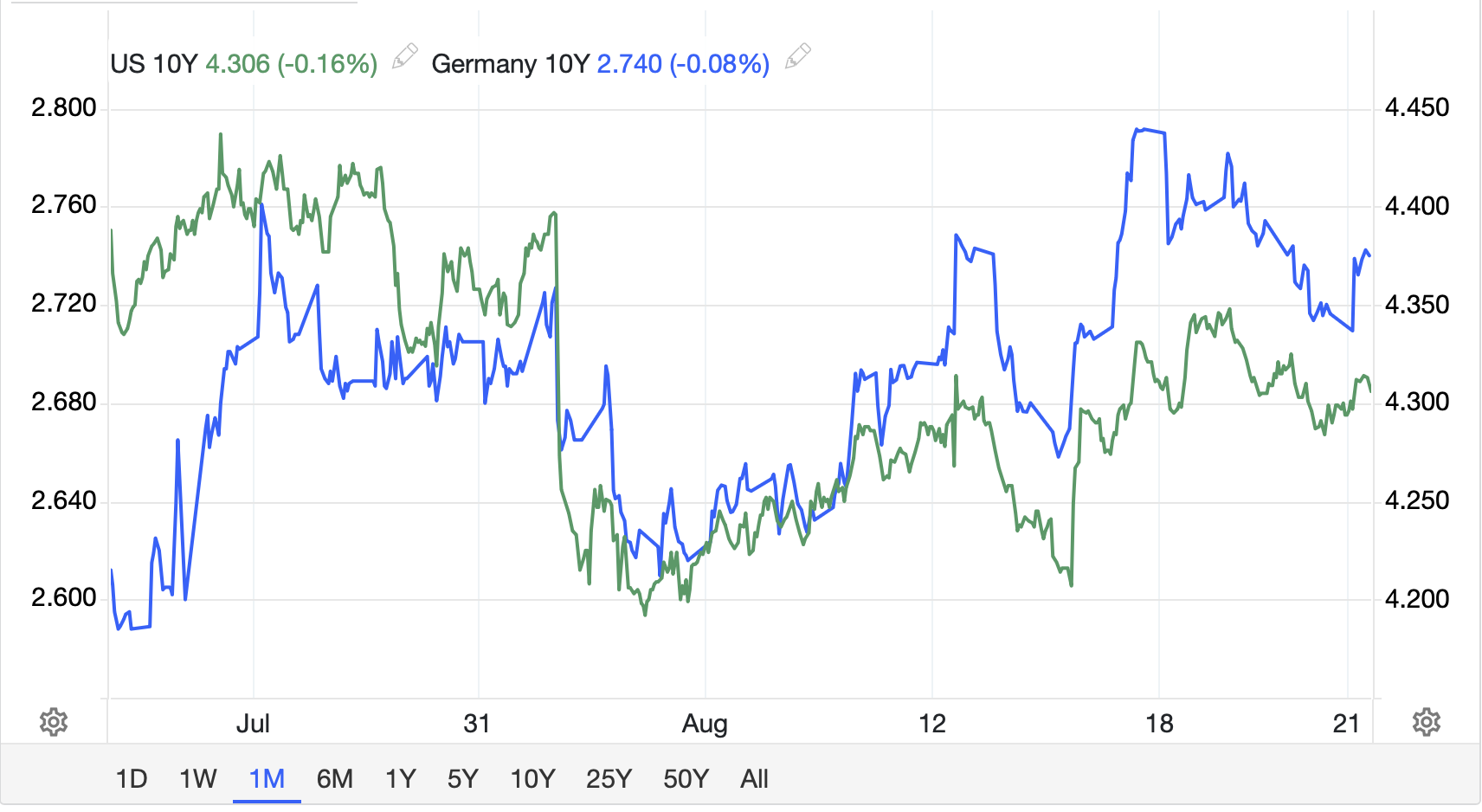
In the bond markets, Treasury yields have edged higher by 1bp but remain below the recent peak at 4.50%. In Europe, we are seeing yields climb everywhere except the UK, where gilt yields are unchanged.  But Italian BTPs (+5bps), French OATs (+3bps) and German bunds (+3bps) are all under a bit of pressure this morning.  Perhaps this is a day where risk managers feel more comfortable about things, so bonds feel less compelling.

Oil (-0.4%) had a pretty big trading range yesterday but closed close to unchanged.  This morning it is slipping a bit as we continue to see demand forecasts reduced by various analysts with the IEA the latest culprit. Personally, I see prices declining from here.  As to the metals markets, gold (+0.25%) which slipped yesterday morning and rebounded all day and through the night continues to have significant support.  Silver is little changed this morning and copper (-0.7%) is backing off some of its recent gains, although is still higher by ~14% in the past week.

Finally, the dollar, which has been under general pressure lately, is stabilizing with the DXY clinging just below 100.00.  This morning, we see the euro softer but the pound and Antipodean currencies rallying, albeit not that much.  But generally, after several days of very large moves, with 2% gains for the euro and Aussie last week, most movement is 0.5% or less today and the randomness implies we are seeing positions being adjusted rather than new activity.

On the data front, here is what the rest of the week brings.

TodayEmpire State Manufacturing-14.5
WednesdayRetail Sales1.3%
 -ex Autos0.3%
 IP-0.2%
 Capacity Utilization78.0%
 Bank of Canada Rate Decision2.75% (unchanged)
ThursdayECB Rate Decision2.25% (-0..25%)
 Initial Claims225K
 Continuing Claims1870K
 Philly Fed2.0

Source: tradingeconomics.com

The only release yesterday was the NY Fed inflation expectations data which, it should be no surprise, rose to 3.6%.  I suppose that the virtual nonstop reporting that the tariff regime is going to raise inflation is having an impact.  From the Fed, yesterday we heard that patience remains a virtue and Governor Waller is in the transitory impact of tariffs on inflation camp.  There are two more Fed speakers today, Barkin and Cook, but nothing has changed my view that they are not that relevant now.

Big picture, my take is this is a reprieve before the next bout of risk selling.  The selling can last into the summer as I think it will take until then before we get a better understanding of the outcome of the trade situation.  Maybe that will be the bottom, or if trade relations worsen, perhaps another leg lower is to come.  As to the dollar, while I don’t see a collapse, I do think lower is the way.

Good luck

Adf
End of Days

The one thing about which we’re sure
Is risk assets lost their allure
It’s not clear quite yet
How big a reset
Is coming, and what we’ll endure


Now, I don’t think its end of days
And this could be quite a short phase
But don’t be surprised
If answers devised
Result in a lack of real praise

Chaos continues to reign in the markets as volatility across all asset classes has risen substantially.  Perhaps the best known indicator, the VIX, is back at levels seen last during the Covid pandemic.  Remember, the VIX is a compilation of the implied volatility of short-term equity options, 1mo – 3mo.  While markets can technically be volatile moving in either direction, the VIX has earned the sobriquet of ‘fear index’ as equity volatility most typically rises when stock markets fall.  As you can see from the below chart, the movement has not only been large, but very quick as well.

Source: finance.yahoo.com

The key thing to remember is that while volatility levels can rise very quickly, as the chart demonstrates, their retracement can take quite a long time to play out.  Part of that is that even when things start to calm down, many investors and traders are worried about getting burnt again, so prefer holding options to underlying cash positions.  At least until the time decay becomes too great.  My point is that look for trepidation amidst the trading community and markets in general for a while yet, even if by Friday, the tariff situation is made perfectly clear.  Of course, with that as background, we cannot be surprised that the Fear & Greed Index has made new lows.

Source: cnn.com

However, arguably of more concern is the price action in US Treasuries, which despite the havoc in the market, are not playing their historical safe haven role.  Instead, Treasury bond yields are rising, actually trading as high as 4.50% around midnight last night although they have since retraced a bit.  The bond market has a generic volatility index as well, the MOVE index, and it, too, is trading at very high levels, the highest since the GFC.

Source: finance.yahoo.com

In many ways, this is of much greater concern to markets, as well as both the Treasury and the Fed.  The 10-year US Treasury is the benchmark long-term rate for the entire world.  A rise in the MOVE index may indicate that there is something wrong with the bond market and its inner workings, or it may be an indication that inflation expectations are rising quickly.  Whatever the reason, you can be certain the Fed is watching this far more carefully than the VIX.

I have heard two explanations for the bond market’s recent performance as follows:  first, there are those who are saying that China is selling its Treasury bonds and using the dollar proceeds to buy gold.  Now, while their holdings have been slowly shrinking, they still have just under $800 billion, so that is a lot of paper and would clearly have an impact.  The thing about this thesis is we will be able to determine its reality when China next reports their reserve numbers next month.  

The other explanation rings truer to me and that is the bond basis trade may be unwinding.  Briefly, the bond basis trade is when investors, typically hedge funds, arbitrage the difference in price between cash Treasury bonds and Treasury bond futures on the exchange.  The current positioning is these funds are long cash and short futures, and since it is a basis trade, they typically lever it up significantly, with leverage ratios of up to 100x I understand.  The total size of this trade is estimated at > $1 trillion.  Now, if this arbitrage disappears, or these funds are forced to liquidate this strategy quickly, it could be a real problem for the Treasury market.  

Ever since the GFC and the Dodd-Frank legislative response, banks no longer carry large bond risk positions and are not able to absorb large transactions seamlessly.  During Covid, you may remember that Treasury yields were all over the map, crashing and then exploding higher one day to the next, and that was caused by this basis trade unwind.  Back then, the Fed purchased nearly $1.7 trillion in QE to stabilize the market, and by all accounts, the basis trade was half the size then that it is now.

Remember, too, arguably the most important part of the Fed’s mandate is to maintain Treasury bond market stability.  Without this, the US will not be able to fund its debt and deficits.  So, whatever your view of how Chairman Powell may respond to the tariff story, which seems to be patience for now, if the bond market starts to break, you can be sure the Fed will step in.  QT will reverse to QE in a heartbeat as they offset the impact of this position unwinding.  If that is the case, I anticipate we will see further weakness in equities and the dollar, while gold will truly shine both literally and figuratively.  I’m not saying this is what is going to happen, just that this explanation makes more sense to me.  

Ok, now that tariffs have officially kicked in as of midnight last night, let’s see how markets are responding this morning.  Most equity markets continue to struggle after yesterday’s disappointing US session, where higher opens eroded all day with the major indices all closing on their session lows.  This bled into Asia where Japan (-3.9%) gave up most of yesterday’s gains although both China (+1.0%) and Hong Kong (+0.7%) held up well amid government support.  As to the rest of the region, Taiwan (-5.8%) was worst off, but other than Thailand and the Philippines, both of which managed gains, every other index was lower, often sharply.  In Europe, the realization of the tariffs is hurting with declines of -3.0% to -4.0% across the board.  As to the US futures market, at this hour (7:25), all three major indices are lower by at least -1.0%.

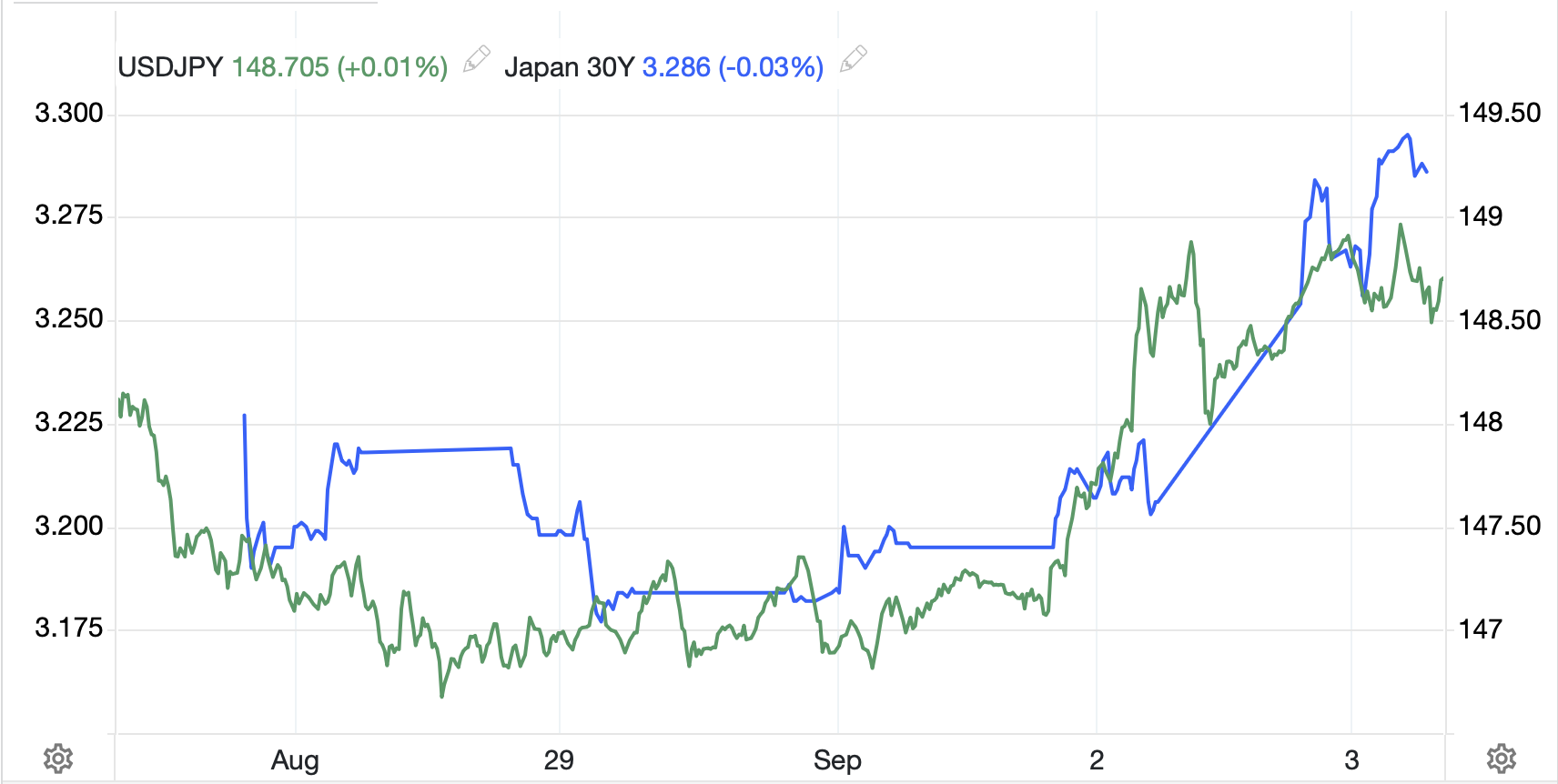
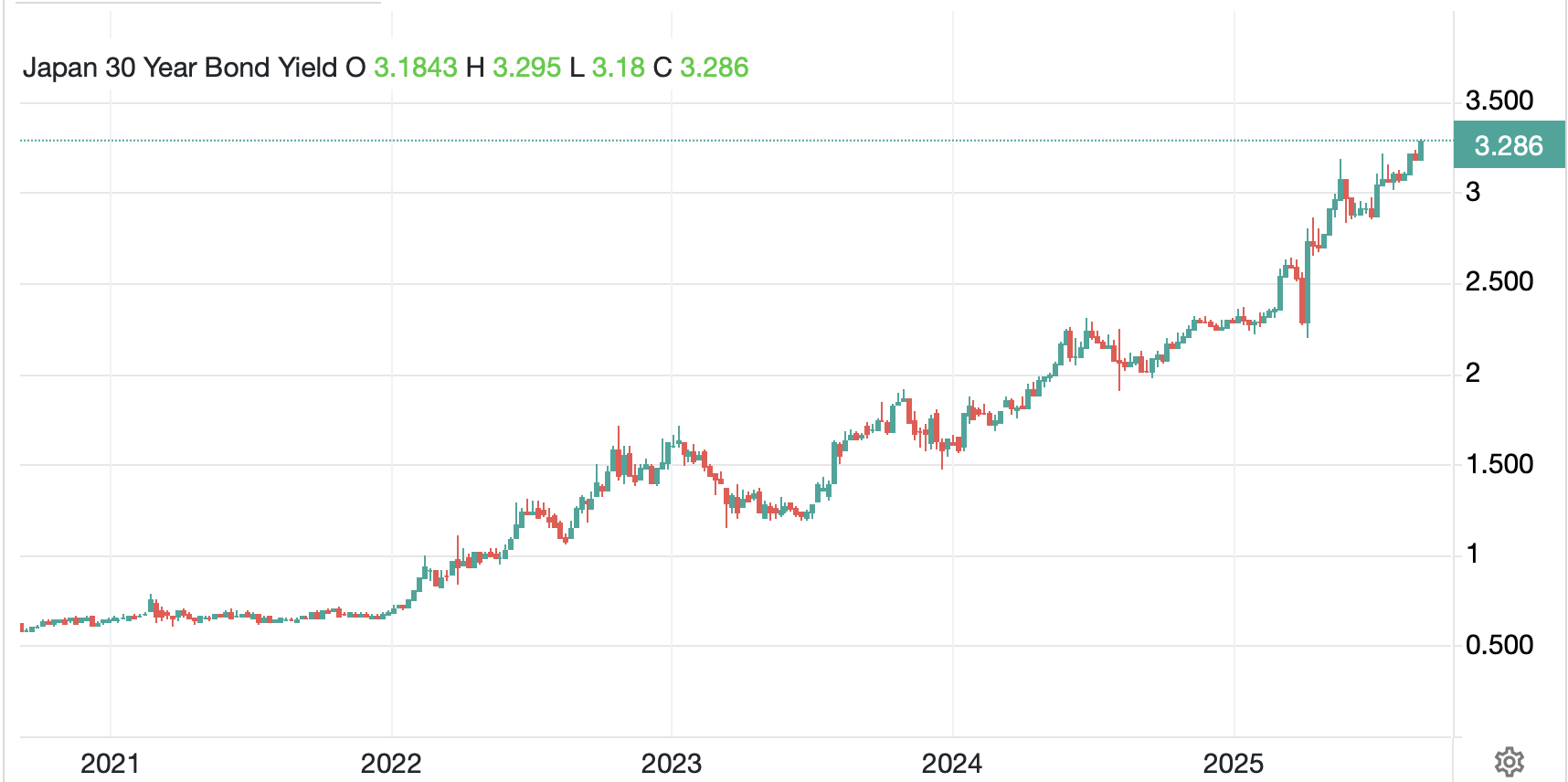
Bond yields are all over the place this morning with Treasuries (+8bps) continuing their recent climb amid the fears discussed above.  However, in Europe, things are such that German yields (-1bp) are doing fine while UK Gilts (+9bps) are suffering along with Treasuries.  The rest of the continent, save the Netherlands, has also seen yields rise, but much less, between 2bps and 5bps.  Overnight, JGB yields were unchanged as players are uncertain as to the next steps by the BOJ there.

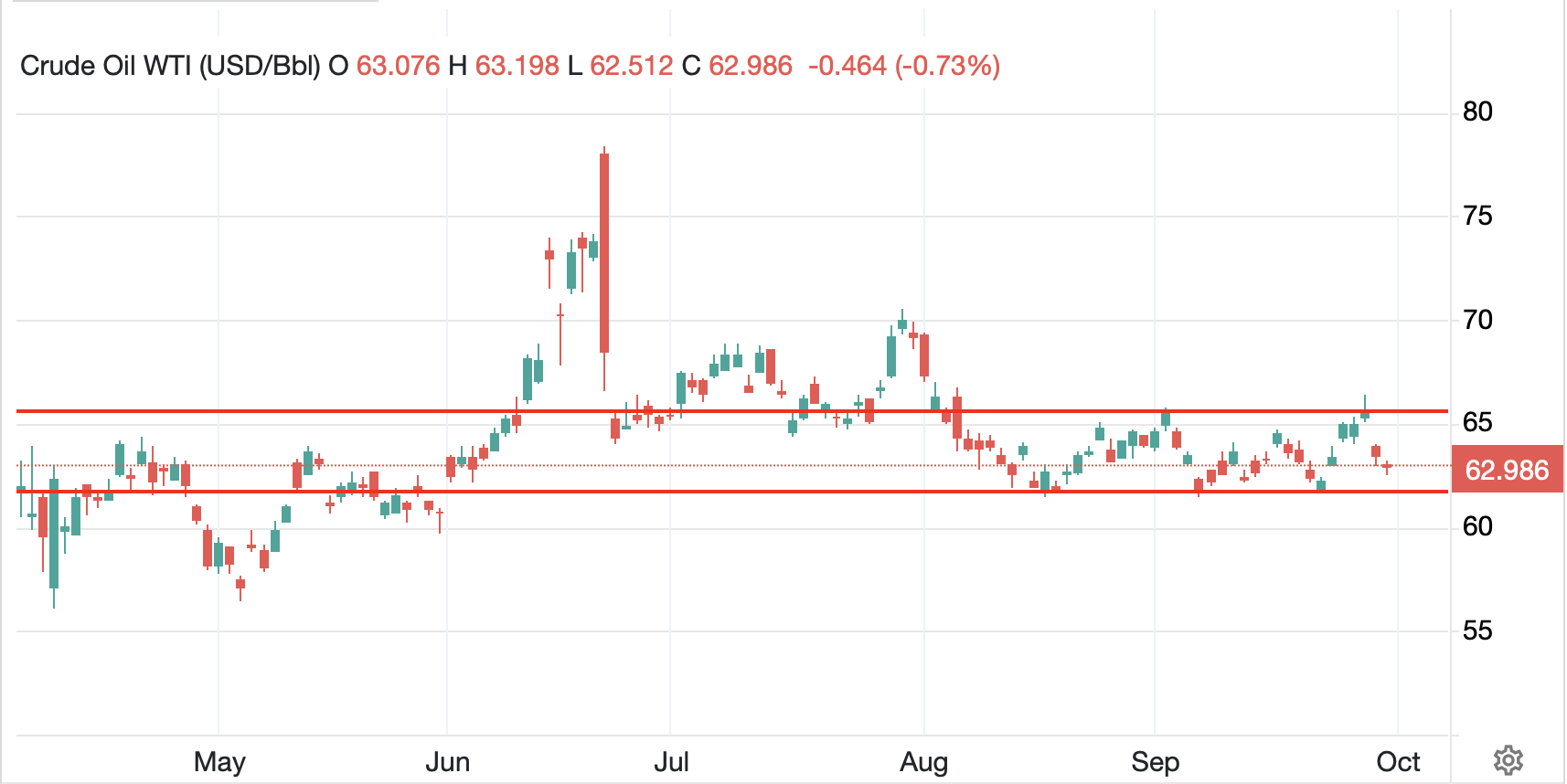
In the commodity market, oil (-5.6%) is once again under major pressure.  This feels like a confluence of both technical factors (the price has broken below long-term support at $60/bbl and is now testing for lows) and fundamental factors, with OPEC raising output and the mooted recession likely to reduce demand.  Interestingly, lower oil prices are a tremendous geopolitical weapon for the US as both Russia and Iran are entirely reliant on them for financing their activities.  As to the metals complex, gold as regained its luster (sorry 😁) rallying 2.8% and well above the $3000/oz level.  This has taken silver (+3.1%) and copper (+3.5%) along for the ride.  It seems to me the copper story is not in sync with the oil story as a recession would likely drive copper prices lower, but that is this morning’s movement.

Finally, the dollar is softer again this morning with the euro (+0.8%) trading through 1.10 and the yen (+1.0%) back below 145.00.  It’s interesting because there was a story last night about how the new Mr Yen, Atsushi Mimura, was speaking to the BOJ amid concerns that the yen has been too volatile.  However, to my eye the movement has been relatively sedate, strengthening gradually and still, as can be seen in the chart below, substantially weaker than for the many years prior to the Fed beginning to tighten policy in 2022.

Source: finance.yahoo.com

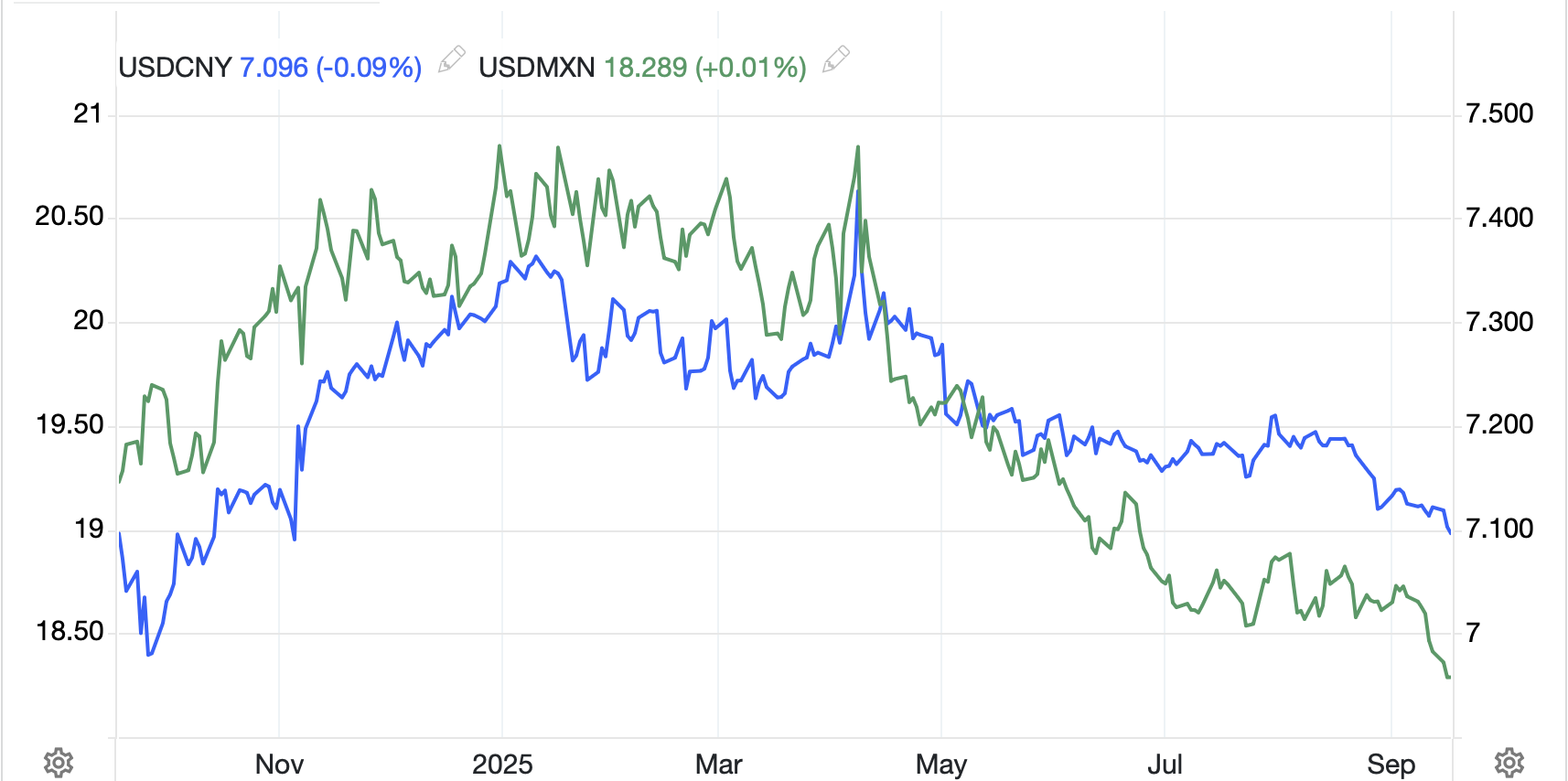
The other noteworthy move is CNY (+0.5%) which after slipping to levels not seen since 2007, has retraced somewhat.  If Treasury bonds are not seen as haven assets for now, the dollar has further to fall.

On the data front, the FOMC Minutes at 2:00pm are released, but given all that has happened since then, it is hard to get excited that we will learn very much new.  We also see EIA oil inventories with a modest build expected, but this market seems likely to have adjusted those numbers outside any forecasting error bars.

The tariff story will continue to drive markets for now as investors try to determine the best way to protect themselves until things settle down.  And things will settle down, but when that will happen is the $64 trillion question.  FWIW, which is probably not much, my sense is that we have a few more weeks of significant chop, as we await clarity on the tariff policy (meaning its goals).  I still believe there will be a number of deals that will reduce the initial numbers, but the ultimate goal is to isolate China.  It is going to be messy for a while yet.  As to the dollar through all this, my sense is lower, but not dramatically so.

Good luck

Adf

Erring

Excitement does not quite portray
The thirst for risk shown yesterday
Though media cried
Investors took pride
In Trump, sure that he’ll save the day
 
So, next Chairman Jay and the Fed
Will try to explain that instead
Of further rate paring
They might soon be erring
On side that Fed rate cuts are dead


Wow!  That is pretty much all one can say about yesterday’s equity market response to the confirmation that Donald Trump will be the next president of the United States.  The DJIA rose 3.6%, far outpacing both the S&P 500 (+2.5%) and the NASDAQ (+3.0%) but even that paled in comparison to the Russell 2000 small-cap index which jumped nearly 6% on the day!  Investors are all-in on the idea that Trump will seek to bring home as much manufacturing and economic activity as possible via tariff policies and small caps and old-line companies are the ones likely to benefit.

But boy, bonds had a tough day with yields across the curve rising between 10bps (2yr) and 20bps (30yr) with the 10yr gaining 15bps on the day.  It is all part of the same mindset, higher economic activity and no slowdown in spending leading to rising inflation and, correspondingly, rising yields.

The other area that really suffered were the metals markets, with gold (-3.3% or $90/oz), silver (-4.7%) and copper (-5.0%) all getting hammered.  The best explanation for the gold price’s decline I have heard is the idea that with Trump coming into office, the prospects for a nuclear war have greatly diminished.  Certainly, based on the fact that there were no new wars during his last term and one of his promises is to end the Russia/Ukraine war on the first day, perhaps that is correct.  As well, consider that the dollar exploded higher, something which had lately been a benefit for metals, but historically has been a negative, and at least we can make some sense of things here.

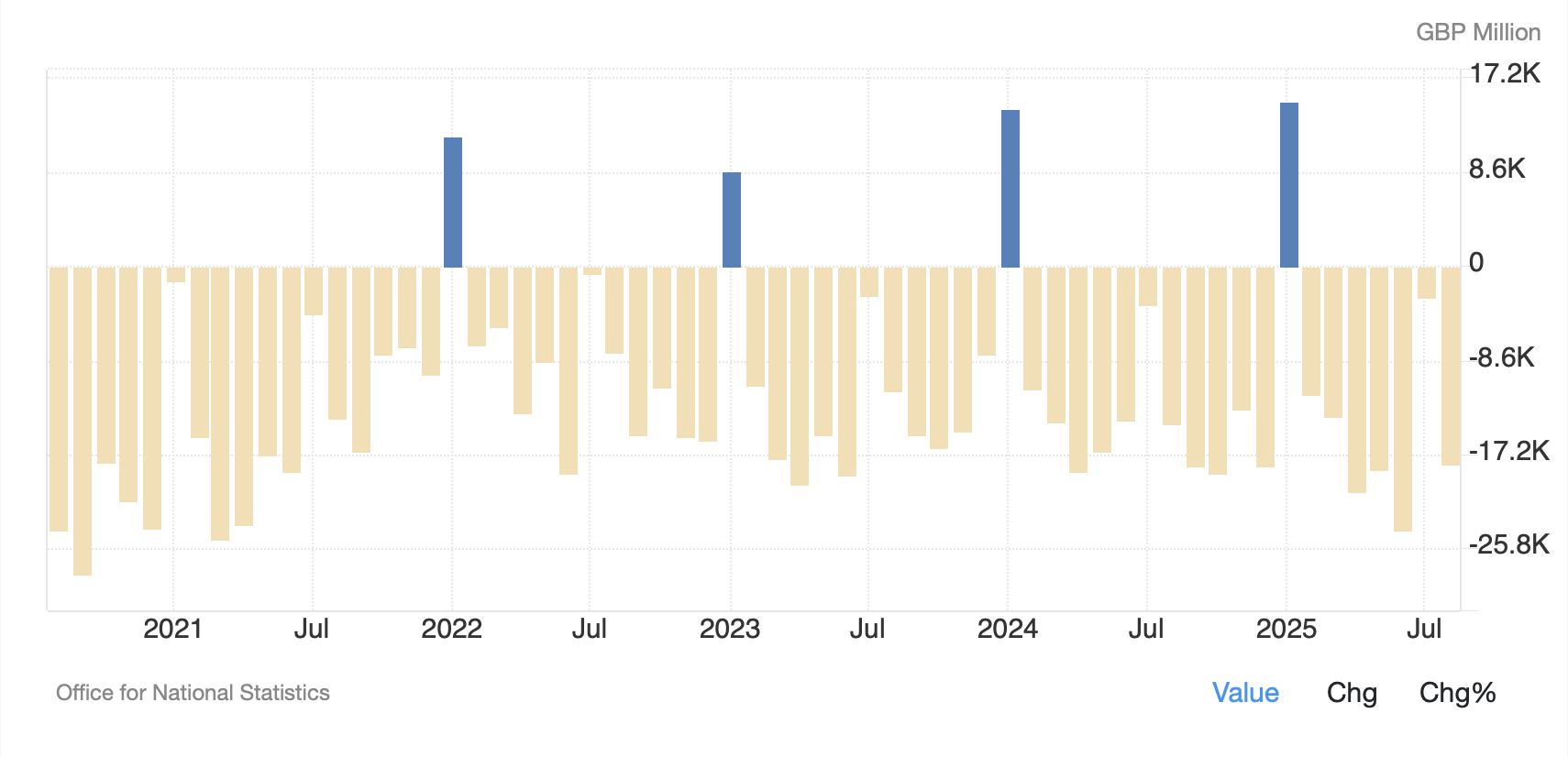
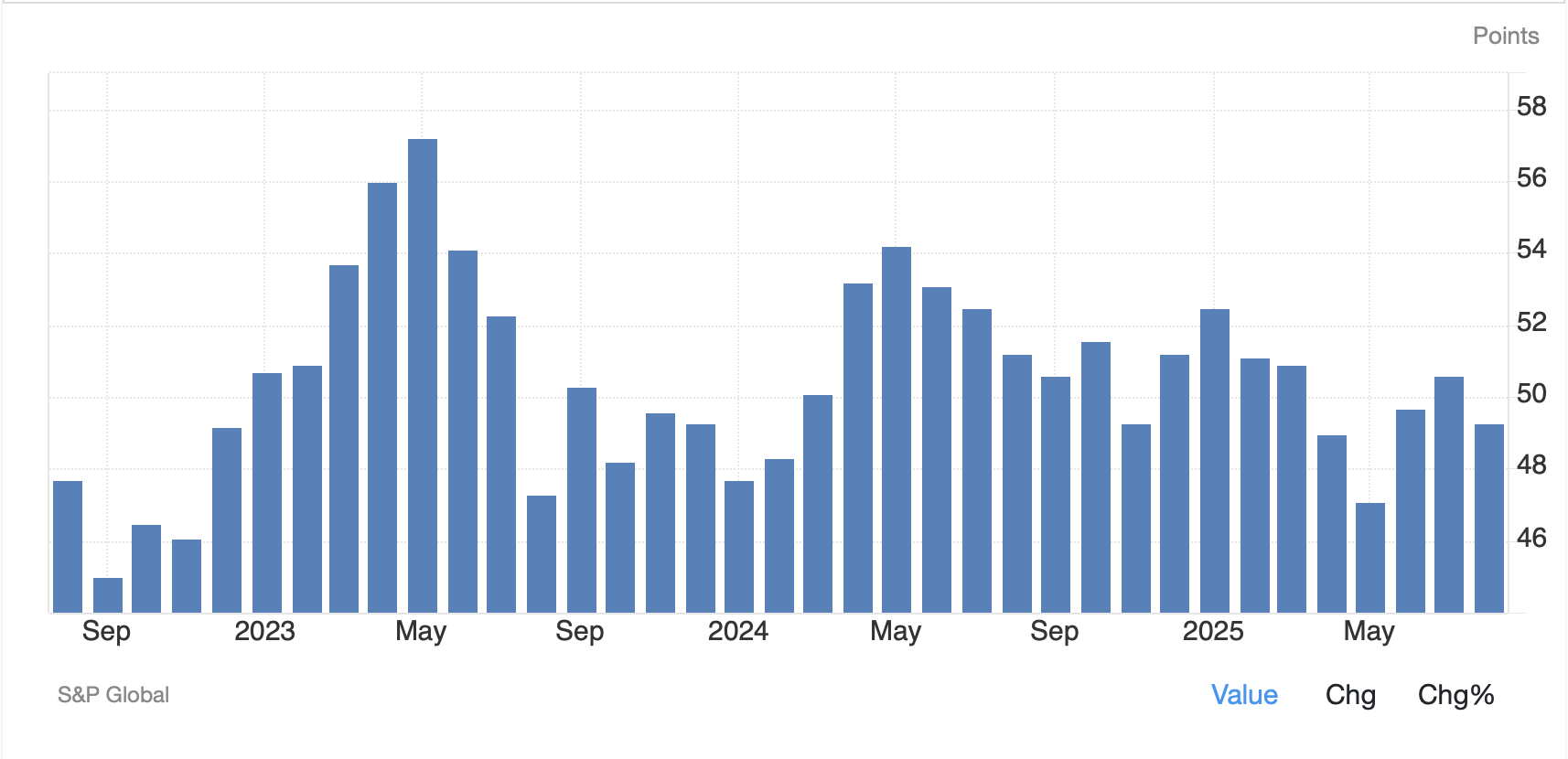
So, where do we go from here?  That, of course, is the $64 billion question.  Reactions around the world are still coming in and I would characterize them as a mix of stoicism and fear.  Perhaps a good place to start is Germany where the governing coalition just collapsed as Chancellor Sholz fired the FinMin who was the head of the FDP, one of his coalition’s groups.  Their problem is that the German economic model is crumbling, and the population is unhappy with the current situation.  The former can be demonstrated by today’s data showing the Trade Surplus fell more than expected while IP fell back into negative territory again, an all-too-common occurrence over the past three years as can be seen below, and hardly the best way to improve the productivity of your economy.

Source: tradingeconomics.com

Meanwhile, politically, the country is seeing a widening of views across the spectrum with the combination of the anti-immigration parties, AfD on the right and BSW on the left, garnering support of about 25% of the population and preventing any meaningful coalitions from being formed.  

If Germany continues to lag economically, it will negatively impact the whole of the Eurozone.  The divergence between the US economy, which has all the hallmarks of faster growth ahead, especially under a new administration, and the European economy, which continues to struggle under a suicidal energy policy that undermines any chance of industrial resurgence, and therefore a significant rebound in economic activity could not be greater.  While much ink has been spilled regarding the prospects that the dollar is going to collapse because of the debt situation and the BRICS are going to create something to replace it, the reality is the euro is in far more dire straits.  The ECB is going to be much more aggressive cutting rates than the Fed and the market is starting to price that in.  The below chart from Bloomberg this morning does an excellent job showing the change in market pricing over the past month.  

I find it hard to see how the euro can benefit in this environment regardless of the dollar’s performance against other currencies given the more limited economic prospects on the continent.  They are dealing with an existential crisis because of Russia’s more aggressive stance since the invasion of Ukraine combined with an undermining of their economic model which was based on exporting high value items to China and the rest of the world.  The problem with the latter is China has become a huge competitor and a shrinking market for their wares, and they have limited other markets.  If Trump holds to his word and imposes 20% tariffs on European imports to the US, the euro is likely to fall even further.

That is just a microcosm of one area and its response to the US election, but one that may well be a harbinger for many others.  The US stance in the world is changing and other nations are not really prepared.  Expect more financial market volatility, in both directions, as these changes become more evident and play out over time.

Ok, let’s see how other markets behaved with confirmation of the Trump victory.  In Asia, the Nikkei (-0.25%) slid but other indices rallied indicating a mixed picture.  Meanwhile Chinese shares rallied sharply (CSI 300 +3.0%, Hang Seng +2.0%) as expectations grow that the Standing Committee will expand the stimulus measures in the wake of the election.  Remember, the Chinese had delayed this annual meeting by a week to capture the results of the US election and now traders are betting on a bigger response.  As well, the Chinese Trade Surplus expanded far more than forecast, to its third highest monthly reading of all time at $95.3B.  As to the rest of the region, the picture was very mixed with some gainers (Singapore +1.9%, Taiwan +0.8%) helped by the China story and some laggards (India-1.0%, Philippines -2.1%) with the latter suffering from a much weaker than expected GDP report.

In Europe, interestingly, most markets are performing well this morning led by the DAX (+1.3%) although the rest of the continent’s bourses are only higher by around 0.5% or so.  The laggard here is the FTSE 100 which is unchanged on the day in the wake of the BOE’s widely expected 25bp rate cut.  Although, there were apparently some looking for a 50bp cut as stocks fell a bit in the wake of the news and the pound jumped 0.3%, a clear sign of a minor surprise.

Speaking of currencies, the dollar which has had quite a run in the past two sessions is backing off overall this morning although remains well above the pre-election levels.  In the G10, NOK (+1.3%) is the leader as the Norgesbank left rates on hold and indicated that was likely their stance going forward, while AUD (+1.0%) seems to be benefitting from both the rebound in metals prices and the potential Chinese stimulus.  Otherwise, currencies have rallied between 0.3% and 0.5% in this bloc.  In the EMG space, ZAR (+1.4%) is the biggest gainer, also on the precious metals rebound, while MXN (+1.2%) is next, although that is simply a continuation of the retracement from the post-election decline.  Bigger picture, I think the dollar remains well bid, but not today.

In the bond market, Treasury yields are unchanged this morning, consolidating their gains from the past week and waiting for the Fed this afternoon.  However, European sovereign yields have all rallied substantially, between 6bps and 9bps, which looks, for all intents and purposes, like the continent’s catch-up trade to yesterday’s US movement.  Nothing has changed the view that Treasury yields lead bond market moves in the G10.

Finally, in the commodity space, oil (-1.0%) is a bit lower this morning although yesterday it recouped most of its early losses and closed lower only minimally.  Yesterday also saw a surprising inventory build in the US which would be expected to weigh on prices.  In the metals markets, after a virtual collapse yesterday, this morning is seeing stabilization in precious metals and a sharp rebound in copper (+2.3%) as hopes for that Chinese stimulus spread to this market as well.

In addition to the FOMC meeting this afternoon, we see regular Thursday morning data of Initial (exp 221K) and Continuing (1880K) Claims as well as Nonfarm Productivity (2.3%) and Unit Labor Costs (1.0%).  However, despite all the recent activity, and the fact that a 25bp cut is a virtual certainty, Chairman Powell’s press conference will still have the trading community riveted to see how he describes any potential future paths in the wake of the election results.  Given the recent data and the estimate prospects of a Trump administration’s efforts to goose growth further, it is hard to see how the Fed can really discuss cutting rates much further.  In fact, I will go out on a limb and say I expect forecasts of the neutral rate are going to consistently climb higher and reach 4% before the end of 2025.  And that means, as is evident by both the economy and the stock market, the Fed has not tightened financial conditions very much at all.

Good luck

Adf